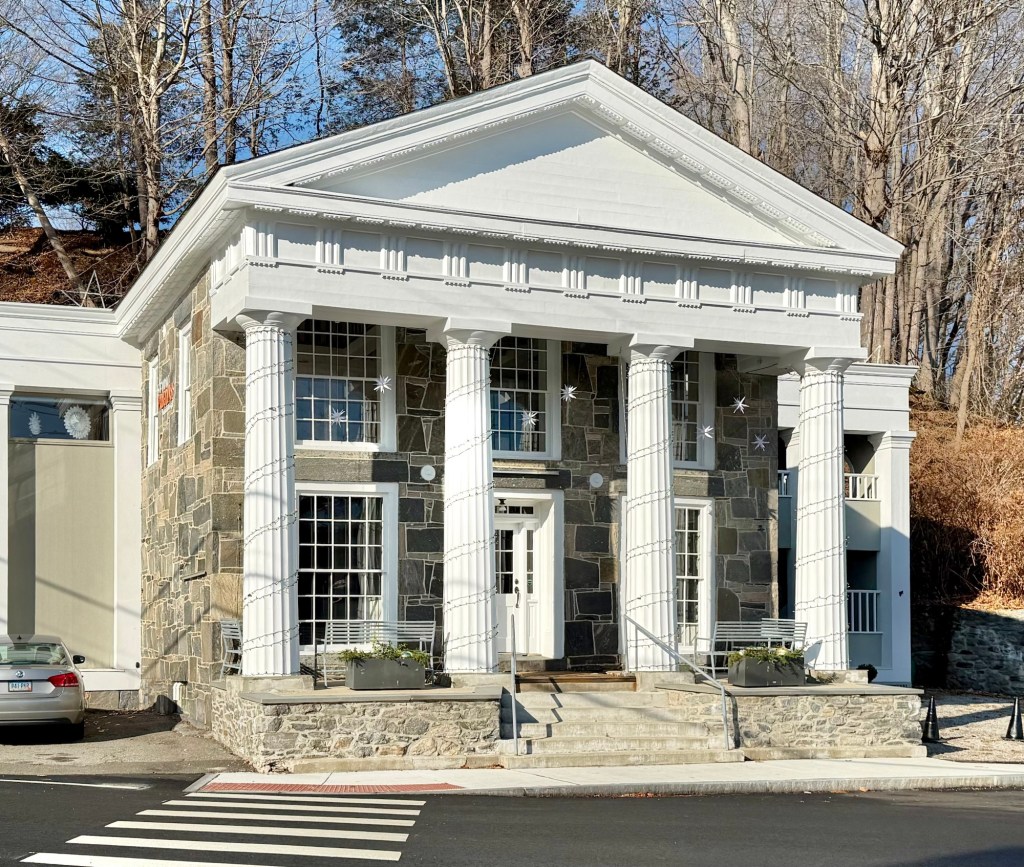
Old Stone Store, Chester // 1809

Colloquially known as the “Stone Store,” this handsome stone structure in Chester Village, Connecticut, was built by William Buck in 1809, a merchant involved in the West Indies trade. The stone for the building is believed to have come from the Chester quarry in town and was likely more vernacular without the columned portico. The four-columned Doric portico was likely added in the 1830s or 1840s as the Greek Revival style surged in popularity. The two side wings were added in the 20th century. The Old Stone Store has held various uses from a store, tavern, post office and liquor store, while the upper floor has served as a private school, the town’s library and an apartment. The Old Stone Store today acts as the western terminus of the town’s Main Street commercial district.
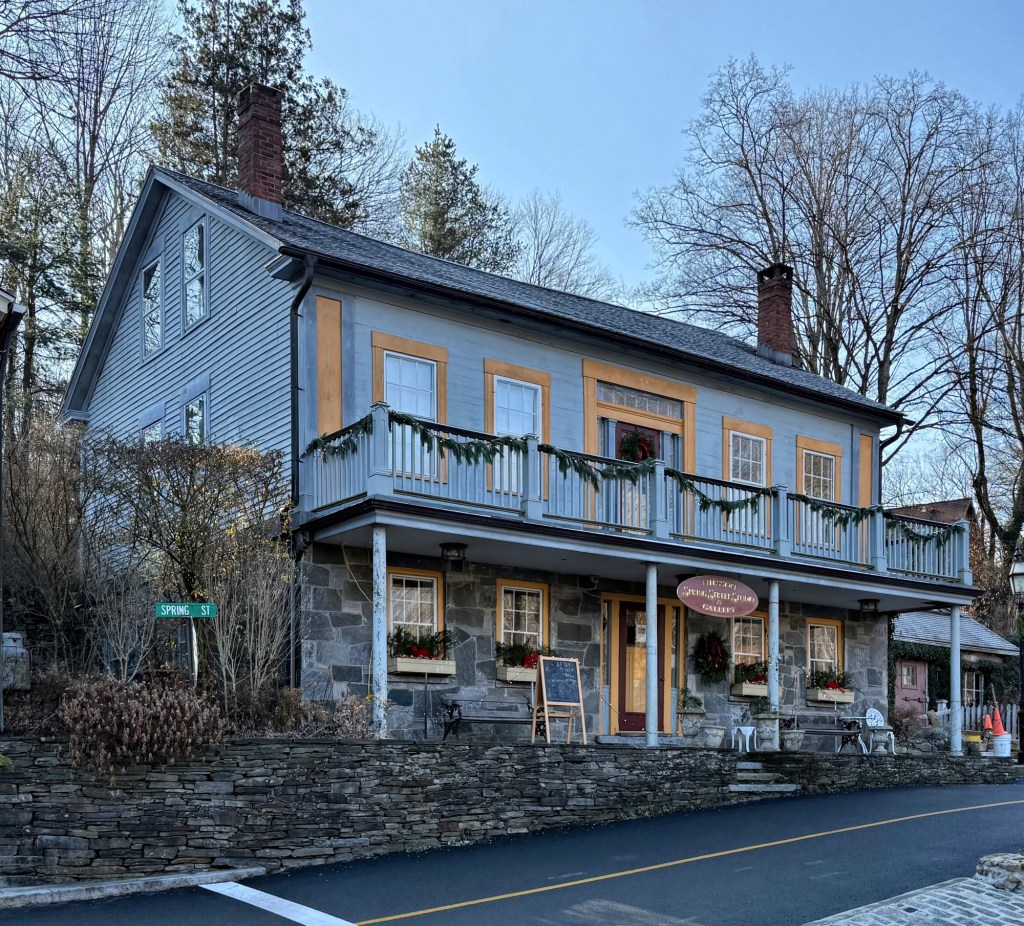
Chester House Hotel // c.1840

This altered building in the center of Chester Connecticut’s village Main Street, has historically been known as the Chester House, a hotel and tavern to provide lodging and drinks to travelers passing through the area in the mid-late 19th century. The structure, built atop a raised stone foundation, was constructed in the Greek Revival style around 1840, and long had a sheltered two-story portico supported by four monumental columns under a gabled roof which resembled a pediment. In 1903, a fire destroyed the upper floor and the roof was removed, creating a flat roof design. Later in the 20th century, a shallow side gable roof replaced the flat roof and the columns on the facade were also removed, giving the building the appearance we see today. The hotel closed, but the historic structure remains an anchor to the town’s vibrant commercial center, and houses a local business.

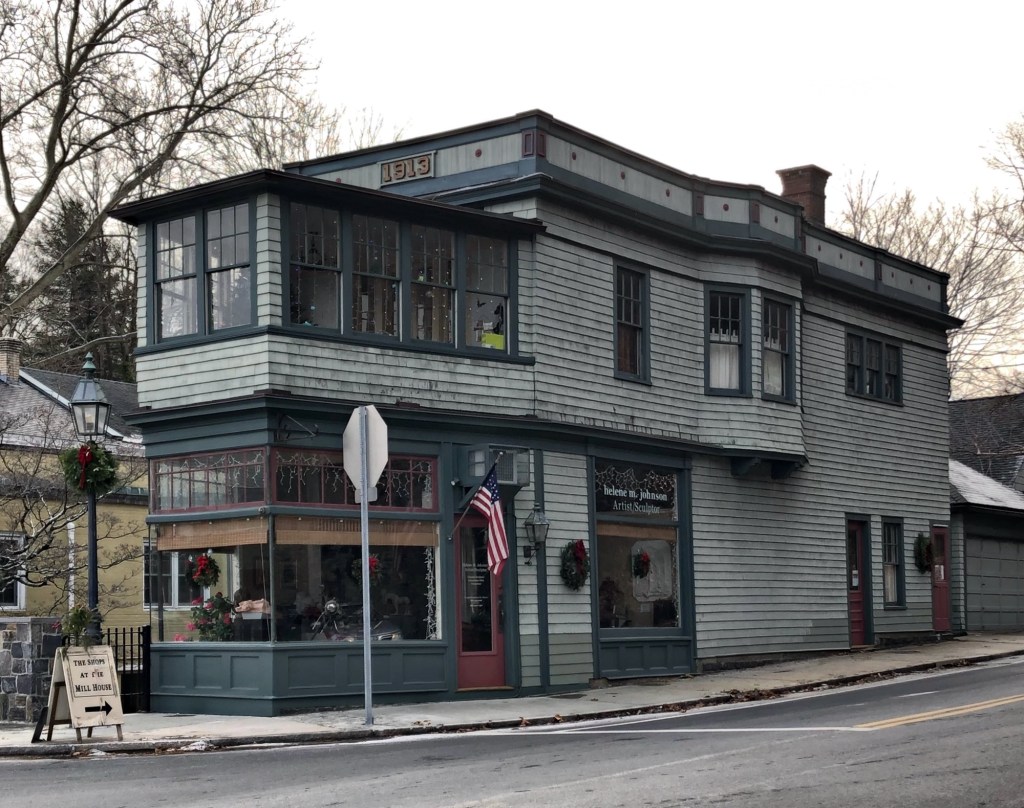
Chester Flatiron Building // 1913

At the junction of West Main and Main Streets in Chester Village, Connecticut, this unique flatiron commercial building stands overlooking the Pattaconk Brook that cuts through the center of town. In 1913, this two-story block was built with ground floor retail and a second floor residence for owner, Elmer Pierce, who ran his pharmacy downstairs. By 1920, the building was owned by Jacob Feinstein, who raised his family on the second floor and had his clothing business, “Feinsteins” in the store below. Later, the retail space was occupied by Child Design, a wooden toy store, and after that, a lighting fixture store. Historic main street buildings are often incubators for small and local businesses, keep the chain stores near the highways!

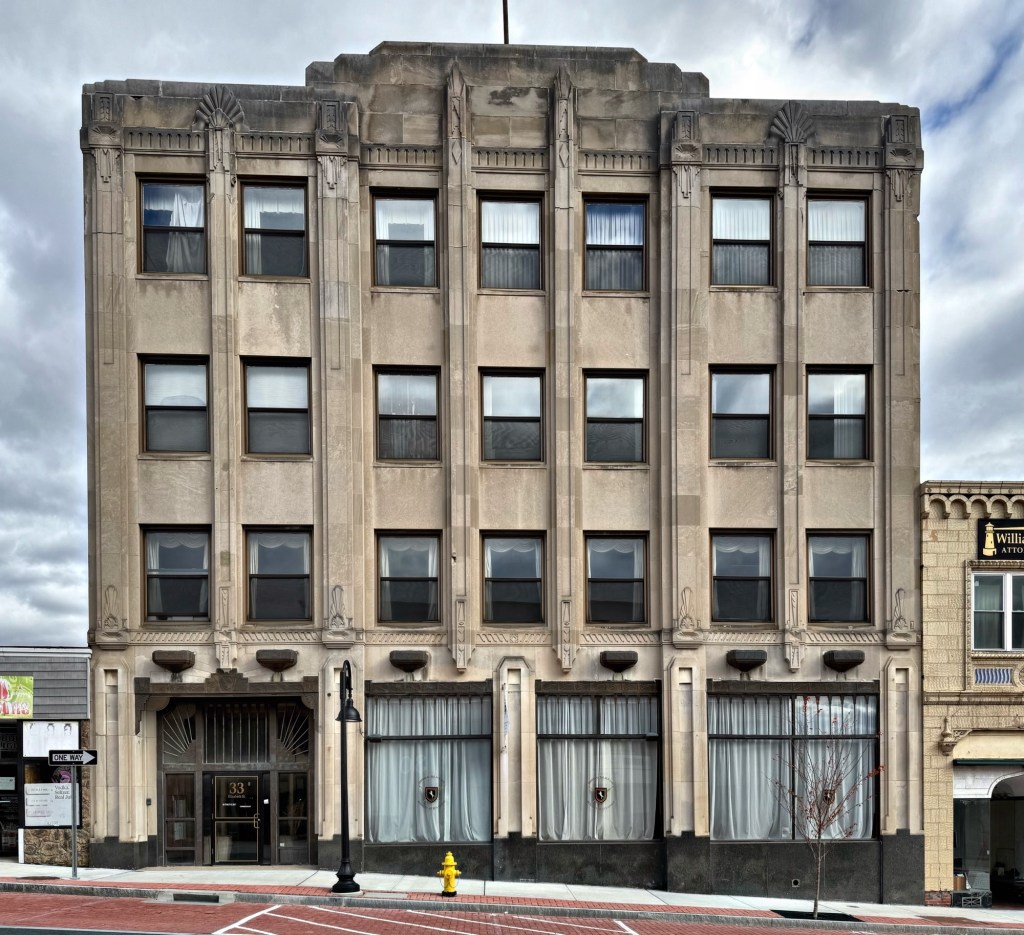
Derby Gas and Electric Company Offices // 1931

The former Derby Gas and Electric Company offices are located on Elizabeth Street in Derby, Connecticut, and stand as one of the great Art Deco buildings in New England. Built in 1931, the four-story office building features a limestone facade with bronze storefronts and light fixtures which were illuminated from the company’s plant nearby. In the 1950s the company was acquired by the United Illuminating Company.

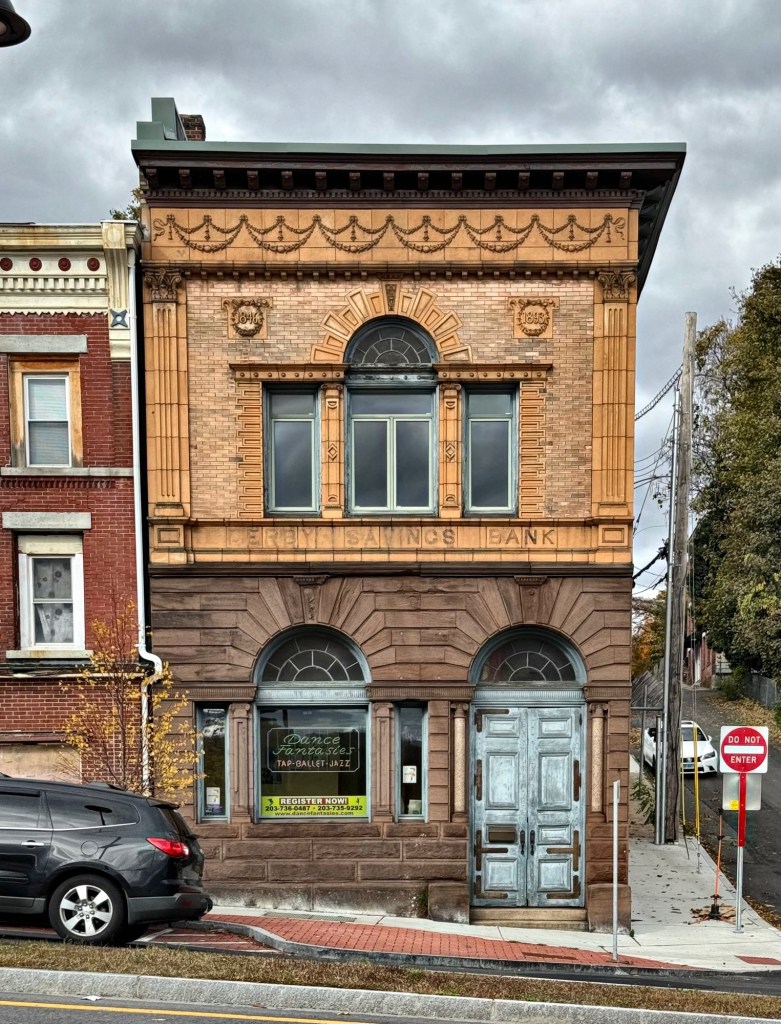
Former Derby Savings Bank // 1893

The former Derby Savings Bank stands at the corner of Main and Caroline streets and is one of the many handsome commercial buildings in Derby, Connecticut, which have been preserved. Designed in the Romanesque and Classical Revival styles, the building is adorned by terracotta, brick, and brownstone, with medallions depicting the date of incorporation (1843) and the date of this building (1893) which flank the Palladian window at the second floor. The bank occupied this structure from the date of its completion in 1893 until it built a new banking facility farther down Main Street in 1923. The bank again built a new building during the period of urban renewal in Derby’s downtown in 1976 when the modern structure at Main and Elizabeth streets was completed. The Modern bank is presently used as the City Hall.

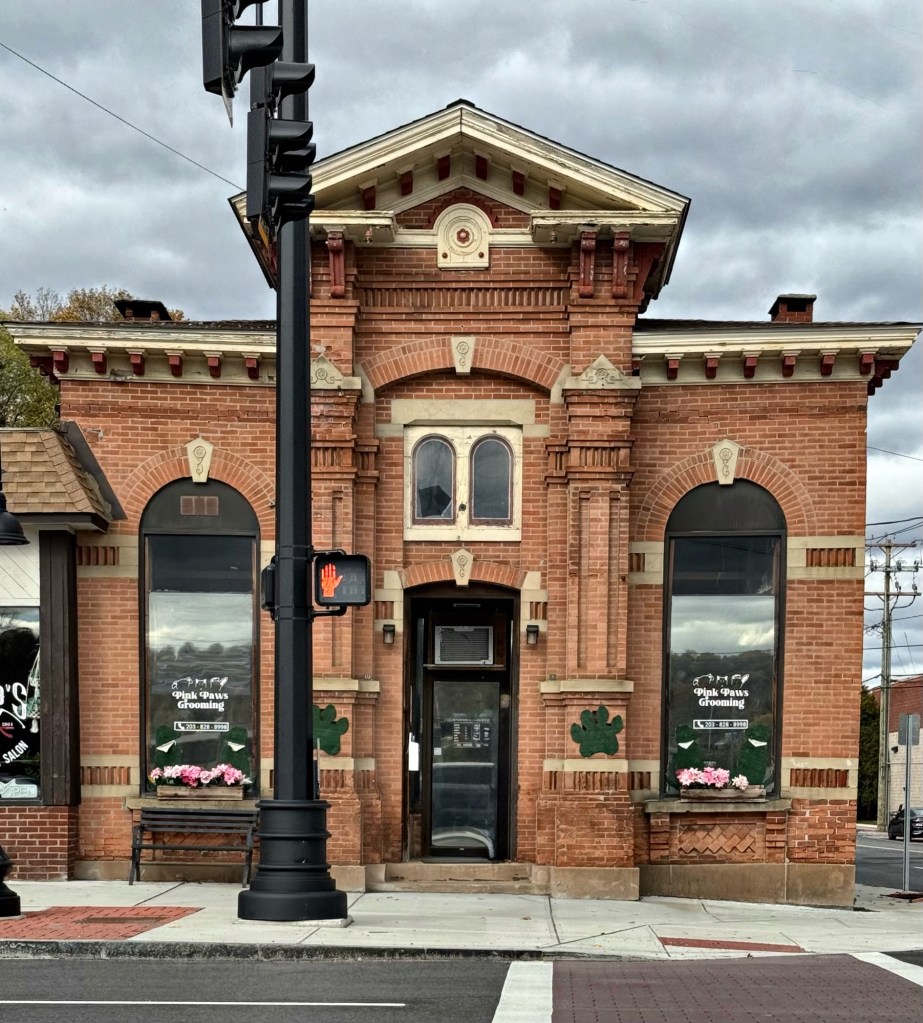
Ousatonic Water Company Offices // c.1880

The Housatonic River (also spelled the Ousatonic) is, after the Connecticut and Merrimac, the most powerful river in New England. Its location in Derby, Connecticut, was seen as a benefit to local businessmen, who after the Civil War, created the Ousatonic Water Company. The new organization made up of industrialists and businessmen, set off to complete the Ousatonic Dam (on the Housatonic River) towards the end of 1870. The dam precipitated the rapid development of the industrial villages of Birmingham (Derby) and Shelton. Aptly built on the corner of Main and Water streets, this handsome Italianate style masonry building was constructed by the 1880s for the Ousatonic Water Company for their company offices. The company was absorbed into the Connecticut Light & Power Company in 1927. The former offices have since been repurposed for a local business.

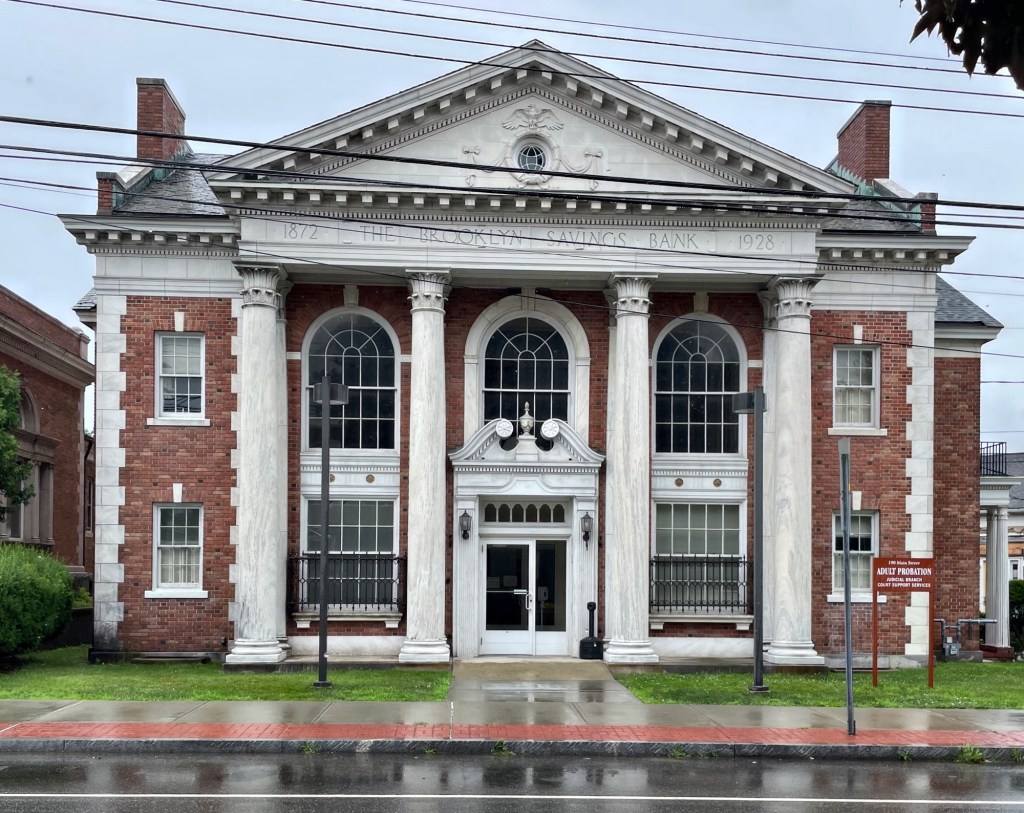
Old Brooklyn Savings Bank // 1928

One of the most intact and architecturally significant buildings in Killingly is this stunning example of a bank built in the Georgian Revival style. Located on Main Street in the village of Danielson, the former Brooklyn Savings Bank was designed by the New Haven-based architectural firm of Norton & Townsend for the Brooklyn Savings Bank, which was founded in the adjacent town, Brooklyn, in 1872. The bank relocated to the economic center of the two towns, Danielson, in 1915, later building this landmark bank structure as its primary facility. The two-story bank is covered in red brick with elaborate limestone and marble trim and detailing, showcasing the wealth and stability of the banking institution for potential members. The façade features a two-story pedimented pavilion, round arched windows, and an elaborate swans neck pediment over the door. The structure has been very well-preserved in its nearly 100 year existence and now appears to be the home of a state judicial court.  

Killingly Town Hall // 1876

The economic center of the town of Killingly, Connecticut is the village of Danielson, which is located at the confluence of the Quinebaug and Five Mile rivers. The area developed as an industrial village and prospered as the town’s center through the late 19th and early 20th centuries. The present-day town hall building was originally constructed in 1876, not as a civic building, but as a multi-purpose music hall and G.A.R. Hall. The Victorian/Ruskinian Gothic style building was constructed of brick with stone trim. The building was later acquired by the town in 1906 and has served as the town offices ever since. Besides the unfortunate replacement windows, the building is well-preserved by the town.

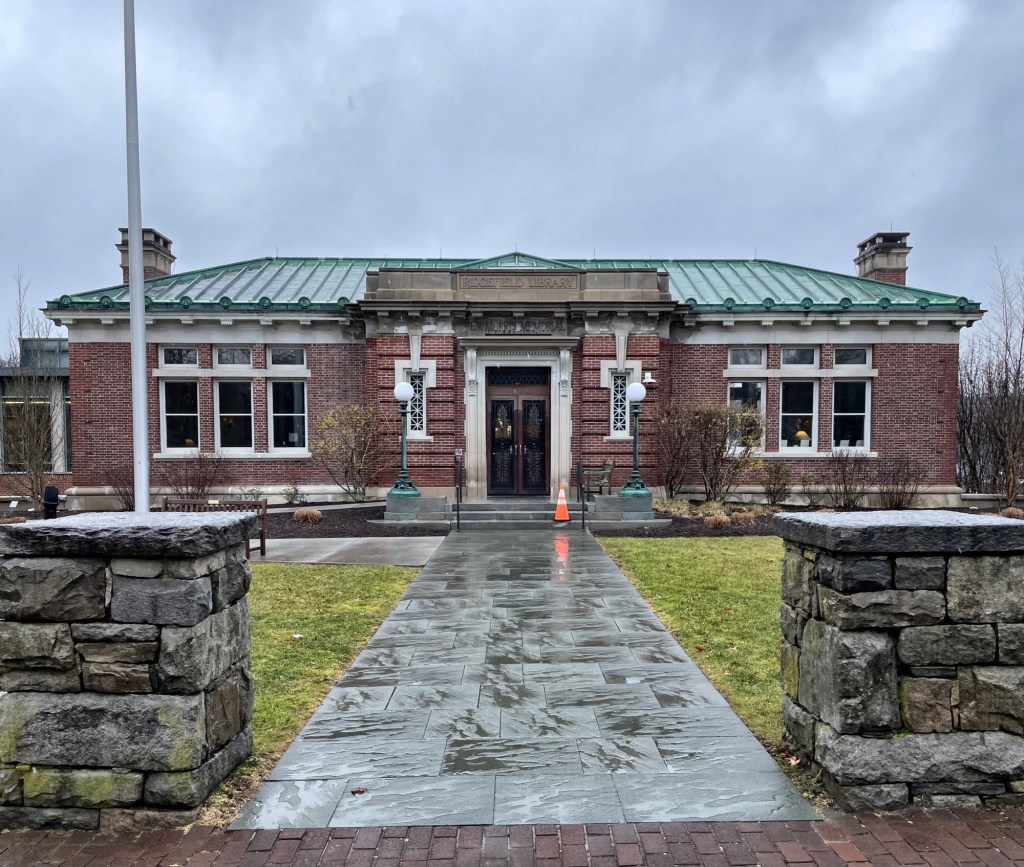
Ridgefield Public Library // 1901

The Ridgefield Public Library is an intriguing Beaux Arts style building from the turn of the 20th century. Built in 1901, the brick structure replaced the Smith Tavern, a 1798 frame structure built by Amos Smith right on Main Street. In 1900 the Smith Family sold the property to James N. Morris who had this library built in memory of his wife, Elizabeth, donating it to the town. Architect Raleigh G. Gildersleeve is credited with the design which is comprised of a one-story building constructed of brick with cast stone trim details and ironwork at the door. The library was given later additions, which are recessive in location and detailing to let the original building shine, as it should!

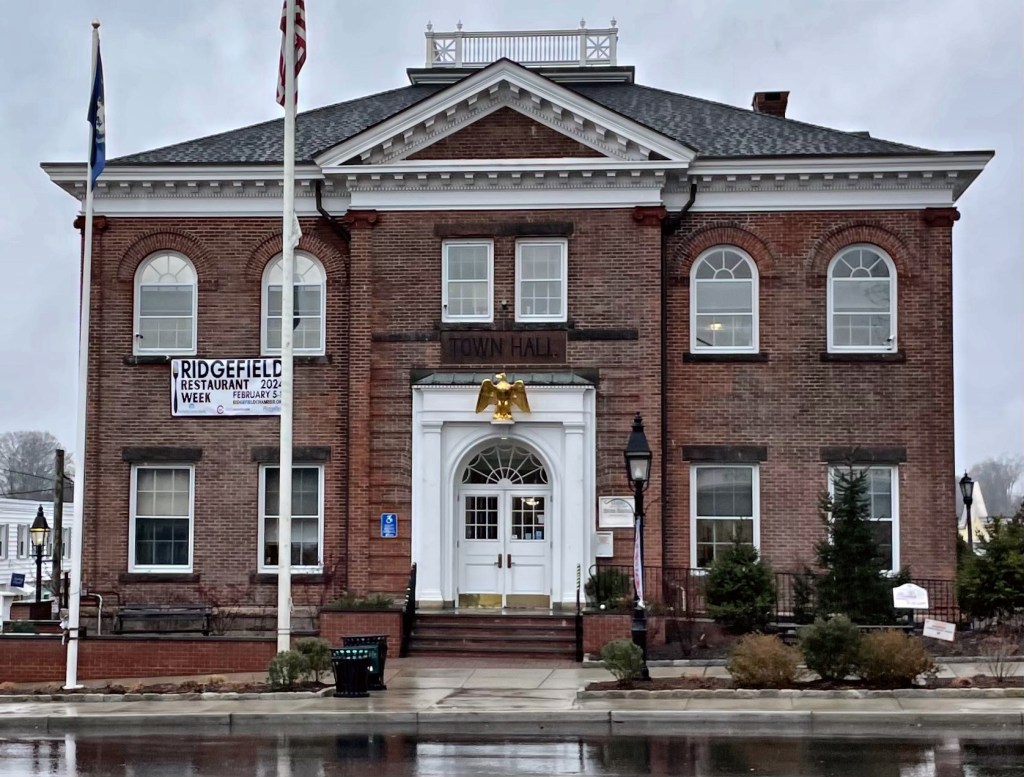
Ridgefield Town Hall // 1896

Ridgefield, Connecticut was settled in 1708 when 24 families from Long Island purchased land from Chief Catoonah of the Ramapo tribe. The Fundamental Orders adopted by Connecticut in 1639 directed would-be settlers, able to support a minister, to establish a settlement, build a Congregational church and farm the land. This is exactly what was done in Ridgefield, beginning in 1708. The original 24 proprietors received 7½-acre home lots drawn by lottery, with a 25th reserved for the minister. The lots were located up and down Main Street from a Common where a Meeting House was built. The town grew and for much of its three centuries, was primarily comprised of old farms. By the late 19th century, spurred by the connection of the railroad, Ridgefield was “discovered” by wealthy New York residents, who assembled large estates in town, a trend that has only picked up in the 21st century! Population growth and a large fire on the town’s Main Street in 1895 necessitated a new Town Hall building. The present Town Hall building was constructed in 1896 from plans by architect Philip Sunderland. Colonial Revival and Romanesque in style, the two-story brick building features a pedimented central bay also containing the entrance with fan light transom, round arched windows, brownstone trim, and narrow pilasters of brick. The building houses town offices today.