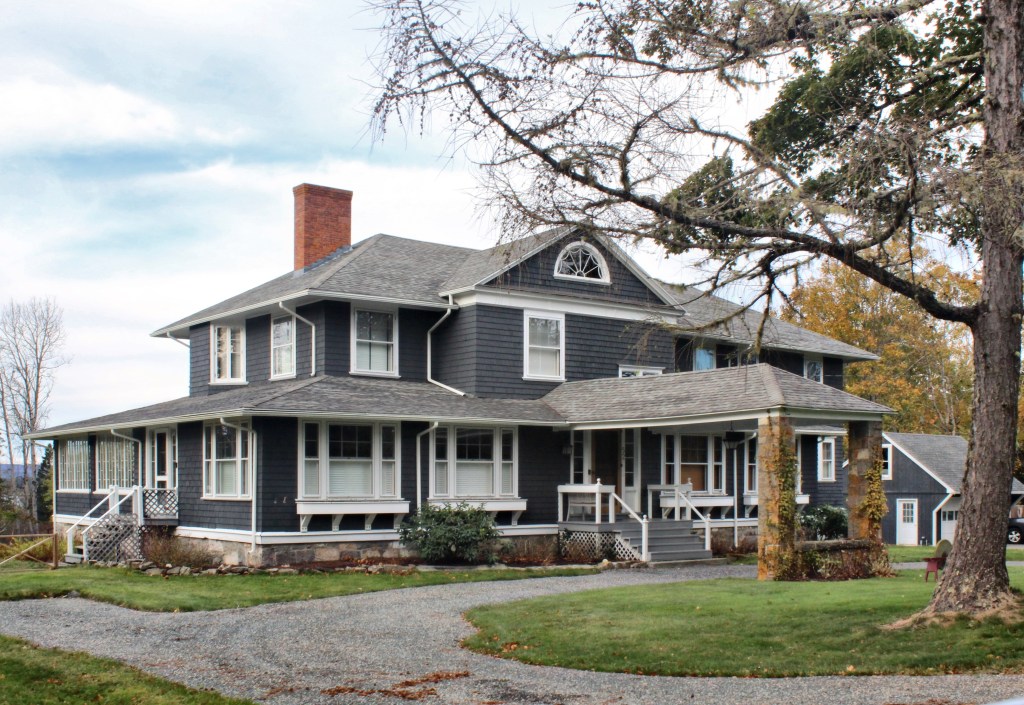
Jefferson Willow Grange Hall // c.1901

Grange Halls have long been vitally important buildings in agricultural towns all over New England and are becoming threatened due to shifting development patterns and dwindling membership. The National Grange of the Order of Patrons of Husbandry was established in 1867 to advance methods of agriculture, as well as to promote the social and economic needs of farmers in the United States. Communities all over built grange halls where farmers and residents could meet and discuss prices, trade, and share tips for larger crop yields. The Willow Grange Hall in Jefferson, Maine was built in 1901 and is a vernacular building which remains a community meeting hall to this day.
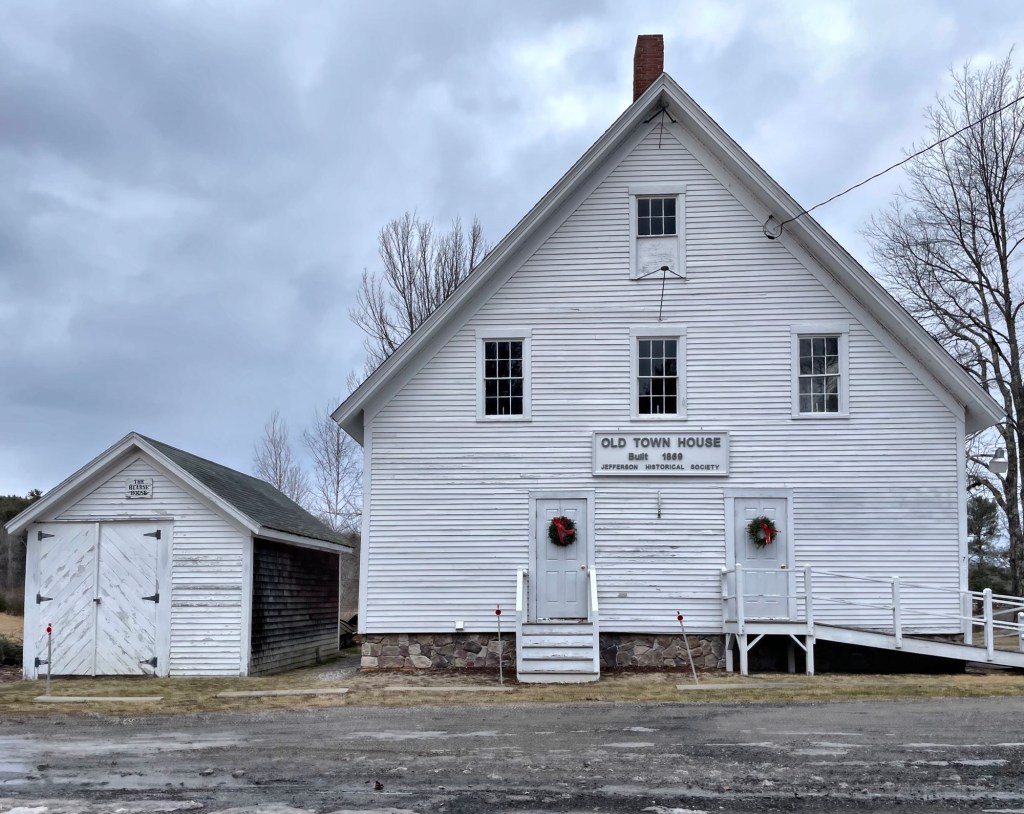
Jefferson Town House and Hearse House // 1869

Following the conclusion of the French and Indian War in 1763, much of the un-colonized land in central Maine began to see development. The Ballstown Plantation was settled in the 1760s and today includes two separate townships created from it, Jefferson and Whitefield, Maine. Jefferson was initially settled by emigrants from the coastal towns of Boothbay and Woolwich in the years just prior to the Revolution and incorporated in 1807, named after Thomas Jefferson, then President of the United States. A Town House was built in 1828 and was eventually outgrown and a new structure was funded in 1869. This is the second Jefferson Town House and like in many rural towns, it served many purposes. The building was used for town meetings, a high school, and was sometimes rented to fraternal organizations (talk about Mixed Use)! The outdated building was no longer needed by the town in the 1970s and a new building was erected closer to the center of town. This building was subsequently rented to the Jefferson Historical Society, who have restored the building, and the historic hearse house next door. The vernacular civic building will hopefully be preserved for another 150 years!

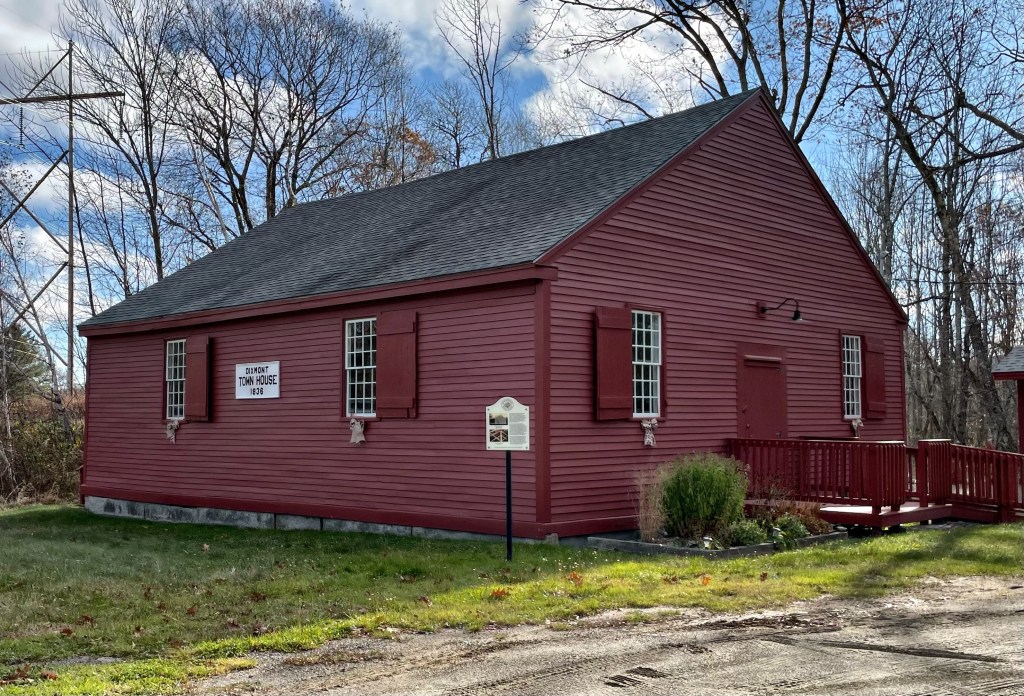
Dixmont Town House // c.1836

Dixmont, a small rural town in central Maine was originally originally a land grant by the Commonwealth of Massachusetts (of which Maine was then a part) to Bowdoin College, which sold the first settlers their land for profit to build on their campus. As a result, the town was originally called “Collegetown”, which was obviously short-lived. Dr. Elijah Dix (1747-1809) of Boston, who never lived there but took an interest in its settlement, encouraged others to settle there, and when the town was officially incorporated in 1807, it named itself after Dix, as Dixmont. A “malignant fever” broke out among the settlers in the early years, also killing Elijah Dix while in Dixmont on a trip there in 1809, he was buried in the Dixmont Corner Cemetery. Elijah was the grandfather of reformer and nurse Dorothea Dix. The early settlers had this Town House built in the center of the township around 1836 as a vernacular structure. The building (like many early town houses) was used for both secular and religious purposes. This small structure is one of the oldest surviving town houses in the state and served as the town government center until 1952 when it hosted its last town meeting. It was restored in the early 2000s and looks great!

Troy Meeting House // 1840

Located in the rural town of Troy, Maine, the 1840 Troy Meeting House is a classic example of a type of meeting house or church that was built by some rural communities in the state in the decades prior to the Civil War. Built as a Union Church, without a specific denomination, the building served the members of the Troy Meeting House Society, and by extension as the only church in the town. The building features both Greek Revival and Gothic Revival stylistic details on the exterior and its design is similar to others in the surrounding towns, likely being from the same builder.

Rockefeller Hall // 1934

In the early 1930s, a U.S. Navy Radio Station at the Otter Cliffs on Mount Desert Island had become dilapidated and Navy funds were not forthcoming for repairs. When John D. Rockefeller Jr. suggested that it be removed, the Navy agreed to include the station in his donation to Acadia National Park, provided that he would build an equally good receiving station nearby. In the midst of the Great Depression, and short on funds, the government accepted the swap. Rockefeller set aside land at the tip of the Schoodic Peninsula, about five miles away across Frenchman Bay, at Winter Harbor. Rockefeller, wishing the station’s buildings to be compatible with others designed for the park, retained Grosvenor Atterbury, the New York architect who designed the park’s gatehouses, to come up with plans for the radio station. It opened in early 1935 and for several years served as an operation center and military housing. After the naval base was closed in 2002, the National Park Service acquired the land and established the Schoodic Education and Research Center (SERC). The SERC campus is managed by the nonprofit Schoodic Institute and the NPS in a public-private partnership as one of 19 NPS research learning centers in the country. They restored Rockefeller Hall (as it became known) in the early 2010s and the stunning architecture can really shine today. The building is a Welcome Center to the institute.

Dixon Cottage // c.1891

The Dixon Cottage on Grindstone Neck was built around 1891 for Alexander J. Dallas Dixon (1850-1948) who appears to have either shared the summer house with his brother Thomas, or sold the property soon after. The Dixon brothers (along with George Dallas Dixon), were early investors in the Grindstone Neck colony and they built summer homes here in its early development. The Dixon Cottage was the summer retreat for Thomas’ eldest son, Fitz Eugene Dixon, who married Eleanor Elkins Widener, a philanthropist and heiress to the Widener and Elkins families. Eleanor and Fitz would later own Park Cottage, featured previously. The Dixon Cottage deviates from the traditional Shingle style cottages seen so frequently on Grindstone Neck and is a refined example of the Queen Anne style with its varied siding, rounded tower, and asymmetrical plan.

St. Margaret Catholic Summer Chapel // c.1895

When the Grindstone Neck Summer Colony of Maine was in full-swing, wealthy summer residents would frequent the colony’s Episcopal chapel (featured previously). What the summer residents did not really plan for was the influx of other residents as summer staff, largely Irish servants who in large part were Catholic. As a result, the St. Margaret Catholic Chapel was built to provide a house of worship, largely for those summer workers on Grindstone Neck. Keeping with the rustic architectural character of the colony, the chapel was designed in the Shingle style. I could not find any information on the architect, so any additional insight would be greatly appreciated!

Thompson Cottage // c.1892

Who doesn’t love a good porte-cochere? In case you don’t know what they are, a porte-cochere is a covered porch-like structure at an entrance to a building where either a horse and carriage (historically) or car (today) can pass under to provide arriving and departing occupants protection from the elements. They are normally found on larger residences and institutional building where the wealthy frequent. The Thompson Cottage on Grindstone Neck in Winter Harbor was built around 1892 for James B. Thompson from Philadelphia. The original cottage was largely updated after Thompson’s death in 1915, the property was owned by Annie Cannell Trotter, who summered at another house in the colony with her husband Nathan Trotter, until his death.

Hammond Hall // 1903

Winter Harbor, Maine, may just be my new favorite place in the state! The town is located just east of Mount Desert Island, south of Gouldsboro (of which it was a village within the town). In 1895, after the Grindstone Neck summer colony was developed, the town’s increased finances and outlook led them to incorporate as a separate town. And what does any new town need? A town hall! Construction of the hall was proposed in 1902 by Edward J. Hammond, owner of a local lumber business who made his fortune shipping and selling the Maine lumber in Boston. Hammond donated the building materials and building lot after a fire swept through Winter Harbor village. The town offices moved out of the building in 1958, and the main hall continued to be used as a school gymnasium until 1987. The town then sold the building to the Winter Harbor Historical Society. Lack of funding by the turn of the present century resulted in the building’s decline, and it was slated for demolition in 2002. It was rescued by Schoodic Arts For All, a cultural organization that brings a variety of events to the space, which now holds a long-term lease on the property. The building looks great today!

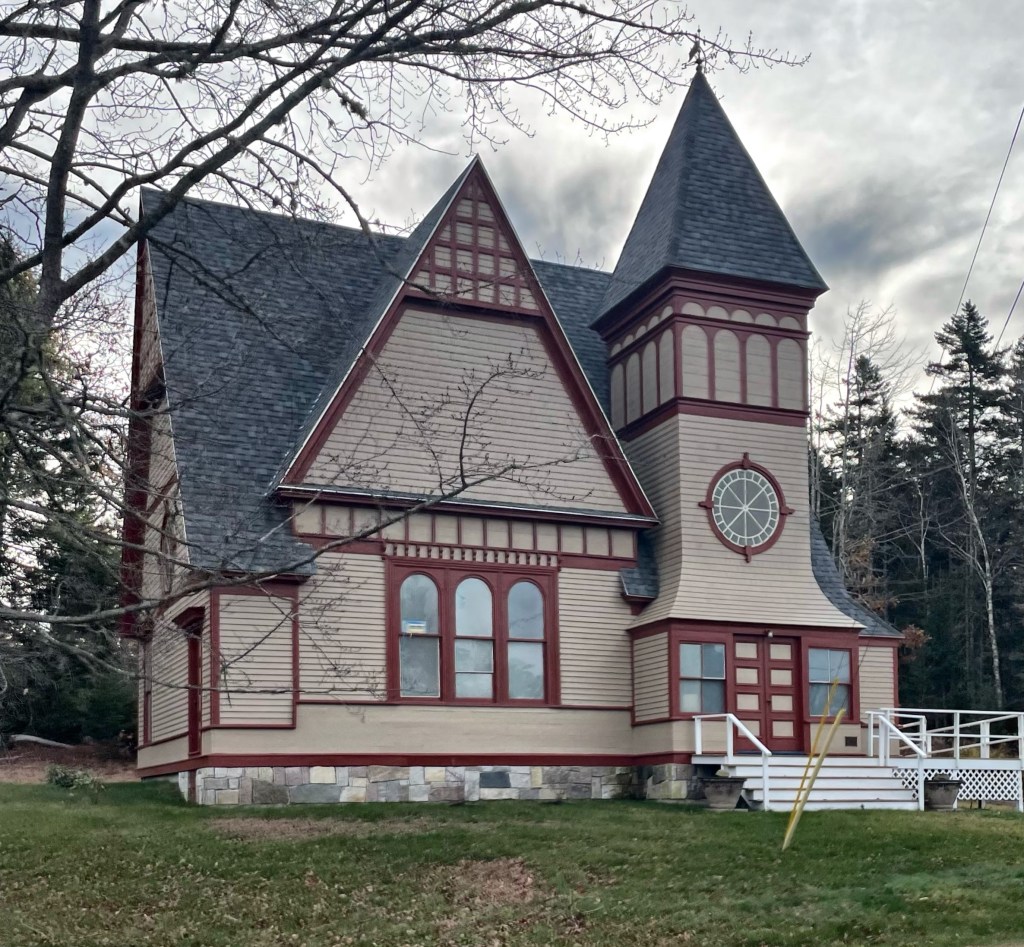
West Gouldsboro Union Church // 1888

In 1888, the West Gouldsboro Union Church Society had enough funds to build this Queen Anne style church, built completely from member donations. By November 1888, the exterior was completed, but so much money was spent on the detailing on the exterior, no funds were available for the exterior painting and interior spaces. In 1891, the new church was finally dedicated. The West Gouldsboro Union Church is a stunning example of a church in the Queen Anne style with varied siding forms, asymmetrical plan, and square tower capped by a pyramidal roof. My favorite part about this building is its historically appropriate paint colors. For a long time, the church was fully painted a bright white, but now its details really shine!

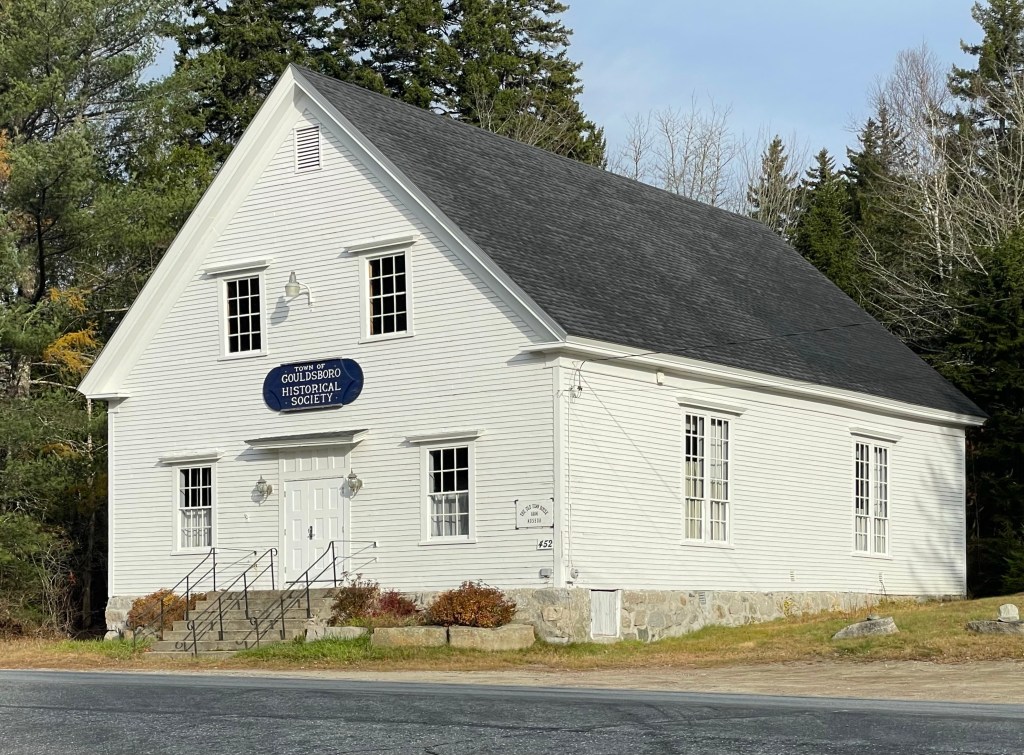
Gouldsboro Townhouse // 1884

Welcome to Gouldsboro, Maine! The town is a charming community made up of many small fishing villages and neighborhoods dotting the rugged Maine coastline. Land in what was then part of Massachusetts, was given to Colonel Nathan Jones, Francis Shaw and Robert Gould in 1764 by the General Court of the Commonwealth of Massachusetts. Francis Shaw and Robert Gould were both merchants from Boston. Francis Shaw had worked hard to develop Gouldsboro, and reportedly died broke because of it, and his son Robert Gould Shaw returned to his parents’ native Boston. Development in the area was slow and never really took-off due to the distance from Boston, but fishing, mills, and villages were built and remain to this day. Now, much of the area is home to summer residents flocking to the area from urban areas. This building was Gouldsboro’s second townhouse. It was constructed in 1884, soon after the first townhouse burned a year prior. The structure was used for town meetings and elections until 1983. It is now owned by the Gouldsboro Historical Society. It is a late, vernacular example of a Greek Revival townhouse.

East Blue Hill Post Office // c.1884

Before the days of USPS trucks delivering mail to your door, mail was delivered to local post offices for pick-up daily. Due to this, many villages had their own post offices to service local communities better due to ease of access by residents. A post office first arrived in East Blue Hill Village, Maine in 1873, likely due to the distance traveled to the central village for mail. By 1884, George Long built this vernacular structure as the village post office, which belonged to members of the Long family, who also served as postmasters, until 1997. The post office is distinct in the state as the only known example of a purpose-built post office facility that is not owned by the United States Postal Service, and that was not built or adapted to its standards. The building sold out of the Long family in 1997, when it was purchased by the East Blue Hill Village Improvement Association, who have preserved it ever-since!

Holt House – Blue Hill Historical Society // 1815

The Holt House in Blue Hill, Maine, was built in 1815 by Jeremiah Thorndike Holt, grandson of Nicholas Holt who brought Blue Hill’s fifth family from Andover, Massachusetts in 1765. Jeremiah was one of the first to locate at the head of the bay, in what is now the center of Blue Hill village. He was an influential businessman who kept a store at what became known as the Pendleton House, engaged in shipping, and became the town’s second postmaster. After Jeremiah died in 1832, his widow turned the house into the town’s only inn and tavern. In 1851 their son, Thomas Jefferson Napoleon Bonaparte Holt (what a name!) and his family occupied the house. It stayed in the family for over a hundred years until the Blue Hill Historical Society bought the Holt House and made it their headquarters in 1970. The Holt House remains as a well-preserved Federal style home in this part of Maine.

Thomas Lord House // 1847

This 1847 Greek Revival home sits in Blue Hill Village, Maine and it was built by and for local architect and builder Thomas Lord (1805–1880), who is credited with bringing the classical motifs seen in Greek architecture to Blue Hill. Mr. Lord had little formal education, spending much of his youth grinding bark at Ellsworth, sailing and working on his uncle’s farm. When he was 22, he apprenticed himself to a carpenter and began working for George Stevens in the shipbuilding yards of Blue Hill. From 1828 to 1880, Thomas Lord worked on 83 vessels, 84 dwellings, 12 school buildings, 14 meeting houses, 10 stern moldings and figureheads, 250 coffins and many barns and sheds. Lord is especially known in the area for his churches, including remodeling the First Baptist Church of Blue Hill in 1856. Just before building the house, Thomas married Matilda Carlton (1811-1898) and the couple had three children while living in the home. When Thomas died in 1880, Thomas Lord’s elder son, Roscoe Granville Lord took up residence here, where the 1900 census lists him as a painter. The home remains extremely well preserved and is one of the finer homes in the village of Blue Hill.

Pendleton House // 1826

Large commercial blocks like this can really transport you back a century or more! The Pendleton House in Blue Hill, Maine was built in 1826 by Jonah and Jeremiah Holt. The brothers were born in Beverly, Massachusetts and their family settled in Blue Hill, likely to work in the shipbuilding industry. Originally called the Brick Block, the building was a storefront for the Holts. In the 1870s, the building had fallen into disrepair, and was seized from its owner, Frederick Holt (Jeremiah’s son), by the Blue Hill Academy, from whom Nathan Pendleton purchased the building. As an 1877 issue of The Ellsworth American stated: “Blue Hill needs a hotel. There have never been so many strangers and visitors. Five hundred men are working in the quarries.” From the massive demand for lodging in town, tied to industry, Pendleton opened the building as a hotel in 1878, possibly adding the mansard roof at that time. The building became known as the Pendleton House for a number of years and was purchased by John M. Snow in 1888, who added porches to the building. Sadly, the porches were removed in the 20th century, but the old Pendleton House remains a fixture in Blue Hill and is home to small businesses with housing above.