Completed in 1811, the First Parish Congregational Church of Pownal, Maine, is an excellent and well-preserved example of a vernacular Federal-period church in a rural setting. Located across from Mallett Hall and built at the foot of Bradbury Mountain, the church was built by a crew headed by master-carpenter Uriel Whitney, a Revolutionary War veteran who moved to the area after the war. He was active in this church and is buried in the church cemetery. Little remains of the original Federal Style architecture, as its current Greek Revival Style (architects unknown) dates from remodeling apparently undertaken in 1838 and 1857.
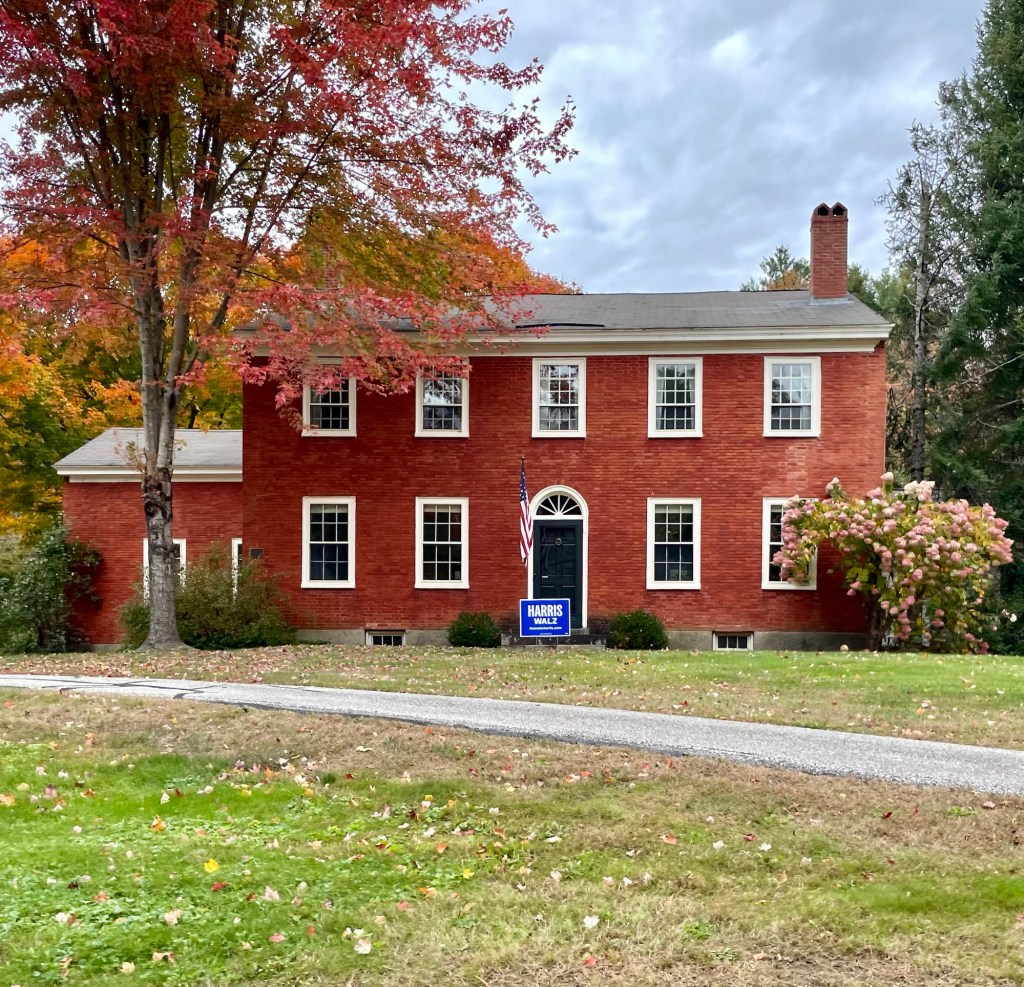
The Jacob Randall House on Lawrence Road in Pownal, Maine was built about 1796 and is a fine example of Federal period architecture executed in brick in the town. Built for Jacob Randall (1771-1829) a native of Weymouth, Massachusetts, who purchased over 100 acres of land in town, and had this house built sometime after. His property spanned the nearby Chandler River, upon which he established a sawmill and gristmill. When Pownal was incorporated in 1808, Randall was one of its first town selectmen, a seat he held nearly continuously until his death in 1836. The house is five bays wide, with its entrance in the central bay, recessed with a fanlight.
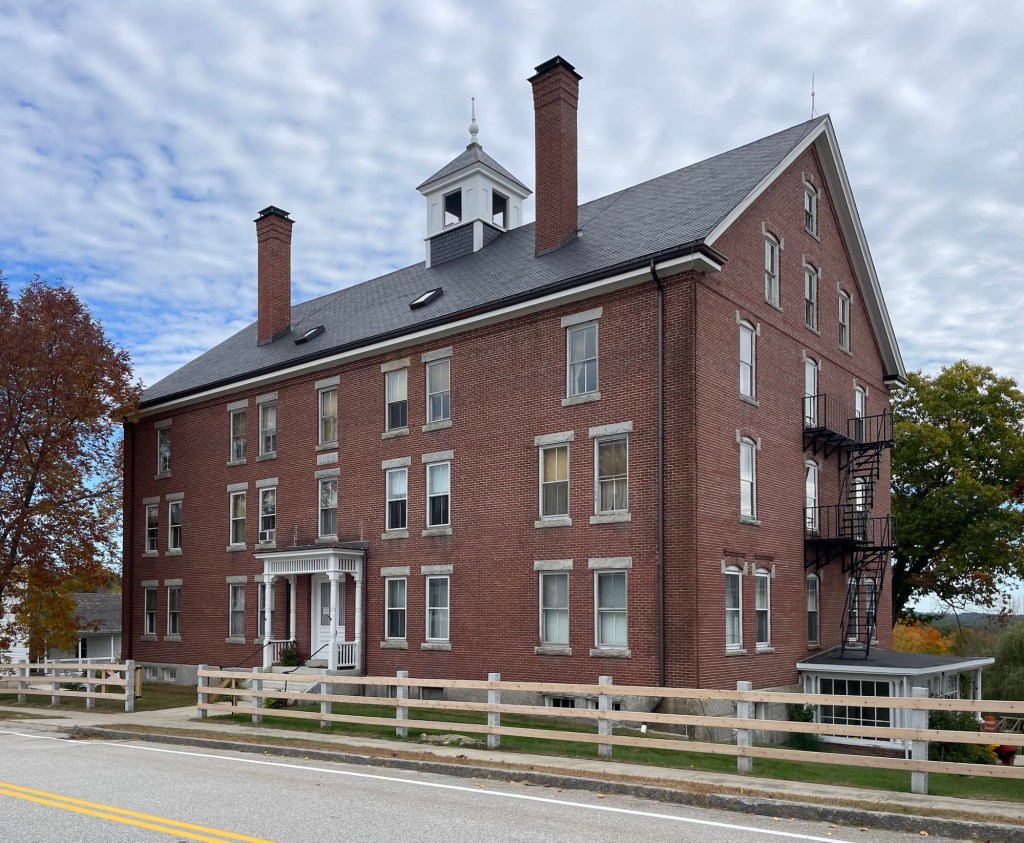
Located across the street from the Sabbathday Lake Shaker Meeting House in New Gloucester, Maine, this large, three and one-half story brick building has historically housed many of the active Shakers in the community. Built in 1883-4, the central dwelling house contains a self-contained town of rooms, including sleeping rooms, a chapel, music room, kitchen, and dining facilities. The building features granite lintels and sills and a square cupola at the roof. The building was designed by the Portland architects Francis H. Fassett and John Calvin Stevens.
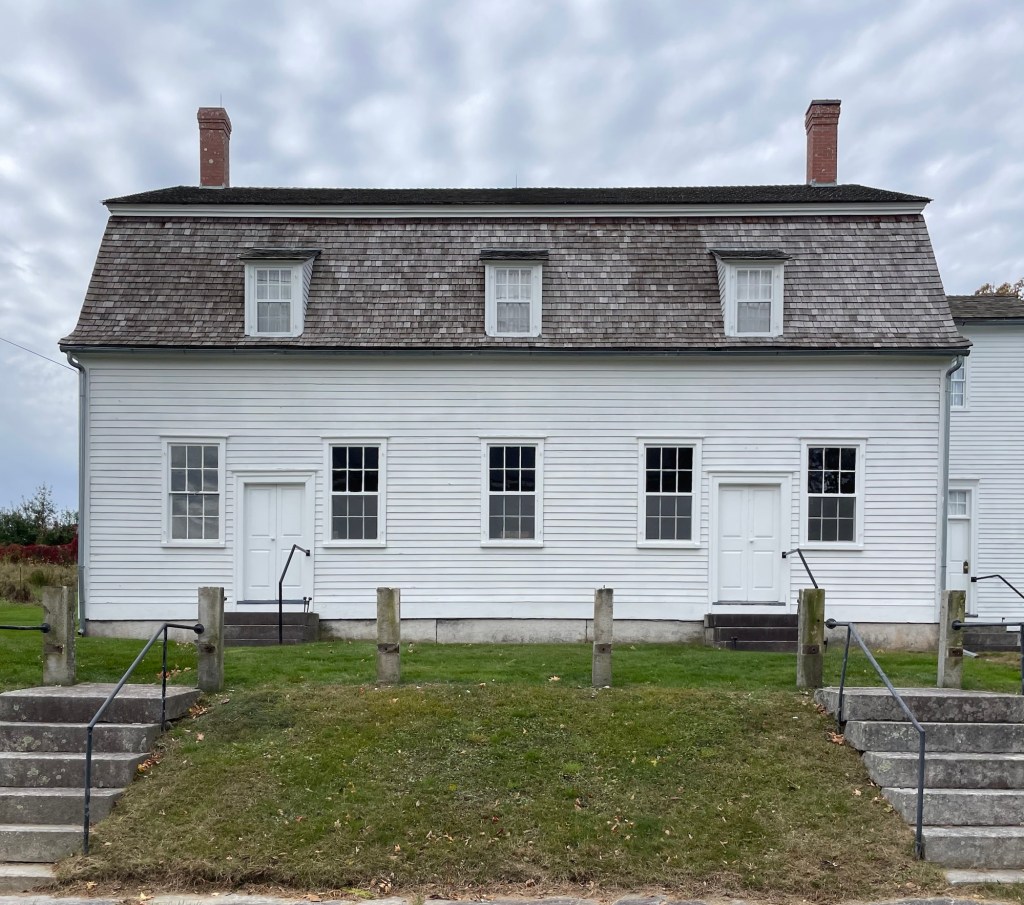
The last active Shaker community in the world can be found in New Gloucester, Maine. The Shakers migrated to Colonial America in 1774 in pursuit of religious freedom and developed from the religious group called the Quakers, which originated in the 17th century. Both groups believed that everybody could find God within him or herself, rather than through clergy or rituals, but the Shakers tended to be more emotional and demonstrative in their worship. Shakers also believed that their lives should be dedicated to pursuing perfection, continuously confessing their sins, and attempting a cessation of sinning, including sex and marriage. They built 19 communal settlements (so far I have featured two: Enfield Shaker Village and Canterbury Shaker Village) that attracted some 20,000 converts over the next century and maintained their numbers through conversion and adoption of orphans, numbers which have dropped to just three active members in 2024! The Sabbathday Lake community was established in 1782 and grew to a size of 1,900 acres with 26 large buildings by 1850. This building, the Shaker’s meetinghouse, was built in 1794 with all materials and labor supplied by the community. The small but significant structure remains a landmark in the community and is occasionally open for tours.
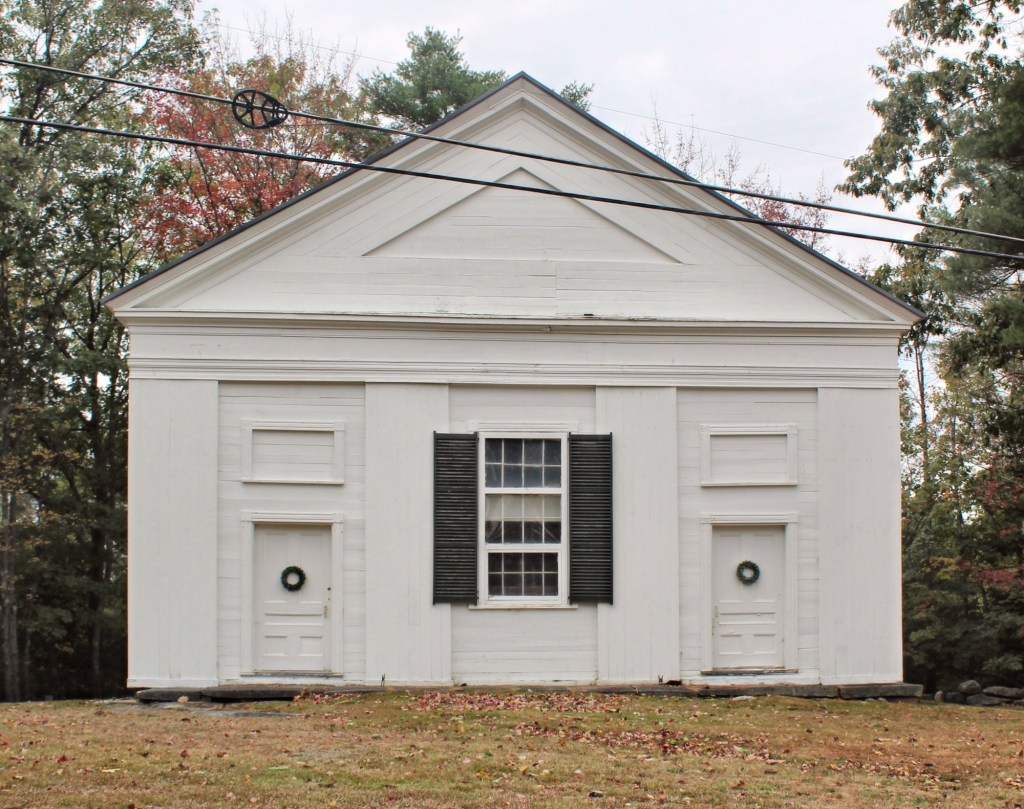
Constructed in 1839 by local carpenter/builder Jeremiah Cotton, the Universalist Meeting House of New Gloucester, Maine, is a dignified example of the Greek Revival style in a rural context. The First Universalist Society of Christians in New Gloucester was organized in 1805 with members drawn from nearby communities including those of Gray and Poland. In 1830, the congregation reorganized itself into the First Universalist Society of New Gloucester and Pownal. During its early history services were apparently held at various places in the community for it was not until November of 1838 that a meeting was called “…to take such measures for Building a meeting house as a majority of Subscribers or proprietors may think proper.” After World War I, membership began to decline and from the 1930s until the society’s demise in 1957 services were infrequently held. In 1969 the property was acquired by the New Gloucester Historical Society, who maintained and restored the building. The flushboard siding, fully pedimented gable, pilasters, and symmetrical façade containing two entry doors, all work together to display the Greek Revival style in a high-style example, but in a rural setting. The building appears to be opened periodically by the Historical Society.
Built in 1765 for Rev. Samuel Foxcroft (1734-1807), this grand two and a half story house was the first major frame dwelling in New Gloucester, Maine. Its large scale and such fine mid-18th century architectural features as the triangular doorway pediment and quoins at the corners make this a house befitting the community’s first minister. Born in Boston in 1735, Foxcroft was the son of the Rev. Thomas Foxcroft, pastor of the First Church of Boston from 1717 to 1769. The younger Foxcroft graduated from Harvard in 1754 and answered the call of the New Gloucester Congregationalists ten years later, a brand new town in the wilderness of Maine. He was ordained in the blockhouse, a defensive structure from attacking native peoples, in January of 1765 and continued his ministry in the town until 1793, having the first purpose-built meetinghouse completed in 1773. The last years of his life were spent in poor health and he died at his home in 1807 at the age of 72.
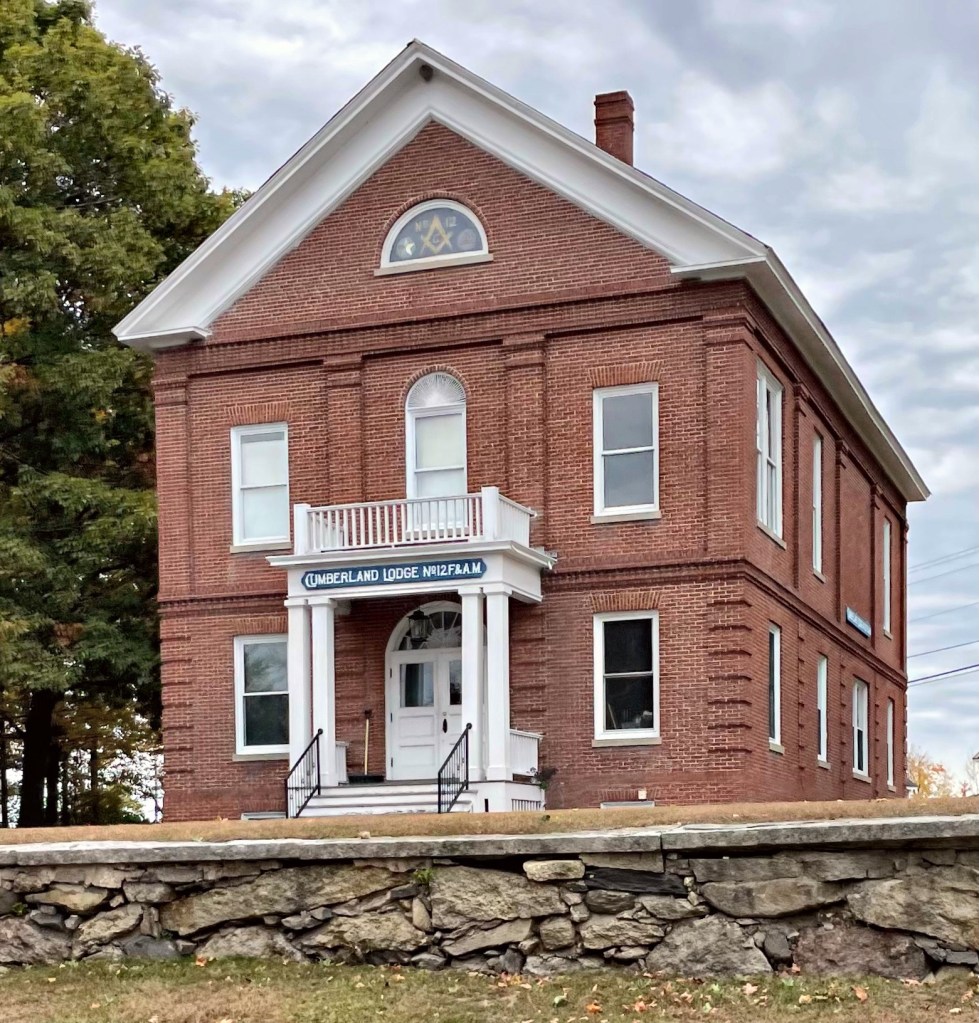
Built in 1902 and dedicated in June 1903, the Cumberland Lodge of Ancient, Free and Accepted Masons #12 is located at the corner of Route 100 and Bald Hill Road in New Gloucester, Maine. The building was constructed as a centennial celebration of the local Masonic Lodge chapter’s founding a century earlier. The impressive and detailed brick structure exhibits engaged brick pilasters and a stained glass lunette (half-round) window in the gable. The building is still occupied and owned by the local Masons who hold meetings in the hall.
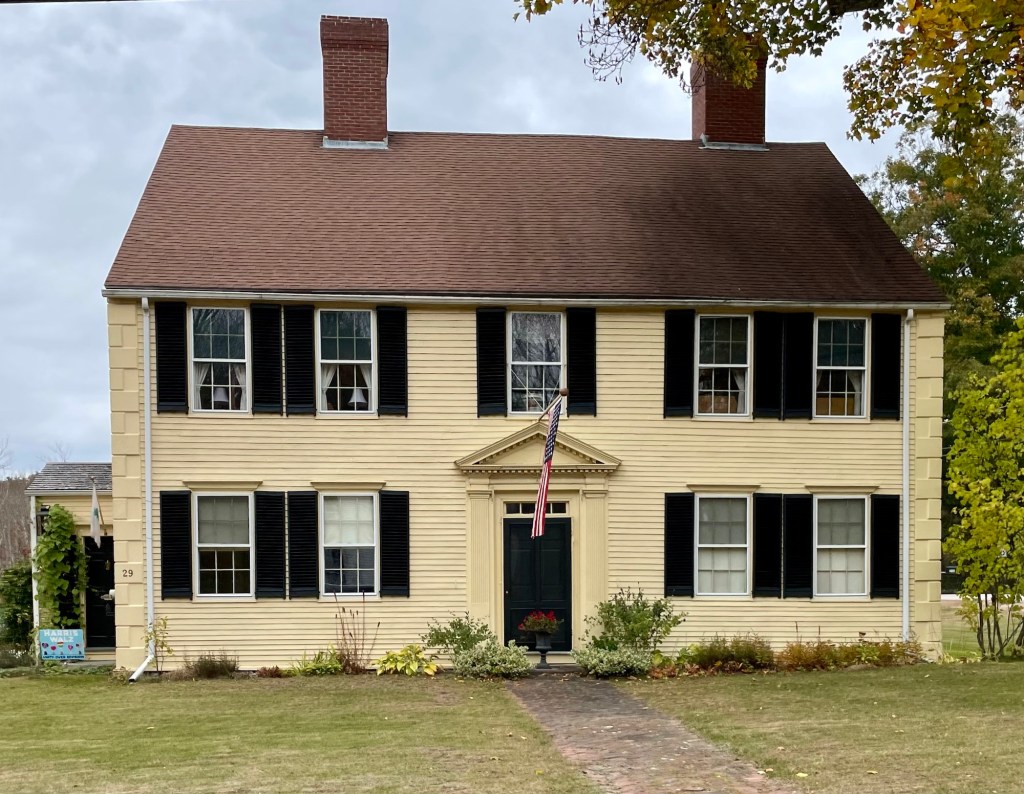
This important Federal-period house sits in the middle of New Gloucester village in Maine, and dates to the early 19th century with mid-19th century alterations. The original owner was Obediah Whitman, who sold the house soon after to General Samuel Fessenden (1784-1869) lived here while practicing law in New Gloucester. He was an avid abolitionist who served as a congressman and in 1828, he declined the presidency of Dartmouth College. The General’s son, William Pitt Fessenden, resided there from ages three to fourteen. William later became a U.S. Senator and Lincoln’s Secretary of the Treasury. The third notable owner was artist, Delbert Dana “D.D.” Coombs, who used the second floor for his studio for some years. The update from the mid-19th century of the modest bracketed eaves and two-over-one windows showcases how later owners can update a home without diminishing the original design.
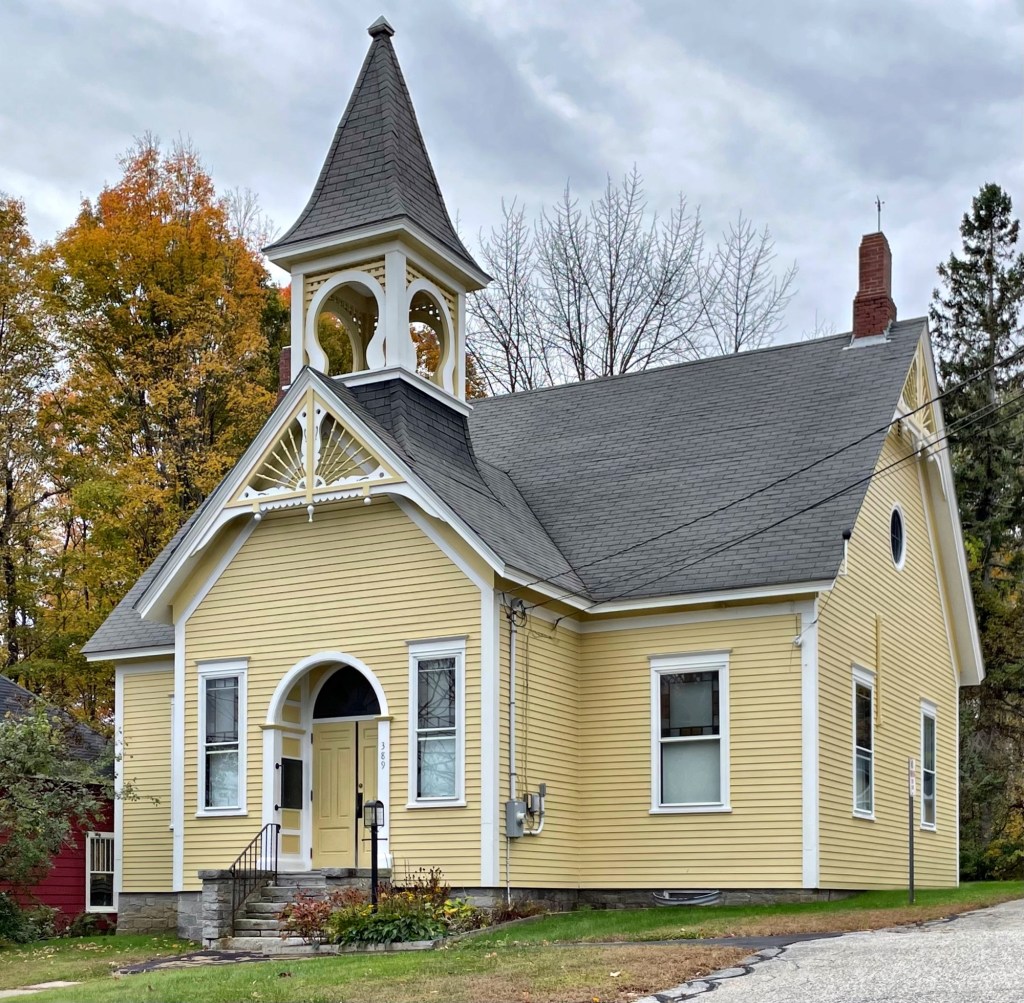
The original New Gloucester Public Library is located in the central village of New Gloucester, Maine, and is one of the finest architectural buildings in the town. The library was established in 1888 when voters passed a resolution to establish a public town library as before this, a private, social library existed here. A committee was chosen to purchase books and make decisions for expenditures and staff. The library was originally located in the town hall building, and was supported by an annual poll tax of 50 cents. The first librarian was Helen A. Moseley, with a salary of $50 a year, she remained the town’s librarian until 1920. By 1895, the library had grown to more than 2,100 volumes and it was decided a new, purpose-built library was needed. That next year, a lot was purchased and this Victorian style building was constructed adjacent to the Town Hall. The wood-frame building has a decorative central section with recessed, arched entry and gable with decorative Stick style ornament. Additionally, a tower protrudes from the roof, giving the building additional whimsy. The library was eventually outgrown and relocated in the former High School, two buildings down the street. The old library has ever-since been the town’s meetinghouse.
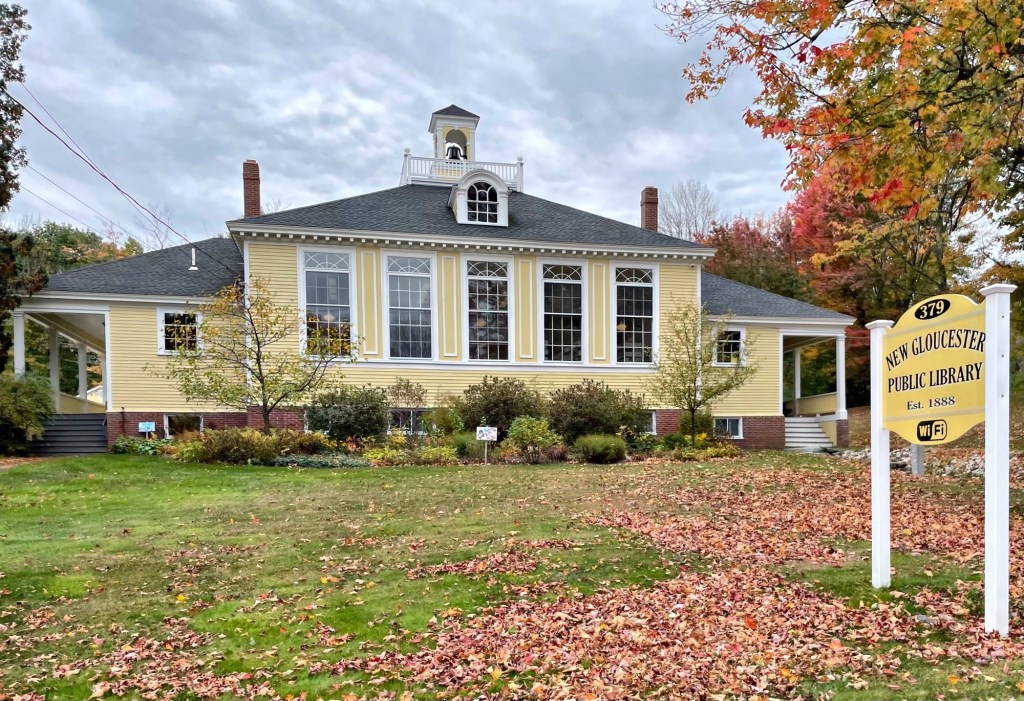
This building, the present New Gloucester Public Library, was originally constructed in 1902 as the town’s high school, a use that remained until 1962, when pupils would go to a modern school building in nearby Gray, Maine. The building is an excellent example of the Colonial Revival style with a symmetrical facade dominated by a row of multi-light windows separated by paneling, a segmental-arched dormer, and cupola at the roof with a bell. When the high school moved to its present location, this building sat vacant for some time and would be occupied by the New Gloucester Historical Society for storage and display of their collections until the public library moved into the building by the early 1990s.

 Buildings of New England