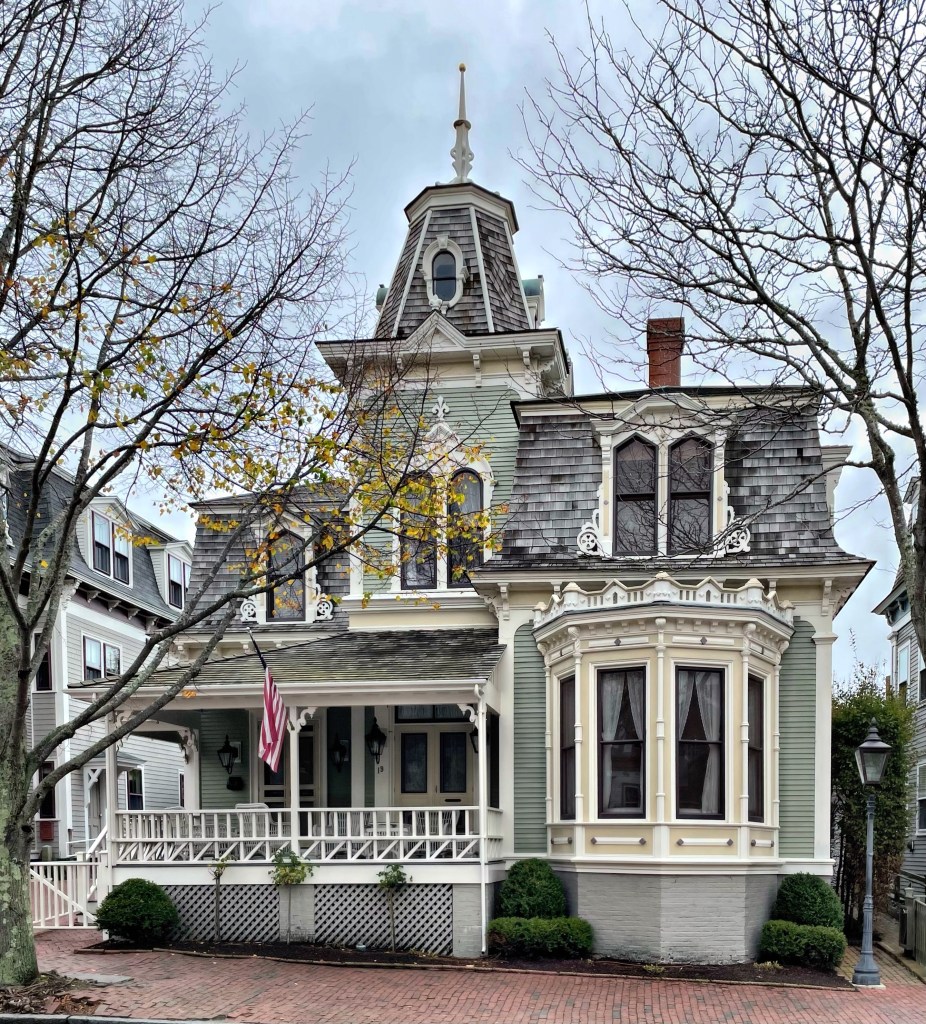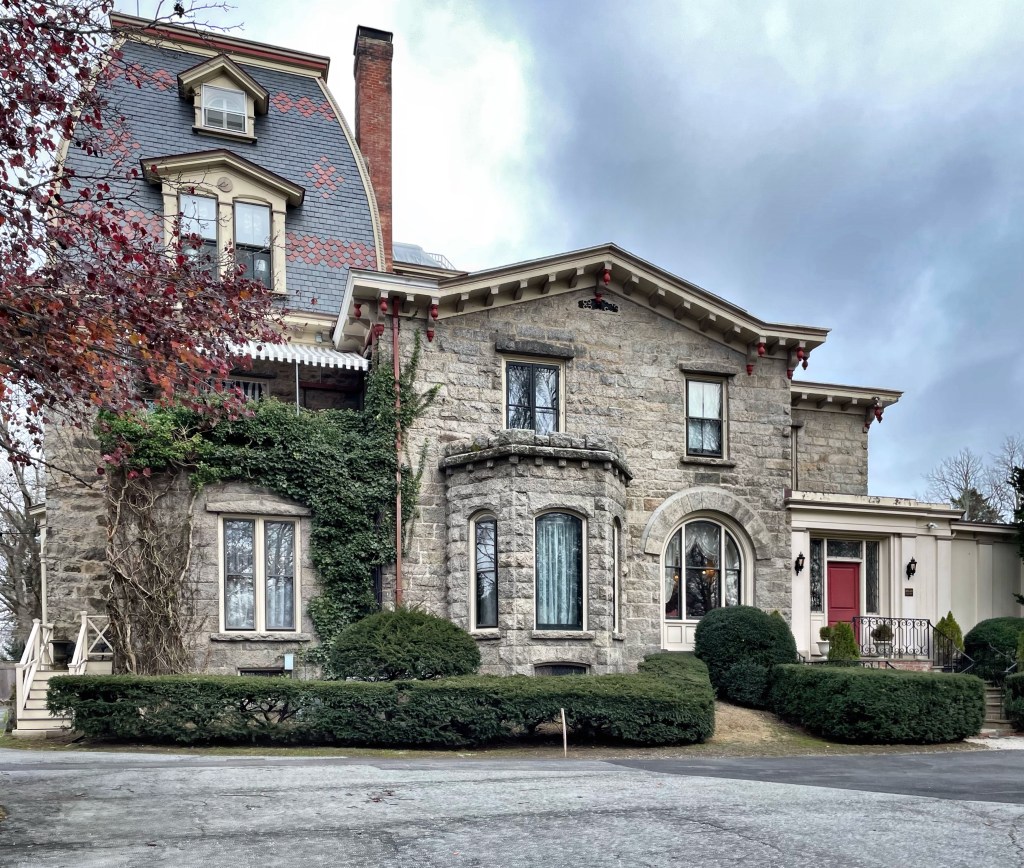
John D. Sanborn Mansion // c.1865

One of my absolute favorite homes in Rockport (there are many) is this mansion, which sits away from busy Bearskin Neck and the hustle-and-bustle of the village. The John Dearborn Sanborn Mansion was built around 1865 and is an elegant example of the Second Empire style of architecture in Rockport. John Sanborn was born in Hampton, NH, and eventually moved to present-day Rockport, marrying Laura Tarr of a prominent local family. Sanborn appears to have been a merchant and ship-owner. It appears that Sanborn was involved with the California Gold Rush, and is thought to have been one of the first men to send gold via the Pony Express, a mail service delivering messages, newspapers, and mail using relays of horse-mounted riders that operated from 1860 to 1861. It is possible that his investments with gold allowed Sanborn to build this stunning estate in Rockport, set behind an iron gate and perched upon a hill. I like to think that his wife Laura would sit in the tower and look towards the sea from the windows.

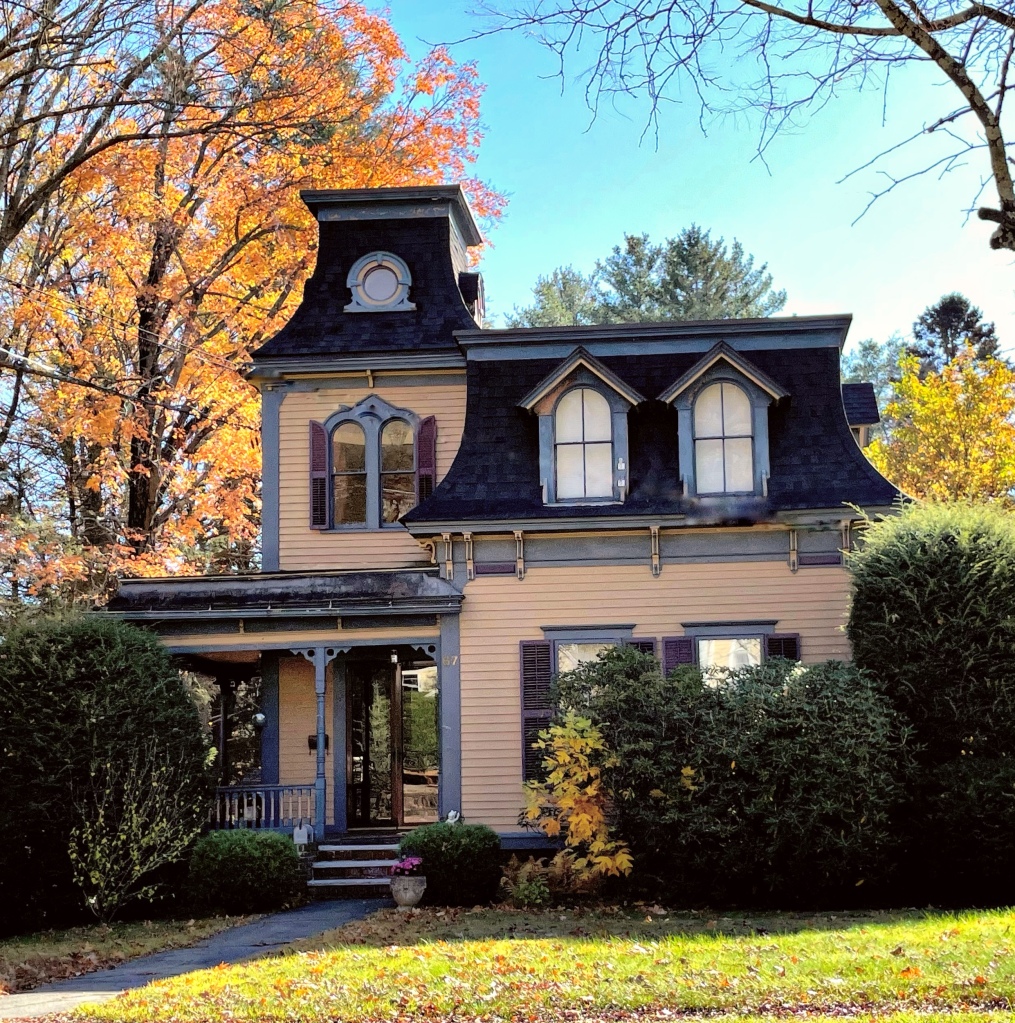
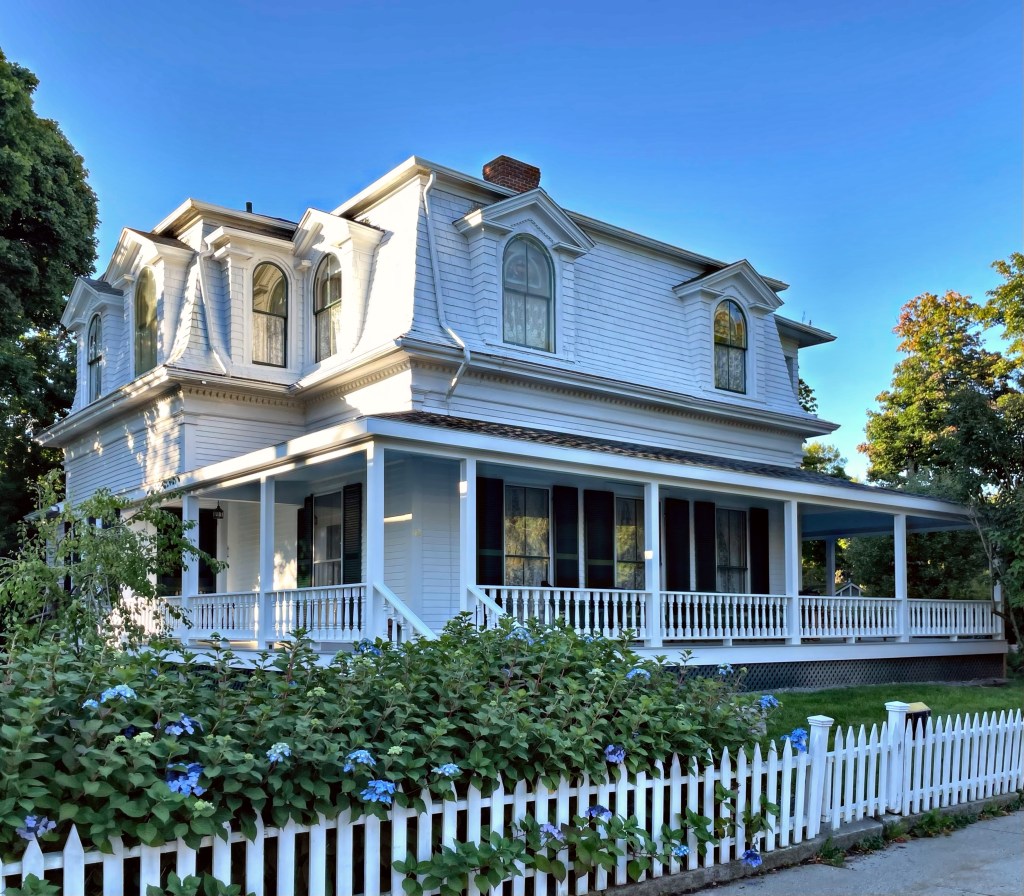
“The Kedge” // 1871

Built for an A. Veazie, this mini-mansard cottage stands out as the oldest home on Bar Harbor Maine’s beautiful West Street. The 1871 Second Empire style home was located elsewhere in the village, but moved to the current site in 1886 by new summer resident, William Sterling. The cottage was modified in 1916 by Maine Architect Fred Savage for William and his family. The stunning windows inset into the mansard roof are especially noteworthy.

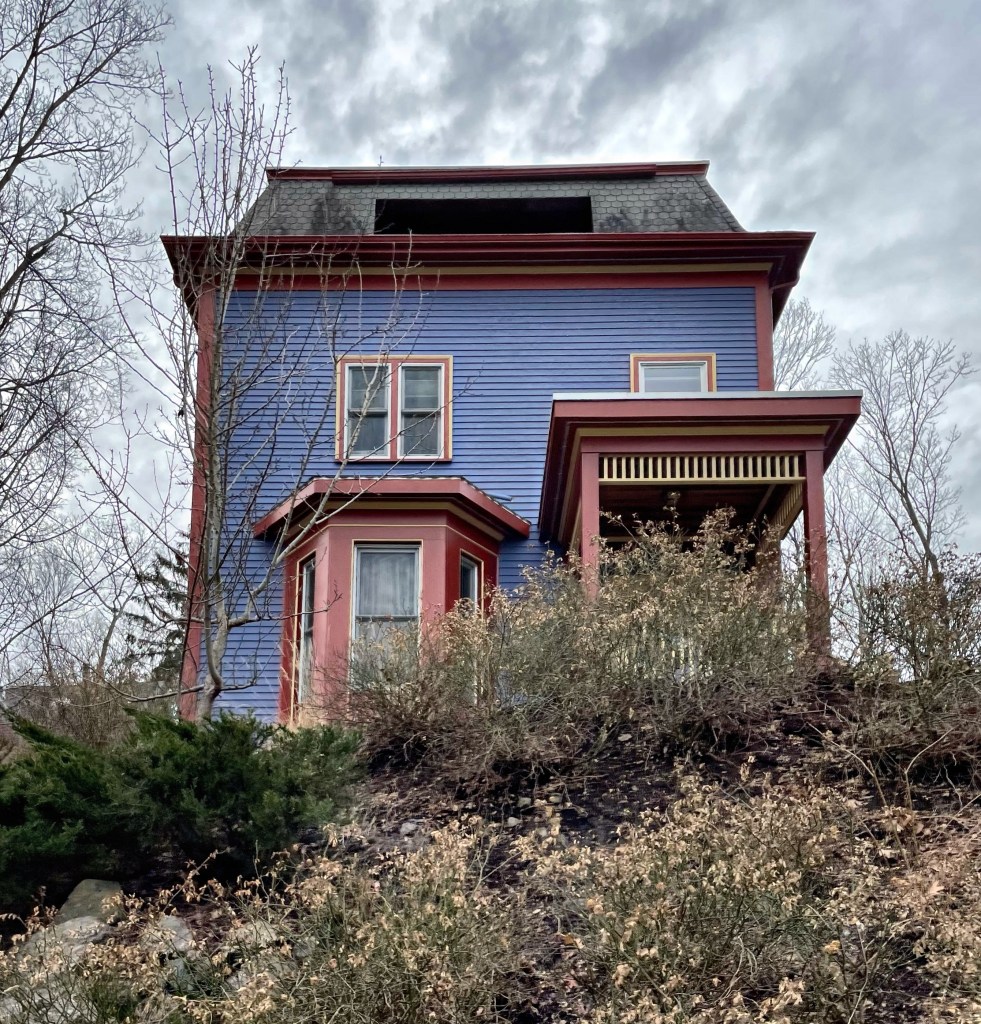
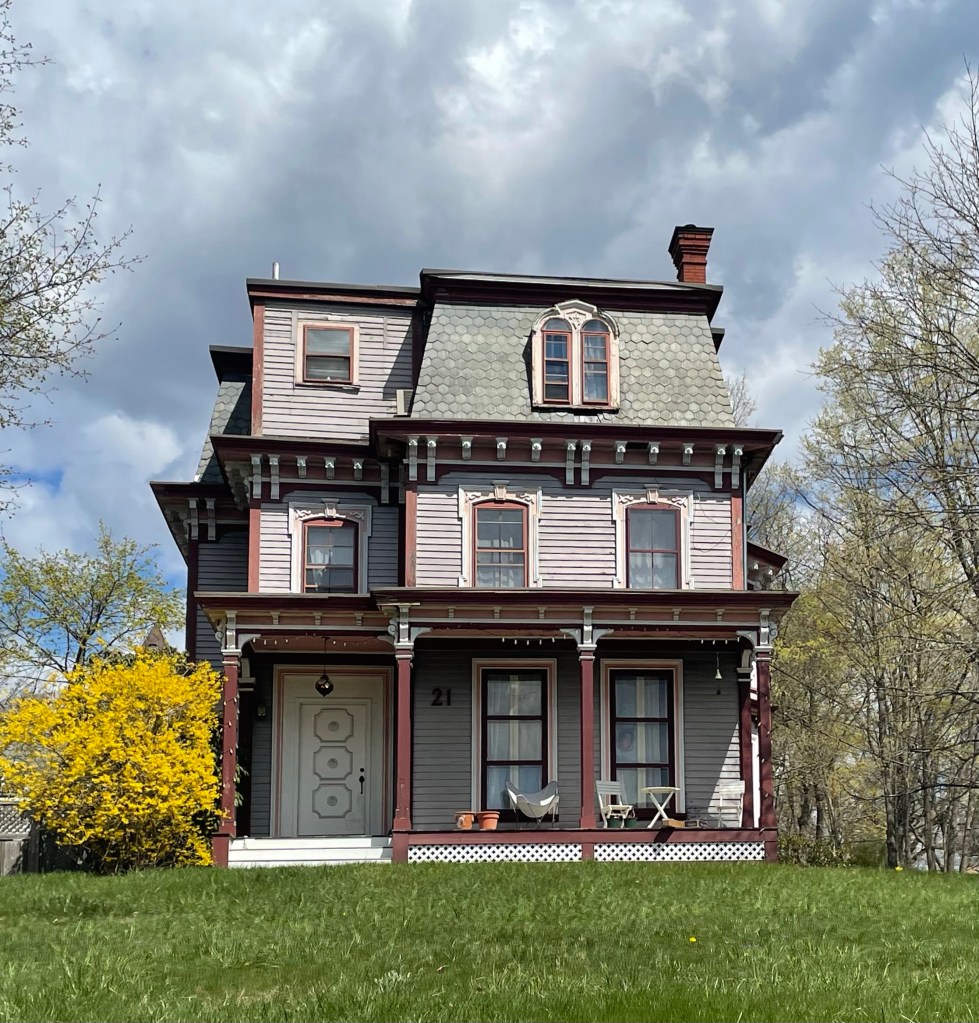
W. W. Dutcher House // c.1870

The Dutcher Temple Company was incorporated in 1867 and founded by Warren W. Dutcher in Hopedale, MA. Dutcher was an extremely ingenious inventor, taking out 20 patents, mainly on temples and machines by which to manufacture them. Temples are adjustable stretchers used on a loom to maintain the width and improve the edges of the woven fabric. The company merged with Draper later on, but after Dutcher built this stunning Second Empire home perched atop a hill. What is your favorite part of this house? The roof and dormers? The porch? The paint scheme?

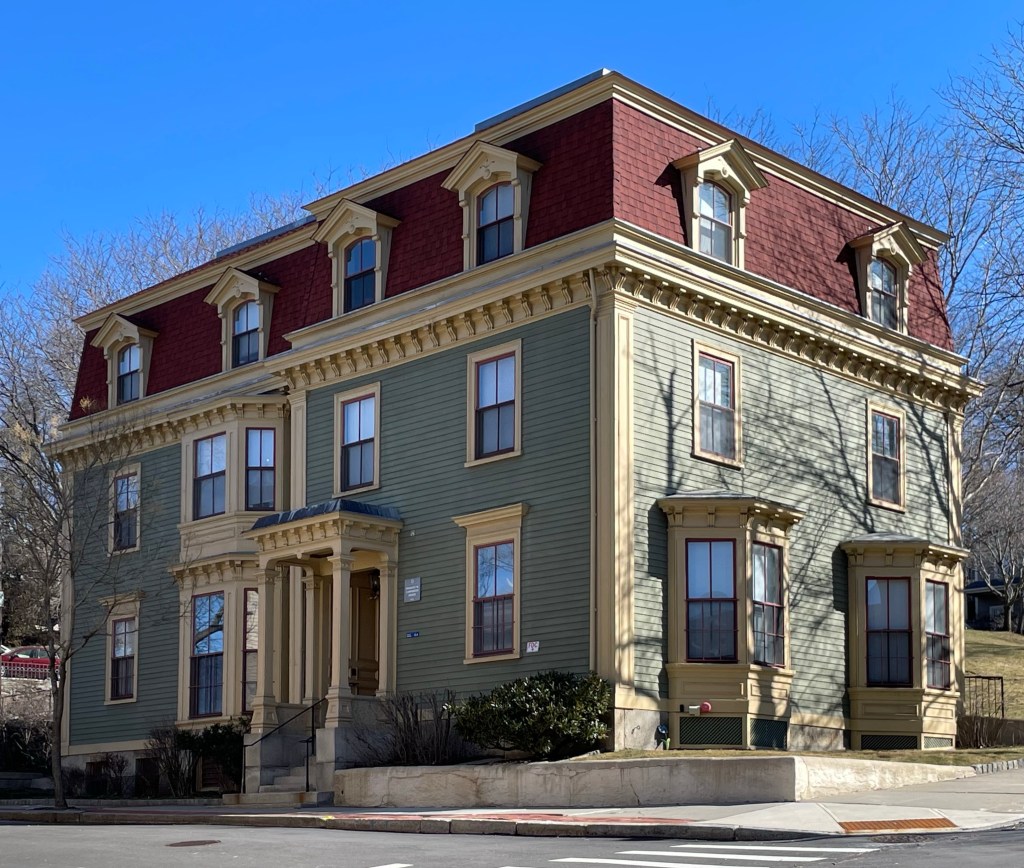
Jones & Wetherbee Houses // 1873

In 1873 Elnathan Jones, Jr.(1829-1904) purchased house plans from a friend in Groton, adapted the plans, and built these two houses, in Acton. One home for himself, and one for his business partner Jonathan Wetherbee (1832 1926). Also near these two houses is the Tuttle House (featured last), in a different style. All three of these men were family by marriage, and ran businesses in the village of South Acton. The Jones and Wetherbee houses were built as sister houses, identical; but over the years, the Jones House has seen some unsympathetic alterations which diminish its architectural significance. The Wetherbee House (yellow) retains its original detailing and corner, towered mansard roof.

Hooper Mansion // 1860

Located on Commonwealth Avenue in Boston’s Back Bay neighborhood, the Hooper Mansion represents one of the most elegant examples of Second Empire architecture style in the city. This home was actually constructed as a double-house for Samuel Hooper and his wife Anne, with a separate, semi-detached home for his son and his own family. The double-mansion was designed by esteemed architect Arthur Gilman, who used pressed brick contrasted with the tan sandstone on the home. Additionally, he designed the dentillated cornice, lavish door and window surrounds, and octagonal bays, all capped with a mansard roof with many windows laid inset to the roof, a stunning feature. The house was designed symmetrically, with entrances on each side elevation. In the early 1890s, later owners extended the eastern half of the façade so that it would be on the same plane as the western half, with an entrance at street level (seen in the right of this photo). Today, the double house is broken up into four large condominium units. When the conversion was approved, the developer wrote into the deed that the open space at the corner, used as a garden, would remain open space in perpetuity.

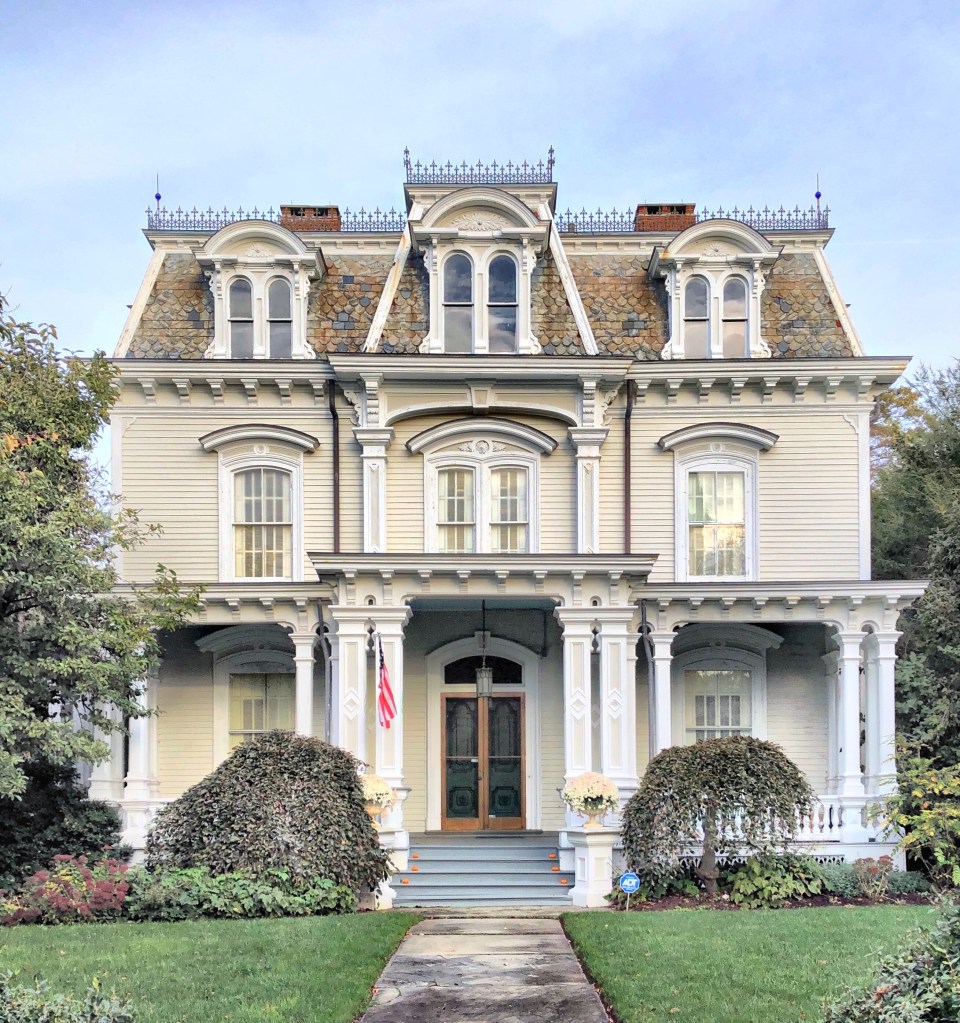
Mary Pomeroy House // 1868

Mrs. Mary Pomeroy, the widow of one of Southport’s industrious and wealthy shipping merchants, Benjamin Pomeroy, built this large residence for herself and her daughters, soon after her husband’s death. Mr. Pomeroy was a merchant who also served as a Senator. In 1866 with ailing health, he took a doctor on a private ship to try various remedies in the West Indies, to no avail, he died at 48 years old. Ms. Pomeroy appears to have taken the money her and her husband had saved and built a large mansion to cement her position in town as the most eligible bachelorette in town. While she never remarried, she sure showed the town what good taste looks like! The facade of the Pomeroy house is symmetrical with a projecting three-story central pavilion, all surmounted by a mansard roof with cresting. Rounded dormers with twin round-headed windows pierce the roof’s multicolored slate surface, making this Second Empire house one of the nicest in a town full of historic homes!

Henry P. Kent House // 1871

Located on South Main Street in Suffield, Connecticut, this stunning Second Empire mansion showcases the tobacco wealth seen in the town in the mid-to-late 19th century. In 1810, a Cuban man who seemingly drifted into town, was hired by a local farmer to grow tobacco and roll cigars for sale. Decades later, dozens of farmers in Suffield erected tobacco barns and cultivated tobacco to be rolled in cigars and sold. One of the first to box the cigars as a pack for shipping and sale was Henry Phelps Kent (1803-1887). Kent’s business did very well and he eventually hired local architect John C. Mead to design a mansion to display his success in business. The large Second Empire mansion features flush-board siding, full length porch, and a projecting mansarded tower with convex roof. The home was later owned by Samuel R. Spencer, a politician who served as a Lieutenant Governor of Connecticut, the first as a blind man. The home is now operated as a bed & breakfast “Spencer on Main”.