Located on the iconic Circuit Street in Oak Bluffs, this Eclectic Victorian cottage has a storied past related to Black history on the island. Even though Oak Bluffs was a relatively safe place for African Americans to be, there were still limits on their rights. In some parts of Oak Bluffs there were laws that said that certain property could only be owned by whites. The island became a vacation spot for thousands every summer in the 19th century and seeing a lack of options for Black travelers, Mrs. Georgia O’Brien and Ms. Louisa Izett began to operate an inn for people of color. The inn was one of two such residences in Oak Bluffs and has since been listed on the African American Heritage Trail of Martha’s Vineyard. The home has since been named the Tivoli Inn and retains much of the original gingerbread trim. In recent years, Martha’s Vineyard was given the nickname, “The Black Hamptons,” due to its popularity as a place for wealthy African-Americans to vacation, it remains a very diverse island in summer months.
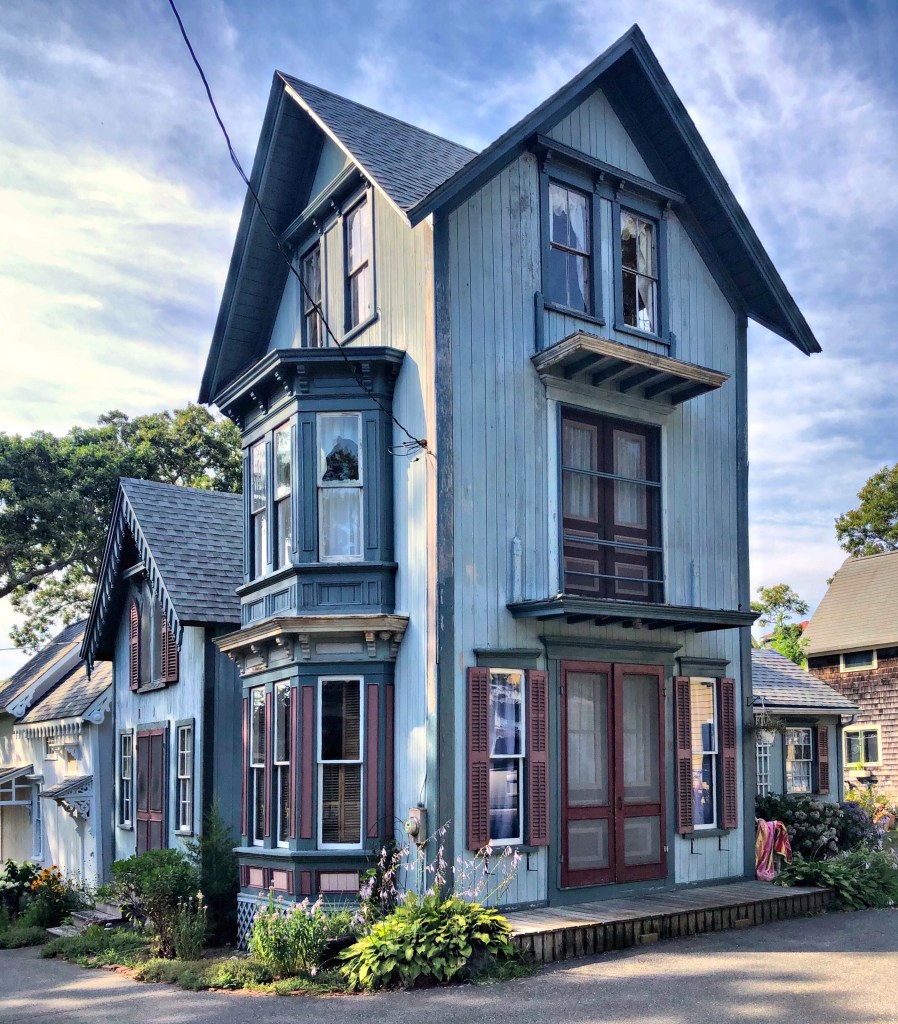
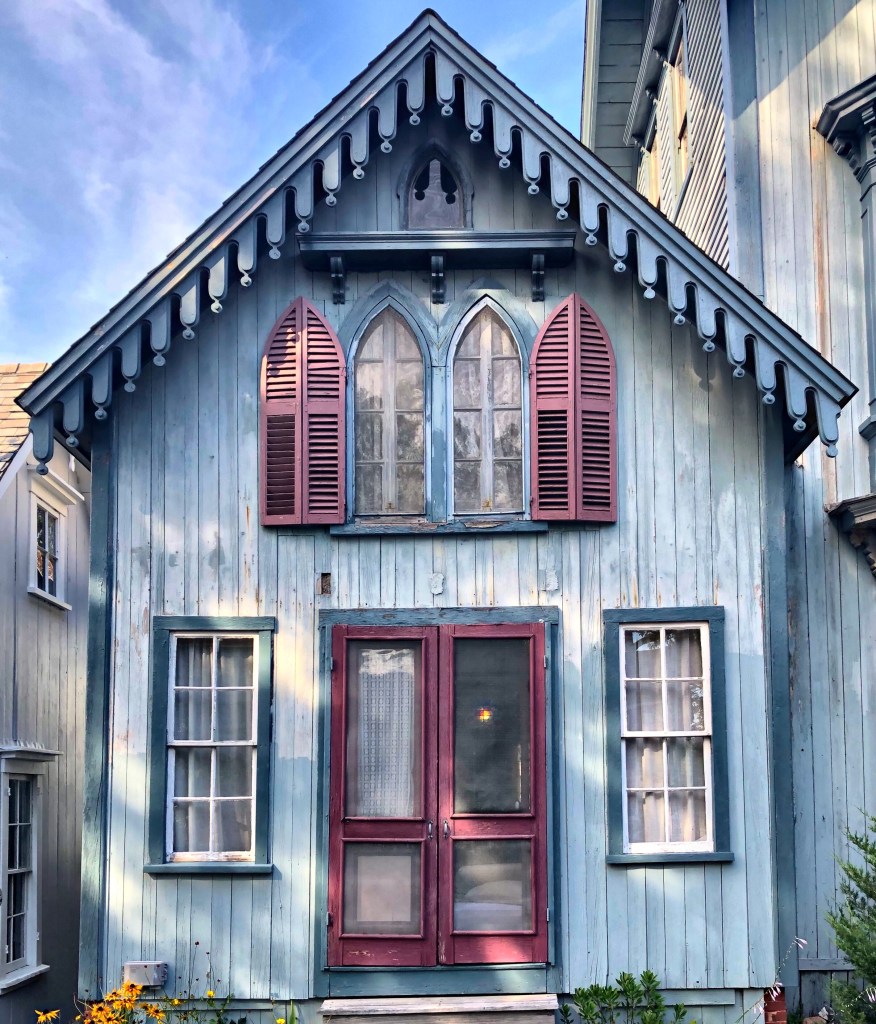
Tall Timbers is one of the more unique cottages in the Wesleyan Grove development, a religiously oriented summer community in Oak Bluffs on Martha’s Vineyard. The cottage was actually built in two phases. The small two story cottage was built first before 1870 and features gothic bargeboard, lancet windows, and paired doors. It was purchased around 1870 by William Newell, of Rhode Island, who had a three-story wing added to serve as a summer cottage. The addition is notable for the full-length vertical boards that rise through the entire three stories without a break like trees after harvesting, likely the inspiration for the name of the cottage. William Newell was a manufacturer of brass fixtures and ran a foundry in Central Falls in Rhode Island. Mr. Newell was active in politics and early in his career joined the cause of the anti-slavery party, which was likely solidified in his experiences in the ethnically diverse Martha’s Vineyard.
This stunning Victorian home in Oak Bluffs on Martha’s Vineyard was built in 1878 as a summer home for Oliver Ames (1831-1895), a businessman, investor and Governor of Massachusetts. Oliver Ames was the son of Oakes Ames, who is credited by many historians as being the single most important influence in the building of the Union Pacific portion of the transcontinental railroad. After his father’s death in 1873, Oliver Ames became the executor of his father’s vast estate and business dealings, and spent vast sums of money on properties in the places he lived including North Easton, MA, Boston and Martha’s Vineyard. He summered at this large home fronting the ocean in Cottage City, then a part of Edgartown. He decided to run for state senate in 1879, after he was unsuccessful in securing passage for the separation of the Martha’s Vineyard community of Cottage City, where he owned a summer house, from Edgartown. Winning election, he saw through the incorporation of the town (now known as Oak Bluffs). Ames served as the Governor of Massachusetts between 1887 and 1890, and continued to summer in his beachfront home during that time. The eclectic Victorian home blends many popular styles at the time from the Shingle style with the continuous shingle siding, the Stick style with the delicate stick-work at the veranda, to Queen Anne with its asymmetric massing and square tower.
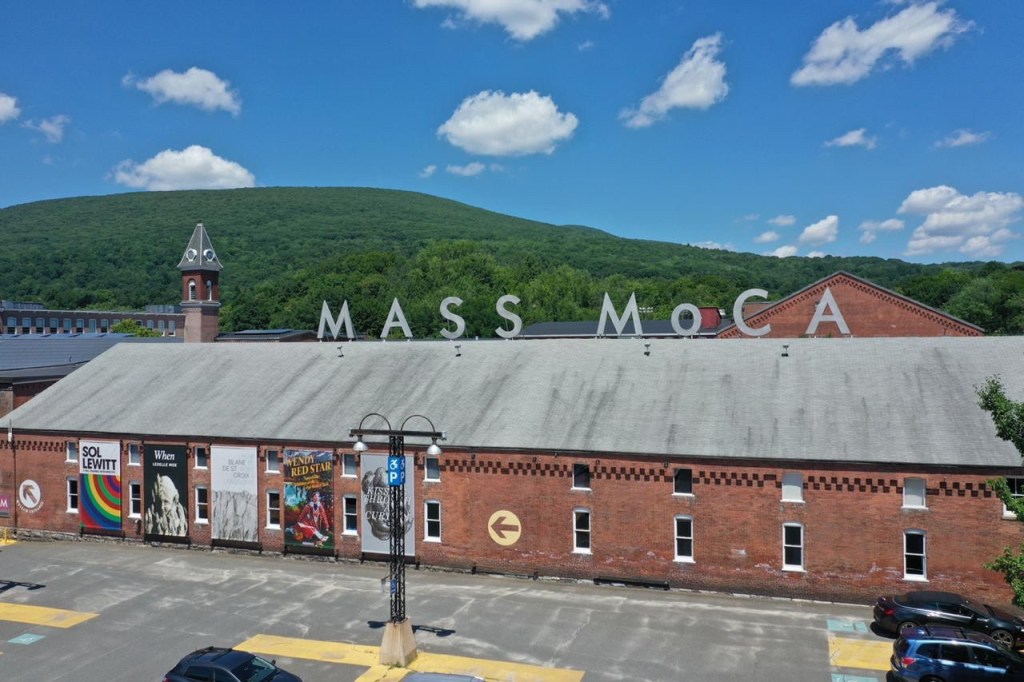
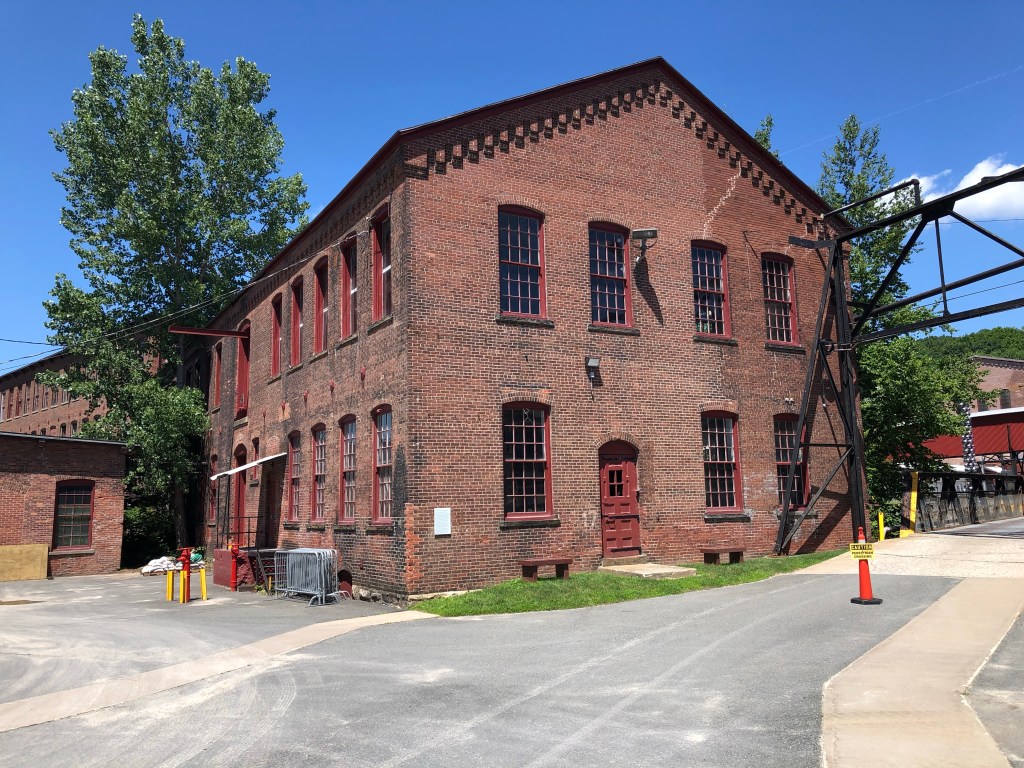
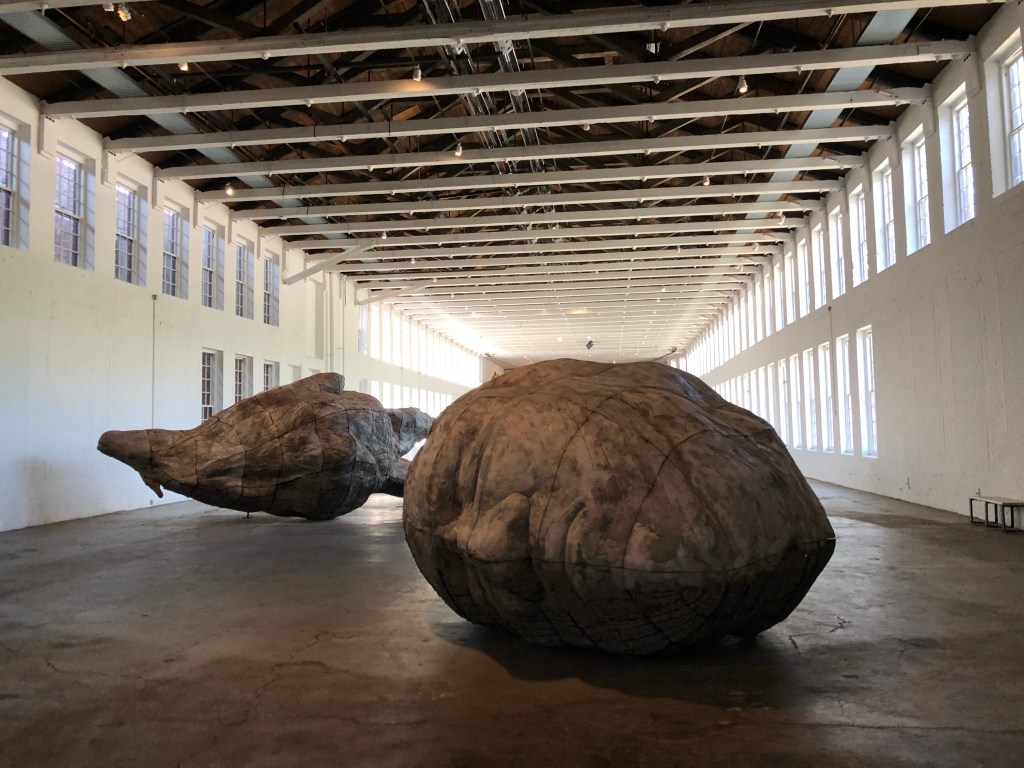
On a last-minute trip to the Berkshires, I couldn’t help but stop at the recently re-opened Massachusetts Museum of Contemporary Art (Mass MoCA) in North Adams. Being a huge nerd for industrial history and repurposed mills and factories, it was an absolute treat to walk through the large brick and steel buildings and wings lined with steel casement windows providing the perfect scenery for some amazing artworks. What is now known as Mass MoCA, – one of the premier art museums in New England – was once Arnold Print Works, a one time world leader in textile manufacturing with offices in New York City and Paris.
The Arnold Print Works were built on the Hoosac River near the center of North Adams. The company was the town’s largest industry during the city’s economic heyday from the Civil War until the early 20th century. The company was founded in 1861 by the John, Oliver, and Harvey Arnold, who began production of printed cloth at an existing cotton mill. At the dawn of the American Civil War, the newly formed company became flush with money due to government contracts for manufacturing Union Army uniforms. The company expanded after the war until a fire destroyed nearly all of the wooden buildings on the site. After the fire, a majority share of the company was purchased by Albert Charles Houghton, who became the first mayor of North Adams, and he oversaw the expansion and prosperity of the company, starting with new buildings of fire-proof construction.
By the early 20th century, many textile and cotton manufacturing shifted to the American South severely crippling the mill’s profits. In 1929, Sprague Electric Company moved to North Adams from Quincy, Massachusetts, and began buying the Arnold Print Works buildings. The print works moved much of its operation to nearby Adams and concentrated on a few particular products in its North Adams plant. The print works was finally sold in 1942 for just $1.9 million dollars, a far departure from its once prosperous past. The plant was shortly thereafter acquired by Sprague Electric Company.
While largely leaving the building exteriors as they were, Sprague made extensive modifications to the interiors to convert the former textile mill into an electronics plant. Sprague physicists, chemists, electrical engineers, and skilled technicians were called upon by the U.S. government during World War II to design and manufacture crucial components of some of its most advanced high-tech weapons systems, including the atomic bomb.
[Outfitted with state-of-the-art equipment, Sprague was a major research and development center, conducting studies on the nature of electricity and semi-conducting materials. After the war, Sprague’s products were used in the launch systems for Gemini moon missions, and by 1966 Sprague employed 4,137 workers in a community of 18,000, existing almost as a city within a city. From the post-war years to the mid-1980s Sprague produced electrical components for the booming consumer electronics market, but competition from lower-priced components produced abroad led to declining sales and, in 1985, the company closed its operations on Marshall Street.] (Mass MoCA History)
The complex sat vacant briefly before the Williams College Museum of Art, led by its director, Thomas Krens—who would later become Director of the Solomon R. Guggenheim Museum—advocated for a museum space for contemporary art that would not fit in traditional art galleries. The nearby Arnold Mills seemed like a perfect, yet daunting task to repurpose. Bruner/Cott Architects of Cambridge were hired to repurpose the mills and oversee the massive adaptive reuse project which today totals nearly 300,000 square feet of galleries and art venues.
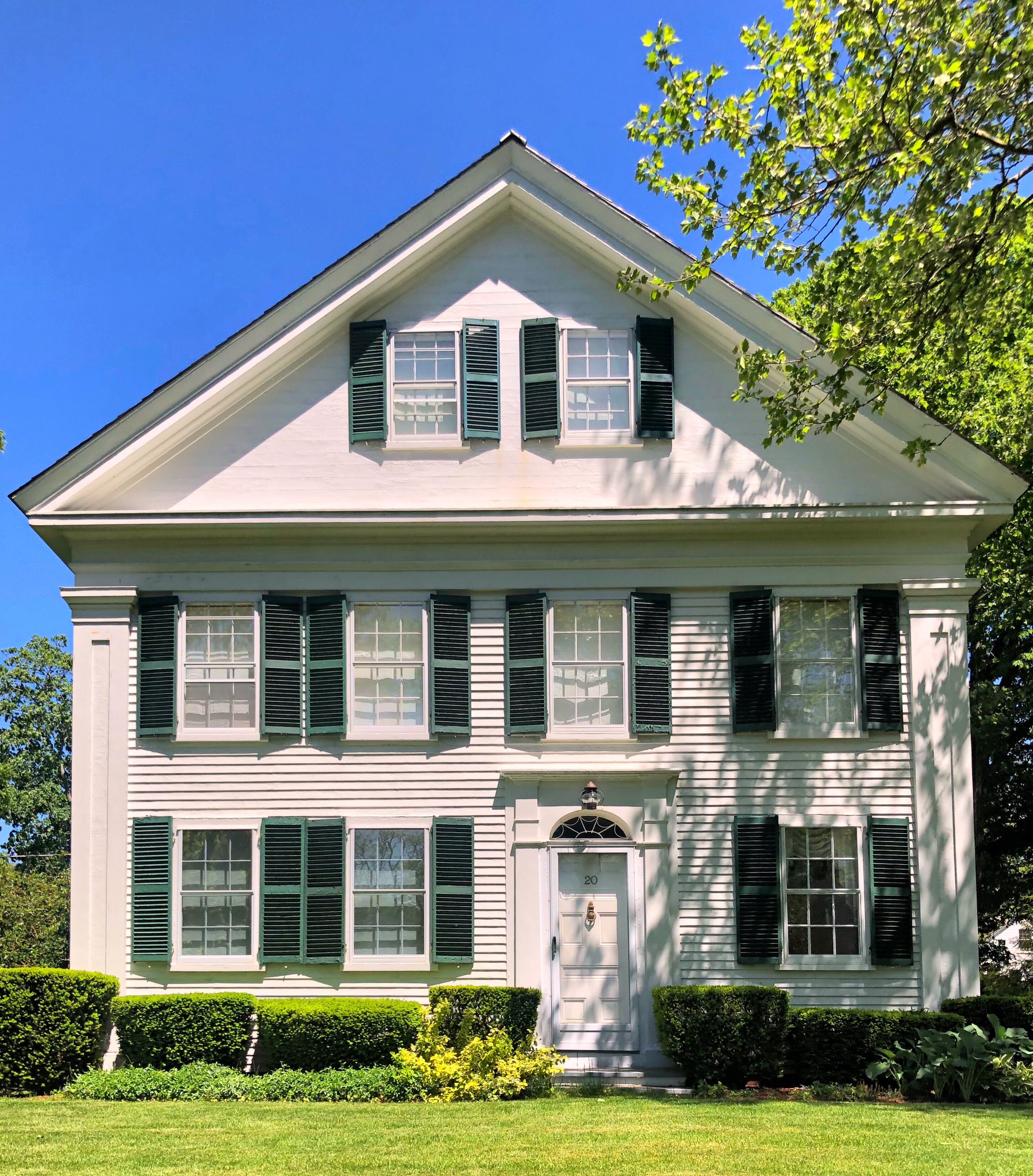
The gorgeous Reuben Nickerson House on Bridge Road in Eastham is an excellent example of a transitional Greek Revival home with hold-over features of the Federal style. Reuben Nickerson was born in 1814 on Cape Cod and worked as a farmer and saltmaker, he later served as a senator, school committee member, and representative. He was married twice; first to Elizabeth Doane who died in 1849, and he remarried Elizabeth’s sister Sarah Doane just a year later. By the 20th century, the home was operated by descendants of Reuben as a funeral home and residence. After WWII, the home was a bed and breakfast and has since been reverted to a single family home. Detail on the home includes: wide, paneled pilasters, boxed, molded cornice, a pedimented gable, a 2-part wide frieze, and a fanlight at the entrance.
Built in 1793, the Eastham Windmill on the old Town Green is the oldest workable gristmill on Cape Cod. Typical of Cape Cod, Eastham’s windmill is an octagonal , “hat and smock” or Flemish design in which the revolving top or hat can be rotated to direct the sails into the wind. Local historians contend that Thomas Paine, a noted early millwright and resident of Eastham, most likely built the Eastham Windmill in the late eighteenth century. Some sources state that the windmill was likely built in Plymouth and later moved to Truro and eventually to Eastham in 1793. In 1895, the women of the Village Improvement Society raised money to purchase the windmill and two adjoining properties from private ownership for $ 113.50. Around the turn of the twentieth century, the windmill became a local tourist attraction and the subject of postcards and souvenirs. The windmill is now the main attraction of the annual Eastham Windmill Weekend.
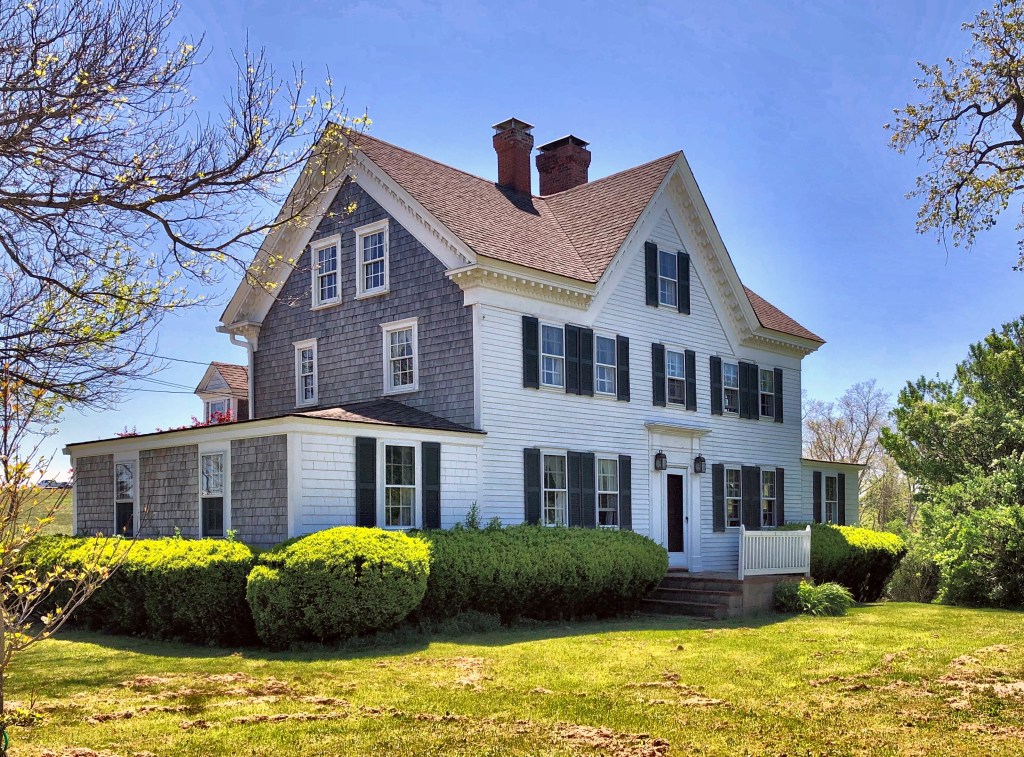
Located just a stones throw from the Penniman House, the c. 1780 Knowles House stands at the historic end point of Fort Hill Road. Accounts differ on its history. Some sources explain the home was built in c.1790 by Seth Knowles (who died in 1787) a prominent citizen of Charlestown, Mass., and one of the original members of the Bunker Hill Monument Association and of its board of directors. From my research, the home appears to have been built for Thomas Knowles, Seth’s son, and was later willed to his son, also named Thomas. Thomas Knowles Jr., was born in 1803, in Eastham, and in early life settled at New Bedford, engaging in the whale fishery industry. Deed research would be required to find out more. The gorgeous Federal home features a large, center cross gable with dentils at the cornice.
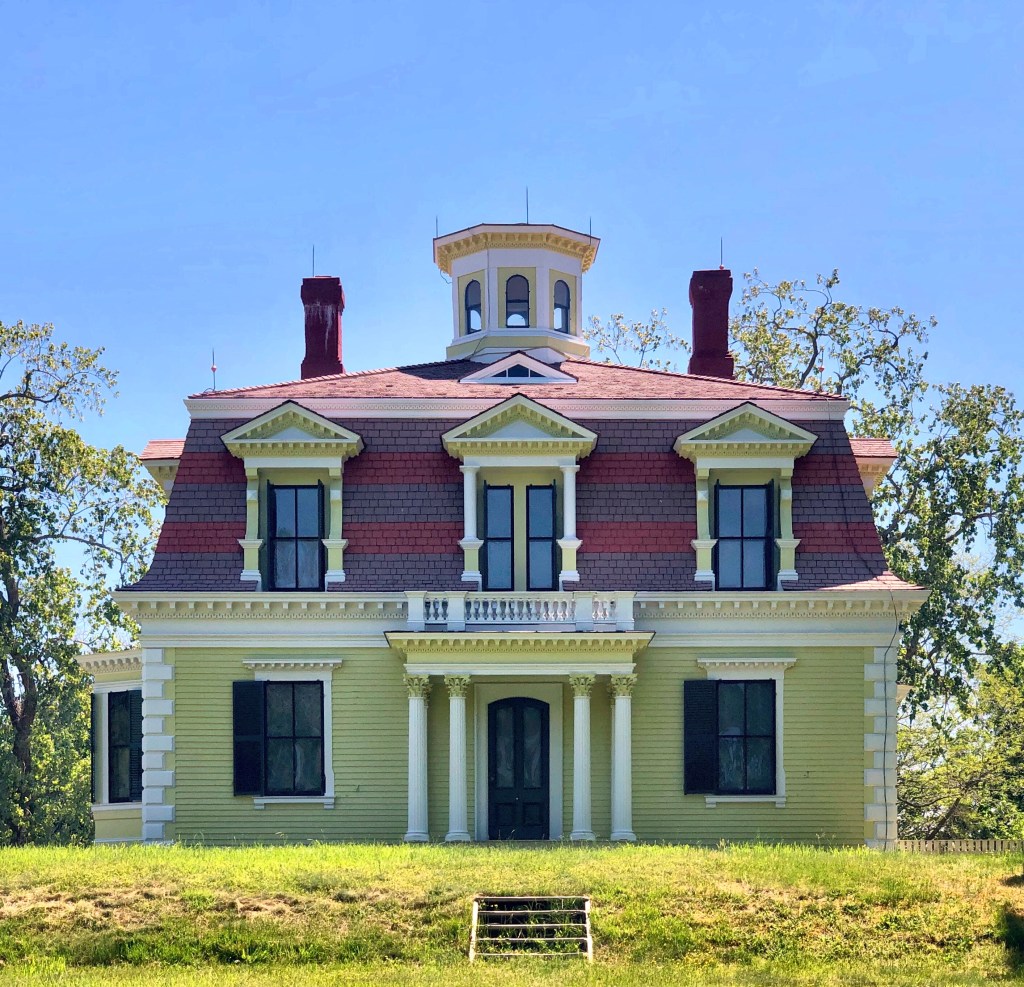
The Edward Penniman House is the finest example of Second Empire style in Eastham, and is one of the finest examples of this architectural style on Cape Cod. The grand home was designed and occupied in 1868 for Edward Penniman (1831-1913), one of the most successful whaling captains in New England.
Born in 1831 in Eastham, Edward Penniman set sail for the first time at age 11. The voyage was to the dangerous and unpredictable waters of the Grand Banks, a rich fishing ground off the coast of Canada’s Newfoundland. Nantucket had a flourishing whaling industry as early as the late 1600s, but it was New Bedford with its deep water harbor and railway system that would become New England’s whaling capital. In 1852 at the age of 21, Penniman would journey to New Bedford and sign on to his first whaling expedition. Later when Penniman became a captain he would select New Bedford as his home port setting sail seven times to hunt whales.
With whale over-harvested in the Atlantic along the shores of New England, whalers were forced to go further and further from home to hunt. Whaling expeditions often spanned three or four years, and it was not uncommon for wives and families of ship captains to go along on the trip. Penniman’s wife, Betsy Augusta Penniman, called “Gustie” by her husband, went on three such voyages often assisting with navigation and other shipboard matters. In addition, each of the three Penniman children accompanied their parents on various journeys with eldest son Eugene eventually becoming a whaling captain himself.
After the Captain’s death in 1913, Mrs. Penniman and their daughter, Betsey, continued to live in the home. Mrs. Penniman’s died in 1921. Betsey Penniman, who never married, stayed around and raised her niece, Irma. Upon Betsey’s death in 1957, the home was left to Irma Penniman Broun. Irma and her husband sold the house with twelve acres to the National Park Service in 1963 when the Cape Cod National Seashore was formed.
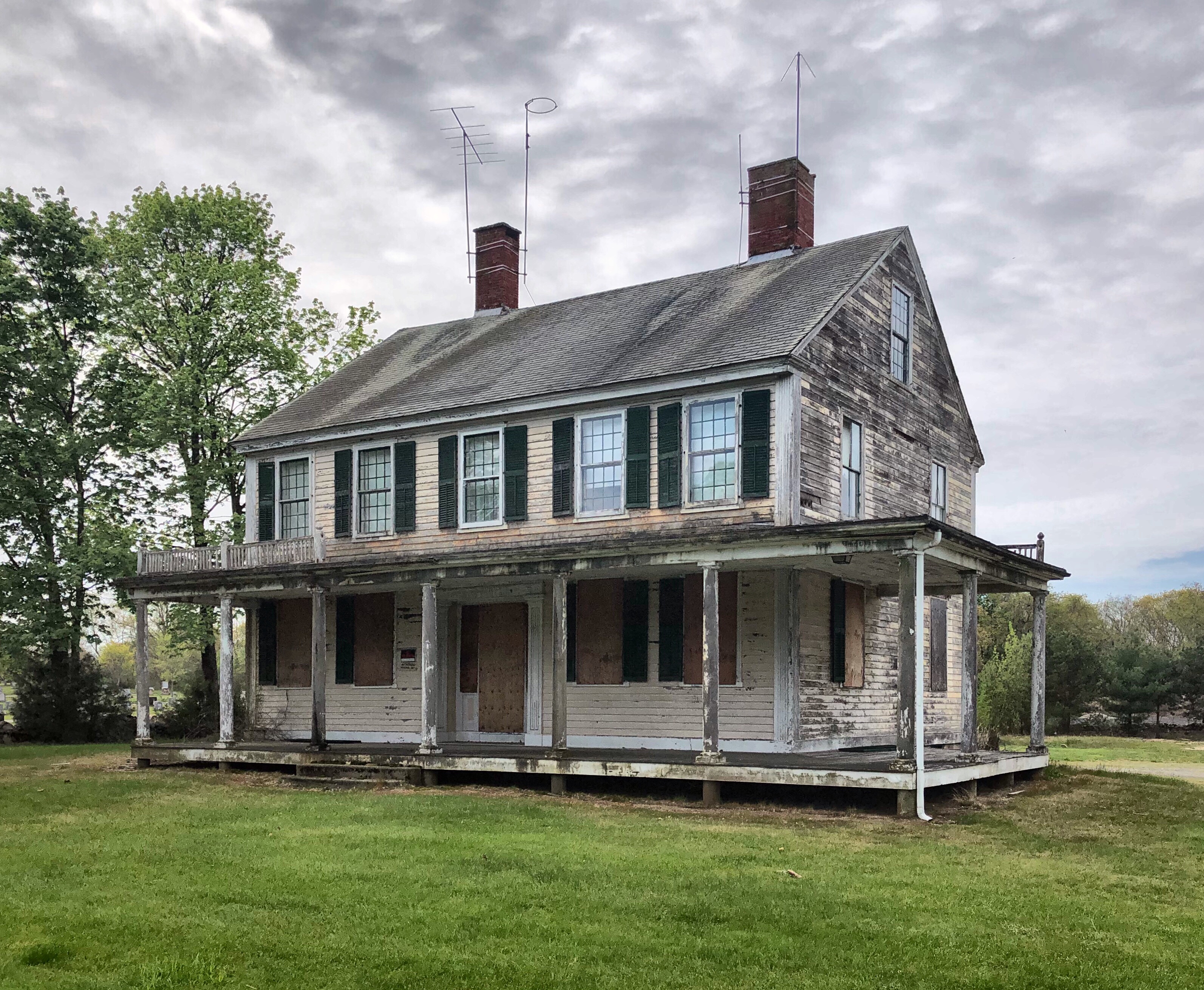
This old farmhouse in Swansea, MA, was built by 1820 for Preserved Gardner (1795-1873), one of five sons of Peleg Gardner, who owned much of Gardners Point. Preserved lived in the home until his death in 1873, and the home and acres of farmland were willed to his only son to live past childhood, Ira Gardner (1836-1901). Ira donated a large tract of land adjacent to the farmhouse to the town in 1882 for a cemetery, in which his father was buried. Later, the farm was purchased by Thomas D. Covel a bank president of Fall River who operated it as a gentleman’s farm and made the house his summer home. A ‘gentleman farmer‘ utilized their farms for pleasure rather than for sustenance or profit. After WWII, the land was purchased by the town to be used as a park and the property is still owned by the town. The Federal home with its veranda that wraps around the side has been neglected by the town for decades while the parks adjacent are maintained adequately.
The town has weighed various options for the home ranging from demolishing it, to preserving the front facade and converting it to a garage and storage shed (with a small museum on the second floor). I hate that idea personally. This seems like an ideal candidate for the town to allow a private individual or developer to move the home and restore it back to its original grandeur. Thoughts?




 Buildings of New England