Elias Danforth House // 1832

On the southern end of Center Village in Lancaster, MA, this gorgeous late-Federal style home holds a stately presence built into and atop a sloping hill. The home was built for Elias Danforth (1788-1868) in 1832 and has been so little-altered in the nearly 200 years since. The house features amazing full-length side porches with bold columns, an early sign of the emerging Greek Revival style. The home sold a couple years ago for just over $600,000, which is a STEAL for the location and high-quality house and interior. Wow!

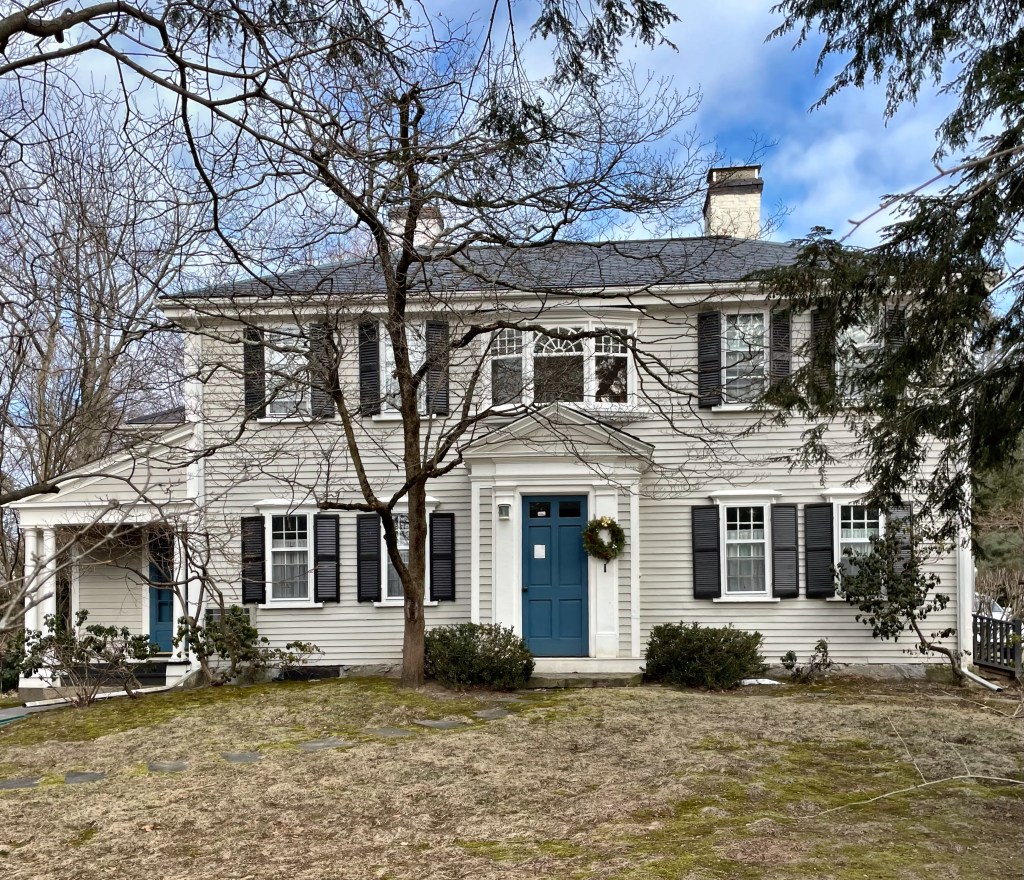
Jonas Whitney House // c.1803

This stunning old house in Lancaster was built in the early 19th century for Jonas Whitney (1772-1846), who acquired the land from his father, who lived across the street. The home was likely built as a wedding gift to his new bride, Mary Hawkes when they married in 1803. Jonas worked as a carpenter, and possibly built his house himself. The house is symmetrical with five bays. A classic door surround with batten door oozes charm, with the massive central chimney providing warmth throughout the house during the cold New England winters. I need this house!

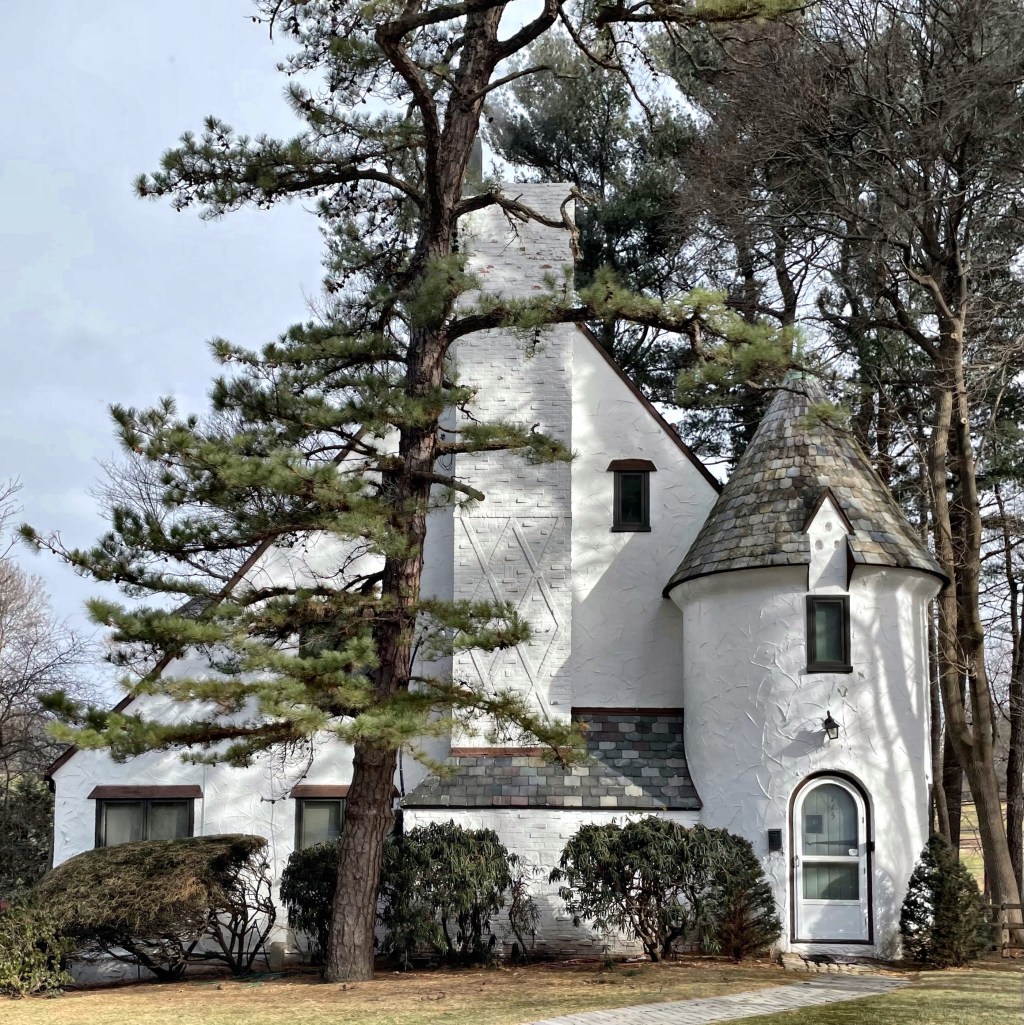
Lancaster Industrial School for Girls Chapel // c.1840

The Lancaster Industrial School for Girls was a self-sustained campus of housing, dining, farming, and functional buildings giving the State of Massachusetts little need to worry about its day-to-day function or funding. In 1838, the First Universalist Society in South Lancaster (then known as New Boston), built a house of worship for members living there. When the southern part of Lancaster reincorporated as the separate town of Clinton, members of the church relocated a short distance to the new manufacturing-oriented community for prosperity. This church was closed, but was purchased by the Industrial School for Girls, who moved the building 1.5 miles to their campus, for use as a chapel. The building was added onto and altered a couple times, but has sat deteriorating since the school closed.

Safford House // 1799

Located in Lancaster, Massachusetts, the Thomas Safford House has stood for over 220 years, but is slowly decaying. Built in 1799 for Thomas Safford, a baker, the house is an excellent example of a Federal-style homestead that appears much like it did when built (besides the neglect). After two subsequent owners, the property was purchased in 1890 by Pauline Revere Thayer, a direct descendant of Founding Father, Paul Revere. Pauline added a large wrap-around porch and balcony to the house, which served as a vacation home for working girls from Boston. She appropriately named the house “Goodrest” where the girls could enjoy their summers, without working in poor conditions. After she died in 1934, the property was acquired by the Commonwealth of Massachusetts as the residence for the head of the Lancaster Industrial School for Girls. The Lancaster Industrial School for Girls was a reform school and the country’s first state reform school for girls, opening in 1856. This school paved the way of social reform, moving away from child imprisonment for “delinquents” towards a correctional paradigm. This was in part achieved because of the observed benefits of environmental change in children, as well as the importance of education. The bucolic, open-air setting was believed to be beneficial for childhood development, compared to a prison setting common before-hand. In 1935, the Safford House was restored to the original appearance, and the porches removed. The State of Massachusetts owns this house and the rest of the severely deteriorating buildings on the campus. It is a shame to see such significant buildings intentionally left to rot.

Lancaster Industrial School for Girls – Rogers Cottage // 1855

The Lancaster Industrial School for Girls in Lancaster, Massachusetts, was was established in 1854 as one of the most progressive correctional institutions of its day, and the first in the U.S. for girls. Throughout the 19th century, state governments struggled with how to best deal with youthful law-breakers and vagrants. Some states began to provide correctional facilities, often known as “Industrial Schools,” while other states continued to incarcerate “delinquents” in prisons alongside adults who often were charged with much more heinous crimes. Institutions like the Lancaster Industrial School led the way in social reform, copying a cottage system created in France that emphasized a wholesome, family-like atmosphere and the opportunity to rise above the “low life” slums from which Victorians assumed delinquent children came from. All girls who were under 17 years old at the time of commitment, were housed in one of eight “cottages” where they would each have their own rooms and chores. The Rogers Cottage seen here was one of a handful of the earliest cottages, all identical in design. Matrons and teachers taught the girls the domestic arts, including how to cook and sew. The Industrial School closed in the 1970s and has been used in an ever-diminishing role by the State of Massachusetts ever since. There have been talks about this complex being sold for redevelopment with some old buildings saved, but I am not holding my breath.

North Village Fire Station // 1888

After sharing the old Central Fire Station building in Lancaster (last post), I couldn’t help myself but to share another mini-mansard fire station constructed in town! Located in North Village, this station was built in 1888, and provided fire service to the more rural part of town. The wood-frame structure features a central tower which may have been used originally as a hose-drying tower. In the 1940s, the building was occupied by volunteers of the Ground Observer Corps, an American civil defense organization. The building’s tower provided unobstructed views of airspace where one could keep their eyes open for invading German aircraft. After the War, the Town of Lancaster sold the building, which then converted to a private residence. Sadly, a fire in 2015, damaged much of the interior of the building, but she survives!

Lancaster National Bank – Central Fire Station // 1836

Located on sleepy Main Street in Lancaster, Massachusetts, this cute mini-mansard building caught my eye immediately, and I had to take a picture! The building was constructed in 1836 for the Lancaster National Bank. The brick building was just one story with storefront windows and a central entrance, and was the only bank in the small town. When the neighboring town of Clinton saw a large increase in population due to industrial growth, the Lancaster National Bank decided to relocate to be closer to a larger clientele. They sold this building to the Town of Lancaster in 1882 and moved out. Within a year, the town added the mansard roof to the building, being careful to preserve the original cornice (now where the brick meets the roof), and converted the building to a fire station with double doors. The Central Fire Station was in operation here until 1967 when a new building was built nearby, with doors large enough to easily house modern engines. The building was then used as storage and offices for the Lancaster Water Department. Sadly, the replacement fire station doors really diminish the appeal of the building.

Delano-Clapp House // 1735

My favorite Georgian style house in Rochester, MA is the Delano-Clapp House set far off the street, behind a stone wall. The house was built in 1735 for Jonathan Delano, a weaver. Jonathan’s son, Jonathan, Jr., sold the house and land to Ebenezer Clapp, in 1755. The property remained in the Clapp Family for nearly 250 years, when it sold out of the family in 1990. This house is testament to the fact that you can find great architecture in every corner of New England!

Rochester Grange Hall // 1924

The Grange, officially named The National Grange of the Order of Patrons of Husbandry, is a social organization that encourages families to band together to promote the economic and political well-being of the community and agriculture. Grange Halls can be found in rural towns and villages all over New England, and historically served as a gathering place to discuss agriculture-based business, crops, trade, and issues faced in the community. The Rochester Grange Hall was constructed in 1924 to the designs of architects Brown and Poole of New Bedford, MA and is of the Craftsman style. The National Grange has sharply declined in membership since the late 19th century. In 2013, the Grange signed on to a letter to Congress calling for the doubling of legal immigration and legalization for undocumented immigrants currently in the United States. The Grange now emphasizes an expansion in the H-2A visa program to increase legal immigration and address the crisis-level labor shortage in agriculture.

Haskell House // c.1854

One of the more high-style houses in rural Rochester, Massachusetts, is the Weld-Haskell House. The house was built around 1854 in the Italianate style for a recently widowed Susan Haskell. Susan was the daughter of Jesse Haskell, who was a state representative and served in the War of 1812, and a descendant of one of the town’s earliest colonial settlers. The home remained in the Haskell family until the second half of the 20th century.