Pawtucket Hair Cloth Mill //1864

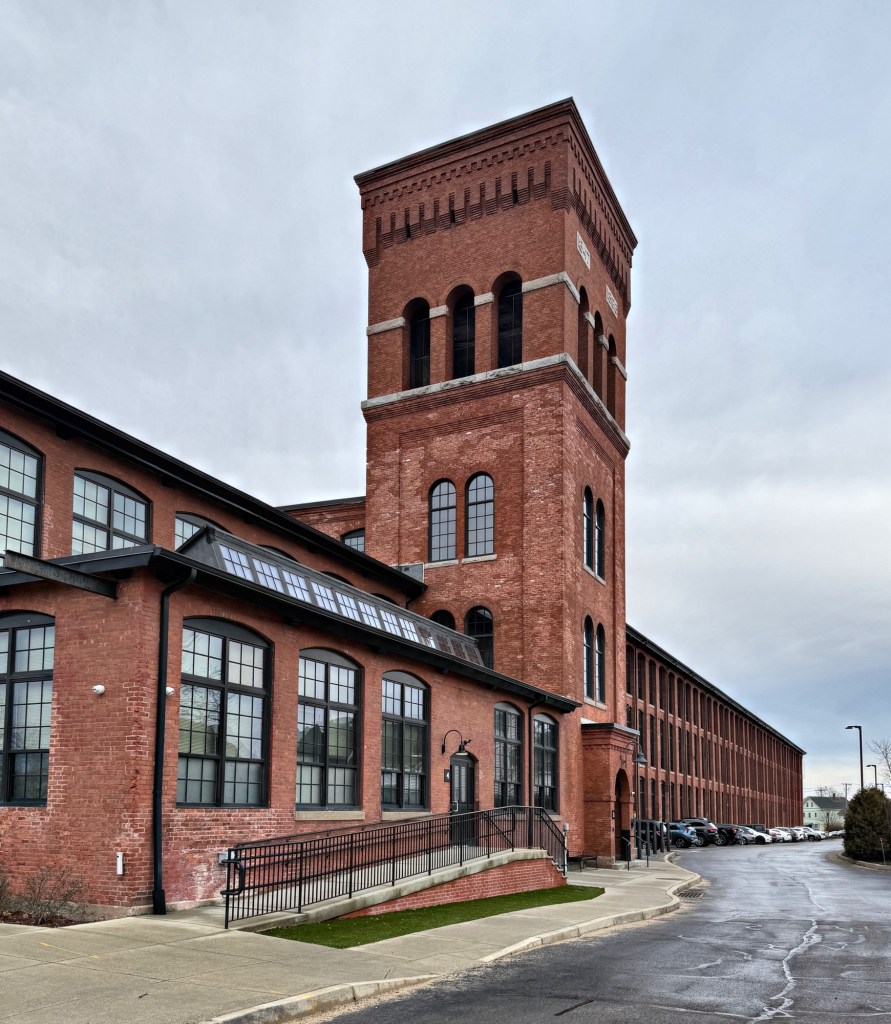
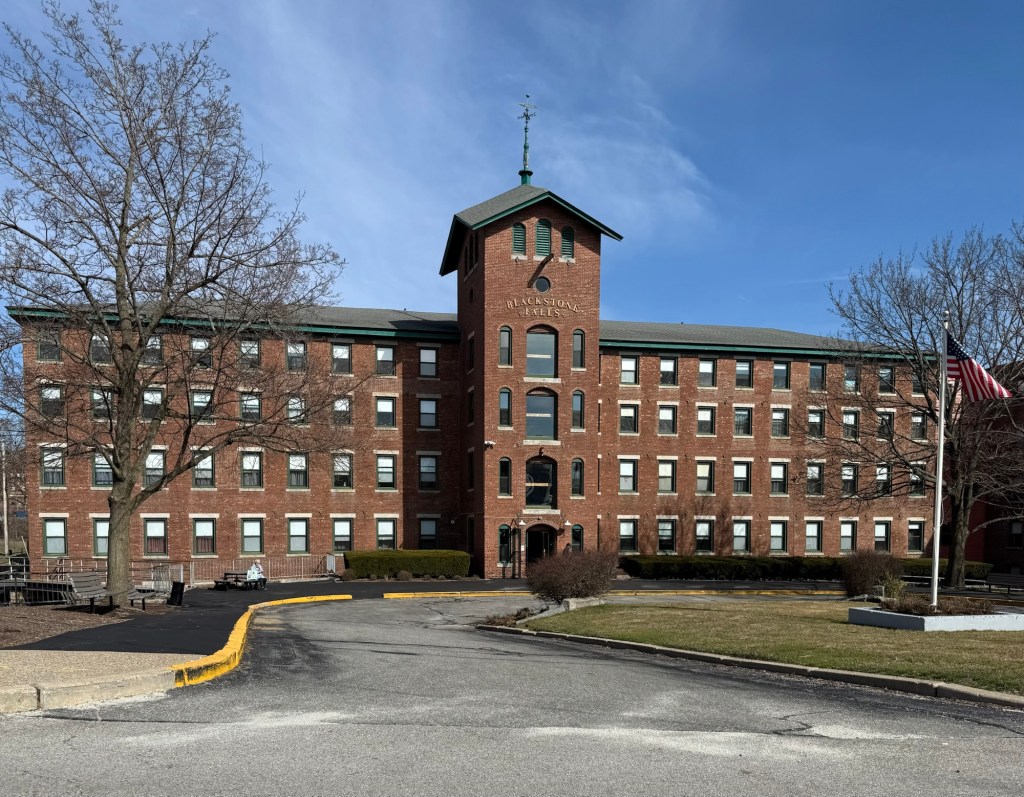
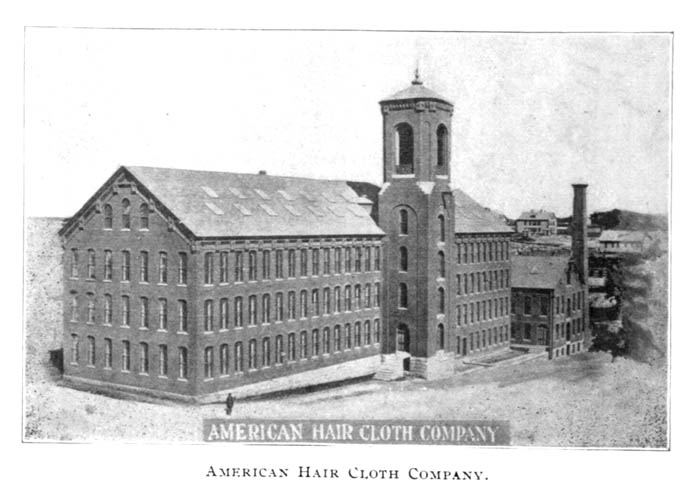
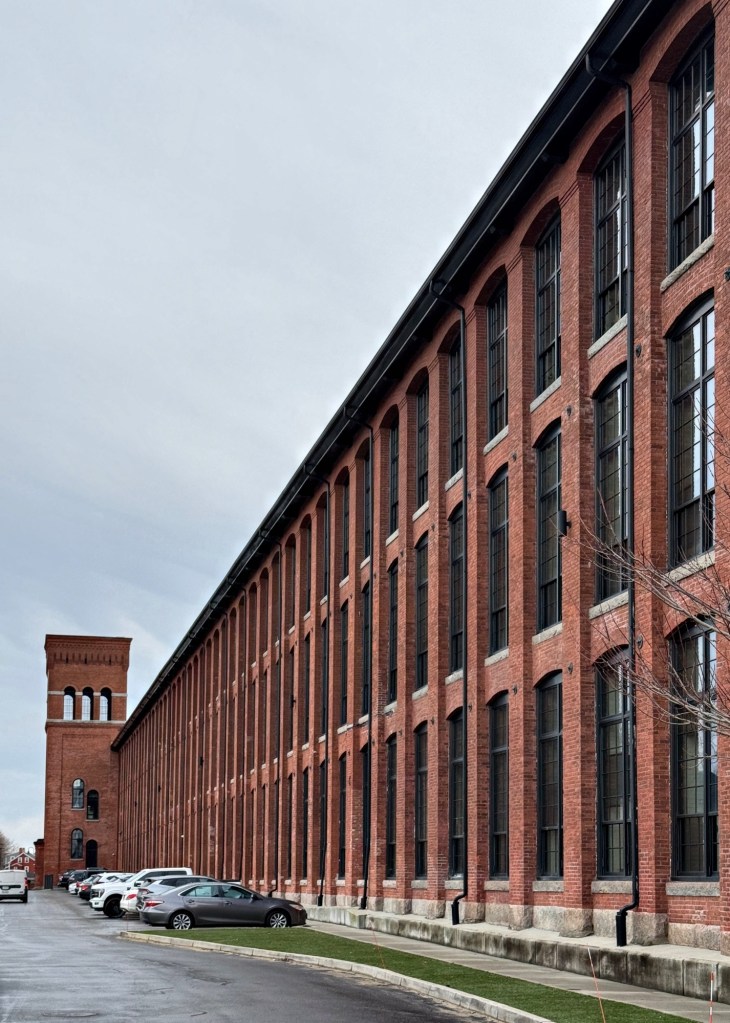
Despite its name, this handsome mill structure, known as the Pawtucket Hair Cloth Mill, is actually located in Central Falls, Rhode Island. The building, located on Roosevelt Avenue on the banks of the Blackstone River, is a great example of a Civil War-era mill, built for one of the many wool and cloth companies in New England. Begun in a small factory across the street in 1856, this business became successful after the acquisition of patents for weaving haircloth (most of the raw material for which originally came from Russian horse markets) for upholstery, crinolines, and inner linings. The company is said to have once been the largest producer of haircloth in the world. The Italianate style mill stands pretty much as built, besides the tower that has lost its low pyramidal cap. The building was one of the first commissions by great Rhode Island architect, William Walker, who was just 34 at the time of designing this large, and complicated structure.

Kennedy-Stafford Mill // 1825

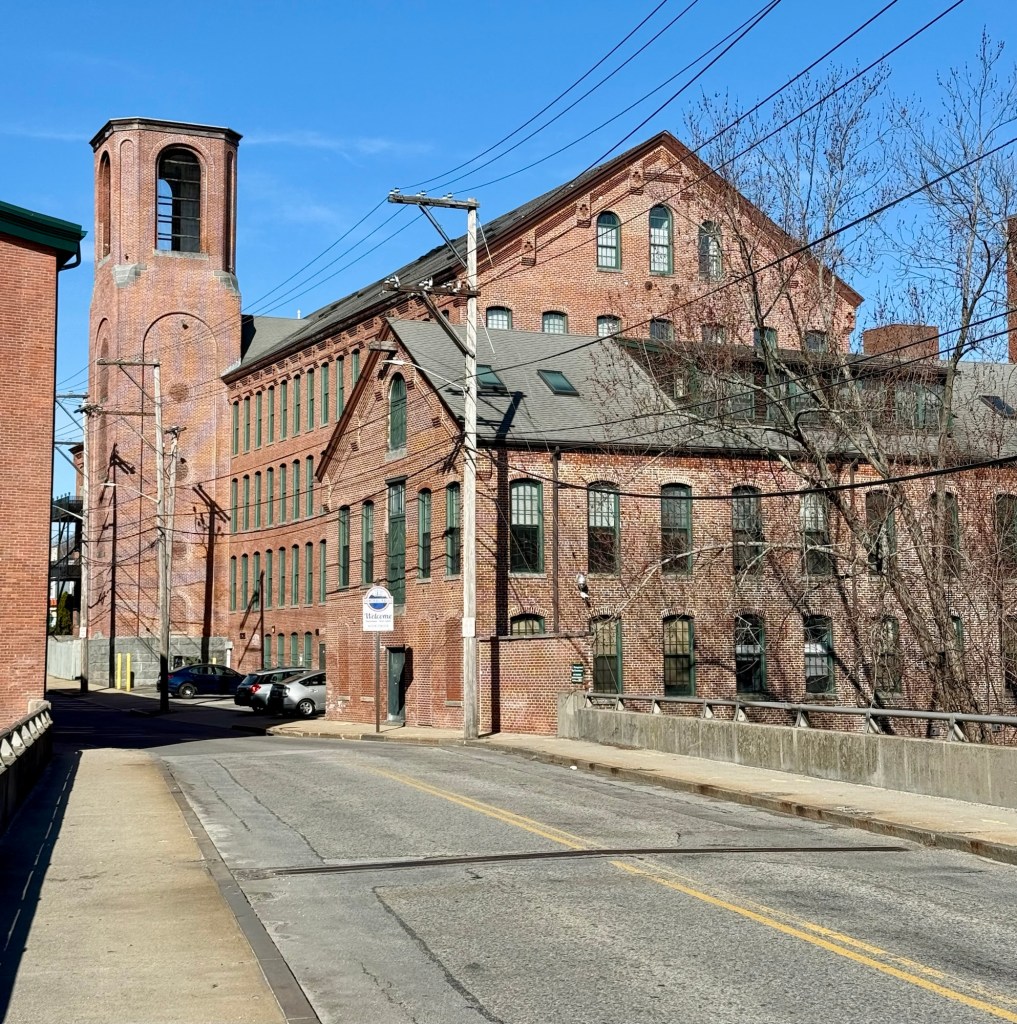
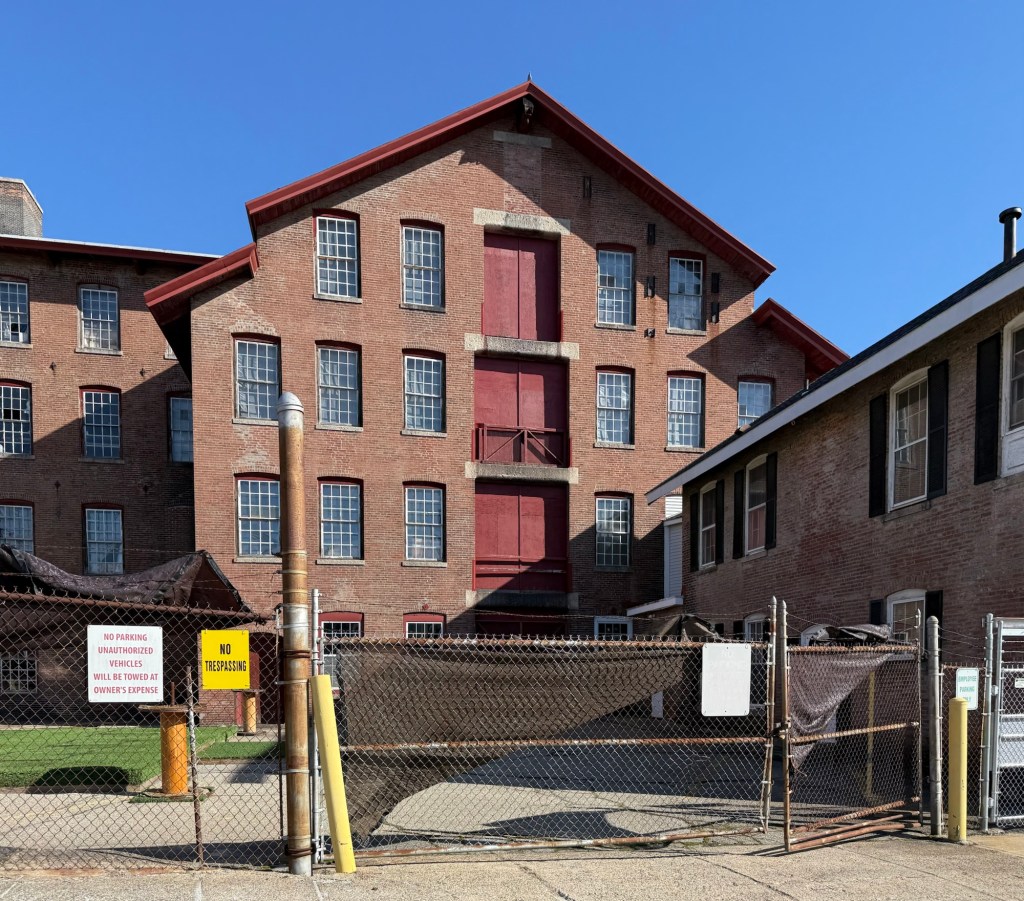
One of the oldest mills in Central Falls, Rhode Island, is this four-story brick building constructed in 1825 is important as one of the earliest extant brick mills in Rhode Island, at a time when such buildings were shifting from wood construction to fire-proof brick or stone construction. Built on one of the first industrial sites in the city, along the Blackstone River, the mill was originally constructed for a John Kennedy as a cotton manufactory. The complex was purchased and expanded in the 1860s by the Stafford Manufacturing Company, who built a new dam on the river and extension to the 1825 building. The structure features a five-story square end tower with freight doors, and a monitor roof which runs the span of the original 1825 building, terminating where the Stafford Company addition begins. Originally, canals flowed directly under the building, powering the building and three mills downstream, but they were filled in by 1965. Elizabeth Webbing started in the Kennedy/Stafford mill buildings in 1933. After over 70 years of making cloth straps used for seat belts, dog collars, luggage straps and more, it ceased operations in March of 2001. The complex, which included 19 nearby mill buildings, was split up and sold off. In 2007 work began on converting the former mill to residential use with the first phase of the project opening to tenants in 2009. It’s another great example of adaptive reuse into housing, the best type of project!

Valley Falls Mill // 1849

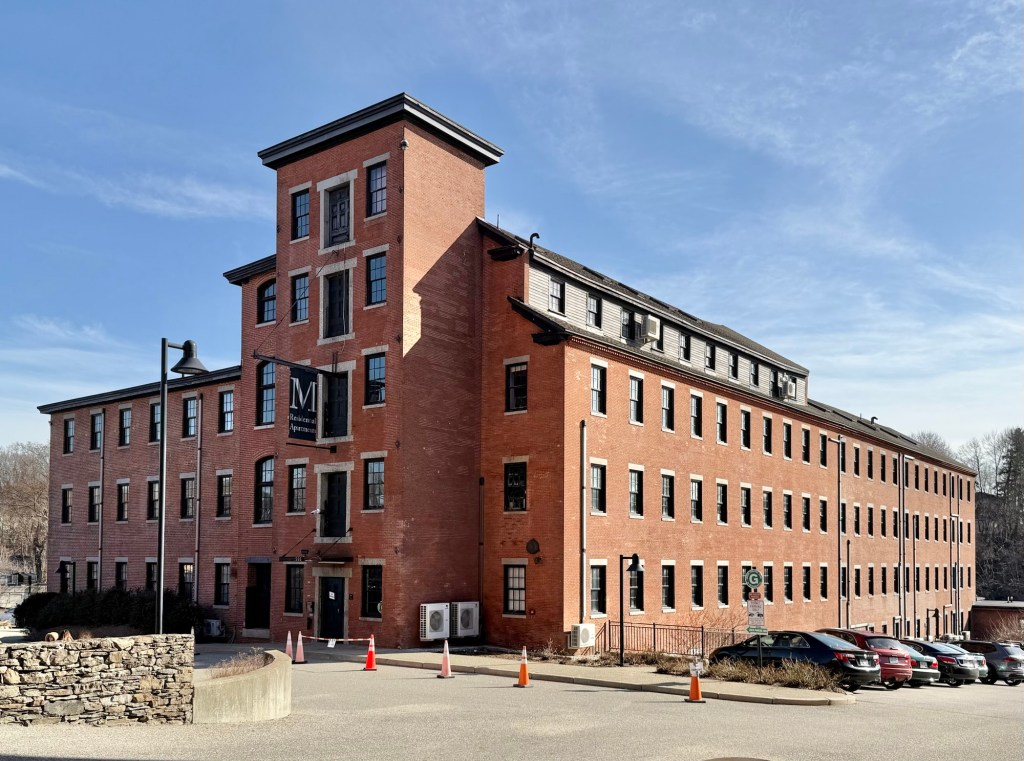
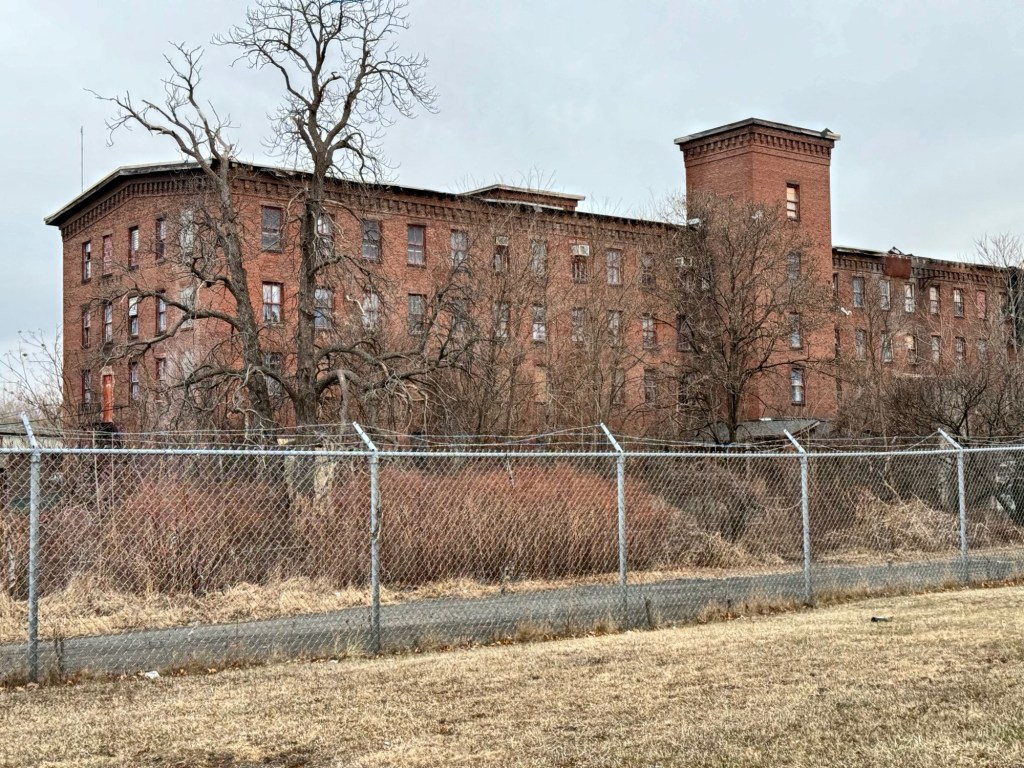
The Valley Falls Mill sits along the Blackstone River in Central Falls, Rhode Island, and is one of the many significant industrial complexes which facilitated the development and growth of the city. The main building in the complex is the four-story rectangular building, constructed in 1849. To meet the requirements of fire resistance, the mill was constructed with load-bearing brick walls and heavy timber columns. Samuel B. and Harvey Chace, sons of Fall River mill owner Oliver Chace, built the mill on this site, influenced not only by the availability of water power, but also by the completion the same year of the Providence & Worcester Railroad, which passes by the mill on its east side. The mill was designed for the manufacture of a variety of cotton products. The Valley Falls Company merged with another industrial concern in 1929, and this mill was subsequently closed the following year. After decades of little-to-no use, the significant Valley Falls Mill was converted into senior housing in 1979 following its listing on the National Register of Historic Places. It ranks as one of the earliest mill conversion projects in New England and while some details were lost, it preserves a significant piece of local history and meets a much-needed demand of housing.

Fales & Jenks Mill // 1863

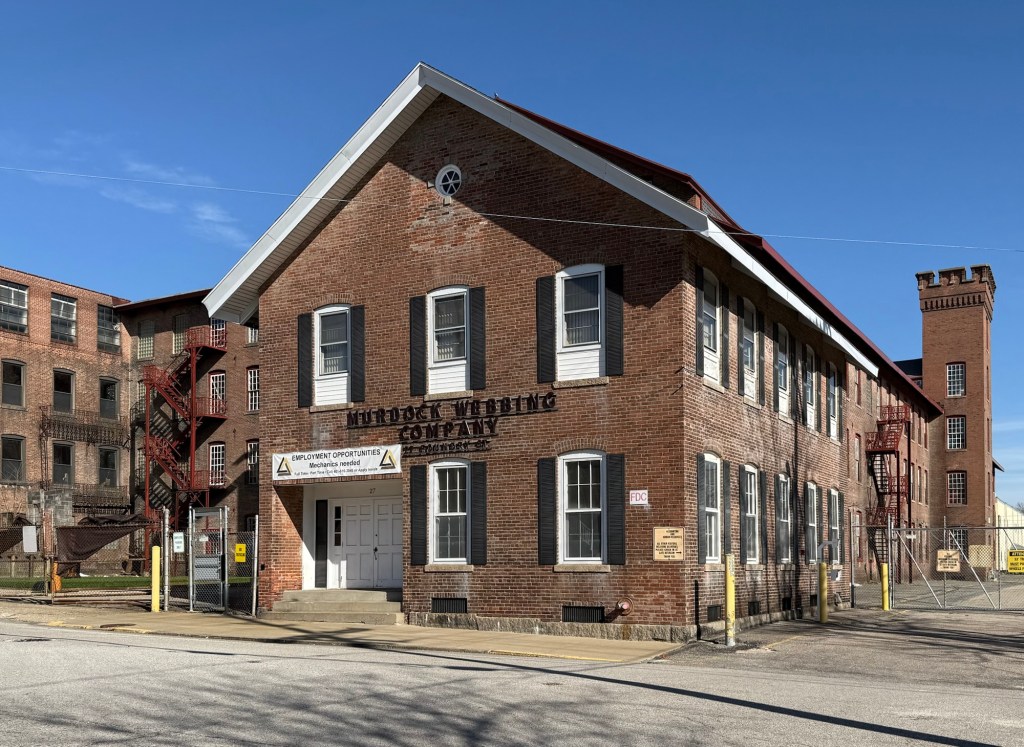
One of the largest mills in Central Falls, Rhode Island, is this complex tucked away on Foundry Street. Constructed in phases beginning in 1863, the site was originally owned by the firm of Fales & Jenks, manufacturers, and it was the first major factory in the town to not be built on a river, but on the railroad, showcasing a shift in the transportation of goods along with the increasing availability of steam power, relieving mill owners from having to build on the rivers. Fales & Jenks manufactured textile machinery here for just a few years until they moved to Pawtucket, and the complex was purchased by A. & W. Sprague in 1865 and after slight enlargement, was used as a flax mill until the Spragues’ failure in 1873. In the late 19th century, the mill was occupied by the U.S. Cotton Company. The oldest buildings are brick with granite lintels under a monitor roof. Later additions include a massive brick factory with a tower with castellated parapet. The small, two-story gable-roofed building at the corner was the mill office. The complex is today owned and maintained by the Murdock Webbing Company.

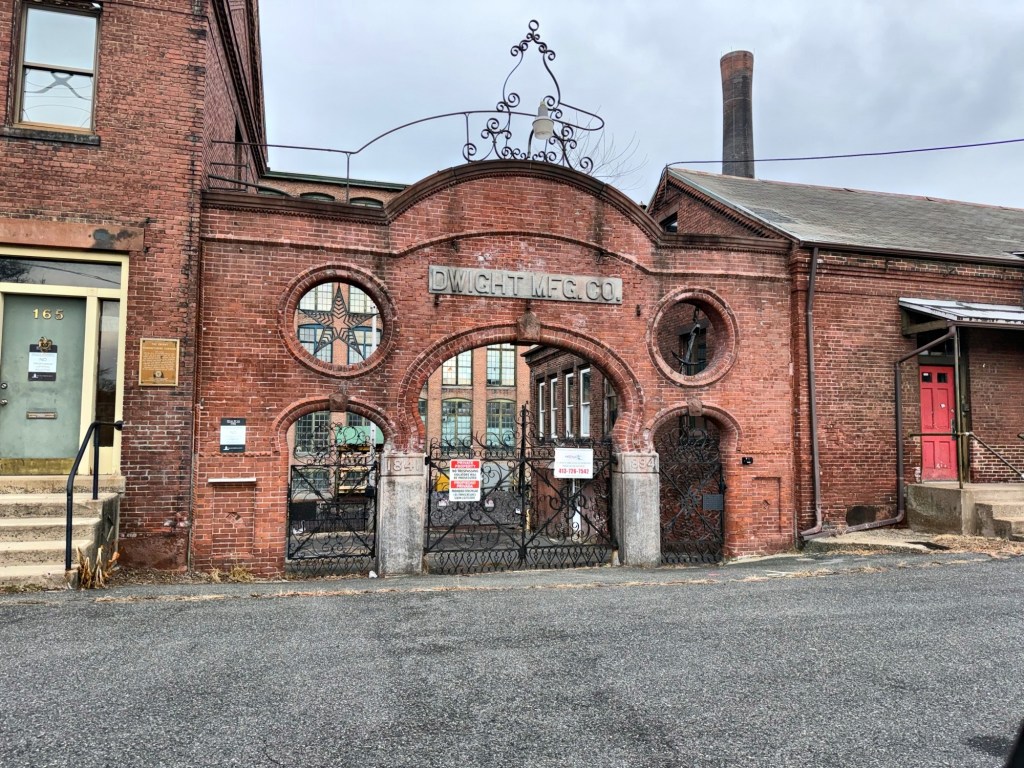
Dwight Manufacturing Company Complex // 1841+

The Dwight Manufacturing Company is named for Edmund Dwight (1780-1849) of Boston, an industrialist who envisioned an industrial town on the Chicopee River. Dwight, having a country home in Chicopee, had begun a venture with his brother, Jonathan, at Chicopee Falls creating the Chicopee Manufacturing Company, to produce cotton cloth. Due to the company’s immediate success, the Dwights along with other investors formed the Springfield Canal Company in 1831, with the goal to create the “new Lowell”, an industrial community in what is now Chicopee Center. In 1856, the Dwight Mills purchased some earlier mill complexes, creating the Dwight Manufacturing Company and consolidating all their cotton cloth manufacturing into one organization. In addition to the mills, the Company also built employee housing
along Depot and Dwight Streets, a stone’s throw from the mills. The creation of employee housing allowed the Company to attract new employees in particular women and children, nearly all immigrants, who could be housed together. My favorite part of the complex is the entrance gate, built in 1894, connecting the Office and Cloth Building. It is amazing to think of all of the people who passed through this portal, working long hours for a better life. Overtime as production methods changed and technology evolved, nearly all the original mills would be replaced or retrofitted. Despite the changes, the Company could not remain profitable and shut down production in 1927 and ultimately selling the land and equipment in 1930. Some smaller manufacturing has since occupied some of these buildings, but they remain largely (if not entirely) vacant, awaiting a new life.

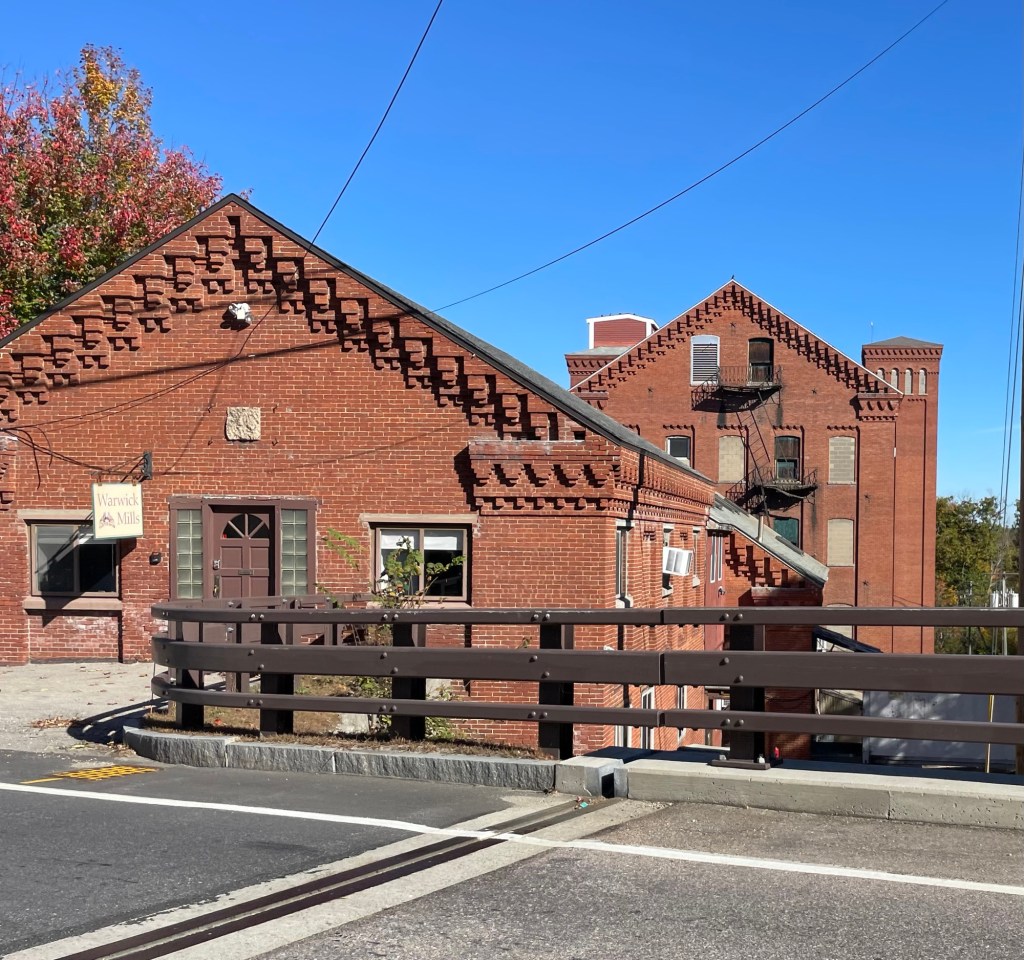
Former Columbian Cotton Mill // 1864

While New Ipswich, New Hampshire, is best known for its early Georgian and Federal period architecture, the small town is home to Warwick Mills, the site of the oldest textile mill in the state. Originally built circa 1807, the mills here burned down two times and were rebuilt a third time using brick; that third iteration is the building seen today. The brick for the building was forged on site and was finished in 1864, with signatures on the beams by craftsmen as far south as Baltimore. The mill was home to the Columbian Mill Company, who created textiles from cotton and other materials in the building, becoming a leading employer in the region. The building is now known as the Warwick Mill, and is an active manufacturing complex, making many contemporary and high-quality materials for 21st century clothing. The buildings exhibit stunning corbel detailing.

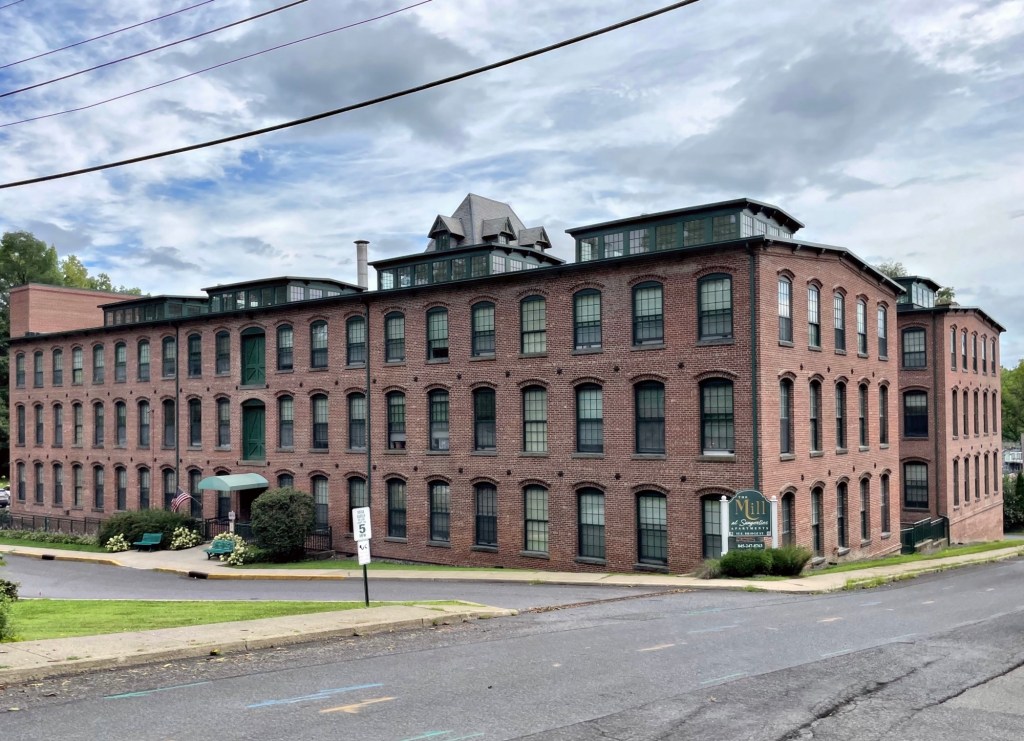
Former Sheffield Mill // 1887

The former Sheffield Mill is historically and architecturally significant as one of the last remaining large-scale manufacturing complex to survive in the village of Saugerties, New York. The building was constructed in 1887 as the J. B. Sheffield Paper Company and was used for the manufacturing of envelopes and bank bookbinding. In the 1930s, the building was purchased by the Knaust Brothers, who grew and harvested mushrooms in nearby towns, making mushroom beds or trays in this building. The Knaust Brothers were at one time, one of the largest firms growing and canning mushrooms in the world. The former mill was vacant by the late 20th century and its future was uncertain until it was renovated at the turn of the present century into senior housing. What a great rebirth of a great old mill!

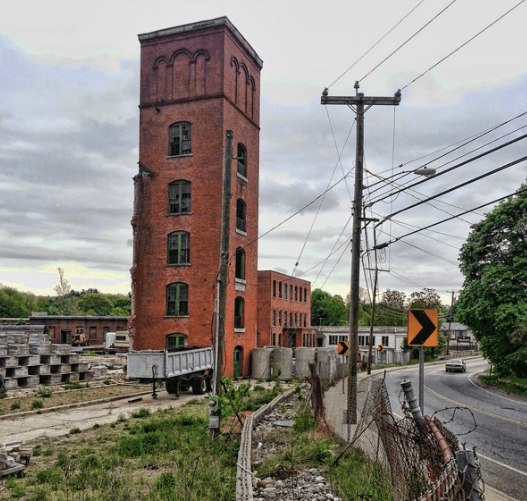
Sayles Mill // 1882-2023

Dayville, a mill village in the town of Killingly, Connecticut, is typical of many similar 19th century villages in the region. Dayville was named after John Day (1756-1838) a Revolutionary War veteran who later owned the water privileges on the Five Mile River. With the opening of the Norwich and Worcester Railroad in 1830, Dayville became a stop along the route and also became a hub for freight transport for other manufacturing villages along the river. In 1858, brothers Harris (1817-1893) and Sabin Lorenzo Sayles (1827-1891) from Rhode Island, purchased a mill site in Dayville and established a woolen manufacturing company. Harris retired in 1879 and Sabin continued the business as the Sabin L. Sayles Company. Sabin had a modern brick mill building constructed here in 1882-1883 which employed 250 people in production of woolen broadcloth. After Sabin’s death, the company was sold and modified numerous times, eventually becoming a metal products plant and later was left vacant. In the 2010s, funding and plans were begun to redevelop the old mill, but that was abandoned after a massive fire in 2023 destroyed the building, leaving just the six-story tower intact.

Photo courtesy of Journeysthrumylens

Lowney Chocolate Factory // 1903

The Lowney Chocolate Factory is a historic industrial complex in Mansfield, Massachusetts and was established there after town officials took advantage of rail access provided by the Boston and Providence Railroad and enticed businesses to establish themselves in Mansfield. The Walter M. Lowney Company was a chocolate and candy business founded in Boston in the early 1880s by Walter M. Lowney, who started his business by manufacturing chocolate bonbons. The company built offices and factories in Boston, Montreal and here in Mansfield, where they would ship out boxed sweets to stores all over the country. The Mansfield factory was designed by the architectural and engineering firm of Dean & Main in 1903. The firm was
comprised of partners Francis W. Dean and Charles T. Main, who had offices in Boston and specialized in mill design and engineering from 1893 to 1907, originally designing Lowney’s Boston factory in the North End. A later fieldstone addition was added in 1910 and housed the company’s office and shipping facilities. After Walter Lowney died in 1921, the Walter M. Lowney Company continued to operate under the ownership of Lowney’s wife. In the 1930s the factory property was wholly purchased by the Rexall Drug Company, who renamed the Lowney company, United Chocolate Refiners. The Mansfield factory was later owned by Nabisco to make chocolate for oreo cookies for a number of years until it again changed hands. The factory had been largely empty since 2010 until it was recently converted to mixed-income housing (the best kind of redevelopment)! Who doesn’t love a happy ending?

Baltic Mill Warehouse // c.1890

Situated along the Shetucket River in Sprague, Connecticut, lies the remains of what was once the nation’s largest textile mill. At its peak, over 1,000 employees operated 1,750 looms and 70,000 spindles to produce some of the country’s finest cotton. The Baltic Mill (as it became known) not only helped reshape Connecticut’s economic and cultural landscape, but its geographic one as well, giving rise to the founding of an entirely new village. The Baltic Mill did very well until the economic Panic of 1873 set in, decimating the company’s finances. The mill was forced to scale back their operations. Then, in 1877, a fire destroyed the interior of the mill, bringing an end to the complex for decades. At the turn of the 20th century, a businessman from Pawtucket, Rhode Island, named Frederick Sayles purchased the property with an eye toward revitalizing the local textile industry. He founded the Baltic Mills Company and set about making extensive repairs and upgrades to the property, including this c.1890 storage building for materials and finished textiles. Unfortunately for Sayles, the New England textile industry had already begun to decline and it wasn’t long before the company’s depleted finances forced Sayles to sell off much of its assets. The company did survive long enough to produce uniforms, parachutes, and life rafts for soldiers in World War II, but the mill’s operations ultimately came to a halt in 1966. The large 19th century mill would eventually be demolished, but this old Warehouse (a fraction of the size of the mill) is one of the last industrial pieces of the former sprawling complex and is now occupied by local businesses.