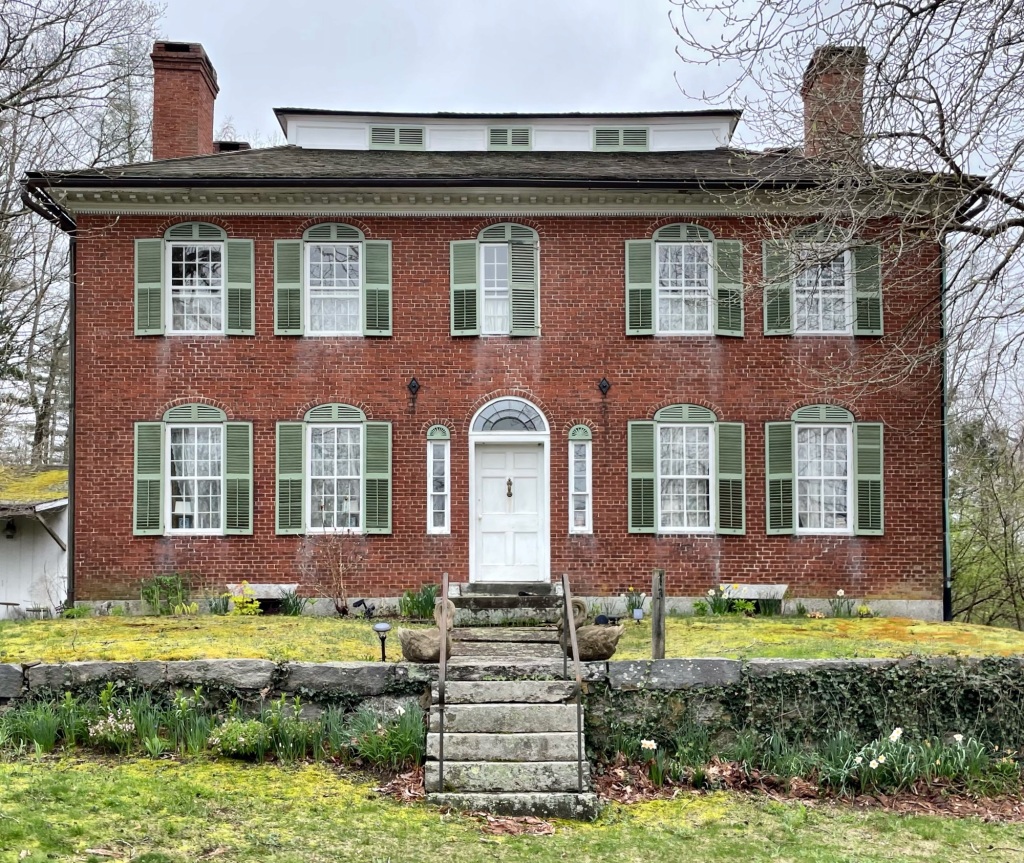
Norwood-Babson Farmhouse // 1799

Located in northern Rockport, Massachusetts, you will find this charming Colonial-era farmhouse set amongst the backdrop of ocean cliffs and granite quarries. At the tip of Pigeon Cove, adjacent to the present-day Halibut Point State Park, James Norwood purchased land and would erect this house by 1799 for his family (possibly built from an older dwelling formerly on the site). After James’ death, the property was willed to his daughter and son-in-law and sold a few times until 1820, when it was purchased by David Wallis Babson who raised his family here. As granite-quarrying became a lucrative trade in Rockport by the early-mid 19th century, David’s son Joseph bought twelve of the Babson Farm acres from other family members to organize a stone cutting business here. The property would leave the Babson Family decades later, but retained the family name until today. Edwin Canney would purchase the remaining 70-acre Babson Farm, selling it to the Rockport Granite Company. For the next thirty years, industrial-scale mining and shipping would redefine Halibut Point over the next thirty years. The quarries are now a State Park, and the former Norwood-Babson farmhouse remains intact as a significant piece of the town’s earlier history.

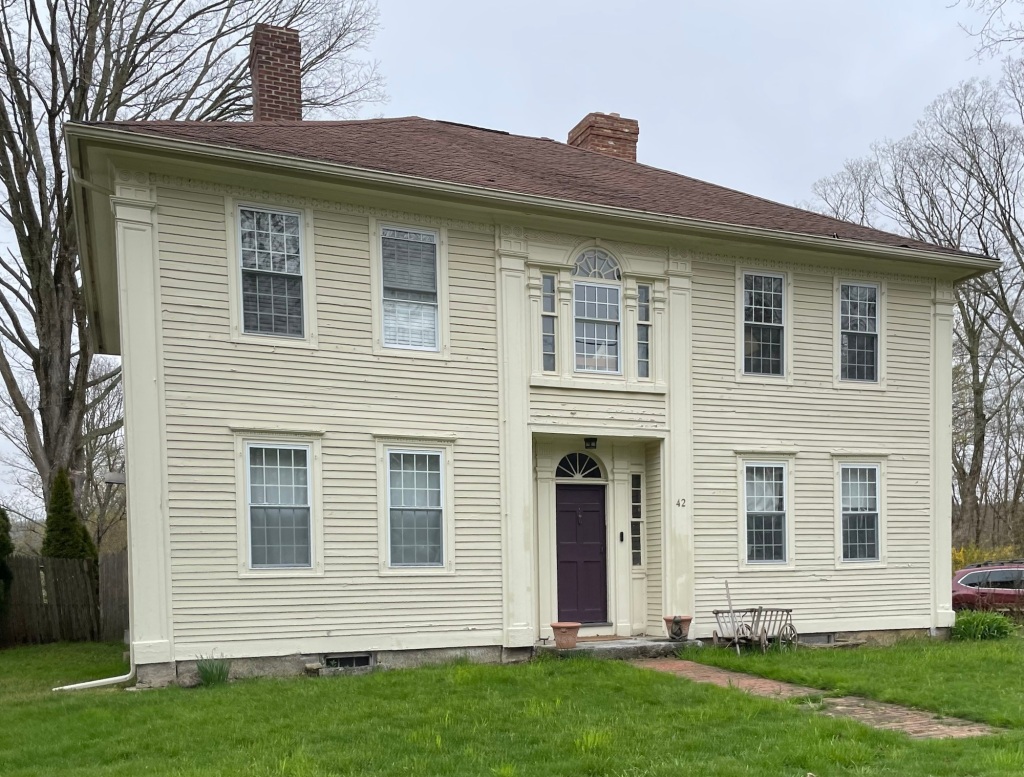
Gott House // 1702

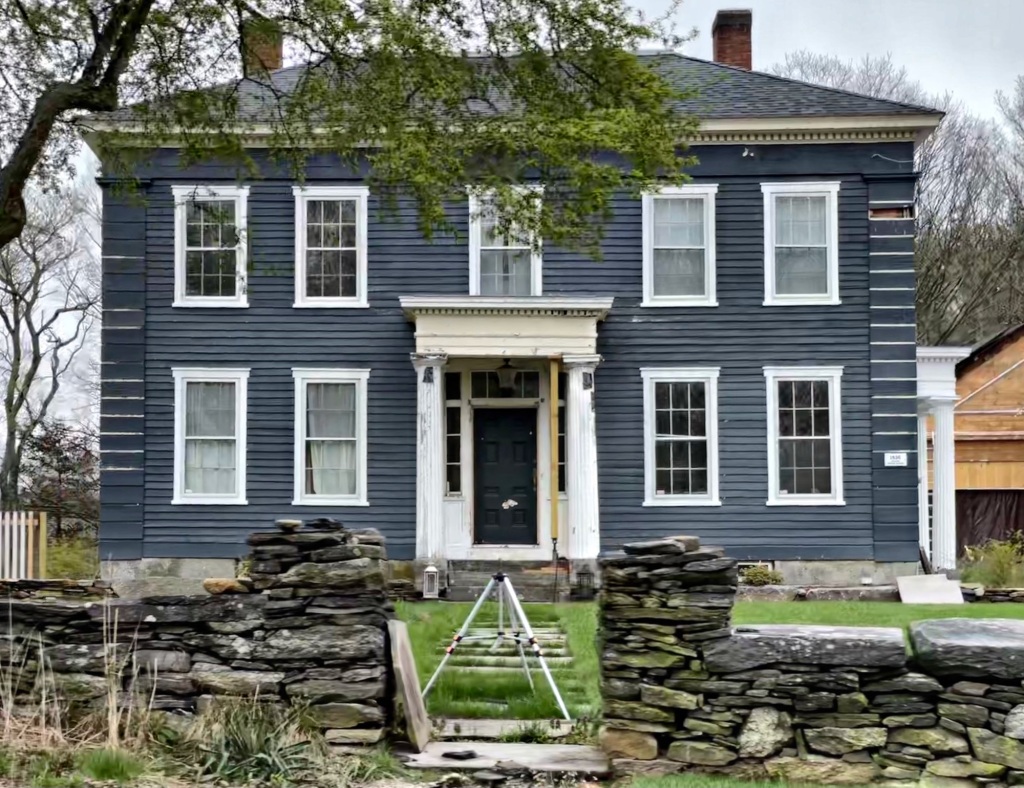
Halibut Point State Park in Rockport is one of the most enchanting places in Massachusetts and it has so many layers of history! Before white settlement, Halibut Point was used seasonally by the Pawtucket people who came to harvest its wild fruits, fish and game on the land. In 1702, Samuel Gott (1677-1748) purchased eight of the 6-acre lots on Halibut Point. At the time, there were no roads to Halibut Point, but Samuel built this house on the land, and he began to farm here. The property passed down the family line and was later owned by Joshua (1754-1846), who came of age just as the War for Independence began. Joshua enlisted with the Revolutionary Army as it was being formed in Boston, and in 1776, he joined General Washington’s forces in the unsuccessful defense of New York. He returned home to lead a long and useful life as farmer and fisherman and was known as Captain Gott. As of the 2010s, the property remained in the same family, handed down through the generations from Samuel Gott over 320 years to today. How cool!

Old Derby Academy Building // 1840

The Derby Literary and Theological Institute, a private boarding school, was opened in 1840 by the Danville Baptist Association on a one-acre plot of land donated by local landowners Lemuel Richmond and Benjamin Hinman. The academy housed 147 students of nearby towns for classes. Two years later, an atheneaum was established in the building as a local library for residents. The building would later become Derby’s public Jr. and Sr. High School as the town’s population at the time was just over 2,000 residents. The school was eventually outgrown and a modern school was built, located nextdoor. This building was gifted to the Derby Historical Society who maintain it to this day.

Derby House Hotel // 1896

The Derby House Hotel is located on Main Street in Derby Center, Vermont and was built in 1896 by Ms. Luvia A. Rickard, a widow. Since its construction, the hotel has been at the center of both the commercial and social activities of Derby Center and is one of the town’s few Second Empire style buildings. While built in the Second Empire style, then in declining use in Vermont, the Derby House Hotel was adorned with high-style touches including elaborately detailed porches and hardware. The rear section afforded extra living space, and a livery stable/barn provided for the guests’ horses and carriages. Luvia ran the hotel for extra income until her death in 1905. It appears that after, her son Harry took over the hotel for a few years until he sold the property to Albert C. Fellows, a local businessman. Tourism never really took-off in the early-mid decades of the 20th century, and the hotel was converted to apartments, a use that remains to this day.

Dudley W. Davis House // c.1900

Dudley William Davis (1857-1942) was born in Quebec, Canada and eventually moved to the United States, graduating from Bates College and settling in the border town of Derby, Vermont. Here, he engaged in business and became the cashier, and eventual President of the Derby Line National Bank (featured previously). His success in banking afforded him the ability to purchase a house lot on high ground in town, and he had this large home built. Clad with wood shingle siding and a prominent cross-gambrel roof, the house retains much of its original architectural integrity.

Derby Line National Bank // 1874

Another of the more stately institutional buildings in the small village of Derby Line, Vermont, the Derby Line National Bank stands out as an uncommon brick structure on the town’s Main Street. The bank was founded in 1851, as the People’s Bank in Derby Line and in 1865, it converted to a national charter and became National Bank of Derby Line. The bank provided citizens access to credit and as a result several small-scale manufacturing businesses were started in town. This brick banking structure was built in 1874 in the Italianate style with round arched windows, bracketed eaves, and granite block quoins at the corners. The bank was absorbed into the Community National Bank, who occupy the building to this day.

Cobb-Foster House // 1861

The Northeast Kingdom of Vermont is not necessarily known for stately houses, but no matter where you go in New England, you can always find interesting old buildings. This is the Cobb-Foster House of Derby Line, Vermont. The house was built in 1861 for Walter B. Cobb, a director of the People’s Bank of Derby Line. After later owners bought and sold the property in quick succession, the house was purchased by Stephen A. Foster, a lawyer and judge who would eventually move out of town, selling the property to Austin Theophilius Foster, a nephew. As architectural styles were later to arrive to rural parts of the country, this house expresses the Italianate style, but with holdover features from the Greek Revival style, which was already a decade out of style in 1861 around Boston and other well-connected areas.

Butterfield Mansion – Derby Line Village Inn // 1903

Once described in a local history book as: “The largest, most glamorous home ever built in this [Derby Line] village”, the Butterfield Mansion is one of Northern Vermont’s best early 20th century houses. The house was built between 1901-1903 for Gen. Franklin G. Butterfield (1842-1916) who before this, received the country’s highest award for bravery during combat, the Medal of Honor, for his action at Salem Heights, Virginia on May 4, 1863 during the American Civil War. He would eventually move to Derby, Vermont, where he established the Butterfield Company, who specialized manufacturing axle cutters. Butterfield hired architects, James T. Ball and Gilbert H. Smith of Boston, who also designed the Haskell Free Library and Opera House in town that same year, to design his Colonial Revival mansion and intact carriage house. Today, the Butterfield Mansion is known as the Derby Line Village Inn.

Derby Line Universalist Church // 1840

Located adjacent to the former IOOF Hall of Derby Line, Vermont, the Derby Universalist Church stands as an well-preserved example of a New England village church in the Greek Revival style. The church was erected in 1840 as the Derby Line Free Church for local Episcopalians. In 1871, Universalist Unitarians were able to acquire the church and they have remained here ever since. The building has a boxed belfry with projecting pilastered facade and smooth siding, all hallmarks for Classically designed churches of the 1840s.

Derby Line Village Hall // 1887

This small wood-frame structure sits in the middle of Derby Line Village and is a good example of a local meeting hall embellished with Classical details. This structure was originally built as an Odd Fellows Hall in 1887, where local and regional members could hold events and meetings. In 1940 the IOOF Hall was moved back on its lot so that It had a similar set back to other buildings on the street, and it was renovated to a village hall for all residents, a use that remains to this day.