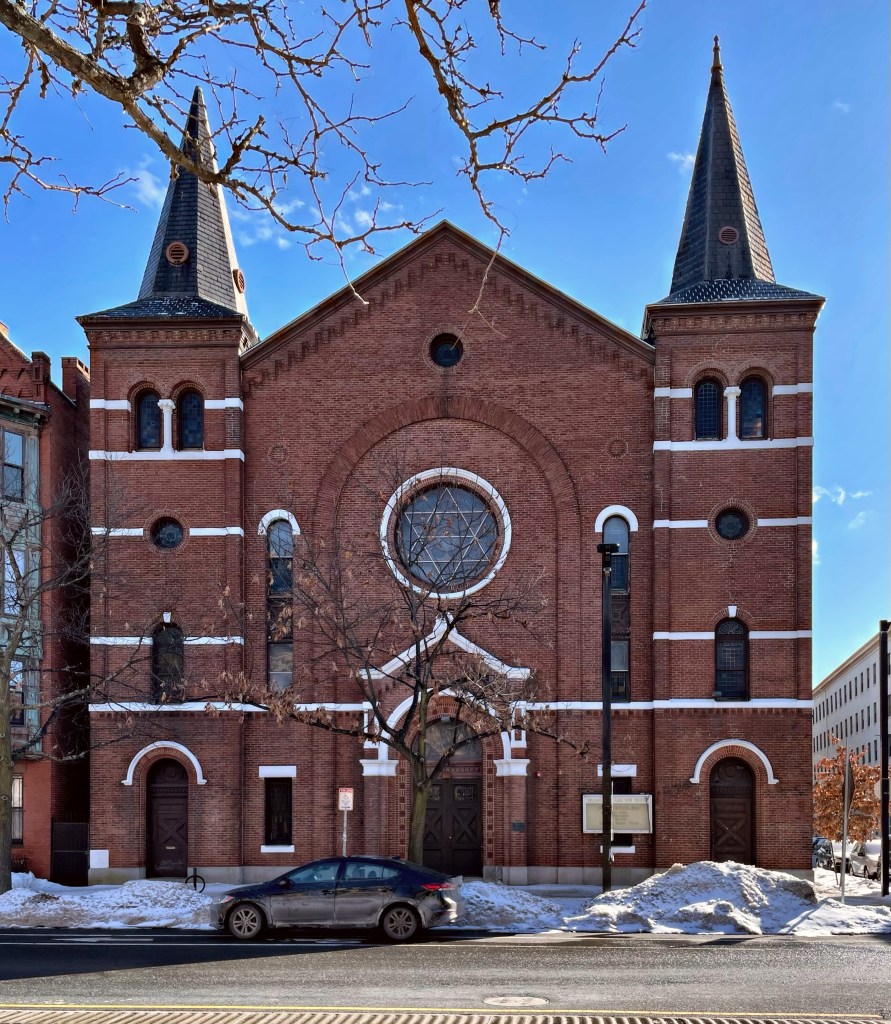
Columbus Avenue A.M.E. Zion Church // 1885

The Columbus Avenue African Methodist Episcopal Zion Church sits on the border of the South End and Lower Roxbury neighborhoods and is a great example of how the area evolved in the 19th and 20th centuries. The beautiful Romanesque Revival building was constructed in 1885 as the first synagogue of Congregation Adath Israel, which was founded in 1854. The congregation sought more space from its current location, and a closer place of worship for many of the German Jews who settled in Boston’s South End. They built this synagogue in 1885 and eventually moved west to a new Kenmore Square synagogue less than thirty years later as the neighborhood’s demographics began to shift. In 1903, the A.M.E. Zion Church purchased the former synagogue as their new home. This congregation had its beginnings in 1838 when seventeen African Americans withdrew from the communion of the Methodist Episcopal Church, then located on Joy Street in Beacon Hill. This group of Black worshippers wanted more religious freedom and desired to become part parcel of The African Methodist Episcopal Zion connection under the leadership of their own race. For many years, this church was the largest and principal Black church in the city of Boston. In 1903, shortly after moving to Columbus Avenue, the church experienced what was called the “Boston Riot.” The church hosted a debate between Booker T. Washington and William Monroe Trotter, editor and publisher of the “Boston Guardian”. Trotter, a Black Bostonian, opposed the gradual conservative approach to civil and political rights as promulgated by Mr. Washington. The debate took place on July 3, 1903 and the church was packed with over 2,000 spectators. Shortly after the opening prayer by Pastor McMullen of the AME Church, Washington was introduced. A disturbance then erupted with Trotter eventually being arrested for disturbing the peace. This building is the oldest synagogue building in Massachusetts and has been a center of Black life in Boston ever since the beginning of the 20th century.

Minot-Herter House // c.1825

Set along Beacon Street, one of the finest streets in Boston, this townhouse has uninterrupted views of the Boston Common and Public Garden. The house was built around 1825 after a large fire destroyed nearly all the homes on the block. Build it and they will come, and the upper-class Boston elite did! Attorney William Minot (1783-1873) purchased the land here as early as 1817, and is said to have hired Peter Banner, the English architect who designed Park Street Church, to design the first house on this site, which stood less than 10 years. Minot had a new home built in the 1820s and lived there until his death in 1873. By the late 1920s, Christian Archibald Herter lived here. Herter held a number of important offices in state and national government, serving as the Speaker of the Massachusetts House of Representatives, Governor of Massachusetts, and President Eisenhower’s Secretary of State (1959 to 1961). It was Herter who likely added the Federal Revival features on the house, including the porch, dormers and updated door surround.

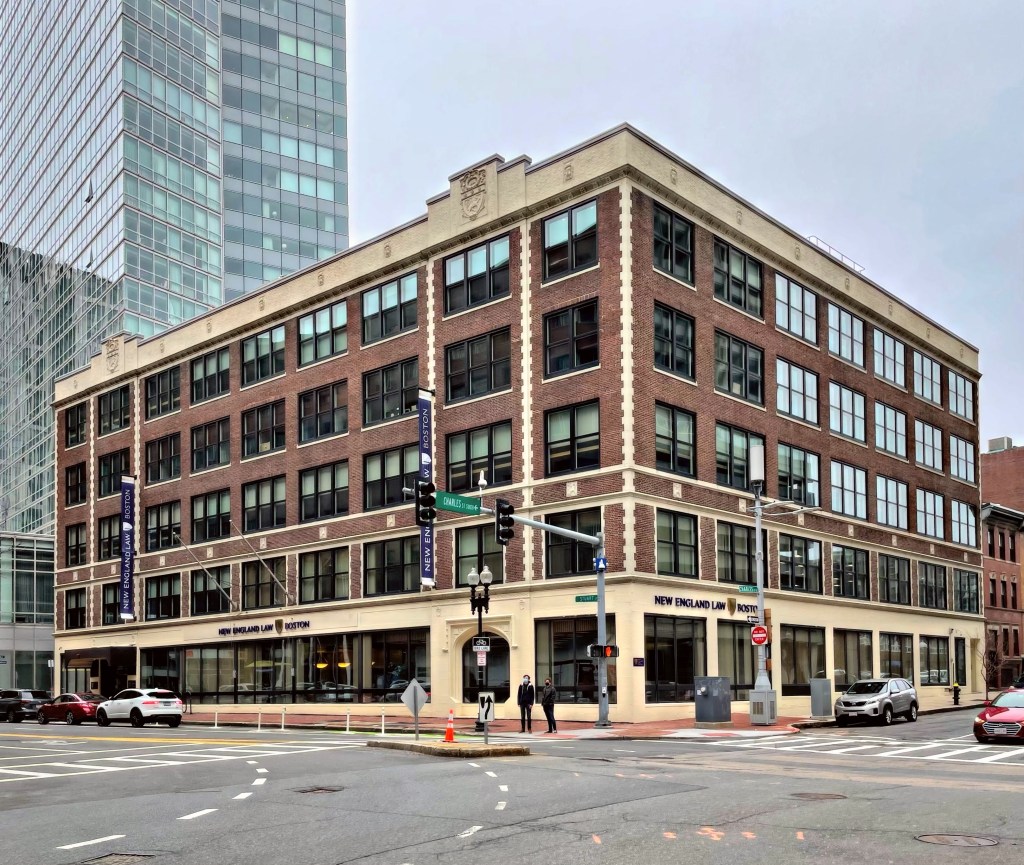
Burdett Building // 1928

In 1921, Stuart Street was widened and extended between Boston’s Back Bay and Bay Village neighborhoods, which necessitated razing of all buildings along the route. From this, new lots were platted along the street where once thriving businesses were. Some relocated and others rebuilt. In 1927, the Park Square Corporation purchased seven contiguous lots at the corner of Stuart and Charles Streets and began construction of a large office building with storefronts on the ground floor. The Burdett Building opened in 1928. The building was built for Burdett College, which was founded in 1879 and focused on business and shorthand courses for students as a junior college. Architect Thomas H. James wanted the building to be like the new buildings at Princeton and Yale. The design featured Gothic inspired entrances and stone carvings of books and lions. Burdett College occupied the building until the 1950s and it was subsequently sold. By 1980, the building was acquired by the New England School of Law, who occupy it to this day as a place of learning.

Chapin-Bodge House // 1829

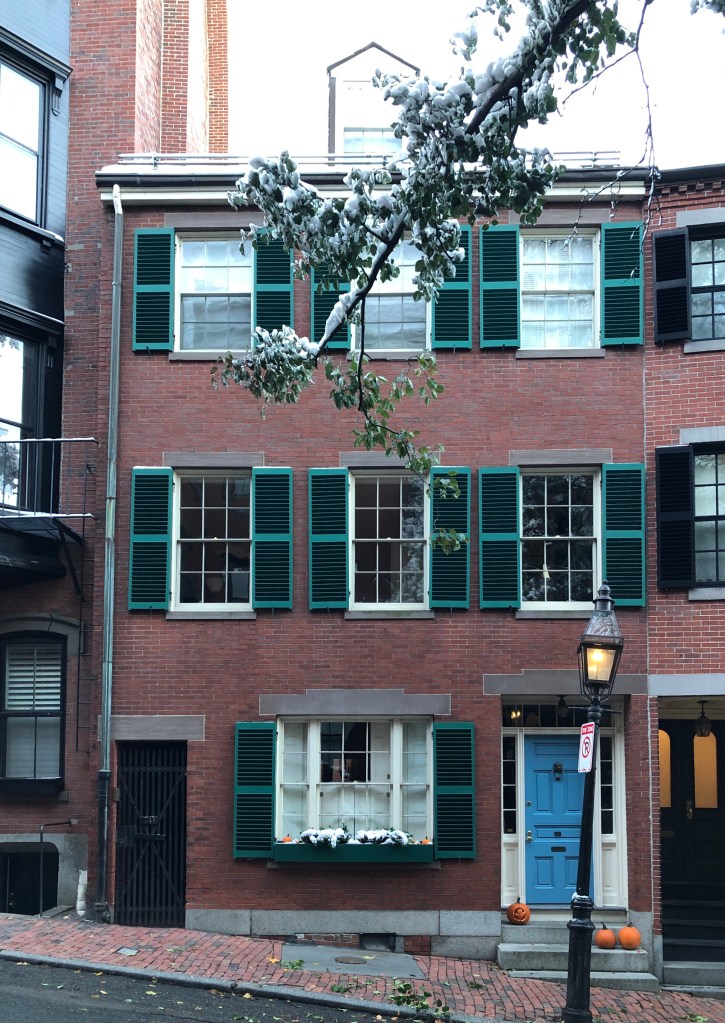
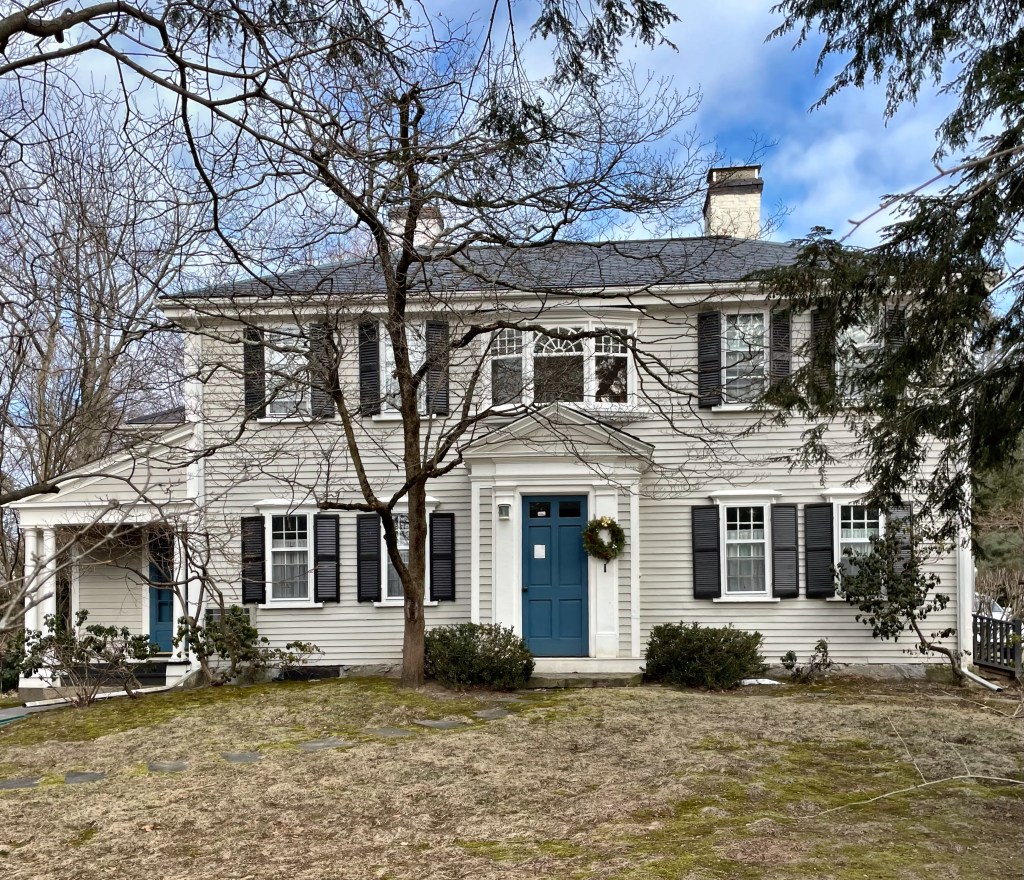
One of my favorite houses in Boston is this absolutely perfect townhouse on Pinckney Street in Beacon Hill. This house was built on speculation in 1829-1830 for Hollis Chapin by architect John Kutts. Kutts was active as a Boston architect between 1828 and 1838, but he is much less well-known compared to his peers today. I hope someone who is a better researcher than me stumbles upon this article because I would love to learn more about this architect! Kutts (possibly also Kutz) is a unique name for Boston, so it is likely he was a German immigrant who settled in Pennsylvania before moving up here. Back to the house. It was finished and sold in 1830 to Ebenezer T. Pope for four thousand dollars. The home was quickly bought and sold a couple more times as the values on Beacon Hill continued to grow. The property was purchased in the 1870s by Noah Bodge, as a rental property and it remained in the family through the 1920s. The home retains all the original details and provides a needed pop of color with the door and shutters.

Robert Gould Shaw Memorial // 1897

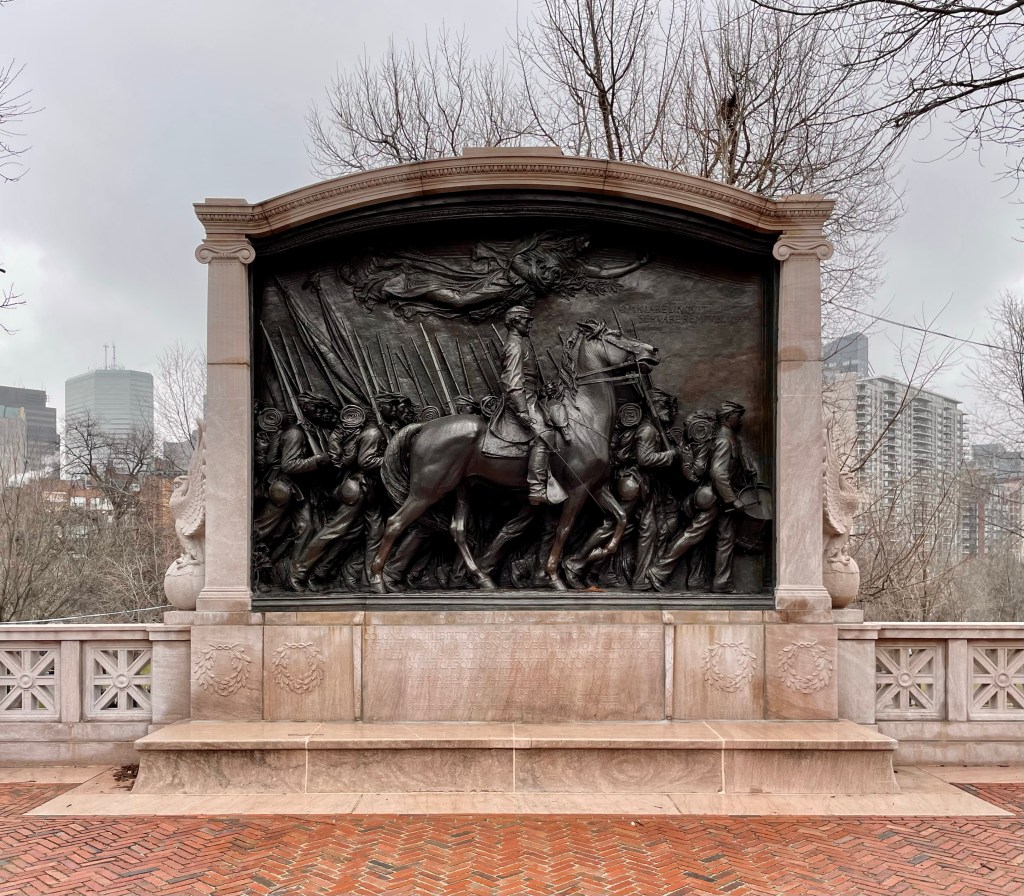
Commissioned from the celebrated American sculptor Augustus Saint-Gaudens in the early 1880s and dedicated in 1897, The Shaw 54th Regiment Memorial (aka the Robert Gould Shaw Memorial) has been acclaimed as the greatest American sculpture of the 19th century. The memorial was designed by famed artist Augustus Saint-Gaudens, and it is a stop on the Boston Black Heritage Trail, commemorating the valiant efforts of Colonel Robert Gould Shaw and the men of the 54th Massachusetts, one of the first Civil War regiments of African Americans enlisted in the North. In July 1863, the regiment was sent to South Carolina where an assault was planned on Fort Wagner guarding Charleston harbor. Shaw had asked to have 54th Regiment lead the attack. Of the 600 men in the attack that day, there were 285 casualties, and Col. Shaw was killed, but the men never wavered in the battle and demonstrated great courage and determination. Following this display of valor, other black regiments were formed, and by the end of the war, 10% of the union army was made up of African American soldiers.

The monument in Boston shows the 25-year-old Shaw seated on his horse, with his regiment as it marched down Beacon Street on May 28, 1863 to depart the city to fight in the South. The concept of Shaw on horseback with marching soldiers was inspired, at least in part, from a painting Saint-Gaudens saw in France, Campagne de France 1814, by Jean-Louis Ernest Meissonier, which depicts Napoleon on horseback with rows of infantry in the background.While Shaw is the centerpiece of the monument, the significance of the monument is the Shaw Memorial is the first civic monument to pay homage to the heroism of African American soldiers in the U.S.

Edmund and Ethel Sprague House // 1929

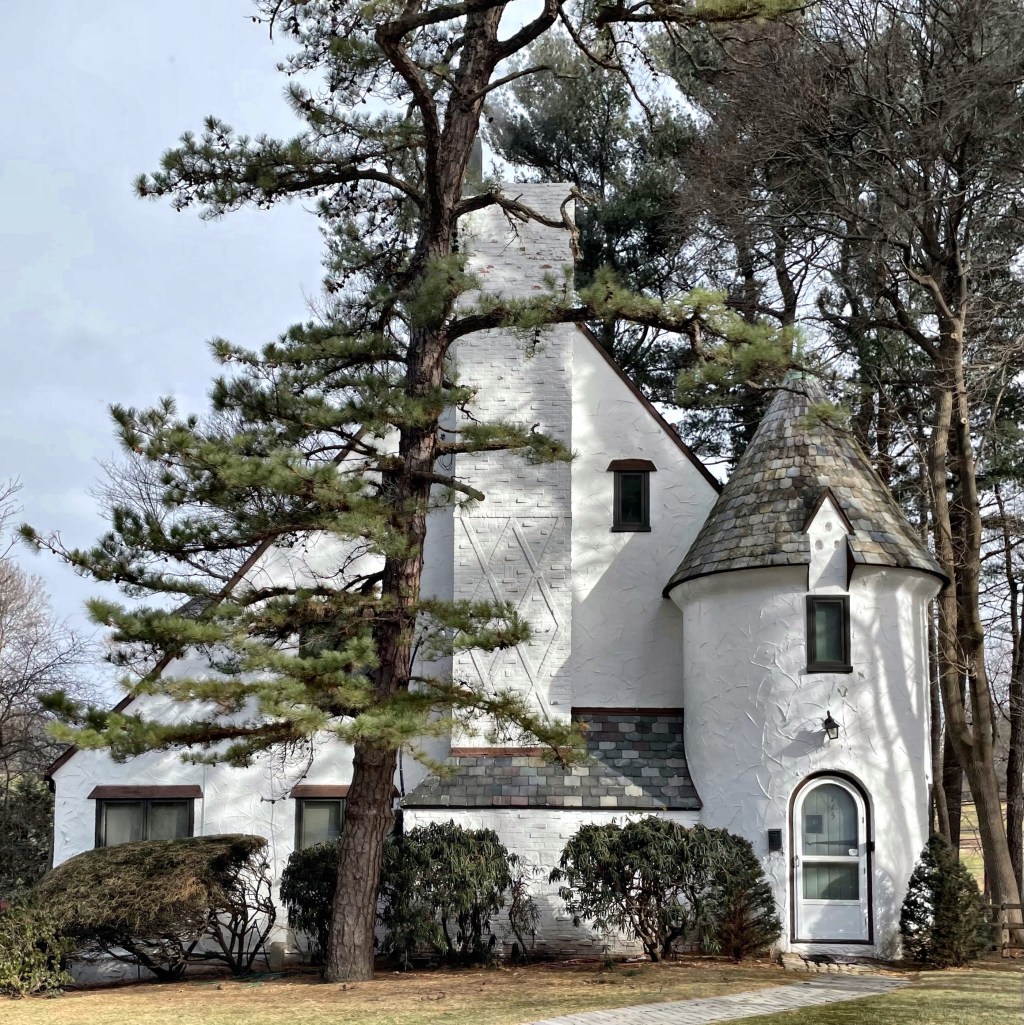
In the inter-war period, Norman Revival houses took off in popularity (though never at the same level as Tudor or Colonial Revival styles), partially due to returning soldiers who served in Normandy France in WWI. Many plans include a small round tower topped by a cone-shaped roof, resembling the grain silos of the ancient Normandy style. The architecture is characterized by steep, conical roofs or hipped roofs and round stair-towers. The style is much less common in the Boston area, but this notable example in Waban Village, Newton, was too good to pass by without snapping a photo! The home was built around 1929 for Edmund and Ethel Sprague. Edmund is listed in directories as a landscaper for trees and shrubs.

Stetson House // 1897

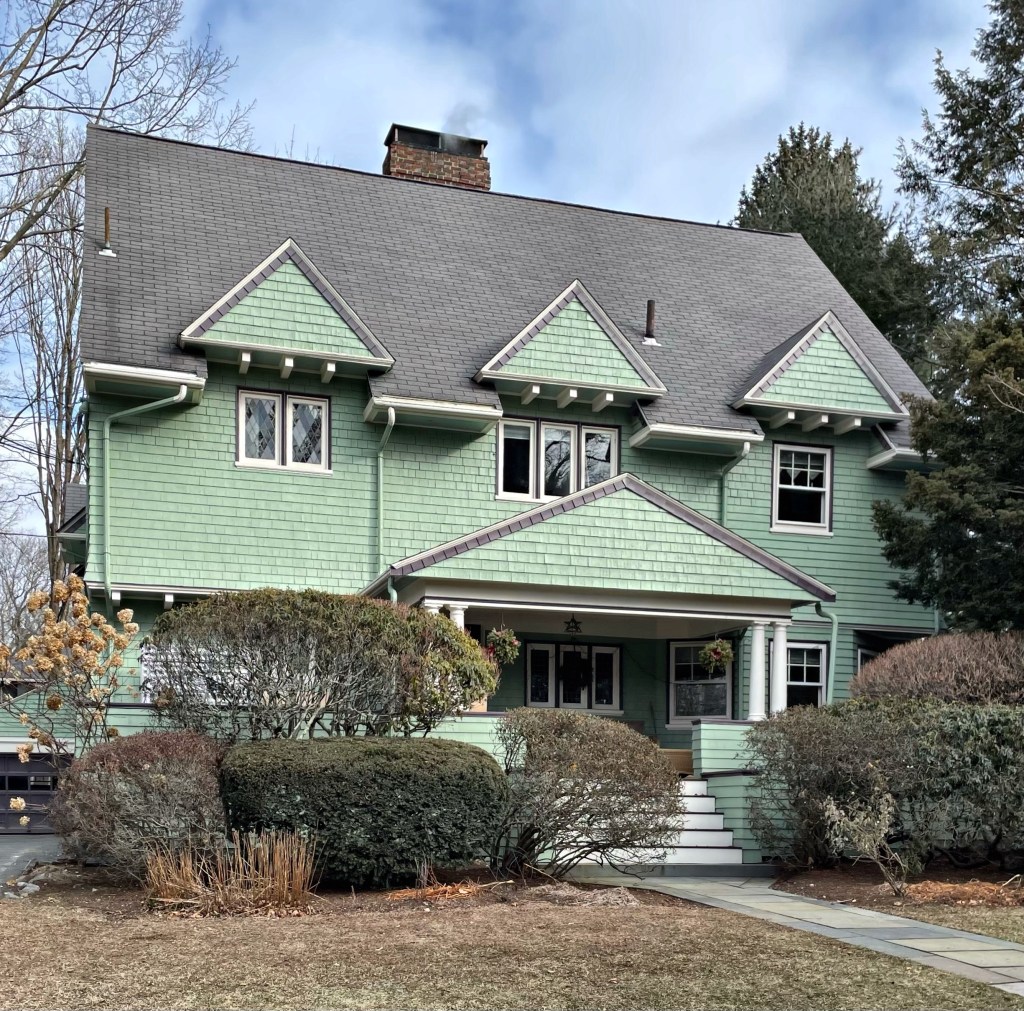
Waban is full of eclectic homes from the end of the 19th century, and this example is probably my favorite! The Herbert and Georgia Stetson House was built in 1897 and demonstrates how elements of the Colonial Revival style were incorporated into a less rigid Queen Anne style plan. Herbert was a lumber dealer, and likely used his own product in his home. The mixture of ornament includes Colonial
Revival style pedimented dormers, a Palladian motif window, oval windows, and a modillion cornice in combination with bays, oriels, a dramatically overshot gable roof, and a swept dormer reminiscent of the Queen Anne style. Together, the composition is perfection, and really makes you stop and analyze all the details!

Hovey House // 1897

In 1897, tailor Charles L. Hovey and his wife Bertha, had this house in Waban built for their family. The architecture really stands out as an eclectic blending of styles, common at the end of the 19th century, when architects and builders would design homes to exhibit architectural details from multiple styles, all under one roof. The shingled house has a steep gable roof and three gabled dormers, which reflects Queen Anne theme. The diamond-pane windows and the technique of cantilevered dormers and the second floor overhanging the first, is First Period-Medieval in style, a unique interpretation of American architecture. What do you think of this home?

Tower-Wyman Farmhouse // pre-1790

One of the oldest extant homes in Waban Village, Newton, is this 18th century farmhouse which is an excellent example a Federal-period home in the Boston area. Dates of construction for this house have ranged from c.1765 to 1790. The earliest recorded ownership of 38 acres of land at this location is attributed to Eleazer Hyde (1664-1731), one of Newton’s earliest citizens and one of a long line of Hydes in Newton. From 1772 to 1791, the house was owned by Josiah Starr. Immediately after, this property was owned by a housewright named Capt. Ebenezer Richardson, who possibly built or re-built this house in the current configuration. Thaddeus Tower owned the land from 1844-1866, when the City of Boston took a portion of it in 1848 for the new Cochituate Aqueduct, which ran right behind his home. Not long after, Thaddeus sold the farm to Edward Wyman, a linen importer from Roxbury. He subsequently
sold it to his brother Dr. Morrill Wyman in 1869. Dr. Morrill Wyman sold 150-acre property to developers, never appearing to have lived in the home, after the railroad came west from Boston in 1886 and increased the value of the surrounding farmland, later known as the village of Waban. All of the land was developed with homes, and all that remains of the old farm is the farmhouse seen here.

Ellis House // 1926

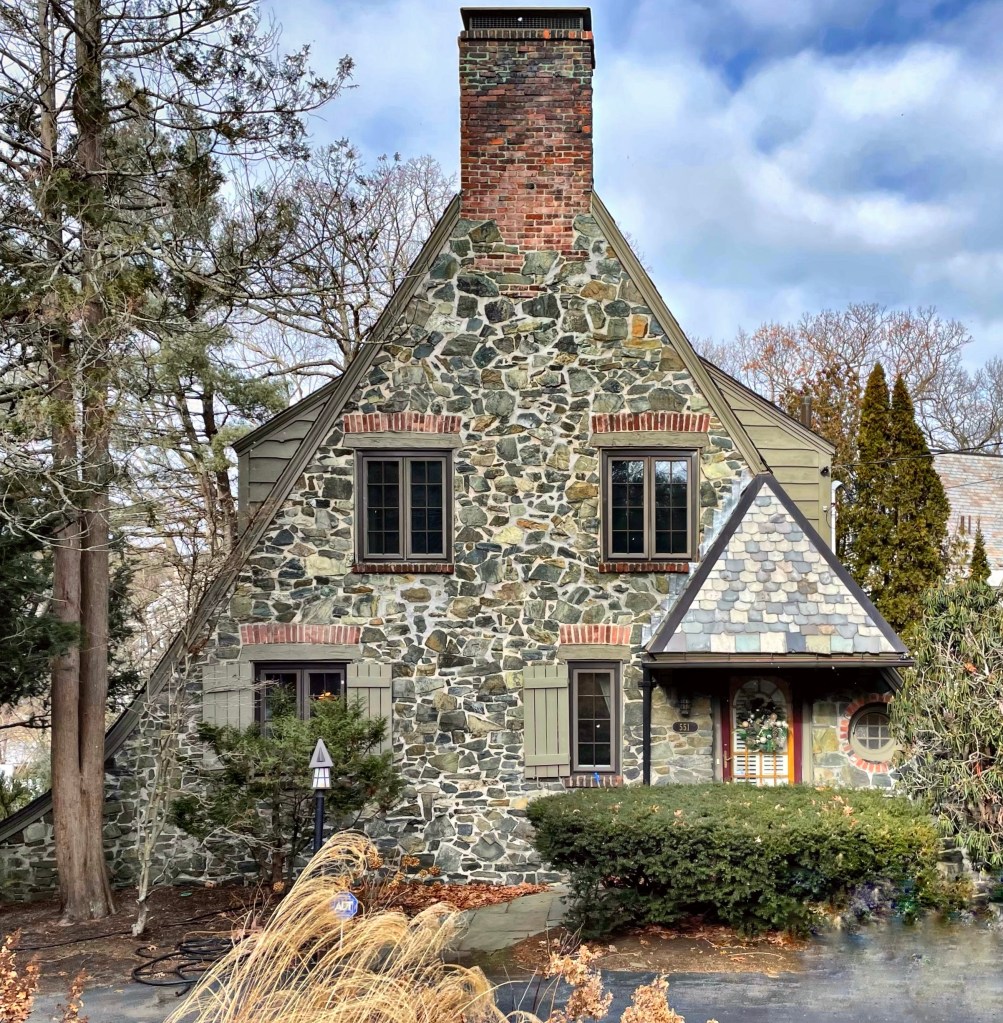
In the land of storybook Tudor houses, this one might just be the most magical of them all! Located on Chestnut Street in Waban Village of Newton, you’ll find this stone Tudor cottage set behind a circular drive. The house was built in 1926, in the interwar period (between WW1 and WW2), a period of rapid suburban development in this part of Newton. The house was first occupied by a Seymour Ellis, who according to newspapers, had a rabid dog! The house exhibits a strong gable to the street which incorporates a massive chimney inside. The gable also sweeps out to form a catslide roof, that incorporates an arched garden gate.