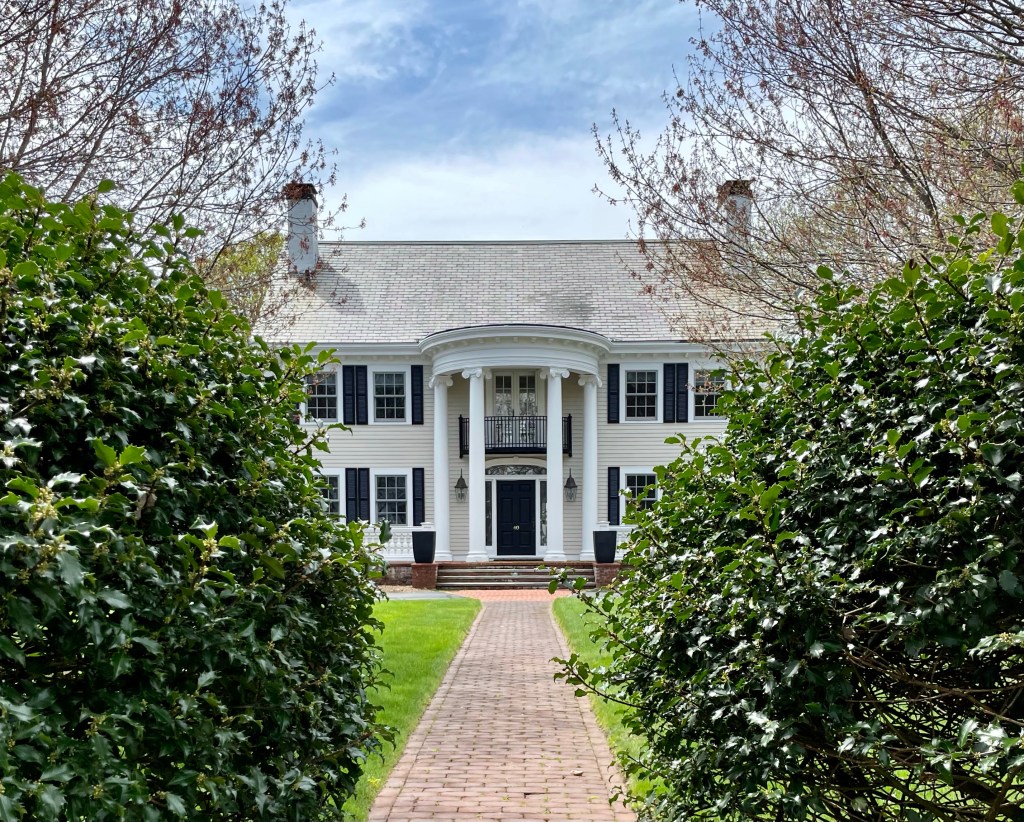
This home was built in 1913 and is a high-style Neo-Classical example of a “beach cottage”. The home is located in the fashionable Rye Beach colony in New Hampshire, which developed in the mid 19th century through the first half of the 20th century as an exclusive enclave for vacationing elite. The home was purchased by Susan Bailey Lord just years after its completion as a summer retreat from her home in Malden, MA, just outside Boston. She purchased the home just years after the death of her husband, who was thirty years her senior. It’s safe to say that Susan let loose up on the beach and had a “hot girl summer”.
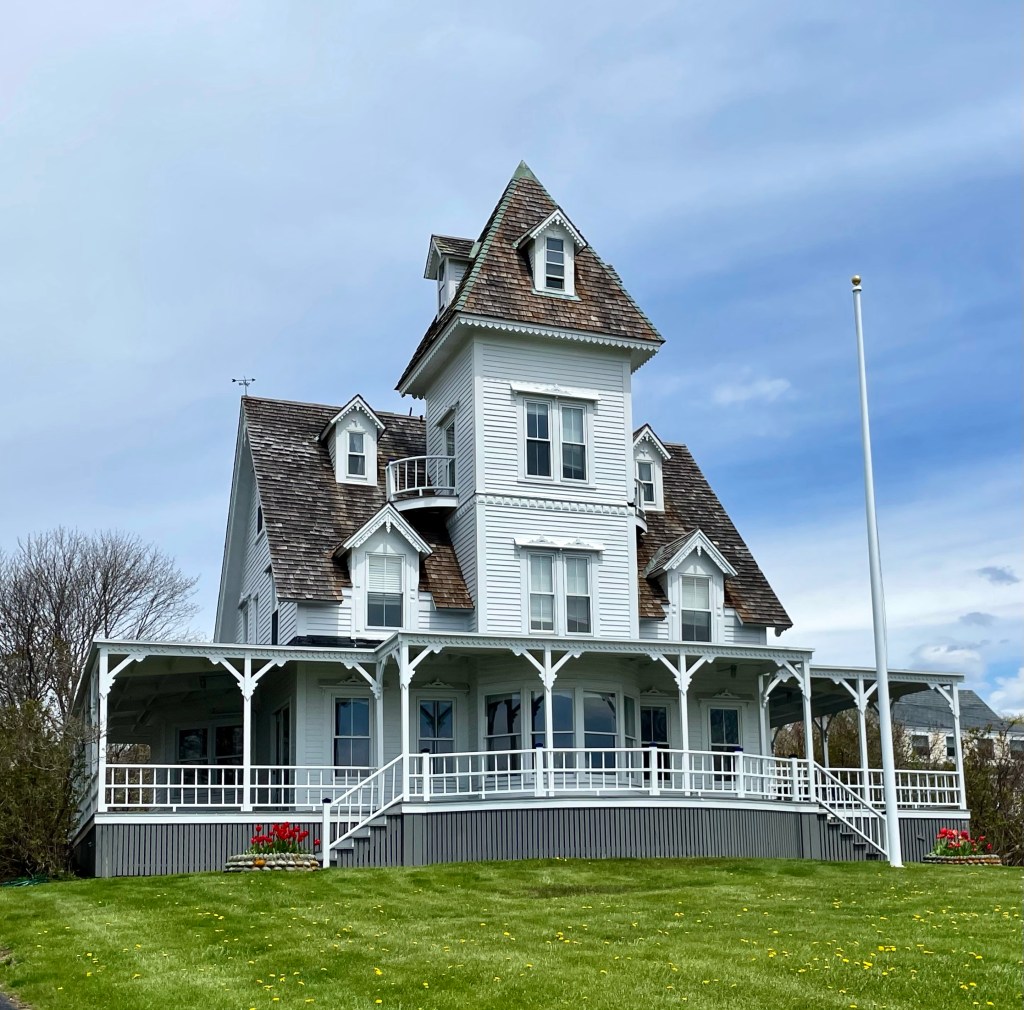
Located in the Foss Beach section of Rye, NH, this Victorian summer cottage stands out among the later new construction of lesser detailed and quality late 20th century homes seen here lately. The home, known as “Tower Cottage” was built at the end of the 19th century and exhibits Victorian Gothic elements with a massive center tower. The steep wood shingle roof is punctuated by two rows of delicate dormers which add detail and views to the ocean. The massive wrap-around porch is also a must for such a prime location fronting the Atlantic Ocean!
This house was built and first occupied by George G. Lougee, owner and proprietor of the Sea View House Hotel (demolished) across the street. Before building his own hotel, Lougee was a clerk at the Atlantic House, another summer resort. Lougee eventually worked his way up and ended up managing that hotel. Lougee’s success managing the Atlantic and later, the Farragut, enabled him to pursue his own enterprise and build his Sea View Hotel. When Lougee sold the Sea View hotel, he also sold this house with it. His former Stick style home was then converted to additional rooms at the hotel until it closed in the 20th century.
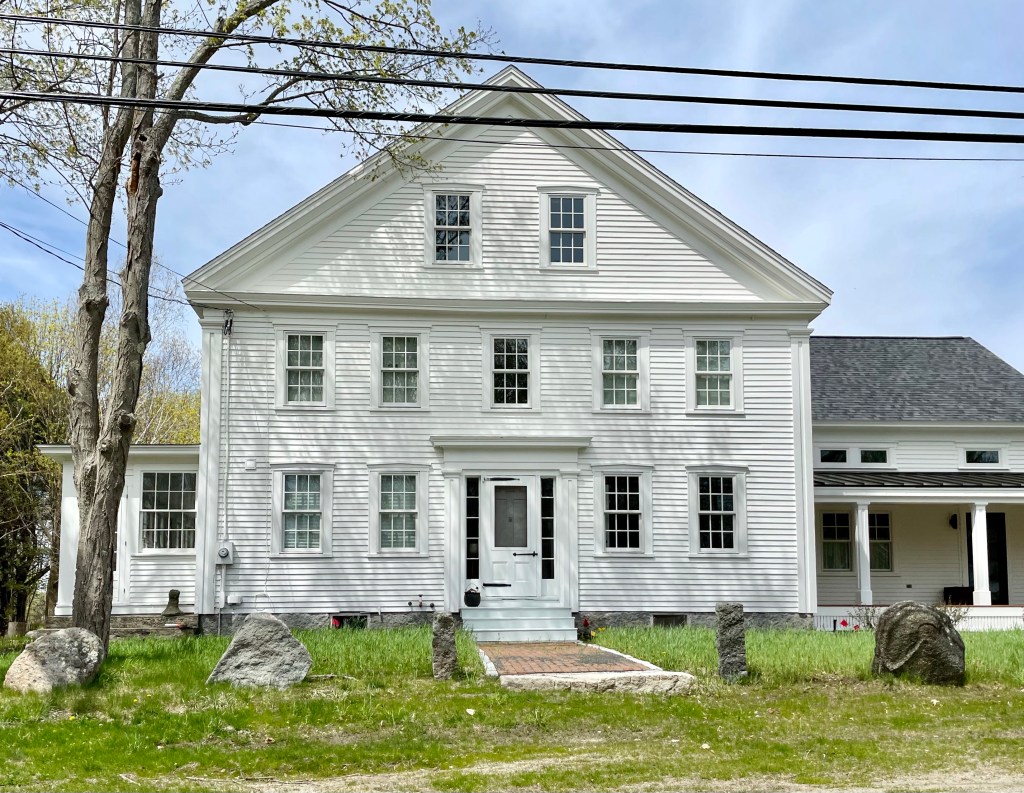
Located a stone’s throw from the Elijah Locke Homestead (last post) in Rye, New Hampshire, this mid-19th century home stopped me in my tracks when driving by. According to old maps, the home was owned by Moses Leavitt Garland, who married Lucretia Locke, a descendant of Elijah. The home shows strong Greek Revival features including the large gable end facing the street serving as a pediment and pilaster at the corners and entry with entablature above. The house recently sold, and the owners demolished the ell connecting the home to the large barn (not pictured) and replaced it with a historically appropriate addition.
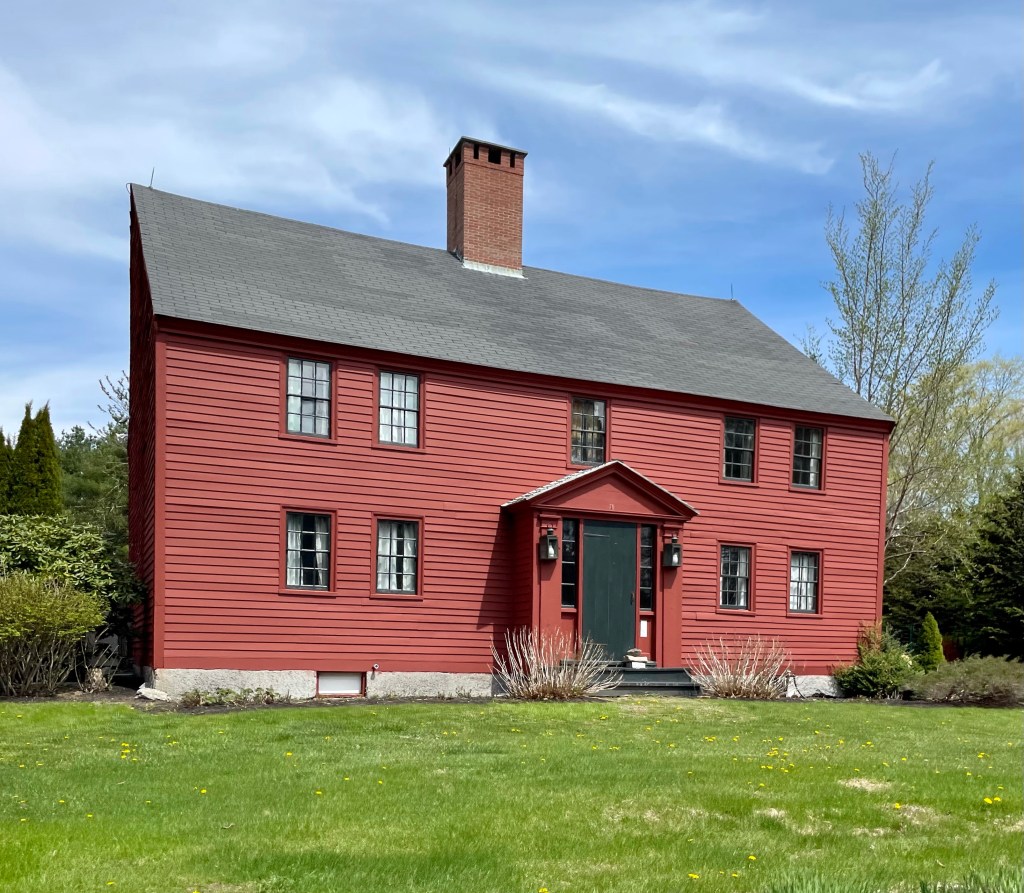
John Locke (1627-1696) settled in New Hampshire about 1640, arriving from London. He was a farmer and carpenter, and reportedly built the first church in New Hampshire. He was also a Captain in the local militia, who was constantly at odds with the people who’s land they were usurping. While working the fields at his homestead in Rye, he was killed by a native person, likely as a retaliatory attach. The attacker was soon after shot by his son, who was helping his father at the time. This Georgian home was built by John’s grandson Elijah in 1739 on family land; the date is found incised on one of the original roof beams inside.
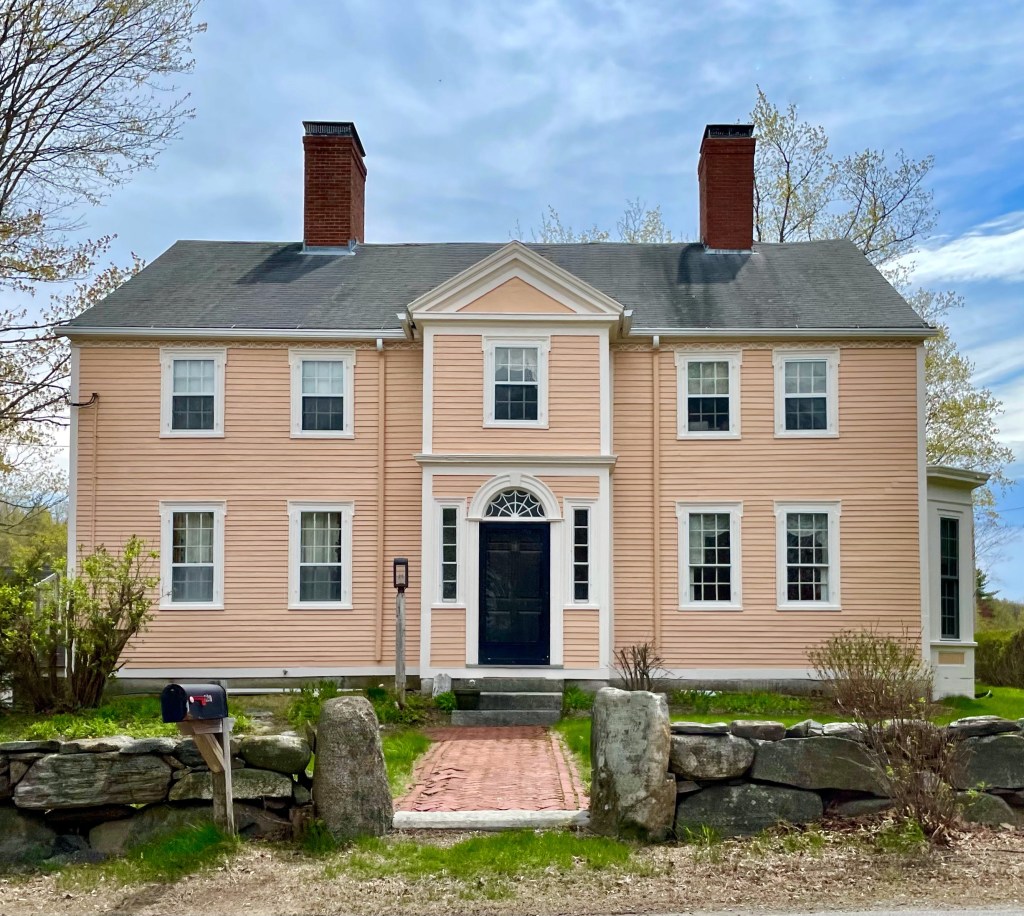
The Parsons Homestead in Rye, contains some of the most interesting early Federal-style design elements in the coastal towns of New Hampshire outside of the principal towns of Portsmouth and Exeter. When the Parsons House assumed its present appearance at the turn of the nineteenth century, Rye was a coastal farming community, but despite its rural character, the town developed distinctive preferences within the Federal style. There is no architect listed for the home, but it is highly likely a housewright took cues from William Pain’s “The Practical Builder” (1774, published in Boston in 1792). This book, inspired directly by the designs of British architect Robert Adam, allowed carpenters to take plans from one of the earliest “do-it-yourself” manuals ever published. The builders’ manuals and pattern book offered carpenters and other construction workers important resources for designs and techniques in house design and construction. Those unable to afford an architect’s services could feel confident in the good taste of their residence by selecting designs from a pattern book style in southeastern New Hampshire. Records show the land here was purchased in 1757 by Samuel Parsons (1707-1789). The property was acquired by his son Captain Joseph Parsons (1746-1832), who was a Doctor and Captain in the Revolutionary War. It is likely that he or his own son built this “modern” Federal home, and incorporated some of the old features of the family home inside.
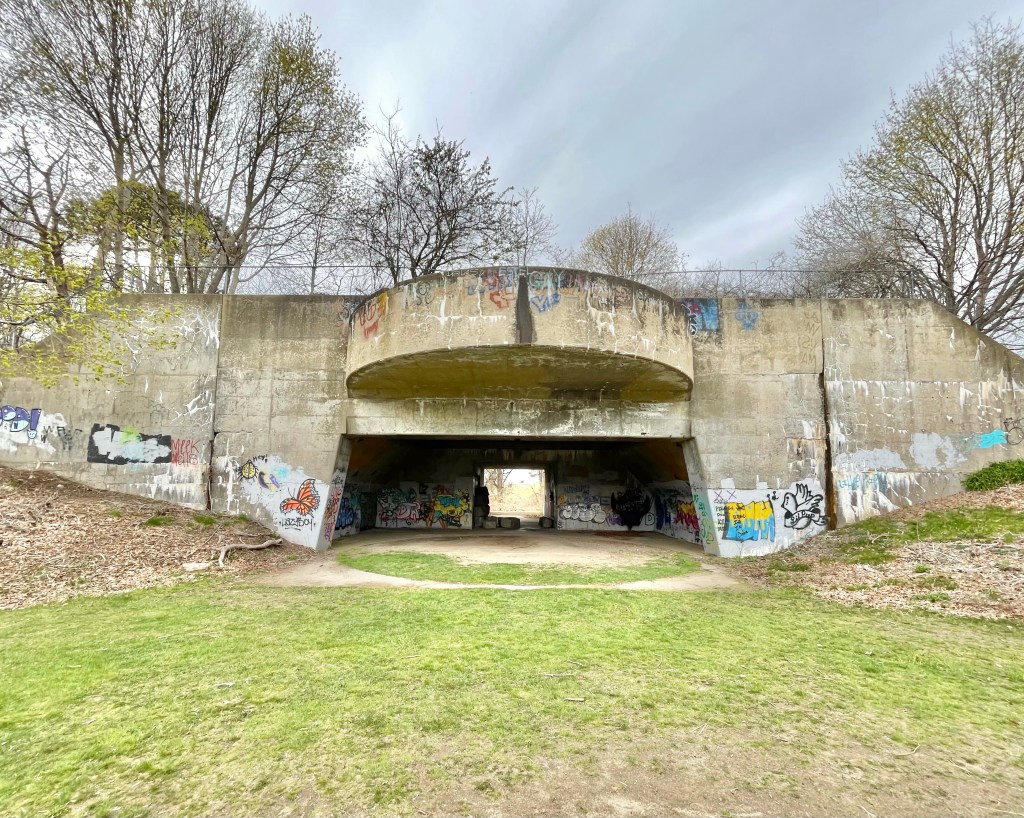
Odiorne Point in Rye New Hampshire was owned by the Odiorne Family from at least 1800, when the family built a farmhouse on the land. The peninsula juts out into the Atlantic Ocean, just south of Portsmouth, and it was seen as a strategic position by the United States Government, to protect the Portsmouth Naval Shipyard. With the advent of World War II, the United States Government deemed it necessary to improve the fortifications commanding the approaches to the Portsmouth Navy Yard, so the Government acquired this property and named it Fort Dearborn. Giant 16” coast defense guns and other equipment were installed to protect the coast from the impending German advance into North America. The Government acquisition on Odiorne’s Point included Mr. Odiorne’s home and 24 other properties, with many fine old homes on the coast demolished to make way for military facilities, but the Odiorne house was converted to a barracks. When The Nazi forces were beat in Europe, the fort was deactivated and all the guns were removed. In the Cold War period, the U.S. Air Force took formal possession of 45.3 acres at Odiorne’s Point in 1955, which it had been using since 1949 as the Rye Air Force Station. By 1961, the defensive use of the site was not as important, and the site was sold to the State of New Hampshire as a State Park. Today, you can explore the park and the decaying concrete batteries up close, which is a favorite excursion of mine.
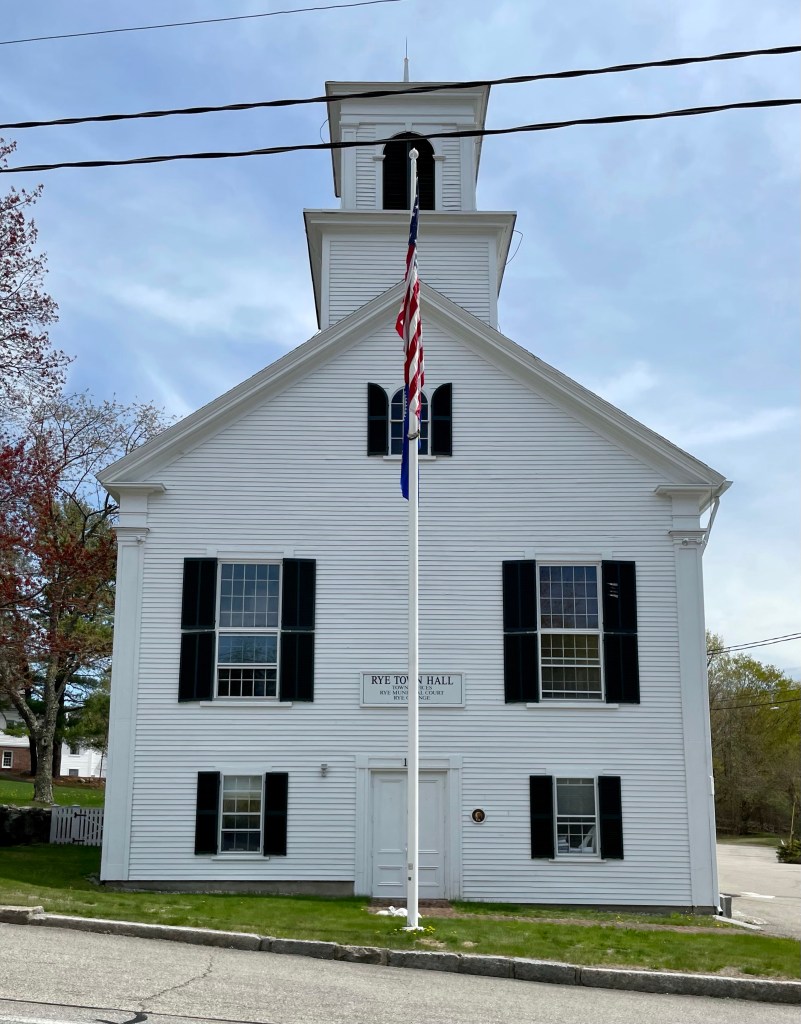
Rye, New Hampshire sits on the short coast of the state, between the busy towns of Portsmouth and Hampton, and provides a respite from the swarms of tourists and beach-goers alike. Modern-day Rye was the first settlement in New Hampshire by Europeans, and was originally named Pannaway Plantation, established in 1623 at Odiorne’s Point (more on that later). The settlement was eventually abandoned for Strawbery Banke, which became Portsmouth, the historic port town we know today. The town was later a village of New Castle, and was known as Sandy Beach Village, before it was called “Rye”, for Rye in Sussex, England, and incorporated as its own town in 1785. The town met in a Meeting House until it purchased an old 1839 Methodist church in town. In 1873, the building was purchased by the town of Rye for $1000, with an additional $2658 spent on renovations, which added a new ground floor to increase the height from 1.5 stories to 2.5 stories, added 10 feet in depth to the building, and the two-stage tower and belfry. The Greek Revival building has long been a landmark in town, hosting dances, concerts, whist parties, singing schools, oyster parties and immunization clinics, beyond the typical governmental functions. There were calls to demolish the building for a modern town hall, which saw resistance (thankfully) and now the town has agreed on a land-swap with a bank, demolishing an old house to take over the bank building, turning it into some town offices.
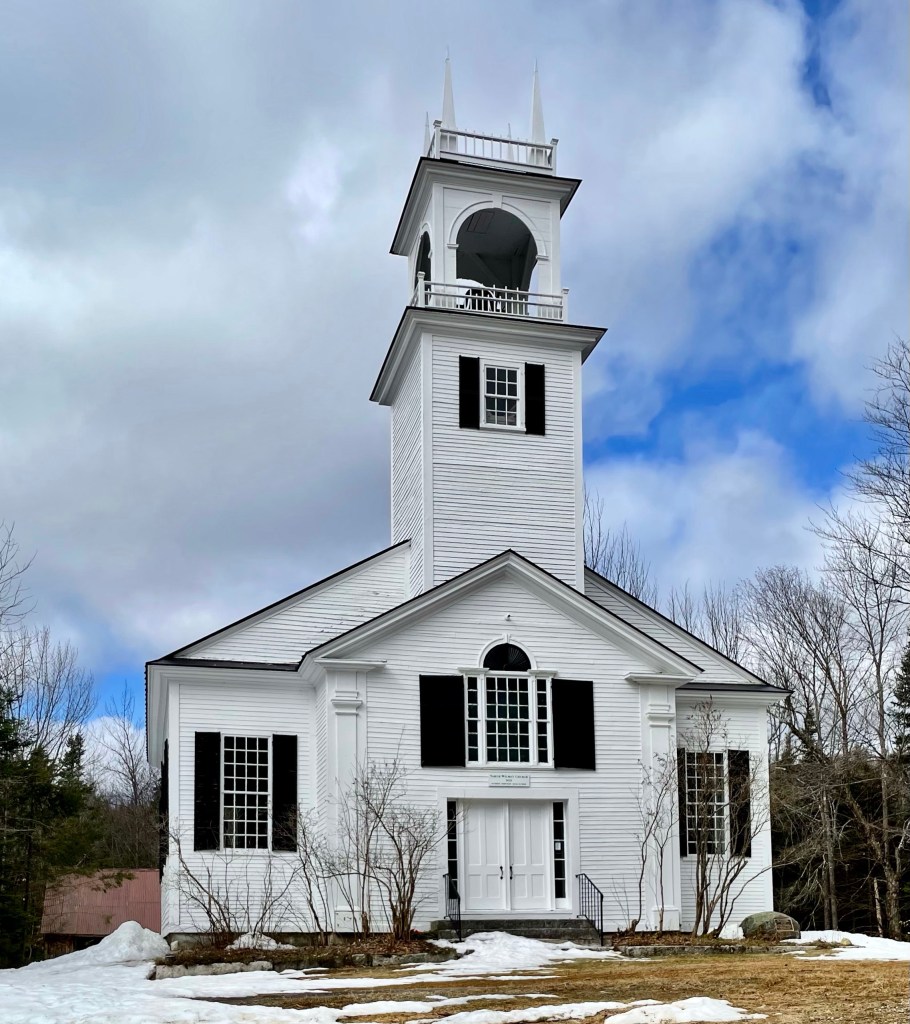
Off the beaten path (like much of the town of Wilmot, NH, you can find this stunning old New England meeting house. Erected in 1829, the North Wilmot Church stands as the oldest extant church in the small town. Five denominations—Congregational, Christian Baptist, Freewill Baptist, Universalist, and Methodist, together collaborated to build this structure then known as the North Union Meeting House. Each denomination held services at the church, as they were all too small separately to warrant their own buildings. Decades after it was built, it was determined that the church should be moved down the hill. In 1846, the church was lifted and placed on rollers (logs), and with the help of oxen, rolled down the hill. It is said that the builder of the church, Josiah Stearns, rode in the belfry. The Different congregations later built churches elsewhere and the building was under-utilized, and it was converted to a meeting space, but allowed a congregation to use the structure. In 1983, with the agreement of remaining North Wilmot Congregational Church members, the North Wilmot Union Meeting House Society was established to maintain the structure and arrange for services in July and August.
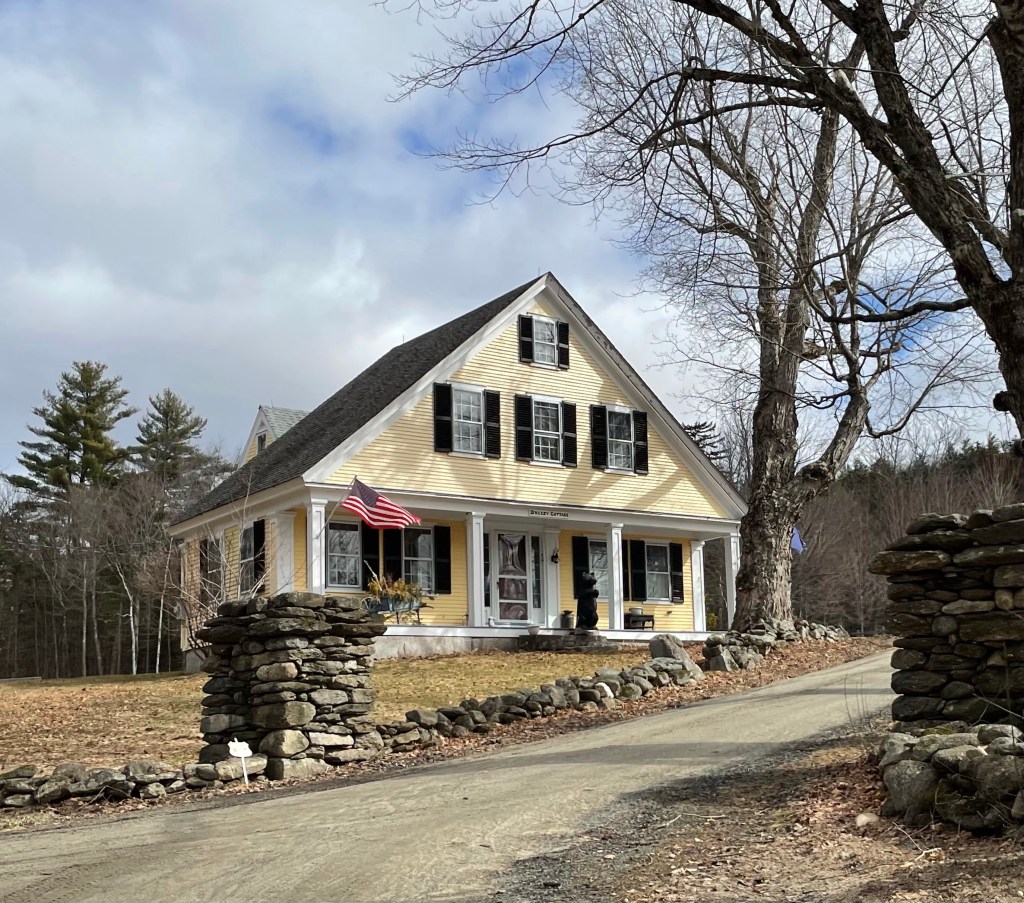
On the backroads of the rural town of Wilmot, NH, I stumbled upon this perfect Greek Revival cottage tucked away on a dirt road. The home was built in 1840 by Col. Samuel Thompson, likely operated as a farm. The property was purchased by the Tewksbury Family decades later, who likely gave the home its name “Breezy Cottage”, after an older colonial home nearby, and subsequently the name of the street in which it is sited. The Greek Revival home is symmetrical with a wide, gabled roof and upper floors overhanging the recessed front porch. The home features bold corner and entry pilasters.

 Buildings of New England