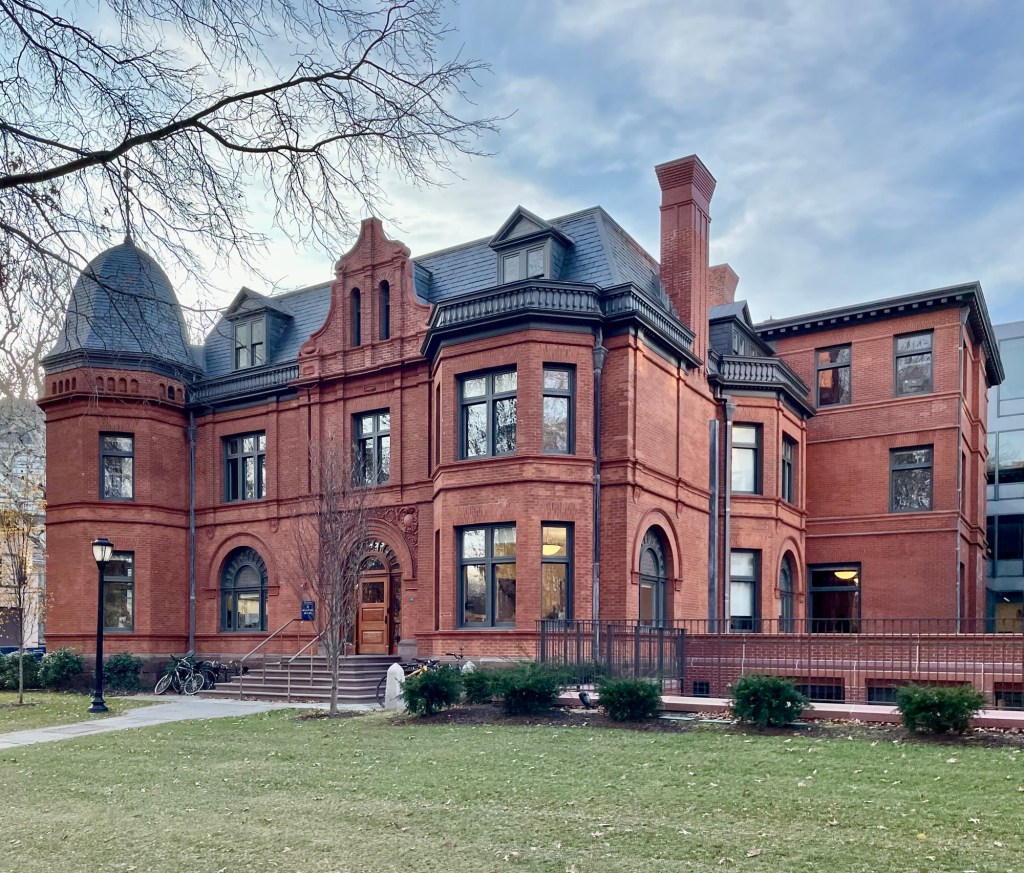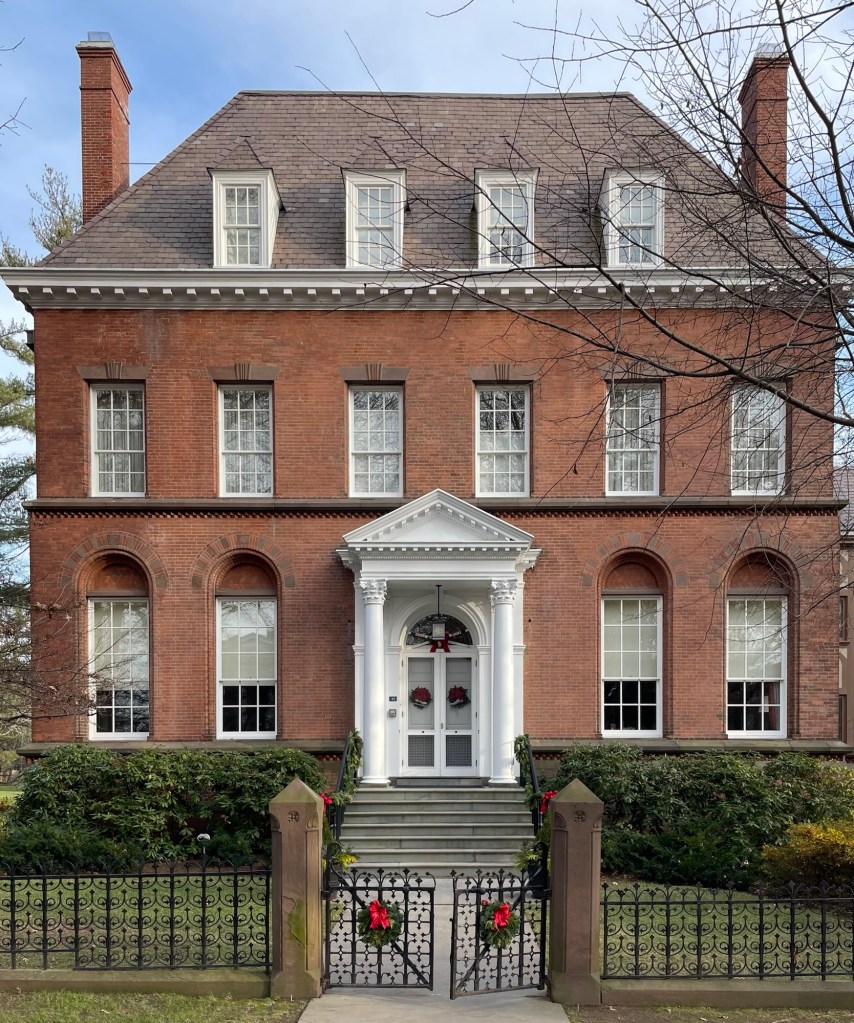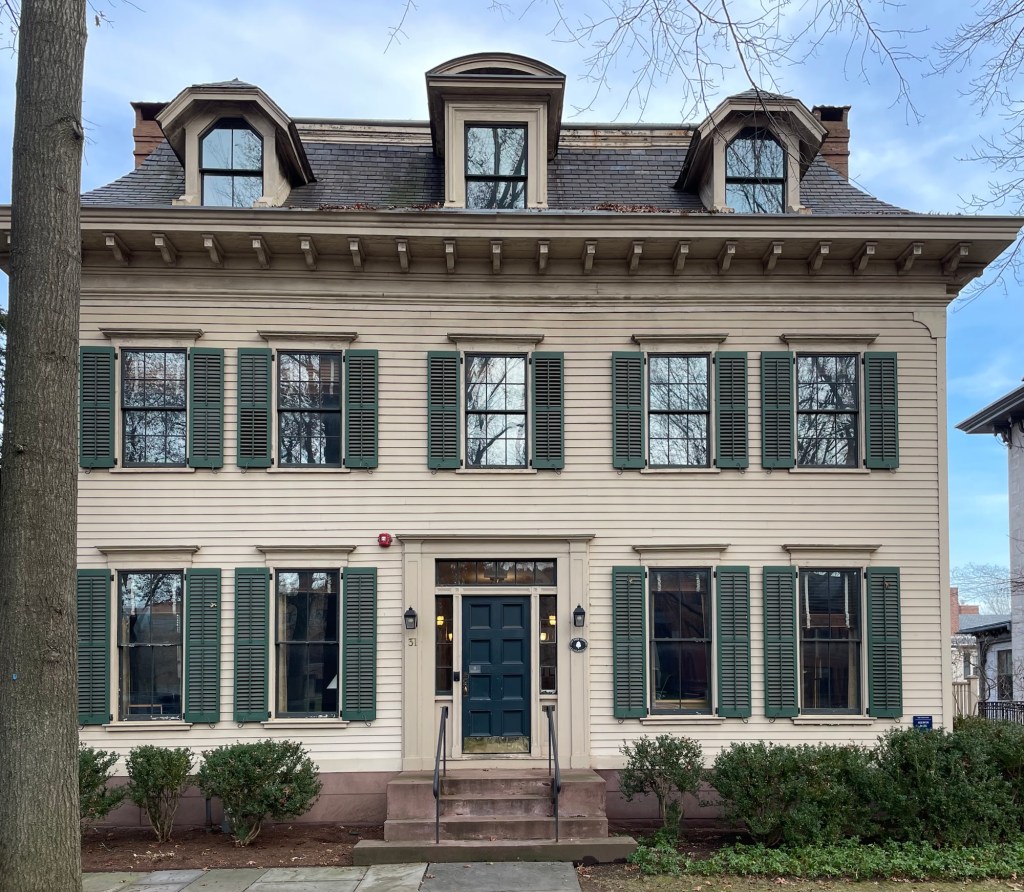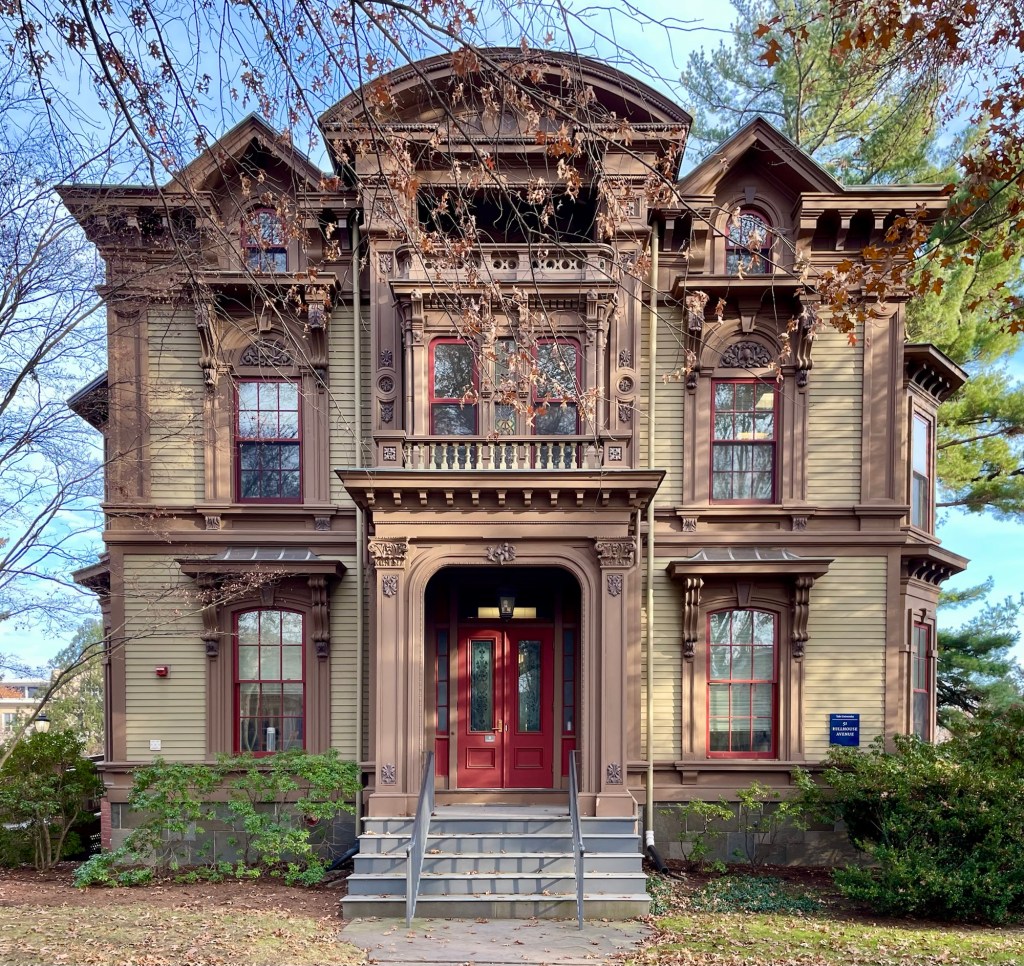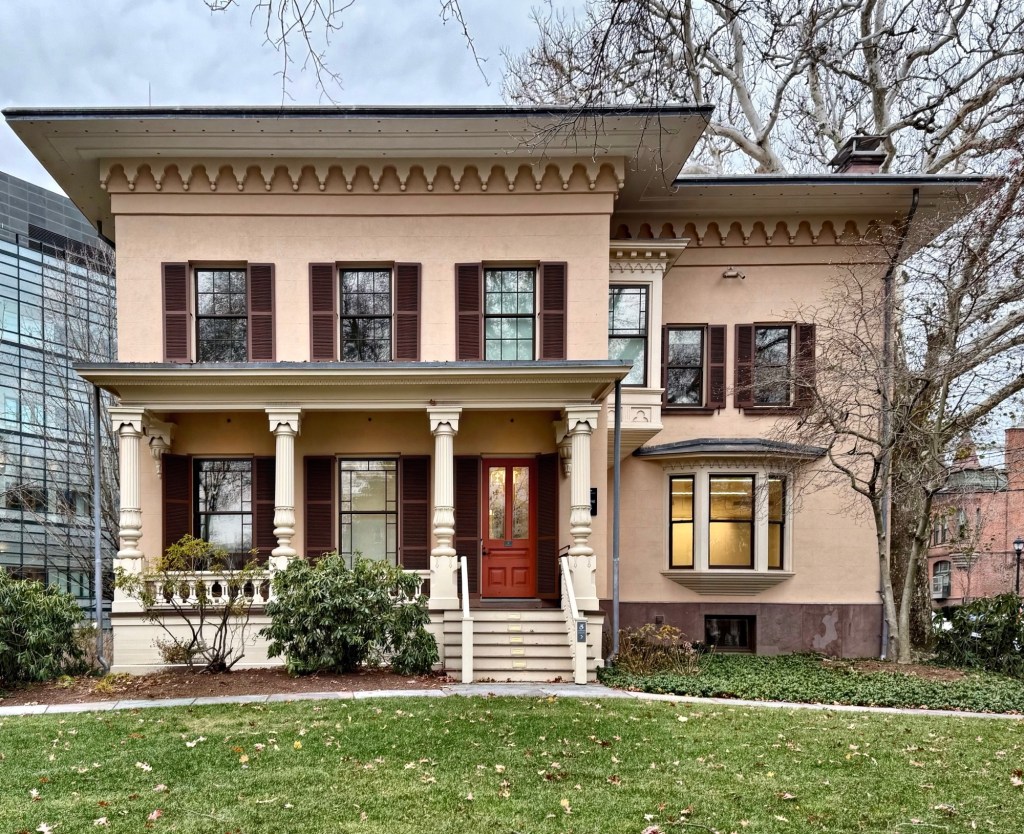
Abigail Whelpley House // c.1826

The oldest extant building on Hillhouse Avenue in New Haven is this Federal-period house with later Victorian-era modifications. The Abigail Whelpley House was built by 1826 (with some estimates as early as 1800 and moved to the site) and was a traditional, five-bay, two-story Federal style residence. It is said that the house was built by James Abraham Hillhouse (1789-1841) for his widowed family member, Ms. Whelpley, and her two sons. As of 1849, the property was owned by Noah Porter, later President of Yale, who would alter the house in the 1860s with the addition of a mansard roof and trim, all designed by architect, Henry Austin. The house, now known as Allwin Hall, is maintained by Yale University and contains offices for the program on Ethics, Politics & Economics.

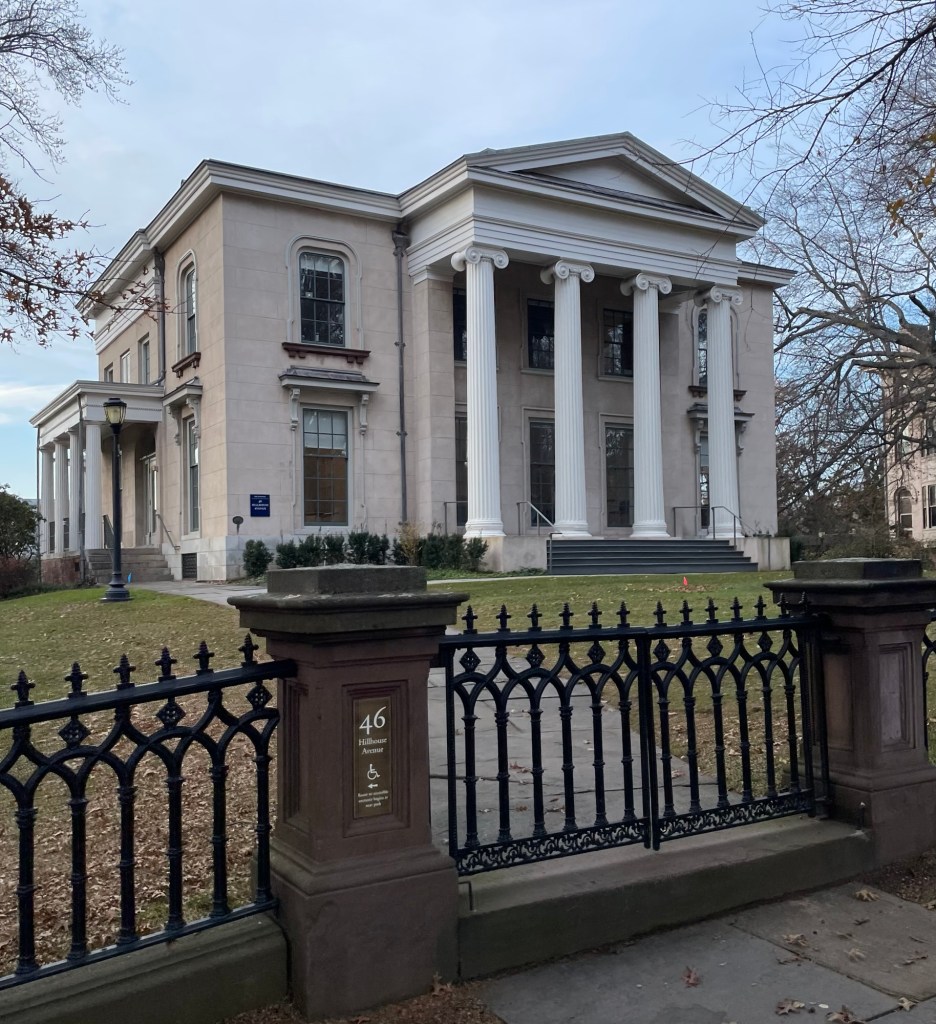
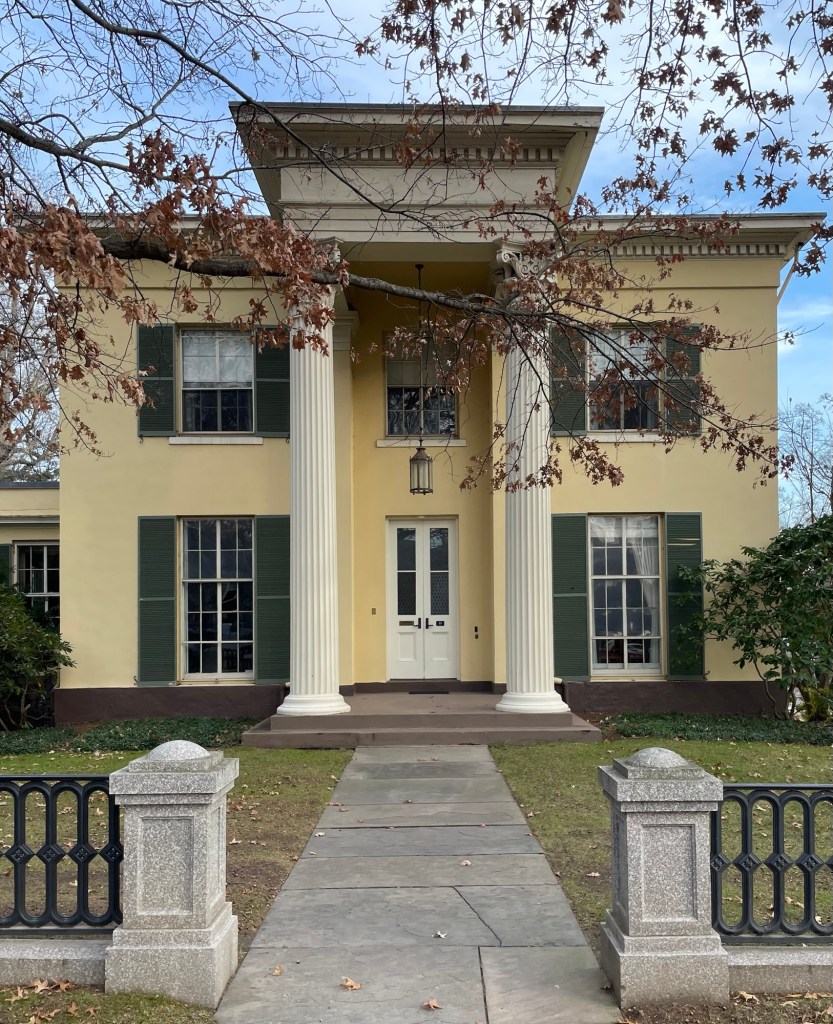
Pritchard House // 1836

One of the earliest houses built on Hillhouse Avenue in New Haven, Connecticut, is this stately Greek Revival mansion with monumental portico. The house was built in 1836 for Mary Pritchard from plans by great American architect, Alexander Jackson Davis. The mansion is two stories and is constructed of brick and stucco with a distinct two-story portico supported by fluted Corinthian columns. The architect also may have designed a barn at the rear of the house for Ms. Pritchard. Like many other former residences on Hillhouse Avenue, the house was acquired by Yale University, and is now the house of the Provost.

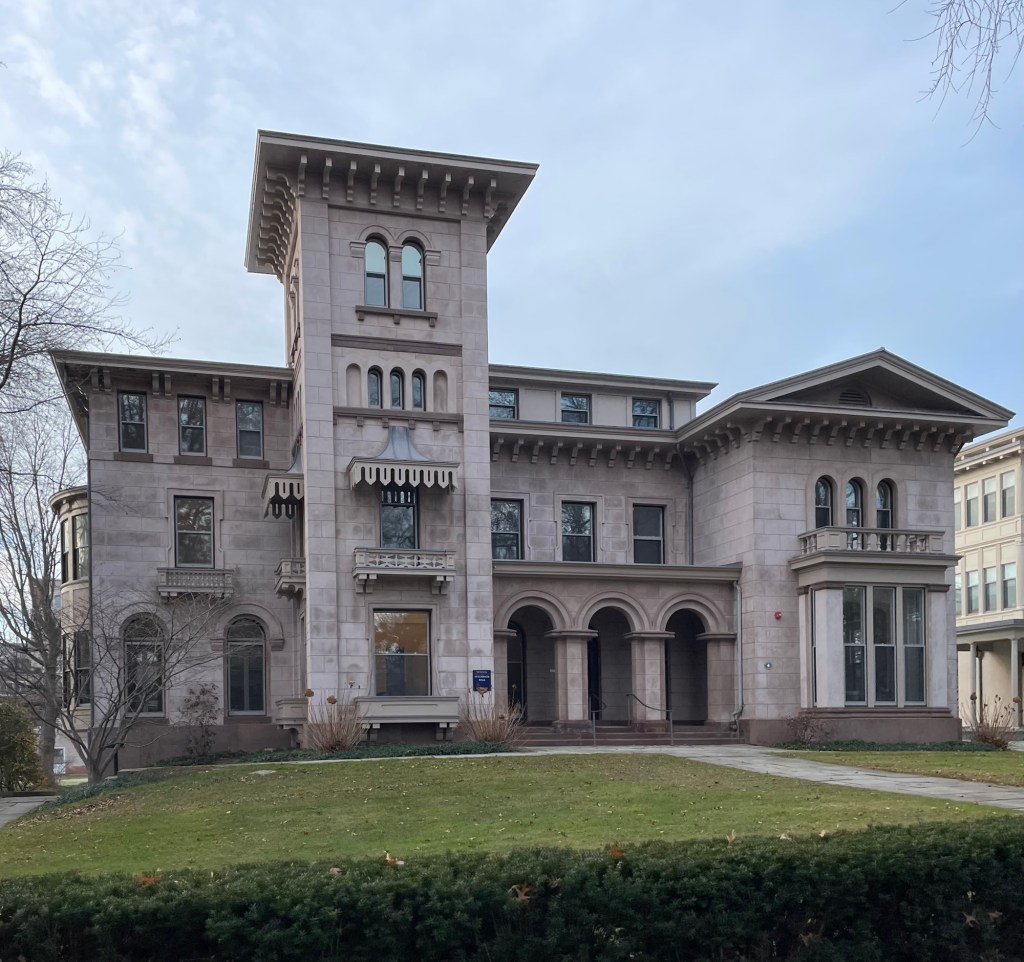
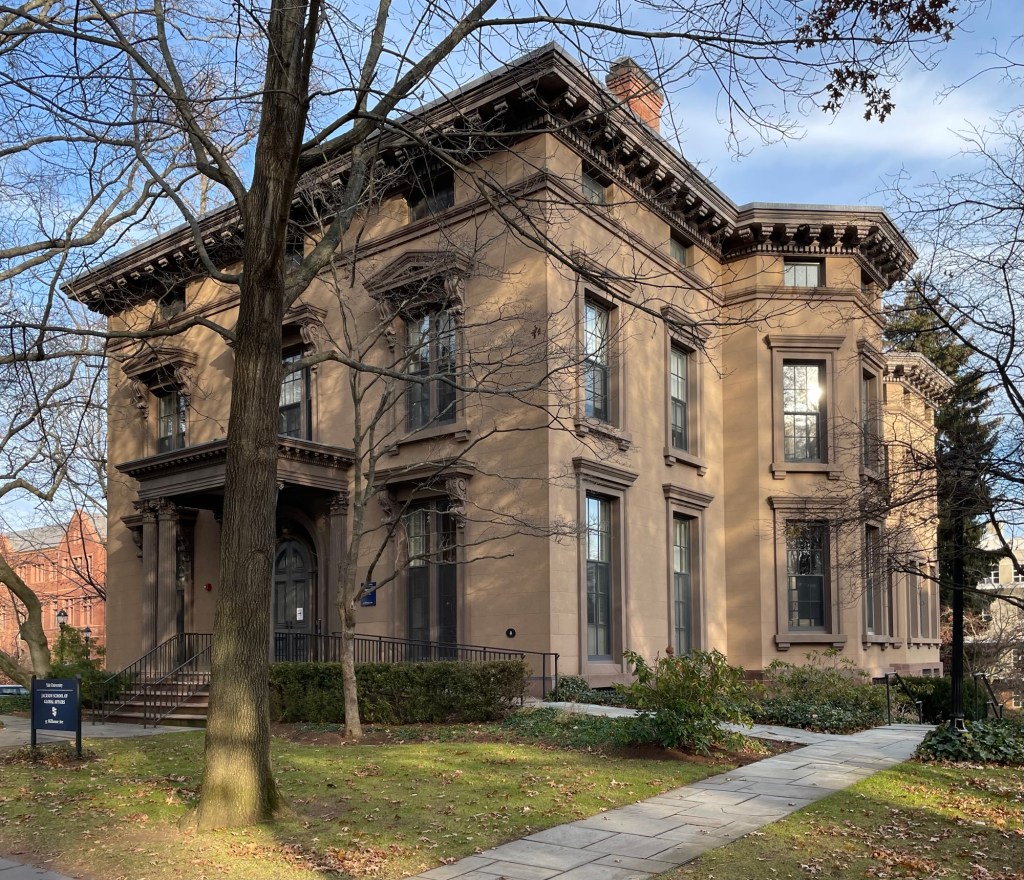
Perit House – Horchow Hall // 1859

This Italianate Villa style mansion on Hillhouse Avenue in New Haven, Connecticut, was built in 1859 for Pelatiah Webster Perit (1785-1864), a successful New York City shipping merchant and president of the New York Chamber of Commerce. Perit split his time between New York and New Haven and would hire architect, Sidney Mason Stone, to design this home on Hillhouse Avenue in New Haven. The brownstone residence is notable for its elaborate scroll brackets supporting the window pediments and front entry portico with arched doorway with rope moldings. The mansion was occupied by Perit for just four years until his death in 1864, and it was later owned by Henry Lucius Hotchkiss, a businessman. Like nearly all buildings on Hillhouse Avenue, the building was acquired by Yale University and is now known as Horchow Hall, and is part of the Yale School of Management.

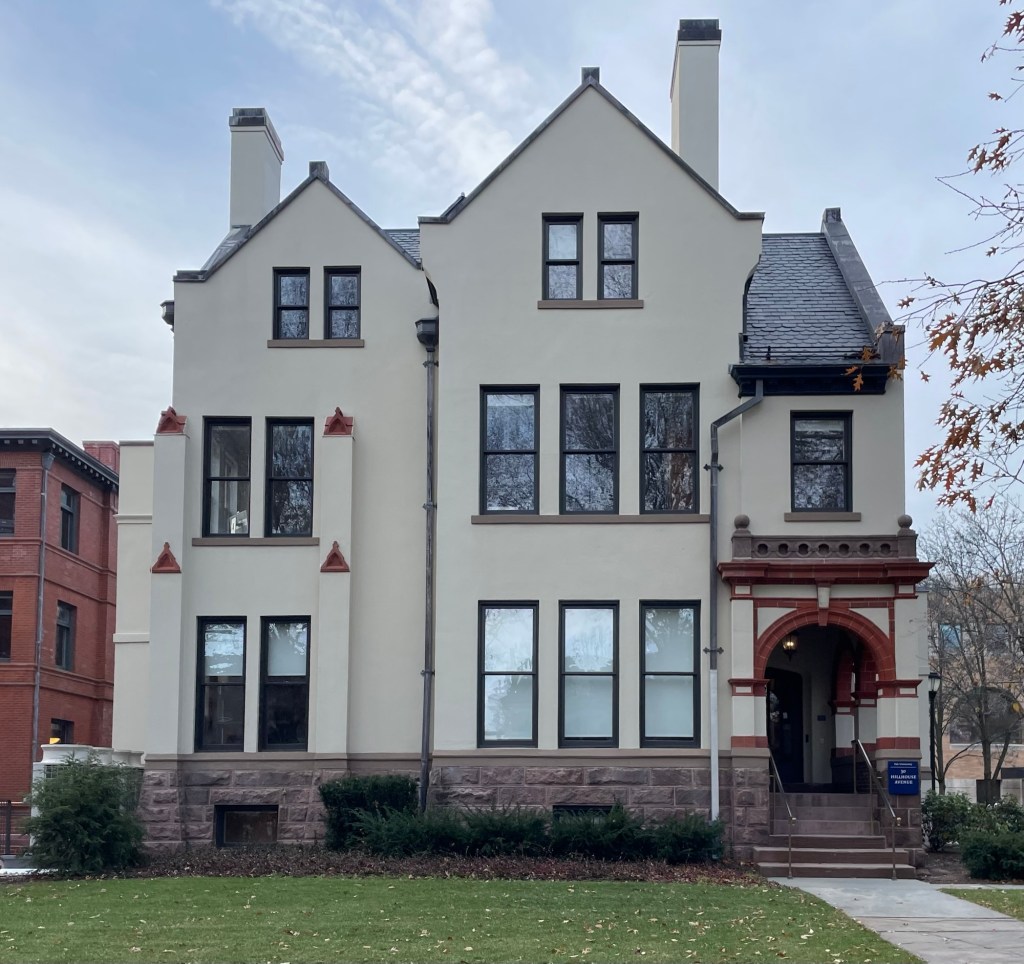
Graves-Dwight House // c.1862

Hillhouse Avenue in New Haven, Connecticut is lined with stunning 19th- and 20th- century mansions showcasing the evolution of styles and architectural taste for the wealthiest residents. This is the Graves-Dwight House, a high-style Italianate mansion built around 1862. The residence was built for John Samuel Graves (1807-1892), a local businessman and politician who was a founder of the New Haven Gas Light Company. The architect is not known, but the house is the work of a skilled designer with immense attention to detail. The highly ornamented exterior features a symmetrical facade, bracketed cornice and window hoods, a recessed third-floor balconette with segmental arch pediment above, and bold, period-appropriate paint scheme. The residence was later owned by James McLaren Breed Dwight, a lawyer, and his wife, Cora Tallmadge Dwight. Since the 20th century, the property has been owned and preserved by Yale University, and is now home to the Archaeology Department.

Town-Sheffield Mansion // c.1836-1957

One of the biggest architectural losses in New Haven was the 1957 demolition of the Town-Sheffield Mansion, formerly on Hillhouse Avenue. The mansion was built around 1836 by esteemed American architect and civil engineer Ithiel Town (1784-1844) as his own home on Hillhouse Avenue in the Greek Revival style; here he kept what was then an extraordinary architectural library, which was said to have been larger than any other personal collection anywhere at the time, including that of Sir John Soane in London. After Town’s death, the house was bought by Joseph Earl Sheffield in 1859, benefactor of the Sheffield Scientific School at Yale, and modified by local architect, Henry Austin in the Italianate Villa style. Alterations included two large asymmetrical towers, a new porch, and symmetrical side wings with large bay windows. After Sheffield’s death in 1889, the building was used for laboratory space for the school. Although the house was one of Austin’s most important works, it was demolished in 1957 by Yale to make way for Dunham Laboratory.