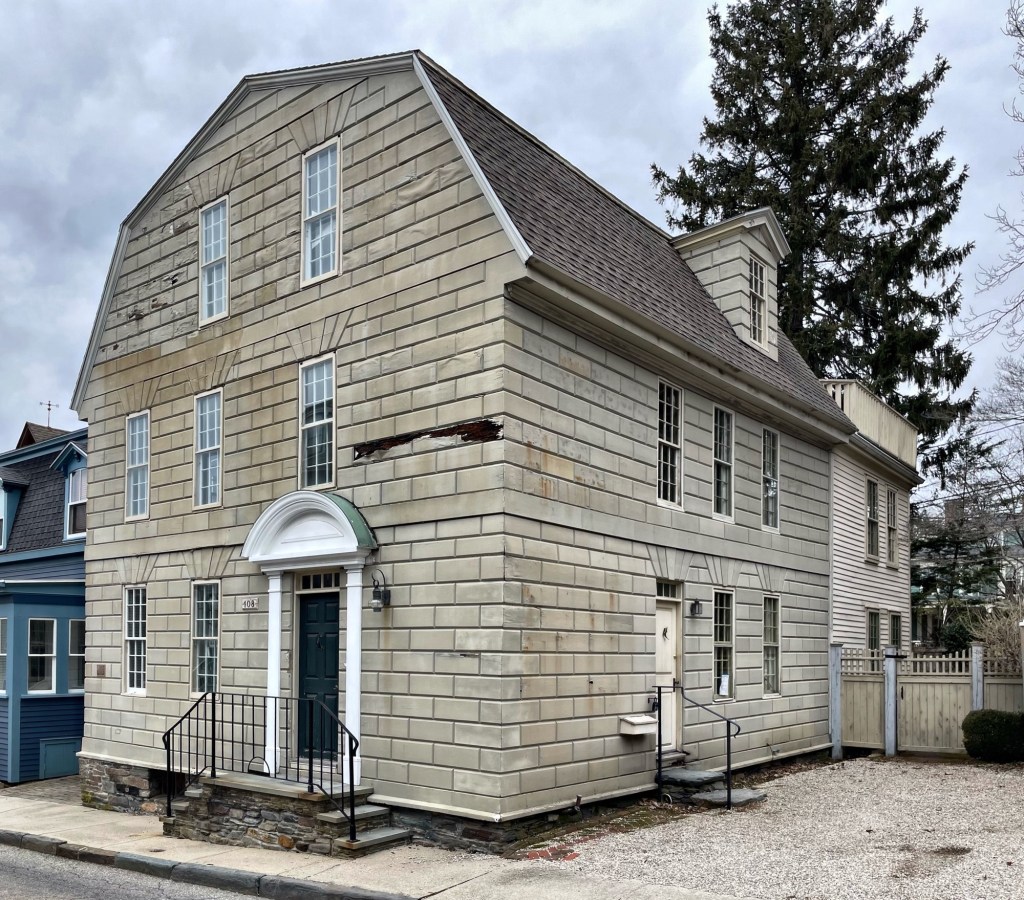
Brattle-Thurston House // c.1749

This early Colonial house with unique, rusticated wood coursing carved, treated, and painted to resemble ashlar stone, can be found on Prospect Hill Street in Newport, Rhode Island. This is the Brattle-Thurston House, a circa 1749 Georgian residence of an appropriate gray color, yet when I stopped by in early 2024, had peeling paint. The house was originally part of the Latham Thurston estate, and was later rented or purchased by Robert Brattle (Brattell), who lived here with his wife, children, and an enslaved person according to the 1790 census. The home would later be owned by William Thurston, a hatter and dyer, who likely inherited the residence from his ancestor. Beyond the unique rusticated wood siding, the design features splayed lintels, the main entrance on the side elevation and a later entrance facing the street with segmental pediment above.
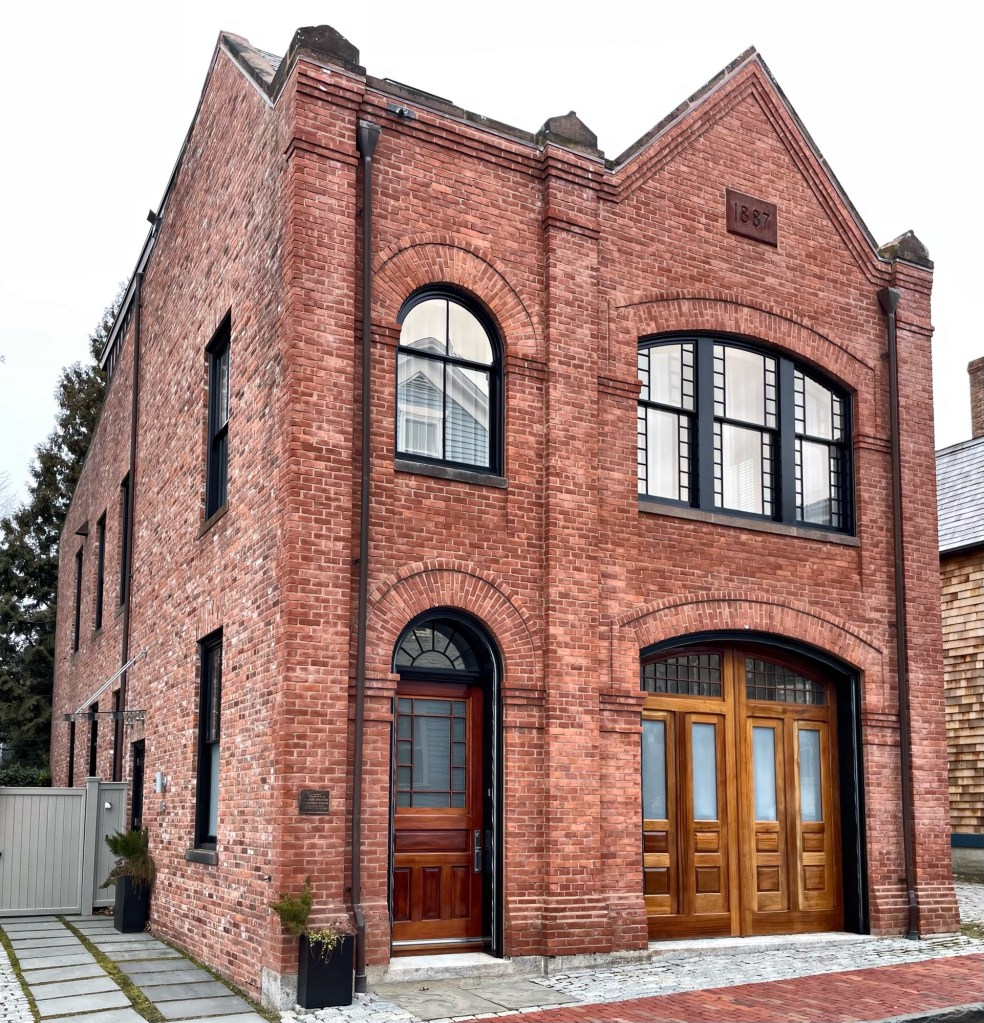
Newport Old Fire Station Hose No. 8 // 1887

One of the charming converted old fire stations of Newport, Rhode Island, can be found tucked away on Prospect Hill Street. This is Hose No. 8 Fire Station, built in 1887 by the City of Newport as a neighborhood station to battle fires in the dense network of streets and homes Downtown. The design blends Romanesque Revival and Victorian Gothic elements into a compact, two-story brick building. The station was closed in 1912 as the structure no-longer was compatible with larger fire apparatus and gasoline-powered trucks. The building would suffer from neglect and was crumbling, before being reconstructed, brick-by-brick, and restored by Hacin Architects of Boston as a private residence. The structure is essentially new on the interior but provides a significant preserved exterior that was long part of the eclectic streetscape of Prospect Hill Street.

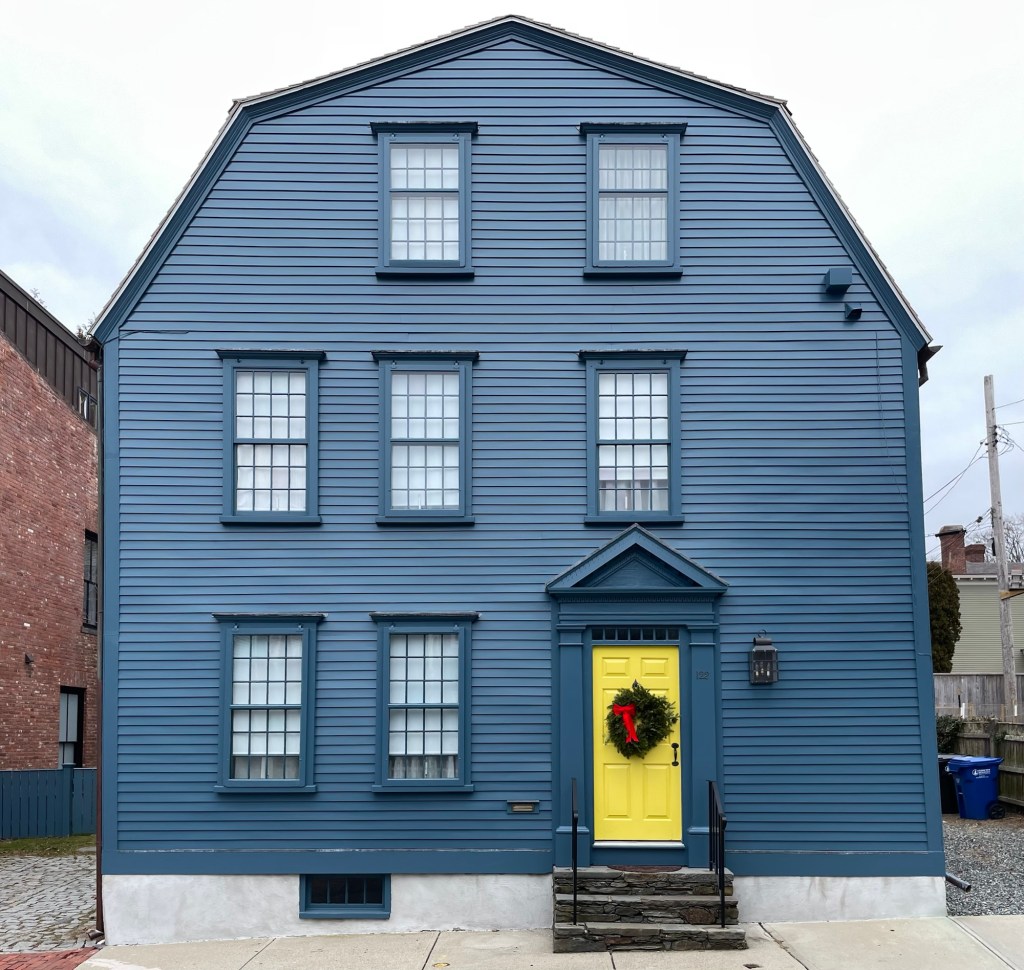
Bowler House // c.1760

This beautiful Georgian house in Newport, with its prominent gambrel roof oriented toward the street, was built by 1760 and owned by Metcalf Bowler (1726-1789), a merchant, politician, and magistrate. Bowler was for many years speaker of the house in the Rhode Island colonial assembly, and it was discovered in the 20th century that he was a paid informant (spy) for the British during the Revolutionary War. The house was owned by Metcalf before he would purchase what is now known as the Vernon House, an even more stately Georgian mansion designed by Peter Harrison. This house was sold, and later owned by Charles Wickham, a Captain in the war, and later to the Burdick and Merrill families.

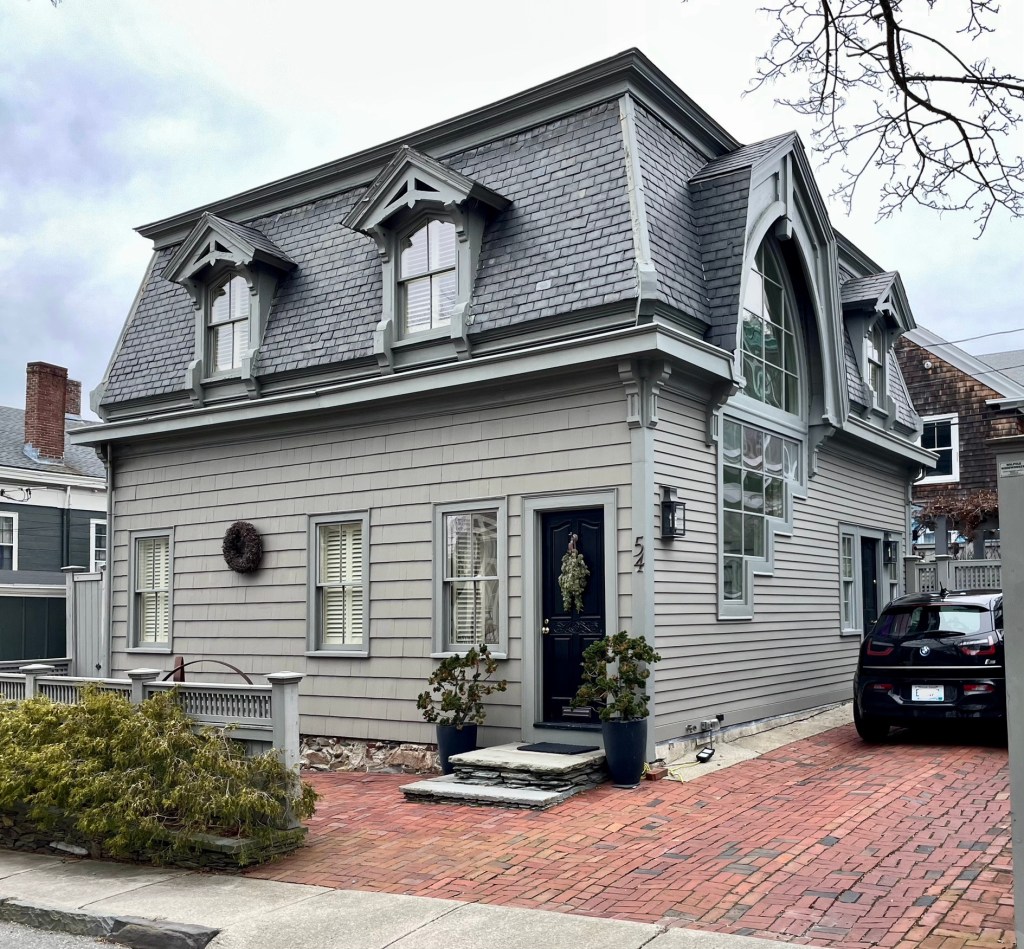
Langley-Dudley Cottage // c.1870

This charming mansard-roofed cottage can be found at 54 Prospect Hill Street in Newport, Rhode Island. While presently a residence, the cottage was originally built around 1870 as a stable or carriage house for the former Bowen-Newton-Tobin House at 204 Spring Street. After the Bowen heirs sold the property, this structure was owned by Mr. John S. Langley, an furniture dealer (who also made coffins and caskets) with the firm Langley & Bennett. The building may have been used for the storage of horses or as a workshop until it was purchased by Mary B. and Dudley Newton, a prominent local architect. They appear to have converted the former stable into a cottage, and rented the property out for additional income. In the renovation, Dudley Newton preserved much of the original detailing above the cornice, and altered openings to provide windows and doors convert the formerly utilitarian structure into a cottage.

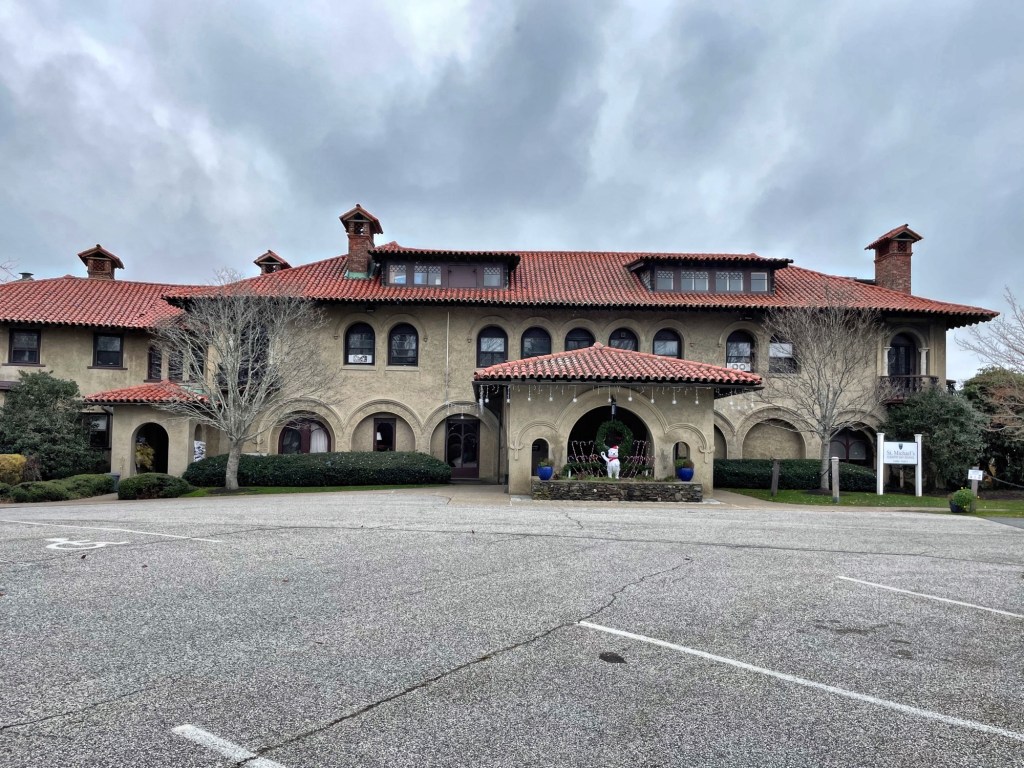
Ellen and Ida Mason Villa // 1902

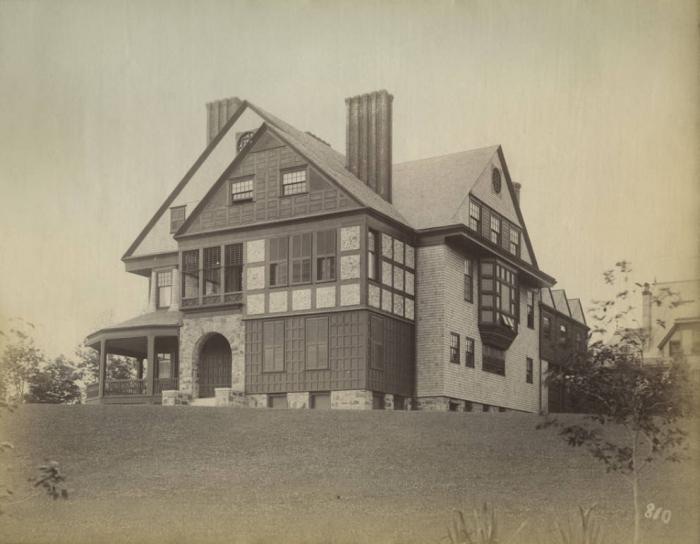
This large, low-slung and stuccoed Spanish Colonial Revival house in Newport Rhode Island, looks straight out of Southern California, thats because it is.. kind of. The Ellen Mason Villa was built in 1899-1902 from plans by Irving Gill, a southern California architect, for sisters Ellen and Ida Mason. The two unmarried sisters were daughters of Robert Means Mason a Boston millionaire, who had a summer cottage on the site that the family enjoyed for decades. The old Mason Villa was designed by H. H. Richardson, but burned to the ground in 1899, replaced by this structure. The sisters lived between Boston and here at this Newport estate until their deaths. In 1943, the property came into the ownership of the St. Michael’s Country Day School, who have both preserved the old estate house, but also added new structures to the campus. The house is unique as a rare Spanish Colonial Revival style property in New England, what a treat!

Original Means Villa

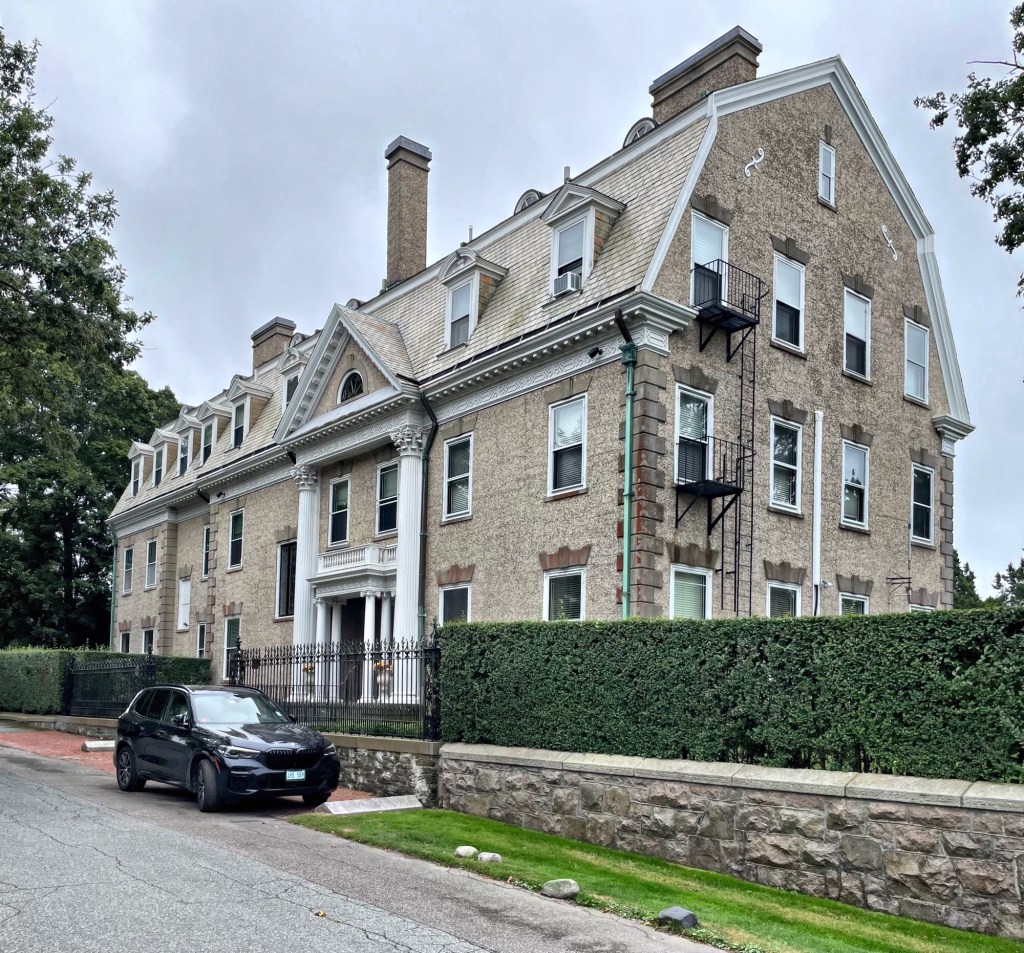
Oakwood/ // 1902

Oakwood, another massive gambrel-roofed “cottage” in Newport, Rhode Island, is another of the McKim, Mead & White designed residences in the Old Beach Road vicinity of town for wealthy summer residents. Built in 1902 for George Gordon King (1859-1922), Oakwood is a large, elongated two-and-one-half-story structure with a gambrel roof with walls in pebbledash finish. Its off-center main entrance with double-height engaged Corinthian columns supporting a pedimented gable and a blind balustrade set on smaller Ionic capitals. The massive home was later converted to condominiums. It sometimes amazes me that families (but with many servants) would live in these houses just for a season…

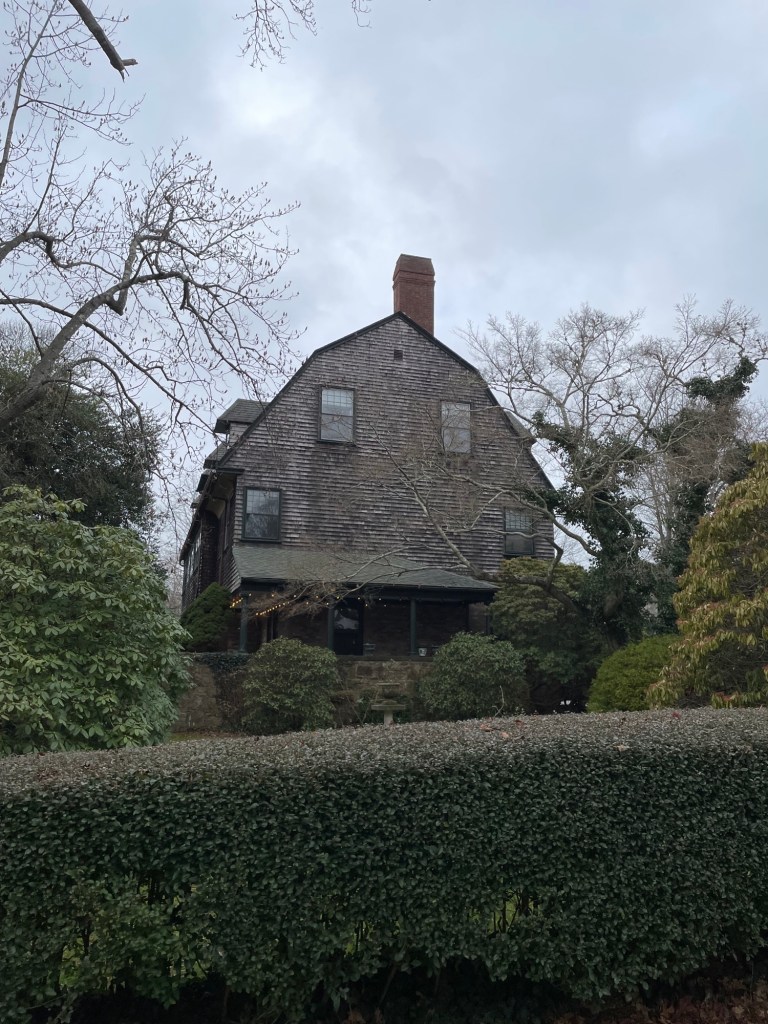
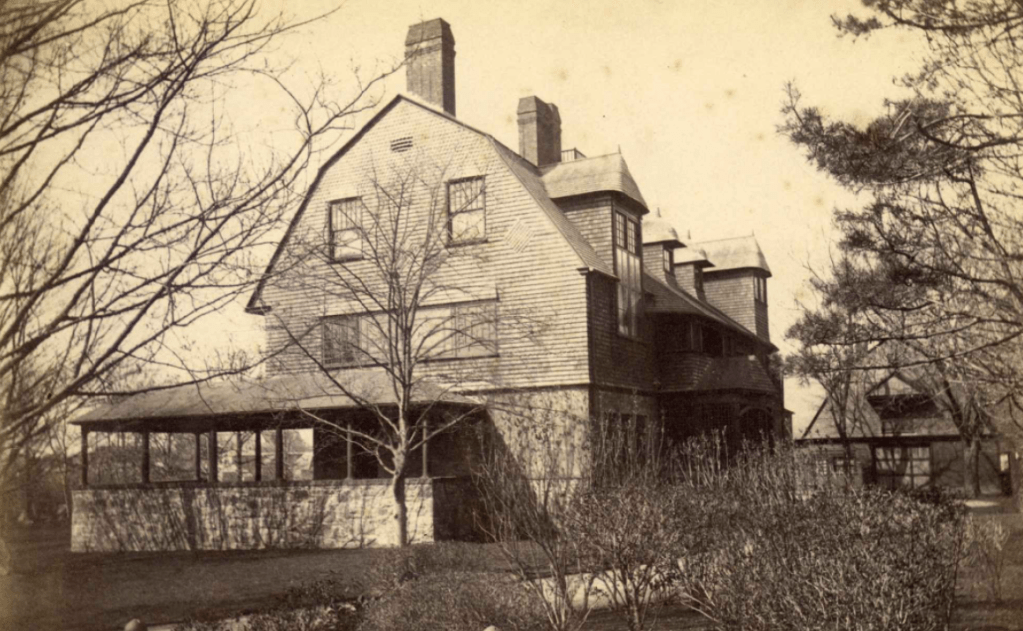
Boxcroft // 1883

“Boxcroft” (also known as “Whileaway”) is a historic Shingle style summer “cottage” on Red Cross Avenue in Newport, Rhode Island. While it is surrounded by vegetation and tucked away, not facing the road, the house is a landmark example of the architecture style and very significant. The house was completed in 1883 from plans by the architectural firm of McKim, Mead & White a white shoe firm who designed many summer cottages in Newport for social elite. The original owner was Samuel Colman (1832-1920), a well-known landscape artist, the first President of the American Water Color Society, a connoisseur of Oriental art and an interior designer in business with Louis Comfort Tiffany specializing in fabrics and wallpaper. Colman lived here with his first wife, Ann Lawrence Dunham until her death in 1902. The property was later owned by Mary Appleton, an unmarried daughter of publisher William Henry Appleton. She would sell Boxcroft to lawyer and socialite J. Coleman Drayton, years following his bitter (and very public) divorce from Charlotte Augusta Astor, a member of the prominent New York Astor family, following a cheating scandal by Charlotte. Mr. Drayton died in Newport in 1934. Boxcroft remains an architecturally and historically significant piece of Newport’s Gilded Age.

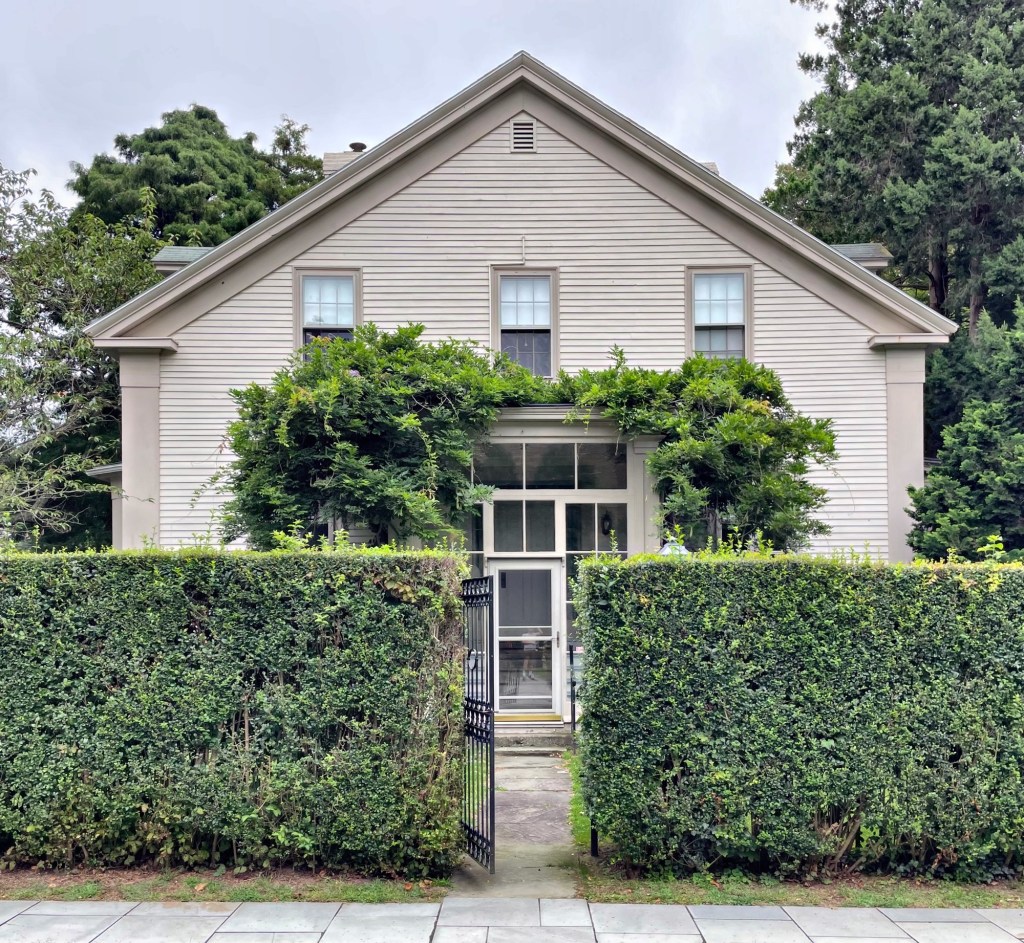
LaFarge Cottage // c.1845

Even the less ornate and grand summer cottages of Newport can have interesting histories! This c.1845 Greek Revival cottage sits on Sunnyside Place and is best-known as the summer home of nationally significant painter, muralist, and stained-glass master John LaFarge (1835-1910), active in the lively late 19th-early 20th-century Newport art scene. John LaFarge’s wife, Margaret Mason Perry LaFarge (1839-1925), was the granddaughter of Commodore Oliver Hazard Perry, and was a native of Newport, seemingly providing the connection between her husband and lucrative stained glass commissions for many Newport and New York buildings. LaFarge is arguably best known for his innovative, opalescent stained glass windows, which was later stolen and adapted by Louis Comfort Tiffany. The LaFarge Cottage was possibly moved to this site and renovated, adding the glazed entry.

Maple Shade Cottage // 1871

“Maple Shade” is a historic, Second Empire style summer cottage located at 1 Red Cross Avenue in Newport, Rhode Island. The house was built in 1871 from plans by George C. Mason, a prominent local architect who designed many summer homes for summer residents in the late 19th century. He even lived in a home adjacent to this house! Maple Shade was built for John Doughty Ogden and his second wife, Mary C. Moore. John originally married Mary’s older sister Margaret, but remarried after Margaret’s death in 1845. The house gained attention again in 1934, when it served as the venue for the wedding reception of John Jacob Astor VI and Ellen Tuck French, then owned by Donald O. Macrae. The house, like many other former estates in Newport, has since been converted into condominiums, but retains its architectural grandeur and presence in town.

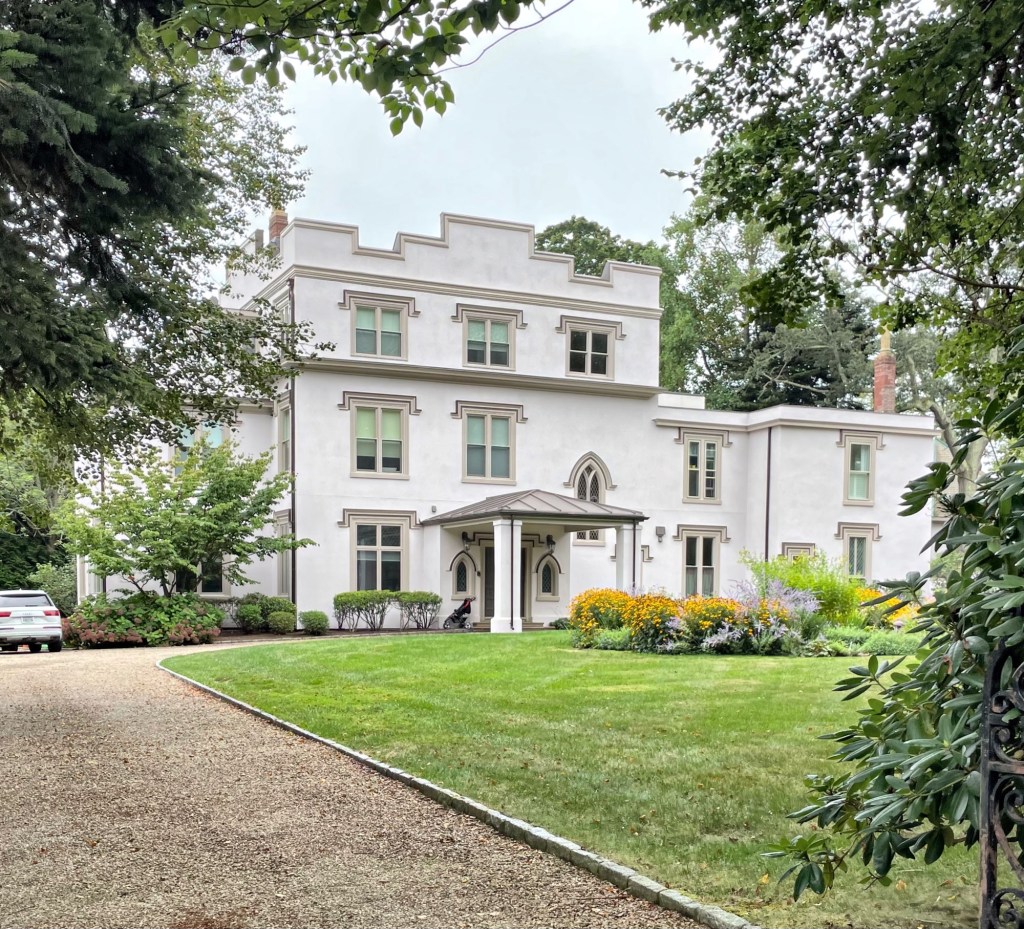
Tudor Lodge // c.1850

A rambling Gothic Revival style house in the mode of the picturesque Gothic estates in England, can be found tucked away in Newport, Rhode Island. This is Tudor Lodge, a stuccoed summer “cottage” notable for its stucco siding, moulding over all the windows, broad crenellated parapets, and a hip-roof porte-cochère in front of the principal entrance. The house was supposedly originally built as a summer residence for Nicholas Redwood Easton around 1850. After his death, the property was purchased by members of the Gibbs (Gibbes) Family, who owned much of the land in this part of town, giving nearby Gibbs Avenue its name. The property was purchased around 1900 by William Rogers Morgan, a New York City banker, who greatly remodeled and named the estate, Tudor Lodge, giving the house its present appearance. The estate was converted to four condominium units in 1980.