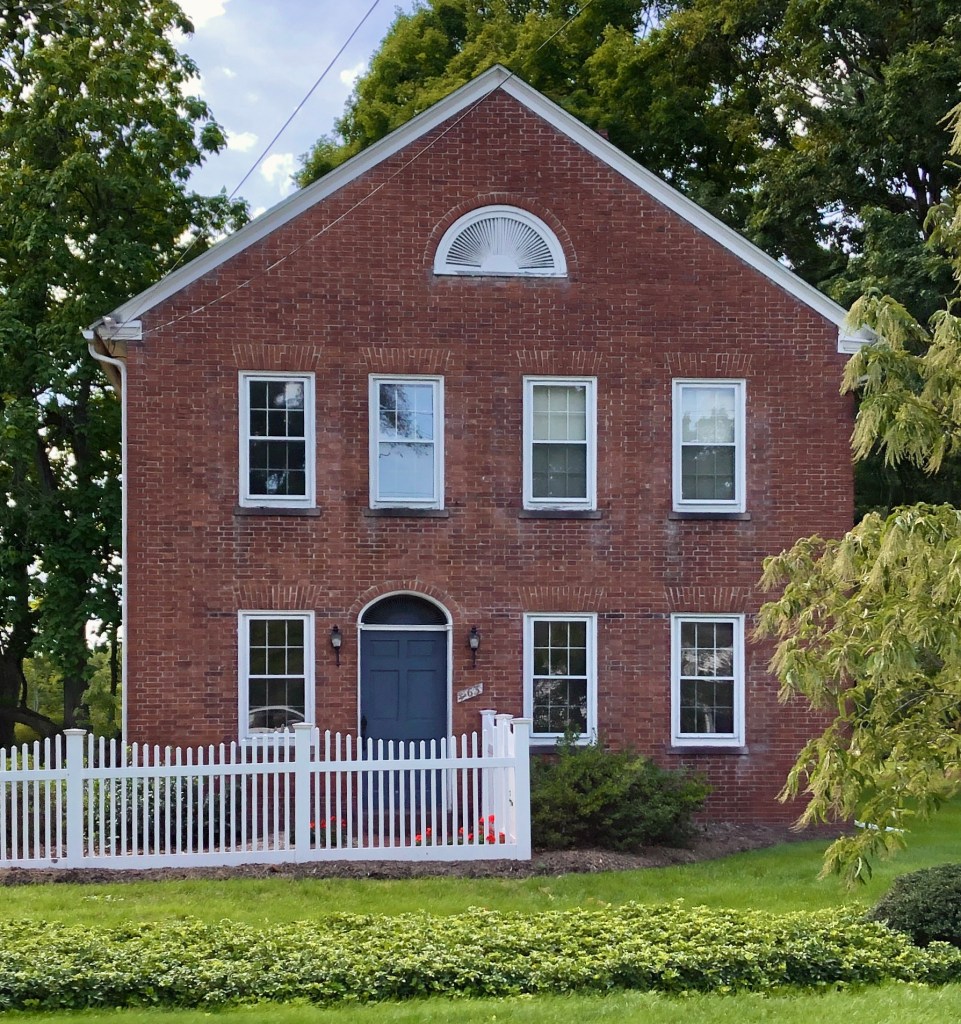
John Fuller House // 1823

This lovely brick, Federal style farmhouse was built in 1823 for John and Mary Fuller in rural Suffield, Connecticut, in 1823 and operated as a farm by the family for over fifty years. The town of Suffield purchased the house and farmland before the 1880s for use as the town’s poor farm. Poor farms (also known as almshouses) were often rural houses where paupers, mainly elderly and disabled people, were supported at public expense. The land was available for the elderly and workers to harvest crops for sale and sustenance. One of the “residents” at the poor farm was “Old Cato” a formerly enslaved person who was owned by Maj. John Davenport, a lawyer and politician in Stamford. Davenport offered Old Cato his freedom in 1812 if he enlisted to serve in the War of 1812, which he did. By the 1820s, he moved to Suffield CT, and worked at the West Suffield Congregational Church, paid to ring the bell at the church, likely also maintaining the property. He eventually ended up at the poorhouse and died, estimated to be over 100 years old. The old Fuller/Poor House was sold by the town in 1952 and converted back into a single-family residence.
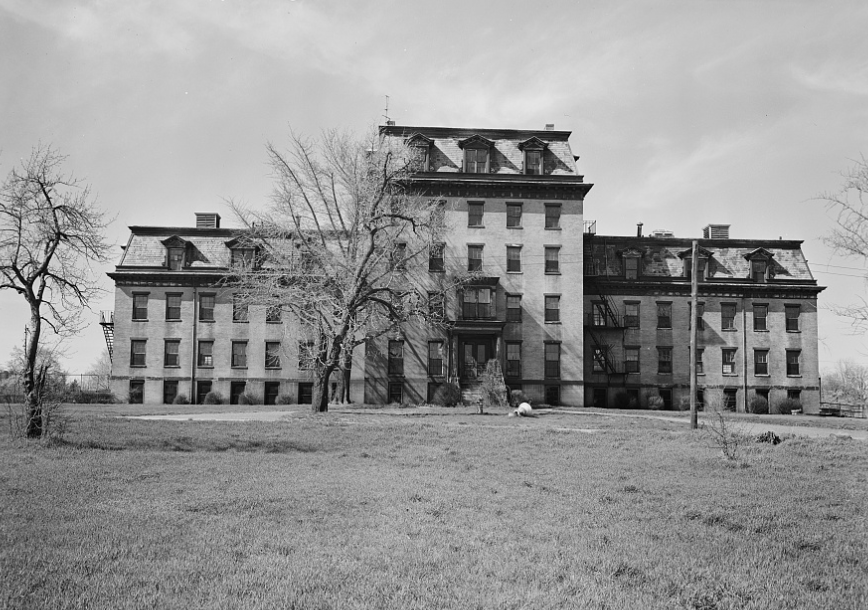
Dexter Asylum // 1828-1958

C.1958 photo before demolition. Courtesy of Library of Congress.

Built in 1828, Dexter Asylum was a “poor farm,” an institution housing the indigent, elderly, and chronically unemployed, located in the East Side of Providence, Rhode Island. Poor farms were common before the introduction of Social Security and welfare benefits in the United States, considered a progressive method for dealing with poverty. Ebenezer Knight Dexter (1773-1824) was a wealthy mercantile trader in Providence, who in 1800, built Rose Farm, a gentleman’s farmhouse on what was then, the outskirts of Providence. Upon his death in 1824, he bequeathed to the town 40-acres of the farmland to the north for use as a poor farm or almshouse site. The building was completed by 1828 and was originally three stories, and later expanded with a mansard roof and dormers sometime later in the 19th century. Dexter also stipulated that a stone wall would surround the site, and parts of it remain to this day. As with many poor farms and almshouses of the period, residents worked farmland and cared for pigs and a herd of dairy cows; they lived in this large building, strictly segregated by sex. Residents were essentially inmates, indentured for periods of six to twelve months, and could not leave the property without a ticket of permission. In the interwar period, “inmate” population there declined and changing views on how to assist the poor caused the City to abandon the facility. After decades of legal troubles and stipulations of the Dexter will, in 1956, the plot was auctioned off, and Brown University purchased the site. The grounds are now used by some of the Brown University athletic facilities. The city set aside the money from the sale to create the Dexter Donation, which gives annual grants to assist the city’s poor, providing an enduring legacy of Dexter’s Asylum.