Ellen and Charles Baker House // 1898

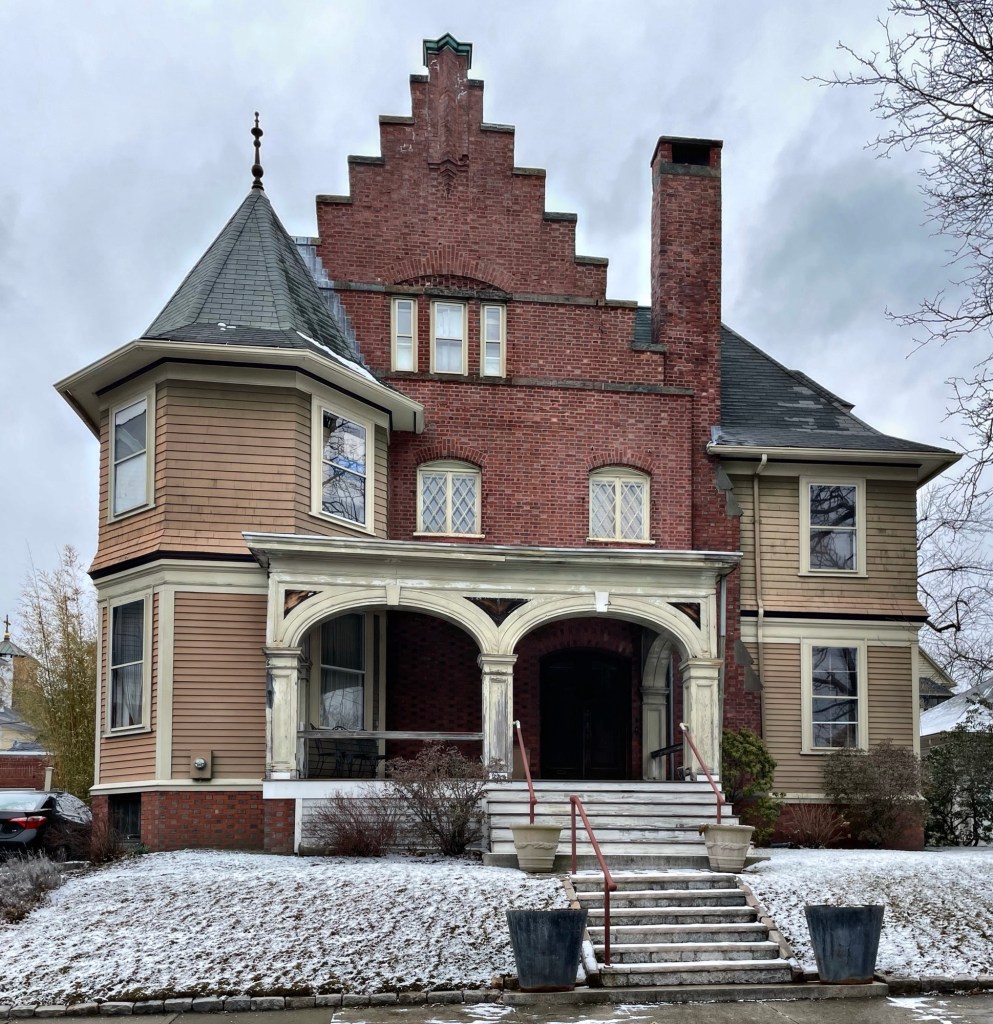
The versatility of the Queen Anne style of architecture is unmatched! This stunning example is located at 67 Stimson Avenue in Providence, Rhode Island, and was built in 1898 for Charles H. Baker and his wife, Ellen. Mr. Baker was a superintendent at the Gorham Manufacturing Company, one of the largest manufacturers of sterling and silverplate tableware in America. Sadly, Charles Baker would not get to enjoy the house for long as he died within a year of the house being finished. Ellen and the couple’s daughter, Maude, would reside here for years later. The Providence architectural firm of Gould and Angell designed the house with a large brick Flemish gable breaking the shingled mass of the house in a really abrupt, yet pleasing way.
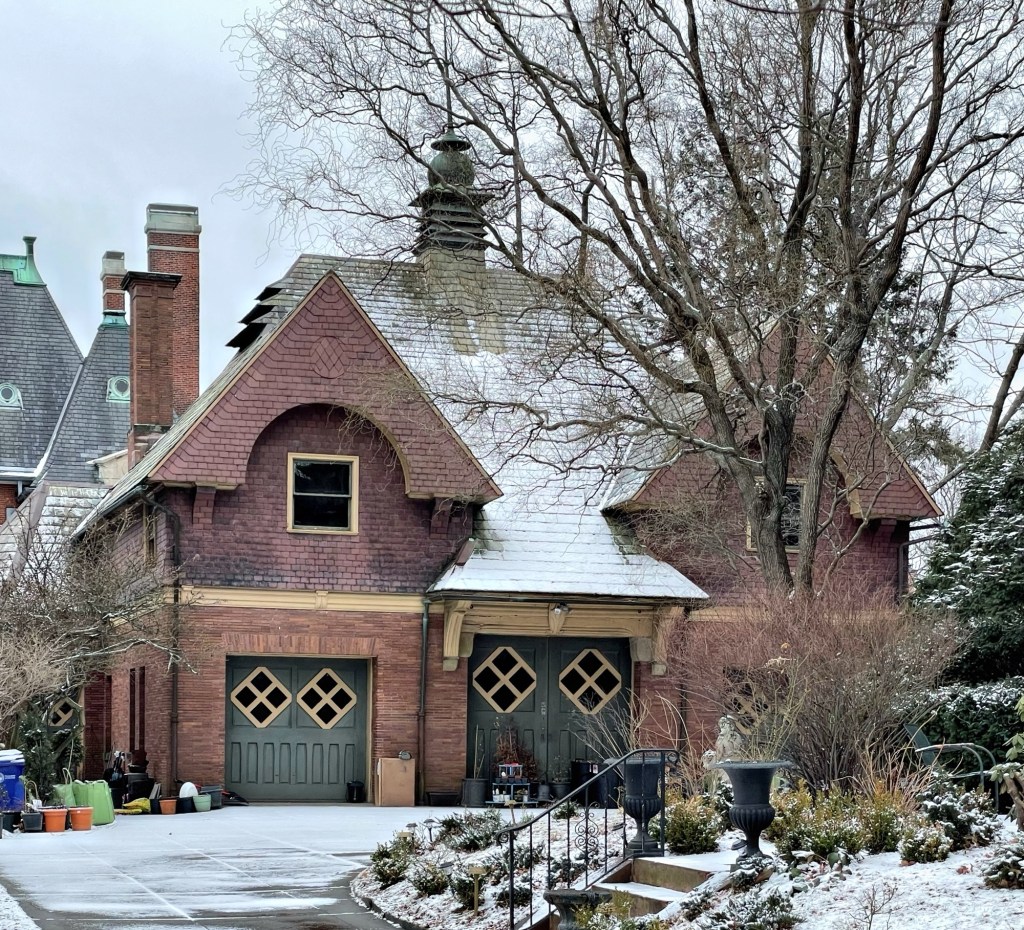
Joseph Fletcher House and Stable // 1889

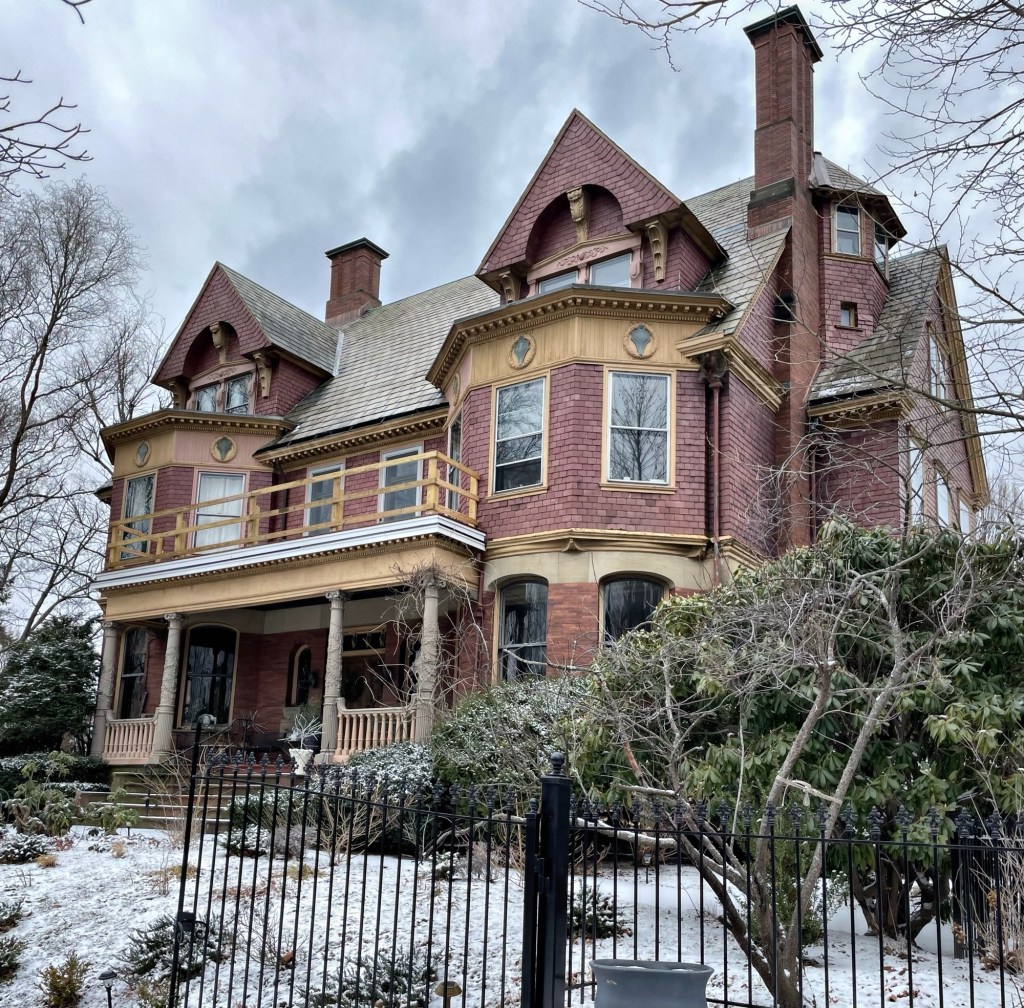
With red brick and slate siding and all the finest trimmings, this house looks like a present wrapped under the Christmas tree! The Joseph Fletcher House is located at 19 Stimson Avenue in Providence, Rhode Island, and is an excellent example of a Queen Anne residence with the innovative use of siding types often found in the style. The residence was built in 1889 for textile manufacturer, Joseph Edward Fletcher (1866-1924), the son of wealthy, English-born manufacturer, Charles Fletcher. The Fletcher house and adjacent stable were designed by Stone, Carpenter & Willson, one of the most prestigious architectural firms in New England at this period. It is believed that the site was developed by Charles Fletcher, as a wedding gift to his 23-year-old son and daughter-in-law following their marriage. The home was recently sold, and the interiors are as stunning as the exterior!

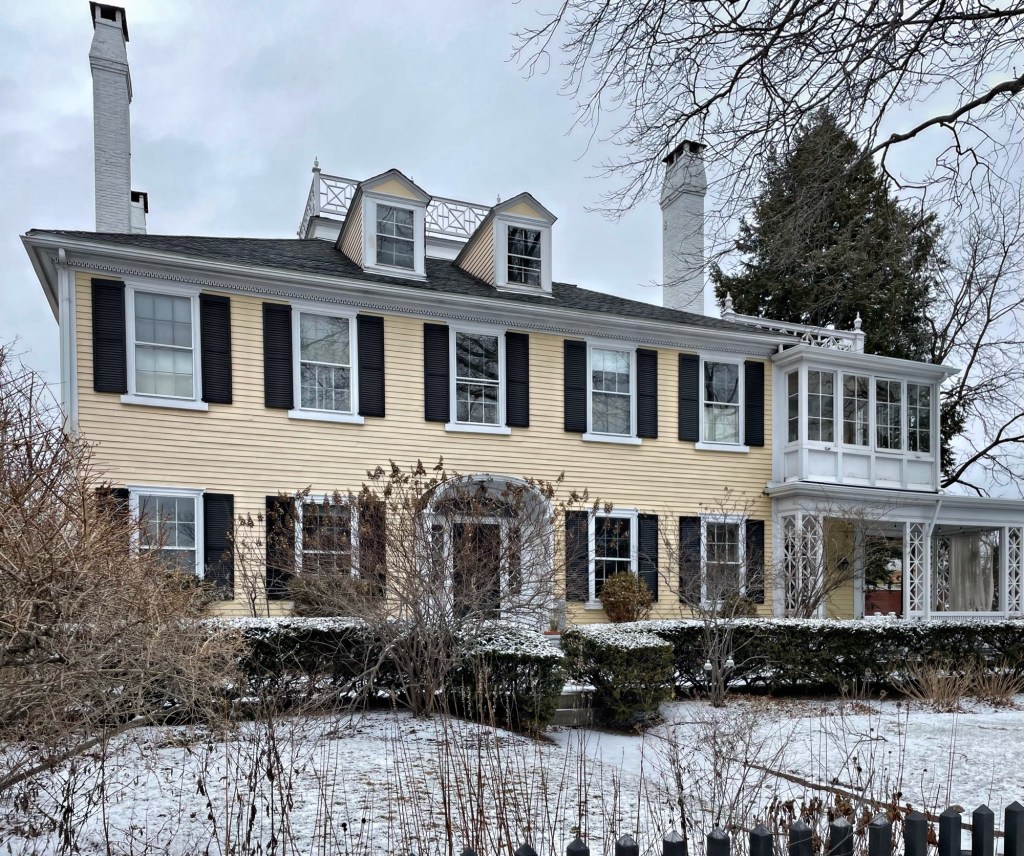
Rose Farm – Ebenezer Knight Dexter House // 1800

When Ebenezer Dexter built this country retreat in 1800, it stood at the eastern edge of settlement in Providence, Rhode Island. Several of the city’s wealthy residents maintained country seats on the then rural outskirts of the city, but Rose Farm is the only remaining gentleman’s farmhouse from the period in this part of the city, surviving over two centuries of development pressure and economic recessions. The house stands out amongst a neighborhood of mid-to-late 19th century residences, for its refined form and simple symmetry. Rose Farm is a wood-frame dwelling with brick end walls and exceptionally tall chimneys at the hipped roof, which once had two levels of a decorative balustrade. Ebenezer Knight Dexter (1773-1824), was a businessman and philanthropist, who left the bulk of this farmland to establish a home for the poor, Dexter Asylum, on land to the north. John Stimson bought the farmhouse and surrounding land in 1837 and the property directly surrounding the farmhouse was later subdivided with large residential lots, with the neighbrohood filling-in by the late 19th century.

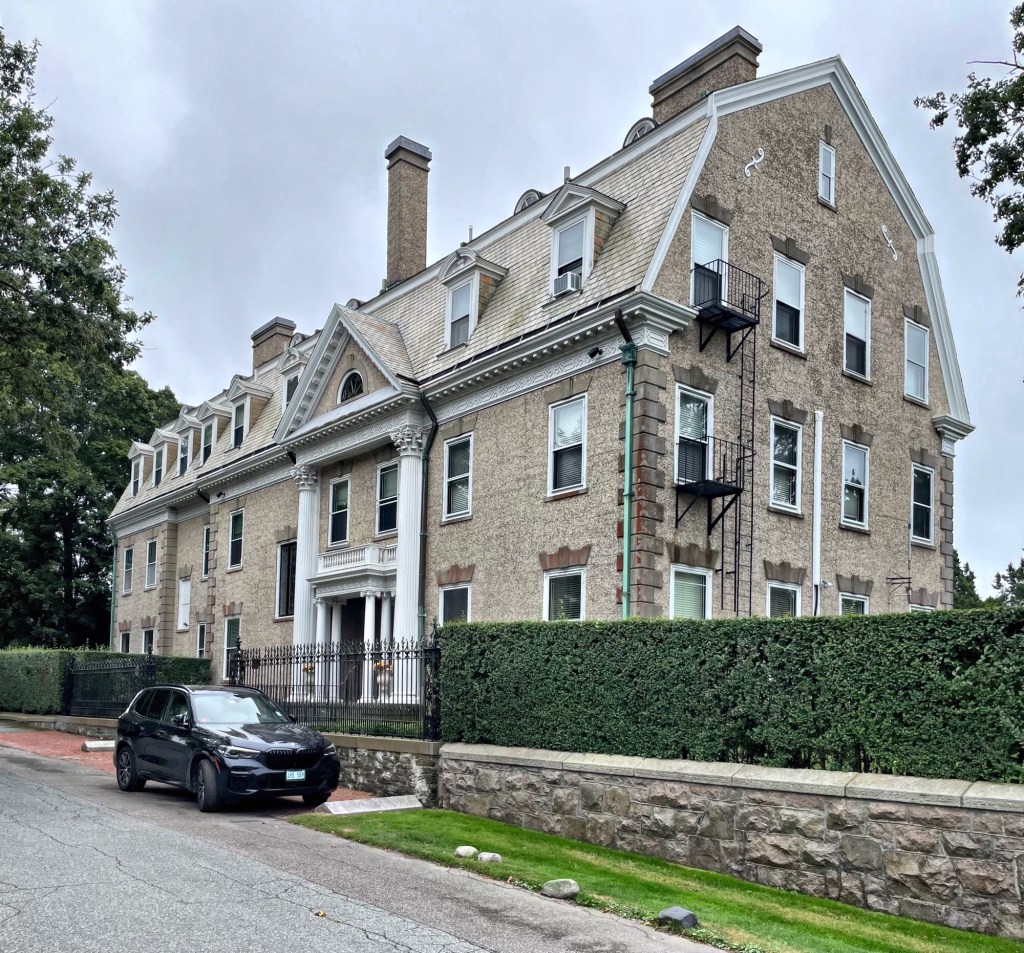
Oakwood/ // 1902

Oakwood, another massive gambrel-roofed “cottage” in Newport, Rhode Island, is another of the McKim, Mead & White designed residences in the Old Beach Road vicinity of town for wealthy summer residents. Built in 1902 for George Gordon King (1859-1922), Oakwood is a large, elongated two-and-one-half-story structure with a gambrel roof with walls in pebbledash finish. Its off-center main entrance with double-height engaged Corinthian columns supporting a pedimented gable and a blind balustrade set on smaller Ionic capitals. The massive home was later converted to condominiums. It sometimes amazes me that families (but with many servants) would live in these houses just for a season…

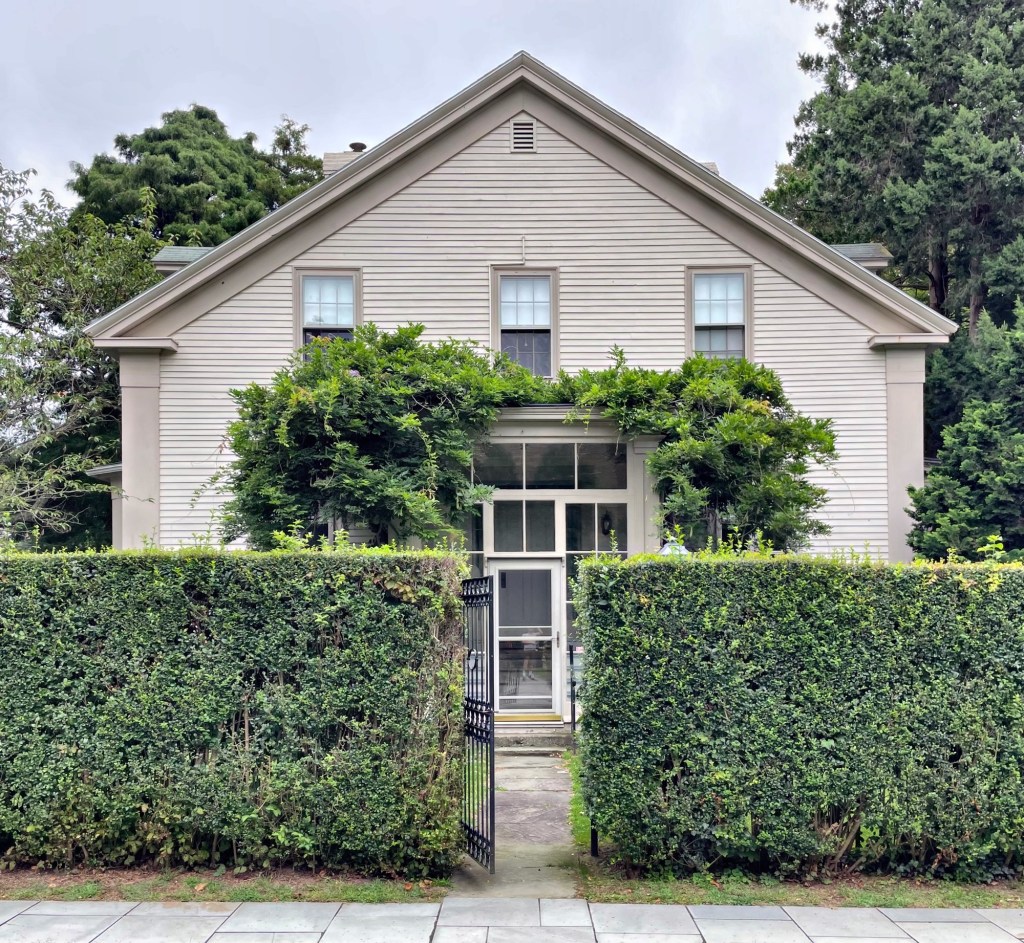
LaFarge Cottage // c.1845

Even the less ornate and grand summer cottages of Newport can have interesting histories! This c.1845 Greek Revival cottage sits on Sunnyside Place and is best-known as the summer home of nationally significant painter, muralist, and stained-glass master John LaFarge (1835-1910), active in the lively late 19th-early 20th-century Newport art scene. John LaFarge’s wife, Margaret Mason Perry LaFarge (1839-1925), was the granddaughter of Commodore Oliver Hazard Perry, and was a native of Newport, seemingly providing the connection between her husband and lucrative stained glass commissions for many Newport and New York buildings. LaFarge is arguably best known for his innovative, opalescent stained glass windows, which was later stolen and adapted by Louis Comfort Tiffany. The LaFarge Cottage was possibly moved to this site and renovated, adding the glazed entry.

Maple Shade Cottage // 1871

“Maple Shade” is a historic, Second Empire style summer cottage located at 1 Red Cross Avenue in Newport, Rhode Island. The house was built in 1871 from plans by George C. Mason, a prominent local architect who designed many summer homes for summer residents in the late 19th century. He even lived in a home adjacent to this house! Maple Shade was built for John Doughty Ogden and his second wife, Mary C. Moore. John originally married Mary’s older sister Margaret, but remarried after Margaret’s death in 1845. The house gained attention again in 1934, when it served as the venue for the wedding reception of John Jacob Astor VI and Ellen Tuck French, then owned by Donald O. Macrae. The house, like many other former estates in Newport, has since been converted into condominiums, but retains its architectural grandeur and presence in town.

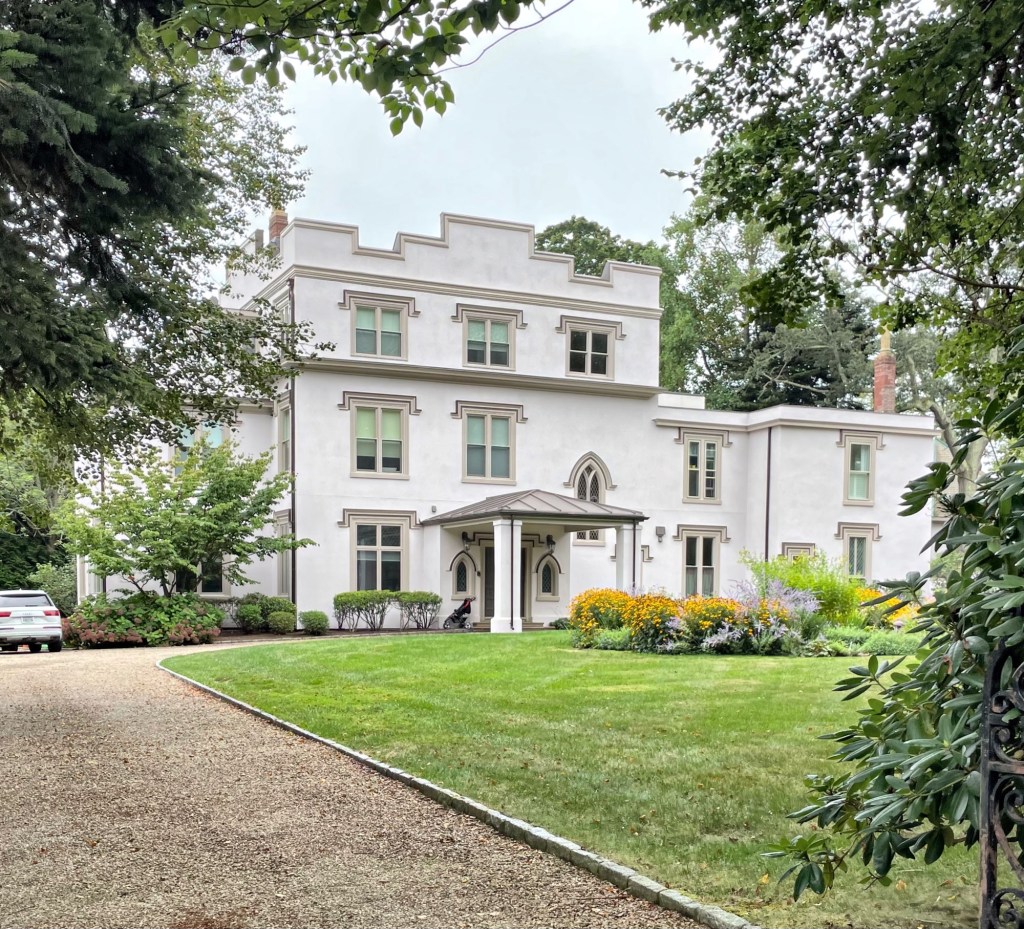
Tudor Lodge // c.1850

A rambling Gothic Revival style house in the mode of the picturesque Gothic estates in England, can be found tucked away in Newport, Rhode Island. This is Tudor Lodge, a stuccoed summer “cottage” notable for its stucco siding, moulding over all the windows, broad crenellated parapets, and a hip-roof porte-cochère in front of the principal entrance. The house was supposedly originally built as a summer residence for Nicholas Redwood Easton around 1850. After his death, the property was purchased by members of the Gibbs (Gibbes) Family, who owned much of the land in this part of town, giving nearby Gibbs Avenue its name. The property was purchased around 1900 by William Rogers Morgan, a New York City banker, who greatly remodeled and named the estate, Tudor Lodge, giving the house its present appearance. The estate was converted to four condominium units in 1980.

Bay Crest Cottage // c.1850

Located across from the Winthrop-Eckley Double House on Corne Street, this gorgeous Italianate style summer cottage is a perfect blending of stature and whimsy. The house was built around 1850 and owned by Charles B. Peckham. Built in the Italianate style, the symmetrical house stands three-stories with covered side entrances divided by a projecting two-story bay. The house exhibits broad, overhanging eaves and paired and ganged round arched windows. The property was known as “Bay Crest” and remains one of the unsung landmarks of the 1850s in Newport.

Smith-Cottrell House // 1887

Located next to the Channing Memorial Church and the Derby Cottage on Pelham Street, this Queen Anne style cottage stands as a significant Victorian era residence on the street dominated by Greek Revival homes. Built in 1878 for a William H. Smith for his residence and office. The home is an excellent example of the Queen Anne style with asymmetrical form and massing, complex roofline with multiple gables and towers, varied siding, and intricate millwork. By the early 20th century, the property was owned by John and Mary Cottrell, and later purchased by the Channing Memorial Church as “Channing House”.

Derby Cottage // c.1848

Located off Touro Park in Newport, you may be surprised to find an early Gothic Revival style cottage obscured from view by the towering stone Channing Memorial Church. Newport has so many hidden treasures! Very little is written about this cottage, but it appears to have been built c.1848 for Richard Crowninshield Derby (1777-1854) of the famous Derby Family of Salem, Massachusetts. Richard Derby would move to Philadelphia and split his time between there, Boston, and his newly built summer cottage in Newport, Rhode Island. He did not get to fully appreciate the home as he died in 1854. The Gothic Revival cottage was inherited by his widow, Louisa S. Bomford Derby until her death and later by the couple’s two children (from both of their first marriages), Richard Catton Derby and Louisa Lincoln Lear Eyre, the mother of famed architect Wilson Eyre. The property was eventually sold by the half-siblings and the site became home to the 1880 Channing Memorial Church, which now dominates the site. Luckily for us, the cottage was spared and moved to the extreme rear of the lot and converted to the parish hall for the church.