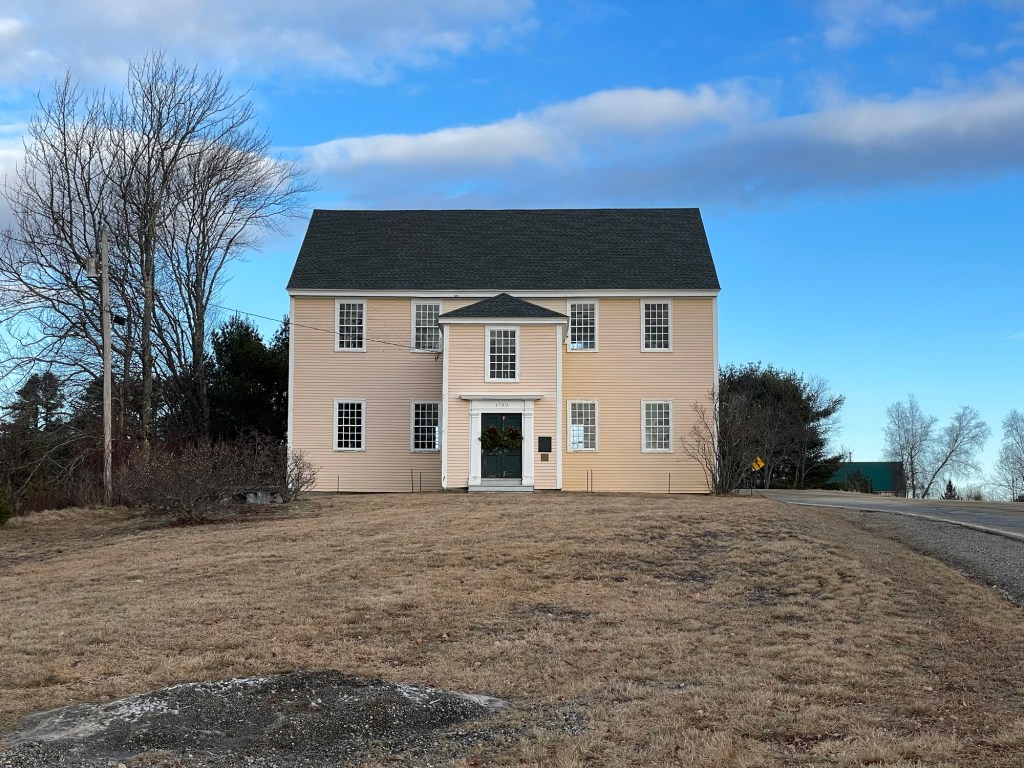
First Parish Congregational Church of Pownal // 1811

Completed in 1811, the First Parish Congregational Church of Pownal, Maine, is an excellent and well-preserved example of a vernacular Federal-period church in a rural setting. Located across from Mallett Hall and built at the foot of Bradbury Mountain, the church was built by a crew headed by master-carpenter Uriel Whitney, a Revolutionary War veteran who moved to the area after the war. He was active in this church and is buried in the church cemetery. Little remains of the original Federal Style architecture, as its current Greek Revival Style (architects unknown) dates from remodeling apparently undertaken in 1838 and 1857.
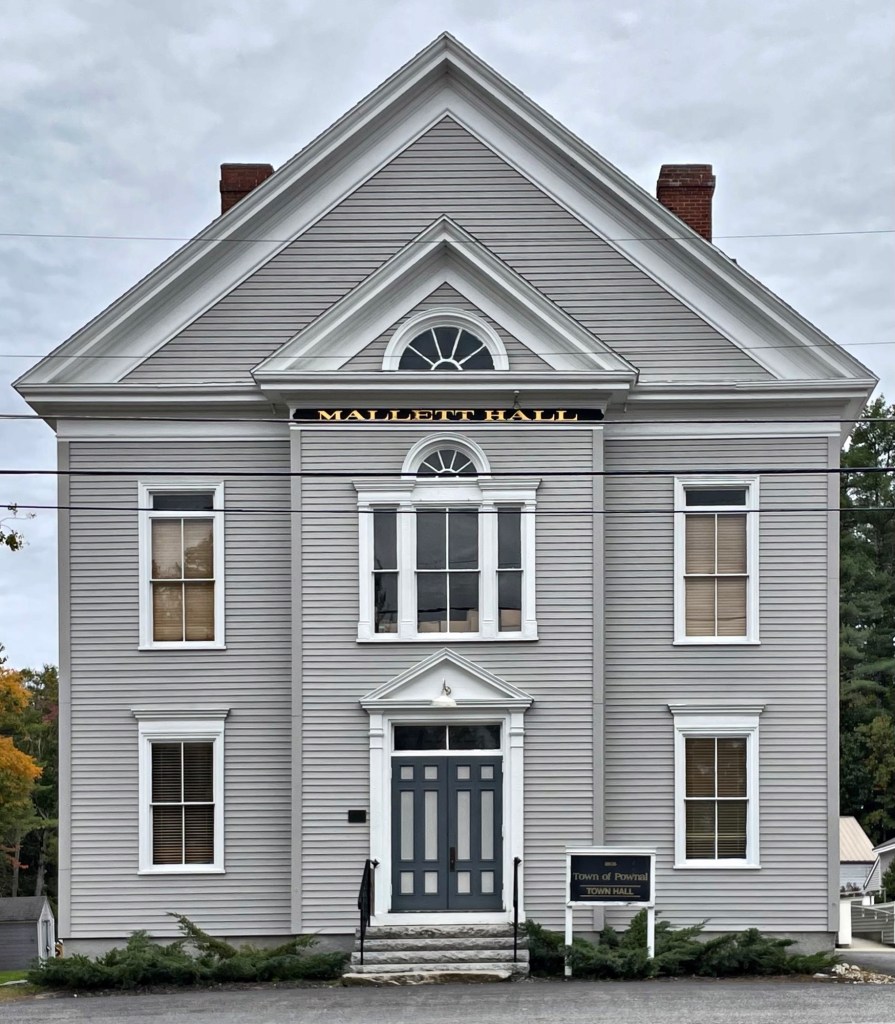
Mallett Hall // 1886

Built in 1886, Mallett Hall is one of the most interesting and significant buildings in the small town of Pownal, Maine. The town is located equidistant to the larger cities of Portland, Brunswick, and Lewiston, but retains a very rural charm. This hall was built following a town meeting on March 15, 1886, where an article was approved to appoint a committee charged with developing plans and estimates for a new town hall. The hall is named after Edmund Mallett, a businessman who partially funded its construction. The architect is not officially known, but estimates guess it was the work of Francis Fassett, a popular architect at the time in the area. In addition to housing town offices and functions, it has also served as a community center, hosting social events. The Colonial Revival style building takes strong cues from Greek Revival meeting houses in the area but exhibits a Palladian window and fanlight in the pediment.

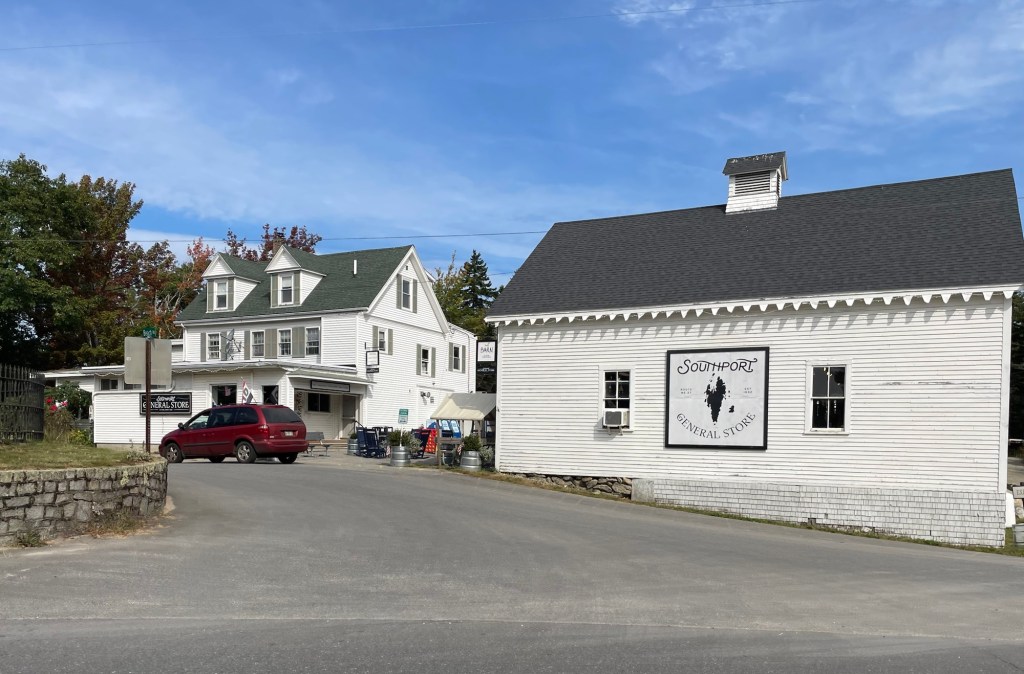
Southport General Store and Barn // 1895

In 1882, Edward Everett Pinkham, known as Everett, opened a new store in one side of his house on Hendrick Hill in the island community of Southport, Maine. The store was known for years as E. E. Pinkham and Son. Everett soon built a proper store adjacent to his house. He served the Town of Southport in many capacities: Postmaster, Town Clerk (1887-1905) Treasurer (1883), and Selectman (1888-1893). Sadly, on May 21, 1895, the store and house burned along with all of the old town records inside. The community helped Everett rebuild the present general store before the busy summer season. Edward’s son “Charlie”, would take over the business and the building has served as the town’s social center ever since. Year-round and summer residents bump into eachother at the store, catch up, and share local news, like every general store should be! Sadly, in so many communities, the “general store” has been replaced by big box retailers or convenience stores, removing the sense of community or place, so these businesses are more important than ever!

Bayville Post Office // c.1920

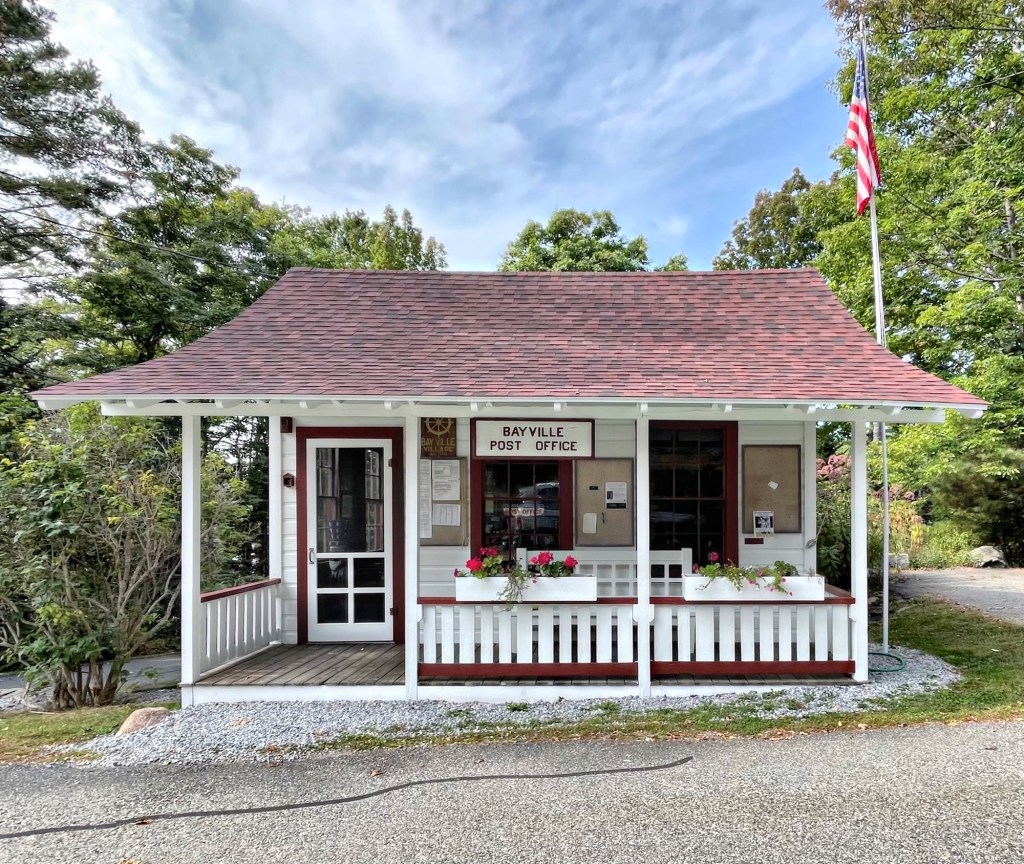
Bayville, is a quiet and picturesque coastal village on Linekin Bay, in the eastern part of Boothbay Harbor, Maine. The small village is comprised of roughly 40 cottages and a small post office. This post office was built around 1920 and has operated here seasonally every summer since. The rustic Craftsman style building features a broad roof with exposed rafter tails, extending to create a sheltered porch off the front.

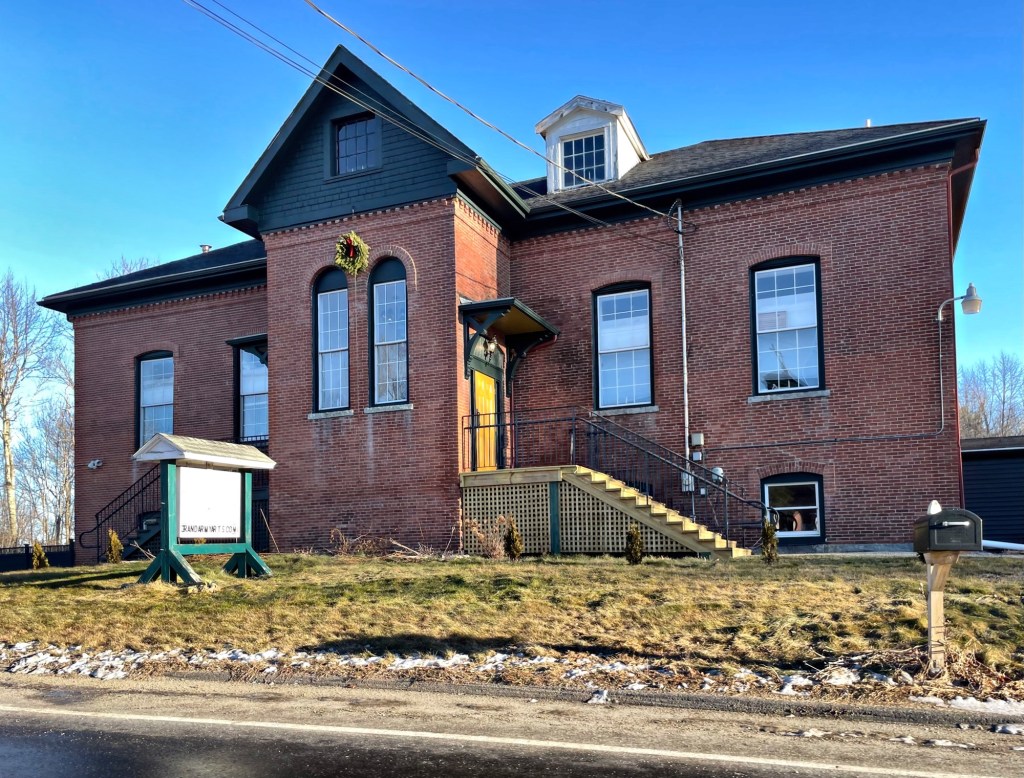
Mount Cutler School // 1882

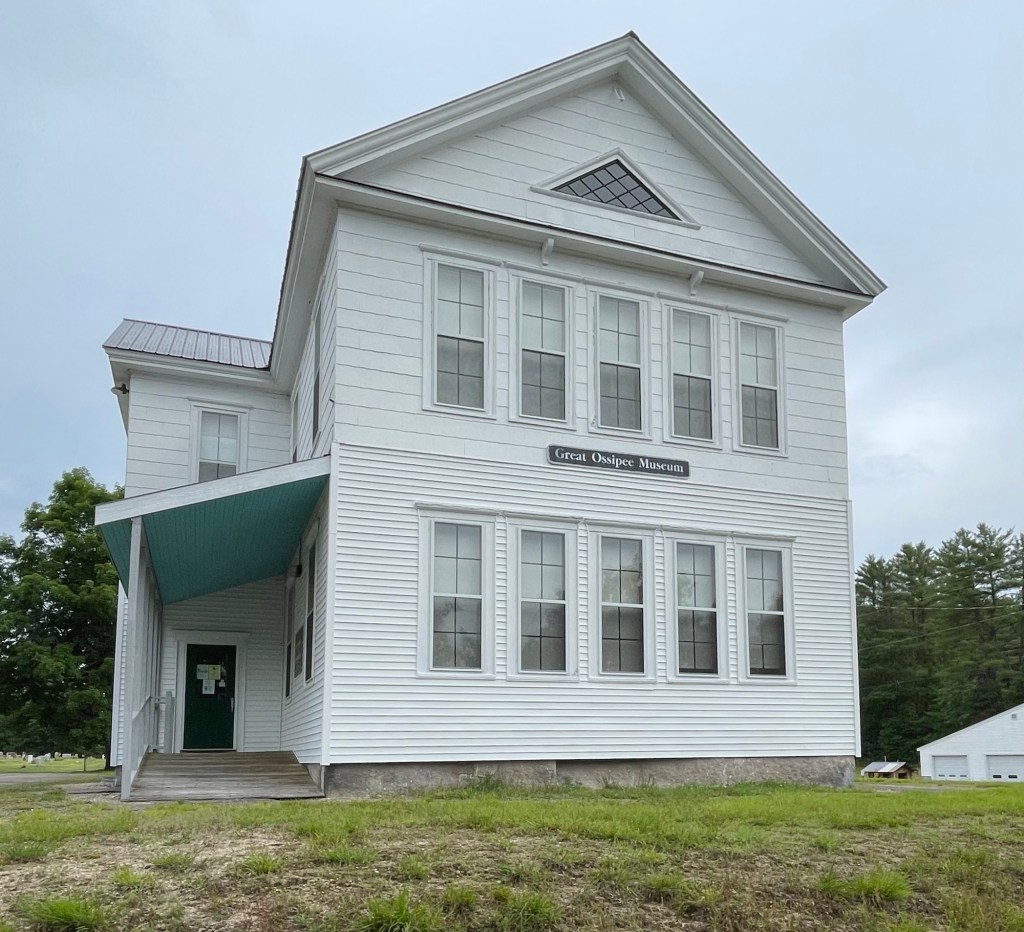
The cross-gabled, two-and-a-half story Mount Cutler School was built in 1883, possibly by local builder James Lot Hill, and is a well-preserved example of a district school in Hiram, Maine. A very late example of the Greek Revival style utilized for an educational facility, the structure displays a gabled facade with closed pediment highlighted at the center by a diamond-paned triangular window. The building, used solely as a grammar school (except from 1922-30 when a two-year high school operated in one room) replaced a similar structure which burned in February of 1883. The Mount Cutler School served the youth of Hiram from 1883-1967 and again in 1974-78. Its second floor now houses the collections of the Hiram Historical Society and it has been preserved ever since.

Riverside Methodist Church, Porter // 1883

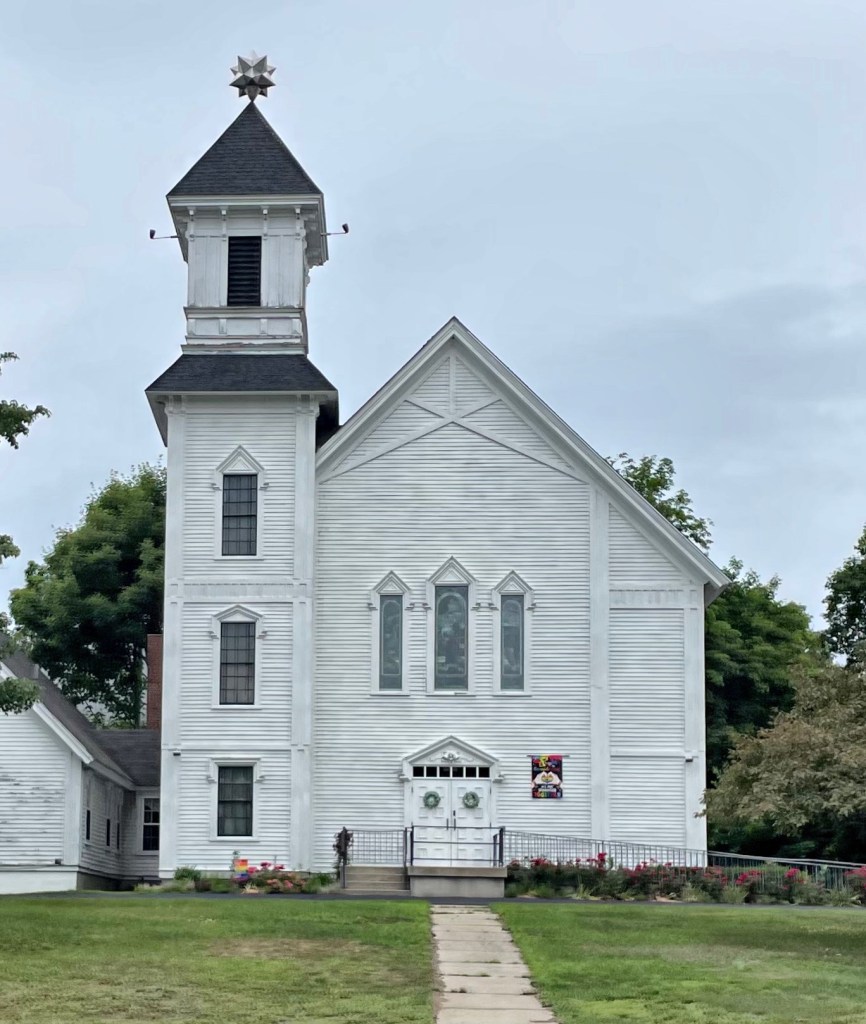
The focal point of the riverside village of Kezar Falls in Porter, Maine, is this large frame church building with prominent siting and grand proportions. This is the Riverside Methodist Church, built in 1883 in the Stick/Eastlake style by Portland architect Charles H. Kimball. The first Methodist services held in the town of Porter were in 1833, when a church was formed in the small town. Soon after 1839, a gable-roofed meetinghouse with tall lancet windows was erected near where the present church stands. The original church still stands, but in a much-altered form and was used as a local fire station. The church remains owned by local Methodists and is well-preserved.

Old Porter Meetinghouse // 1818

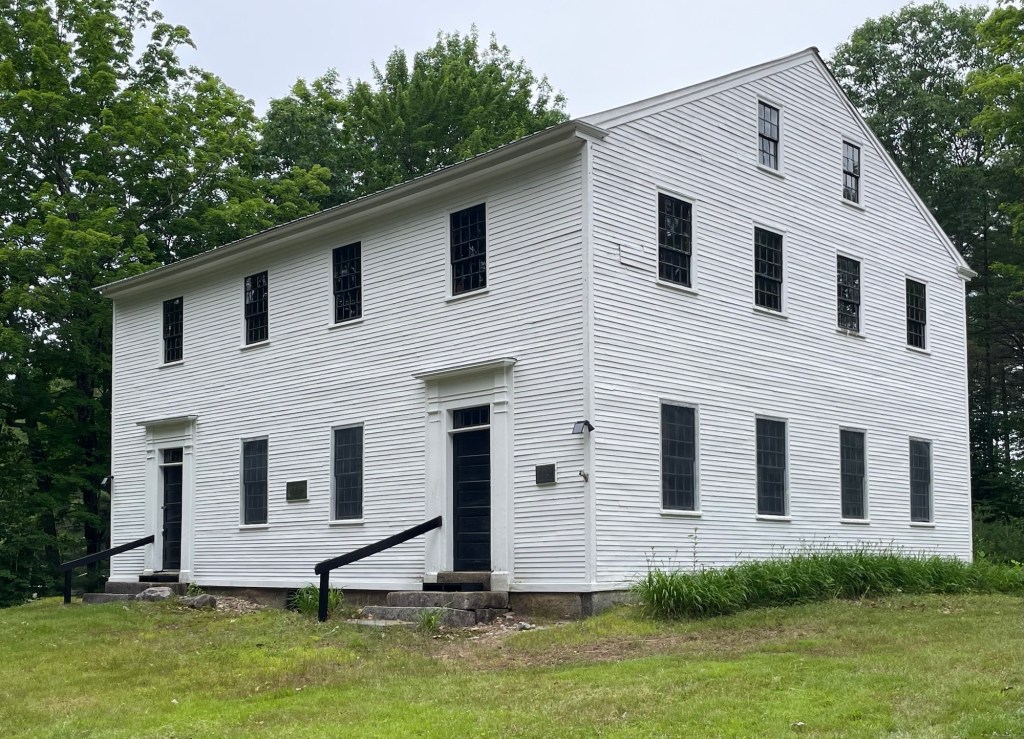
Welcome to Porter, Maine! The town is located on the Maine/New Hampshire border and was first called Portersfield Plantation. Porter was incorporated in 1807 and named after its first proprietor, Dr. Aaron Porter (1752-1837). The Porter Meetinghouse was built beginning in 1818 and it is said that it was not completely finished until 1824. The original congregation was a Freewill Baptist organization led by Reverend Jeremiah Bullock, and were known locally as “Bullockites“. The structure housed the Baptists and town meetings as needed. The plain vernacular, meetinghouse is typical of many early meetinghouses of the period in rural New England. The inside retains its original character with its space as a single large chamber with a gallery above on three sides. The walls are plaster, much of it original, with trowel marks visible. The main floor is populated with original box pews and a replica pulpit. The structure is a rare survivor!

Bailey Homestead // c.1815

Located on a hill overlooking the Head Tide Village of Alna, Maine, this stately brick farmhouse has sat for roughly 200 years. According to old maps of the area, the property was occupied by the Bailey Family as far back as the land was surveyed in 1813. The property was owned by Ezra Bailey, who possibly built the house soon after as the village began to develop. By 1857, the property and its house were owned by I. H. Bailey, seemingly Ezra’s son, Isaac, who married his first cousin, Laura Palmer. The couple resided in the old homestead until they sold it in 1866, moving to Boston. The brick, Federal style house has a four bay facade with the entry door surrounded by a recessed arched relief. Above the door is a blind fan with sidelights.

Alna Meetinghouse // 1789

The Alna Meetinghouse in Alna, Maine was built in 1789, and incorporated in 1796 as a Congregational church. The 40′ by 52′ foot building is one of the finest examples of a traditional New England meetinghouse in the state of Maine and Regular church services were held here until 1876. In recent years the building has been used for Town Meetings. Unlike many of the other meetinghouses of this period, the Alna meetinghouse has only one door. This door leads into a vestibule that contains the stairway to the gallery. The original box pews are still in place, as is the original pulpit with a sounding board hung from the ceiling. The building remains well-preserved and sits right on the side of the road!

St. Denis Catholic Church // 1838

Believe it or not, this church in rural Whitefield, Maine is the second oldest Catholic Church in New England! As Irish and French Canadian families settled in this part of Maine in the early 19th century, Catholic churches were needed to provide worship space for those families. The church community of St. Denis began in 1818 when Father Dennis Patrick Ryan, an Irish immigrant serving at St. Patrick Church in Newcastle (the oldest Catholic Church in New England), moved to Whitefield to serve the influx of Irish Catholics and soon founded the church. Fr. Ryan oversaw the construction on a wood-frame structure built on this site. As more Catholic families settled here, a more permanent building was needed, and between 1833 and 1838, the main portion of the present brick church building was constructed around that original church. The tower was added in 1861, and the stained glass windows also date from later in the 19th century following the growth and prosperity of the church and its members. The St. Denis Parish House was constructed across the street in 1871 and is a lovely Romanesque style building.