Ashford Academy // 1825

Built in 1825, the Ashford Academy school building is the last remnant of what was Ashford, Connecticut’s once thriving town center. The taverns, church and businesses which were once located here have almost entirely been razed, leaving just this school building as the remaining structure. Ashford Academy was founded about 1825 when a group of citizens raised funds toward adding a second story to a schoolhouse then under construction in the town center. Only one teacher was hired per term, and some years there were no academy classes at all. The last academy session was held in 1875, though the building continued in use as a district school until 1949. The building is significant, not only for its siting and connections with the town’s early days, but also architecturally as a high-style school building for a more rural setting.

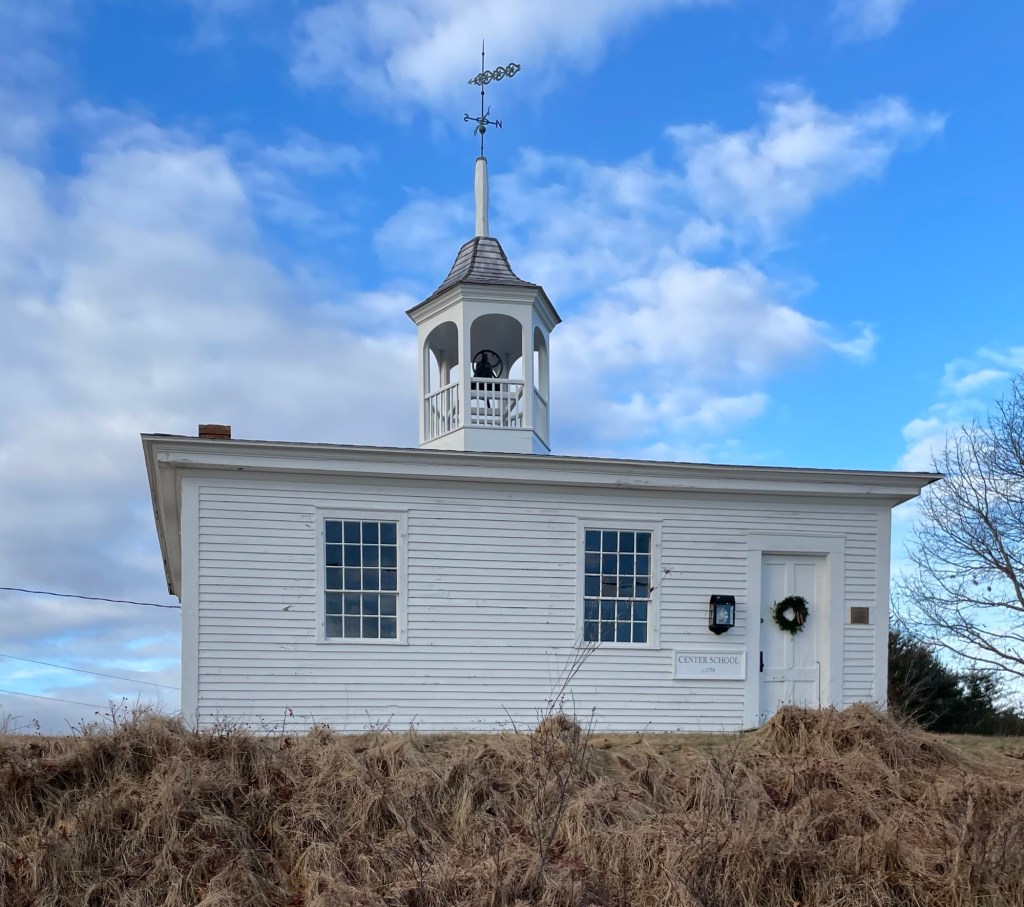
Alna Center School // 1795

Built in 1795, the Alna School is one of the oldest extant purpose-built school buildings in New England. The small frame structure sits a short distance from the Old Alna Meetinghouse and is one of the finest 18th century buildings in town. The Federal period one-room school building features a square footprint with graceful cupola housing a bell projecting from the roof, which was added a few years after the building was completed. The school was one of two early school buildings for the newly incorporated town of Alna, soon after its separation from Pownalborough and incorporation in 1794 (originally as New Milford, and later at Alna in 1811). The school remained in operation through the 20th century and is no longer used.

North Weare Schoolhouse // 1856

The Town of Weare, New Hampshire was first divided into thirteen school districts in 1805 as a result of a state law to divide each town into school districts to service all students equally. Over the years the number of school districts fluctuated and were periodically redefined based on population distribution and class sizes. The North Weare Schoolhouse was built in 1856 and was operated as a one-room school until 1952 when a consolidated school was built in town. Architecturally, the building blends multiple styles, most notably the Greek Revival and Italianate styles. The property was later occupied as a Grange Hall with a 1960s addition to the rear. It was purchased in 1985 by new owners who had spent years restoring the building as a residence before they sold it more recently. Today, the former schoolhouse has modern additions and windows, but maintains its charm and uniqueness.

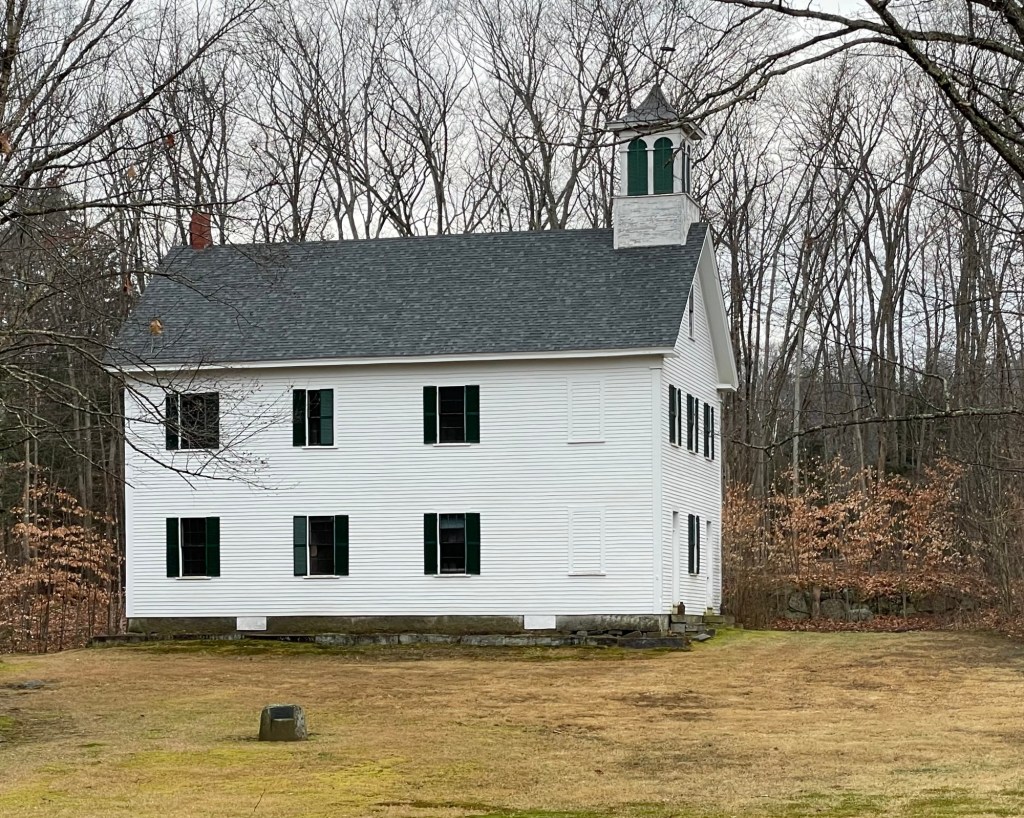
Clinton Grove Academy // 1874

Clinton Grove Academy of Weare, New Hampshire was the first Quaker seminary in the state when it was founded in 1834 by Moses Cartland (1805–1863). Moses Cartland was a Quaker abolitionist who served as the first Principal of the school and for fourteen years after. He later would move to Lee, NH, and aided those who escaped slavery in the south, sheltering them and assisting them on their way north to Canada. The original Academy here served as a private high school and included a classroom building, boarding house, barn and sheds. Students came from as far away as Ontario, Nova Scotia, Minnesota and Texas to study here under Mr. Cartland. In 1872, the Academy complex burned. It was quickly rebuilt as one structure here, in 1874. This building served as a district school until the 1930s. Today, it looks like the building is largely vacant, anyone know what its purpose is?

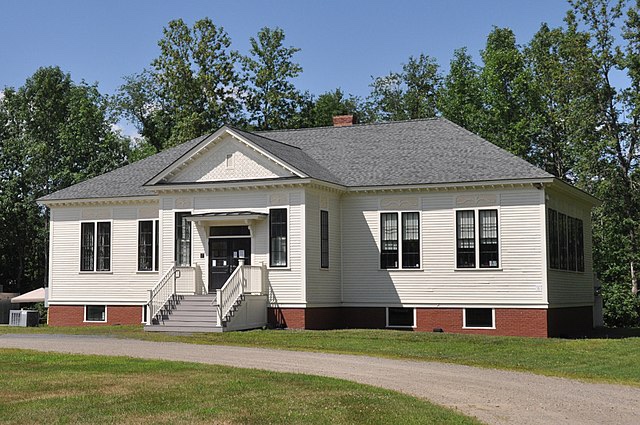
Unity Village School // 1898

The town of Unity, Maine, was incorporated in 1804, and for most of the 19th century had small district schools for the education of its children. In 1894, the state enacted legislation that encouraged the consolidation of school districts in order to improve quality and building standards. The town, whose population and student enrollment had been declining, voted in 1898 to build this school, which effectively replaced four of its eight district schools. The Colonial Revival style schoolhouse was built by Joseph Sawyer of Fairfield, Maine. The Village School remained the town’s largest primary school until 1953, when increasing enrollment and school overcrowding prompted the decision to build a new elementary school.

White Oak Schoolhouse // 1840

When the first white settlers of present-day Southbury, Connecticut, traveled up the Housatonic on rafts in 1673, they spent their first night under a white oak tree in what is now Settlers Park. That section of Southbury became known as White Oak for this early history. As this part of town developed and the population grew, another schoolhouse was needed. In around 1840, this Greek Revival style school building was constructed and has stood proudly on Main Street in the nearly 200 years since. The school now shares the same lot as the Reverend Graham House and has most recently been occupied as an antiques store.

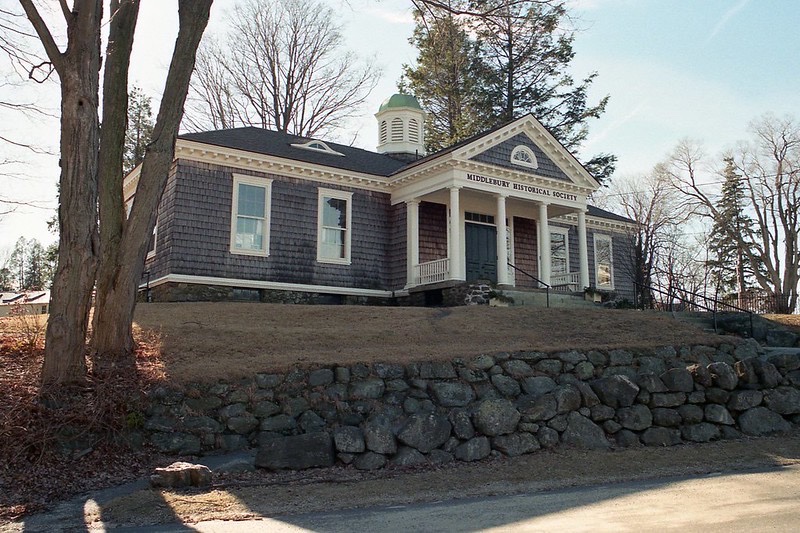
Former Middlebury Central School // 1898

Having the tall order of being a neighbor to the later Westover School, the town of Middlebury’s Central School still packs an architectural punch. The school was built in 1898, replacing the former Union Academy building also near the town green. The school building is Neo-Classical in style with a projecting pedimented portico supported by four columns. A cupola extends through the roofline and shingle siding add some charm to the small two-room school building. The former school later housed the Middlebury Public Library and is now occupied by the Middlebury Historical Society.

Margaret Fuller Primary School // 1891

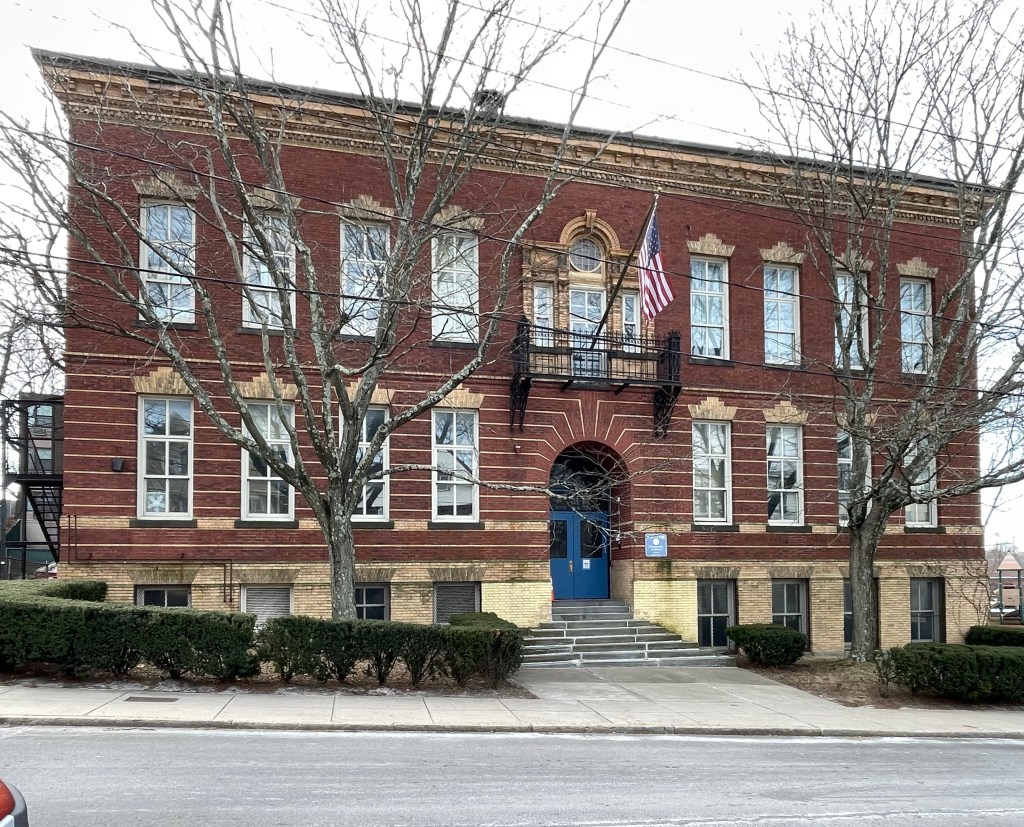
The Margaret Fuller Primary School (now Community Academy) is a public school in Boston that shows how much attention to detail the school department and the city architect paid when designing these structures in the late 19th and early 20th centuries. The Fuller School was constructed in 1892 to alleviate an overcrowded school district resulting from rapid urbanization. Jamaica Plain was one of Boston’s first streetcar suburbs largely spurred by the growth of the Boston and Providence Company Railroad between 1860 and 1890, when the area saw a shift from large bucolic estates to subdivided urban housing (largely triple-deckers and apartment buildings along major routes). With the surge in population, many new schools were built city-wide, including this primary school which was designed by Edmund March Wheelwright (1854–1912), a prominent Boston-based architect who served as City Architect for Boston from 1891 to 1895. Architecturally, the building is a stunning example of the Colonial Revival style with red and buff brick walls which are laid in a Flemish bond and rusticated at the first story with single recessed courses of buff brick. An arched entrance and Palladian window with iron false balcony sit at the central bay. The school was named after Margaret Fuller Ossoli (1810-1850) an early transcendentalist and writer advocating for women’s rights born in Cambridge.

Albert Parlin School // 1931

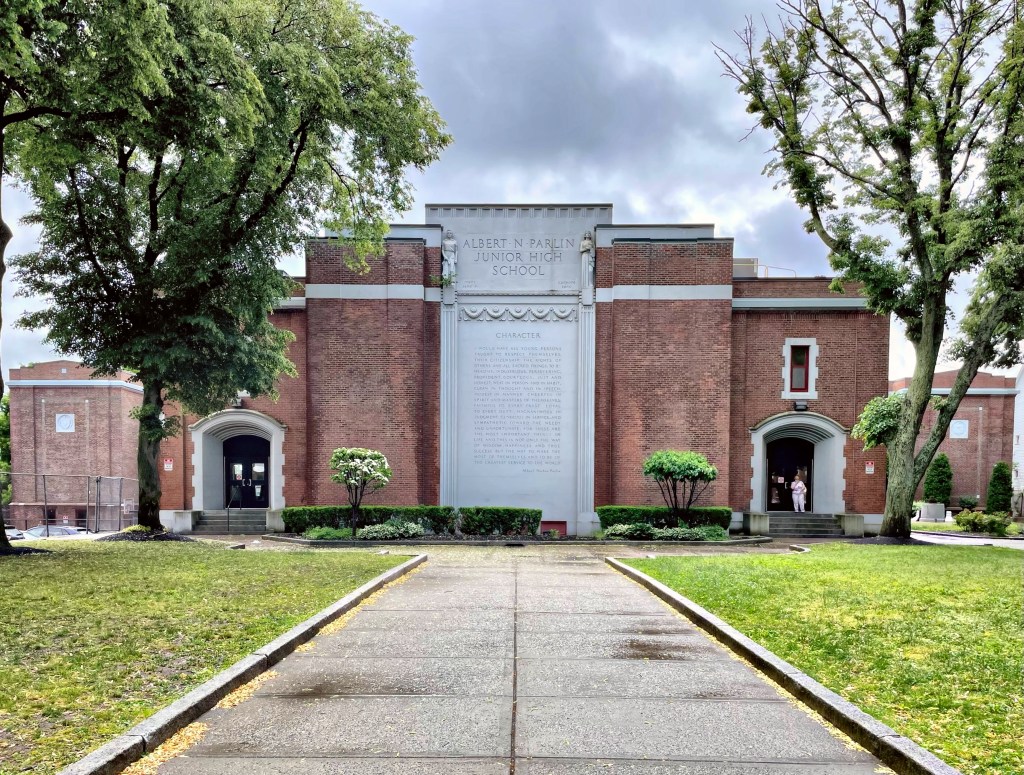
Albert Norton Parlin (1848-1927) was born in Everett, Massachusetts to Ezra Parlin and Nancy Pickering-Parlin. At a young age, Albert lost both his parents – his mother passed in 1853 at the age of 26 and his father passed in 1858 at the age of 37, both succumbing to “consumption” (tuberculosis). At the age of nine, young Albert had become an orphan, and was raised by his grandmother at the Pickering Estate. He found his first job as a floor-sweep and errand boy in a retail cloak store. At seventeen, Albert Parlin began working with Magee Furnace Company, a Boston-based company where Mr. Parlin spent twenty-eight years of his professional career, moving up the ranks to become treasurer of the company. After he became successful, he gave back to his hometown, when in 1892, he donated his familial home and money to the City of Everett for the erection of the Parlin Memorial Library, to honor his late son. Parlin was not done giving to his hometown. He also left funds and a large piece of land to the City of Everett for a new Junior High School in 1915. The architectural firm of Desmond & Lord was commissioned to design the school which is set deep on the lot to give the building a beautiful front lawn. The 1931 building blends Art Deco and Tudor Revival styles with a large central panel.

Second Everett High School // 1922

In 1892, the growing municipality of Everett, Massachusetts incorporated as a city. While Everett’s population had remained small compared to nearby towns throughout much of the nineteenth century, its close proximity to Boston resulted in dramatic population growth between 1885 and 1915. During this late industrial period Everett’s population was one of the fastest growing in the state, doubling between 1870 and 1880, nearly tripling from 1880 to 1890 and doubling again between 1890-1900. This massive population growth put a strain on public facilities, necessitating new housing construction, new public utilities, and schools. By 1889, planning for the first purpose-built high school had begun. The resulting first Everett High School, first known as the Home School, in 1893, the year after Everett’s incorporation as a city. That building was almost immediately outgrown and the city acquired a new site for a school that was large enough to educate the ever-growing town’s students. The City of Everett selected the architectural firm of Ritchie, Parsons, and Taylor for the construction of the new high school. The firm was led by Scottish-born James H. Ritchie, who designed the Classical Revival building. In the early 2000s, the building was again deemed inadequate and a third high school was built about a mile away. The building is now occupied by the Everett Community Health and Wellness Center and the Webster School Extension.