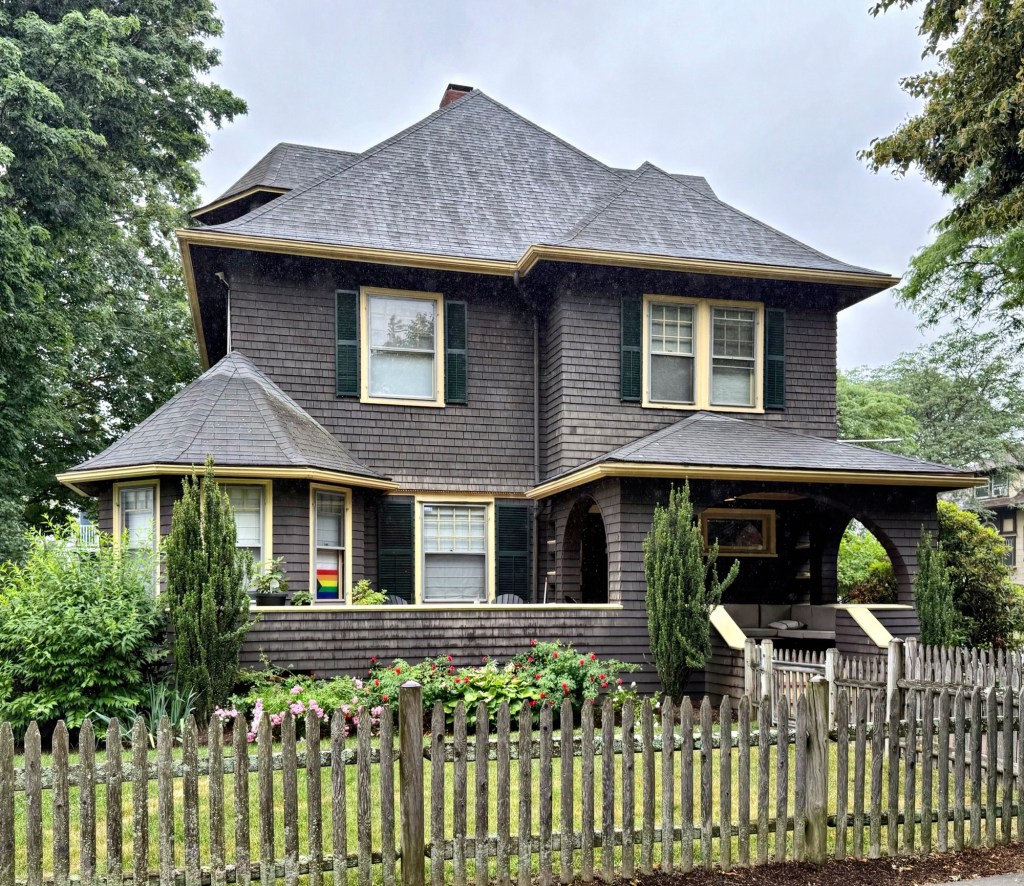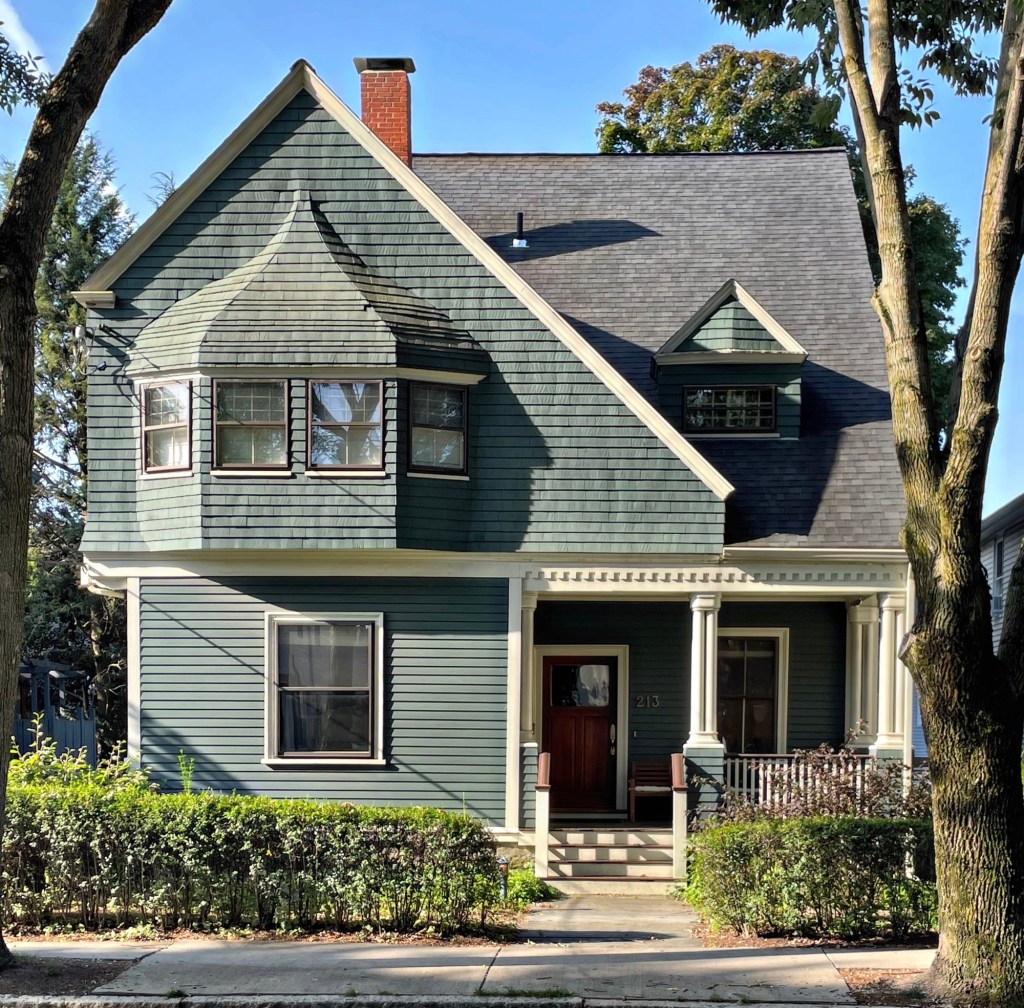
Dr. Thomas J. Shanahan House // 1892

Dr. Thomas Joseph Shanahan (1873-1929) was born in Lawrence and graduated from Harvard Medical School in 1896. He practiced medicine in Brookline and Boston and was engaged in local organizations. He purchased this 1892 house on Aspinwall Avenue in Brookline in 1911, which had previously been rented to families. Two generations of Shanahans would own the house until the 1970s. After Dr. Shanahan’s death in 1929, the widowed Margaret Shanahan remained in this house with their daughter, Mary Margaret Shanahan, who was employed in 1940 as a medical secretary for a hospital. Mrs. Shanahan transferred title to the property in 1947 to her daughter, who converted the house to a two-family dwelling in 1953 for supplemental income. Architecturally, the house is Queen Anne and Shingle styles with continuous shingle siding, complex form with bays and oriels, and a unique arched opening in the gable over the entrance filled with a spindle screen. Architects were William Langley Morrison and Peter J. McEwen.

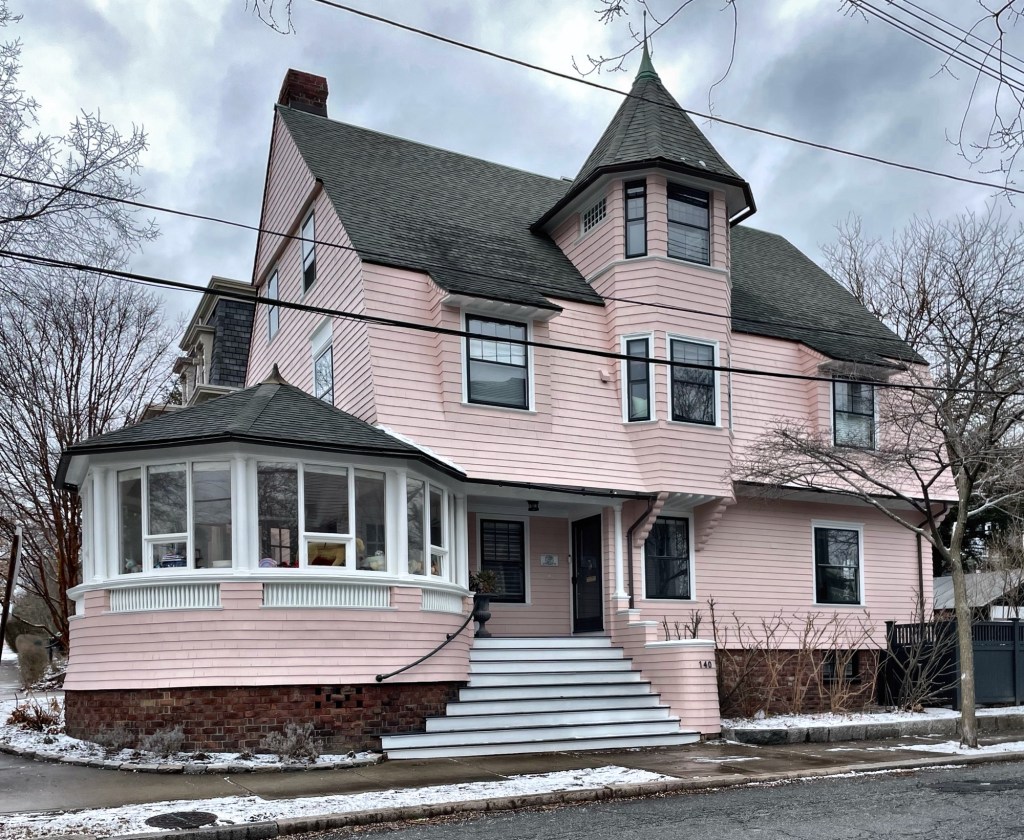
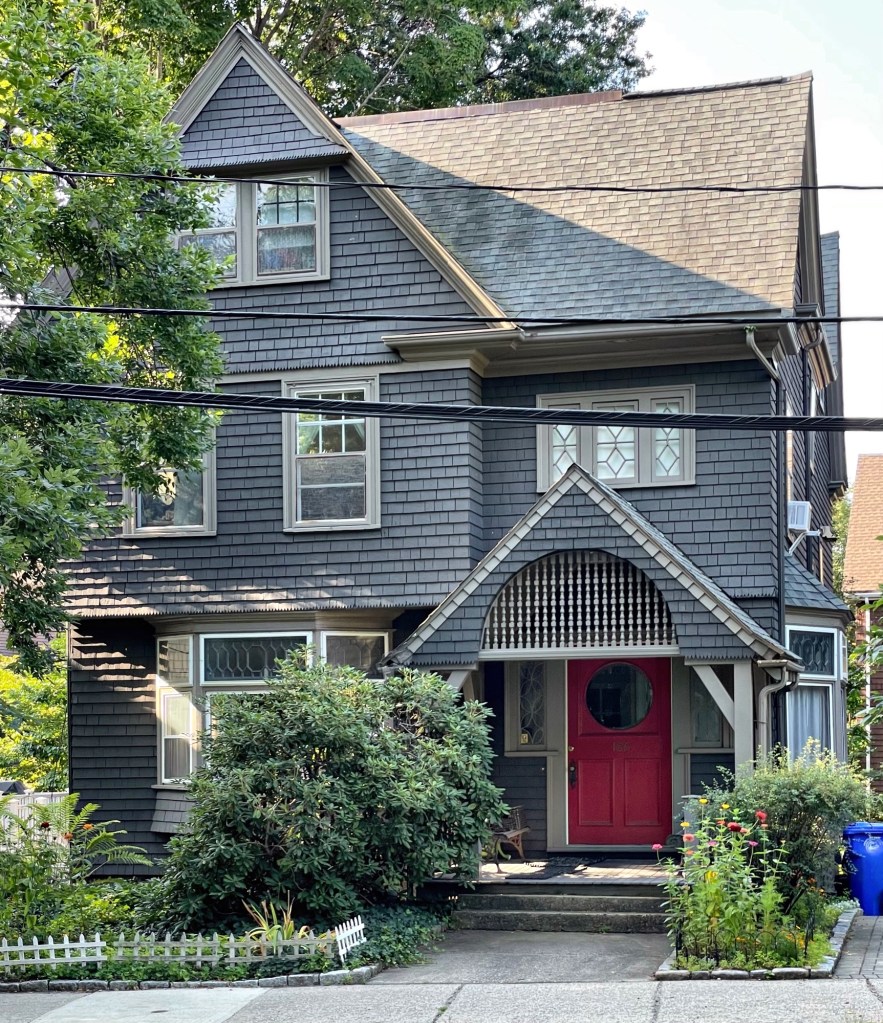
Levi T. Lyon Two-Family House // 1895

When Brookline Village filled in with multi-family housing in the late 19th and early 20th centuries, many speculative real estate developments sprouted up from larger residential estates. As so many were built on speculation, high-quality designs and construction were a necessity to bring in picky buyers. This two-family house was built on the corner of Brook and Toxeth streets by Levi T. Lyon, a builder and developer, who lived on Brook Street. This house was designed by F. Manton Wakefield, a relatively unknown architect who apprenticed under Shingle-style maestro William Ralph Emerson, before opening his own firm. Buildings like this are great as they provide much-needed housing, while being built of a good scale that allows residents to know their neighbors, not as easy in a high-rise.

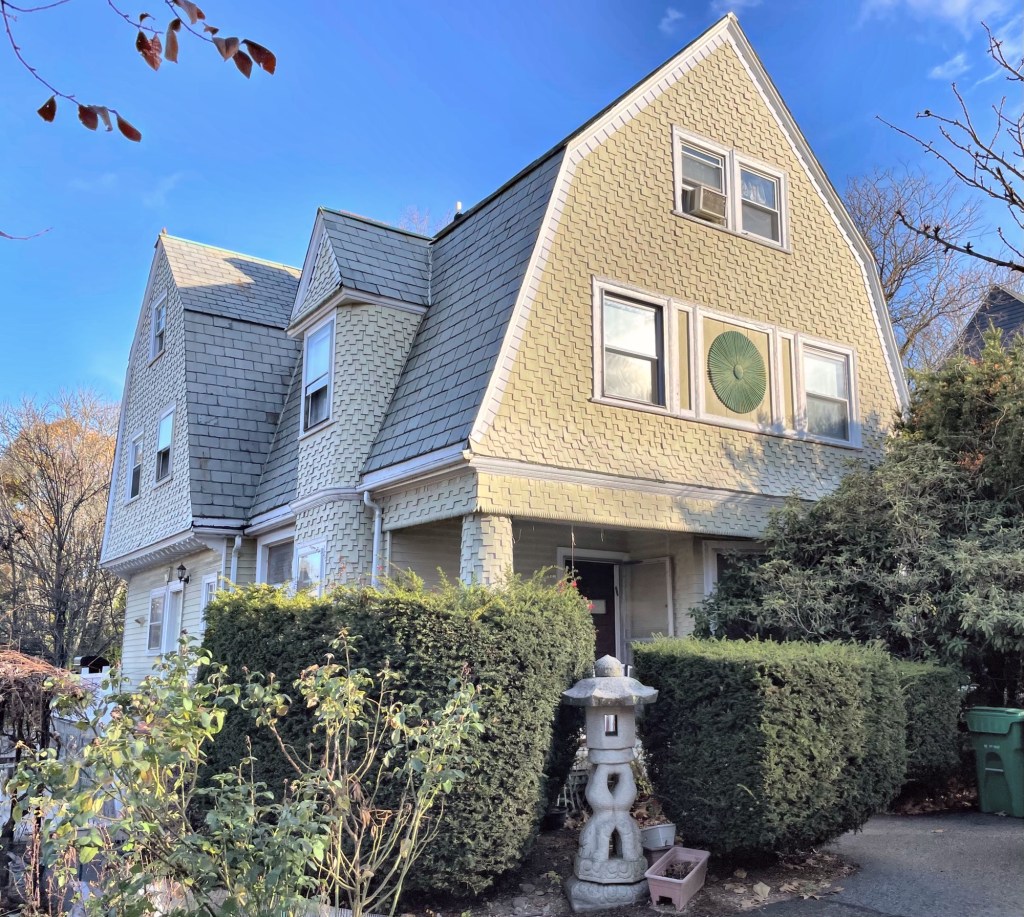
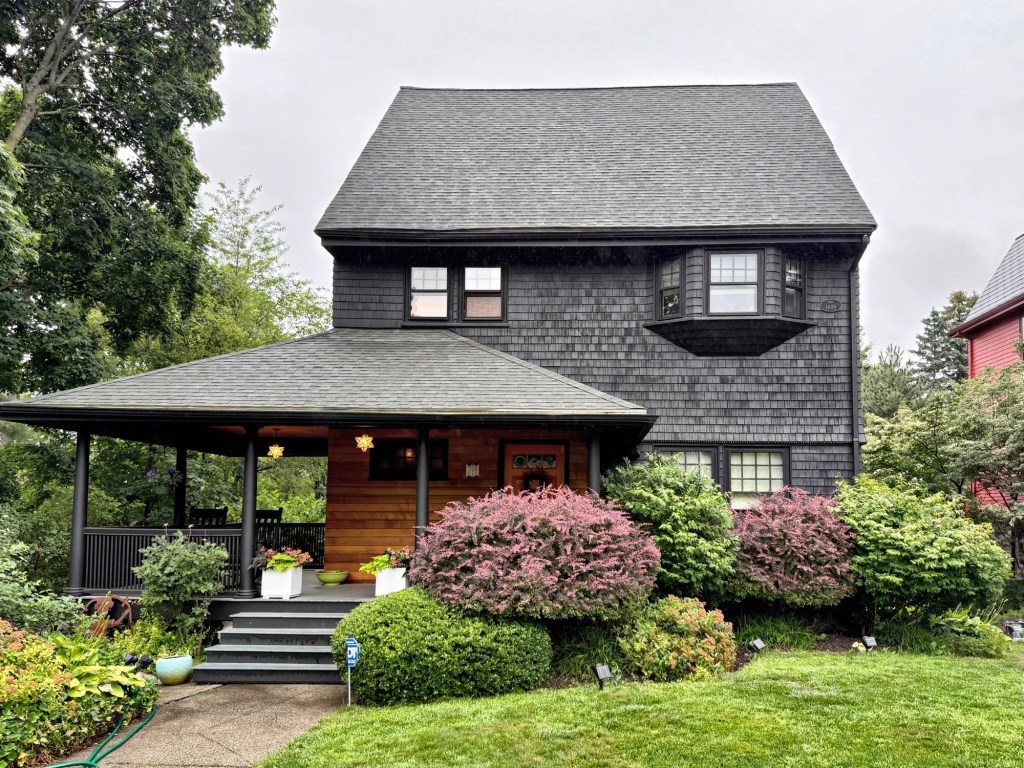
Oliver J. Barr House // 1908

Built in 1908 as a late example of the Queen Anne and Shingle styles, the Oliver J. Barr House is one of the finest Victorian buildings in Norwood, Massachusetts. The residence was built for Oliver J. Barr (1863-1935), who served as the General Manager of the Norwood Press in town, following his company from Boston to Norwood. The house was designed by Eugene Clark a Boston-area architect who specialized in suburban houses in the late 19th and early 20th centuries. The dwelling is noteworthy for its distinctive form, intact and rough textured wood shingle siding, and complex roof configuration. Particularly noteworthy is the verandah which encircles its northeast corner and rounded conically capped tower.

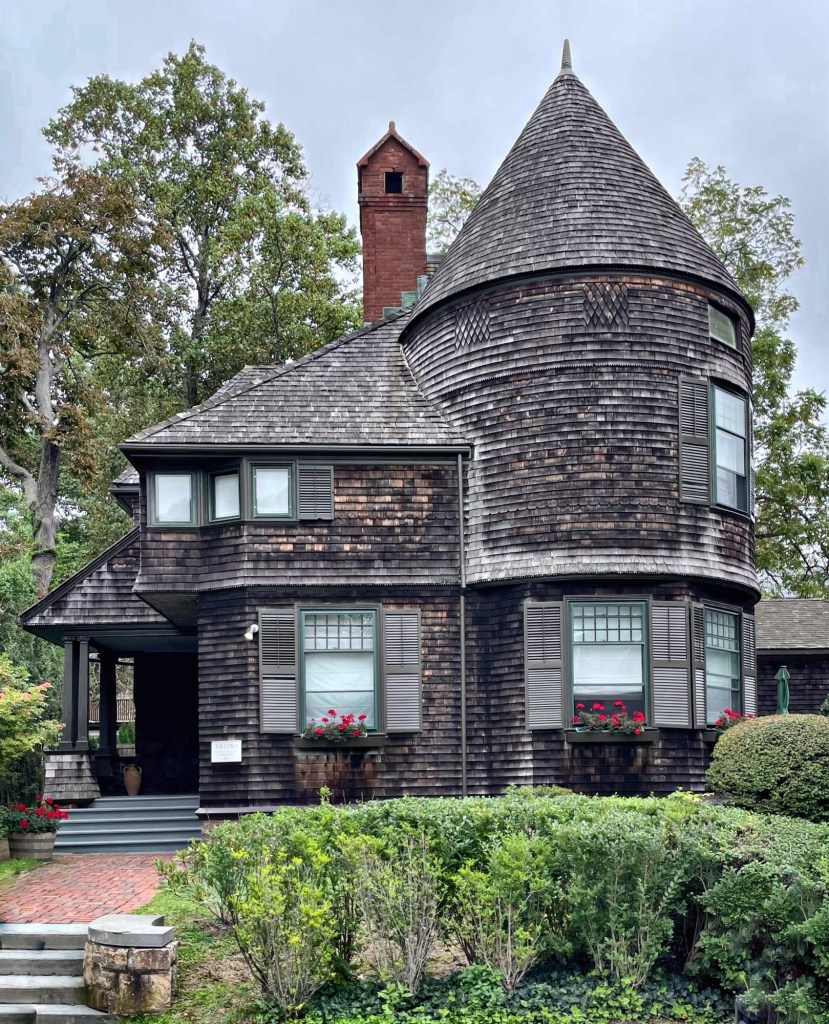
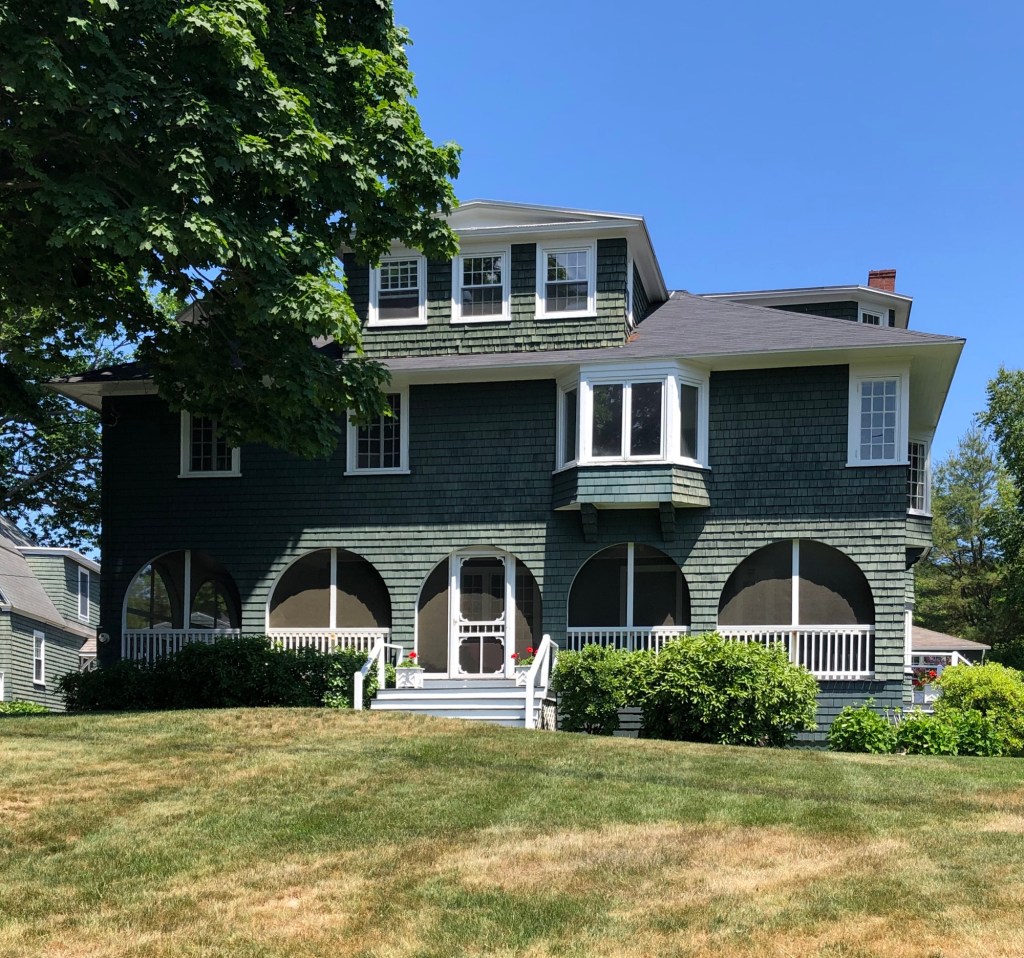
Chester Guild Cottage // 1902

One of the many stunning summer “cottages” built in the Cape Arundel summer colony of Kennebunkport, Maine, is this turn-of-the-century Shingle style dwelling built for Chester Guild of Boston. Chester Guild III was born into the wealthy Guild Family of Roxbury with his father being a successful leather dealer. Chester Guild spent summers with his family in Kennebunkport beginning in the 1890s, eventually had this cottage built in 1902. The Shingle style dwelling remained in the family for five generations and is very well-preserved, showcasing the hallmark elements of the ubiquitous coastal Maine architectural style.

Conant-Cushing House // c.1890

Atop the Great Hill on Point Allerton in Hull, Massachusetts, this large summer “cottage” stands out for its unique architecture and siting overlooking the bluffs and Atlantic Ocean. The Shingle style house was built around 1890 by Edward D. Conant, a real estate agent and developer of Newton as his family summer home. The architect is not clear, but the house exhibits a unique four-story crenellated tower, giving the appearance of a castle from a distance. The house was later owned by Cardinal Richard Cushing (1895-1970) as his own summer residence. Cardinal Cushing served as Archbishop of Boston from 1944 to 1970 and was made a cardinal in 1958. Cushing’s main role was as fundraiser and builder of new churches, schools, and institutions, and he helped then-presidential candidate John F. Kennedy deflect fears of papal interference in American government if a Catholic became president. Kennedy grew up spending summers at his grandfather’s home in Hull (featured previously). The Conant-Cushing House remains significant even with 20th century renovations.

Whelen Cottage // c.1891

For the last cottage on Grindstone Neck, I present the stunning Whelen Cottage. Charles S. Whelen (1850-1910), a banker and philanthropist who served as one of the directors of the Gouldsboro Land Improvement Company and as one of several of its stock agents in Philadelphia, purchased a house lot for him and his wife Migonette Violett. The couple did not hire Lindley Johnson, like so many other cottage-holders did, but they worked with esteemed architect Wilson Eyre to design the home. The Whelens were typical of the type of person who chose to summer on Grindstone. While comfortably well off, they were not in a financial position to commission the sort of cottages built on an ever increasing scale in Bar Harbor. The property left the Whelen’s ownership in 1897, and the house was altered and enlarged in 1900. The large porte cochere, porch, and additional rooms added at this time by William Winthrop Kent, an alumni of H. H. Richardson’s office.

McCrea Cottage // 1891

In 1891, Laura Denby McCrea, a wealthy widow based Philadelphia, sought to maintain her social standing all year by building a summer cottage on Grindstone Neck, a summer colony in Winter Harbor, Maine. She was one of the first to build a cottage here, and she hired renowned architect Wilson Eyre to furnish plans for the rustic home. The Shingle style house is dominated by its massive gambrel roof and was historically clad entirely with wood shingles (asphalt shingles have since replaced cedar at the roof).

Landreth Cottage // c.1892

Lucius S. Landreth, a Philadelphia attorney had this cottage built on Grindstone Neck in Maine around 1892 for his family. The cottage, like so many in the colony, was designed by architect Lindley Johnson in the Shingle style. The house is so perfect with its gambrel roof which is covered with cedar shingles all the way down to the stone foundation.

C. B. Taylor Cottage // c.1892

Men from Philadelphia and New York gathered to establish the Gouldsboro Land Improvement Company in the late 1880s with the goal to develop an alternative, more quiet summer colony to rival Bar Harbor on Mount Desert Isle. Two of the early investors (and summer residents) were J. Bonsall Taylor and Carter Berkeley Taylor, brothers from Philadelphia. John Bonsall Taylor’s cottage (last post) and this cottage, built for C. B. Taylor, were constructed around 1891-2 and are typical examples of upper-middle-class summer cottages in Winter Harbor. Philadelphia architect Lindley Johnson designed John’s cottage, so it could be hypothesized that he was also architect for C.B. Taylor’s here. The house as originally built was enlarged in the early 20th century, but maintains the rustic quality and charm that so many of these Shingle style cottages possess. And that red trim really pops!

Charles and Elizabeth Doremus Cottage // c.1892

In 1889, the Gouldsboro Land Improvement Company, bought 300 acres of farmland to build a residential summer colony as an alternative to the busy Bar Harbor across the bay. They hired landscape architect Nathan Franklin Barrett to design the subdivision of 198 cottage lots of at least one acre and arranged them on roughly parallel roads, with a primary road (Grindstone Avenue) running the length of the peninsula’s spine through woodlands to dramatic ocean views at the tip. The summer colony has many great cottages and chapels tucked away on rocky outcroppings with towering spruce trees all around. This charming cottage was built for Charles Avery Doremus and his wife Elizabeth Ward Doremus around 1892. Charles was a scientist, the son of chemist and physician Robert Ogden Doremus. He graduated from the College of the City of New York in 1870. He became a professor in chemistry and became a leading specialist on toxicology, often called into court cases to help solve crimes. Elizabeth was a playwright from Kentucky and her father and his brother owned plantations in Mississippi before the American Civil War. The couple summered at this cottage on Grindstone Neck until Charles’ death in 1925. It is a great example of a rustic Shingle style summer cottage.