Sherwin-Goldsmith House // 1844

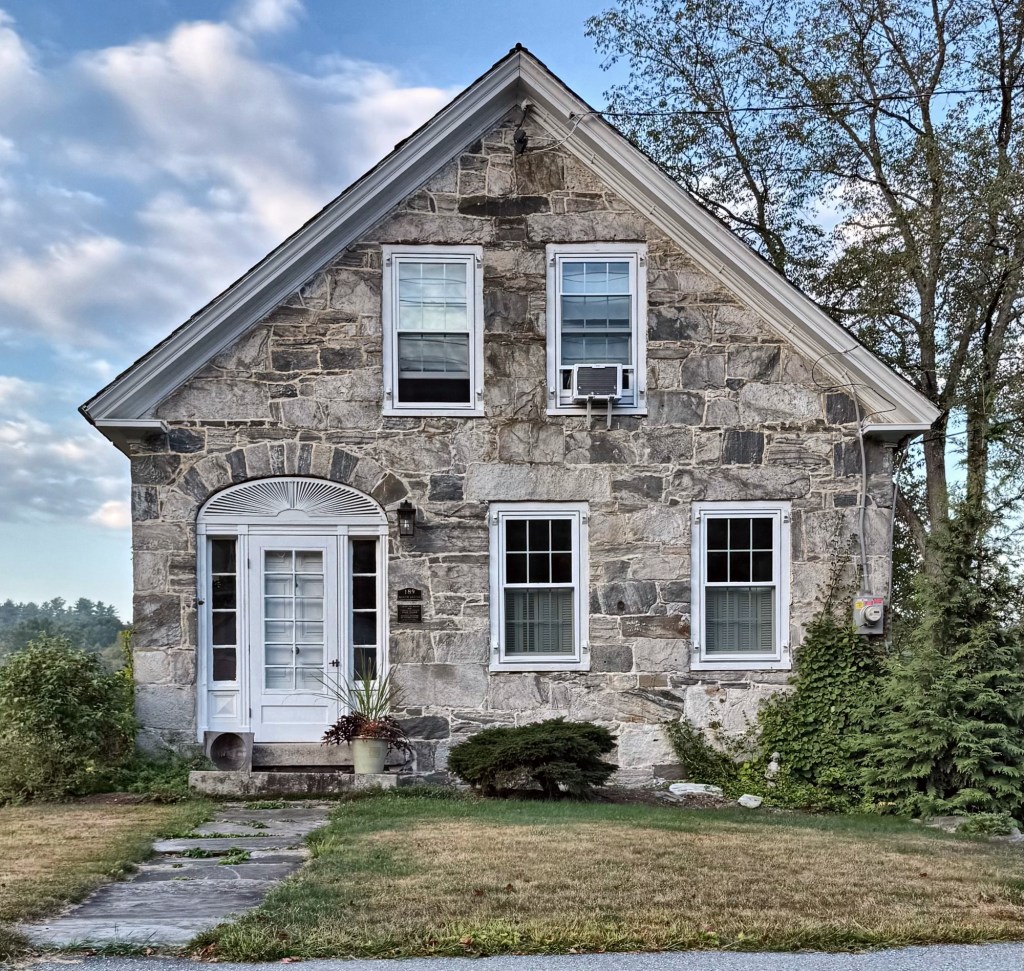
The Stone Village of Chester, Vermont, is said to be the largest collection of stone buildings in the state. Built around 1844, the Sherwin-Goldsmith House is one of a few dozen “snecked ashlar” buildings in the region, where rubblestone is laid up with mortar using long stones called “snecks” to tie an outer and an inner wall together. The construction method is said to have been brought to the area by masons from Scotland and Ireland which is known there as ‘Celtic Bond’. Oral tradition state that Scottish masons from Canada introduced the technique to local masons while erecting a mill in nearby Cavendish in 1832. Local Chester resident, Dr. Ptolemy Edson became such a fan of the building that in 1834, he had his home, the first stone building in Chester, built in this method. He then would influence the rest of the North Village of Chester, where many of his neighbors, as well as the church and schoolhouse, built their structures in snecked ashlar. The Sherwin House is one of three near-identical houses built around the same time that are colloquially known as the “Three Sisters” because they were built for members of the same family. The Greek Revival form is toned down in this smaller side-hall house, which playfully uses large blocks of schist and mica which read as quoins at the corners. Simeon Sherwin (1813-1874) was a farmer, postmaster, and justice of the peace in Chester. Later owner, Olivia Goldsmith, wrote her bestseller, First Wives Club when she lived here. 
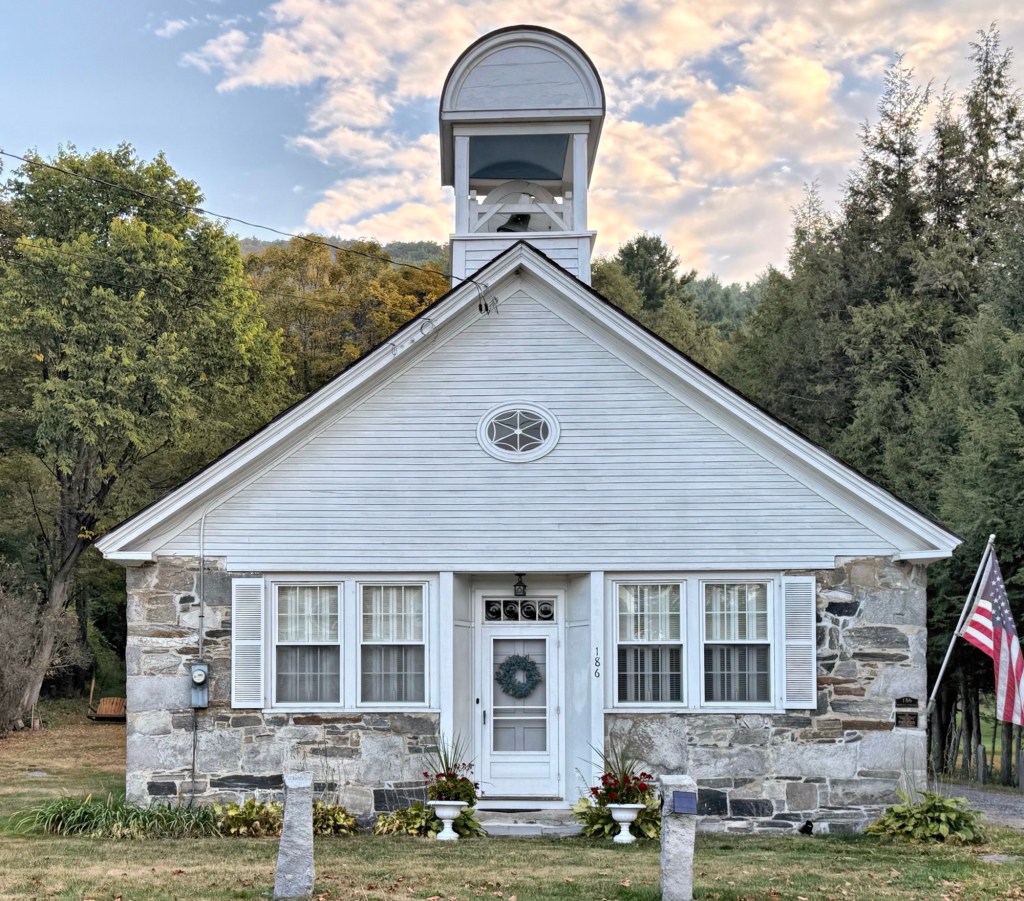
Stone Village Schoolhouse // 1835

Across the street from the Gideon Lee House in the Stone Village of Chester, Vermont, this historic schoolhouse is one of the oldest in the state and one of the few extant schoolhouses built in stone in New England. The Stone Village Schoolhouse is a rare example of a snecked ashlar building, where the construction method is said to have been brought to the area by masons from Scotland and Ireland which is known there as ‘Celtic Bond’. Oral tradition state that Scottish masons from Canada introduced the technique to local masons while erecting a mill in nearby Cavendish in 1832. Local Chester resident, Dr. Ptolemy Edson became such a fan of the building that in 1834, he had his home, the first stone building in Chester, built in this method. He then would influence the rest of the North Village of Chester, where many of his neighbors, as well as the church and schoolhouse, built their structures in snecked ashlar. Completed in 1835, the schoolhouse is a single-story rectangular plan building with the end gables forming a high pitched roof with a bell cupola over the facade’s gable. The snecked ashlar siding appears only on the first floor with traditional wood clapboard siding in the gable above. Built as School No. 3 for Chester, the building converted to residential use in the 20th century, but still maintains its important materiality and the iconic school bell, allowing passersby to understand its original purpose.

Gideon M. Lee House // c.1836

The Stone Village of Chester, Vermont, is said to be the largest collection of stone buildings in the state. Built around 1836, the Gideon Lee House is one of a few dozen “snecked ashlar” buildings in the region, where rubblestone is laid up with mortar using small long stones called “snecks” to tie an outer and an inner wall together. The construction method is said to have been brought to the area by masons from Scotland and Ireland which is known there as ‘Celtic Bond’. Oral tradition state that Scottish masons from Canada introduced the technique to local masons while erecting a mill in nearby Cavendish in 1832. Local Chester resident, Dr. Ptolemy Edson became such a fan of the building that in 1834, he had his home, the first stone building in Chester, built in this method. He then would influence the rest of the North Village of Chester, where many of his neighbors, as well as the church and schoolhouse, built their structures in snecked ashlar. The first residence besides Dr. Edson’s home built this way in the village was this home, built nextdoor for Dr. Edson’s friend, Gideon Merrick Lee (1811-1880). Designed in a more vernacular version of the Federal style with emerging Greek Revival side-hall form, the Lee House features a charming entry with sidelights and a blind fan over the door.

Stone Village Unitarian Church // 1845

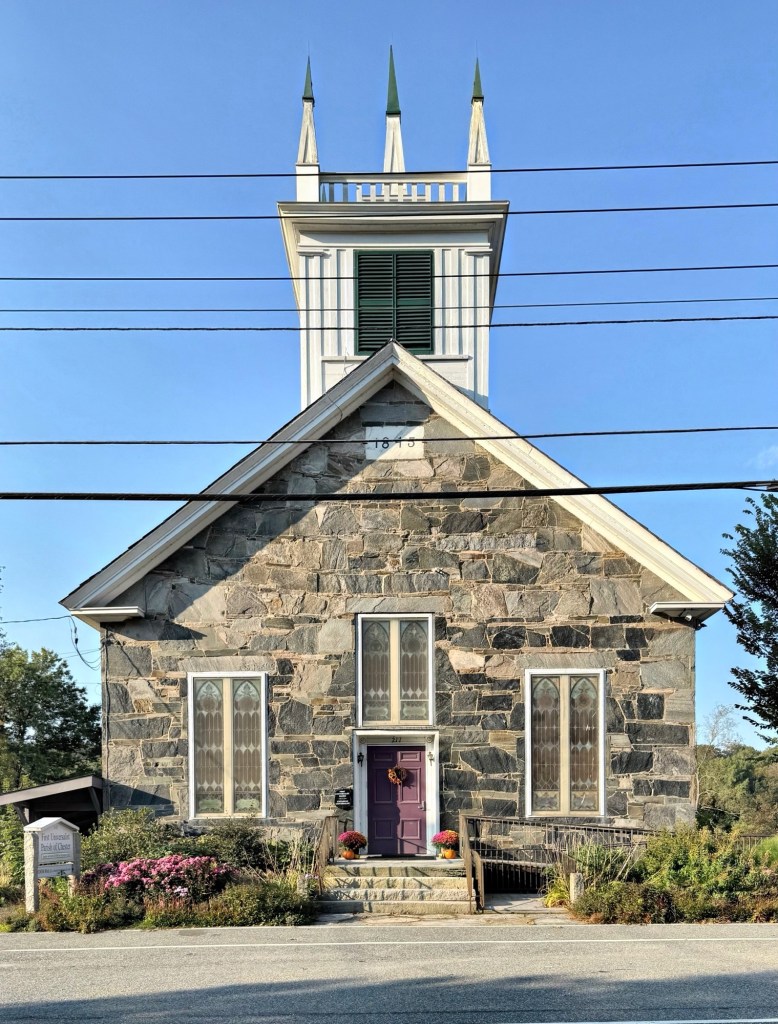
The Stone Village of Chester, Vermont, is said to be the largest collection of stone buildings in the state, and is anchored by its largest building, the Unitarian Church. Built in 1845, the Unitarian Universalist Church is one of a few dozen “snecked ashlar” buildings in the region, where rubblestone is laid up with mortar using small long stones called “snecks” to tie an outer and an inner wall together. The construction method is said to have been brought to the area by masons from Scotland and Ireland which is known there as ‘Celtic Bond’. Oral tradition state that Scottish masons from Canada introduced the technique to local masons while erecting a mill in nearby Cavendish in 1832. Local Chester resident, Dr. Ptolemy Edson became such a fan of the building that in 1834, he had his home, the first stone building in Chester, built in this method. Dr. Edson served on the building committee for the new village church, and likely pushed for a cohesive material and construction method for this church and other buildings soon after. The Stone Village Unitarian Church blends Greek Revival and Gothic Revival styles in a more vernacular way, typical in many rural Vermont communities. The building exhibits stained glass windows that were added sometime in the late 19th or early 20th century.

Dr. Ptolemy Edson House // 1834

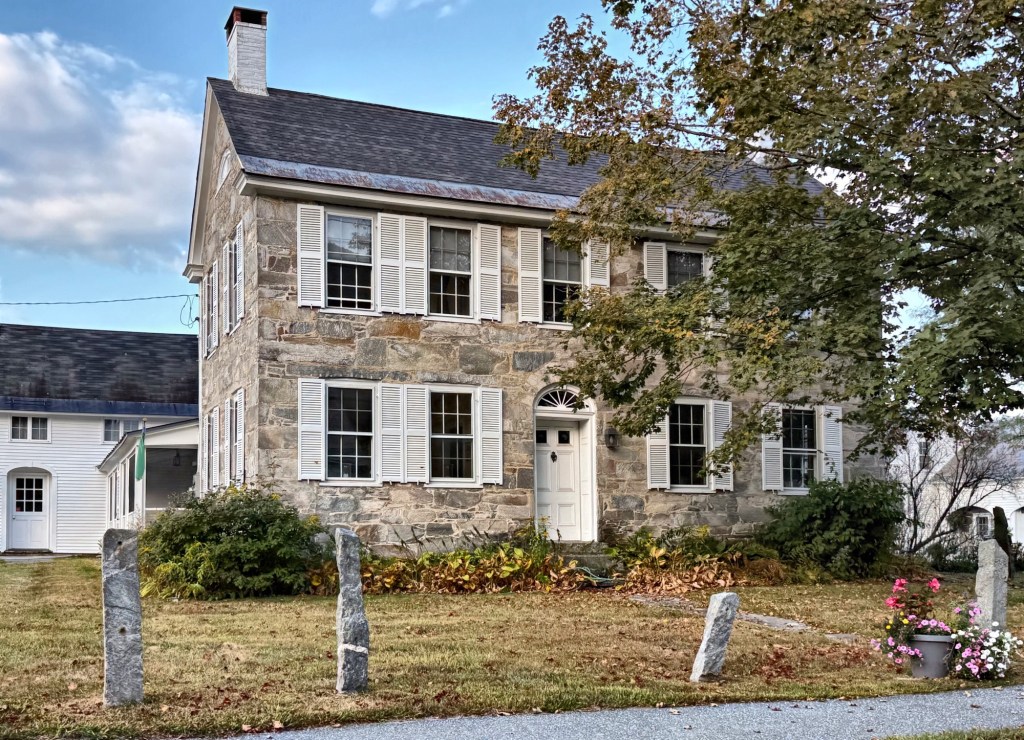
The Stone Village of Chester, Vermont, is said to be the largest collection of stone buildings in the state. Built in 1834, the Dr. Ptolemy Edson House is one of a few dozen “snecked ashlar” buildings in the region, where rubblestone is laid up with mortar using small long stones called “snecks” to tie an outer and an inner wall together. The construction method is said to have been brought to the area by masons from Scotland and Ireland which is known there as ‘Celtic Bond’. Oral tradition state that Scottish masons from Canada introduced the technique to local masons while erecting a mill in nearby Cavendish in 1832. Local Chester resident, Dr. Ptolemy Edson became such a fan of the building that in 1834, he had his home, the first stone building in Chester, built in this method. He then would influence the rest of the North Village of Chester, where many of his neighbors, as well as the church and schoolhouse, built their structures in snecked ashlar. Designed in the Federal style, the Edson House is a vernacular, five-bay, two-story residence with central entrance and arched fanlight transom over the front door.

Leland Homestead // 1843

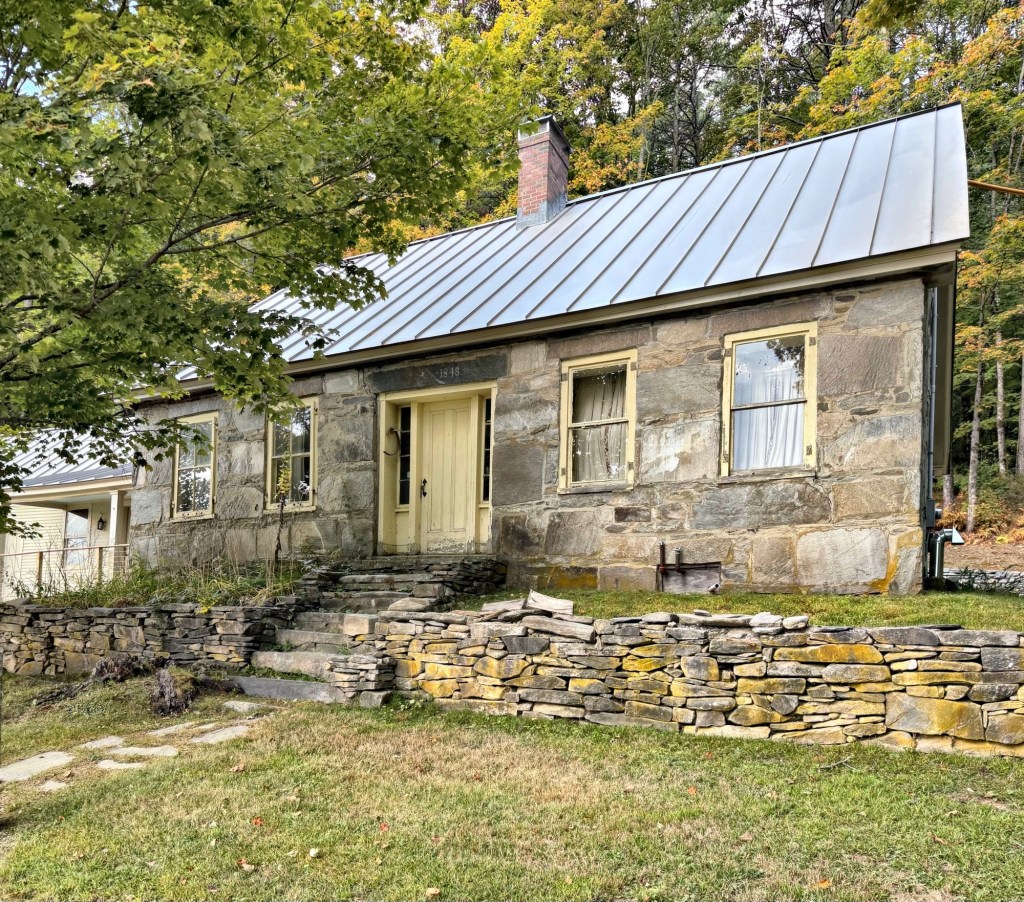
The small, rural Town of Baltimore, Vermont, was originally a part of Cavendish but due to the geography and a mountain separating the village from the main town, residents here voted in 1793 to set off as its own town. The nomenclature of the town name, Baltimore is not clear, as the city in Maryland was named for George Calvert, first Baron Baltimore, who was granted that colony in 1632, but there is no evident connection between the two communities. The word Baltimore itself is Celtic for “large town”; appropriate for Calvert’s colony, perhaps, but hardly for this Vermont town, which is one of the smallest in the state in terms of population or square miles. The town has always been a community without a distinctive village center and has long been primarily farmland, with properties bounded by stone walls and forests. This stone house on Harris Road in Baltimore was built in 1843 by Joshua Leland and his wife, Betsy Boynton. A history of the town speaks of the house, “It was one of the most attractive houses ever built in Baltimore, a well-built front hall and stairway, four fair-sized pleasant rooms downstairs, three well-arranged chambers and a convenient back stairway, all well-finished”. The home, with its date of construction over the front door, remains one of the most historic and well-preserved buildings in the town of just over 200 residents.

Glimmerstone // 1845

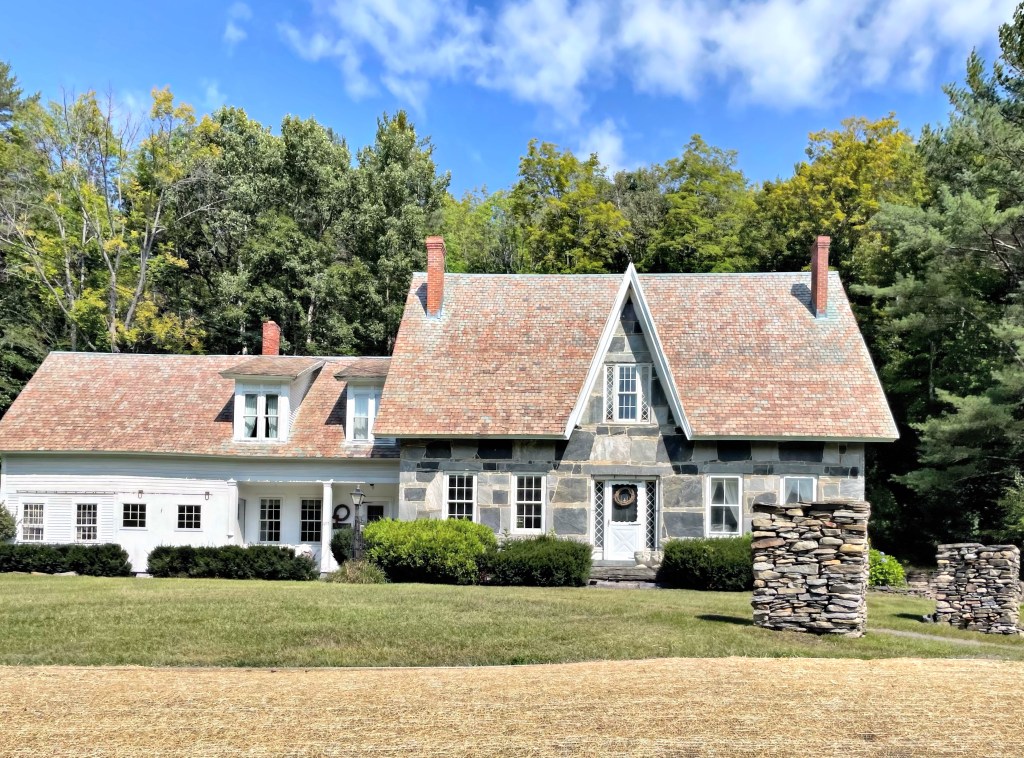
What a treat it was to stumble upon one of the most beautiful homes in Vermont, and all the best houses have names! Glimmerstone is located in the small town of Cavendish, and is possibly the finest Snecked Ashlar constructed home in the state. The house was built in 1845 for Henry Fullerton, manager of the Black River Manufacturing and Canal Company mill in Cavendish. The stone used to build the house was quarried less than a mile away, and hauled to the site. The construction style consists of stone facing on either side of rubble fill, with slabs and snecks sometimes laid across the fill to provide strength, a method brought to the region by Scottish immigrant masons. The house’s design is by a local carpenter, Lucius Paige, and is based on designs published by Andrew Jackson Downing, who depicted many Gothic style designs in pattern books which were built all over the country. The house has had a number of owners after Mr. Fullerton died. During the prohibition era, Art Hadley, who would later become extremely wealthy as the inventor of the expansion bracelet, used the home as part of a rum running operation. Glimmerstone was purchased in 2010 by the current owners, who underwent a massive restoration of the home, converting it into a bed and breakfast, allowing the public to experience the property as well.

Joshua Parker Farmhouse // 1850

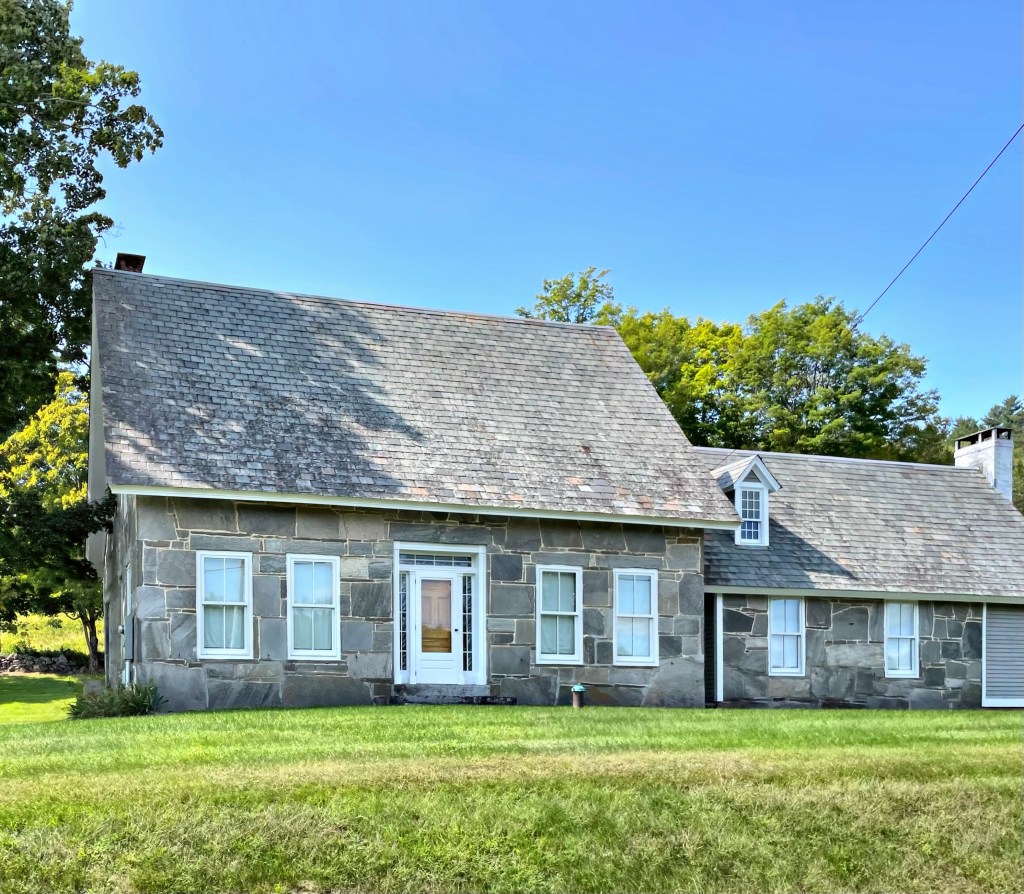
This house in Cavendish was constructed in 1850 by Joshua Parker and is an outstanding example of a gothicized snecked ashlar house. The house is in the Cape form and largely exhibits a more traditional cottage layout, but with the steep gable dormer, giving the home a distinctive Gothic feeling. The 1850 home replaced a late 18th century farmhouse, but in the iconic snecked ashlar construction. The farm grew over the subsequent decades, including a c.1900 snecked ashlar barn (not pictured), which is probably the last building of “Snecked Ashlar” construction erected in the State of Vermont.


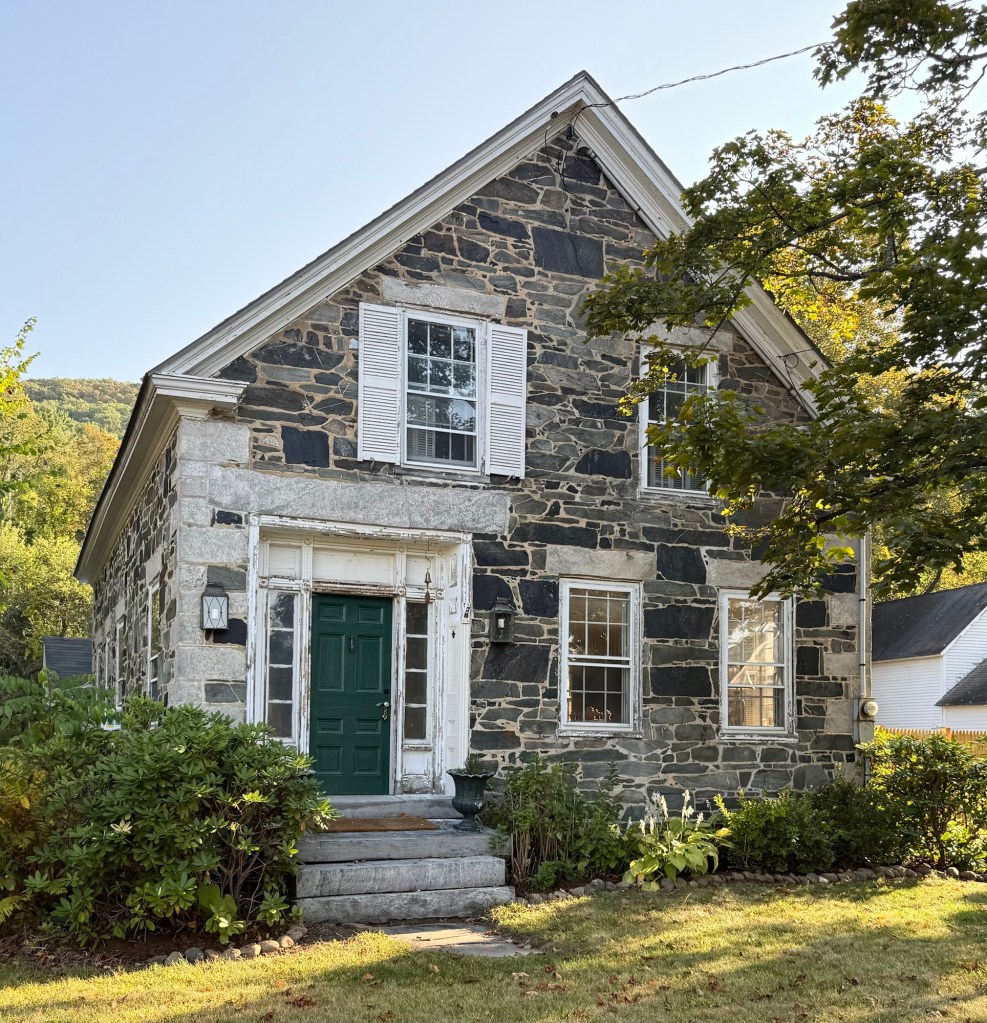
James Spaulding House // c.1840

This Greek Revival cape house in Cavendish, Vermont sits along a rural road and is one of the few dozen examples of Snecked Ashlar buildings in this part of the state. In the early 1830s, skilled masons from Scotland settled in central Vermont to work on building projects there. A number of these builders, mainly from the Aberdeen area, were experienced in snecked ashlar construction, in which plates of stone are affixed to a rubblestone wall. This home was built for James Spaulding, and remained in the Spaulding family for generations, lovingly maintained as an excellent example of a Snecked Ashlar home in Vermont.

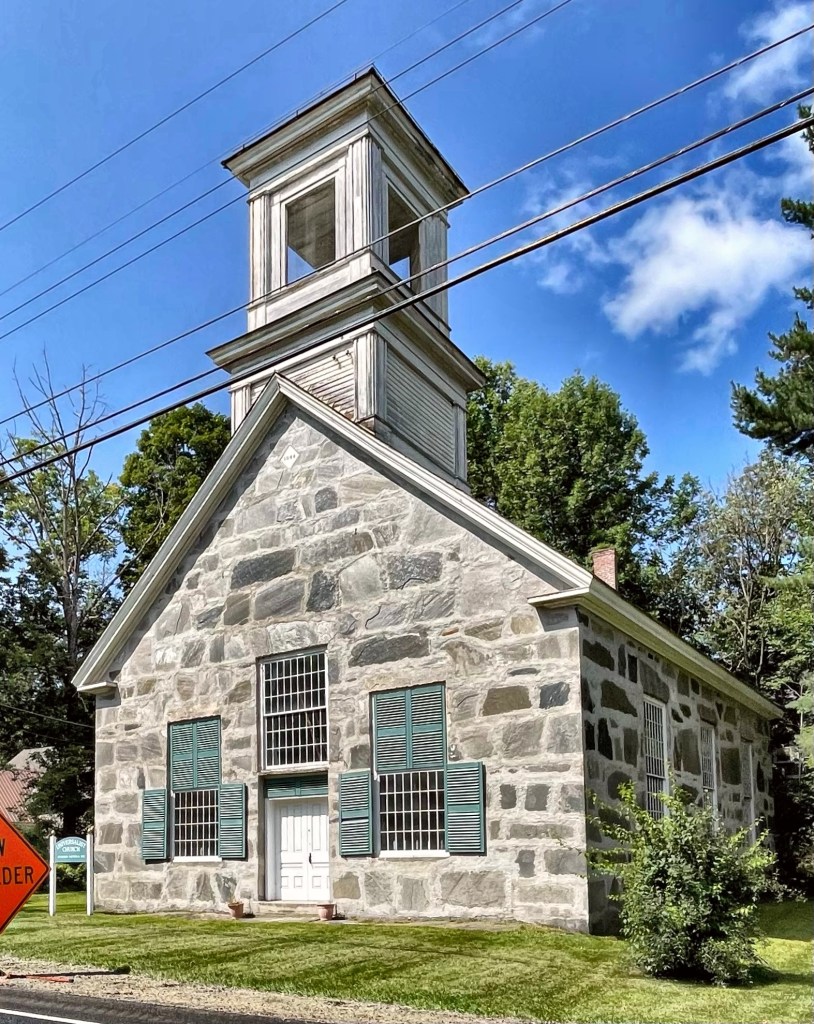
Cavendish Universalist Church // 1844

Oh Snecked Ashlar… the iconic vernacular building style that was seen in south-central Vermont in the middle of the 19th century. The Cavendish Universalist Church was built in 1844 by Scottish immigrant stonemasons who had moved to the area ten years earlier from Canada. These builders constructed houses, schools, and churches in Windsor County and nearby, using traditional building techniques they likely brought to North America from Scotland. This church in Cavendish was built under the leadership of Rev. Warren Skinner, an avid abolitionist and was part of the “above ground” railroad in Vermont. The church was decommissioned in the 1960’s from a shrinking congregation and was leased to the Cavendish Historical Society in the 1970’s. While work has been done to maintain the building, it is in need of repairs. In recent years, the Universalist Unitarian Convention of Vermont and Quebec has agreed to deed the building to the town of Cavendish on May 11, 2013. The structure has been restored, and apparently houses exhibition space inside.