Paul and Caroline Hunt House // 1905

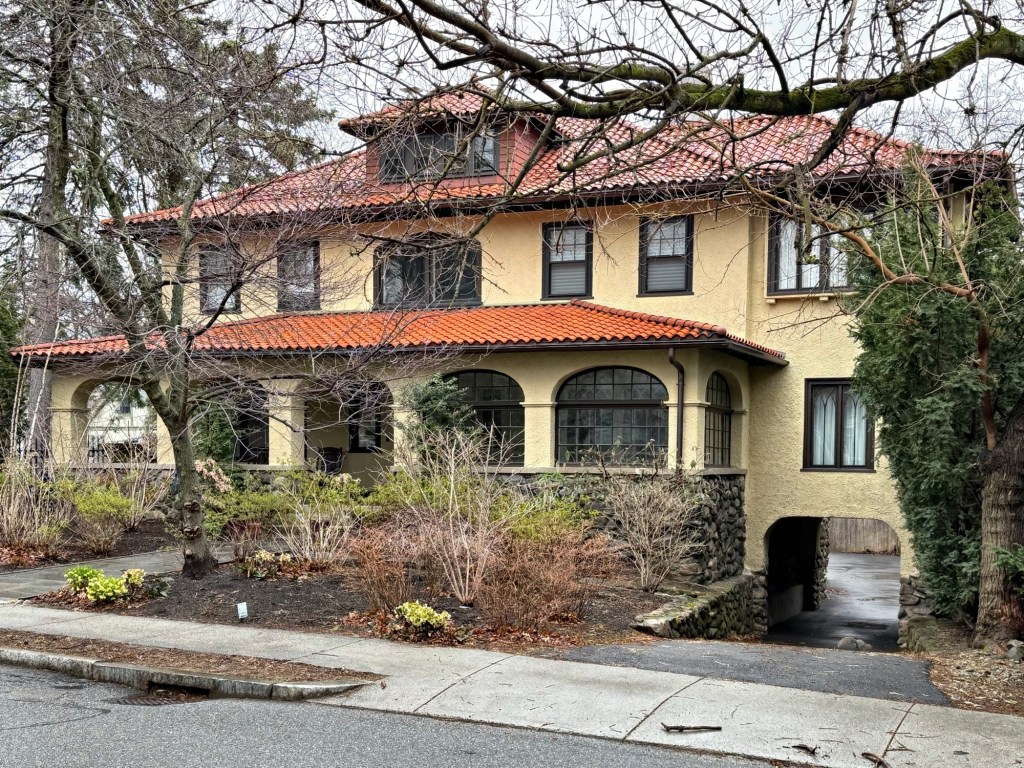
Paul Hunt, the son of famous painter, William Morris Hunt, and the nephew of famed architect Richard Morris Hunt, built this house in Brookline, Massachusetts for $15,000 for him and his wife, Caroline. Paul had been involved in real estate development in Bar Harbor, Maine, where his mother had a summer cottage, and while not an architect himself, he was very interested in design and took a keen interest in developing estates with the family funds. While developing property in the summer enclave of Bar Harbor, Maine, Paul met the Bar Harbor architect, Milton W. Stratton, and the two collaborated in the construction of houses there and two adjacent homes in Brookline. The two-story house is wood frame construction with a stucco finish on the exterior. Spanish Colonial Revival in style, the roof is hipped with terra cotta tile, as is the roof of the verandah which extends across the facade. In 1911, Paul Hunt worked with architect William Ewing Harding to add the two-story wing on the side of the house, which is built over the driveway, creating a really unique (though not as functional) design element. 
Ellen and Ida Mason Villa // 1902

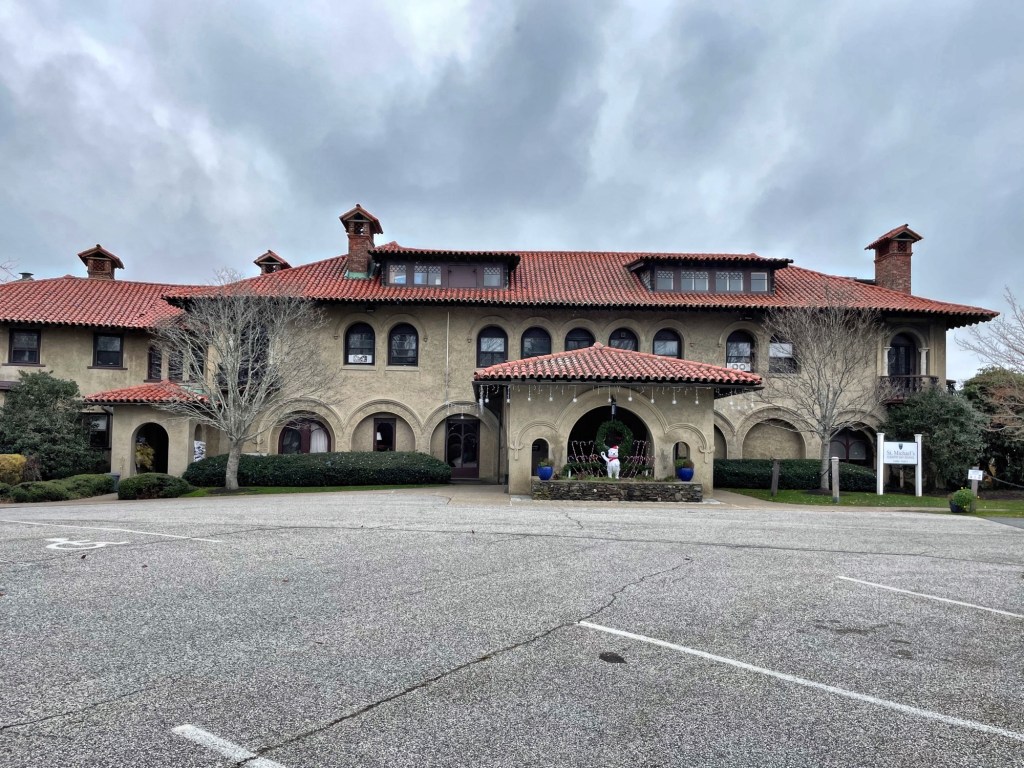
This large, low-slung and stuccoed Spanish Colonial Revival house in Newport Rhode Island, looks straight out of Southern California, thats because it is.. kind of. The Ellen Mason Villa was built in 1899-1902 from plans by Irving Gill, a southern California architect, for sisters Ellen and Ida Mason. The two unmarried sisters were daughters of Robert Means Mason a Boston millionaire, who had a summer cottage on the site that the family enjoyed for decades. The old Mason Villa was designed by H. H. Richardson, but burned to the ground in 1899, replaced by this structure. The sisters lived between Boston and here at this Newport estate until their deaths. In 1943, the property came into the ownership of the St. Michael’s Country Day School, who have both preserved the old estate house, but also added new structures to the campus. The house is unique as a rare Spanish Colonial Revival style property in New England, what a treat!

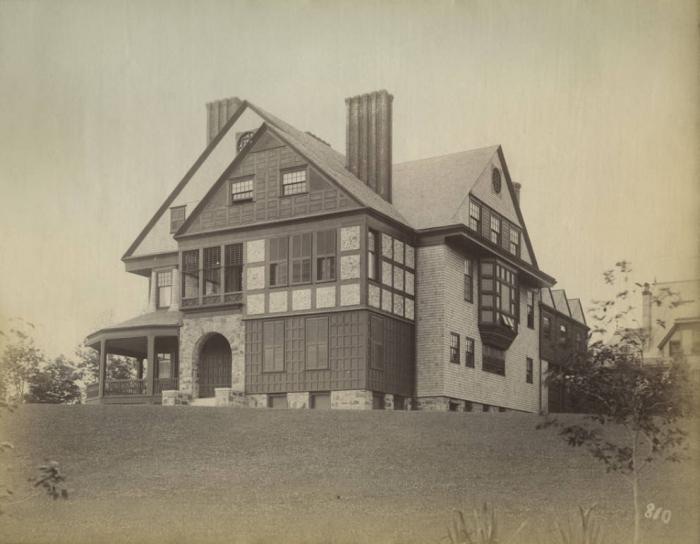
Original Means Villa

Former St. Mary’s of the Bay Catholic Church // 1928

Catholic residents of Hull, Massachusetts surged in the early 20th century with many well-to-do Irish families settling in town as year-round or summer residents. As a result, the cramped original St. Mary’s of the Bay Catholic Church was deemed too cramped, and a site in Hull Village was selected for a new church. In 1927, ground was broken for the new stucco church, which was partially funded by the Kennedy Family, who had a summer house nearby. The first service took place in 1928 and the church was in use as a religious building until the 1990s when it was sold to a private owner. The church was converted to a single-family residence and recently sold to new owners, who preserve the significant Spanish Colonial Revival style edifice.

Wrightstone // 1925

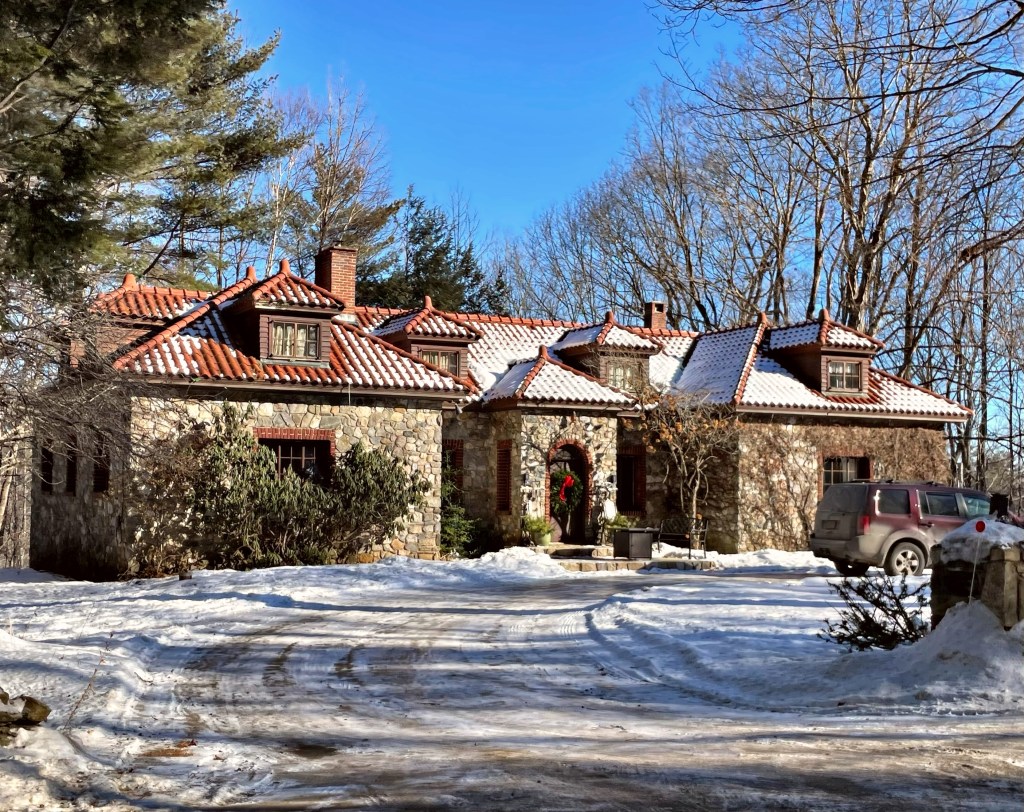
In the early 20th century, Norway, Maine and the surrounding towns were sought-after for their natural beauty with large lakes and rivers with untouched expanses of forest. Upper-middle class residents of Portland, Boston and other larger cities in New England built more rustic summer homes, compared to the elaborate “White Elephants” in Newport, Rhode Island. This home in Norway was named Wrightstone and was built in 1925 for the Wright Family. The U-shaped home is constructed from rubblestone, likely gathered from the land on which it sits. The house blends the Arts and Crafts movement with the uncommon (in Maine) Spanish Colonial Revival style, with the terracotta roof! I bet the interior is so cozy!