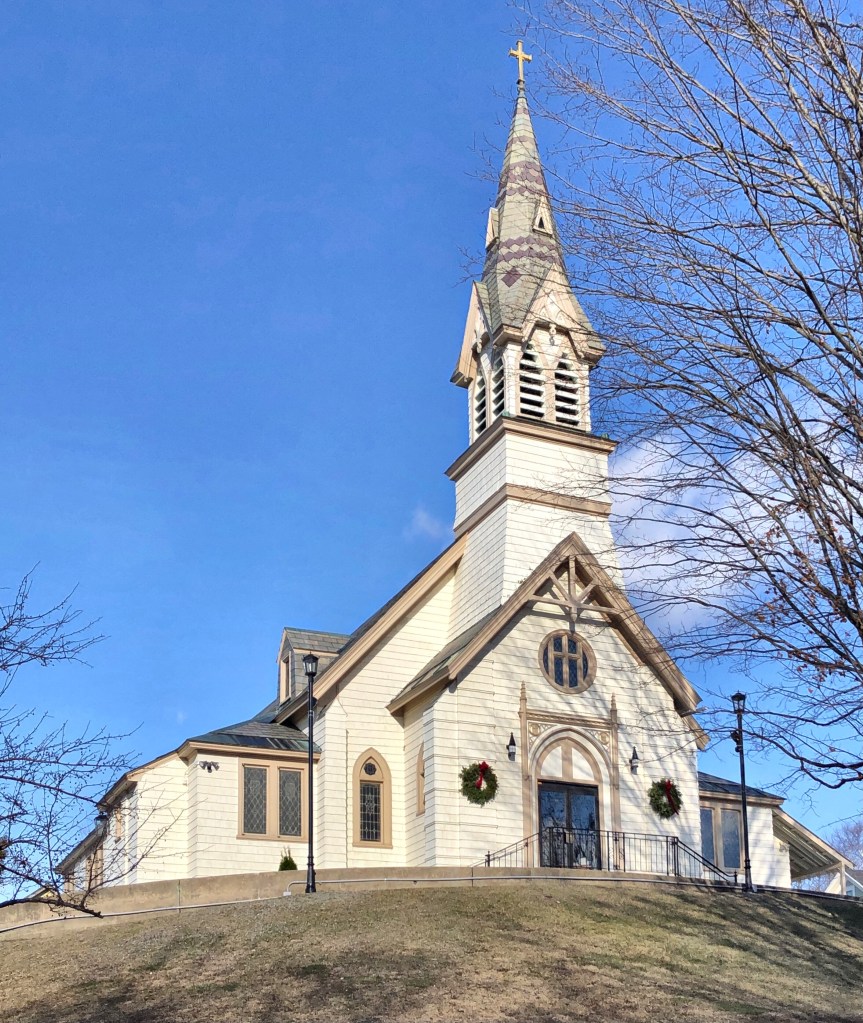
St. Patrick’s Church, Newport // 1882

Perched high on a hill in central Newport, NH, St. Patrick’s Church has served the community in its stunning building for nearly 150 years. The town of Newport began seeing Irish immigrants moving into town looking for work at the mills as early as 1835. The large working-class population created a need for a Catholic church in the growing town. That same year, the Catholic population of the state of New Hampshire was listed at just 720 people. Over the following decades of meeting in homes and small buildings around town, the Catholic population in town, along with the newly established Archdiocese of Manchester, NH, came up with funds for a church in the mill town of Newport. The congregation hired Hira Ransom Beckwith, a carpenter, builder and architect from nearby Claremont to design and construct the new place of worship. Interestingly, Beckwith had only a high school education, so his training as an architect and builder was through apprenticeships. The church is a blend of Gothic Revival and Stick styles, with the lancet windows and tracery paired with the elaborate stick-work in the gable.

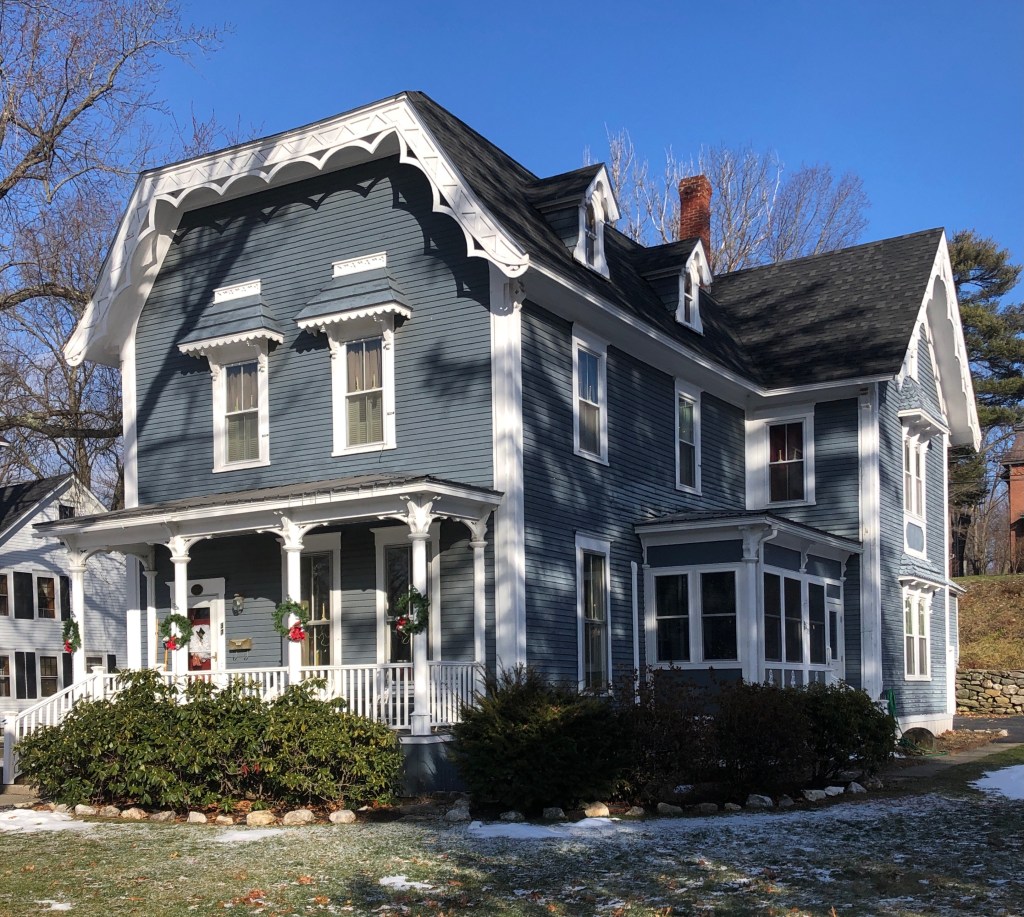
Parmelee House // c.1879

Located on the east side of the Town Common in Newport, NH, the Parmelee house stands out as a unique vernacular Stick style home. The home was built for Joseph Warren Parmelee (1818-1892), the grandson of original settlers of town, Captain Ezra Parmelee and Sybil Hill. He began his adult life as a merchant in Newport, before moving south to Charlestown, South Carolina in 1847. Joseph was forced back north at the beginning of the Civil War, and he lived in New York City until he finally relocated back to his hometown in 1879, which is likely when he built this home for his family. Upon returning, he became active in town affairs, and also pursued interests in history and poetry, creating a book of poems from his home. The Parmelee house retains much of its original detailing from the decorative bargeboards at the gable ends, large eyebrow window hoods at the second floor, and the interesting trapezoidal roof, possibly a vernacular nod to a mansard roof.

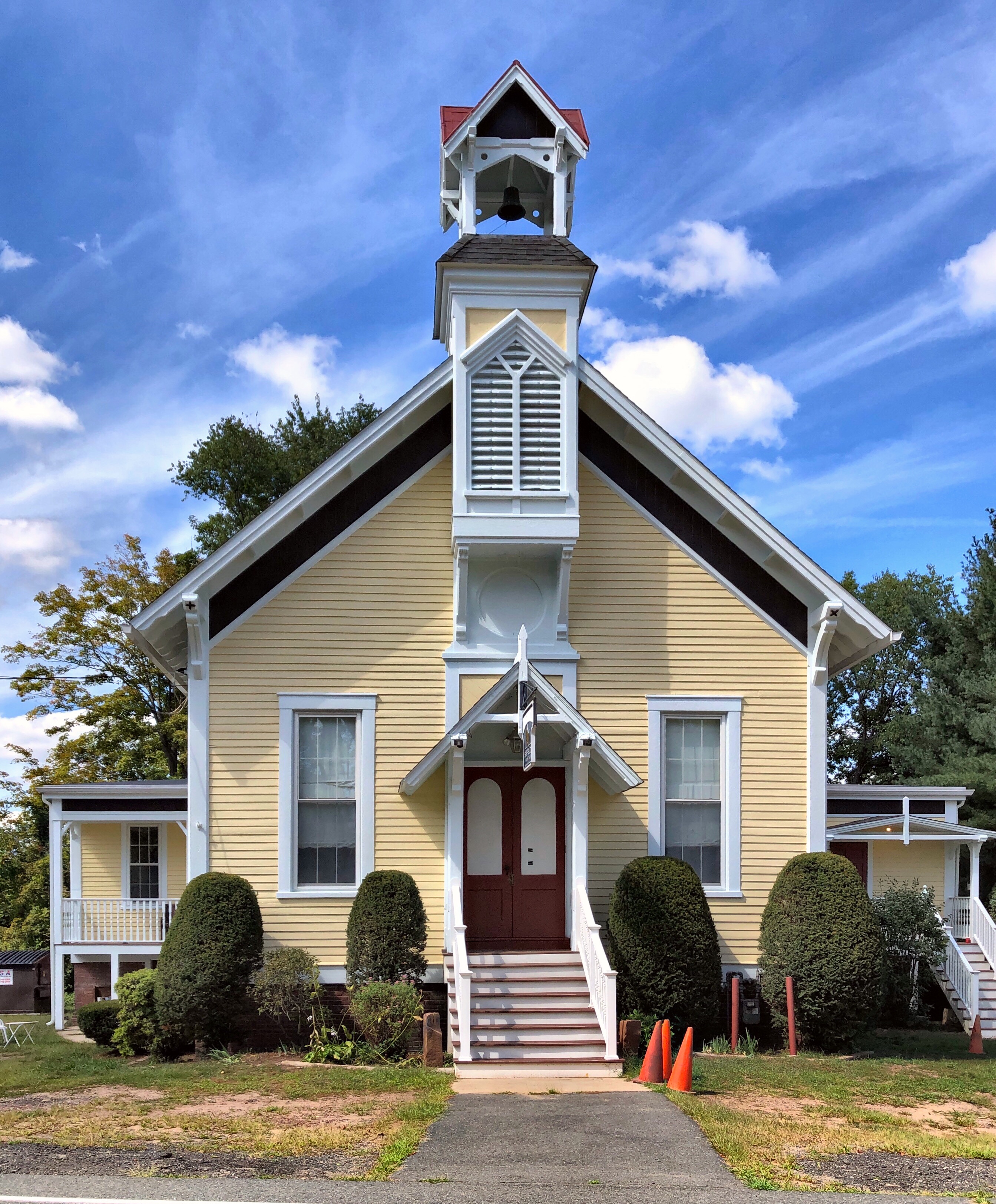
Mapleton Hall // 1883

This meeting hall in Suffield, CT was built in 1883 on Crooked Lane, named Central Hall. When Crooked Lane was renamed Mapleton Ave, the hall was so renamed to reflect this name change, to Mapleton Hall. Starting in 1885, the hall was home to the local grange, a fraternal organization that encouraged families to band together to promote the economic and political well-being of the community and agriculture. With Suffield’s active agricultural uses (primarily in tobacco crops), this grange was quickly funded and built. For nearly 100 years the building saw use as a fraternal center, with dwindling membership after WWII, when the agricultural character of town began to make way for suburban growth. The building was sold to the Mapleton Hall Asssociation, in 1978, who began restoration of the structure which began to decay from deferred maintenance. The building is now owned by The Suffield Players, a non-profit community theater company.

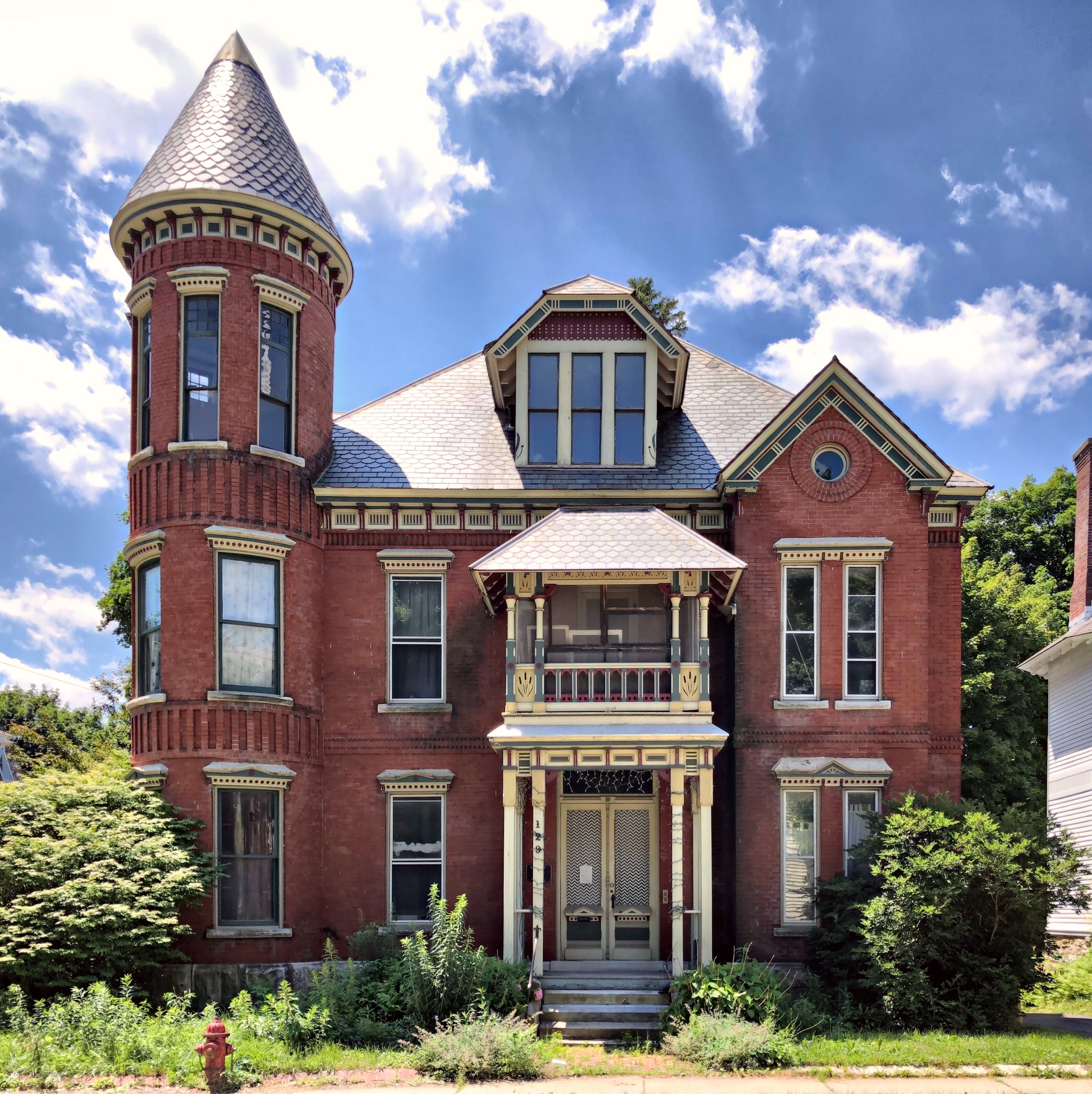
Whitman House // 1881

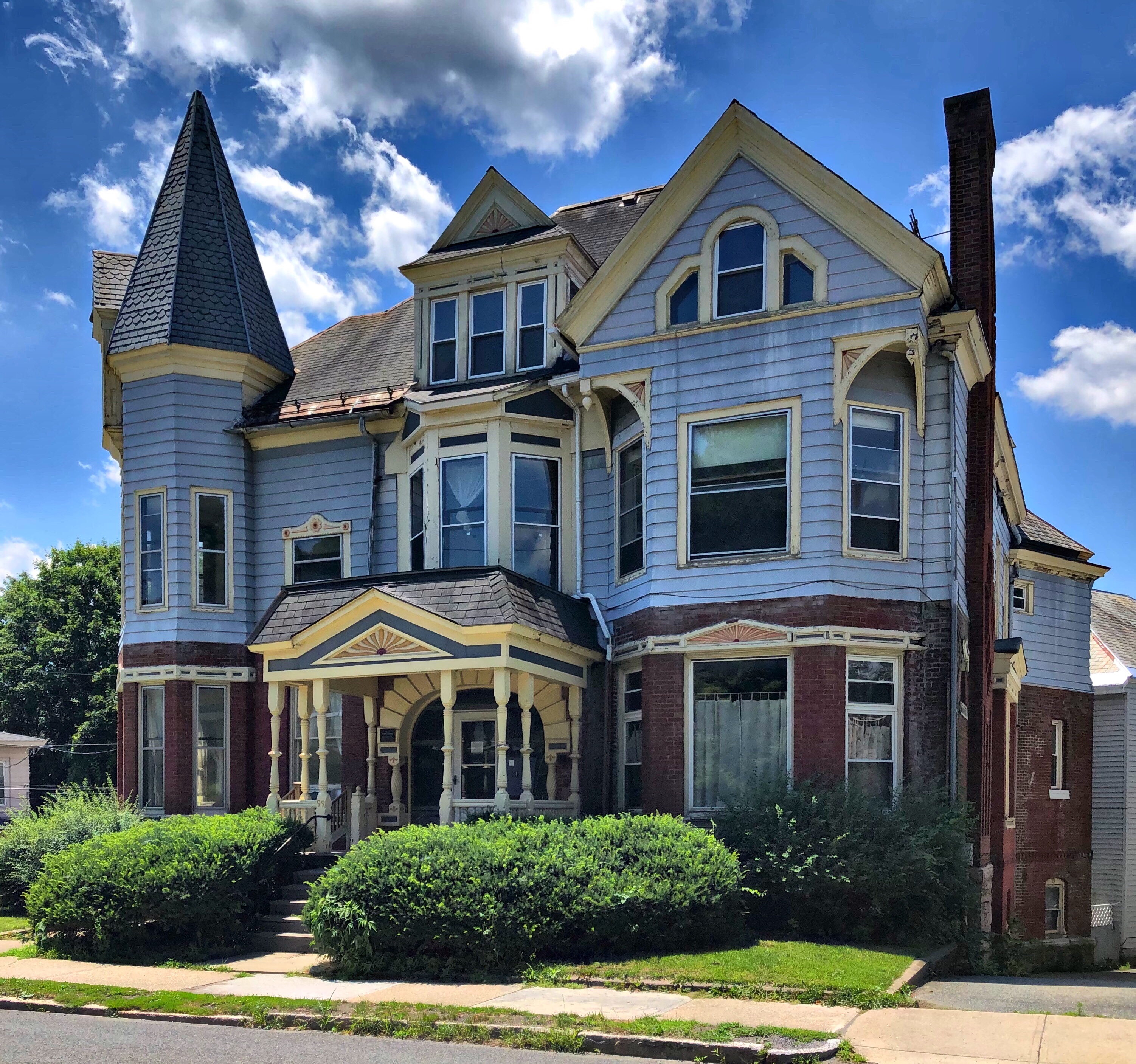
Built in 1881 for William Henry Whitman, this stunning Victorian house remains one of the better-preserved in the town of North Adams. William Whitman was a successful shoe manufacturer in town that lived modestly until his late 40s when he had this home built. The brick home is trimmed with freestone and features a very prominent three-story corner tower with conical roof. The house is a blending of the Stick and Queen Anne styles, under the umbrella of the ‘Victorian’ classification.

Penniman House // c.1885

Edmund Burke Penniman (1841-1929) was born in North Adams, a son of Mr. and Mrs. Edmund B. Penniman. His father an established lawyer, and mother died, leaving the young boy with a sizable estate. Just before the Civil War broke out, he developed a mill, which had to shut down when the war began. After the war, the company had no orders to fill and they sold the property. Penniman became treasurer for the North Adams Manufacturing Company, and later served as President of the Hoosac Savings Bank. He and his family resided in this Stick style home until his wife’s death in 1909. The home features a brick ground floor and clapboards (now aluminum) above. The Victorian home has a rusticated arched entryway protected by a projecting porch with stickwork. A large corner tower gives the house a large street presence.

Charles Cutting House // 1881

This stunning Stick style house in North Adams was built for Charles Cutting (1850-1940), founder of the C. H. Cutting Company, a prosperous clothing company in town. The company started as a partnership between 20-year old Cutting and a Mr. Silsby, who retired just a year after co-founding the company. Cutting used his business connections to help establish other local clothing companies including the Bay State Clothing Company in Adams, the Orange Clothing Company in Orange, MA, and the Athol Clothing Company in (you guessed it) Athol. With his wealth, he had this amazing Victorian home built on East Main Street where he lived until his death in 1940.

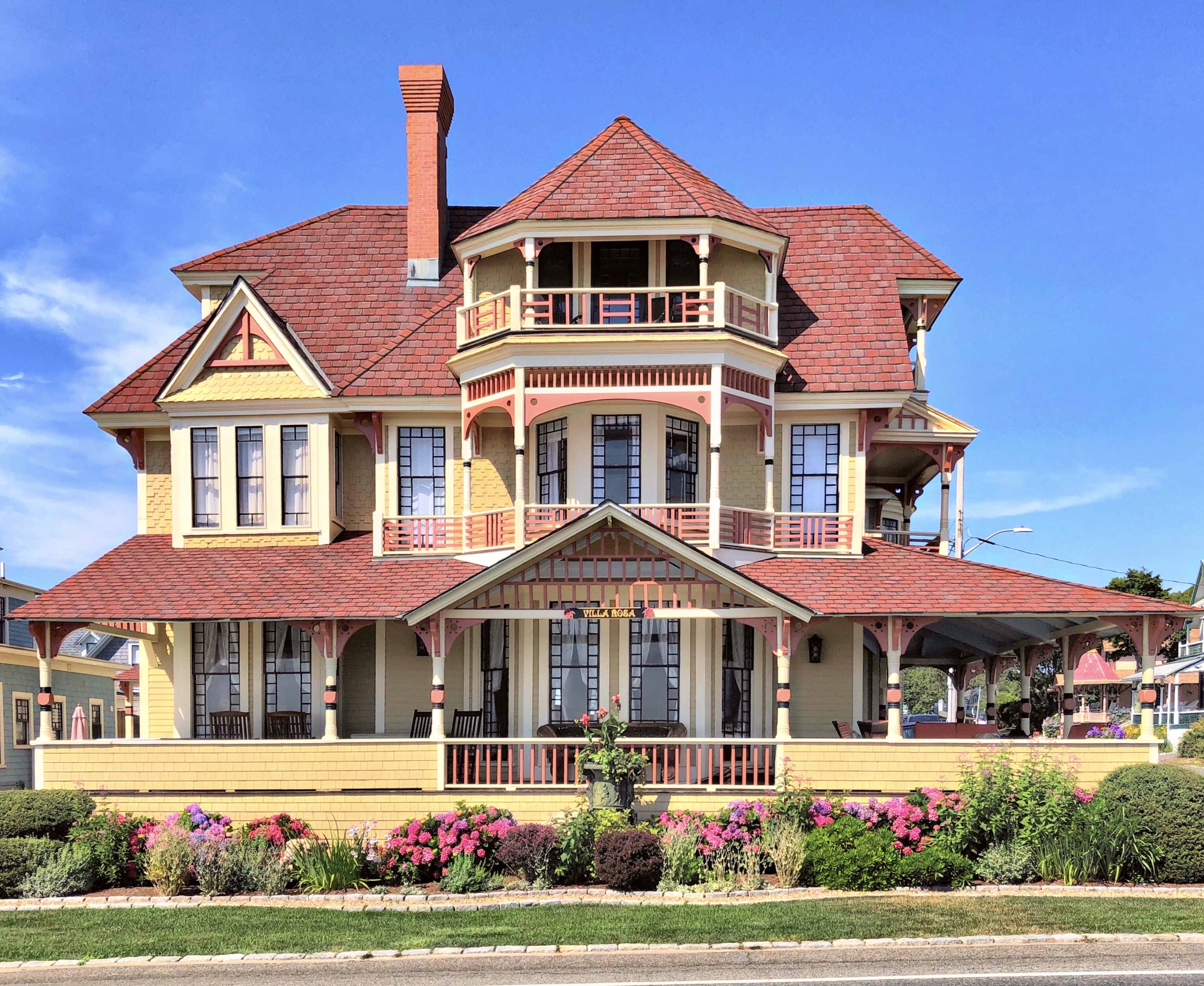
Villa Rosa // 1875

This Victorian mansion in Oak Bluffs was built in 1875 as part of the Oak Bluffs Land and Wharf Development, a private off-shoot development inspired by the success of the Wesleyan Grove campground. The Stick style house was occupied by wealthy businessmen and their families from its completion to after WWII. The home was purchased by Joe Overton of Harlem, NY, likely the home’s first Black owner. Under Overton’s ownership, Martin Luther King Jr., Adam Clayton Powell Jr. and other civil rights leaders visited what has come to be known as the Summer White House for African Americans. Overton was New York’s first African American labor organizer and president of NAACP New York Chapter. The home served as an informal inn, which provided a safe night’s stay for African American elite visiting the island. There was a guestbook with the signature of nearly every major Civil Right’s organizer in it, even Fidel Castro stayed here once. The home is now owned by Valerie Mosley, who named it after her grandmother as Villa Rosa.