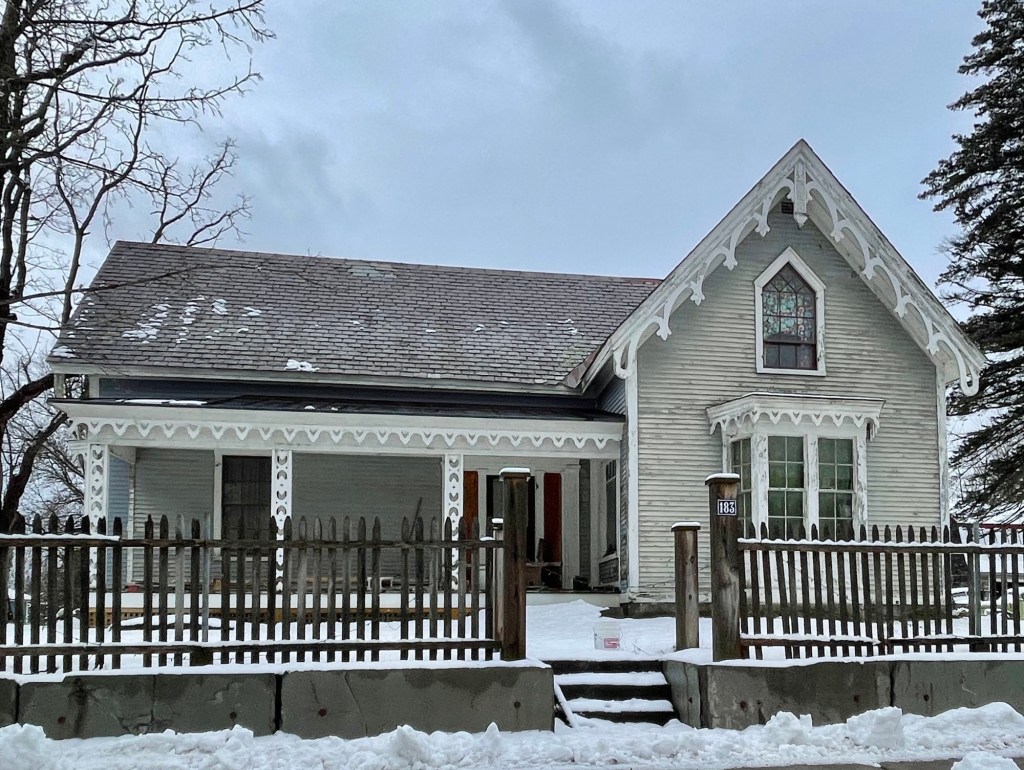
This stunning Gothic Revival style house in Richmond, Vermont, was built around 1850 for Orson Goodrich (1808-1877), likely after the death of his first wife, Ann in 1849. Goodrich was a farmer who had a large property off the Main Street, which likely ran all the way to the Winooski River. The house is an excellent example of Carpenter Gothic, a wooden Gothic Revival home with decorative bargeboards at the roof (which look like icicles in the snow), pierced wooden columns at the porch, and a lancet window at the second floor gable end. The home was such a statement piece, that the home was one of a handful of buildings portrayed in the 1857 Map of Chittenden County, Vermont.
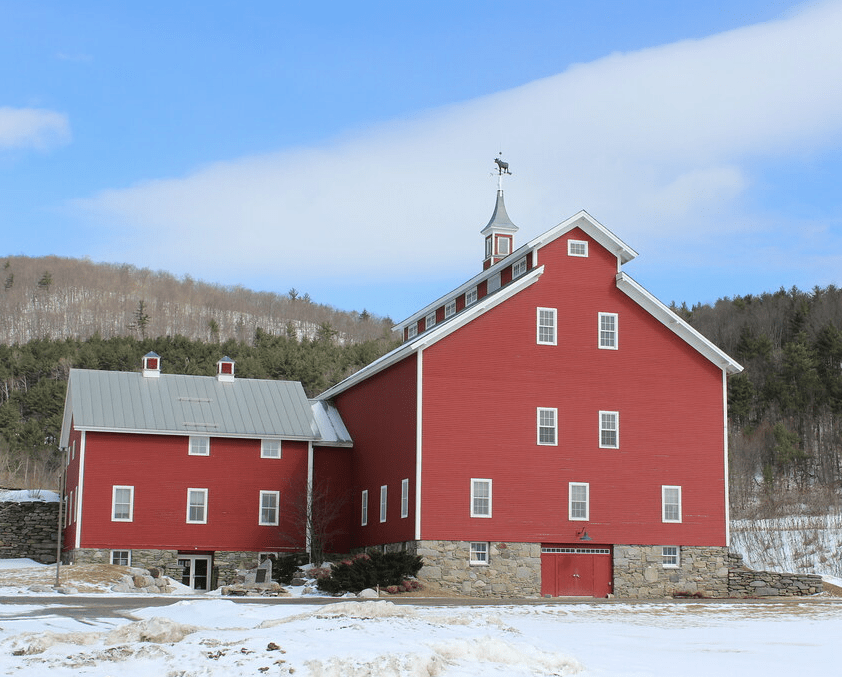
Located in Richmond, Vermont, this four-and-a-half-story, wood-frame barn with striking monitor roof, is one of two nearly identical such barns on adjacent farms in the small rural farming community. In 1871, Uzziel Stevens Whitcomb (1817-1899) and his brother, acquired adjacent farms on East Main Street in the Winooski River Valley. Uzziel’s farm grew and he created one of the largest dairy farms in Vermont, spanning around six hundred acres with about 120 cows. Uzziel’s son, Moses S. Whitcomb (1842-1933), continued his father’s massive dairy farm and acquired nearby farms, growing his property to span over 900-acres of farmland. In 1901, with one of the largest dairy farms in the state, he erected the first and larger barn, now known as the East Monitor Barn, and in 1904, added a second to the west, the West Monitor Barn. Unlike many barns west of the Green Mountains, this one followed the more traditional northern New England bank barn design with a manure basement, cow stables on the second floor, and two-floors of hay storage above. The barn is now commonly used as a venue for weddings and other special events!
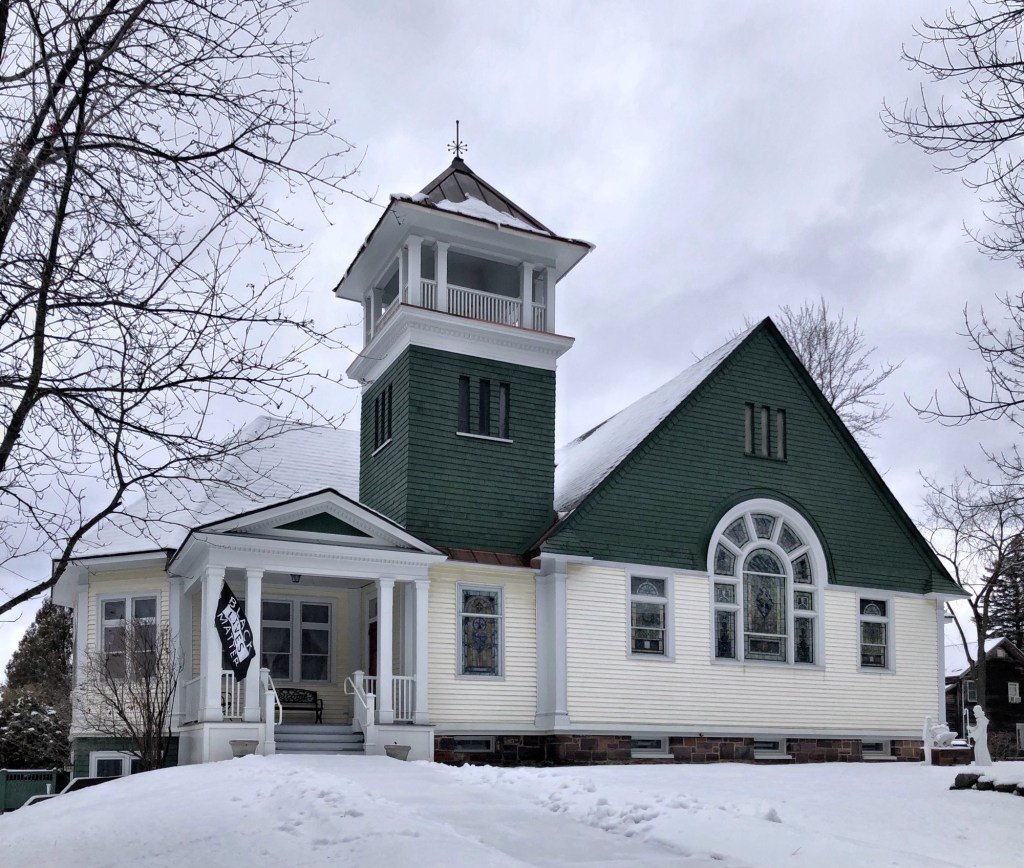
The Richmond Congregational Church is a stellar example of an early 20th century, wood-frame church building in the small town of Richmond, Vermont. Designed by prominent Burlington architect, Walter R. B. Wilcox in 1903, the building blends many styles that were popular at the time, namely the Shingle, Queen Anne, and Colonial Revival styles, into a single composition. The parish hall addition was built in 1984, and is in a sympathetic Colonial Revival style, designed by Burlington architect Donald Albertson. The congregation remains active and maintains the church building, which was listed on the National Register of Historic Places in 2001.
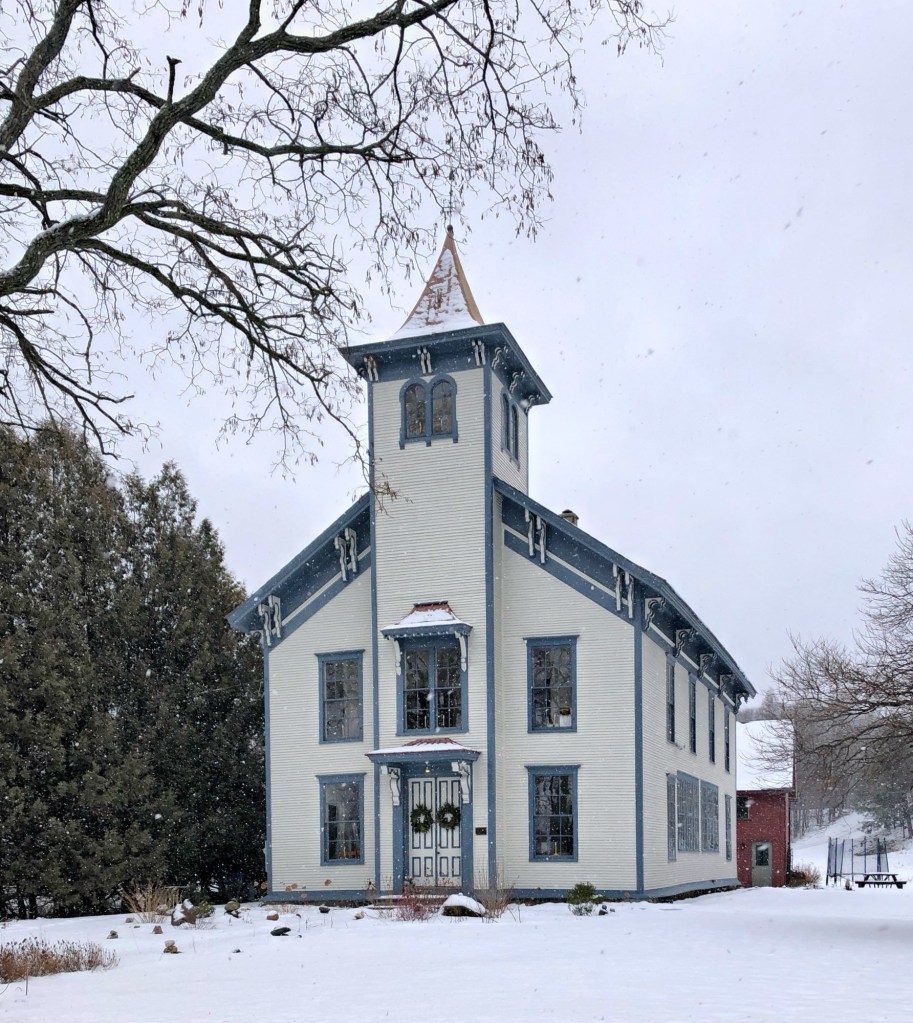
Jonesville Academy is a historic schoolhouse located in the village of Jonesville, in the town of Richmond, Vermont. The large, wooden schoolhouse was constructed around 1868 in the Italianate style with center entry tower, bracketed cornice, window and door hoods, and round arched windows, all hallmarks of the style. The building was constructed at the height of the area’s success as an industrial village, and operated as a high school and later as an elementary school until 1955, when schools in Richmond were consolidated. After the school closed, the building operated as a grange hall for a number of years until it reverted back to private ownership, and is today a single-family residence.
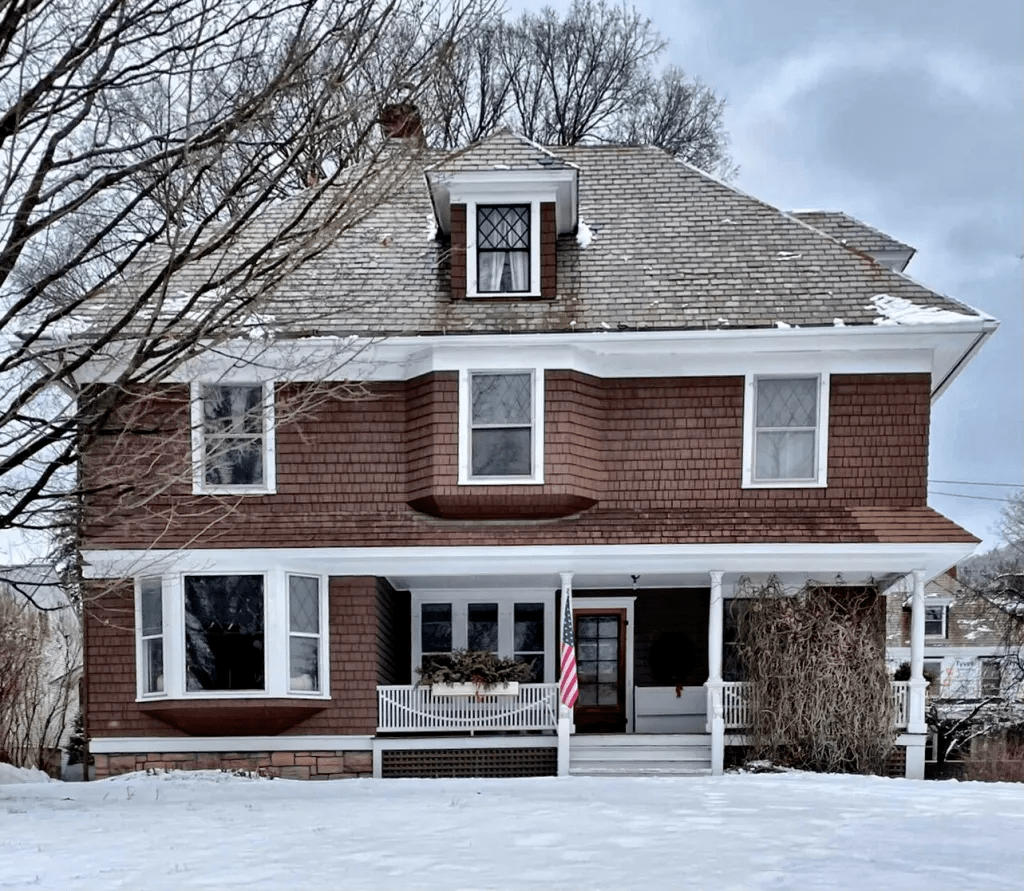
This handsome house in the small town of Richmond, Vermont, was built in 1902 for F. H. Goodwin, a partner of the Richmond Underwear Company, which started in 1900. Goodwin’s brother and his partner were brought from Peekskill, New York to the small town of Richmond to create and manage a new industry to revitalize the town, a program funded by the citizens. F. H. Goodwin was hired as a manager of the company, and built this home in a blending of Shingle and Arts and Crafts styles, common in the early 20th century. The house was unique in that it was the first in town to be electrified as it was directly connected on the grid with the factory next door.
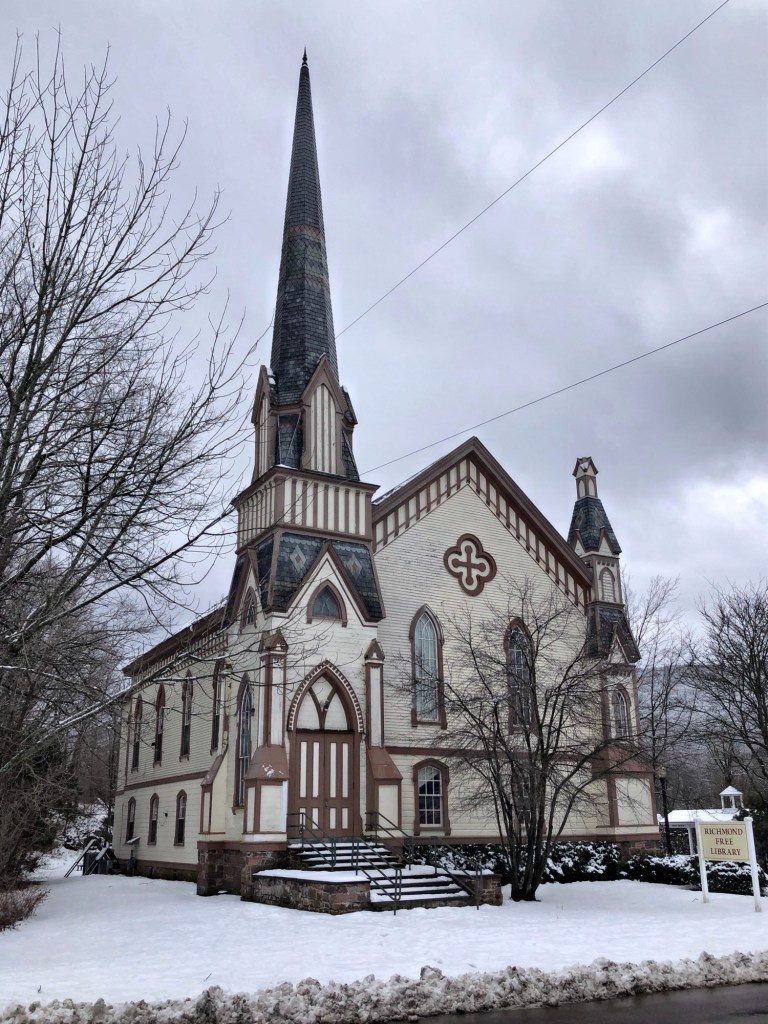
Adaptive reuse of old churches in New England is fairly common; with most conversions into housing or community centers, but have you seen a church turned into a library? Located in the charming town of Richmond, Vermont, this Victorian Gothic landmark was constructed in 1880 after Universalists in the community decided to leave the Round Church where they shared meeting space with other congregations in town. After WWII, the dwindling congregation sold the church to a resident who then offered the property to the Richmond School District, which had its large school next door. Voters accepted the gift at Town Meeting and passed a bond to convert the building into a cafeteria and gymnasium for the school next door. In the mid-1980s, with a new school built elsewhere in town, the school building was abandoned and converted to the Town Hall, with this former church, which served for years as the school gymnasium and cafeteria, eyed for demolition. It was explored to raze the former church and build a new, modern library building in its place. Preservationists petitioned to save the building, acquiring funds to restore the exterior and convert it to a library, and succeeded. Now the town of Richmond is home to one of the greatest examples of adaptive reuse in the state of Vermont.
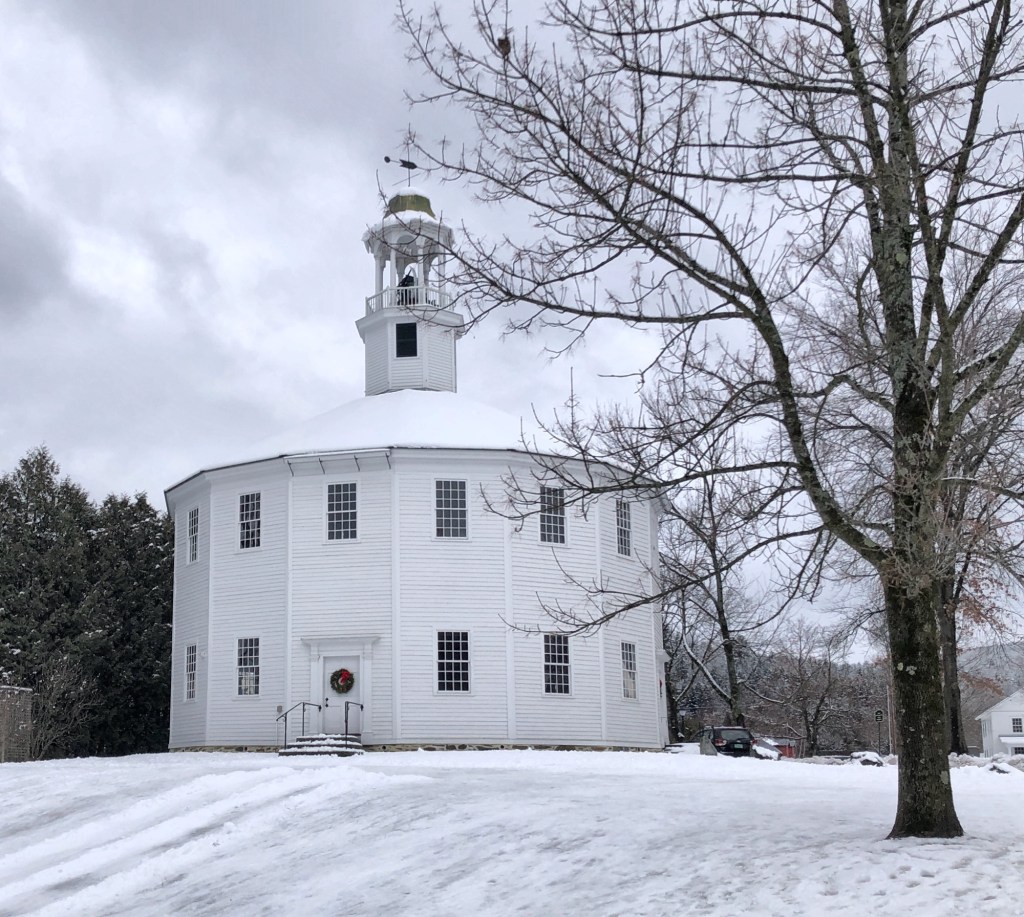
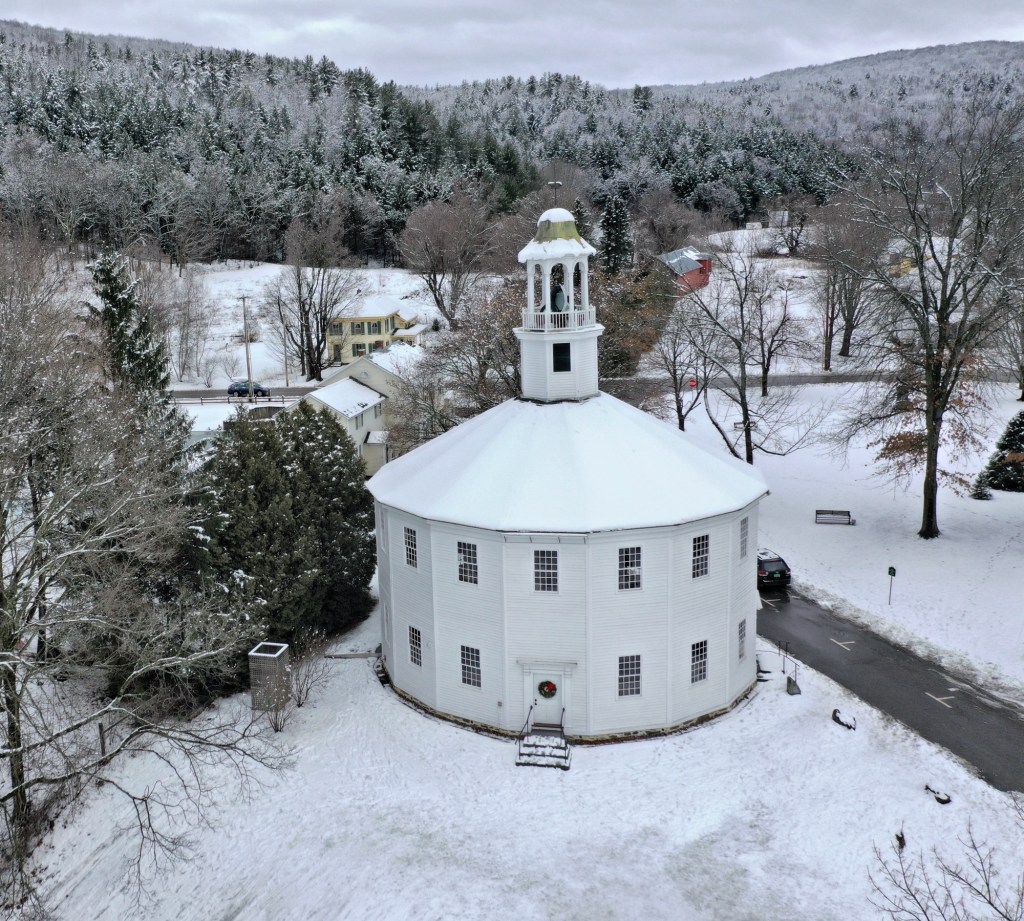
The Old Round Church in Richmond, Vermont, was built in 1812 on the village common to serve the town’s many congregations as a union church. The building is a master-work of housewright William Rhodes, who documented its construction in his journal and is a vernacular, yet grand Federal period church. While known as the Round Church, the building is actually a sixteen-sided hexdecagon with shallow angle cuts to create the rounded form, so the term round church sounds a little better than the Old Hexdecagon Church! Fifty feet in diameter, the two-story church rises to a hipped roof which is surmounted by a two-stage octagonal belfry with a bellcast cap and weathervane. Within a few decades of the church’s opening, the founding denominations began to move out, building their own houses of worship, and in 1880, the Old Round Church reverted to the Town of Richmond and continued in use as the town’s meeting hall until 1973, at which time safety concerns forced its closure to the public. The Richmond Historical Society was formed in 1973, shortly before the church had to be closed and in 1976, the town deeded the church to the society, who then gathered funds to restore the building. The Old Round Church remains one of the most unique architectural designs in Vermont and is always a treat to drive by in all seasons. The beloved building was declared a National Historic Landmark in 2000, one of just 18 in Vermont.
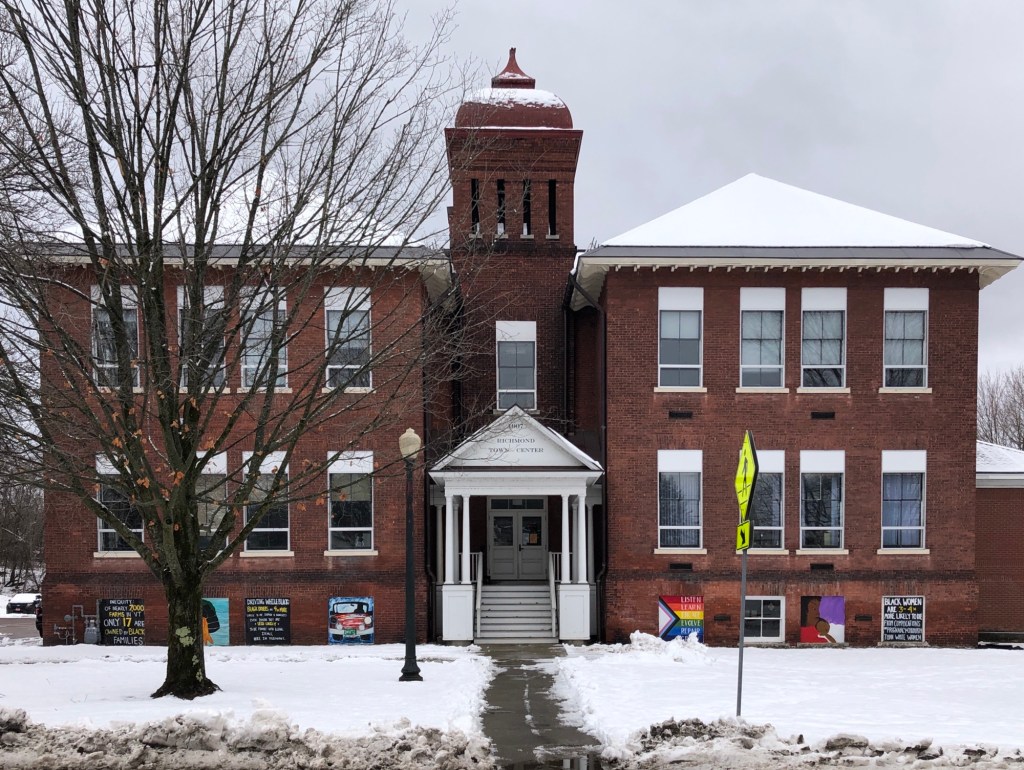
This handsome brick building is located in the historic downtown of Richmond, Vermont, and was built at a time of rapid growth of the small community. Pupils in the town of Richmond originally went to school in small, one-room rural schoolhouses, with the Richmond Academy serving the main village. The old academy building was constructed in 1868 and taught classes from elementary through high school. The building was outgrown as the town grew in the first decade of the 20th century, necessitating a new, larger schoolhouse for the main village. This new school was constructed in 1907, apparently just as the right side and tower, which was expanded with the left half four years later in 1911. Blending Craftsman and Romanesque styles, plans for the school were drawn up by Vermont architect, Frank Lyman Austin. Another rear addition in the 1950s was constructed to meet increased demand until the 1980s when a new elementary school was built in town. Since 1989, the former Richmond School has been home to Richmond town offices. The building, while altered, is an important landmark of the town, showcasing a blending of architectural styles popular in the early 20th century.
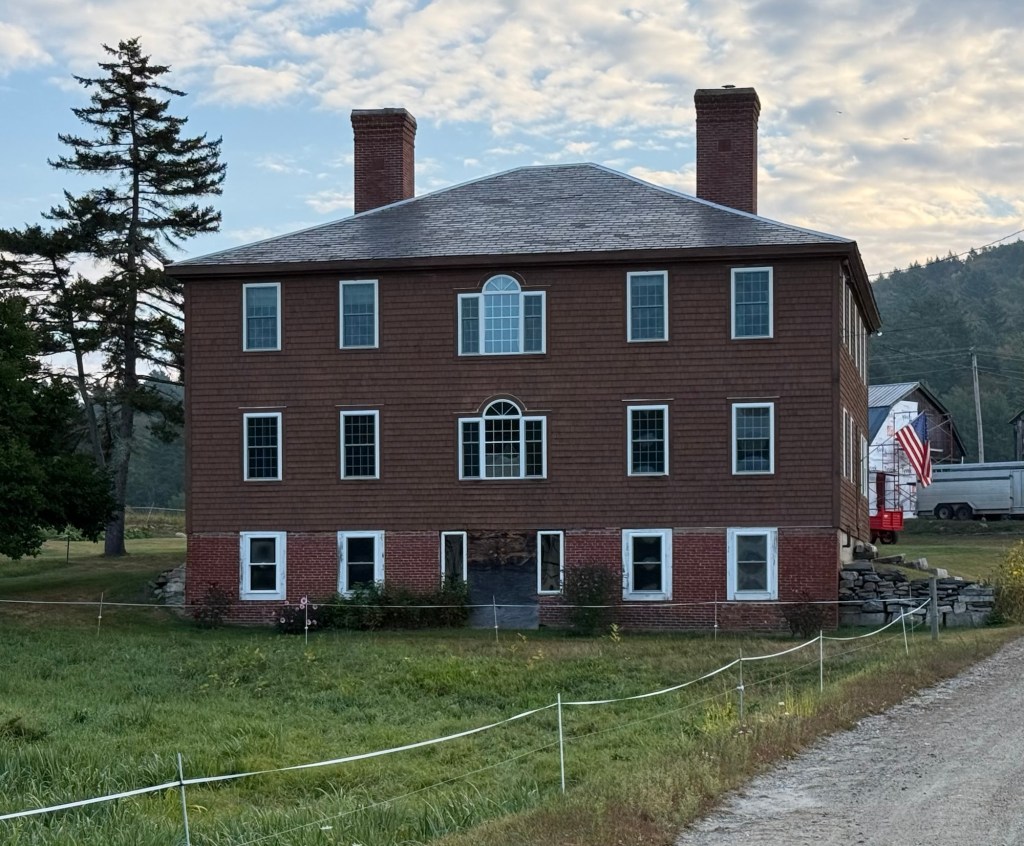
Deacon Jabez Sargeant (1720-1788) was born in Malden, Massachusetts, and later moved to the newly established town of Chester, Vermont in 1763. He is thought to have been the first settler of European ancestry in the town. Upon the outbreak of the Revolution, he served in Captain Little’s Company in 1778, returning home to Chester after. His son, Jabez Sargeant Jr. built this stately three-story late-Georgian residence in 1797 as a tavern along the Green Mountain Turnpike, a highway connecting Boston and Montreal. The dwelling originally fronted directly on the road, but was moved back sometime in the 19th or 20th centuries. The building boasted a large ballroom on the second floor, likely for community and fraternal organizations, and a tavern in the brick first floor. It is likely that Jabez and his family lived on the third floor. Outside, the property contained a large apple orchard and cider house, providing drinks to weary travellers. Although the tavern is built to a large size, it lacks many of the high-style features often found in large Georgian houses, telling for its time of construction in a sparsely developed area without seasoned builders.
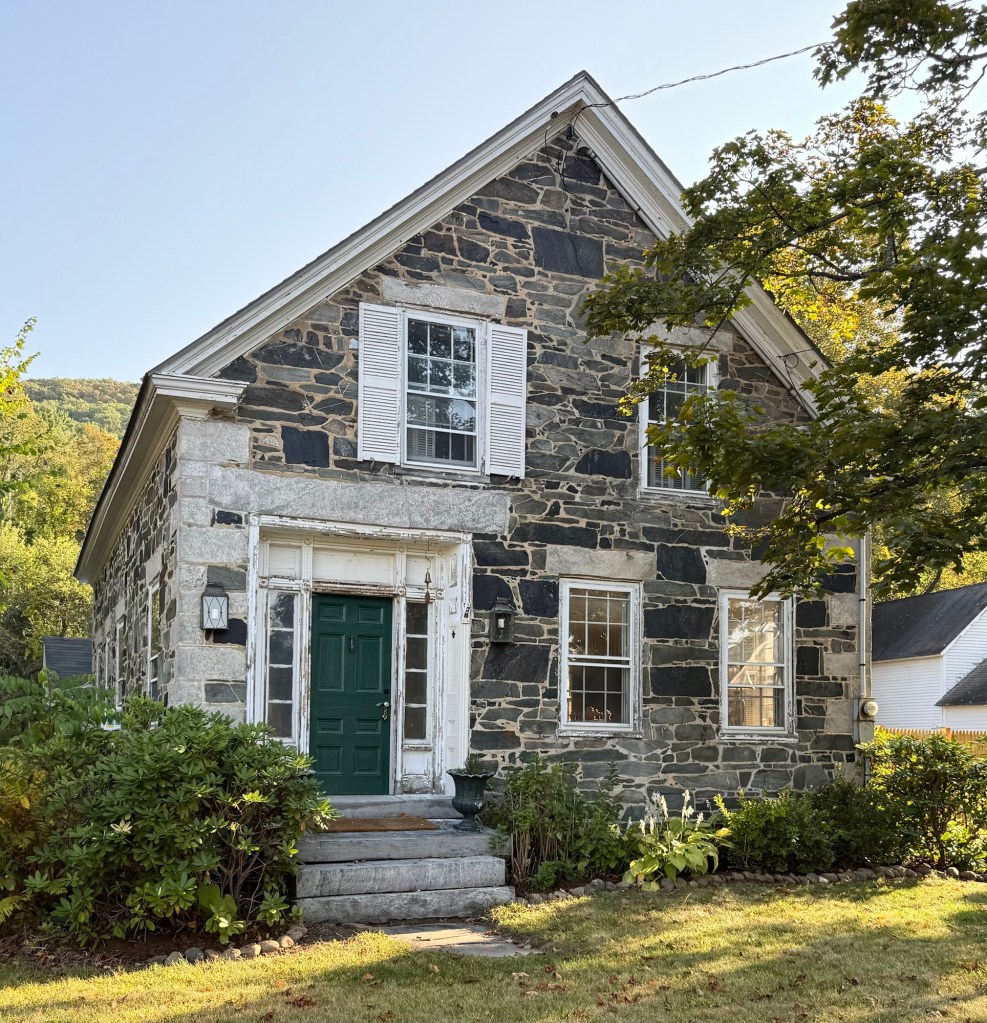
The Stone Village of Chester, Vermont, is said to be the largest collection of stone buildings in the state. Built around 1844, the Sherwin-Goldsmith House is one of a few dozen “snecked ashlar” buildings in the region, where rubblestone is laid up with mortar using long stones called “snecks” to tie an outer and an inner wall together. The construction method is said to have been brought to the area by masons from Scotland and Ireland which is known there as ‘Celtic Bond’. Oral tradition state that Scottish masons from Canada introduced the technique to local masons while erecting a mill in nearby Cavendish in 1832. Local Chester resident, Dr. Ptolemy Edson became such a fan of the building that in 1834, he had his home, the first stone building in Chester, built in this method. He then would influence the rest of the North Village of Chester, where many of his neighbors, as well as the church and schoolhouse, built their structures in snecked ashlar. The Sherwin House is one of three near-identical houses built around the same time that are colloquially known as the “Three Sisters” because they were built for members of the same family. The Greek Revival form is toned down in this smaller side-hall house, which playfully uses large blocks of schist and mica which read as quoins at the corners. Simeon Sherwin (1813-1874) was a farmer, postmaster, and justice of the peace in Chester. Later owner, Olivia Goldsmith, wrote her bestseller, First Wives Club when she lived here.
 Buildings of New England