Wildwood Baptist Chapel // 1910

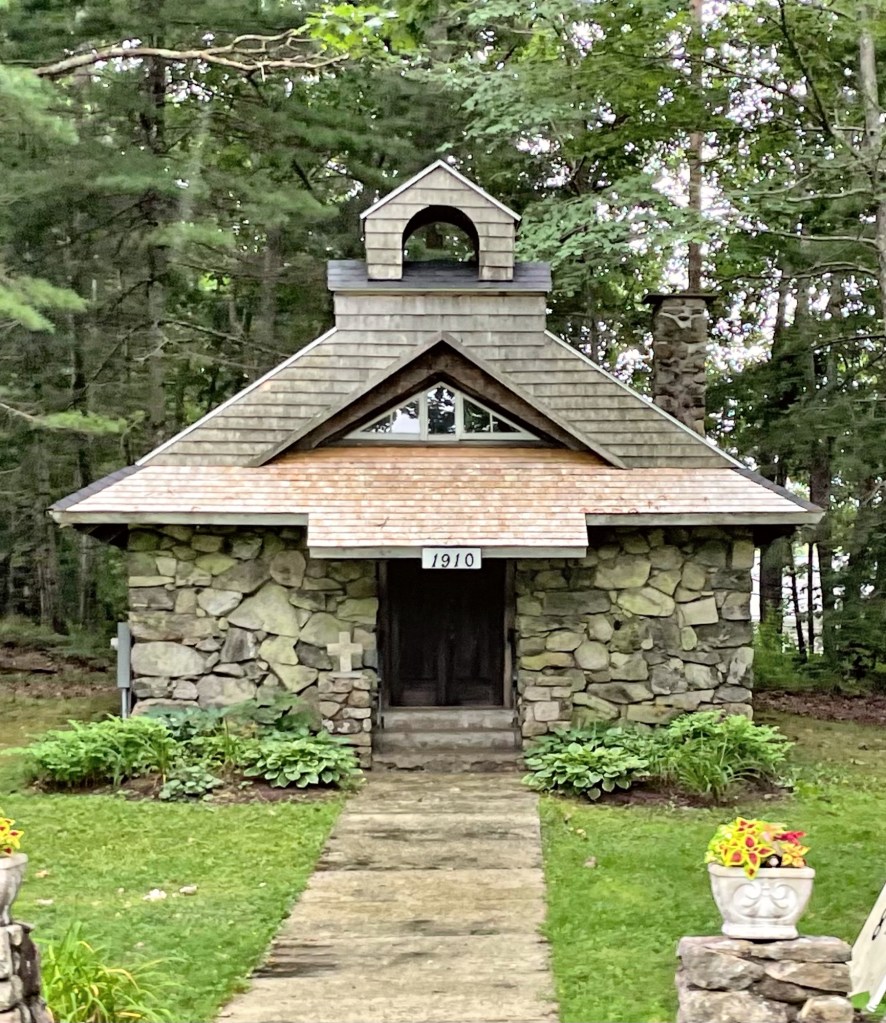
Tucked away on a wooded lot, away from the main villages of Kennebunkport, Maine, the Wildwood Baptist Chapel sits on the side of the road looking like a scene from a storybook. The chapel was built in 1910 for Baptists residing in the Wildes District of town, between the busier Kennebunkport Village and Cape Porpoise. The stone used in the construction of the chapel was taken from nearby properties and assembled on site by a skilled mason who built the walls with a Shingle style roof. Services here were limited and eventually ceased in earnest in 1935, as personal automobile allowed residents to travel to the church in the village for services. The poorly insulated chapel and small fireplace made the sanctuary inside difficult to heat in the cold winter months. The chapel is maintained well to this day, and is primarily used for summer services and special events.
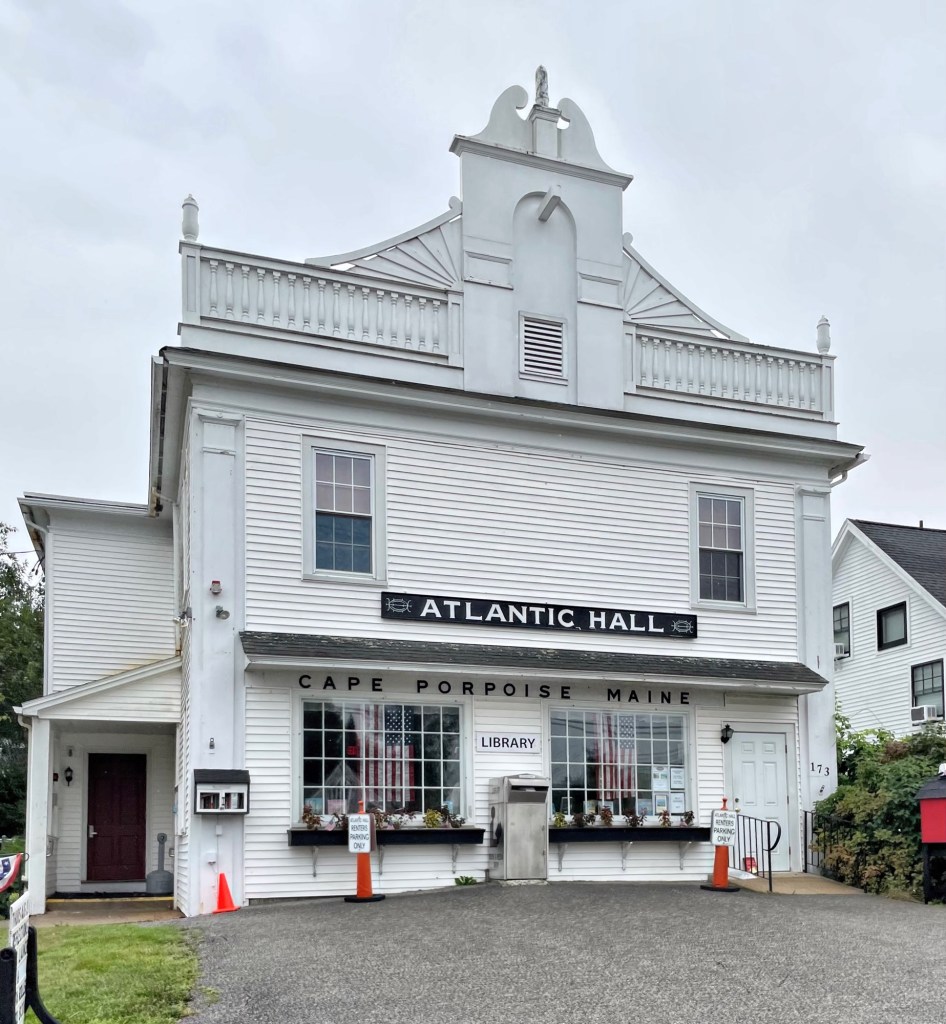
Atlantic Hall // 1920

Atlantic Hall is one of the most iconic buildings in the well-visited town of Kennebunkport, Maine. The landmark structure was completed in 1920 as a volunteer fire station, by the Atlantic Hose Company. The volunteer fire-fighting company was founded in April 1906, and different members kept different parts of fire fighting equipment in each of their barns without a consolidated station. With the advent of the automobile, the community raised funds and purchased a Chevrolet hose truck, but had no station to put it. Without having the town pitch in money, residents (both permanent and summer “rusticators”) donated funds and a central location in Cape Porpoise was selected as a site for the new station. Construction started on a modest building in 1914, but was halted during WWI. After the war, local resident, Marion Goodall Marland hired the well known firm of Kilham, Hopkins and Greeley to furnish updated designs for the station, in a more elaborate version of the Colonial Revival style, fitting for the charming town. The building opened in 1920 with an engine room at the first floor and a meeting hall on the second floor. It was in 1958 that the Atlantic Hose Company outgrew its station at Atlantic Hall, and a new fire house was built across the street. Atlantic Hall was renovated for library and event use and has remained a significant piece of Cape Porpoise ever since!

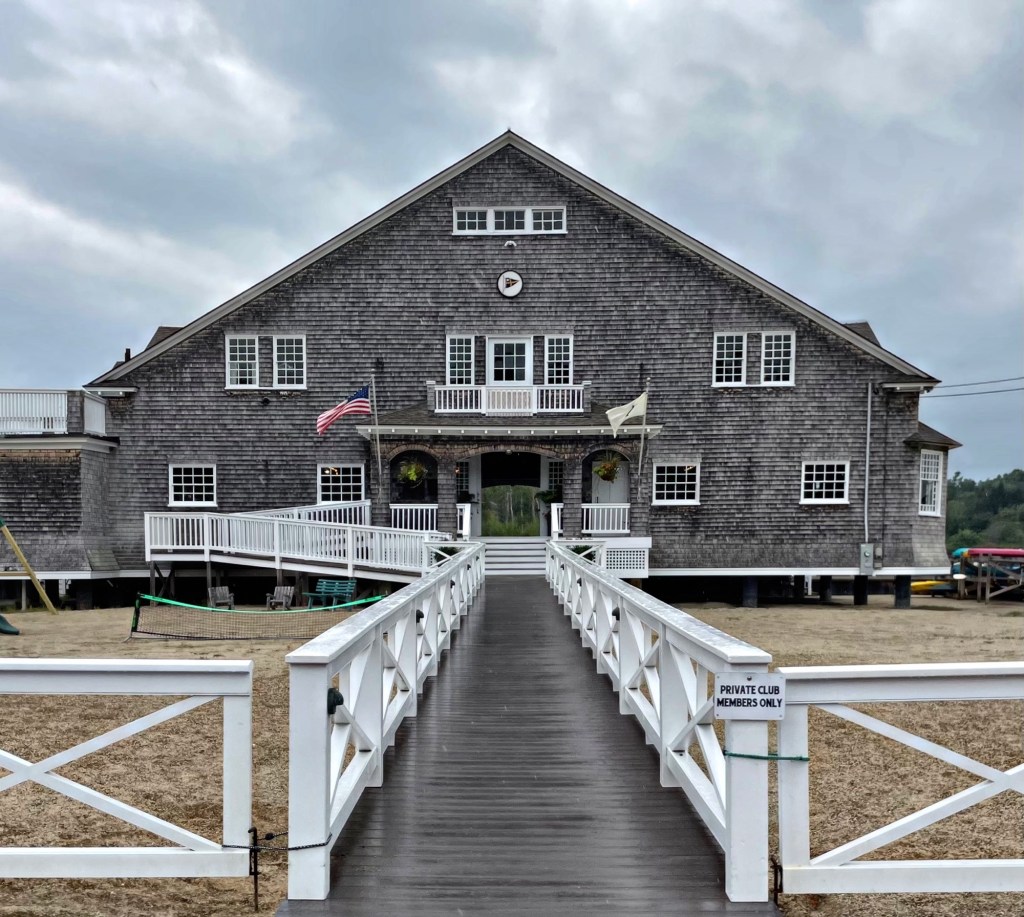
Kennebunk River Clubhouse // 1889

A canoe club formed by John B. McMaster, Prosper L. Senat and Henry E. Woods in the early 1880’s grew to a large “Lobster Club” by 1888. In 1889, the club decided to build this Shingle style boat house and the organization changed their name to the ‘Kennebunk River Club’ and hired Lowell, Massachusetts architect, Frederick W. Stickney to design a new boathouse. It opened in August 1890. The club grew quickly as Kennebunkport continued to become a premier summer destination with wealthy residents building summer “cottages” in town. In the building, canoes were built and hired out to club members by members of the Penobscot tribe who came to Kennebunkport from Old Town each summer working here. The clubhouse is one of the finest Shingle style recreational buildings in New England.

Kewaydin Cottage // 1900

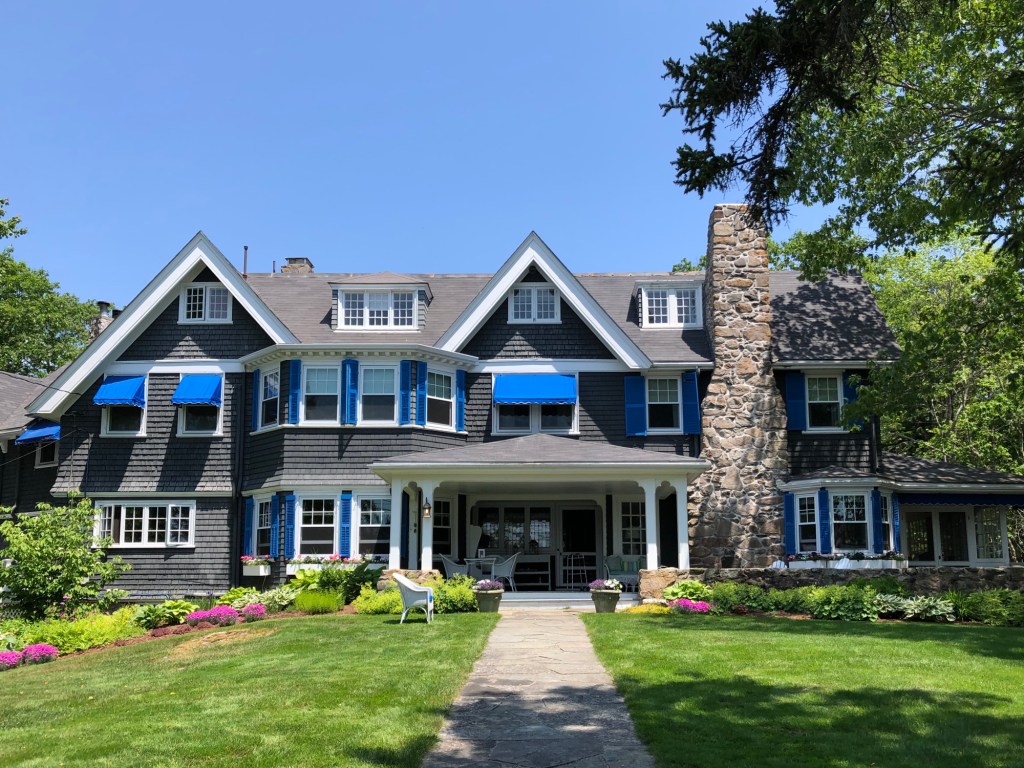
Every good summer cottage needs a name, and this charmer in the Cape Arundel Summer Colony of Kennebunkport, Maine, is no exception! This is “Kewaydin” a massive summer home built for Eben Caldwell Stanwood Jr. (1856-1906) a merchant and later banker of Boston, Massachusetts. Stanwood hired the Boston firm of Chapman & Frazer to design the cottage, which blends Shingle style and Queen Anne elements in a rustic composition that has such great curb appeal! The use of cedar shingles and rubblestone chimneys, paired with the vergeboards and complex roofline with dormers, makes this one of the gems of Kennebunkport!

Moses Howard House // c.1794

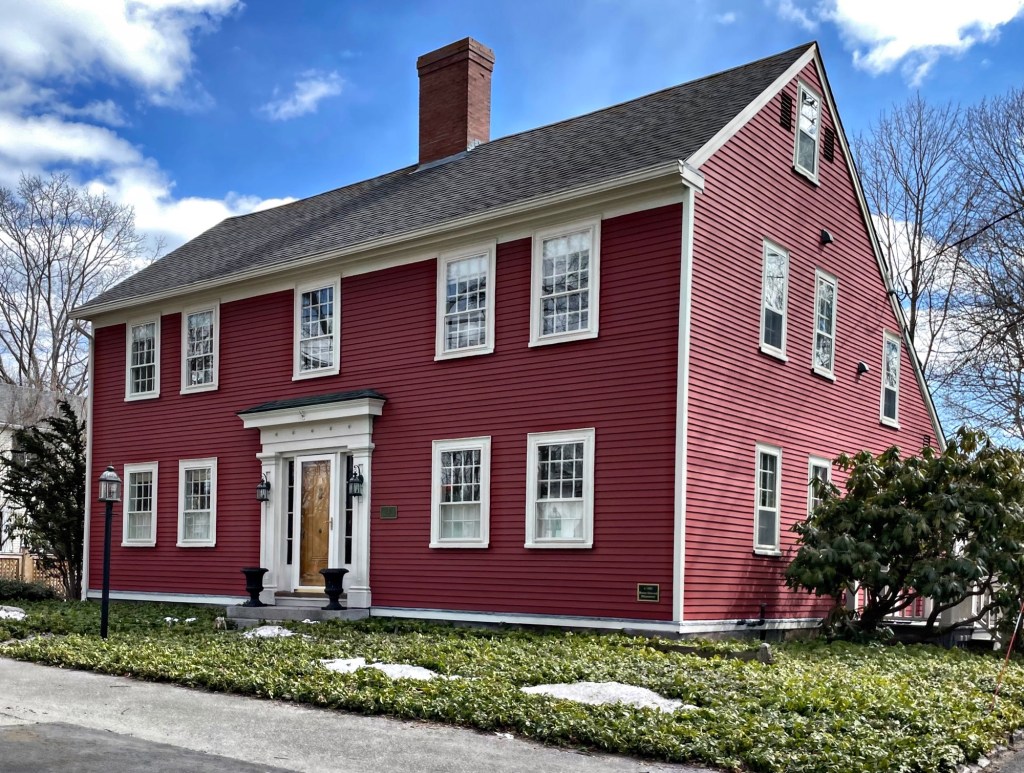
This charming Federal style saltbox house was built around the turn of the 19th century for Moses Howard, a “shipmaster” who moved to Kennebunkport from Cohasset, Massachusetts in 1793. The house here is clapboard with a symmetrical facade and central chimney. A saltbox roof extends off the rear of the house. Moses Howard did not stay in Kennebunkport for long as he moved to Portland by 1812. The house was lovingly maintained for the next 200+years.

John Andrews Jr. House // c.1808

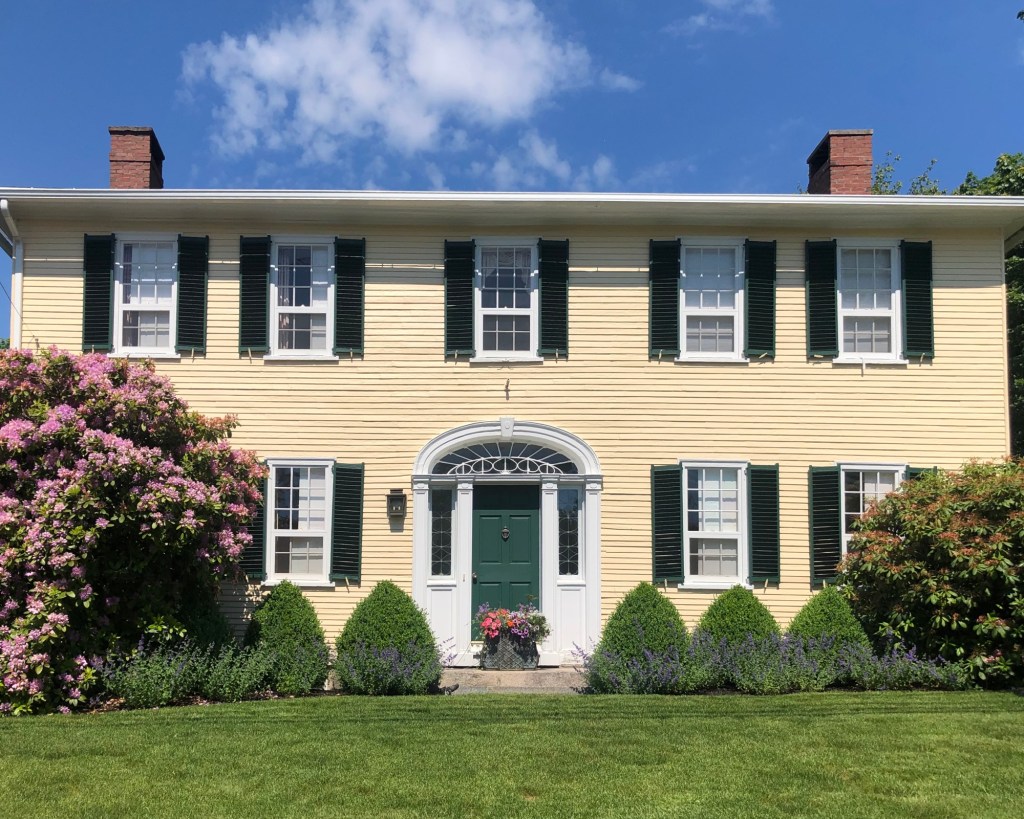
John Andrews Jr. (1747-1844) was born in Essex County, Massachusetts to John Andrews Sr., a church Deacon, merchant, and blacksmith. John Jr., was a fisherman and would later move to Arundel by 1783 (now named Kennebunkport) and built this stately Federal style residence in the village. The house was built sometime between 1783 and 1810, with my best estimate dating the house (at least in its current form) to around 1808 as the high-style entry is similar to what is seen in Asher Benjamin’s plan books of the early 19th century, like the American Builder’s Companion, which provided builders with plans for elevations, cornices, entrances and windows, and any other features of a house built at the time.

The Floats // 1900

Newton Booth Tarkington (1869–1946) was an American author best known for his novels The Magnificent Ambersons (1918) and Alice Adams (1921). He is one of only four novelists to win the Pulitzer Prize for Fiction and was considered the greatest living American author in much of the 1910s and 1920s. While he was born and grew up in Indiana, “Booth” eventually fell in love with the coast of Maine, and built a home in the charming village of Kennebunkport. In Kennebunkport, he was well known as a sailor, and his schooner, the Regina, survived him. Regina was moored next to Tarkington’s boathouse this building, which was named “The Floats” which he also used as his studio. The building was constructed in 1900 as a shop to build ships. He purchased the building, preserving it for generations to come. After his death, the boathouse and studio were converted into the Kennebunkport Maritime Museum. The building appears to now be a private residence, perched above the harbor. How charming!

Samuel’s Stairs // 1810

Houses with unique names are always the most fun to research and post! This stately Federal style mansion in Kennebunkport was built in 1810 for Samuel Lewis (1777-1857), a cabinetmaker and carpenter in town. Lewis also worked as an undertaker and made glass-top coffins from 1801, until his death. It is estimated that Mr. Lewis made 2,500 coffins during his career – including his own. Samuel was a quirky character and built his home as a large addition to a 1762 home, which possibly remains today as an ell. The 1810 house with original transom and sidelights at the entrance was two stories as built which contained a spiral staircase that ended on the second floor at a skylight. Thus, the house became known locally as “Samuel’s Stairs.” A later owner added the third floor, but maintained the Federal proportions. SWOON!

Lord-Gould House // 1799

Believe it or not, this stunning Federal mansion in Kennebunkport was a marriage present! When Phebe Walker married Nathaniel Lord in 1797, Phebe’s father, Daniel had this home built for the new couple. Phebe and Nathaniel had a total of nine children before Mr. Lord died in 1815 at 38 years old. Before his death, the wealthy couple used part of their property to erect a larger home, which is now known as the Nathaniel Lord Mansion. The couple sold the property, and it was owned for some time by Captain Alden B. Day, who passed it down to his daughter Nellie and her husband, William Gould. The property remained in the Day-Gould family until 2017. The house is very well-preserved and looks much like it would have appeared when built in 1799 besides the later entry added in the mid-19th century.

John Bourne House // c.1800

John Bourne (1759-1837) was born in Wells, Maine as the son of Benjamin Bourne. When the American Revolution hit a peak, when he was only sixteen years of age, John enlisted in the service of the country, and marched in company of Capt. Thomas Sawyer, to Lake Champlain. After the war, he learned the trade of shipbuilding and established himself in Kennebunkport, at the height of the village’s manufacturing. John Bourne built ships for a wealthy ship-owner and became successful himself. Bourne was married three times. His first wife, Abigail Hubbard (m.1783) died at just 24 years old after giving him three children. He remarried Sally Kimball a year later, who died in her twenties at just 28, she birthed one son for him in that time. His third wife, Elizabeth, would outlive John, and they had five children together. After his marriage with Elizabeth, John likely had this home built, possibly from his own hands. The Federal style home stands out for the unique entry with blind fan and modified Palladian window framed by engaged pilasters.