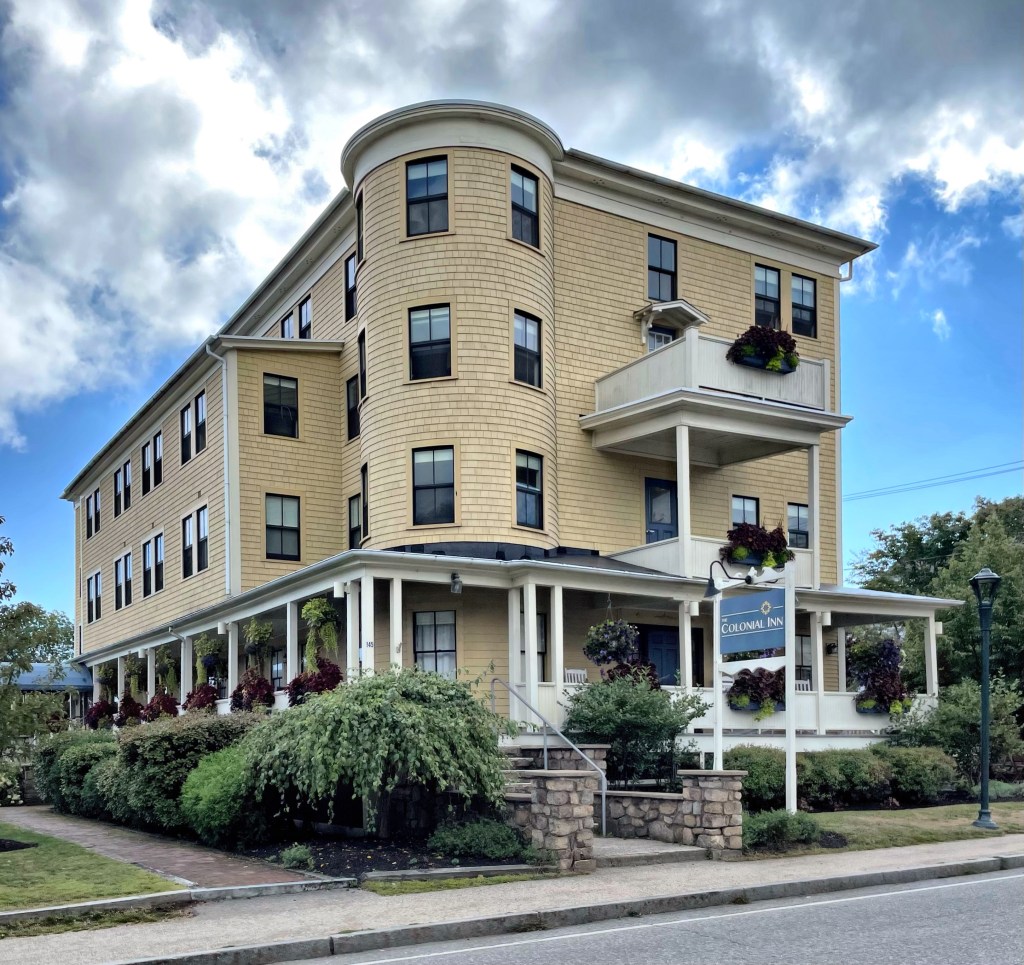
Colonial Inn, Ogunquit // 1897

As Ogunquit surged in popularity as a coastal summer retreat in the late 19th century, the flocks of city-dwellers needed a places to rest their head after splashing in the crisp Maine ocean. The original structure began with a mid-19th century house, likely in the Greek Revival style. It was expanded in the 1880s when it opened as a hotel for tourists, equipped with a mansard roof. The hotel consistently sold out of rooms in the summer months and the proprietors decided to expand in about 1897 with a sizeable Queen Anne style addition. A fire in 1951 destroyed the rear wing of the building and the conical tower roofs were removed, resulting in the final form seen today. The hotel is historically significant because it is the only surviving 19th-century hotel in Ogunquit that still serves as a hotel and largely retains its historic appearance, enhanced following a 2013 restoration by the owners who worked with David Lloyd of Archetype Architects. Other hotels of the period have either been converted to condominiums or been engulfed by modern alterations. The hotel was thus placed on the National Register of Historic Places, a large, and worthy addition!
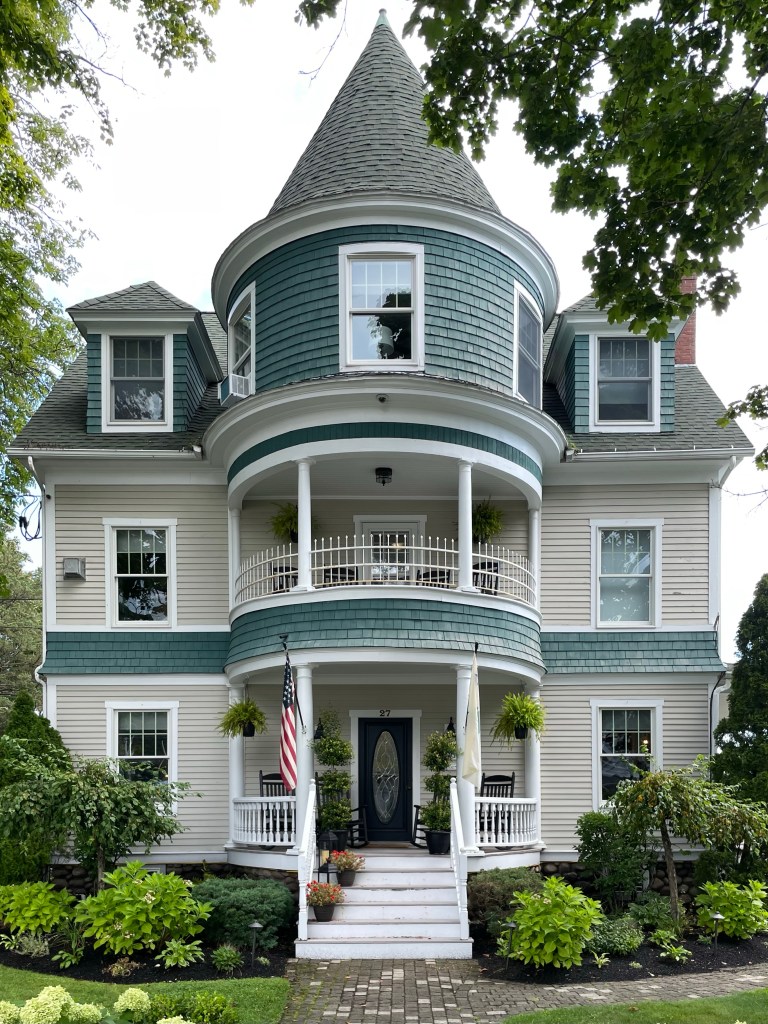

Nellie Littlefield House // 1889

One of the most charming buildings in the quaint village of Ogunquit Maine has to be this Victorian inn, located right on Shore Road, the town’s main thoroughfare. The house had its beginnings in 1889 when Joseph H. Littlefield constructed it for his wife Ellen “Nellie” Perkins and their family of four children. Joseph was a member of the esteemed Littlefield Family, which goes back to before Edmund and Annis Littlefield and their six children traveled from England and settled in the town of Wells in 1641. The family was prosperous in the area, and Joseph used his wealth and position in local affairs to develop summer cottages and buildings at the beginning of the town’s large development boom in the late 19th century and early 20th, catering to summer residents and tourism. The Littlefield House was passed down to Joseph and Nellie’s children after their passing, last occupied by Roby Littlefield (1888-1988), who served in local and state politics. It was Roby who was instrumental to establishing the Ogunquit Beach District, which allowed the government to acquire the beachfront in Ogunquit, making it public. The old Littlefield House is now an Inn, known as the Nellie Littlefield Inn & Spa, and it retains so much of its original charm.

Ogunquit Playhouse // 1937

Opened in 1933 in a converted garage and relocated to the existing building upon its completion in the summer of 1937, the Ogunquit Playhouse is an important part of Maine’s historic twentieth-century cultural landscape. The Playhouse was founded by former Hollywood director and Broadway producer Walter Hartwig and his wife Maude, and the building was designed by theater architect Alexander Wyckoff. The site on Rt-1 was intentional as the highway was the main coastal route for the inter-war summer tourist travel. The Colonial-inspired theater was in keeping with the historic nature of New England, but with the grandeur to attract a nation-wide summer audience. Early articles mentioned the building constructed of “…steel and wood, painted white with green shutters and roof, is simple in line, suggesting the Colonial architecture of New England”. Walter Hartwig died in 1941, and his widow Maude took over as the producer for the upcoming season. In 1947, she engaged George Abbott, New York’s most distinguished playwright/producer to share in the managerial duties, and in 1950 John Lane arrived as co-producer. Lane acquired the property in the following year, counting among his first tasks the rebuilding of the stage which was destroyed by a storm the year prior and changing the landscape to move the parking lot in front of the building to the side. The Ogunquit Playhouse continues its 26-week season runs from May through October, with off-season co-productions at The Music Hall in Portsmouth, NH. Go see a show before the season is over!

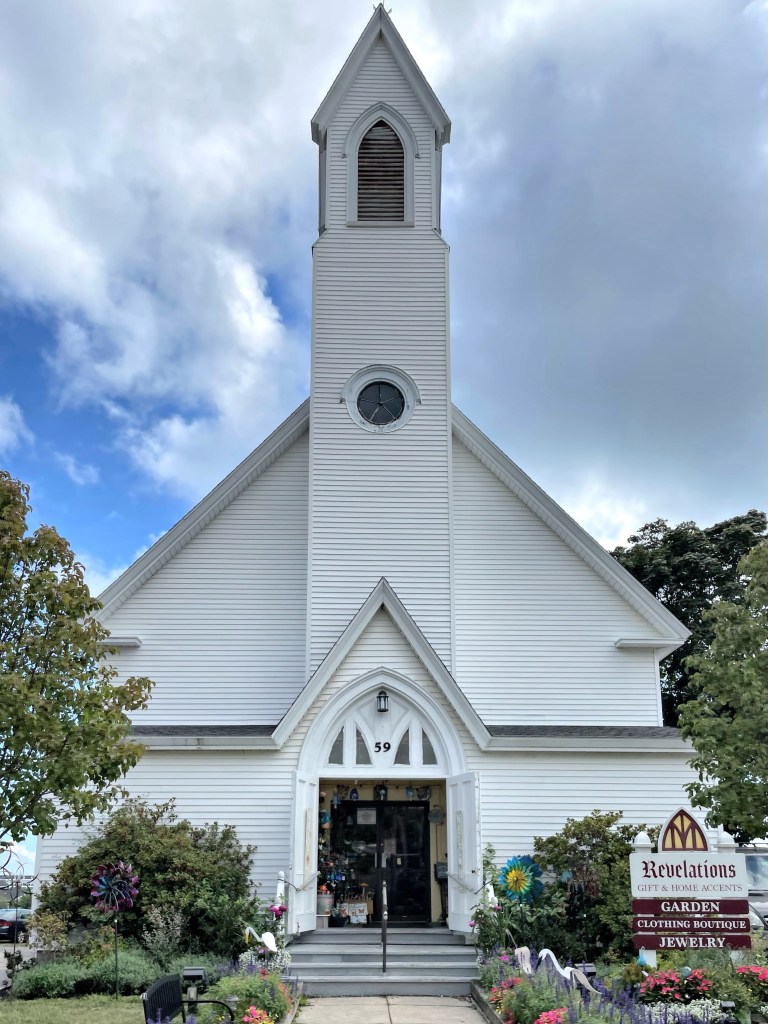
Old Ogunquit Methodist Church // c.1880

Ogunquit, which means “beautiful place by the sea” in the indigenous Abenaki language, was first a village within Wells, which was settled in 1641. Ogunquit grew as a fishing village with shipbuilding on quiet tidal waters protected within smaller alcoves. By the late 19th and early 20th centuries, the village was discovered by artists, who flocked to the area for the natural scenery and bucolic coastal scenes perfect for painting. At this time, summer residents came to the sleepy village en masse, facilitating the construction of summer resort hotels and commercial buildings. Ogunquit seceded from Wells in 1980, and has been one of the most visited villages in Maine. Ogunquit has been a destination for LGBT tourists and businesses, adding to the rich culture there. This church building, shows the history of the town well. It was constructed as the village’s Methodist Church after 1872 in a vernacular Gothic style with lancet windows and entry. The church merged with the nearby Wells Methodist Church in the 1970s and later moved to a new church building between the two towns. The former Ogunquit Methodist church was purchased and converted to a gift shop, frequented by locals and tourists alike.

South Congregational Church // 1824

Built in 1824, the South Church in Kennebunkport Village looked very much as it does today, with the exception of the portico, which was added in 1912. In the early 19th century, architects were seldom employed in such remote areas therefore, builders often used manuals and examples of other churches in addition to their own experience gained from working the large shipbuilding yards adjacent to the Kennebunk River. The cupola, restored in 1991, is designed after an example by Christopher Wren and the steeple retains the original 1824 Aaron Willard clock with its unique wooden face, still keeps accurate time and rings on the hour. The church remains as an active space with a growing congregation in the summer months.

St. Martha’s Catholic Church // 1903

A happy blending of Mission, Colonial Revival and Shingle Styles for the Maine coastal community of Kennebunkport, the St. Martha’s Catholic Church exemplifies the charm of this town. The church is sited on a corner lot with a belfry at its corner. The nave features a central entry with Colonial pilasters and pediment above the second floor windows. The roofline is shaped with Mission style parapet walls and arched openings at the tower, showcasing the Spanish influence in the design. The entire building is wrapped with cedar shingles, as a nod to the coastal summer resort it resides. The church operated here until the mid-late 20th century when it was converted to an art gallery, and now is home to condos.

Captain George Nowell House // 1854

Captain George W. Nowell and his wife, Frances, the daughter of the wealthy Capt. William Jefferds, built this elegant Italianate style home in 1854 that stands on Temple Street, next door to the Kennebunkport Post Office. George was a sea captain, following in his father’s footsteps and also invested in several of the ships he sailed, but had the fiscal foresight to insure his interests against loss. His prized ship was named “Tropic” and she was launched in 1855, less than a year after his house was built. On a cold December day in 1862, Nowell, captaining The Tropic left Philadelphia with a cargo of coal for the Pacific Mail Steamship Company in San Francisco. She and her crew of 20 were never heard from again. George was not yet 40 when he perished. His youngest son, Frank, never met his father and was only 8 years-old when his mother passed in 1872. Shipbuilder David Clark bought their Temple Street home and George’s brother took his children to live in Bangor.

The captain’s reputation as a prudent and charitable man was recognized by Victoria, Queen of England. She awarded Capt. George W. Nowell, of the ship Tropic, an engraved spyglass in testimony of his humanity in rescuing her subjects, the crew of the Village Belle, of Nova Scotia. The telescope and a certificate, signed by the Queen, have been proudly protected by the Kennebunkport Historical Society.

The family home features bold corner quoins, bracketed door and window hoods, and paired rounded arch windows at the top floor.