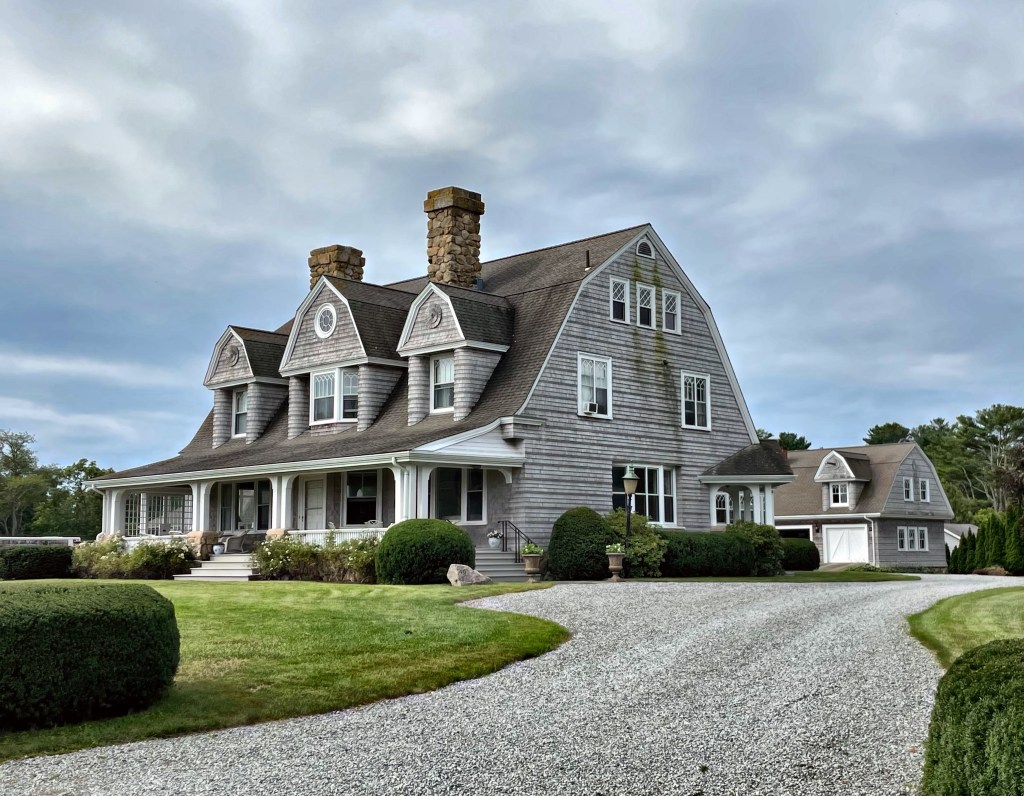
President Grover Cleveland Summer Home // c.1886

My favorite home in Marion, Massachusetts is this summer cottage on Water Street, overlooking Sippican Harbor. The home is said to have been built from a c.1840s house and enlarged by Reed as a summer home in the fashionable Shingle style. H. R. Reed, an agent for the Revere Sugar Refinery in Boston was well-connected in town and hosted President Grover Cleveland with Rev. Percy Browne ( a summer resident) at his cottage during the summer months. Evidently, Reed added the rubblestone elements, modified the porch, added a tower on the south elevation, the massive dormers at the roof, and is responsible for the exquisite Colonial Revival-style interior, from architect James Templeton Kelley. The home is arguably best known as the summer White House of Grover Cleveland, the only U.S. president to marry in the White House and the only two-time president to serve non consecutively – from 1885-89 and from 1893-97. The Cleveland’ Family summered in Marion between their time in the White House. In 1891, the President hoped to purchase the home, but could not settle upon a reasonable price, so he bought Grey Gables, a summer cottage in nearby Buzzards Bay (no longer extant).
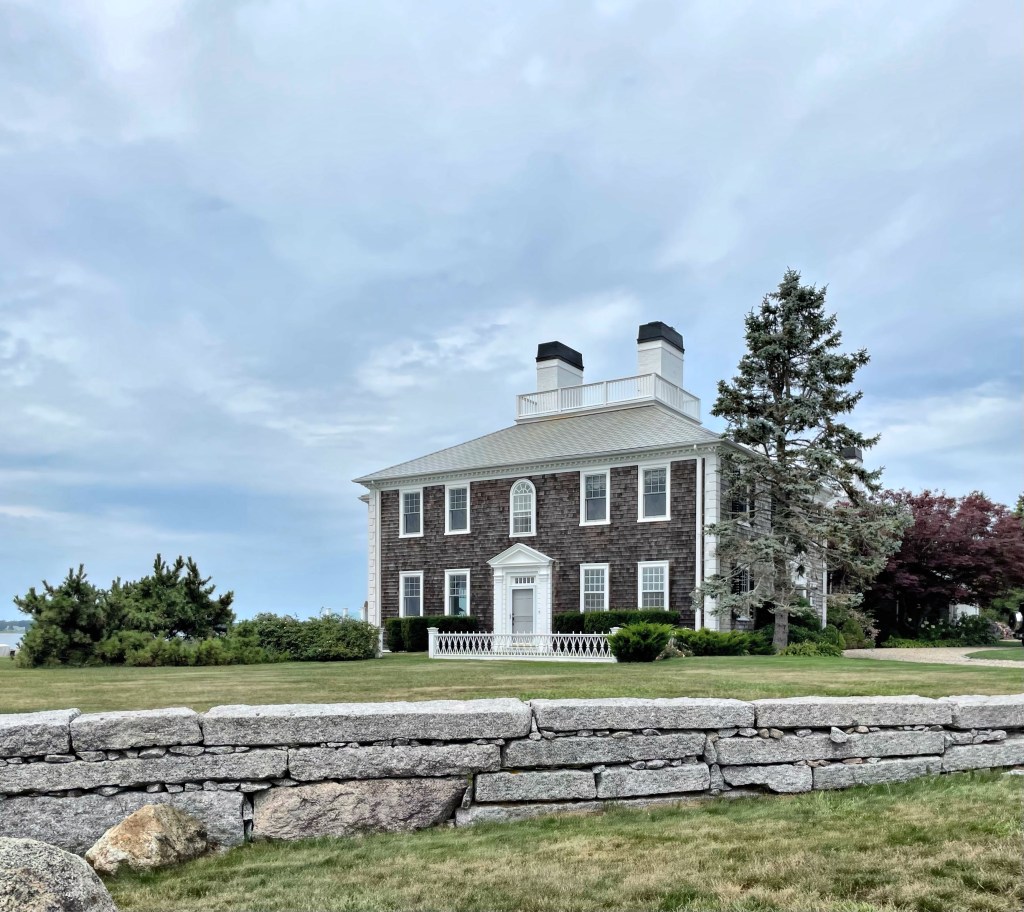
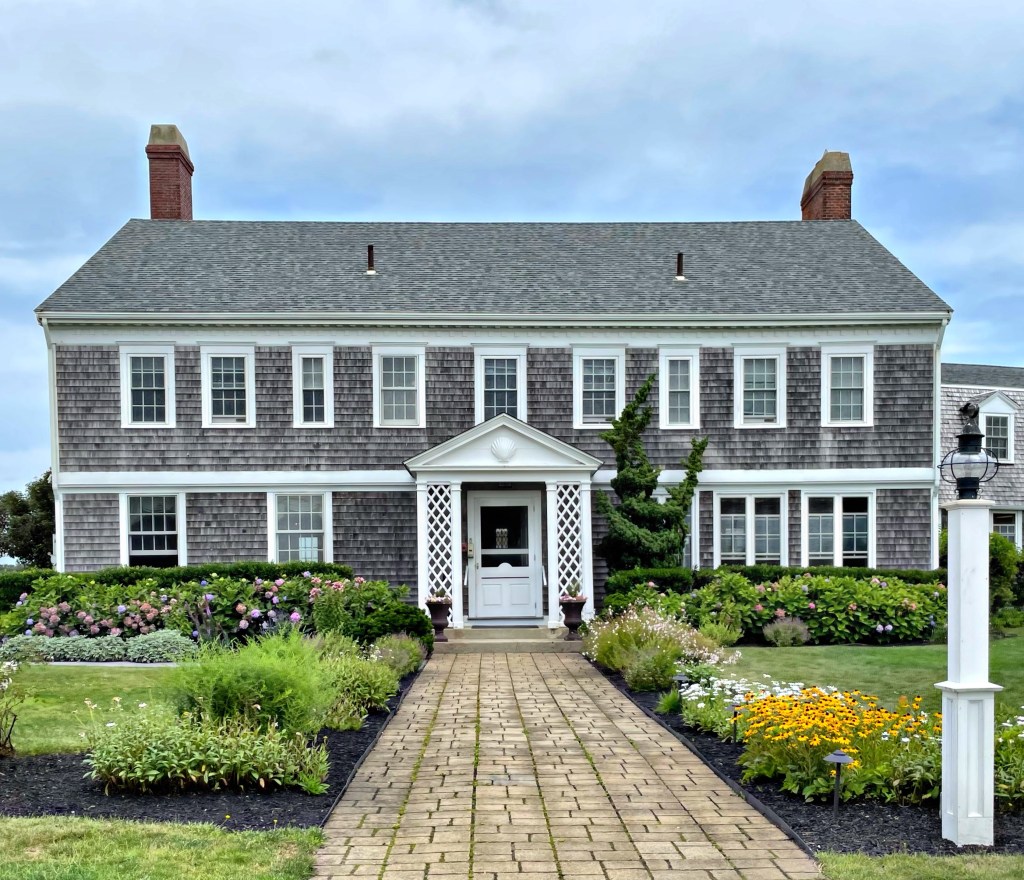
George House // c.1929

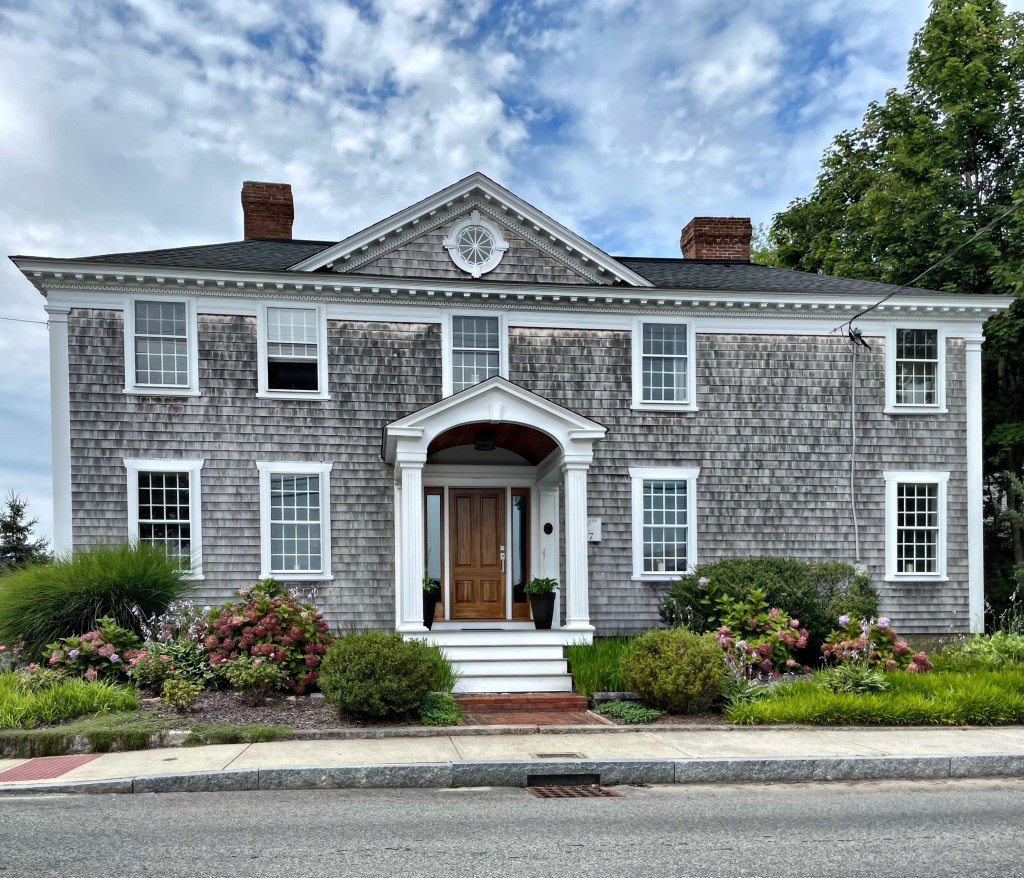
This Georgian Revival house was built in the mid-late 1920s for the George Family, who ran a construction company based out of Worcester, Massachusetts. The home was a summer retreat for the family, who acquired a prime lot on Butler Point in Marion, MA, from the Butler’s Point Associates, a group of men who developed the peninsula with the Kittansett Club and desirable house lots from plans by the Olmsted Brothers, landscape architects. The house is prominently sited and is one of the best examples of the Colonial Revival style I have seen in the seaside town. It is clad in cedar shingles as a nod to the vernacular coastal homes and larger Victorian-era summer homes seen in the village.

Kittansett Club “Winter House” // 1925

Where are my golfers at??

Across Sippican Harbor from the town center of Marion, the Kittansett Club property provides some of the best views in town. The Kittansett Club was founded by a group of members of the Beverly Yacht Club in 1922.
At the time the Beverly Yacht Club and its clubhouse and yachting facilities, were located in a building (no longer extant) at the southern tip of Butler’s Point. Its members had come to feel that the property was underused and that it made sense to expand it into a golf club, which could be used throughout the spring, summer and fall rather than for only several weeks during the summer for yachting. Kittansett was derived from two Native American words, “Kittan,” said to mean “sea,” and “Sett,” said to be a common word-ending for “near”, roughly translating to “near the sea”. The wealthy group of men who developed the peninsula with assistance from the Olmsted Brothers, landscape architects, totaling over 180 acres, a substantial portion was leased to the golf club while approximately 16 house lots were retained for those fronting the cost, to members of the club to help defer the expenses of developing the course. In 1925, the Kittansett Club undertook the construction of what became known as the “Winter House,” (the current clubhouse) which was a winterized building with heating and plumbing. The Colonial Revival building is sited so elegantly at the tip of Butler’s Point, looking out at Buzzards Bay.

Ward Parker Delano House // 1797

During the 1790s and early 1800s, the rise of the coastal schooner trade and whaling ushered in a long period of prosperity for coastal towns in New England, which continued unabated until the Civil War. The War of 1812 provided many Marion sailors and sea captains with the chance to experience life at sea with privateers papers issued by the United States government, these captains went to sea in their schooners to hunt down British ships, plundering them like pirates. One of these captains was Ward Parker Delano, who built this house in 1797 overlooking Sippican Harbor. Under subsequent owners in the Delano family, the home was modified on numerous occasions in styles popular at the time until the early 20th century when it was Colonialized, which added the portico, gable, and dentils.

Harvey Everest Cottage // c.1890

Built during the 1890s for real estate agent Harvey W. Everest, this home in Marion has such a stately presence even as a cottage. The Colonial Revival home features a large gambrel roof with two shed dormers and one central gable dormer. Mr. Everest in was active in town affairs, he petitioned to build a section of sea wall in town to help protect the buildings from storms and flooding during inclement weather. After building this home, he lived out his final days here, until the old age of 92. There is a horse hitch near the street too!

Gardiner Almshouse // 1834

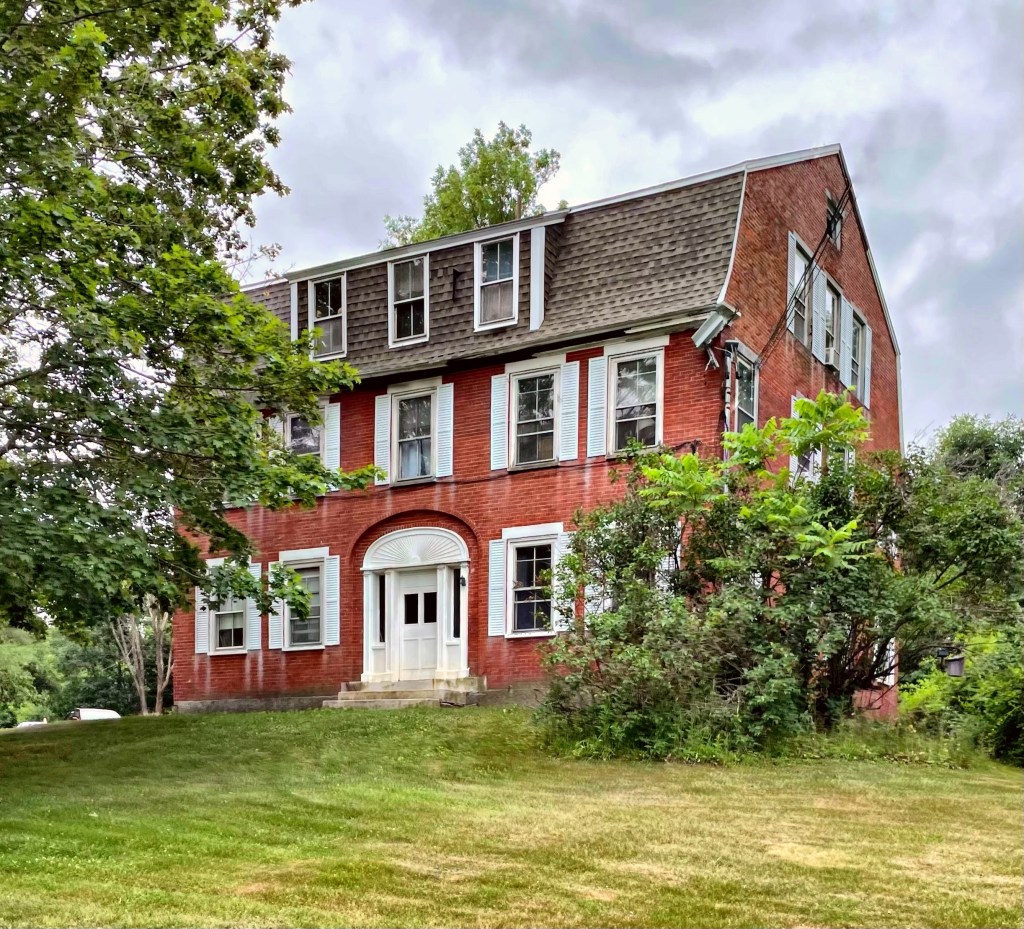
This large brick Federal house was built on the outskirts of Gardiner, Maine, in 1834. Ebenezer Moore, the builder, worked as a carpenter and house-wright in town and showcased his skill on his own brick mansion, selling it to a C.E. Bradstreet. By the late 1840s, the town of Gardiner decided that it would need a new almshouse, city-provided housing for the poor, so they purchased the Bradstreet house and 14-acres of land. In the 1848 town report documents noted, “The establishment is a brick one, of two stories, containing thirty-six fine rooms, including seven fitted for the insane in the most admirable manner, together with a spacious hall. The building is every way a most excellent one for the purpose, and is a monument of the humanity and generosity of the city.” The almshouse served as a working farm where the poor could harvest their own crops and contribute in a small, closed society. The almshouse burned in 1909, and was immediately rebuilt using the outside brick walls. In the Colonial Revival manner, a gambrel roof replaced the former gable roof, which added a third story to the almshouse. The building was eventually sold, as new housing models for low-income residents took off. The former almshouse was converted to an apartment building in 1970, a use that appears to continue to this day.

Walter Garde Cottage // c.1910

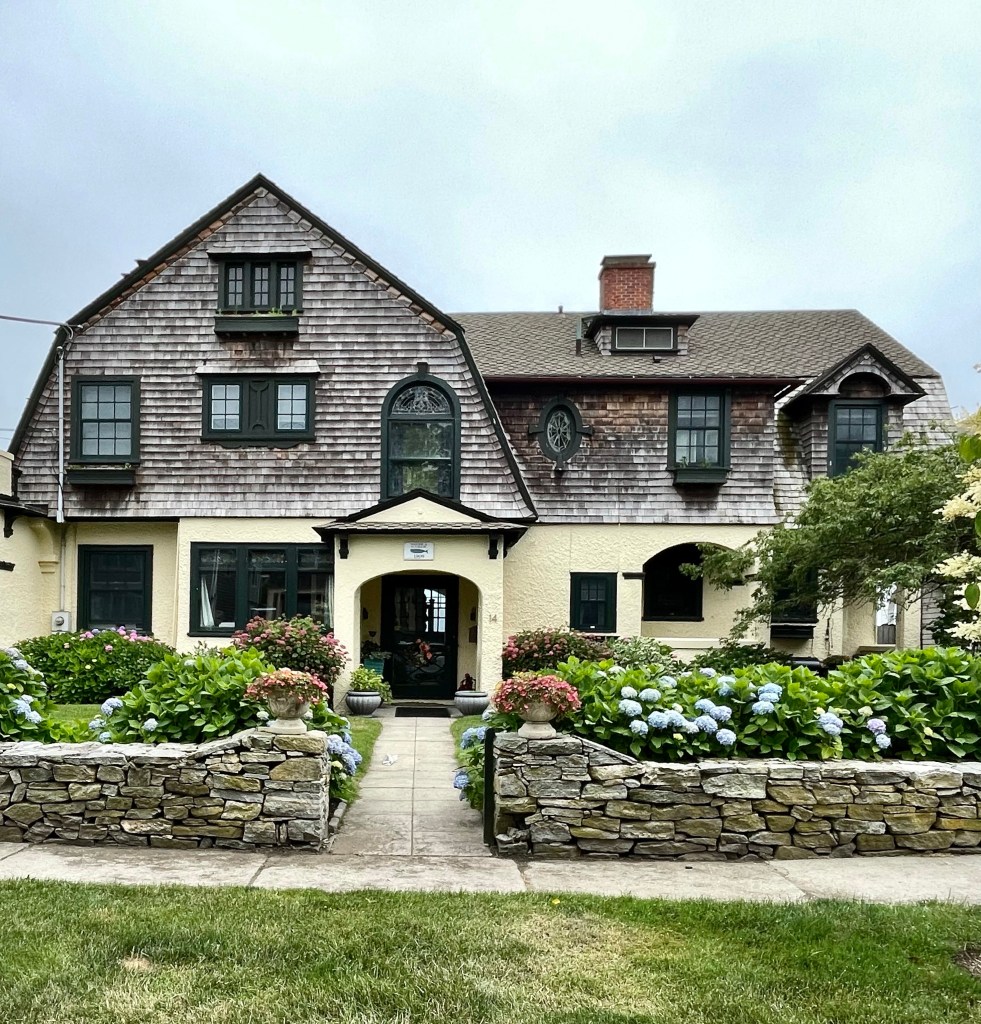
This summer cottage in the Neptune Park development of New London, Connecticut, was built around 1910 for Walter Garde, a resident of Hartford and New London. Walter built this home as a retreat from city-living where he could breathe the fresh sea breeze and not worry about smoke and pollution from the growing industrial cores of Hartford and New London. The home blends styles and forms elegantly with a stuccoed ground floor and shingles above. A cross-gambrel roof adds depth with windows in various shapes and sizes creating a pleasing composition at the street. Walter Garde was a businessman who notably opened the Garde Theatre (now Garde Arts Center) in Downtown New London.

Mary English Cottage // 1911

This shingled beach cottage on the southern tip of New London, Connecticut sits in the Neptune Park community, which was laid out by real estate speculators as summer homes, primarily for local families. The Post Hill Improvement Company made up of professionals, purchased the beach and the surrounding land for $25,000 and began selling off the land adjacent to the beach. Then, once developable lots were sold and many cottages were built, they sold the beach alone back to the City for the same sum of $25,000. Like many such developments, deed restrictions were placed on properties, and ensured that only a dwelling house, with a minimum value of $2,500 if not waterfront and $3,000 if waterfront, could be constructed on the lots. This formerly Colonial Revival cottage was built in 1911 for Mary R. English, and would have cost at least $3,000. The shingled home was later given the tower and other details, but retains much of its charm.

Boxborough Town Hall // 1901

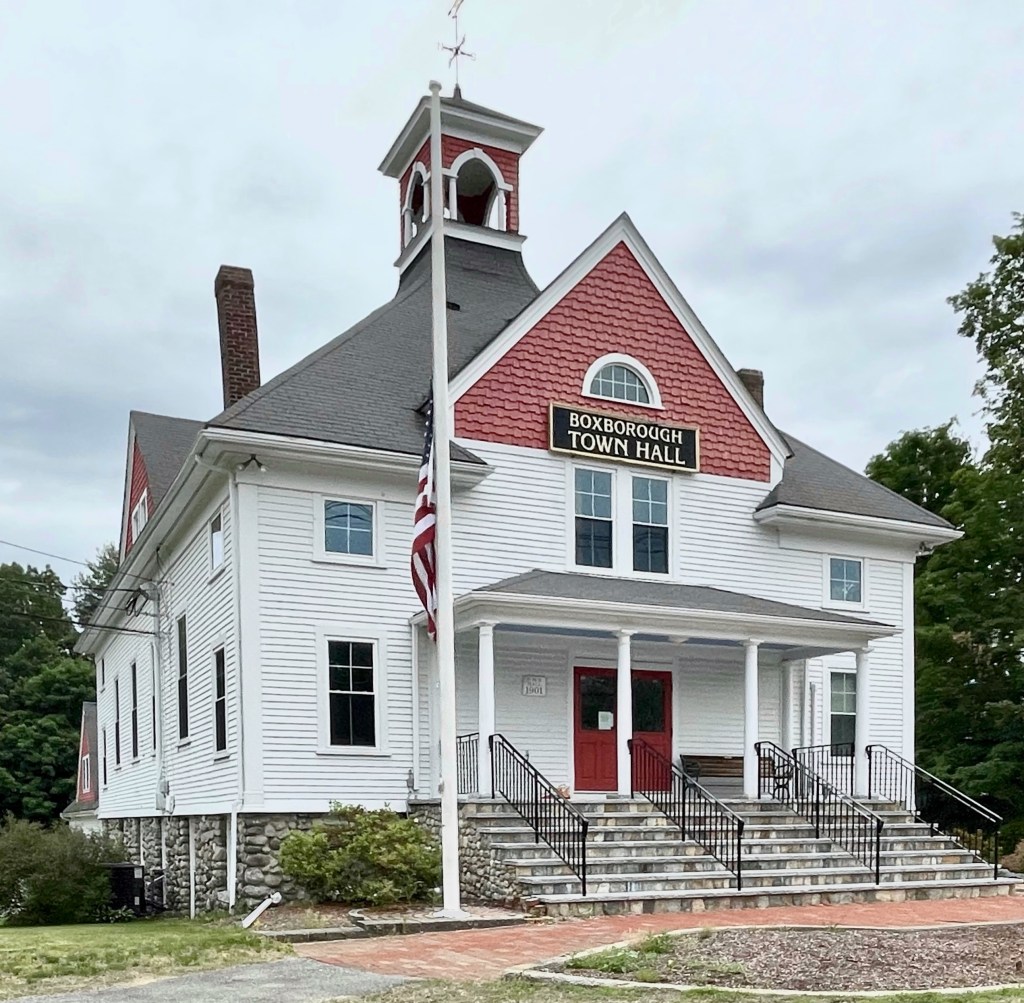
The area which became the town of Boxborough, Massachusetts, was first inhabited by the Native Americans of the Nipmuc and Pennacook tribes. Land in Boxborough was not settled by colonists until the beginning of the eighteenth century by farmers looking for fertile land to establish farms, who branched out from nearby Acton. Boxborough was formed from Harvard, Littleton, and Stow in 1783 and was incorporated as its own town. With the exception of small local industries including gristmills, sawmills, and cooperages as well as some minor boot and shoemaking, comb-making, and a lime quarry and kiln, Boxborough’s economy remained almost entirely agricultural through the 19th century. The town grew steadily and a Town Hall building was funded by the turn of the 20th century. This Queen Anne/Colonial Revival Town Hall building was constructed in 1901, atop the foundation which was constructed of locally gathered cobblestone by local volunteer farmers. Today, the town retains much of its agricultural heritage, but it is definitely under threat by subdivisions and Neo-Colonial mansions further contributing to Bostons suburban sprawl.

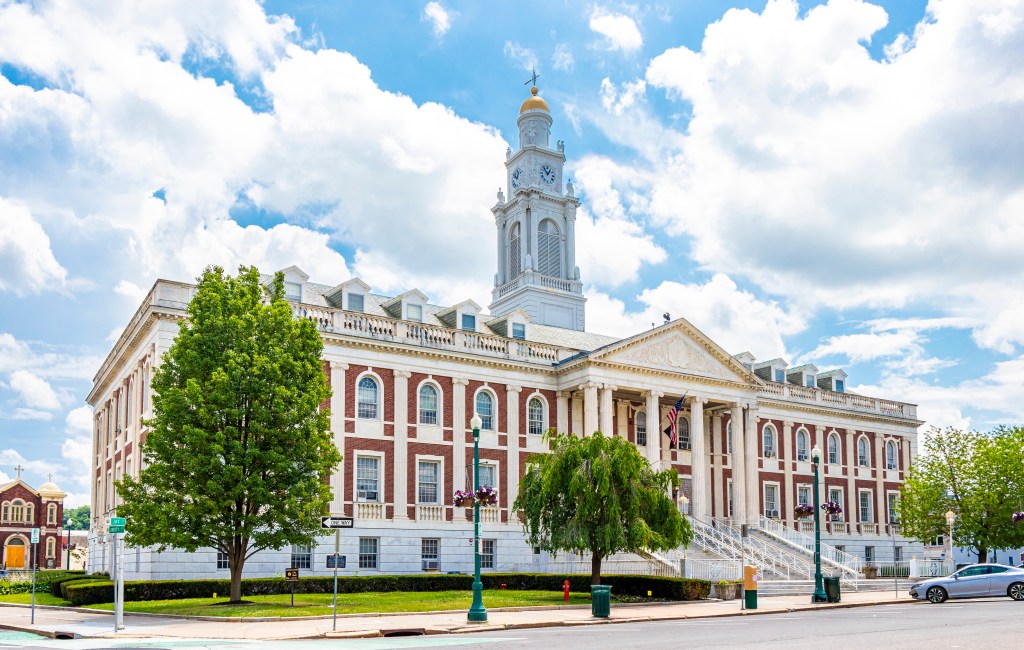
Schenectady City Hall // 1931

Buildings of New England travels! Welcome to Schenectady, a great city in upstate New York, with an hard to spell and pronounce name! The name “Schenectady” is derived from the Mohawk word skahnéhtati, meaning “beyond the pines”. Schenectady was founded on the south side of the Mohawk River by Dutch colonists in the 17th century, many of whom were from the Albany area. In 1664 the English seized the Dutch New Netherland colony and renamed it New York. They established a monopoly on the fur trade around Albany, and issued orders to prohibit Schenectady from the trade through 1670 and later. The town grew mostly as an inland agricultural town until the Erie Canal was built in 1825, creating a navigable water route from New York City and the Atlantic Ocean to the Great Lakes, cutting through Schenectady. The town grew and became an industrial center, attracting a very diverse population of immigrants in the 19th century and African Americans as part of the Great Migration out of the rural South to northern cities for work. The community struggled (like many) in the mid 19th century but has seen a large resurgence as of late!

This building is the Schenectady City Hall, a massive architectural landmark which made my jaw drop when I saw it! The City of Schenectedy outgrew their old City Hall, and in the late 1920s, held a nationwide contest to select designs for a new City Hall. The contest was won by the prominent architectural firm McKim, Mead, and White. It appears that the designs were furnished by James Kellum Smith of the firm, the often overlooked genius of the MMW practice. The exorbitant cost of the project, which was undertaken during the Great Depression, caused the building to be dubbed “Fagal’s Folly” after Mayor Henry C. Fagal, who allowed all the cost increases while the city’s future was uncertain. He was not re-elected after this building was completed. The building is a pleasing mixture of Colonial and Classical Revival styles and features bold pilasters and a towering cupola