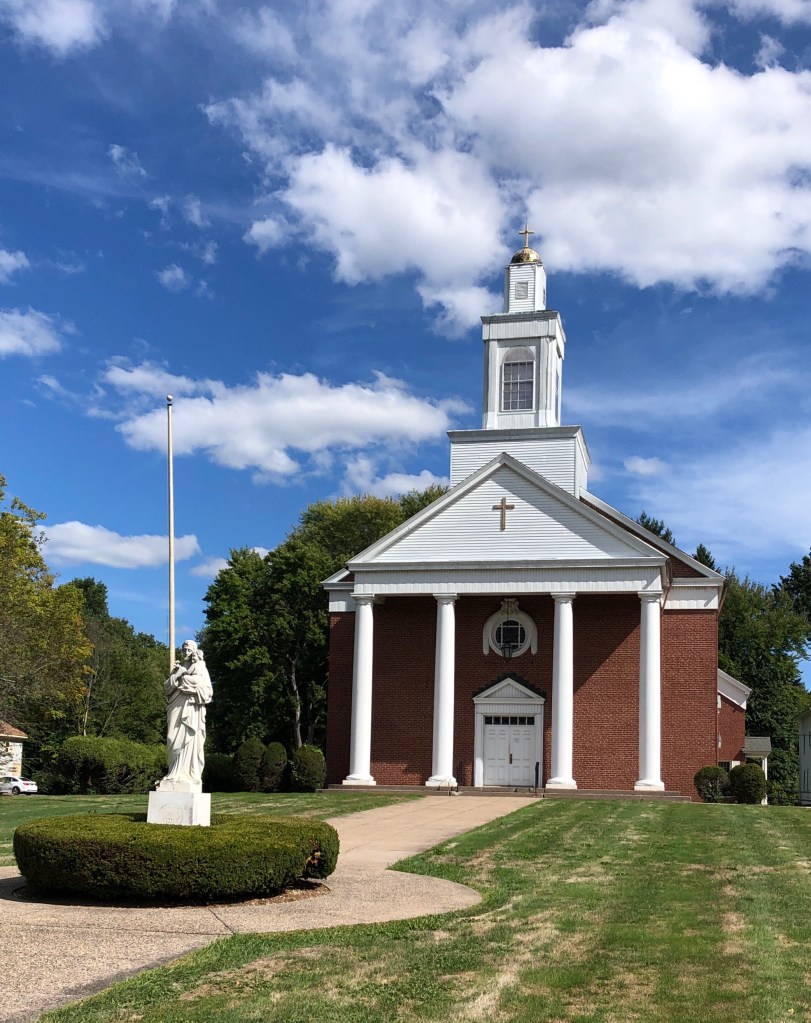
The congregation’s second sanctuary, this Colonial Revival church building was constructed in 1952 for the large Polish population in town. In the 1890s, Polish immigrants settled in rural Suffield in large numbers, many working on tobacco farms. The St. Joseph’s Polish Society was formed in 1905, with increasing demand for a sanctuary to worship. The lot at 140 S. Main Street was purchased in 1916 and the stable was converted to a church, with the home converted to the rectory. After WWII, the stable was clearly insufficient, and the site was cleared for a larger sanctuary which we see today.
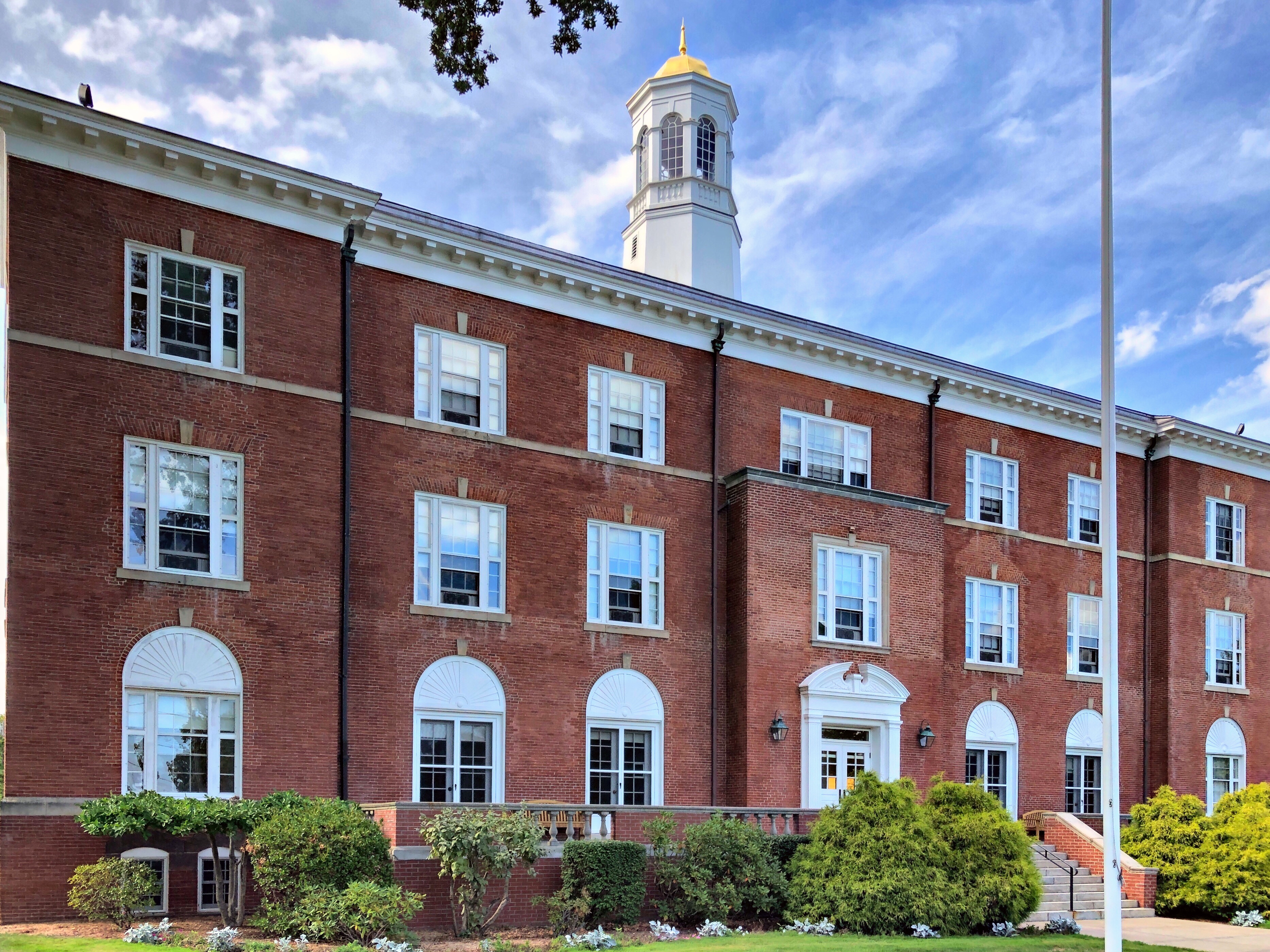
Initially established as the Connecticut Literary Institute (the school was renamed Suffield School in 1916 and then Suffield Academy in 1937), the mission of this school with Baptist roots was to educate young men for the ministry. As the Connecticut Literary Institute was the only high school in Suffield, the town tax dollars paid for local students to attend. Although town and local Baptists served a major role in getting the school underway, the founders soon moved away from a denominational focus. Built for the Institute in 1854, this large brick academic building was designed in the Italianate style with brackets and decorative brickwork at the cornice. In 1950, the school “Colonialized” the campus beginning with the Memorial Building, removing the Victorian flair for a more traditional Colonial Revival appearance. They also did the same with Fuller Hall next door.
The Connecticut Literary Institute opened in Suffield, CT, with Baptist roots with the goal to educate young men for the ministry. Later rebranding as Suffield Academy, the school was the only high school in town, so it received tax revenue from the town to allow boys outside the Baptist faith to study there. Later, with changing views of women’s right to education, the school allowed women into the school in 1843. Forty years later, the school constructed this building, then known as the ‘Women’s Building’ just next door to the 1854 Memorial Hall. The Second Empire style academic building was heavily modified in 1953, just like its counterpart next door in the Colonial Revival style, adding a cupola and removing the stunning mansard roof.
Built in 1911 as a single-family home for Bayard and Ruth Thayer, this building on Beacon Street is one of the most visited in the city (I will get to that later). The four-story home replaced two large townhomes across from the Public Garden and was designed by New York based architect, Ogden Codman, Jr., who was born in Boston into the esteemed Codman family. Bayard Thayer died within five years of the completion of the house, and his widow, Ruth, and their children continued to occupy the massive residence into the 1930s. By 1944, the home was being used as a lodging house, a violation, and it was sold two years later to a realty company who operated apartment houses. From this time the house functioned as a residential hotel known as the Hampshire House. In 1969, Thomas Kershaw acquired the property and kept its name, which it retains today. In the same year they opened the Bull & Finch Pub in the basement, which in 1982 became famous world-wide as the locale for the bar in the television sitcom Cheers, one of the most-watched programs in television history. Pictures of the exterior of the building were used in the show’s credits and scene changes, and the interior was faithfully replicated in a set used in Hollywood. The building is now habitually swarmed by locals trying to get to drink in a piece of cultural history.
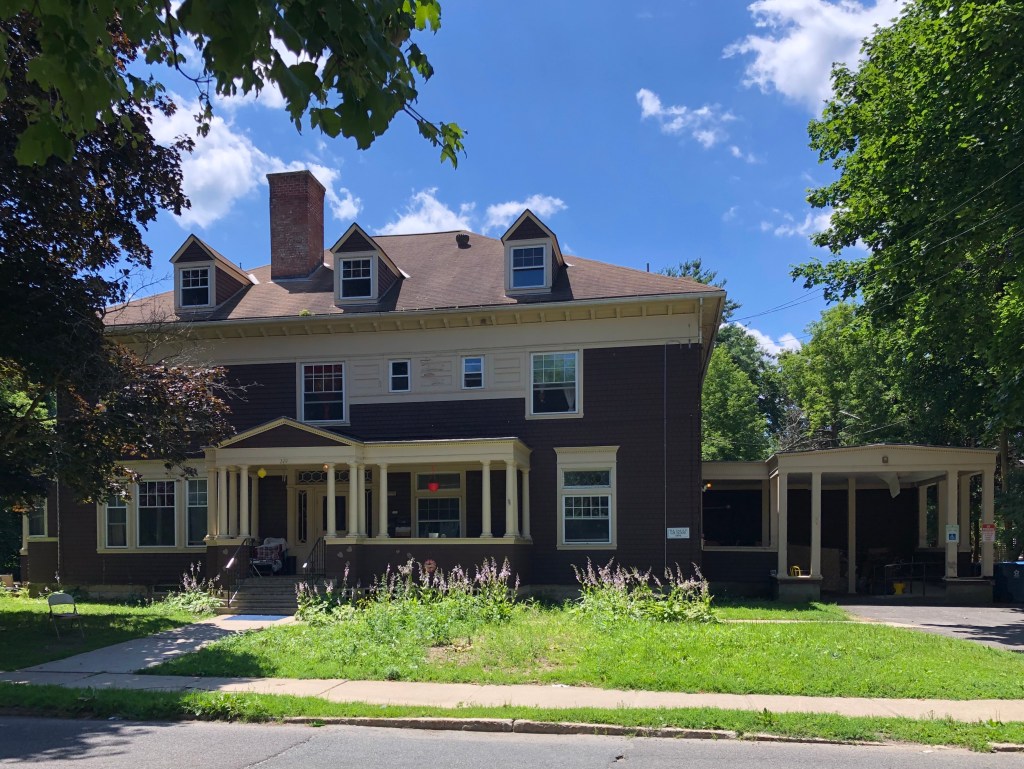
William A. Gallup was born October 28, 1851, in North Adams. He worked primarily for the Arnold Print Works beginning in 1870 before becoming a charter member, elected clerk, and director of the company. He went on to work for and own a few more mills in North Adams by the end of the 19th century. Gallup hired H. Neill Wilson, a Western MA based architect to design a mansion for his family on Church Street, near his father in-law and business partners (A.C. Houghton) house.
North Adams in Western Massachusetts was incorporated as a city in 1895, separating from Adams, MA in 1873. The town was flourishing as an industrial center due to it’s location on the confluence of the Hoosic River’s two branches here. Thanks to the Arnold Print Works (now Mass MoCA), the town’s population doubled in twenty years after incorporation. Due to this, the United States Post Office and Treasury Department decided to build a large post office, a size that would allow the growing city to fill into. The Georgian Revival post office building is credited to James A. Wetmore, who was actually not an architect, but an attorney and Executive Officer of the Office of the Supervising Architect, within the Treasury Department (what a title). He later became the Supervising Architect without any known education in design. As Supervising Architect, he managed a staff of nearly 1700 architects and draftsmen who designed at least 2000 federal government buildings, including courthouses and post offices. The North Adams Post Office, remains a landmark of a city which has sadly seen a declining population every decade since 1940.
This grand home was built in 1871 for George Hills, one of the original investors in the Oak Bluffs Land & Wharf Company development, a development to the east of Wesleyan Grove. The home was designed by Samuel Freeman Pratt, a Boston carpenter turned premier architect of Oak Bluffs, who likely designed the home in his distinct Stick Style with intricate wood carvings and posts. In 1877, the home was purchased by Governor William Claflin after his time in office as a summer retreat from his home in Newton, MA. The governor was an ardent Methodist who was involved with liberal causes such as abolition and Native American and female enfranchisement. Within 10 years of his purchasing of the home, he modified and enlarged it with Colonial Revival motifs including the gambrel roof, Tuscan columned porch, and simplified dormers.
William Jefferds Jr. was born August 30, 1779 in Kennebunk. On October 25, 1802 he married Sarah (Sally) Walker who was born in Arundel on March 4, 1783. Twenty years later, in 1803, Captain Daniel Walker gifted his son-in-law, Captain William Jefferds, Jr., “80 square rods of land, with love and affection” on the lane leading to Walker’s Wharf (he also gifted land to his other son in law, Nathaniel Lord. In 1804 the 2-story, Federal-style building that now houses Captain Jefferds Inn was built as their private home.
Capt. Jefferds was a ship owner and captain in the West Indian trade; he later became a merchant in Kennebunkport. He and Sarah had 11 children, and their family was considered one of the most aristocratic in Kennebunkport. Following Sarah’s death at age 88 in 1871 (her husband had predeceased her in 1851), the household furniture was sold at public auction and the home sold outside of the family.
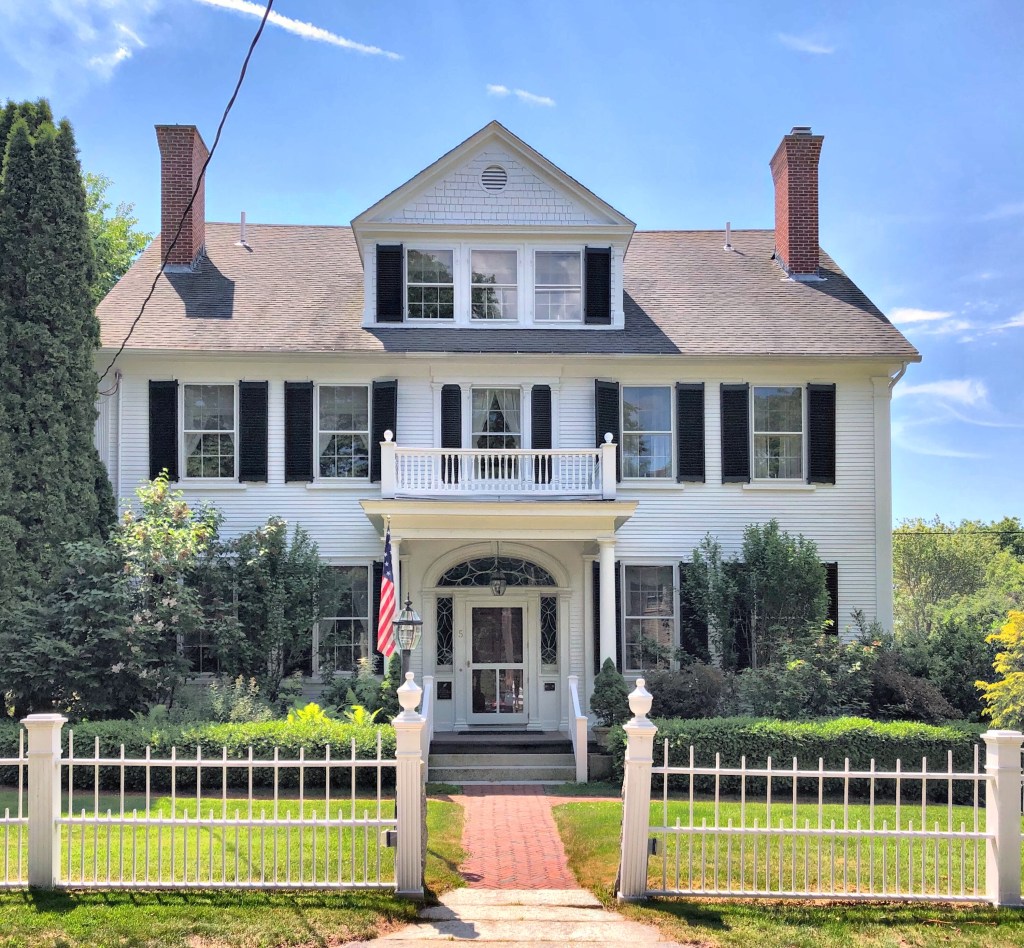
The house was a two-story hipped roof Federal style dwelling, somewhat outdated by the latter half of the 19th century. By the 1880s, the Agnew Family who owned it at the time, had the home remodeled with Colonial Revival detailing, including the portico and large central dormer. The home was eventually converted to an inn, and is known as the Captain Jefferds Inn.
Check the Inn’s website for more images and history!
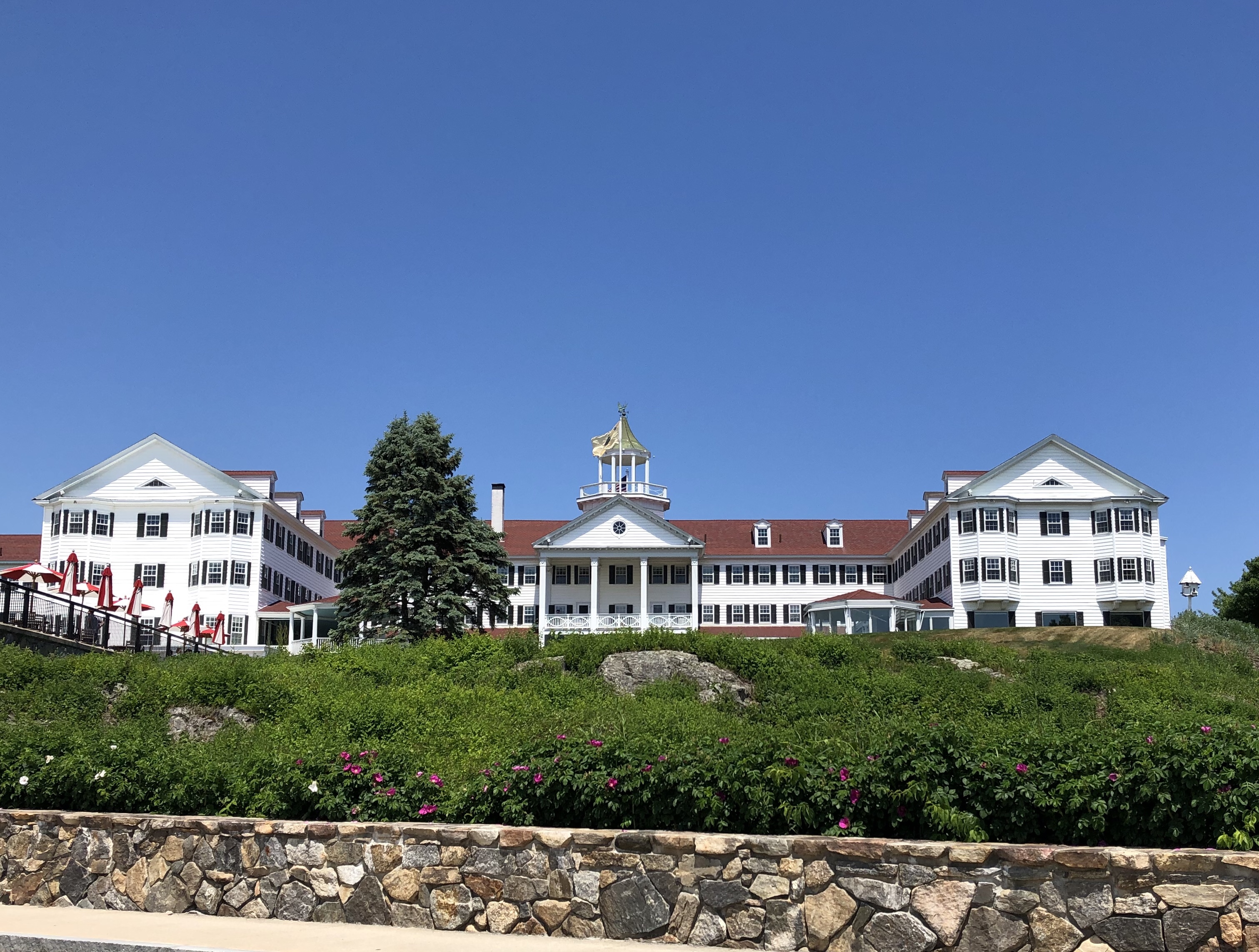
One of the larger hotels in Kennebunkport, the Colonial Revival Colony Hotel, built in 1914, provides historic charm with views of the Kennebunk River and Atlantic Ocean. Owner Ruel W. Norton had the new hotel built on the site of the Ocean Bluff Hotel (1873, burned 1898), to attract summer people, many of which stayed for months at a time. The Colony was originally called Breakwater Court until 1947, when George Boughton purchased Breakwater Court and changed the name to The Colony Hotel to complement their Florida property, The Colony Hotel in Delray Beach Florida. The hotel was designed by John Calvin Stevens, who lived in Maine and designed an estimated 1000+ buildings in the state, many of which in the Shingle or Colonial Revival styles.
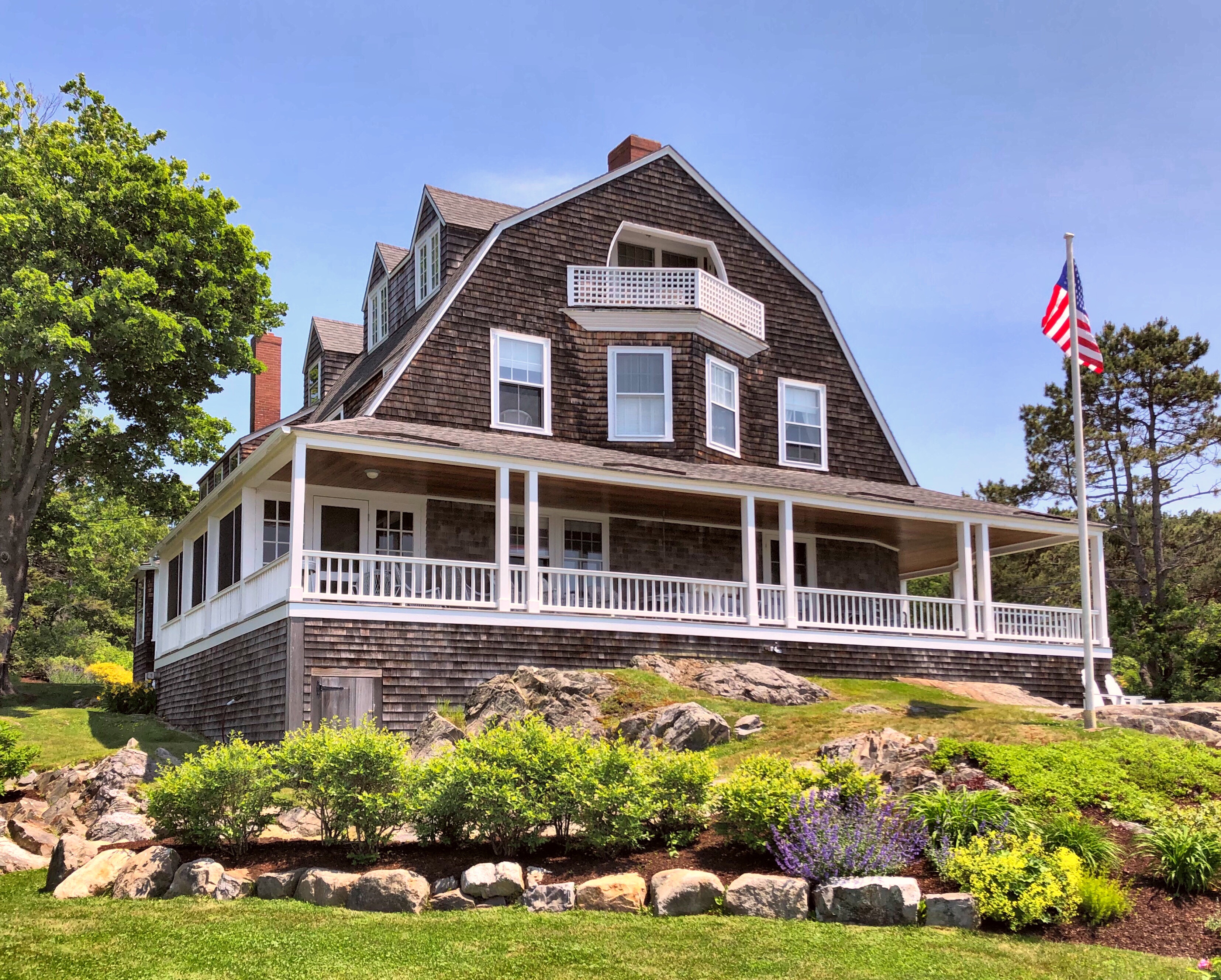
One of the jewels of the Cape Arundel summer cottages in Kennebunkport is the Rock Ledge Cottage, sited prominently on a hill overlooking the Atlantic. Rock Ledge was a cottage built in 1887 for Elon Dunbar Lockwood (1836-1891) of Philadelphia. Lockwood was a merchant who started a dry goods business with his brother, forming W. E. & E. W. Lockwood. Elon became a highly respected businessman in Philadelphia and later became a member of the Committee of Fifty, a group formed to devise measures for the 1876 Centennial Exposition in Philadelphia which would showcase the city for the first ever World’s Exposition in the United States. Elon’s wife Elizabeth died in 1884, and a couple years later, he had this summer cottage built, where he would apparently entertain, giving him the designation as a womanizer until his death in 1891 at the age of 54. The cottage was designed by William Ralph Emerson, one of the busiest architects in New England at the time, with commissions all over the region, including many summer cottages in Maine.




 Buildings of New England