Beckett’s Castle // 1874

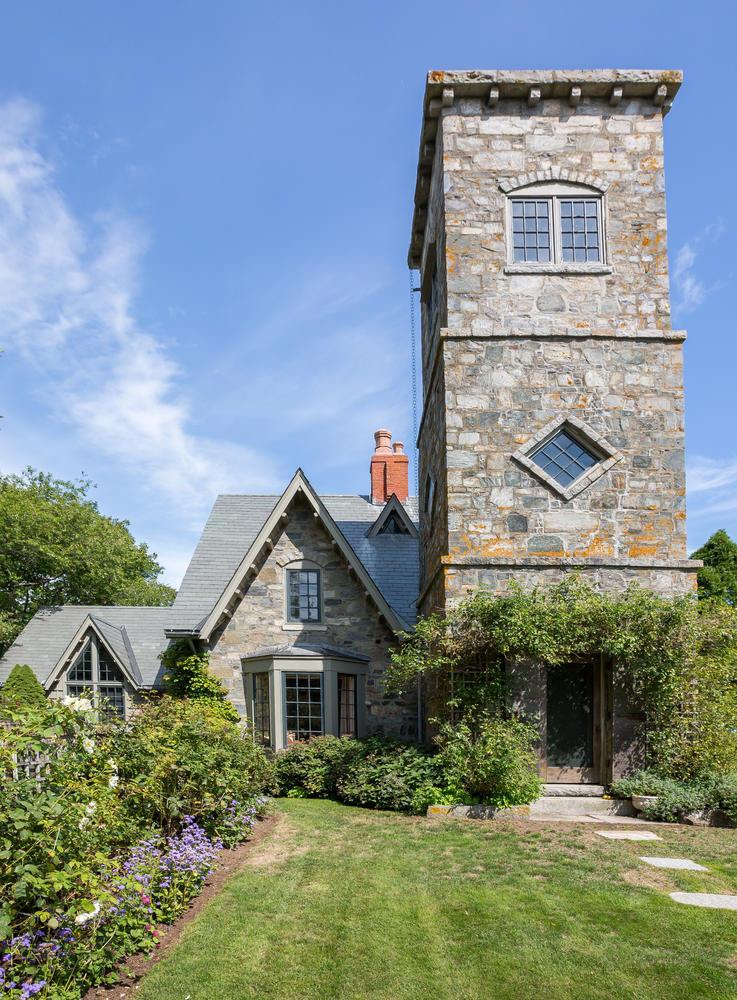
On a rise above the Cape Elizabeth’s rocky shore stands Beckett’s Castle, a picturesque Gothic cottage of a century ago. Designed and built by the Portland literary figure Sylvester Beckett for his summer residence, the Castle was begun in 1871 and finished in 1874. It is said that Beckett constructed the cottage from local gray fieldstone largely with his own hands, though he must have had help, or fabricated this fiction as he would have in his own books. The home was patterned after a typical English castle, but on a much smaller scale, and is tucked away from the street. Sylvester Blackmore Beckett was born in Portland, Maine in 1812, as the son of English parents. Although never attending college, he acquired a modest education and became a prominent journalist and articulate writer. He was admitted to the bar in 1859 and spent much of his time administering and settling estates becoming well-connected in town. Beckett held massive parties in the home, and invitations to the social gatherings held there were highly prized; guests were served expansive dinners cooked in primitive fashion in a large fireplace. Sylvester Beckett died in 1882, and went to his only child, Lizzie. The home fell into disrepair in the 1970s, but was restored by the most recent owner. It was sold in 2018, and the listing photos show some great interior spaces.

Cape Elizabeth Twin Lights // 1873

East Light.

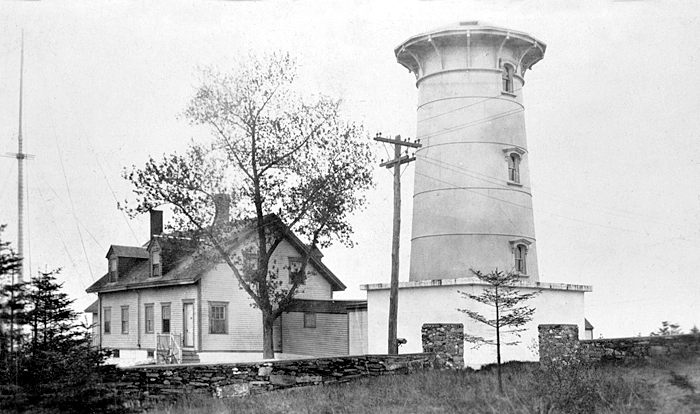
At the southern tip of Cape Elizabeth, Maine, two lighthouses have long provided a beacon to ships that sailed the rocky coast where the town protrudes into the ocean. The story of Cape Elizabeth’s Two Lights begins in 1614, when Captain John Smith, who sailed along New England’s shores, gave the appellation to the cape in honor of Princess Elizabeth, King Charles’ sister. After the American Revolution, Portland Harbor became an important trading port, and ships from all over the world would dock there. In 1827, the decision was made to use two lights at this location, a fixed light in the east tower and a revolving light in the west one, so the station would not be confused with the lights at nearby Portland Head Light or Wood Island Light in nearby Biddeford. After land was purchased for a mere $50, the towers were built, spaced by 895 feet and topped by octagonal wrought-iron lanterns housing lamps and reflectors, first shone their lights in October 1828. The stone towers were poorly constructed and keepers would consistently complain about poor working and living conditions. A $30,000 appropriation was made in 1873 to fund the erection of two matching sixty-seven-foot, brick-lined, cast-iron towers set 923 feet apart and featuring elegant Italianate details. In 1878, a new wood-frame, one-and-a-half-story dwelling was built for the principal keeper near the east tower, designed in the Gothic Revival style. During World War II, the west tower became an observation tower after a cylindrical turret was installed atop, which had had its lantern room removed after being discontinued. It was auctioned to the highest bidder in 1959. In 1971, actor Gary Merrill, ex-husband of Bette Davis, purchased the west tower for $28,000. Merrill sold it in 1983, and a new house was built next to it. The keeper’s cottage at the east tower is also privately owned, but the tower is retained by the Coast Guard, and is automated today.

West Light.

Washington Congregational Church // 1840

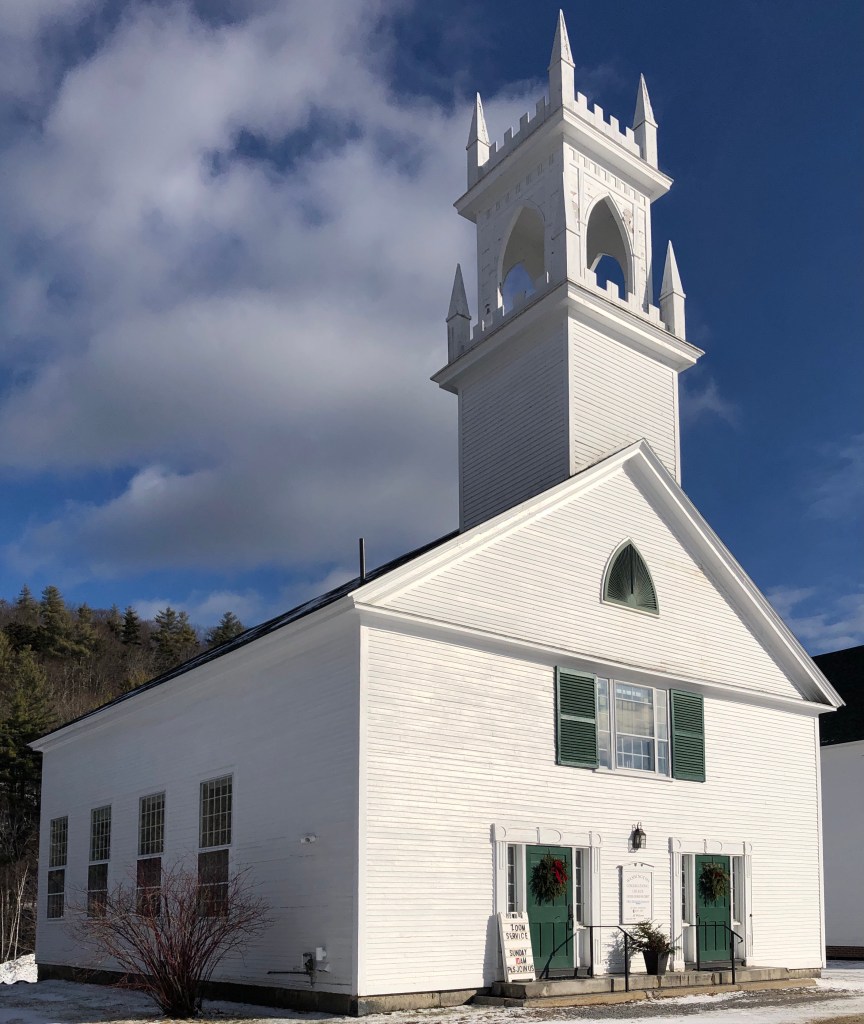
Located adjacent to the Washington Meeting House and Central Schoolhouse on the Washington, New Hampshire Town Green, the Washington Congregational Church perfectly compliments the collection of vernacular buildings here to create a very cohesive, three-building historic district. The church is dominated by a Gothic-inspired two stage square tower adorned by pointed pinnacles and crenellation. The building, constructed in 1840, is a great example of a Gothic Revival vernacular church building in rural New Hampshire and has been well-maintained over the years. In 1960, a fire in the church resulted in several thousand dollars worth of damage. A full basement was built under the church in 1985 to provide space for Sunday School classes and events. The simple arched sanctuary has remained in keeping with the original interior design, and features wide board wainscoting and wooden pews, taken from the old Meeting House.

St. Patrick’s Church, Newport // 1882

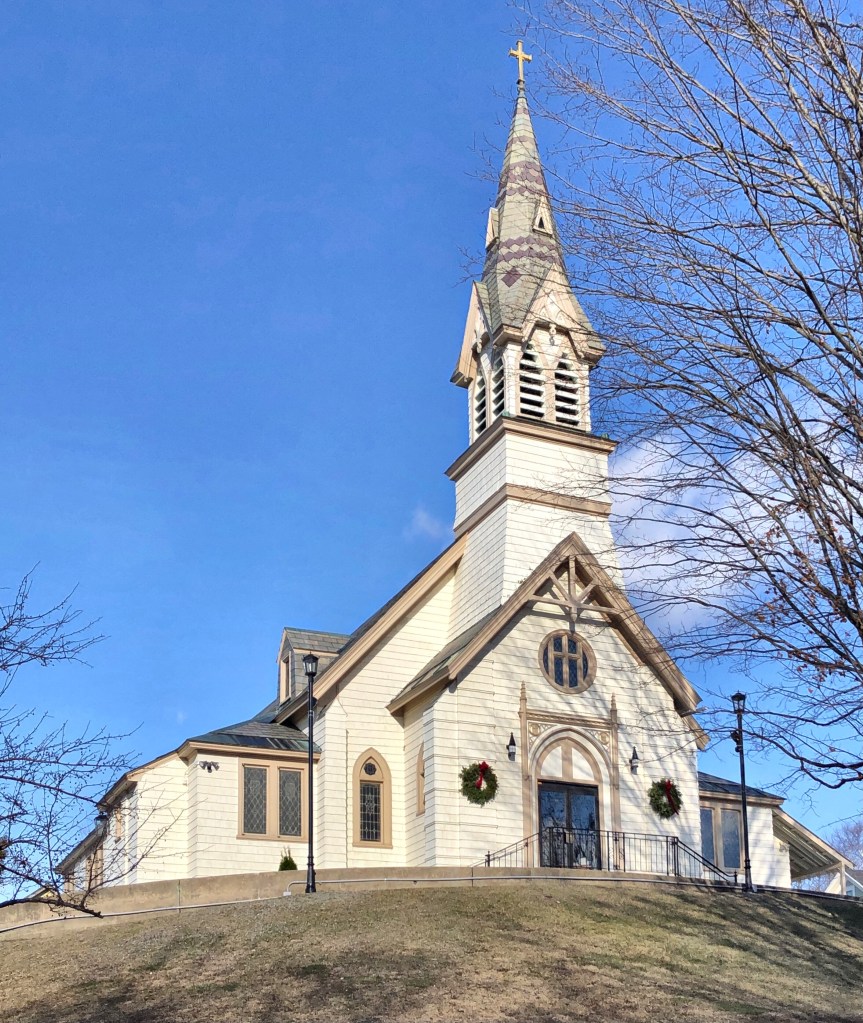
Perched high on a hill in central Newport, NH, St. Patrick’s Church has served the community in its stunning building for nearly 150 years. The town of Newport began seeing Irish immigrants moving into town looking for work at the mills as early as 1835. The large working-class population created a need for a Catholic church in the growing town. That same year, the Catholic population of the state of New Hampshire was listed at just 720 people. Over the following decades of meeting in homes and small buildings around town, the Catholic population in town, along with the newly established Archdiocese of Manchester, NH, came up with funds for a church in the mill town of Newport. The congregation hired Hira Ransom Beckwith, a carpenter, builder and architect from nearby Claremont to design and construct the new place of worship. Interestingly, Beckwith had only a high school education, so his training as an architect and builder was through apprenticeships. The church is a blend of Gothic Revival and Stick styles, with the lancet windows and tracery paired with the elaborate stick-work in the gable.

Justin Morrill Homestead // 1851

One of the most stunning Gothic Revival homes in New England has to be the Justin Morrill Homestead in the tiny town of Strafford, Vermont. The home was designed by and built for Senator Justin Smith Morrill (1810-1898), who was born in town and worked with his mentor Jedediah Harris at the local store. He later expanded and owned numerous stores in the area and diversified, investing in railroads, banks and real estate in the region. He retired in the late 1840s and became a gentleman farmer, building this Gothic Revival home in town. In 1854 Morrill was elected to the Thirty-fourth Congress as a Whig. He was a founder of the Republican Party, and won re-election five times. In 1866, Morrill was elected to the U.S. Senate as a Union Republican, serving until his death in 1898. Morrill is best known for sponsoring the Morrill Act, also known as the Land Grant College Act. This act was signed into law by Abraham Lincoln in 1862, and established federal funding for higher education in every state of the country. Senator Morrill primarily used this house as a summer residence, as he spent much of his time in Washington, DC. The property remained in the Morrill family, until World War II. The house was eventually acquired by preservationists, who sold it to the state in 1969 for use as a Historical Site and museum.

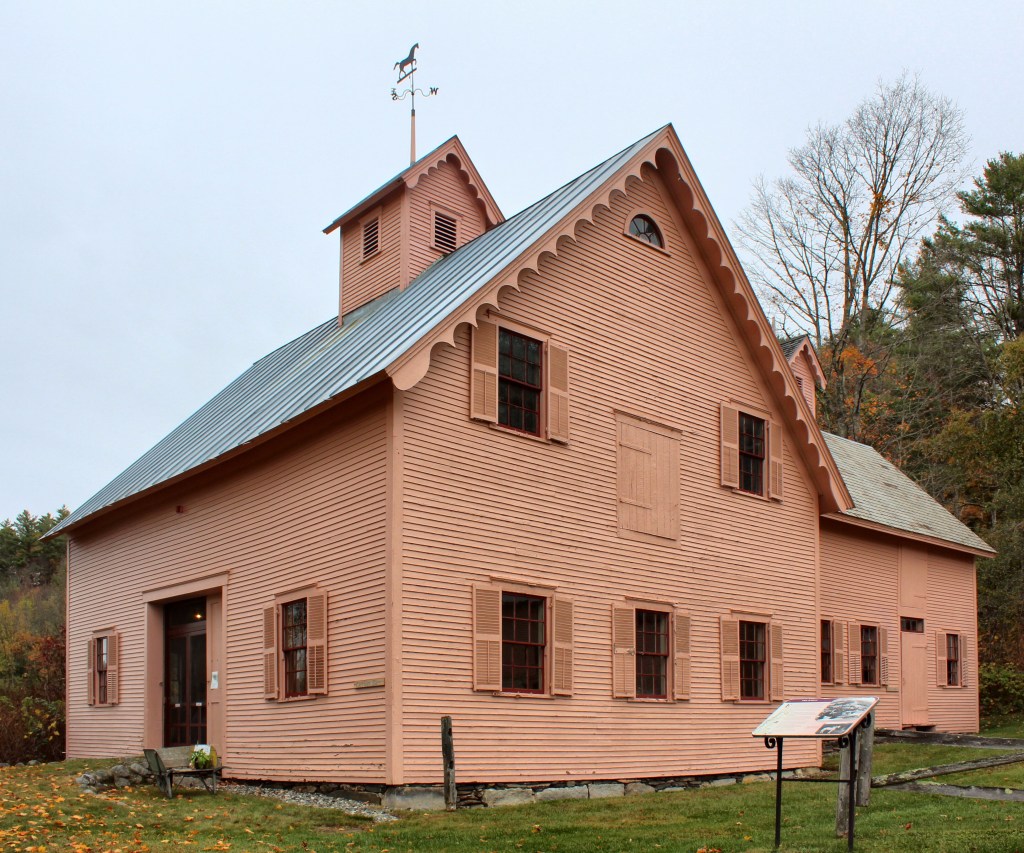
Justin Morrill Barn

Samuel Allen Nichols House // 1848

Samuel Allen Nichols (1790-1864) was born in Fairfield, Connecticut to a large family. He began his adult career as a farmer, but shifted towards the merchant trade after seeing how the village of Southport began to see massive wealth accumulating. He ran a store in the town and later became involved in local politics serving as the clerk from 1847-1863. A year after he accepted this position, he had this home built on Harbor Road. The 1848 home was Gothic Revival in style with gabled dormers, lancet windows, and decorative bargeboard. Nichols died in 1864 and the home was likely willed to one of his five living children. The home was renovated around 1871 with a Second Empire style Mansard roof and square belvedere to overlook the Southport Harbor. Since then, much of the detailing has been removed, but the home remains as a gorgeous home, changed over time to keep up with the changing architectural tastes of the 19th century.

Trinity Church, Southport // 1862

The Trinity Episcopal Church in the Southport section of Fairfield, Connecticut was established in 1725. Twenty families met for worship at its first meeting house in the center of town on Thanksgiving Day, 1725. Since then, the church has constructed five different places of worship in locations around town. Architect Albert C. Nash designed the church which was constructed during the years 1854-56. Sadly, the building’s near total destruction by wind during a tornado on January 1, 1862, required the church to be completely rebuilt as originally planned, with a few structural alterations. Trinity Church is an excellent work of early Gothic Revival church architecture in wood, one of the best I have seen in my trips around the region.

Sturges Cottage // 1840

In the 1840s in New England, one architectural style commanded a large majority of all new house styles, Greek Revival. A divergence from the Classical designs of the Georgian, Federal and Greek Revival styles which dominated at the time, the Romantic movement began its first true breaths across New England. The Gothic Revival and Italianate styles are often thought to be the first couple styles which brought the frills and detailing personified by Victorian-era architecture.

This home in Fairfield, Connecticut was built in 1840 to a design by Joseph Collins Wells, it is one of the oldest-known and best-documented examples of architect-designed Gothic Revival architecture. The home was built for for Jonathan Sturges (1802–1874), a businessman and patron of the arts. It is one of the earliest known examples of architect-designed Gothic Revival architecture, a style more often taken by local builders from pattern books published by the style’s proponents. The home was likely a pre-cursor to architect Joseph Wells later commission, the famous Roseland Cottage.

Unity Church of North Easton // 1875

The Unity Church of North Easton, Massachusetts looks like it could stand toe-to-toe architecturally with the large churches in major American cities. The church was a gift to the Unitarian Society in town, by Oliver Ames II, who hired renowned Gothic architect Henry Vaughan to design a chapel, worthy of the town’s wealth. The church contains various tablets and memorials to the Ames Family, with stunning stained glass windows by John LaFarge, recently restored by the church! Behind the grounds is the cemetery where many of the Ames family members are buried.

Forest Hills Administration Building & Chapel // 1884

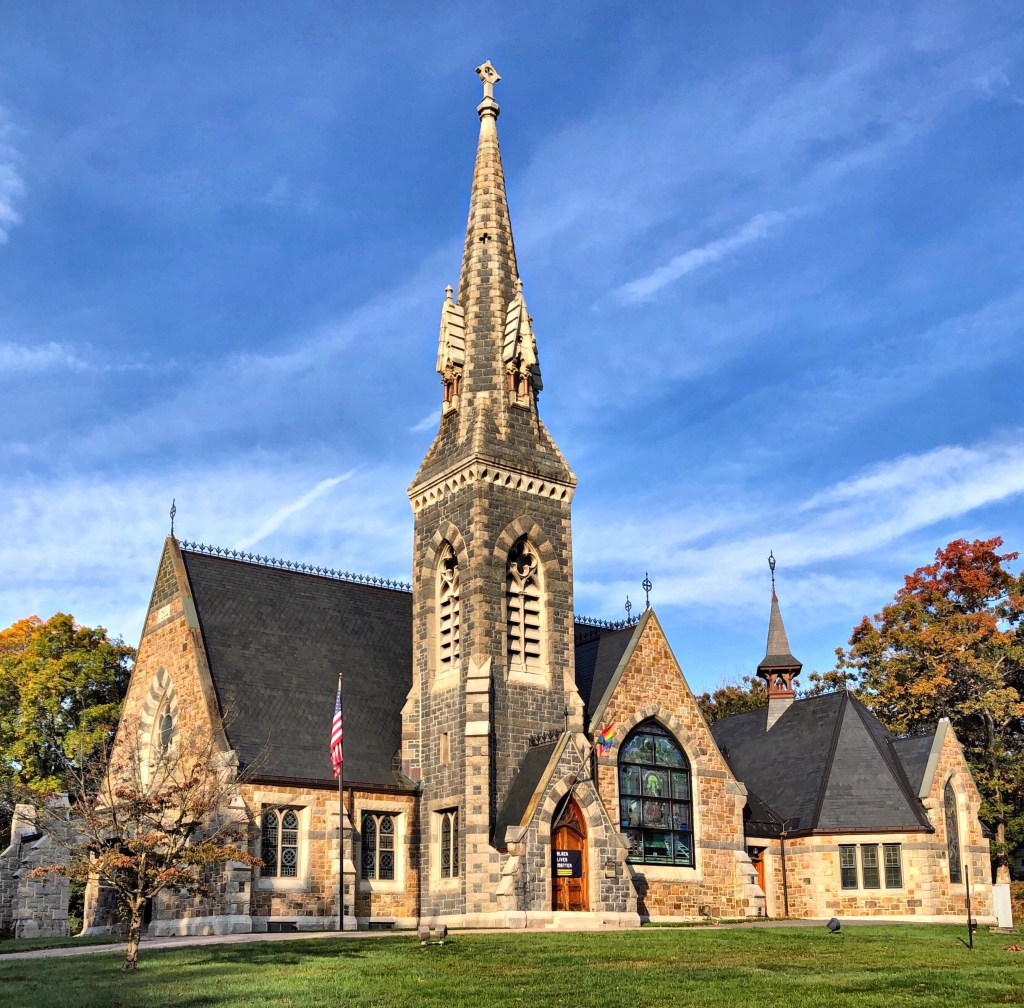
Located adjacent to the Entrance Gate at Forest Hills Cemetery in Boston, the Administration Building and Chapel perfectly compliments the Gothic Revival collection of structures welcoming all visitors to the cemetery. Designed by the firm of Van Brunt & Howe, the building was completed in 1884, when the cemetery’s popularity with visitors (alive and deceased) was at a high. The building is in the Gothic Revival style and is constructed of
Roxbury puddingstone, with sandstone trim on the original parts of the building and yellow freestone trim on the 1921 addition. The building remains as a perfect partner to the entrance gate, serving as a physical portal between metaphorical life and death.