George N. Faught Chalet // c. 1890

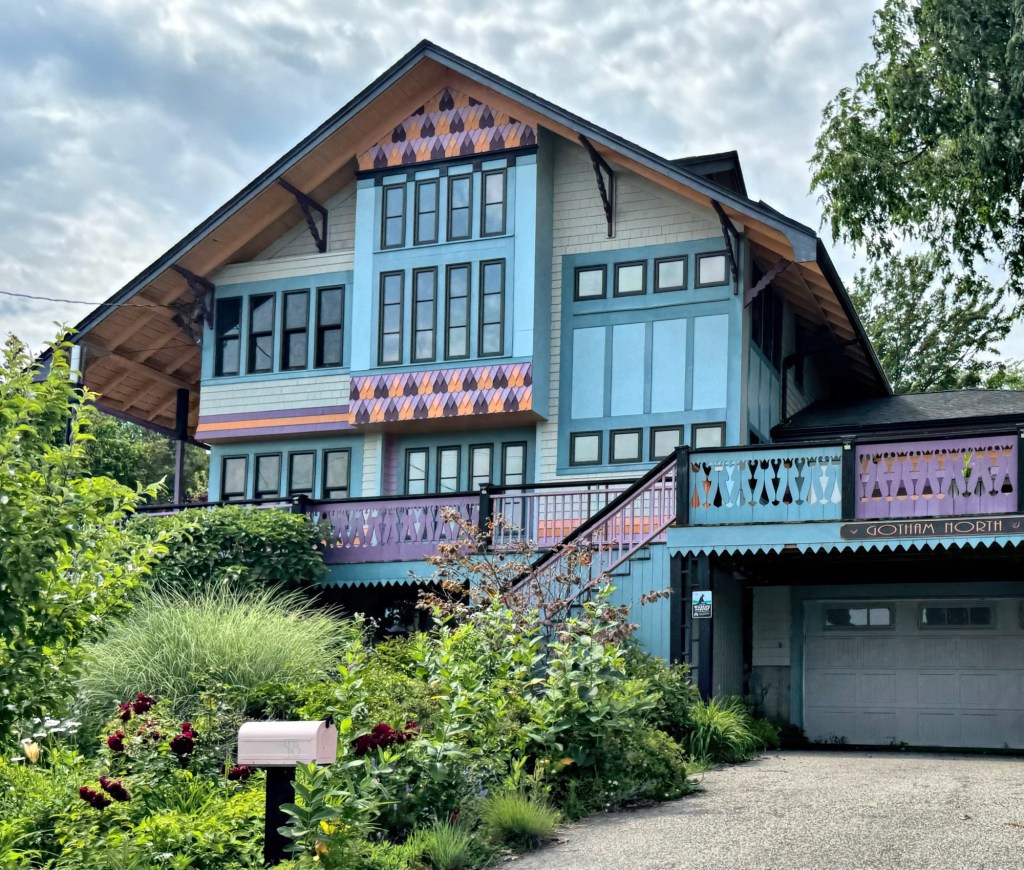
The most unique house in Hull, Massachusetts is this stunning (and rare) example of a Swiss Chalet, located on Vautrinot Avenue in the fashionable Hull Hill neighborhood, which is dominated by late-19th century summer cottages. The earliest owner of the house was George N. Faught (1831-1915), an artist and tailor who moved to Boston from Maine. George went into the tailoring business in Boston and did well for himself, eventually building (and possibly designing) this summer home for himself in Hull. Mr. Faught died in 1915 in his bed in Boston, and this property was sold at auction in 1917. After some insensitive alterations in the 20th century, the property was sold in 2011. The later owners restored much of the house, while modernizing it to meet their needs. It is a showstopper!

The house is privately owned and not open for tours.

Point Allerton Artillery Fire Control Tower // 1942

Those who have visited the tip of the coastal Boston suburb of Hull, Massachusetts, will recognize this tall tower, but may not have known its intended purpose. This is the Point Allerton Artillery Fire Control Tower, built atop the highest point in the town, to serve as part of the Coastal Defenses built around the World Wars. Several fire-control stations were built at Point Allerton going back to 1907, but this seven-story concrete tower is the last to remain here. This tower was built around 1942, as the US Government grew increasingly serious about the potential for war, with new batteries and surveillance bases built all along the coast, many of which remain to this day. Fort Revere, a remnant of the coastal defenses, remains in Hull, nearby. This 7-story fire control tower is the center of Point Allerton, and by virtue of its base elevation (124 feet), had its top observation level at 179 feet above sea level, making this the tallest observation point in the Boston harbor defenses. The tower was later deaccessioned by the government and is owned and maintained lovingly by a private homeowner on their land. The tower is luckily preserved for future generations to learn about this lesser-known part of Boston-area history.

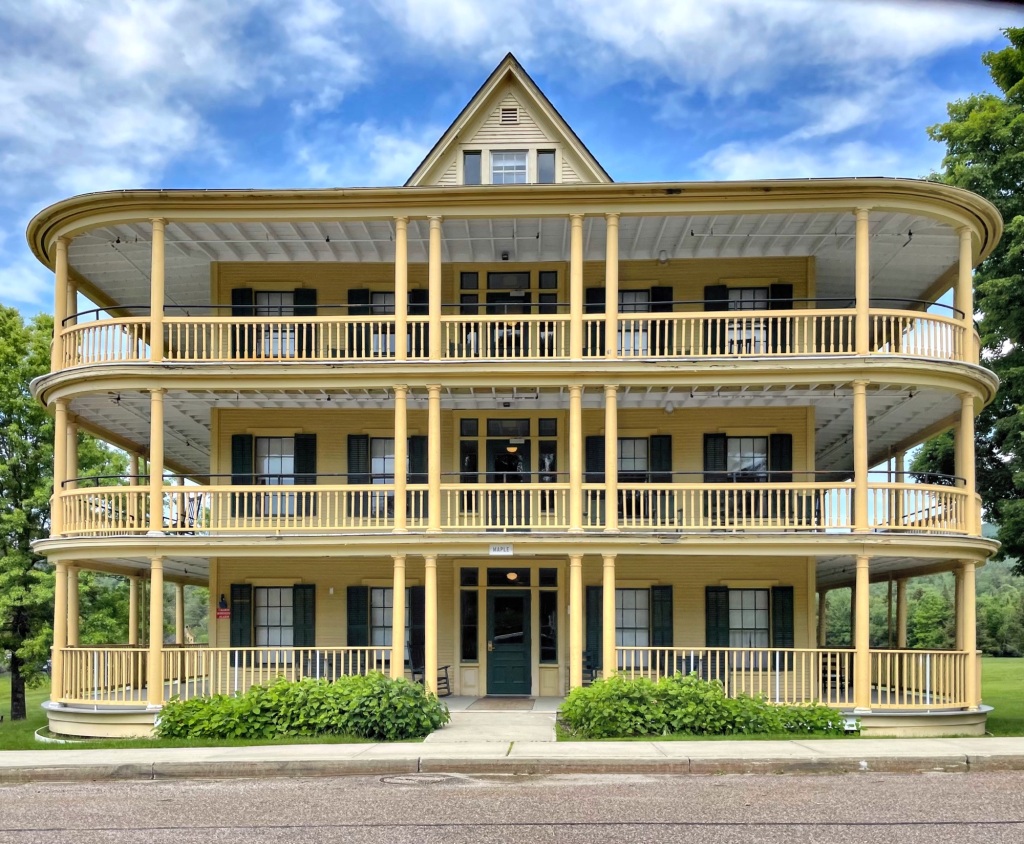
Bread Loaf Campus – Maple Cottage // c.1900

Welcome back to the Bread Loaf Campus! For more early history and context of the complex, check out the post on the Bread Loaf Inn. By 1900, owner Joseph Battell’s enterprise exceeded the capacity of the original inn, and cottages were added to accommodate more guests visiting his new permanent home in the mountains of Ripton, Vermont. Located adjacent to the Mansard-roofed Birch Cottage, one of the most visually striking buildings in the campus is Maple Cottage, which reads more porch than cottage, but it’s 100% perfect. It was the last cottage built by Battell for his family and friends to stay at when visiting. They must have loved evenings on the three-floors of porches looking out over the Green Mountains.

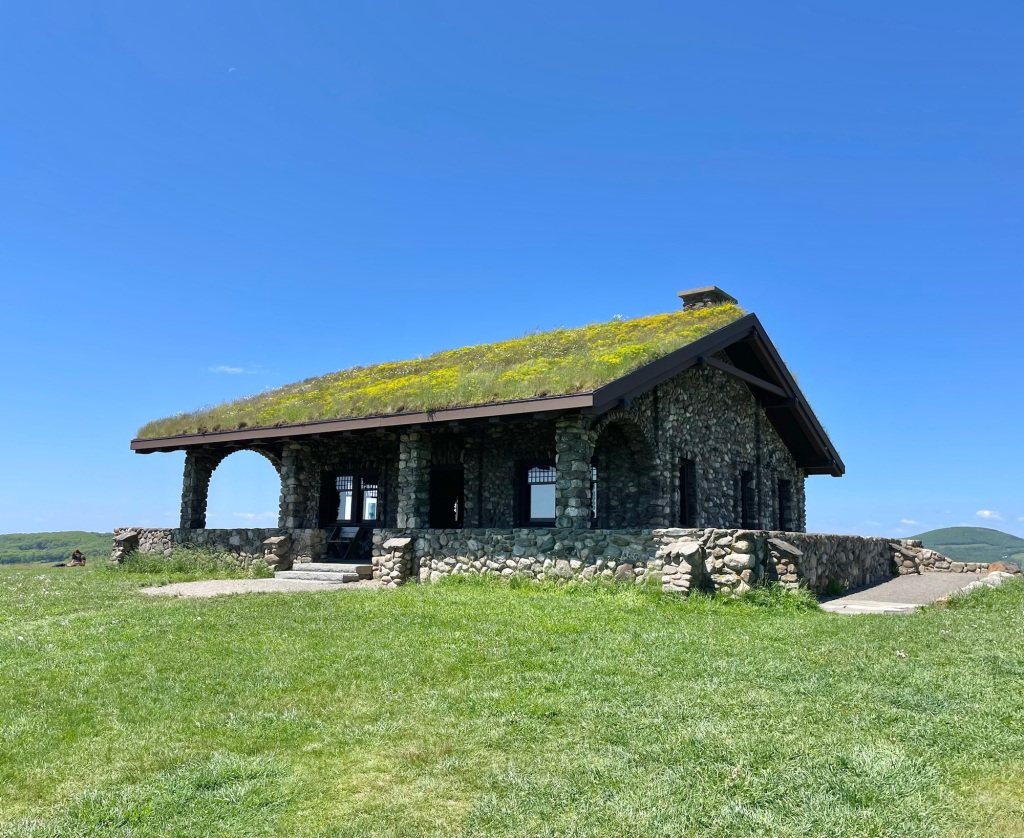
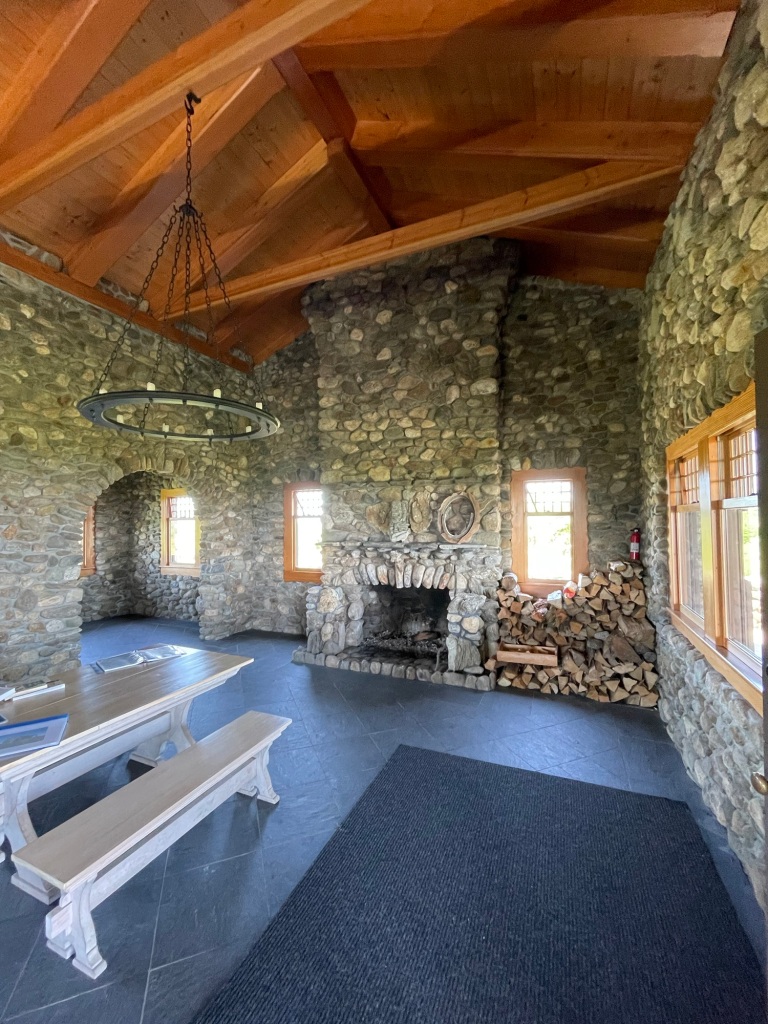
“Beech Nut” // 1913

“Beech Nut” is a stone cottage built at the top of Beech Hill in Rockport in one of the best hiking areas of Mid-Coast Maine. The hut was built in 1913 for owner John Gribbel (1858-1936), a Philadelphia-based industrialist, who had a summer estate, “Weatherend” in Rockport. He hired a Norwegian immigrant named Hans Heisted, an employee of the Olmsted Brothers, to improve the grounds at Weatherend, which included meandering paths, stone walls, and stone structures. Meanwhile, the Gribbels had started acquiring land on Beech Hill in 1909, and eventually accumulated holdings of more than 300 acres. To keep the masons and landscapers busy during the winter, Gribbel and Heisted thought to build a small hut a few miles away on Beech Hill, which would serve as the family picnic and tea shelter. The stone building features a unique sod roof which was typical of Scandinavian houses up until the late 1800s. Once complete, family and friends would visit Beech Nut to enjoy the fresh air and views of the Atlantic from atop the hill for the day. After successive owners, the property began to deteriorate until the 1980s, when developers began to swarm the open space for redevelopment. In 1986, the land around Beech Nut was put under conservation easement and was acquired in 2003 by the Maine Coast Heritage Trust, which then transferred it in 2006 to the Coastal Mountains Land Trust. In 2007, the hut was completely restored and serves as a respite after the uphill climb for visitors.

Rockport Lime Kilns // c.1800

During the 19th Century, Rockport, Maine, (then named Goose River as a village in Camden) was a major supplier of lime to East Coast markets. These kilns near the harbor converted limestone rock supplied by 15 local quarries into lime used to make mortar & finish plaster. The burned lime was packed into wooden casks and shipped by schooner to cities all down the coast. In 1817, three hundred casks of lime from Rockport were sent to Washington, D.C. for use in the rebuilding of the United States Capitol, which had been damaged by the British during the War of 1812. In 1852, the citizens of Goose River voted to change their village’s name to Rockport for its rocky terrain. In 1891, Rockport split off from Camden, taking its industry and lucrative harbor with it. A disastrous fire destroyed many of the lime kilns here in 1907, which occurred about the time that cement began to replace lime in building construction. After a few years the kilns were shuttered and remained here as fossils of industry ever since. Local residents in the 1970s gathered together and advocated for the preservation of these significant local structures and gathered funds to stabilize the kilns.

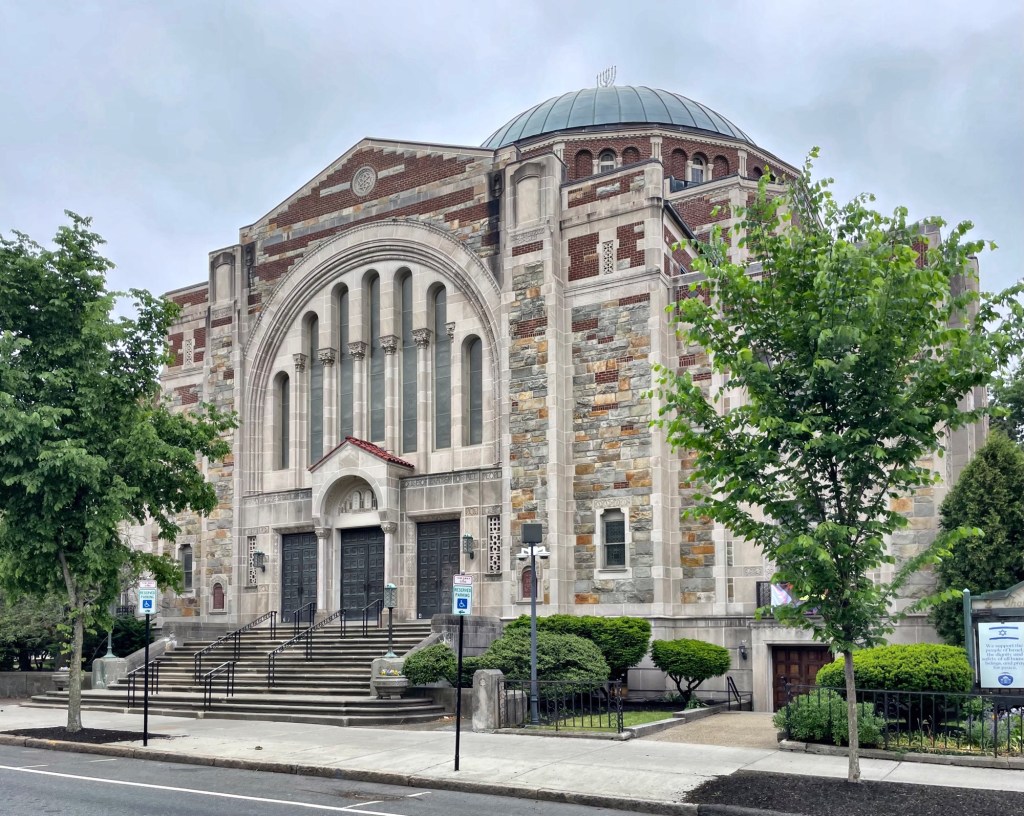
Temple Ohabei Shalom // 1927

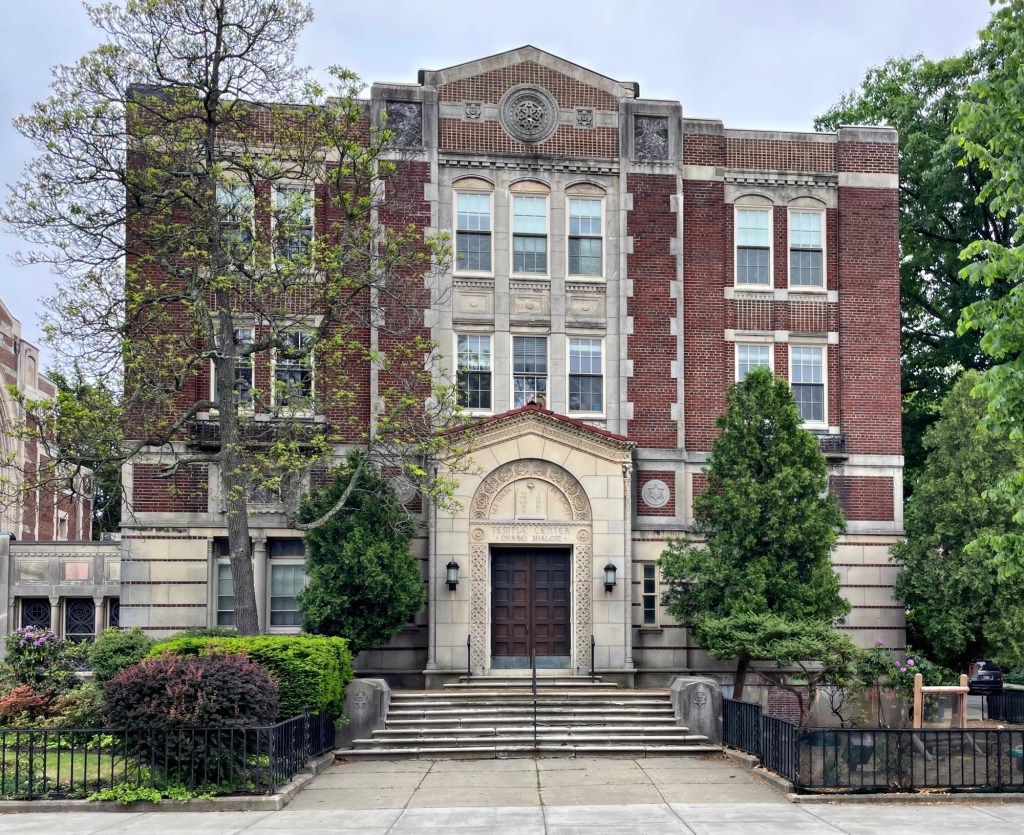
The congregation of Ohabei Shalom is the oldest jewish congregation in the greater Boston area and the second oldest in New England. It was formed in 1843 and was the first formal congregation in Boston. After a smaller space, they purchased the former South Congregational Unitarian Church on Union Park Street in the South End of Boston. The congregation split over ideological differences and the decision was made for one half of the congregation to build a new temple in Brookline, where many of the members began to move to. Land on Beacon Street, just west of the Longwood section of Brookline was purchased in 1921, and it would be four years until a temple center (now the hebrew school) was built in 1925. The larger temple was built just after on the corner of Beacon and Kent streets in Brookline from plans by Clarence Blackall, a noted architect in the area. With its lively use of polychromatic masonry and Byzantine ornament, all surmounted by a great copper dome, the congregation boasts the most architecturally outstanding synagogue in the Boston region and it has been maintained well for the almost 100 years since it was built.

School Building


St. Philip the Apostle Church // 1937

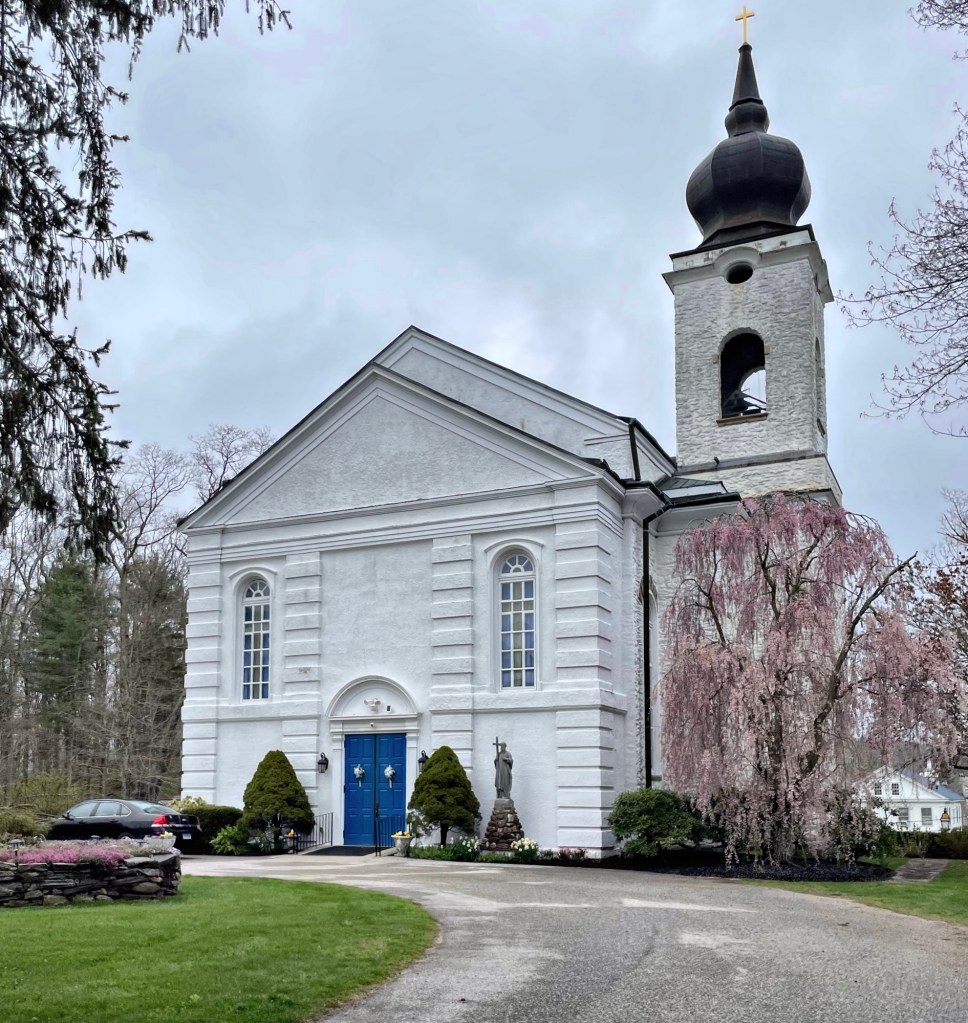
In 1921, the Catholic Diocese of Hartford purchased a Federal style farmhouse with 135-acres of land in Ashford, Connecticut, with the intention of establishing a new parish in the area. The Diocese assigned Father William J. Dunn, a Connecticut native and son of Irish Immigrants, to this daunting task. Since they had no church building at the time, Father Dunn partitioned off a section of his own home to serve as a chapel for about 100 worshipers, until the purpose-built St. Philip the Apostle Church was constructed in the 1930s. Father Dunn convinced summer resident Paul Chalfin to design the new building. Chalfin was not an architect, but he was an architectural designer whose best known building is the Villa Vizcaya in Miami, Florida. Chalfin was openly gay, and his hiring by the Catholic Church to design one of its churches in the 1930s is noteworthy. There were certainly several Irish immigrants and people of Irish descent in the congregation, but many parishioners came from small villages in Slovakia. The dome is a typical feature of churches in those villages and Chalfin included it in his design as a tribute to them. Due to material and construction costs during the Great Depression, members of the church largely built the church themselves with rocks acquired from stone walls and farms nearby. The church was completed in 1937.

Old Brant Point Lighthouse // 1856

Located nearby the present Brant Point Lighthouse on Nantucket, the old lighthouse remains as a significant piece of island history preserved. In the 1740s, Nantucket’s whaling industry was growing fast, so at a town meeting in 1746, it was determined that a lighthouse at Brant Point was to be built, to mark the point around which all vessels passed as they entered the island’s inner harbor. On or near this site, nine lighthouses stood, guiding ships into and out of the harbor. This brick tower and attached keeper’s house were constructed in 1856. The tower itself was brick, topped by sandstone, which supported the lantern. The cast-iron lantern had twelve windows. A circular iron staircase led to the lantern, situated forty-seven feet above the ground. By the 1850s, Nantucket faced a sudden decline after the invention of kerosene, cut the need for whale oil and a growing sandbar blocked the harbor. The shifting sands would eventually require a new lighthouse built nearby, the present 1901 wooden lighthouse. The 1856 tower was retained ever since and is an important historical artifact for Nantucket’s maritime history.

Brant Point Lighthouse // 1901

The Brant Point Lighthouse located on Nantucket Island was first established in 1746 to guide ships to the main harbor. At a town meeting at Nantucket on January 24, 1746, the sea captains of the island spoke out for a lighthouse and the sum of 200 pounds was voted, the wood 1746 lighthouse tower burned in 1758. It was replaced eight more times until 1901, when the present lighthouse was erected. While small, the lighthouse oozes charm and remains active and automated since 1965.

Second Church of Christ, Scientist, Roxbury // 1915

Breaking ground in 1915, this early Modern church building must have turned heads when it was being built in Roxbury! In October, 1907, a fine lot of land with a house on it, at the corner of Elm Hill Avenue and Howland Street, was purchased for eighteen thousand dollars by a group of Christian Science followers. In October, 1911, a building committee of five was elected by the church, and by the summer of 1914 the building fund had made such satisfactory growth that ground was broken and work for the new structure begun in September. The congregation hired the illustrious architectural firm of Shepley, Rutan, and Coolidge to design the edifice of classic and imposing design. Constructed of gray tapestry brick with limestone trimmings, the auditorium seated upwards of one thousand members, under the dome roof. Today, the building is occupied by Grace Church of All Nations.