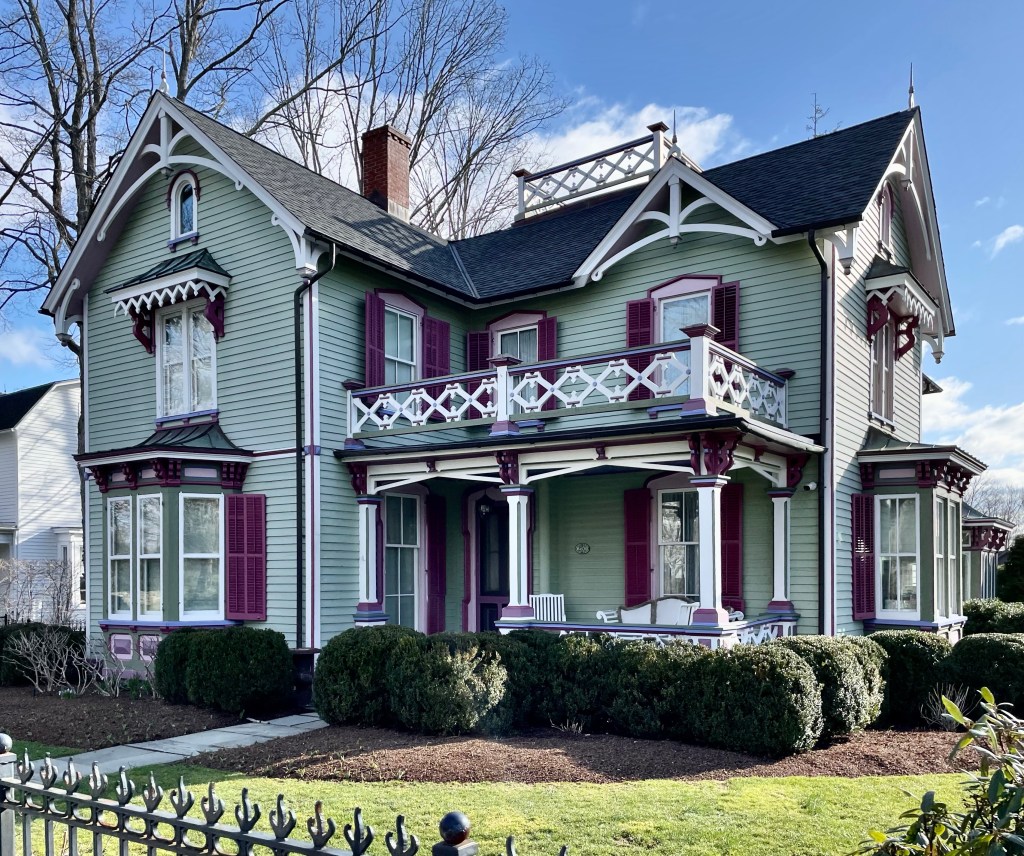
Hawley House // c.1865

Located next to the Reverend Thomas Hawley House (last post), this gingerbread cottage on Ridgefield’s Main Street looks straight out of a fairy tale! The home appears to have been built around the Civil War (or a renovation of an earlier house) and blends Italianate and Gothic detailing elegantly under one roof. The home was built on land that was owned by the Hawley descendants and was occupied by a few members of the family until it sold out of Hawley ownership in the 20th century. The house was purchased in 2002 by Gregory and Valerie Jensen who restored the home. Mrs. Jensen is the founder of the Prospector Theatre, a non-profit cinema dedicated to providing a higher quality of life through meaningful employment to people with disabilities.

St. Mary’s Catholic Church, Ridgefield // 1896

Located just a block of Main Street in Ridgefield, Connecticut, St. Mary’s Catholic Church stands out as a rare example of Victorian Gothic architecture in a village full of Colonial (and Revival) and mid-19th century buildings. The first known Catholic to arrive in town was James Brophy, who’s family settled in Ridgefield in 1848. While growth of a local Catholic church in Ridgefield was slowly being established, the character of the town was changing by the second half of the 19th century, with wealthy New Yorkers building homes for vacationing in the summers. From this, many Irish Catholic immigrants were hired to work on the new estates. The first permanent Catholic church in town was built in 1867 as a modest wood frame church. As the congregation grew, a new church edifice was needed, and after a capital campaign, funds were gathered to erect a new church. Connecticut architect Joseph A. Jackson (who specialized in ecclesiastical design), was hired to furnish plans for the new church. The building exhibits eclectic architectural styles. Gothic design is seen in the pointed or lancet windows, arches and cast iron finials. The Queen Anne style is reflected in the use of textured and varied building materials, such as brick, brownstone, and shingles. And St. Mary’s most unique feature, its unusual steeple with its four turreted abutments and conical roof worked in shingles, is representative of the Shingle style.

Old Willington Congregational Church // 1876

The Congregational or Town Church of Willington, Connecticut, has existed since the town’s incorporation in 1728, but originally met in a member’s small home on the Town Green. The Victorian Gothic style church we see today was built in 1876, after members gathered funds to construct the building. Land, materials, and labor were donated to offset costs for the small congregation. The church flourished until a split in the beliefs led to the formation of the Baptist Church of Willington. Eventually, the Congregational Church merged with the Willington Baptist Church in 1911 to form The Federated Church of Willington. The congregation then moved to the Baptist meeting house across the Green. In 1924, the Old Congregational meeting house, which was erected in 1877, was sold for $1 to the Town of Willington with certain restrictions, the most important of which was that, if it should cease to be used for public meetings under the control of the selectmen, possession would revert to the Congregational Ecclesiastical Society. From 1926-1974, the church was used as town hall (when the smaller building next door was outgrown. The church’s bell was removed during World War II to allow plane-spotters to use the tower. Instead of being placed back in the tower, it was mounted on a pedestal outside the building, where it remains today. The Willington Town Offices moved to a former industrial building a short distance away, but retain and maintain the building.

Bramanville Fire Station // 1883

A short distance to the Lapham Woolen Mill, this historic fire station can be found right on the street in Bramanville, an industrial village in Millbury, MA. The fire station was built in 1883 by the Lapham Woolen Mill owners as an insurance protection from fire and complete loss of their lucrative business. After Lapham’s death in 1893, the company sold the mill, worker’s housing, store and fire station to the Mayo Woolen Company which began production almost immediately. Sadly, like many former industrial buildings nearby, the future is unclear for this amazing old building. What would you repurpose the Bramanville Fire Station into?

Lapham Woolen Mill // 1879

I have gotten a lot of requests recently to feature an old New England mill town, and I wanted to highlight a lesser-known one, so here is Millbury, Massachusetts! This gorgeous mill building was constructed between 1879-1919, impacted by over forty years of growth and design. The Lapham Woolen Mill is the largest and most intact 19th century industrial building in Millbury and sits in the middle of Bramanville, an industrial village in the town, off Singletary Brook, a branch of the Blackstone River. The Lapham Woolen Mill was built on the location of the former Burbank paper mills, which were in operation in Bramanville between 1775-1836. The Lapham Woolen Mill was started in the mid-1870s by Mowry A. Lapham, who oversaw the company’s growth after the Civil War, manufacturing clothing and other woolen goods. After Mowry’s death, the company’s pollution into the brook got the best of them and they disbanded, selling it. The mill was then purchased by Josiah and Edward Mayo, and their business partner Thomas Curtis. The group renamed the existing business the Mayo Woolen Company. The complex was occupied by Steelcraft Inc., a manufacturer of medical supplies, until recently. The building’s future was threatened until 2020, when a proposal to restore the old mill, and add new housing on the site was proposed. Fingers and toes are crossed to see this gorgeous building restored!

Unity Church Parsonage // 1878

Architects William Robert Ware and Henry Van Brunt designed this parsonage in Easton, Massachusetts for the Unity Church in town (featured previously). The Victorian Gothic house is constructed of polychromatic stone, wood trim, slate and copper roof surfaces, and terracotta finials. The architecture is very well-developed and stands toe-to-toe with the other architectural landmarks in town, just a short walk away.

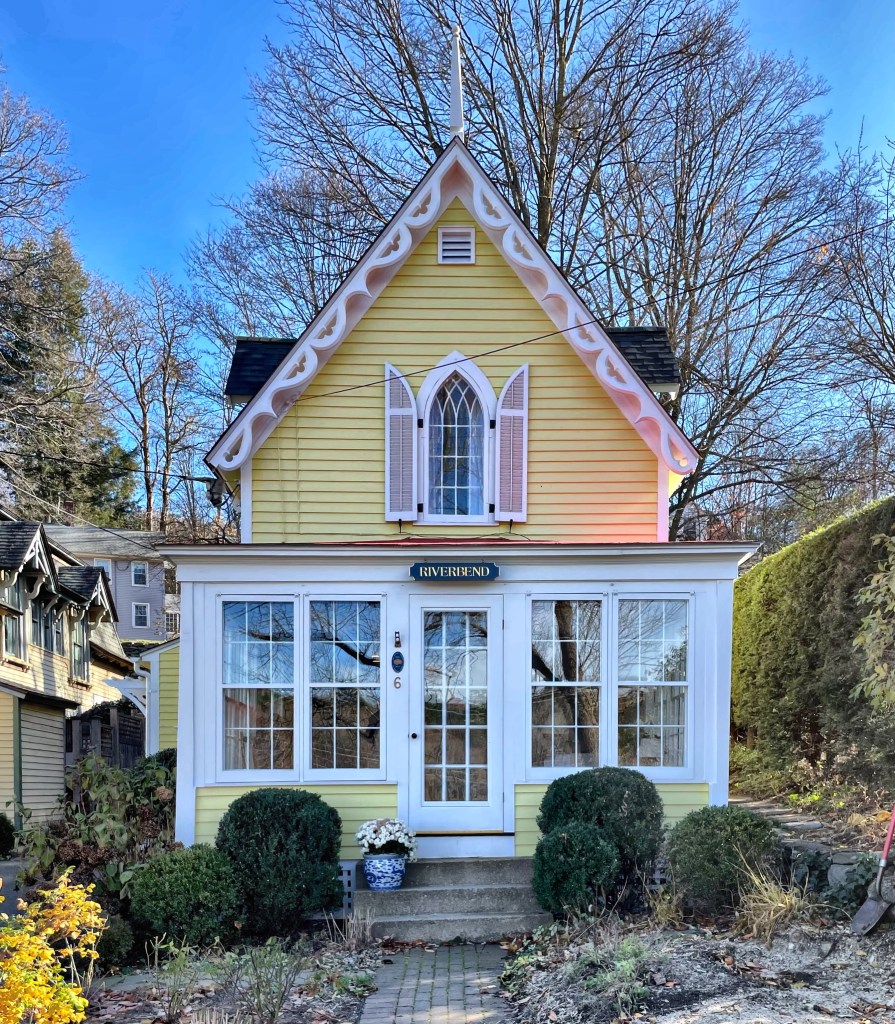
Riverbend Cottage // c.1860

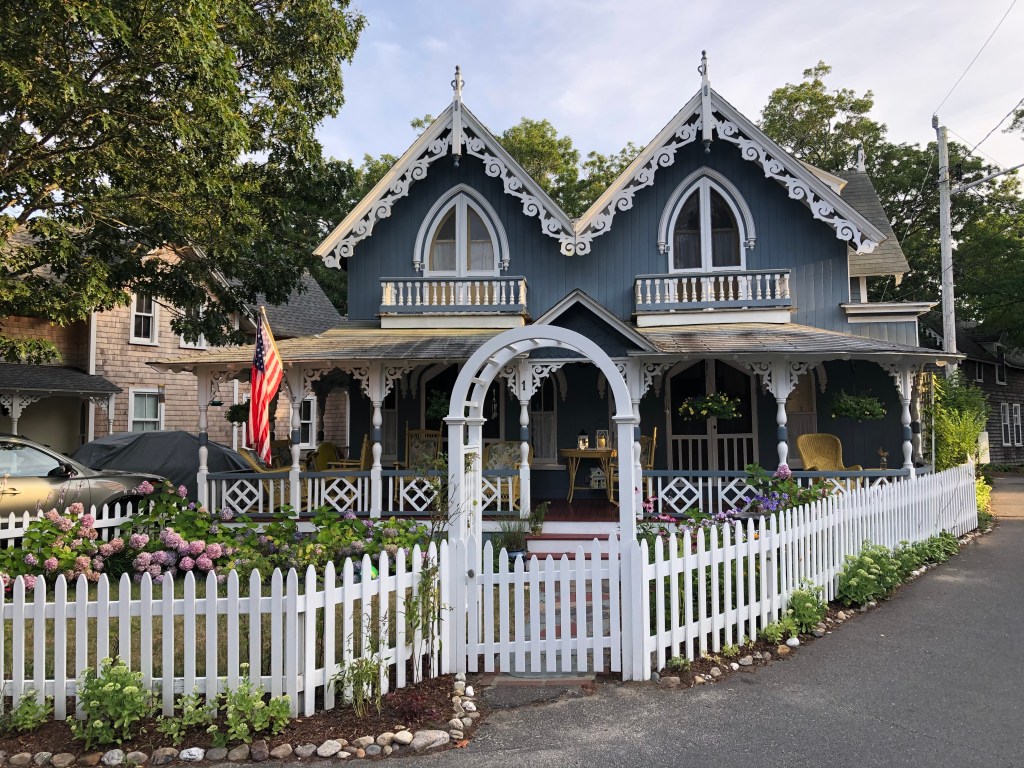
No, this is not Martha’s Vineyard, it is Collinsville, Connecticut! Perched on a hill near the banks of the Farmington River, this quaint little Victorian cottage is one of the better-preserved examples of worker’s cottages in the former industrial village. I could not locate much on the house’s history, beyond that it may have once been part of a larger home, and moved to this site in the 20th century.

St. Saviour’s Episcopal Church // 1877

Initially erected in 1877 and enlarged several times thereafter, the St. Saviour’s Episcopal Church in Bar Harbor is an excellent example of ecclesiastical architecture in the state of Maine. The original church building had been erected in 1877-78 at a cost of about $7,000 from designs by the New York architect Charles C. Haight. Within eight years of its construction, space limitations caused the church to undertake a major expansion. Designed by the Boston architectural firm of Rotch and Tilden, this building campaign – carried out in 1885-86 – dramatically changed the church’s appearance by developing a cross shaped plan that made use of the original structure for transepts and added a larger nave, semi-circular apse, and an imposing crossing tower. The numerous building campaigns designed by both prominent and lesser known architects, have produced a rich eclectic architectural legacy that mirrors the development of Bar Harbor.

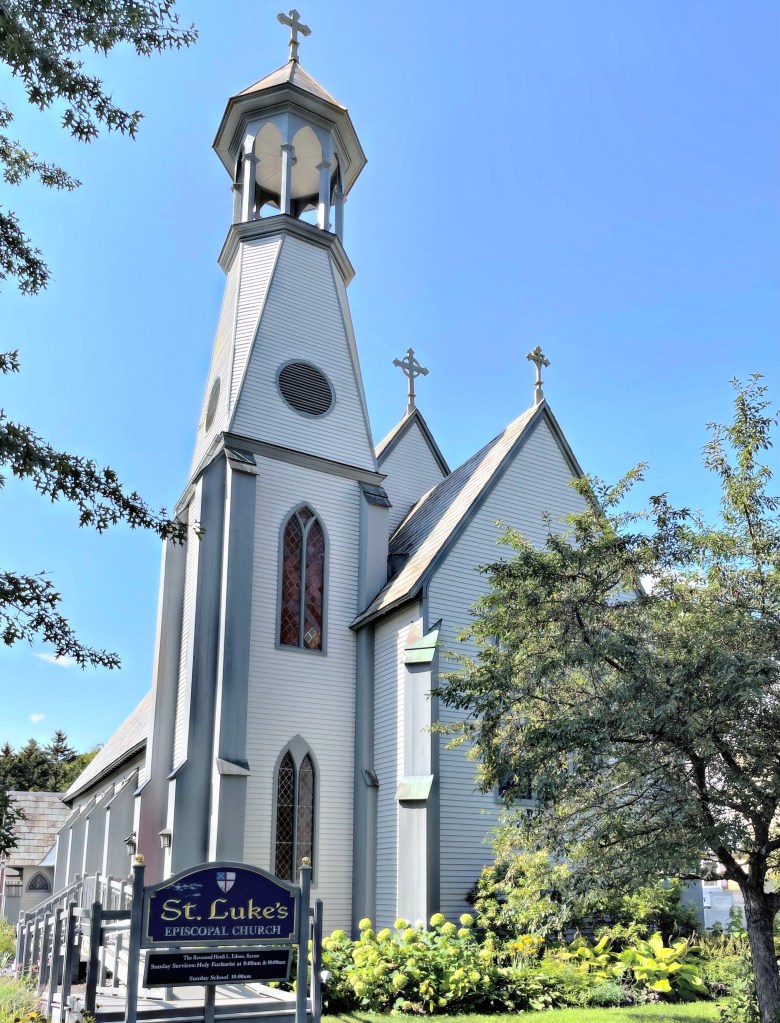
St. Luke’s Episcopal Church // 1871

Next door to the Inn Victoria, the beautiful St. Luke’s Episcopal Church in Chester, VT, stands out as one of the only Gothic Revival buildings in the town. A small group of residents gathered in the 1860s to found a Episcopal church in the town, which already had a dominant Congregational church. They furnished money which was matched by the diocese, and Merrick Wentworth was named senior warden. Members of his family and that of Frederick Fullerton, his son-in-law, formed a large part of the congregation. Frederick and Philette Wentworth Fullerton donated a building site across the street from their home, and Mr. Wentworth’s nephew, Boston architect, William P. Wentworth, contributed plans for a Gothic-style frame church, which includes a tall corner belltower.

Kickemuit Cottage // 1869

Summer is here and I am missing my favorite place to explore, Oak Bluffs on Martha’s Vineyard. The town is sleepy most of the year, but in the Summer, the place explodes with summer residents and tourists, providing such a lively and diverse atmosphere. One of the most beautiful of the cottages in the Wesleyan Grove campground is the Kickemuit Cottage, built in 1869 for a family from Rhode Island. They so-named the cottage after the Kickemuit River which runs from Massachusetts through Warren, RI and spills out into the Mt. Hope Bay. The story goes that this double cottage was actually just a single peaked home until it was combined with another giving it the double-peaked appearance we see today. The cottage retains the turned posts, delicate gingerbread detailing, and the lancet windows and doors. Swoon!

Side note: If anyone has a cottage in Oak Bluffs that they’ll let me rent, I would love to be in touch!