Commonwealth Trust Company // 1908-c.1974

Ca. 1910 image courtesy of Boston Public Archives.

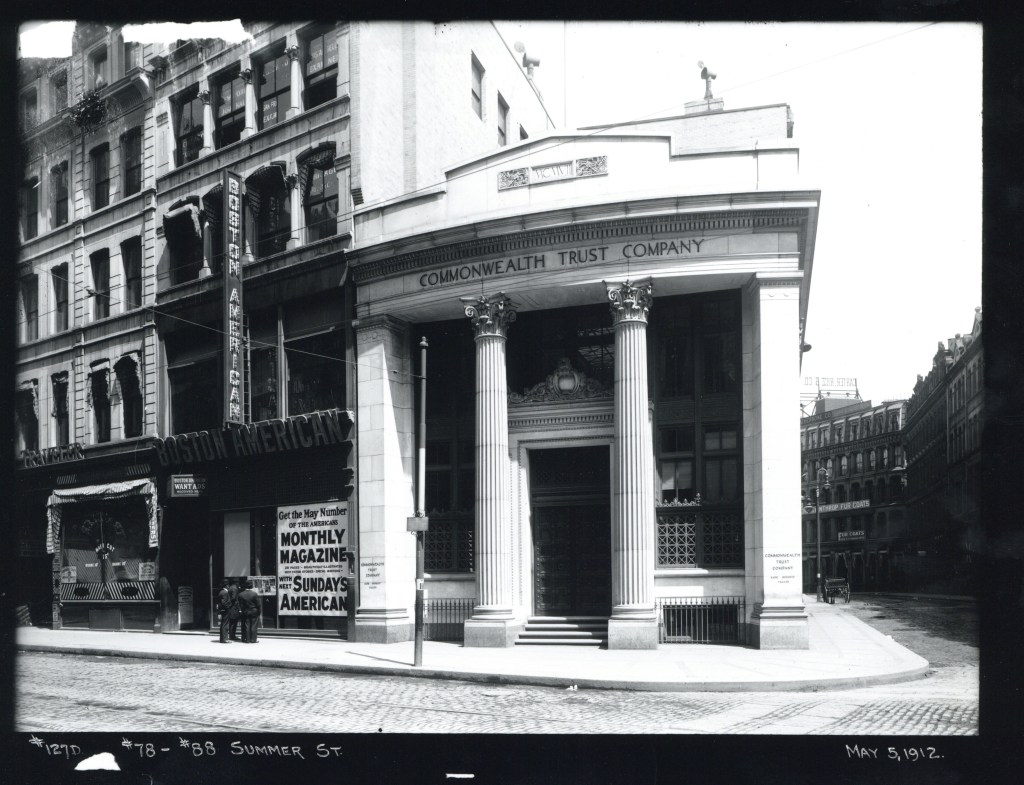
Located at the corner of Summer and Devonshire Streets in Downtown Boston, the Commonwealth Trust Company’s two-story marble banking house commanded the corner, despite its short stature. The building, completed in 1908, was constructed with Lee marble and decorated with ornate wrought and cast-iron grilles over windows. The building was designed by the architectural firm of Parker, Thomas & Rice in the Classical mode with large, fluted Corinthian columns and boxed corner pilasters framing the recessed center entrance, Corinthian pilasters ran along the side facade. At the inside, the building was coated with Cararra and Blanco marble with paneled oak offices. At the ground floor, offices and banking stations framed the outer walls, with the safety deposit boxes located on the second floor. The building was demolished by the 1970s and replaced with a one-story minimalist Modern building (I could not figure out why the former building was razed). The new building was demolished after a few decades with a larger building, better fitting the commercial district.

Old Penn. Station // 1910-1963

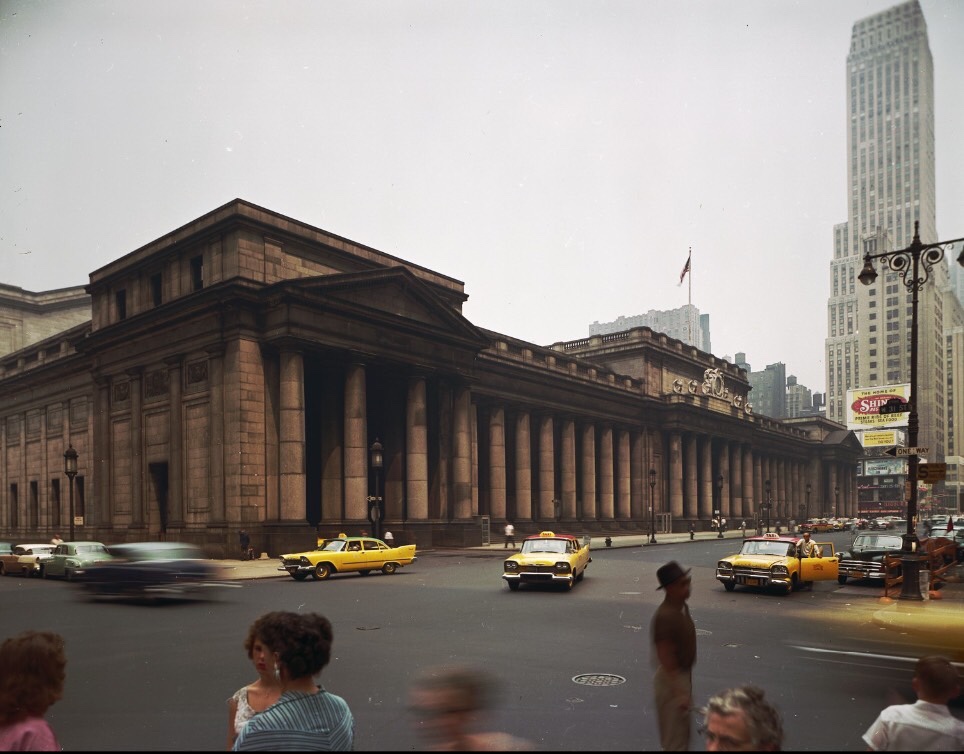
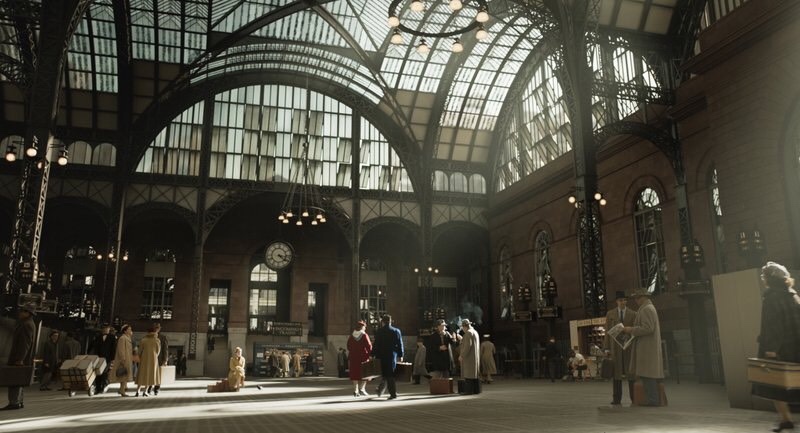
Pennsylvania Station in Manhattan was opened in 1910, and its sheer scale immediately evoked a sense of awe. At the time it was completed, it was the largest building ever built occupying two entire city blocks, and boasted the biggest waiting room in history. Over 500 buildings were demolished for the station to make way for the Charles McKim-designed station, an icon in the Beaux-Arts style. The structure had “nine acres of travertine and granite, 84 Doric columns, a vaulted concourse of extravagant, weighty grandeur, classical splendor modeled after royal Roman baths, rich detail in solid stone, and an architectural quality in precious materials that set the stamp of excellence on a city.” Sadly, being one of the most beloved architectural gems in the city did not constitute its maintenance nor preservation.

In 1961, after numerous plans for redevelopment, air-rights were sold on the building and in 1963, Penn Station was razed. The former grand station was replaced by Madison Square Garden and Pennsylvania Plaza, an office skyscraper, all with a modernized station below. When the building was destroyed, art historian Vincent Scully famously said, “One entered the city like a god. One scuttles in now like a rat.” In 1965, two years after Penn Station’s demolition commenced, the city passed a landmarks preservation act, thereby creating the New York City Landmarks Preservation Commission. Additionally, Grand Central Station was proposed to be demolished later in the decade, but was saved thanks to preservation efforts.

Waban Station // 1886-1958

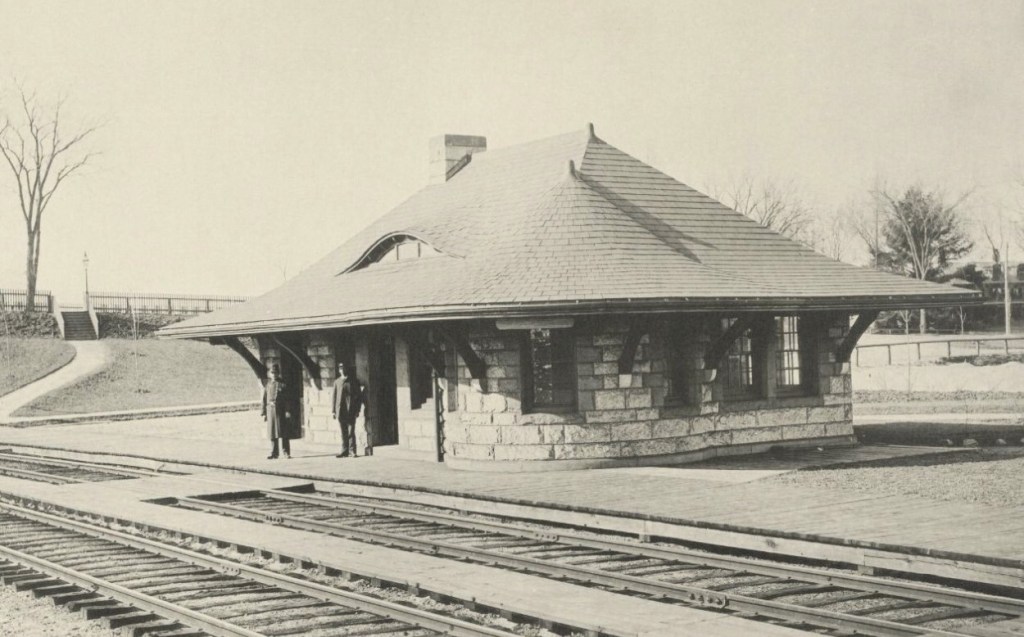
Image from Harvard Archives.

The village of Waban in Newton, Massachusetts, was named after a Massachusett Chief who had previously resided atop Nonantum Hill on the Newton-Brighton line. This location is believed to have been a favorite hunting ground for Waban (the Wind) and his people. Throughout much of the 19th century, Waban remained a quiet agricultural region. As late as 1874, fewer than 20 families held title to all of its land. In the mid-1880s, however, interest in suburban developments near the Boston and Albany Railroad became increasingly widespread. Seeing suburbanization in the late 19th century and into the early 20th century.

The station that allowed all the development in the early days of Waban was built in 1886. The Boston & Albany Railroad hired renowned architect Henry Hobson Richardson to design the station, and many others on branches of the various lines radiating out from Boston. The Highland Branch (which this station was on) was later acquired by the MBTA in Boston, which operated it as a Commuter line. Waban Station closed along with the rest of the Highland Branch commuter rail line in 1958 and reopened a year later in 1959 as part of the Green Line’s D Branch. The gorgeous H.H. Richardson-designed station was demolished in order to build a 74-space parking lot. They literally paved paradise, and put up a parking lot

Boylston Market // 1810-1887

One of the biggest architectural losses in Boston has to be the demolition of the Boylston Market formerly at the corner of Boylston and Washington Streets. A new market house in Boston was desired by many of the city’s elite, and when John Quincy Adams (who lived on Boylston Street and was elected President of the United States 15 years later) gathered capital for the new structure it was so built. The group hired Charles Bulfinch, who at the time was THE architect of Boston, to design the new brick market. When opened to the public in 1810, the market was considered far out of town, but the neighborhood quickly developed around it with new Federal and Greek Revival homes popping up all around it, with commercial buildings soon after. The market featured stalls for the “sale of provisions” on the first and second floors, and Boylston Hall on the third floor, which featured musical and theatrical productions. The market building was sadly demolished in 1887 for a larger and more modern market of the same name. The belfry atop the former market was disassembled and given to a church in Arlington, MA, who now displays it on their own church building.

Massachusetts Normal Arts School // 1886-1967

The Massachusetts Normal Art School was one of the many Richardsonian Romanesque buildings constructed in the Back Bay, but it did not survive like so many others did. The building’s history goes back to the 1860s, when wealthy Bostonians petitioned for the Commonwealth of Massachusetts (State Government) to assist with the founding of new institutions to enhance the quality of life in the state. Due to this, the legislature funded three major institutions including the Massachusetts Institute of Technology (1860) and the Museum of Fine Arts (1870), and founded in 1873, the Massachusetts Normal Art School. The Normal Arts School was tasked with training future teachers for public schools and budding professional artists in the arts, with courses ranging from drawing to architecture. The Commonwealth of Massachusetts rented space in various buildings in Downtown Boston before they appropriated $85,000 and hired the firm of Hartwell & Richardson to design and oversee construction of the new school at the corner of Newbury and Exeter Streets. The Richardsonian Romanesque building was constructed of red brick and brown freestone, featured entrances on both street facades, and held gallery spaces inside for members of the public to view the work created at the school. The school outgrew the original building, which could comfortably fit just 100 students, and in 1929, a new building was constructed at Brookline and Longwood Avenues. Before moving one more time to its current location in 1983, the school was renamed to the Massachusetts College of Art and is best known as MassArt today. The original school in Back Bay was demolished in 1967 and was home to a surface parking lot before the existing building was constructed.

Hotel Boylston // 1870-1894

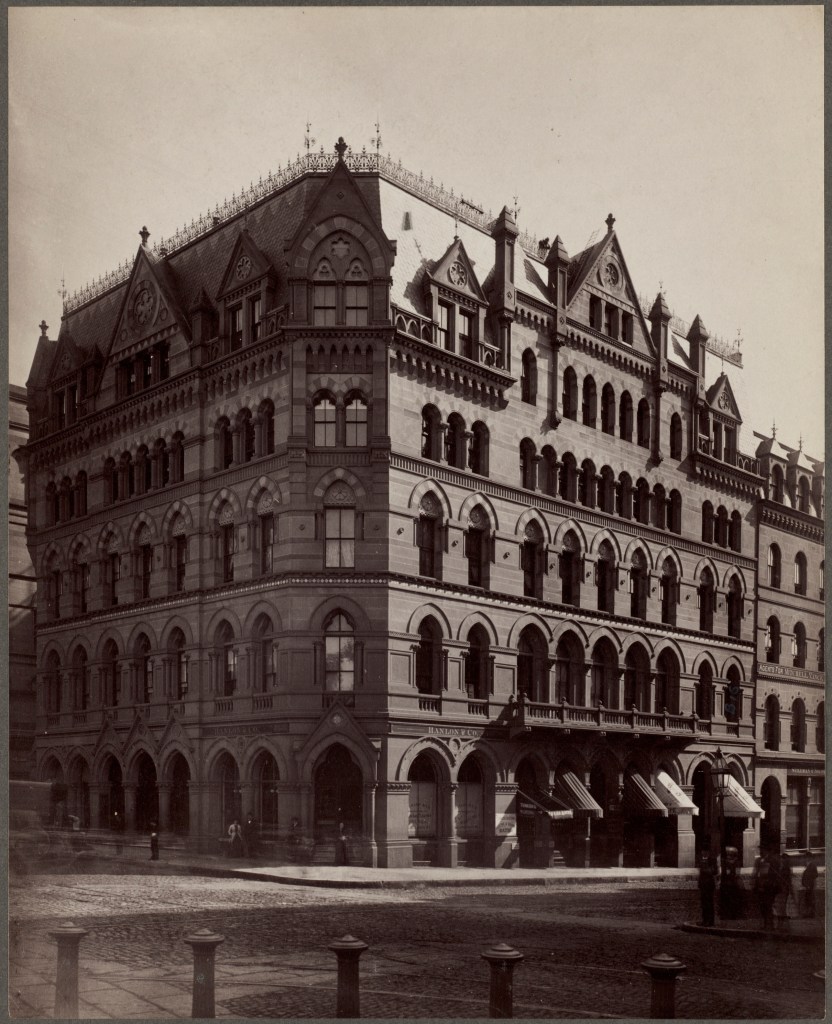
C.1875 image of Hotel Boylston, BPL image.

Standing just 24 years, the Hotel Boylston at the corner of Boylston and Tremont Streets, evoked the Victorian-era grandeur of Boston. Built in 1870, the Victorian Gothic hotel (what we consider apartment building today) was designed by the architectural team of Cummings and Sears, who were very busy at the time in Boston and beyond. The 5 1/2-story building was constructed of sandstone and featured Gothic arches, dormers of varied sizes and shapes, and a mansard roof with iron cresting. The building (and the three others on Tremont Street) was razed in 1894 and replaced with the Hotel Touraine a few years later.

General Crane House // c.1670-1908

Crane House c.1900, courtesy of BPL.

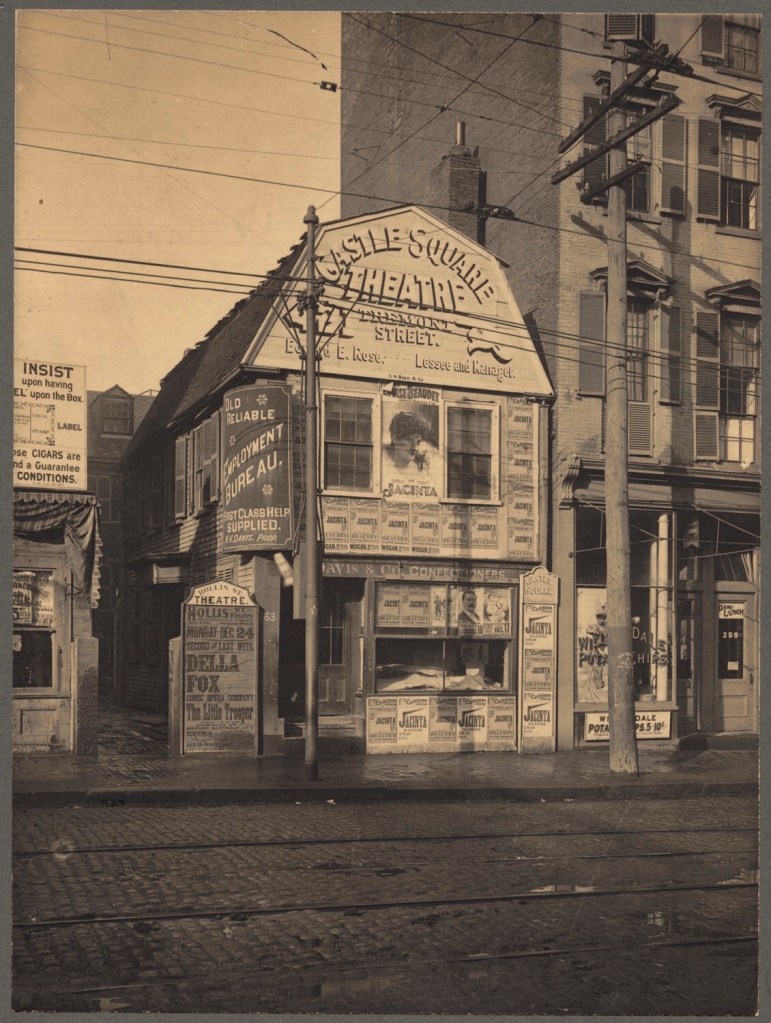
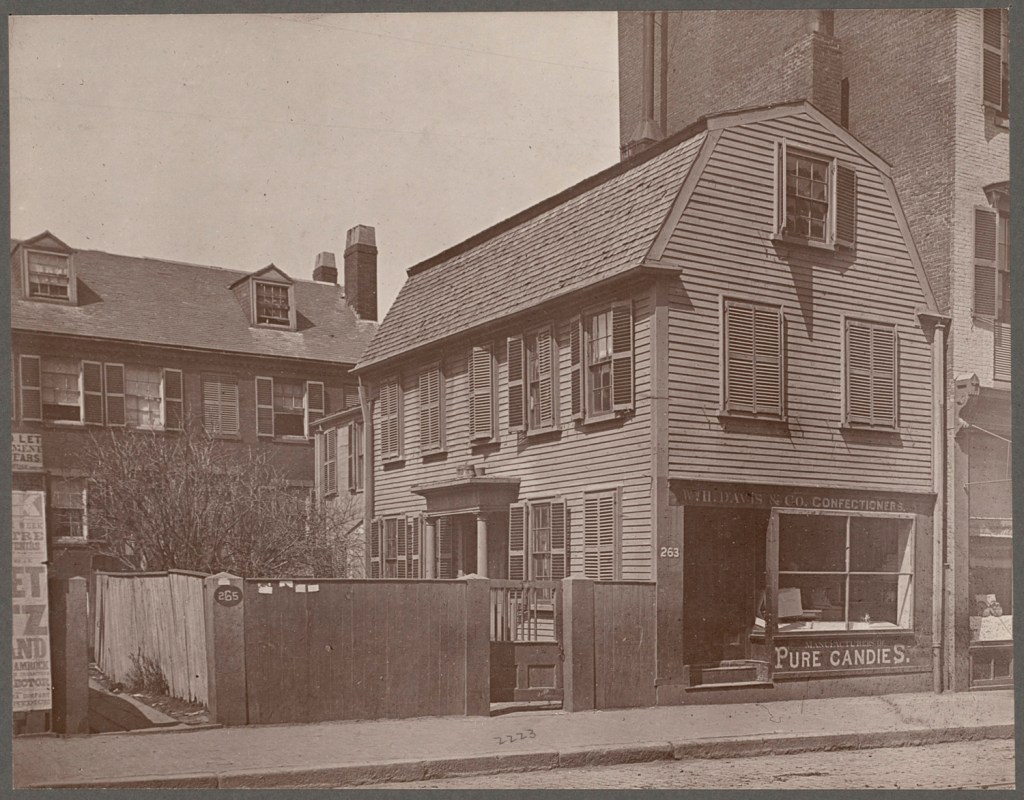
Formerly located on Tremont Street in Downtown Boston, this ca.1670 Georgian gambrel home went from residence to candy shop to billboard in its lifetime. The home was constructed by John Crane (1744-1805), who was a housewright by trade but a patriot and soldier most importantly. At the tender age of 12, he had an early military experience when he substituted for his father in the French and Indian War when his father received the draft. Records state that Crane was an active member the Sons of Liberty, a secret revolutionary organization that was founded by Samuel Adams to fight taxation from the British government. Hours before the Boston Tea Party, Crane and the other participants met at his shop at his home to disguise themselves as American Indians as disguises for the events that would take place that night. He was in the hold of one ship when he was knocked unconscious by a falling crate of tea. His fellow patriots thought him dead and hid him under a pile of wood shavings in a carpenter’s shop off the harbor, only for Crane to recover later. Less than a year later, Crane and his family moved to Providence, Rhode Island where he would later serve under a militia there in the Revolutionary War. After serving, and seeing battle, he was awarded land in Whiting, Maine (Maine was part of Massachusetts at the time) where he built a home and spent his last days.

Crane House, c.1880s, courtesy of BPL.

His former house on Tremont Street in Boston was occupied as a home until the late 19th century until it was occupied by a confectionary shop, with a storefront added on the street. Due to the shifting demand for theater-oriented development and lodging, the candy shop began struggling. The owner, James Grace, then allowed for the home to be covered with signage and notices advertising various theaters nearby. Ironically, the home was demolished by 1908 for the Shubert Theater, which remains today.

Preserved Gardner Farmhouse // ca.1820

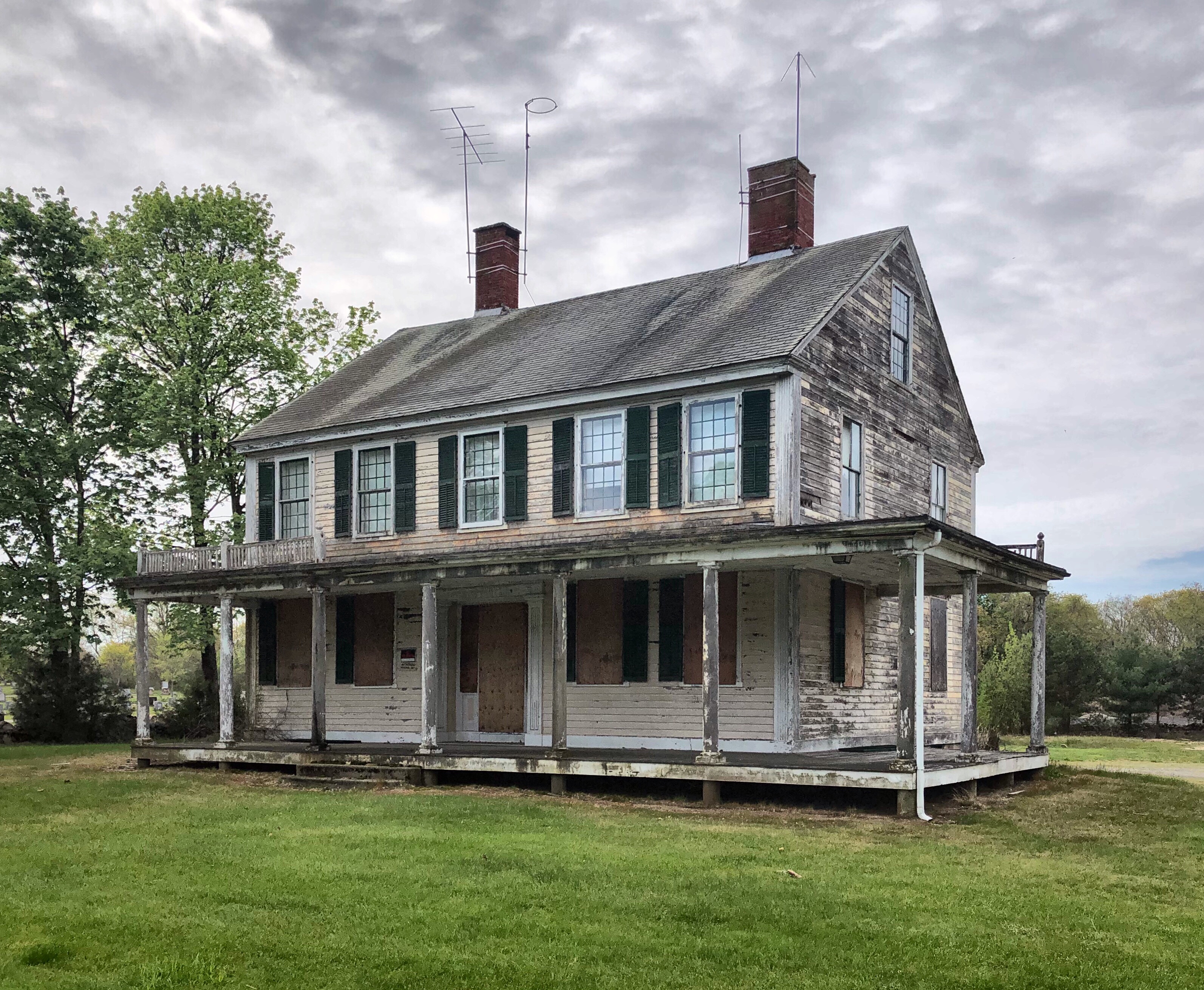
This old farmhouse in Swansea, MA, was built by 1820 for Preserved Gardner (1795-1873), one of five sons of Peleg Gardner, who owned much of Gardners Point. Preserved lived in the home until his death in 1873, and the home and acres of farmland were willed to his only son to live past childhood, Ira Gardner (1836-1901). Ira donated a large tract of land adjacent to the farmhouse to the town in 1882 for a cemetery, in which his father was buried. Later, the farm was purchased by Thomas D. Covel a bank president of Fall River who operated it as a gentleman’s farm and made the house his summer home. A ‘gentleman farmer‘ utilized their farms for pleasure rather than for sustenance or profit. After WWII, the land was purchased by the town to be used as a park and the property is still owned by the town. The Federal home with its veranda that wraps around the side has been neglected by the town for decades while the parks adjacent are maintained adequately.

UPDATE: The Preserved Gardner House was demolished in 2024 by the Town of Swansea.

The town has weighed various options for the home ranging from demolishing it, to preserving the front facade and converting it to a garage and storage shed (with a small museum on the second floor). I hate that idea personally. This seems like an ideal candidate for the town to allow a private individual or developer to move the home and restore it back to its original grandeur. Thoughts?