Robert Gould Shaw Estate // 1912

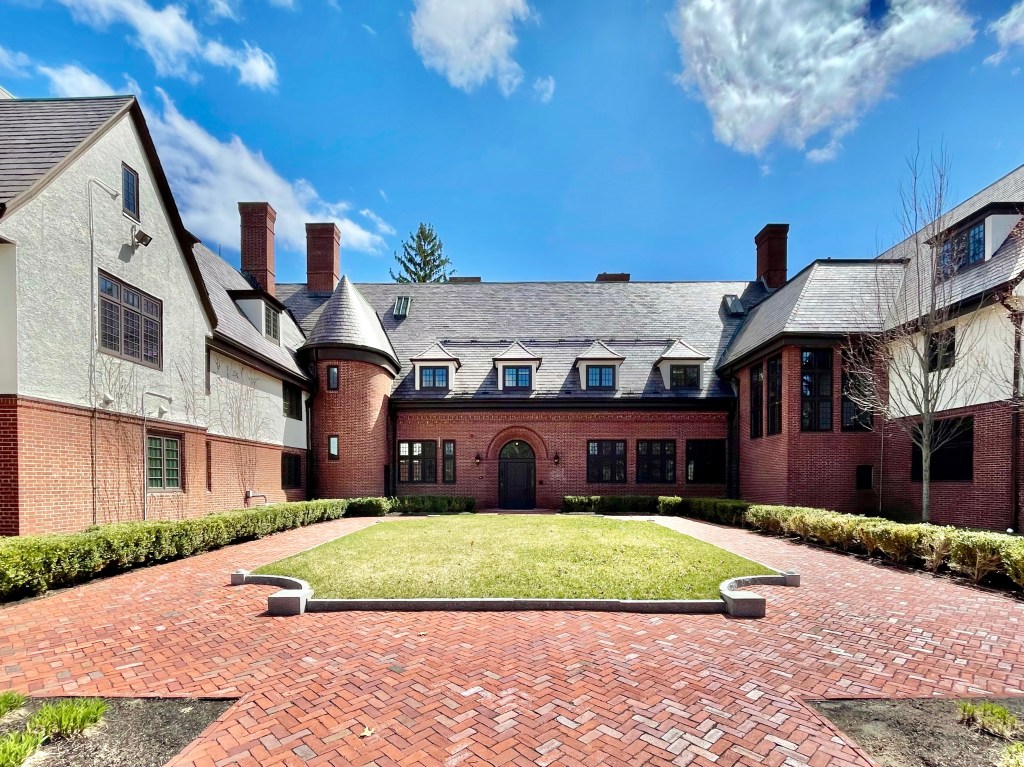
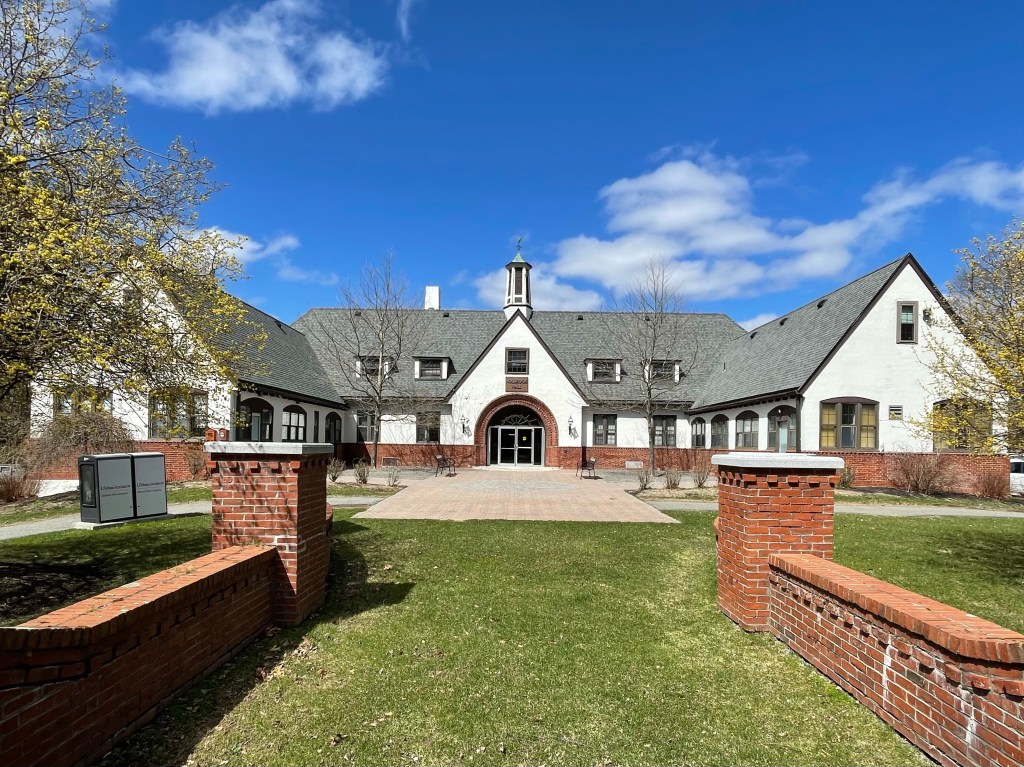
Born into the heart of Boston Brahmin society (Boston’s elite class), Robert Gould Shaw II (1872-1930) had a life of great opportunity, but full of tragedy. Robert was born in Boston and was a first cousin of Robert Gould Shaw, the famed military officer who accepted command of the first all-Black regiment (the 54th Massachusetts) in the Northeast. Robert II had a life of leisure, and enjoyed his position in society by drinking and enjoying elite sporting events. He became a wealthy landowner around Boston, and international polo player of the Myopia Hunt Club in the North Shore. He gained a reputation for alcohol abuse and promiscuity and divorced his first wife after just four years, she would later move to England and marry Waldorf Astor, and become the first woman seated as a Member of Parliament. The couple’s only son Robert Gould Shaw III followed his mother to England, but was eventually imprisoned there for six months for “homosexual offenses”. His alcoholism and his mother’s death, may have led to his suicide in 1970. Robert Gould II in Boston, remarried and purchased land in Oak Hill, Newton to build a country estate. He hired James Lovell Little Jr. to design the Tudor style property with a mansion, and various outbuildings including a carriage house and stable. As the Gilded Age gave way to the Progressive Era and eventually the Great Depression, the Shaw fortune collapsed. Shaw died in New York in 1930. The estate was later purchased as the new home to Mt. Ida College, now a regional campus of UMass.
As another piece of this interesting family’s history… Louis Agassiz Shaw II, one of Robert’s four children in his second marriage, had all the opportunities of his father, as he attended Harvard, had a sizable bank account, but was a recluse and had some mental issues and paranoia. Like his elder half-brother Robert Gould Shaw III, and father, Louis struggled with depression and alcoholism and in 1964, he strangled his 64-year-old maid, who he said was plotting to murder him in his sleep. He confessed but plead not guilty; he was committed to Danvers State Hospital and later McLean, where he lived for 23 years until his death. After which, much of his art collection, which he intended to donate to the Fogg Museum at Harvard, was discovered to be fakes.
Murdock-Wiswall House // c.1718

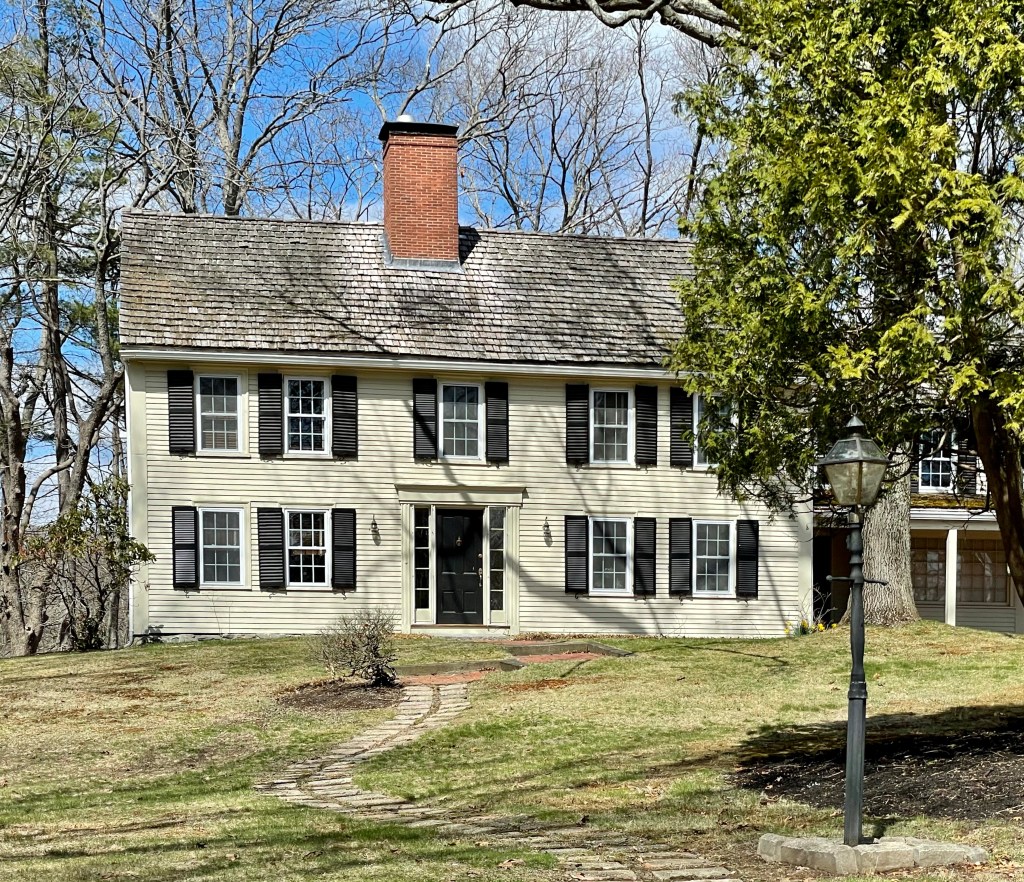
Another of Oak Hill Village’s pre-Revolution homes is this stunner! This home was built some years before 1718 and was eventually occupied by Robert Murdock (1663-1754) and wife Hannah Stedman. Murdock emigrated from Scotland to Plymouth, MA in 1688 with his brother, later settling in Roxbury. In 1703, Robert bought a house and 120-acres of land here, and worked as a housewright. Like the King House (last post), the house was likely rebuilt or modified substantially at this time. Robert also served as a selectman, Constable, Surveyor of Highways, and Assessor in town until his death; and his son, Robert Murdock Jr., took over the property. By the mid-18th century, the estate was purchased by Jeremiah Wiswall (1725-1807). Wiswall served as Captain of the militia at the battle at Concord and Dorchester Heights during the Revolution and held a number of positions in the community including Overseer of the Poor, Constable, Selectman and as a hogreeve (person charted with the prevention or appraising of damages by stray swine). He was very involved in the events leading up to the Revolution including the committee on the tea embargo and drilled with the militia. He also lent money to the town to hire soldiers and owned a house designated as a place to receive smallpox inoculations in 1777, though it is unclear if it was this house he used. The house was eventually slated for demolition in the 1960s, but was saved by Dr. Roy Carlson, President of nearby Mount Ida College (now owned by UMass. For $1, he purchased the home from a developer and paid for it to be moved from its original location at the corner of Brookline and Dedham streets a ¼ mile southwest to its current location, on Carlson Ave, and it served as the President’s House.

Dike-King House // c.1740

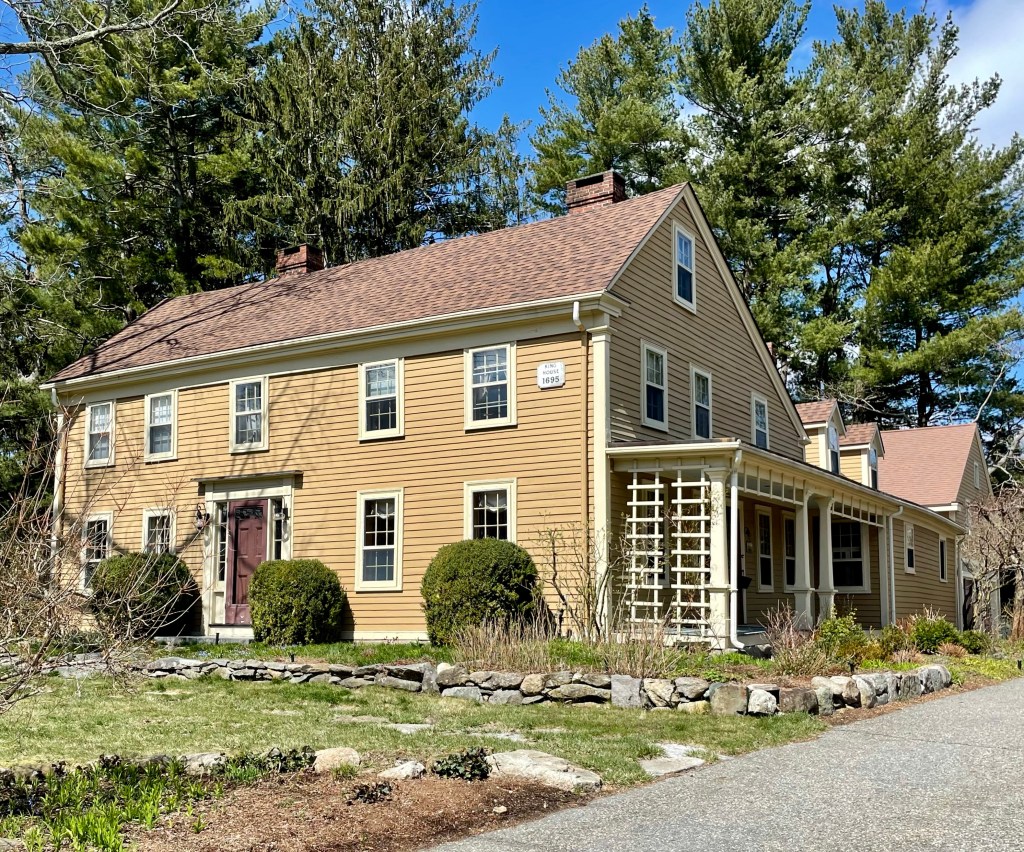
Located in the Oak Hill Village of Newton, the Dike-King House remains as one of a few pre-Revolution houses, but the history is a little murky from what I found. Oak Hill was the most remote village of Newton historically and has maintained much of its open space to this day, as it did not see the suburban development following the streetcar in other villages in town connecting to nearby Boston. This house was apparently built by Jonathan Dike (1673-1751), a cooper, who lived here with his second wife Experience French (yes that was her name). The home he built was likely a much smaller dwelling and was added onto as the family grew. Jonathan died in 1751 and the home went to his eldest living son and later sold to Noah King in 1796. The house plaque on the house gives a date of 1795 as King purchased a house on the lot, but it was likely much older than one year old. Noah King was a housewright, deacon, and son of Dr. John King a prominent civic leader in the town. With his expertise as a housewright, he likely rebuilt much of the house into what we see today. Starting in 1796 through 1923 the property was run as a farm by members of the King family, but land was sold off around the Great Depression for much needed funds. Due to the asymmetry of the house, it is likely that it started as a half-house with just three bays with the door at the left-most bay, with the saltbox roof added around that time.

Massachusetts General Life Building // 1965

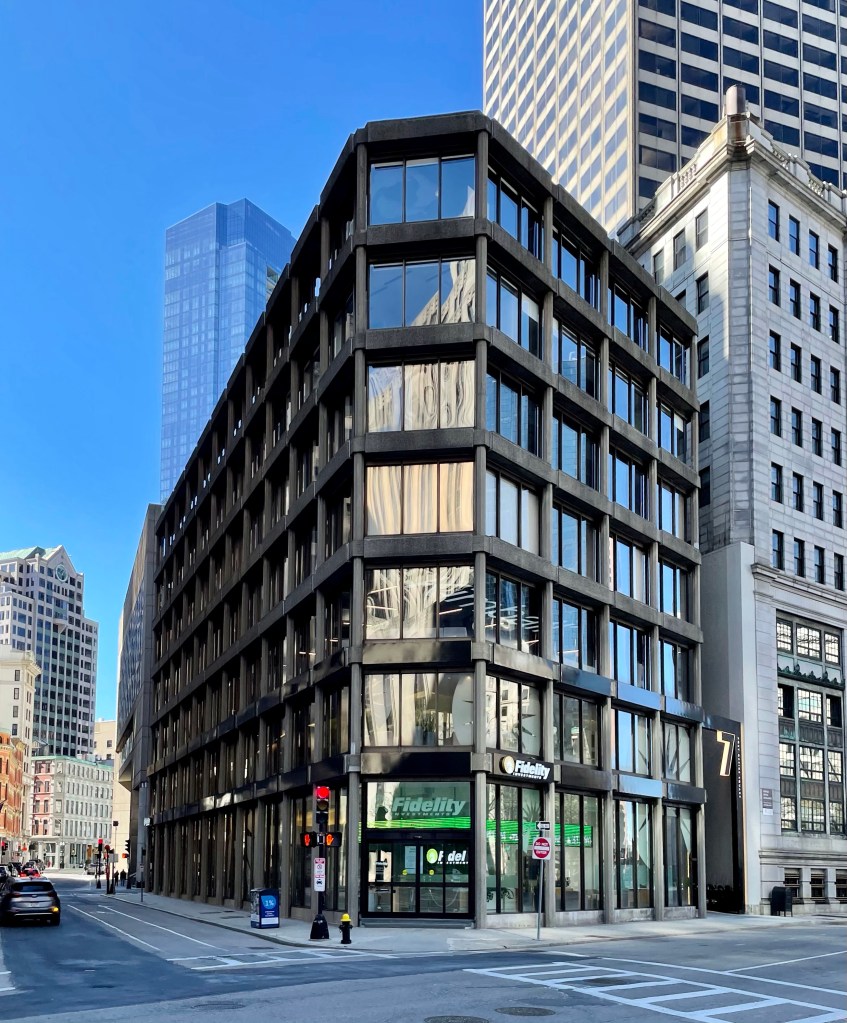
One of the lesser-known and written about examples of Brutalism in Boston is this refined, elegant take on the style, found in Downtown Boston. While many of you may dislike or even despise Brutalism, this building is a lighter version of the strong mass that we all know. The Massachusetts General Life Building was designed by Boston architect Frederick A. Stahl, who was trained in architecture locally at Harvard’s Graduate School of Design and MIT. Frederick Stahl was a perfect architect for Boston, he often worked on preservation projects including the rehabilitation of the Old South Meeting House, but showcased how 1960s architecture could compliment historic forms in a big way. For this building, he re-envisioned the historic granite commercial blocks found scattered around Boston, but showcased the ability of concrete to do more for much less massing. One of the key features of the design is that the two entrances are somewhat hidden, and are recessed in 14′ wide slots where the building is connected to the adjacent historic building. This was the aim to make this structure recess and not try and command the prominent corner. In the Mass. General Life Building, tenants also included the Loeb, Rhoades & Company, a brokerage firm based out of New York, that had offices in buildings in major financial centers all over the country. They later merged with Hornblower & Weeks, a Boston based firm, who had their own building in Boston.

Church of All Nations // 1975

One building in Boston that has always perplexed me is this round church building. It echoes Eero Saarinen’s MIT Chapel in Cambridge, but is much heavier and plain. After over an hour of researching, I finally found out some history behind it! The church was constructed in the South Cove Redevelopment area, an urban renewal program run by the Boston Redevelopment Authority (now BPDA) as a sort of “slum” clearance near Chinatown. The Church of All Nations was founded in the South End in 1917, housed in a Gothic Revival chapel that was seized by eminent domain for the Massachusetts Turnpike Extension and demolished in 1963. The congregation met in temporary quarters on Arlington Street until the new church was constructed in 1975. Records show that the congregation hired famed Modernist architect Bertram Goldberg as early as 1967 to design a new chapel, set in a new public park. The original plans called for a square building with a massive “steeple” incorporated as the entire roof. For some reason (possibly funding and changing demands for the church), the final design was a little more mundane. The cylindrical church is clad in dark glazed brick with a cross raised in the brickwork. The church suffered from a dwindling congregation in its location, and now appear to rent out the building. One of my favorite local architecture firms Touloukian Touloukian, Inc., re-imagined the site as a new residential tower. It would be one of the few beautiful new buildings in Boston in the past decade or two. Can we please make this happen?!

North Wilmot Church // 1829

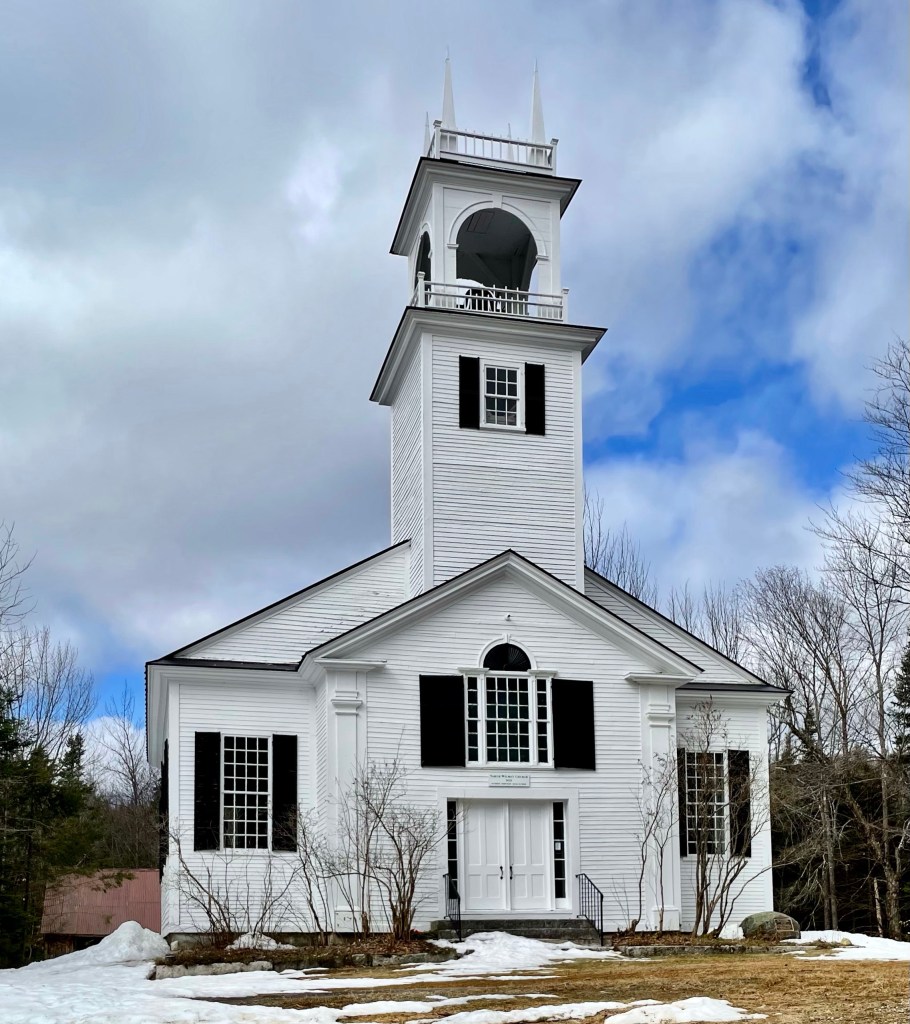
Off the beaten path (like much of the town of Wilmot, NH, you can find this stunning old New England meeting house. Erected in 1829, the North Wilmot Church stands as the oldest extant church in the small town. Five denominations—Congregational, Christian Baptist, Freewill Baptist, Universalist, and Methodist, together collaborated to build this structure then known as the North Union Meeting House. Each denomination held services at the church, as they were all too small separately to warrant their own buildings. Decades after it was built, it was determined that the church should be moved down the hill. In 1846, the church was lifted and placed on rollers (logs), and with the help of oxen, rolled down the hill. It is said that the builder of the church, Josiah Stearns, rode in the belfry. The Different congregations later built churches elsewhere and the building was under-utilized, and it was converted to a meeting space, but allowed a congregation to use the structure. In 1983, with the agreement of remaining North Wilmot Congregational Church members, the North Wilmot Union Meeting House Society was established to maintain the structure and arrange for services in July and August.


Breezy Cottage // 1840

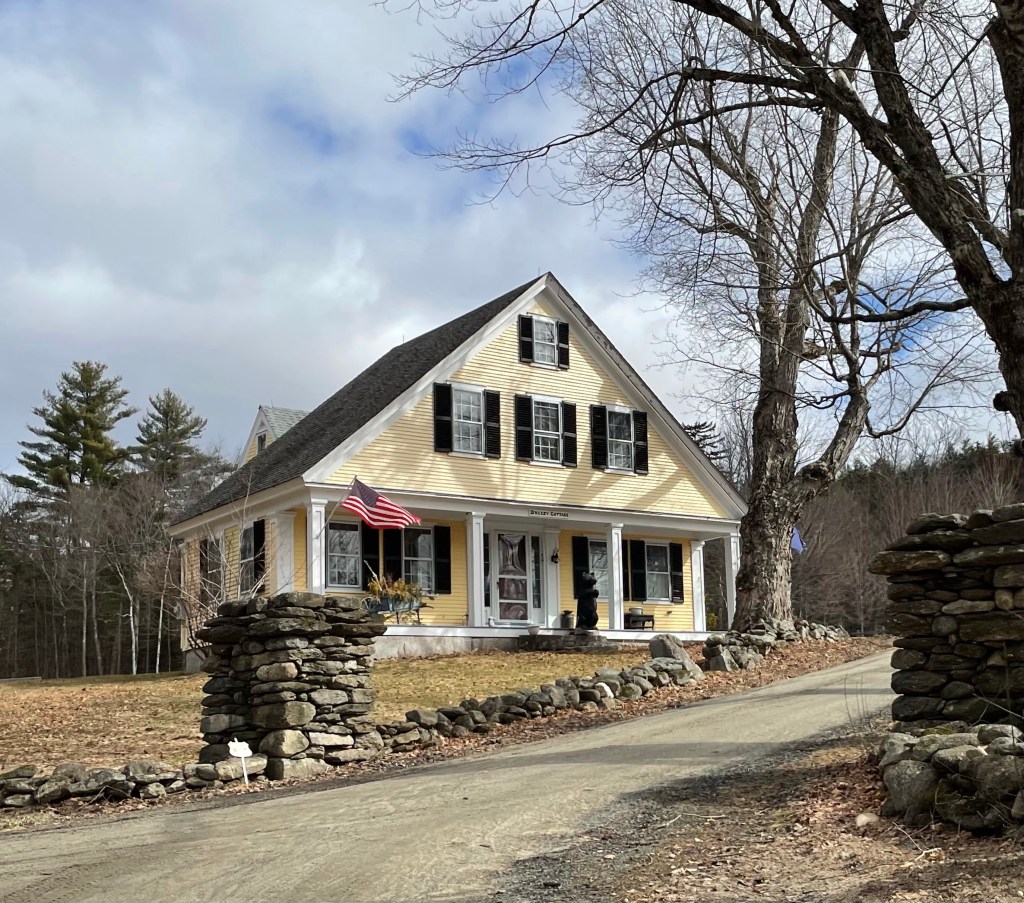
On the backroads of the rural town of Wilmot, NH, I stumbled upon this perfect Greek Revival cottage tucked away on a dirt road. The home was built in 1840 by Col. Samuel Thompson, likely operated as a farm. The property was purchased by the Tewksbury Family decades later, who likely gave the home its name “Breezy Cottage”, after an older colonial home nearby, and subsequently the name of the street in which it is sited. The Greek Revival home is symmetrical with a wide, gabled roof and upper floors overhanging the recessed front porch. The home features bold corner and entry pilasters.

Wilmot Center Schoolhouse // 1854

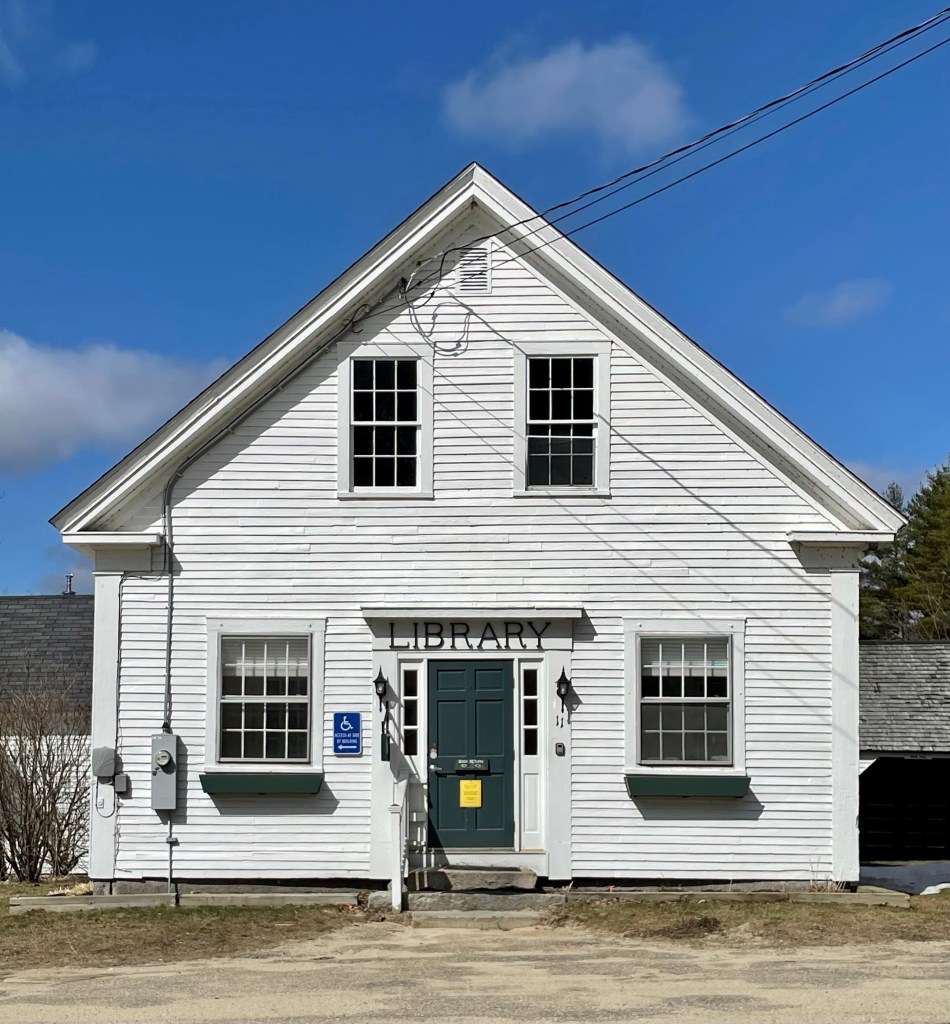
Driving through the quaint village of Wilmot Center in New Hampshire, I had to pull over to snap a photo of this little library building. When I got home, I learned that the building was constructed in 1854 not as a library, but as a schoolhouse! The vernacular Greek Revival school served as one of many district schoolhouses in the region, dispersed around small towns to be within walking distance of the sparsely developed parts of the state. With population growth in the 20th century and the proliferation of the personal automobile, these small regional schools became obsolete. Many of these buildings were converted to other civic uses or as personal residences, but most were demolished. The Wilmot Public Library located in the former schoolhouse in 1972 and is now connected to the town offices next door.

Thomas Casey Building // 1896

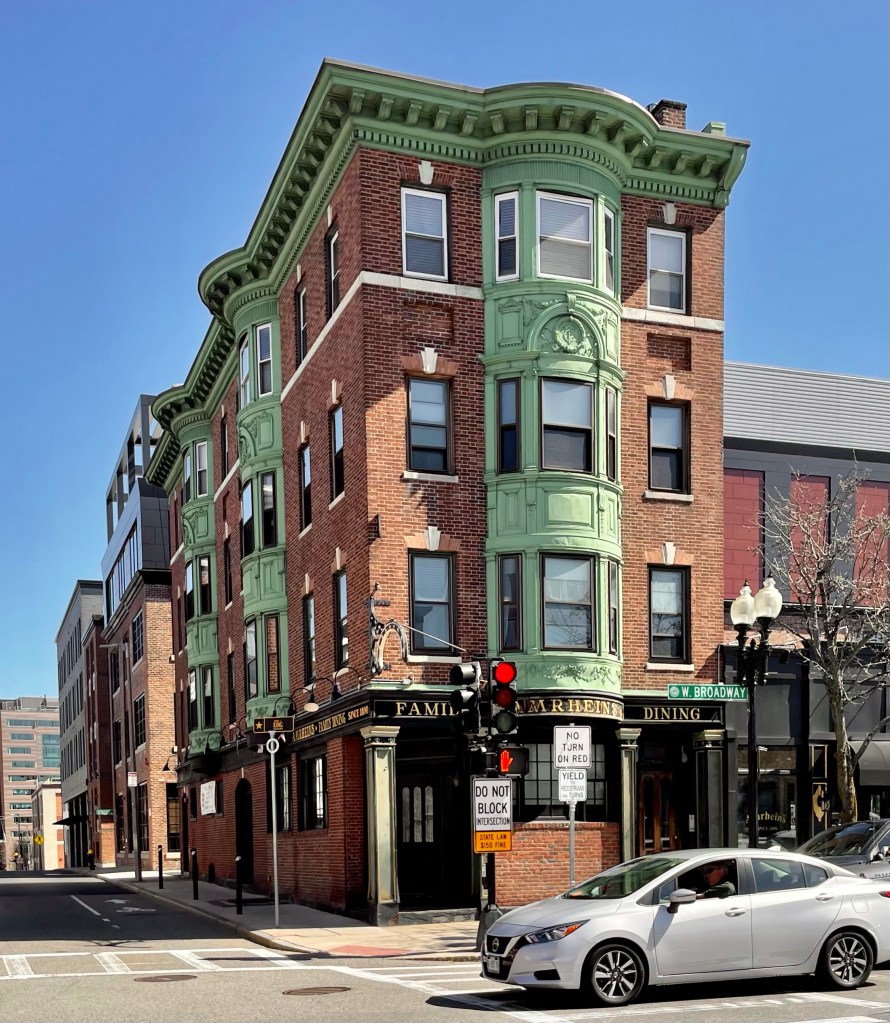
Located on West Broadway in a section of South Boston that has almost been stripped of all of its architectural character and history, sits this historic commercial building, which soon may face the wrecking ball. This building was constructed in 1896 for Thomas Casey, an Irish liquor dealer. He hired Irish-born architect Charles Donagh Maginnis who emigrated to Boston at age 18 and got his first job apprenticing for architect Edmund M. Wheelwright, the city architect of Boston, as a draftsman. The result was a four-story Colonial Revival commercial building, significant for the series of rounded copper bays and cornice. Of special note, there are wreath inlays designed into the bays between the third and fourth floors with the letters “T” and “C” within, representing Thomas Casey. Years after the building was constructed, it was purchased by Emma A. Amrhein, and has – until recently – been home to Amrhein’s Restaurant and Bar. The local landmark had two (unconfirmed) claims to fame; the oldest hand carved bar in America and the first draft beer pump in Boston. The large property was sold, and the developers proposed a large housing development on the site, retaining the Casey-Amrhein building. However, some have recently pushed for the demolition of this building to make the project slightly larger than would be with the historic building.

New Hampshire Mountain Inn // c.1790

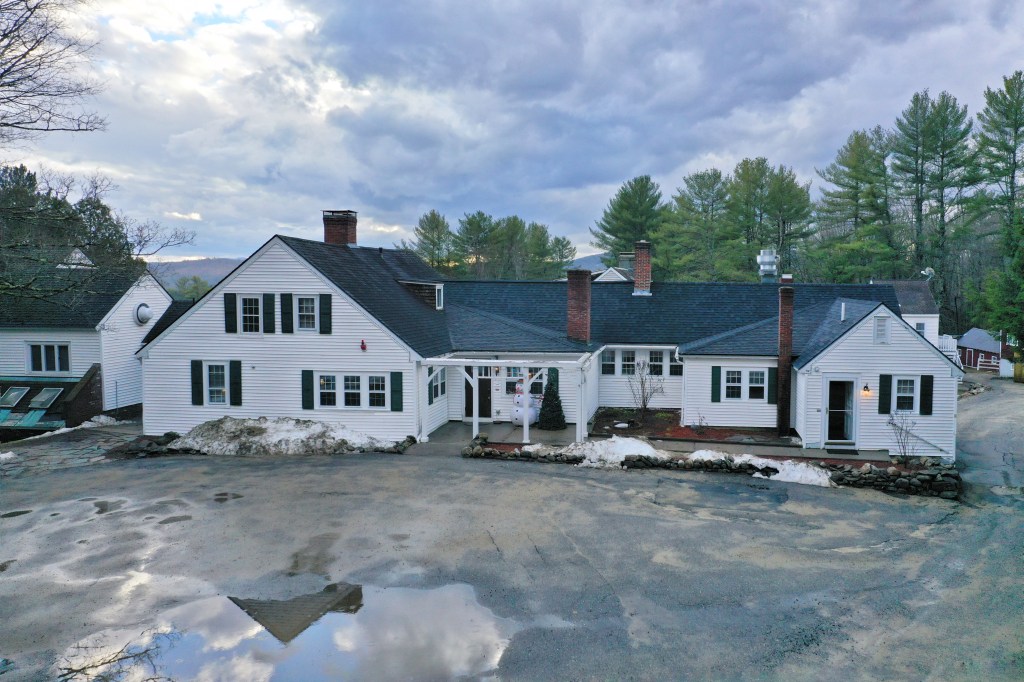
At the base of Ragged Mountain, on a winding dirt road lined by towering pine trees, I came across the New Hampshire Mountain Inn. The original Cape block of the house was built in the late 18th century and operated as a farm for a family in the rural town of Wilmot, New Hampshire. By the mid-19th century, the construction of the Northern Railroad through New Hampshire, created a housing demand for railroad workers who spent long days laying rail lines, thus the beginning of this farm becoming a short-term boarding house began. The railroad line was officially abandoned by the 1990s, and later converted to a linear park with biking, walking, and snowmobile trails in various sections. After the railroad’s construction, the farm saw visitors beginning in the 1930s, drawn to the area due to the skiing opportunities in the area. Subsequent owners added onto the farmhouse numerous times, to accommodate growing flocks of skiers every season. The house features telescoping additions, similar to many historic farms in New England, but on three sides, which expanded the once small farmhouse to a modern inn. The siting of the property on a hill overlooks the distant mountains with fresh country air blowing across the sloping fields.