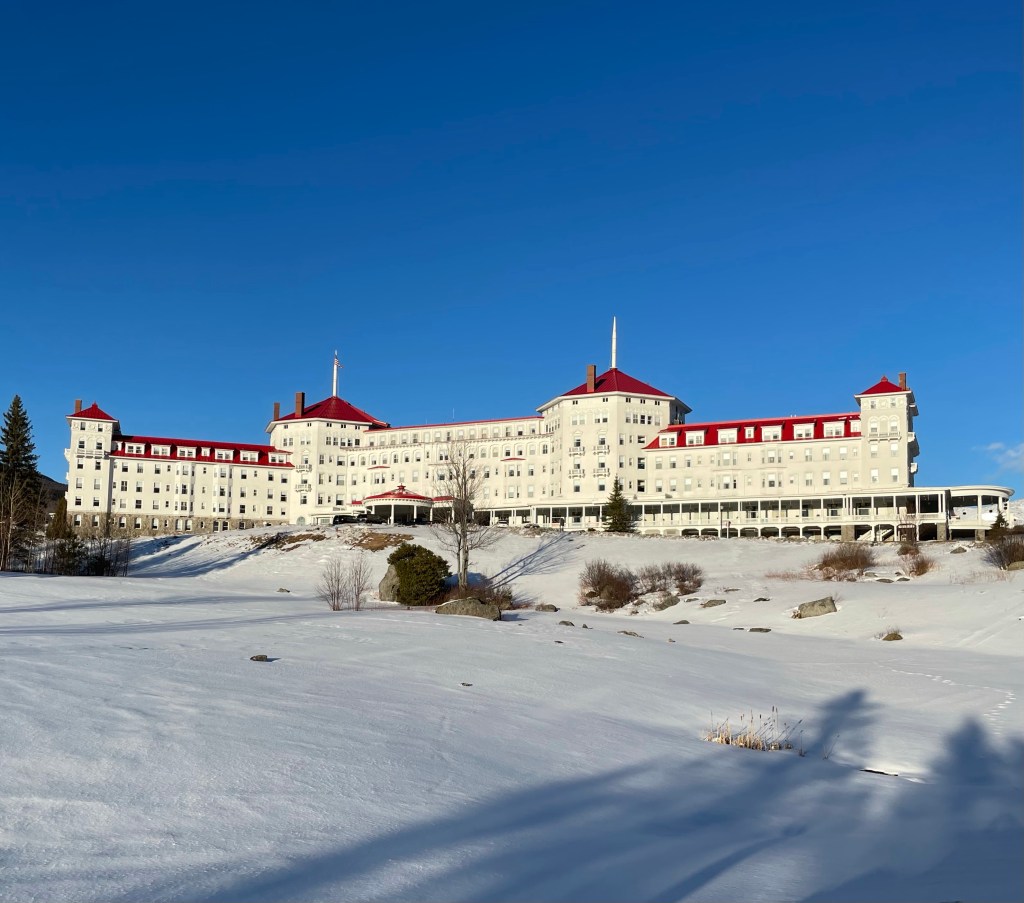
Mount Washington Hotel // 1902

The Omni Mount Washington (originally the Mount Washington Hotel), surrounded by the great White Mountains of New Hampshire, was completed in 1902, at the end of the Gilded Age and the grand hotel era of America. The grand hotel was financed by Joseph Stickney, a native of New Hampshire, who made a fortune before the age of 30 investing in the coal business in Pennsylvania. In 1881, Stickney purchased the Mount Pleasant Hotel, a nearby summer resort and enlarged it, and acquiring a taste for hospitality development in the White Mountains (it was later demolished in the 1930s). He hired architect Charles Alling Gifford to design a new, larger resort across the street which in total, cost him over $50,000,000 in today’s dollars! Ironically, Joseph Stickney, had famously told the press on the opening day: “Look at me, for I am the poor fool who built all this,” as the economy was starting to turn right as the hotel opened. He died one year later in 1903. Nevertheless, up to fifty trains a day unloaded the families of the country’s wealthiest people, mostly from New York City, who stayed here for Summers at a time, leaving behind “the yellow fever and cholera in the cities” for fresh air and open space. The hotel’s design incorporated some of the most cutting-edge innovations of its age, including a steel-frame superstructure, an electrical power plant, and a sophisticated internal heating system. Roughly 250 Italian artisans were brought in to provide artistic touches to the structure by working on its exterior granite and stucco masonry including the two massive octagonal towers, and installing Tiffany stained glass windows.
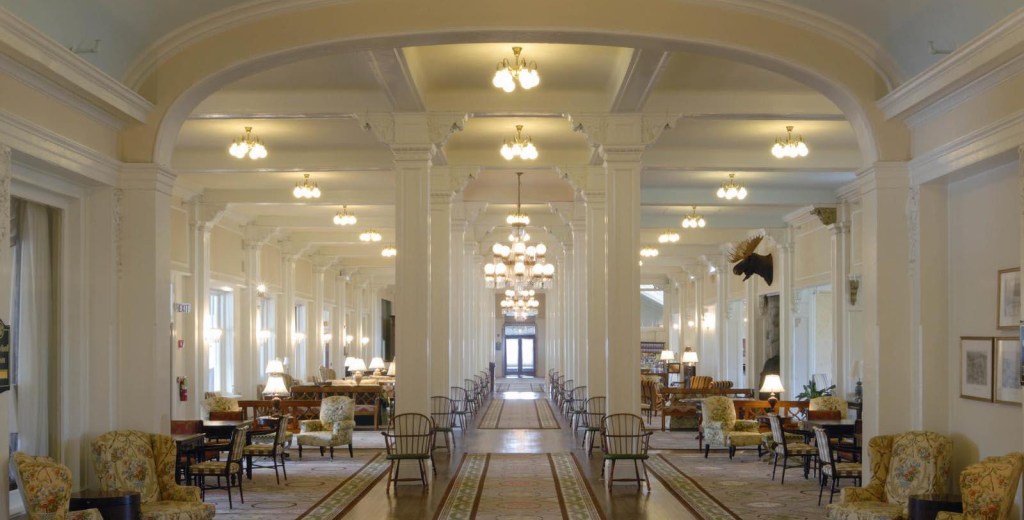
After Joseph Stickney’s death in 1903, Carolyn his widow, became extremely rich (the couple never had children). Carolyn spent her summers at the hotel for the next decade, a nearby chapel honoring her late husband. The hotel did well in the subsequent decades until the advent of income tax, Prohibition, and the Great Depression, which harmed many large resorts’ profits. In 1936, Mrs. Stickney’s nephew, Foster Reynolds, inherited the hotel, but it closed in 1942 because of World War II. A Boston syndicate bought the extensive property for about $450,000 In 1944. The Bretton Woods monetary conference took place that year, establishing the World Bank and the International Monetary Fund. After subsequent owners, in 2015, the hotel and the Bretton Woods Mountain Resort were purchased by Omni Hotels & Resorts, who have been advocates to the history and preservation of the building and surrounding area, also overseeing the hotel’s inclusion to the illustrious Historic Hotels of America list.

There is so much more I could write about the Omni Mount Washington Resort, from the incredible interior spaces, to Carolyn’s marriage to a French prince, to the supposedly haunted sites… So much history to uncover, so little time!
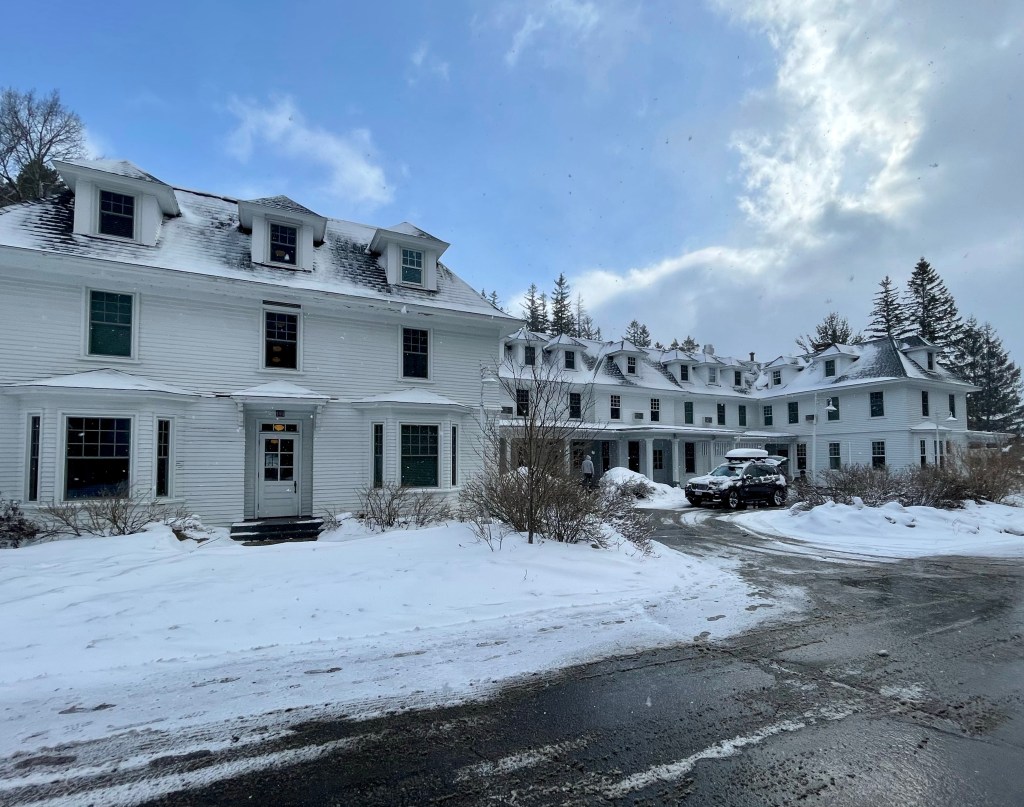
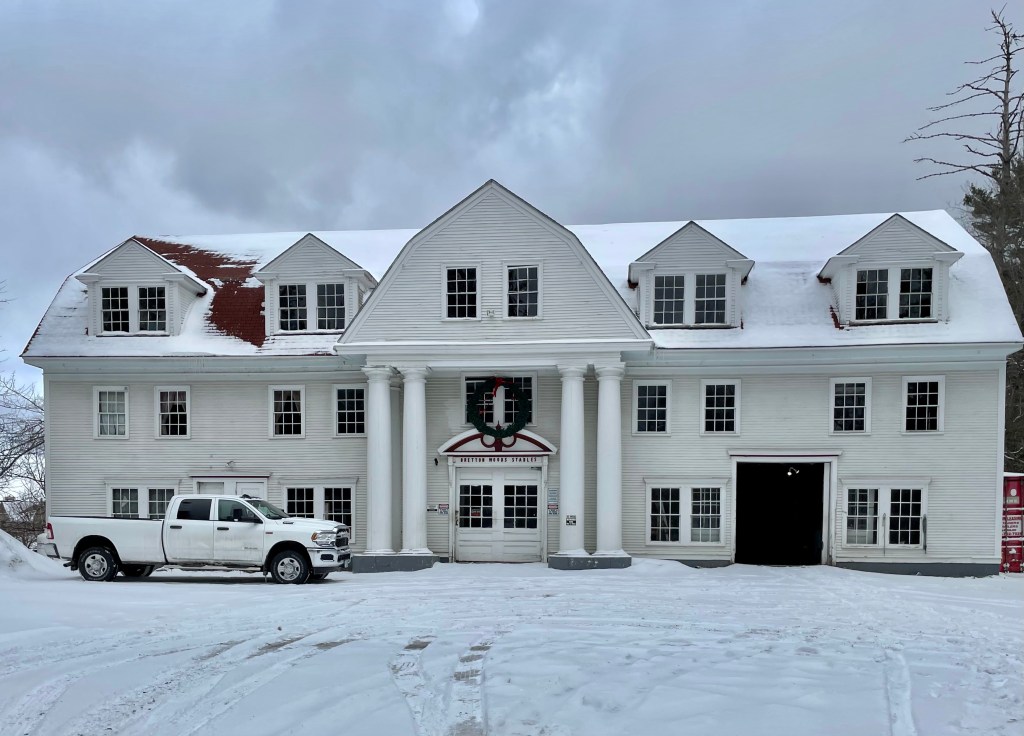
Bretton Arms Inn // 1896

The historic Omni Bretton Arms Inn, adjacent to the Omni Mount Washington Hotel in the White Mountains of New Hampshire, was built as a private home in 1896. The home was designed by, and occupied by architect Charles Alling Gifford, while he oversaw the design and construction of the iconic Gilded Age hotel. After the hotel nearby was opened, the interior was converted to hotel rooms, and opened to guests in 1907. The Colonial Revival building features a central mass with two wings. The building was occupied in 1944 as the headquarters for the Conference Secretariat during the 44-nation Bretton Woods Monetary Conference. The Inn was granted National Historic Landmark designation in 1986 and has recently undergone a $1.4 million renovation focused on bringing the outdoors in. Part of the Omni Mount Washington Resort, this property offers more seclusion and less crowds compared to its larger neighbor. Just down the road from the Bretton Arms is the equally stunning Bretton Woods Stable, likely built at the same time.

Rosebrook Lodge // 2020

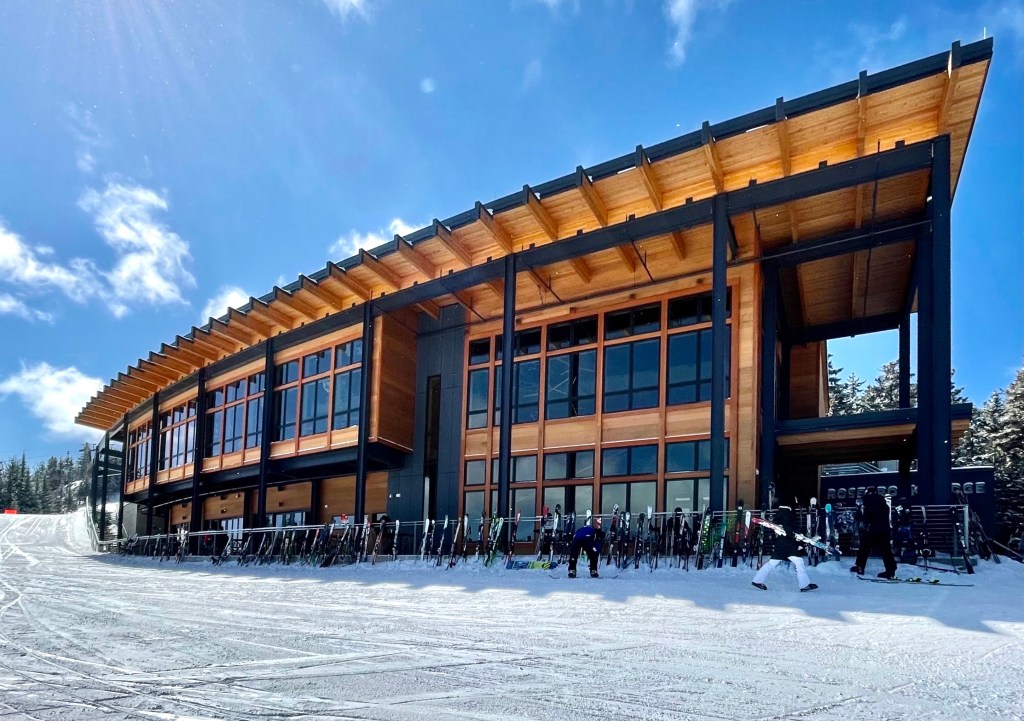
Located at the top of Rosebrook Mountain in the Bretton Woods Ski Resort, this stunning modern lodge building provides possibly the best mountain views in New England. After a couple runs on the slopes, I took the gondola up to the top, exiting to a sweeping view of the White Mountains and the iconic Mount Washington Hotel (more on that later). At the top, is this large, well-sited lodge which is perched upon the mountainside, and an excellent example of Contemporary design done right! Appropriately named Rosebrook Lodge, the new building was just completed in 2020 by designs from architectural firm Bull Stockwell Allen from San Francisco, with help from TruexCullins on the interior design. The two-story lodge is constructed from of timber, steel, stone and glass, which complement the region’s rugged natural beauty and provide a sleek space for on-mountain dining or aprés ski. Inside, the building highlights the outside with walls of windows with warm lighting and woodwork that make relaxing effortless.

Linden Place // 1810

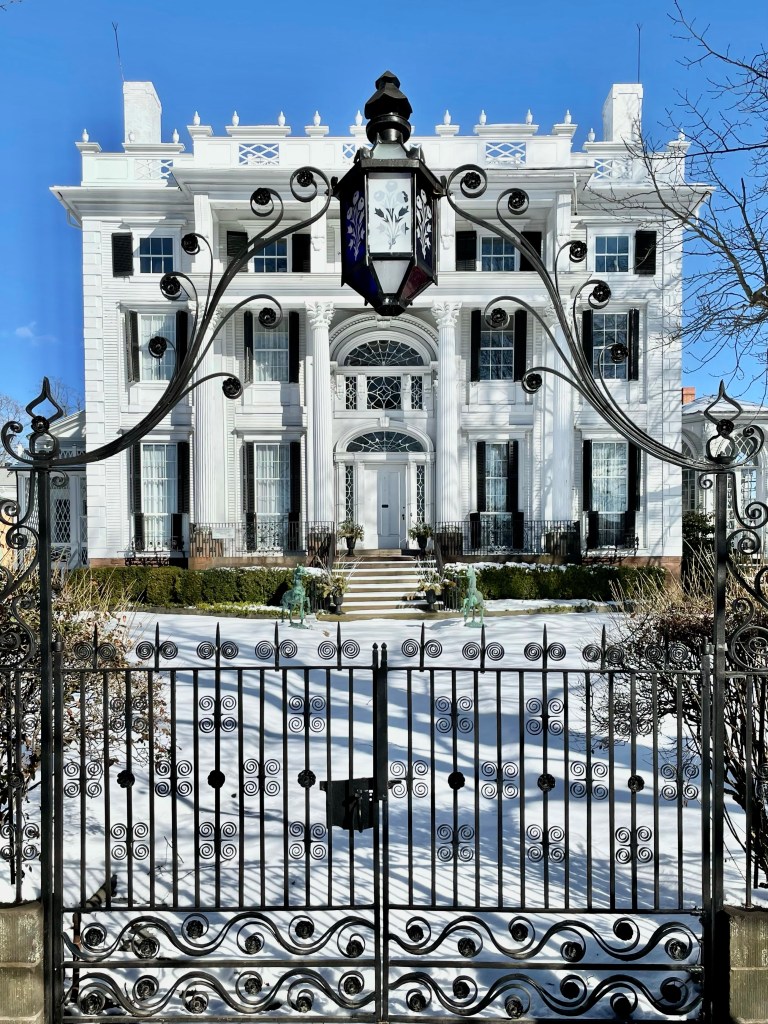
For the last post in this series on Bristol, Rhode Island, I am leaving you with a house that is architecturally stunning, but holds a dark history. Linden Place was built in 1810 by slave trader, merchant, privateer and ship owner George DeWolf and was designed by architect, Russell Warren. The DeWolfs of Bristol, who became the biggest slave-trading family in U.S. history, transported well over 11,000 Africans to the Americas between 1769 and 1820. The U.S. banned the slave trade in 1808, but the DeWolfs continued dealing in the slave trade until the 1840s by going through Cuba, where they had numerous plantations. They also got help from a DeWolf brother-in-law, who served as a customs inspector in Bristol — thus ensuring family slave ships continued to come and go. In 1825, George DeWolf suffered major financial hits and he and his family fled to his plantation in Cuba, where they’d be beyond reach of his creditors. Stories explain that with the possibility of legitimate payment out of the question, the townspeople sought compensation for George’s debts where they could, and they broke down the front door of Linden Place, and took everything, even peeling the silk wallpaper off the walls.

Following DeWolf’s bankruptcy, the house was bought by his uncle James DeWolf, who was alleged to have directed the murder of a female African slave in 1789 who was sick with smallpox on the slave ship Polly, which he commanded; she was bound to a chair and lowered overboard. James DeWolf was tried and effectively acquitted; which, sadly, should not surprise anyone based on historical precedent. In fact, James DeWolf financed another 25 slaving voyages, usually with other members of his family and was thought to be the second richest man in the United States upon his death in 1837. In later years the house passed to Samuel Pomeroy Colt, a grandson of George DeWolf (as well as the nephew of the inventor of the Colt revolver). His son Russell married actress Ethel Barrymore, who was the great-aunt of current actress Drew Barrymore, and lived in the home. Today, the grand estate is a house museum and event space.

Bradford-Norris House // 1792

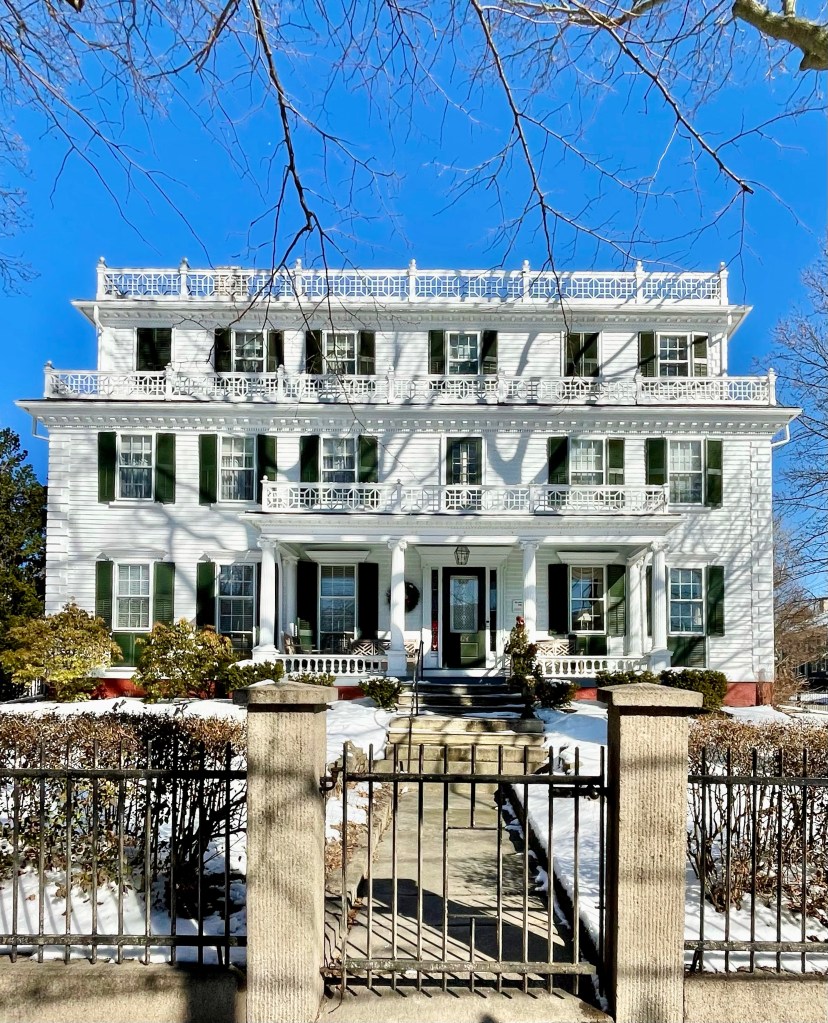
William Bradford (1729-1808), who would become Deputy Governor of Rhode Island from 1775 to 1778, came to Bristol to practice medicine by 1758. When he arrived, he rented Mount Hope Farm (featured before), before building a home in town. When the British Navy bombarded Bristol on October 7, 1775, his home was among the buildings destroyed. He afterward went aboard ship to negotiate a cease fire, saving what was left of the town. In 1792, he built a 2 1/2-story Federal style, boxy house on this lot, close to the street. The home was willed to his son Hersey, who resided there until the 1840s, when he mortgaged the house to Francis Dimond, who resided in a Greek Revival temple front home (also featured on here previously). He gifted the modest Federal home to his daughter, Isabella, possibly as a wedding gift upon her marriage to Samuel Norris, a sugar refiner. Mr. Norris and Isabella hired architect Russell Warren, who designed her father’s home nearby, to renovate the house in the spring of 1845, moving the house away from Hope Street. The house was given its third floor and additional bay, along with the ornate design which characterizes it to this day, including the Ionic porch and Chinese Chippendale balustrade. The house remained in the Norris family until 1942 and is now a B&B.

St. Michael’s Episcopal Church // 1860

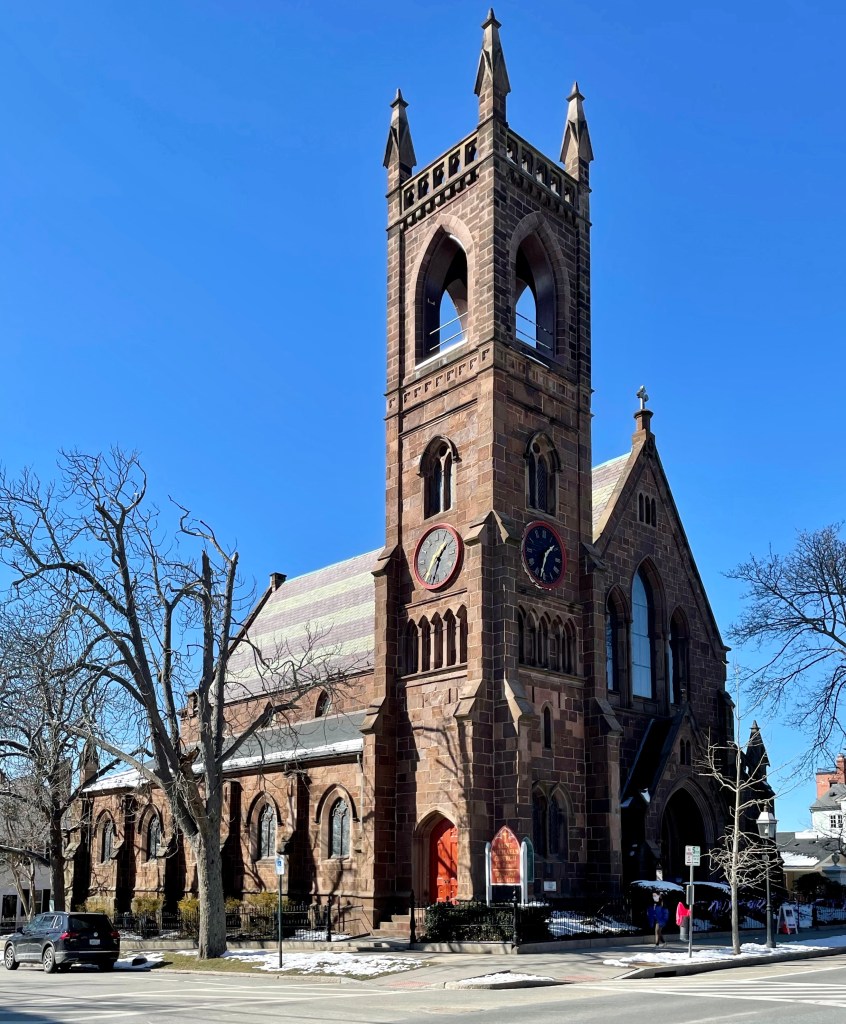
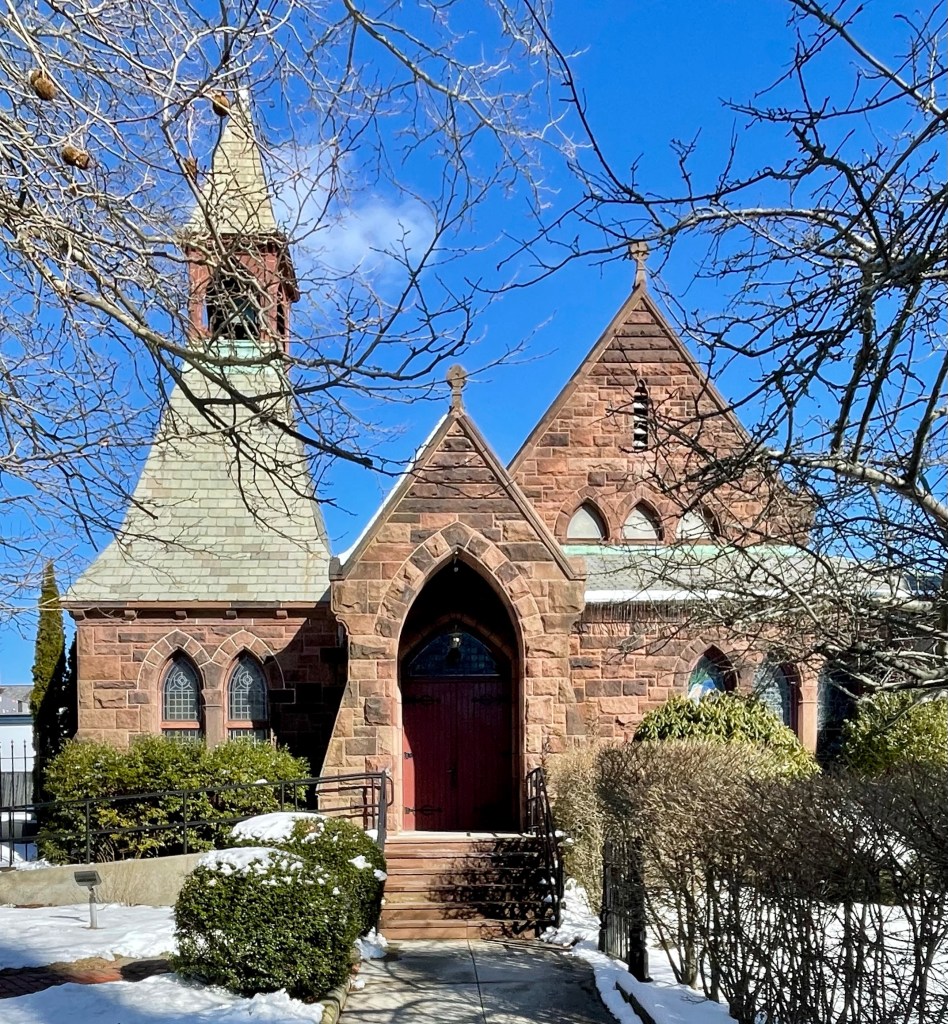
While I love the quintessential white, wood-frame New England churches that proliferate the region, the stone, Gothic churches always make me stop in my tracks; and this example in Bristol is no exception! St. Michael’s parish was founded in 1718 as one of the Rhode Island’s four colonial churches, funded and overseen from London. The first church, built in 1720, was ironically later burned during a British raid in 1778. It was replaced in 1785 by a plain wooden meetinghouse with funds from local residents and partitioners. In 1833, it was replaced by a wood-frame Gothic church which burned in 1858. Undeterred, the church hired New York City architects Alexander Saeltzer and Lawrence B. Valk, who designed the present brownstone Gothic Revival church. Just over a decade later, the church hired Worcester architect Stephen C. Earle, to design a chapel and parish house, across the street. The chapel building follows the Gothic Revival style, but with more Victorian flair, and is also constructed of brownstone to compliment the church. Together, the two structures transport you to the English countryside with their design and presence on the main street in town. What do you think of them?

DeWolf-Guiteras House // c.1835

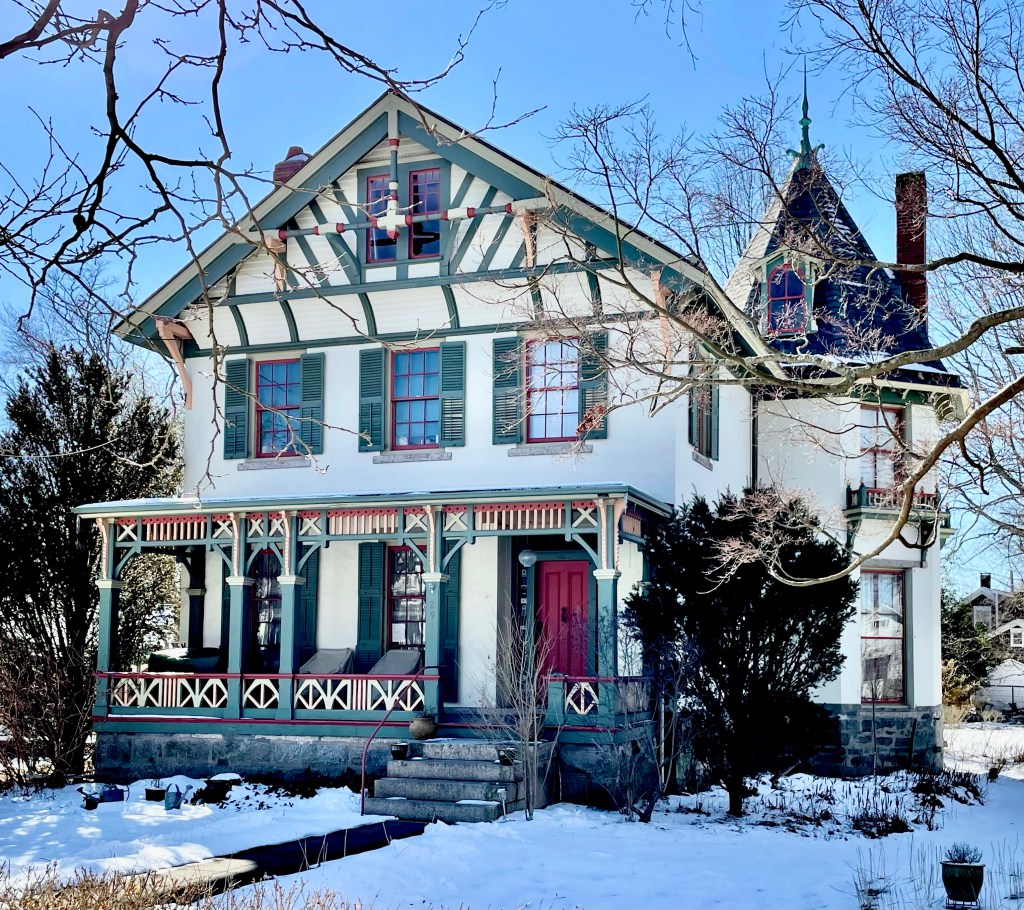
This incredibly unique and flawless home in Bristol was apparently built by the infamous James DeWolf. Historic records state that the slave trader built the home for his son William Henry, but that is unlikely as he was the owner of the family mansion, Linden Place at that time. Therefore it is likely that another of James’ sons William Bradford DeWolf was gifted the home, roughly at the time of his marriage in 1835. The home was a 2 1/2-story Greek Revival home. By the 1880s, the property was sold to Dr. Ramon Guiteras, a urologist, who had the house stuccoed, fashionable Stick style trim applied across the facade, a full-width bracketed porch, and two-story octagonal tower on the side. The home is now owned by the neighboring church who restored it in the 1970s and maintain it beautifully to this day.

Colt Memorial School // 1906

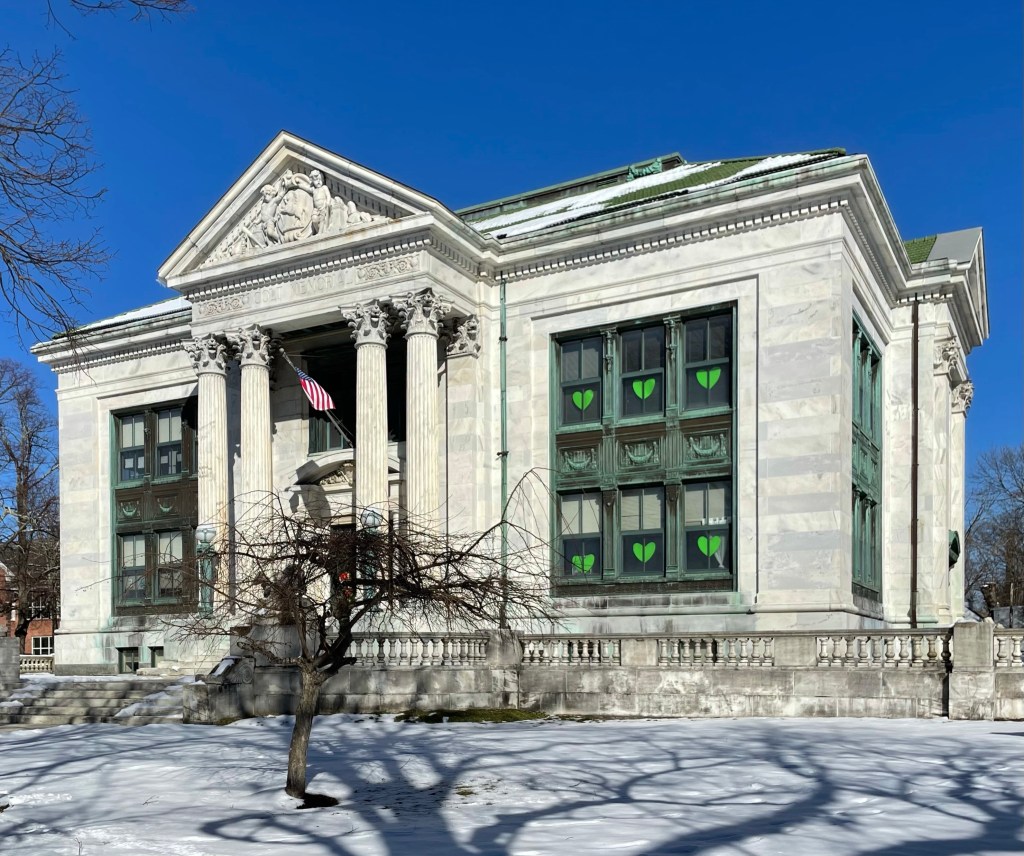
Similar to Burnside Memorial Hall nearby, this school building in Bristol was also constructed as a memorial, in the form of an architectural statement-piece. The school building was gifted to the town of Bristol by Samuel P. Colt, who resided in a mansion nearby, Linden Place, and also owned a massive country estate in town, where his prized cows were cultivated. The school building was funded as a gift in memory of his mother Theodora DeWolf Colt and showcases his everlasting love for her. Designed by Cooper & Bailey of Boston, this monumental, 2-story, hip-roof Renaissance Revival structure was built of white marble with 2-story, cast-bronze window bays. The symmetrical facade has a central Corinthian portico with fluted columns and a pediment containing cherubs around the Colt family crest. The school was used as the town high school until the 1960s when it was outgrown, the building has since been used as an elementary school, the nicest one I have ever seen!

Burnside Memorial Hall // 1883

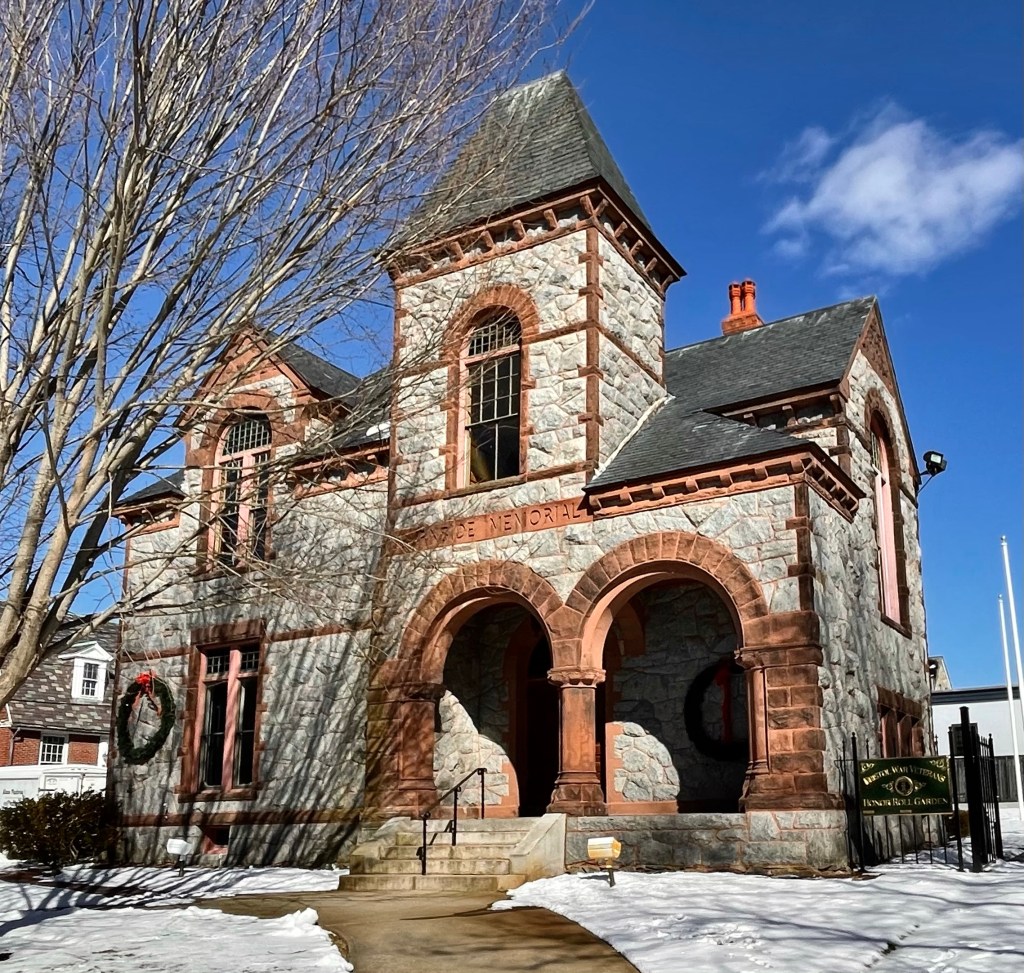
Located on Hope Street in Bristol, the Burnside Memorial Hall stands out as an elaborate, poly-chromed, two-story Richardsonian Romanesque public building. The Town of Bristol required a new town hall, and hired Worcester-based architect Stephen C. Earle to design the new structure. Earle’s program was to combine a town hall with a memorial to Major General Ambrose E. Burnside, Civil War hero, thrice governor of Rhode Island, and later United States senator, who died in 1881. The centerpiece of Burnside Memorial Hall was to be a statue of the general on its porch, long since removed from the building. Bristol town offices were removed from the building in 1969, and shifted to a bland building attached at the rear, Burnside Hall now serves purely as a memorial. Fun Fact: Burnside was noted for his unusual beard, joining strips of hair in front of his ears to his mustache but with the chin clean-shaven; the word burnsides was coined to describe this style. The syllables were later reversed to give the name we know today as “sideburns”!

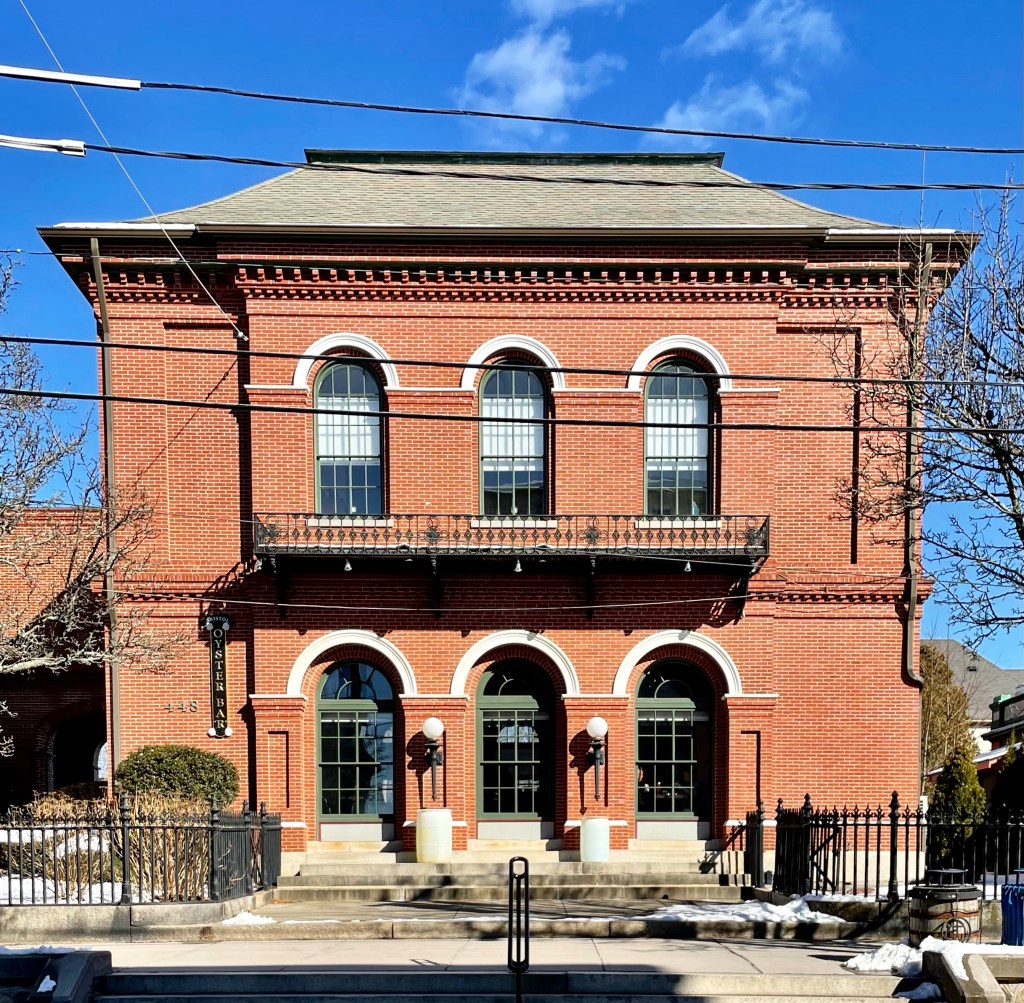
Bristol Customs House and Post Office // 1858

Completed in 1858 from designs by architect Ammi B. Young, the Bristol Customs House and Post Office is a two-story rectangular Italianate style building, that stands out as an uncommon building of the style in town. Ammi B. Young was the first Supervising Architect of the U.S. Treasury Department. As federal architect, he was responsible for designing many custom houses, post offices, courthouses and hospitals across the United States. He was a master of the Greek Revival style so it is interesting to see how he diverged from his trusted style in a town so populated by homes and buildings in the style. The design is more subdued compared to other Customs Houses he designed around the time, likely a response to the declining economy in town from whaling and shipping. The building was occupied as a customs house and post office until 1962, when it was abandoned. The adjacent YMCA purchased the building soon after, connecting it via a small addition and occupying it as additional programming space until 1990. The building was restored and is now home to the Bristol Oyster Bar.