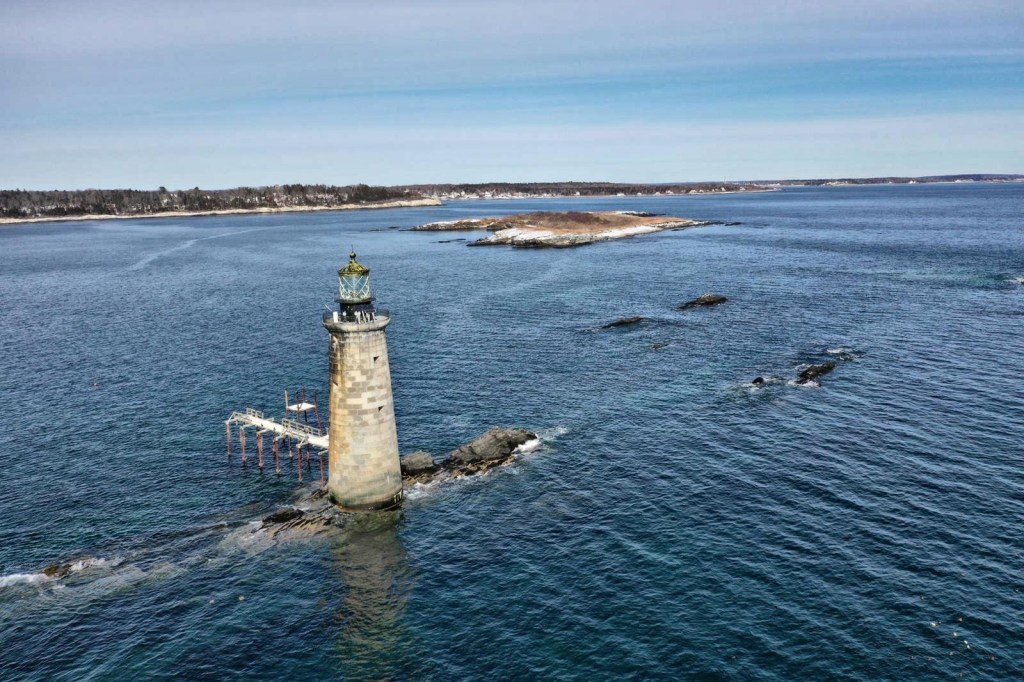
Ram Island Ledge Lighthouse // 1905

Ram Island, about a mile offshore from Portland Head near the entrance to Portland Harbor in Maine, is surrounded by dangerous ledges. For as long as ships have been navigating Portland Harbor, they have crashed into the rocky shore, losing supplies and lives. Because of this, a Congressional act on June 28, 1902, authorized the construction of a lighthouse and fog signal on Ram Island Ledge, to work together with the Portland Head Light to guide ships through the treacherous channel. The next year, the federal government purchased Ram Ledge from two Cape Elizabeth families for $500, to erect a new lighthouse. Before the lighthouse could be constructed, at least two ships, the Glenrosa and the Cora & Lillian schooner sunk in the bay. As the ledge was underwater for much of the year, a stone tower was required. Granite from Vinalhaven was shipped in and a crew of 25 men built the tower which was complete in 1905. The iconic double flash of light has guided sailors ever since. The lighthouse was manned by multiple keepers until the late 1958, when an underwater power cable was laid between Portland Head and Ram Island Ledge, allowing the ledge lighthouse to be automated. In 2008, the structure was deemed “excess to the needs of the United States Coast Guard” and auctioned off. After a bidding war, a local doctor from Maine purchased it for an estimated $190,000.
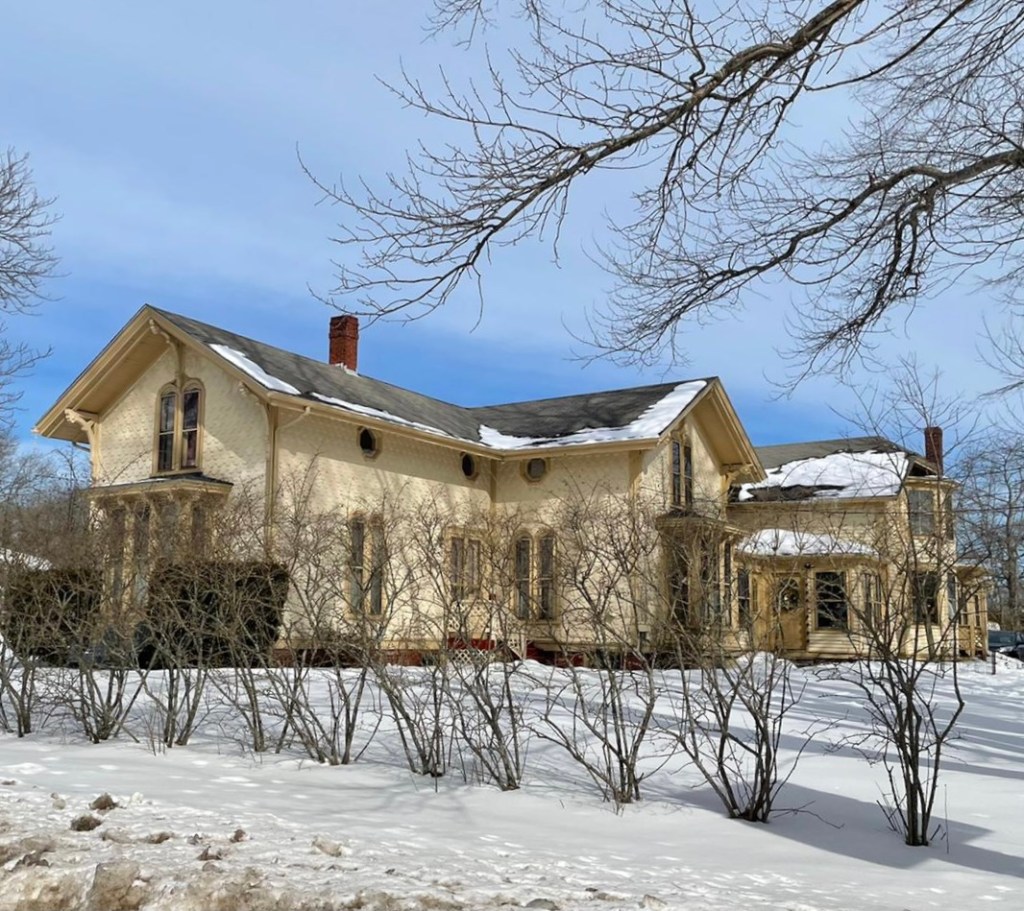
312 Ocean House Road // c.1870

This charming home in Cape Elizabeth, Maine looks to have been built after the American Civil War, as an interesting Italianate cottage. The home is clad with scalloped shingle siding which works well with the paired round headed windows facing the street. The deep overhanging eaves are supported by brackets. Running under the eaves on the sides are octagonal windows, a very unique detail. The home is located at the center of town, away from the summer cottages which sprouted up along the rocky coastline in town starting around this time. It was converted into condominium units sometime in the late 20th century.

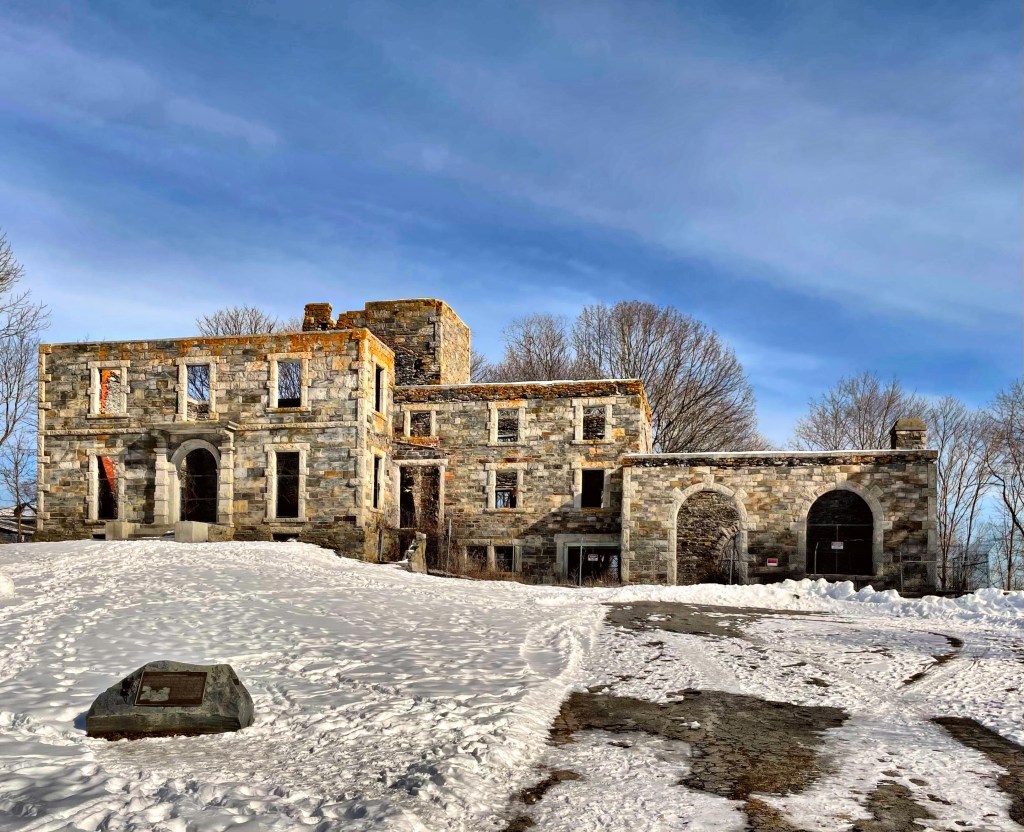
Goddard Mansion // 1859-1981

This shell of a former mansion was built in 1859 for Colonel John Goddard (1811-1870), a Civil War Union Army Officer. Goddard was a “lumberman” who amassed substantial wealth before the outbreak of the Civil War, and he hired architect Charles A. Alexander, to design an estate house for him and his family. The home appears to have been constructed of local stone with white granite trim and featured a prominent tower, emulating an Italian Villa. The home was purchased in 1898 by Judge Joseph W. Symonds, who presided over the Maine Supreme Judicial Court. Just two years later in 1900, during the expansion of Fort Williams, the estate was acquired by the Federal government. The home was used for housing married enlisted men and their families while stationed at Fort Williams. The basement was converted into the fort’s Non-Commissioned Officers’ Club. At the time of the town’s purchase of the Fort in 1964, the mansion was already in serious disrepair and its future was uncertain. People routinely broke in and damaged the interior, which suffered numerous small fires over the years, until the town decided in 1981 to hold a controlled burn of the home, leaving the shell. The shell remains a significant architectural landmark and a massive opportunity for the town.

David Calhoun House // 1915

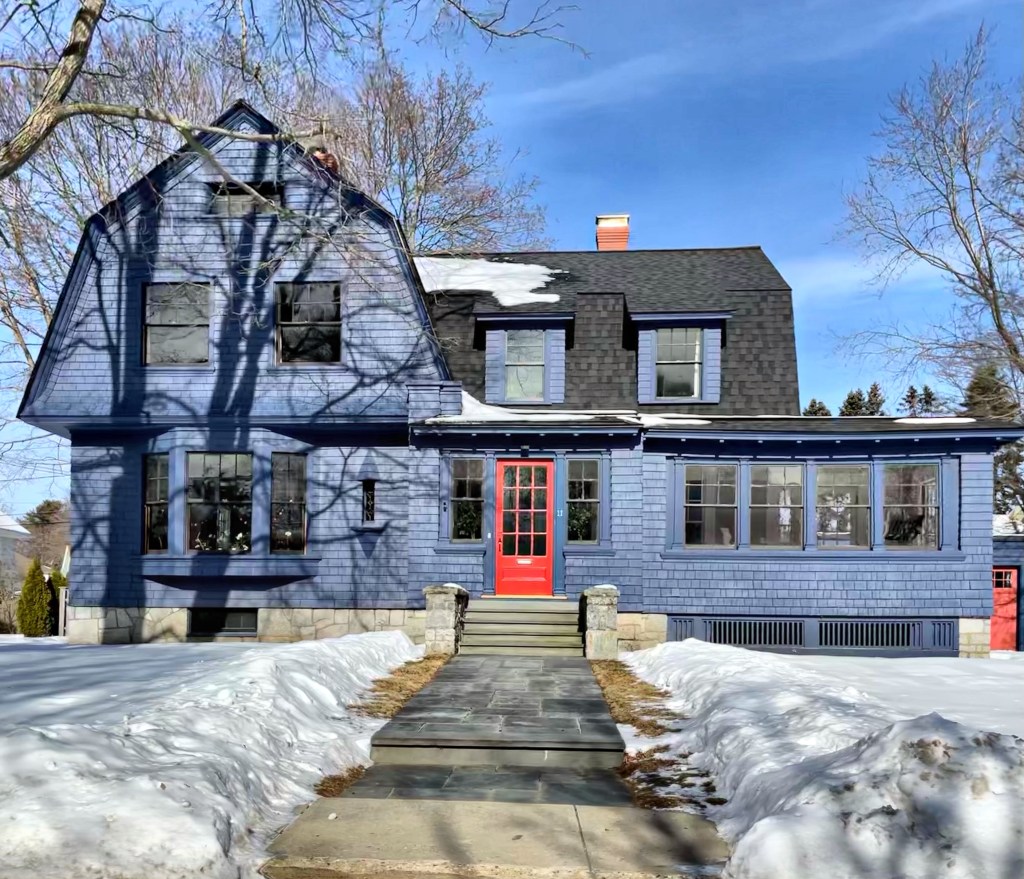
I normally am not a fan of dark houses, but I really like this one, but some of the amazing detail is harder to see due to the singular, dark paint color. This home in Cape Elizabeth was built in 1915, during the housing boom in the early 20th century when the formerly sleepy farming town saw massive development as it became a summer resort and bedroom community of Portland. Owner David A. Calhoun hired the Portland firm of Miller & Mayo to design this home, and they pulled out all the stops for a modest budget. Calhoun moved to Maine in the 1880s and became a founding member of the plumbing and heating firm of Willey & Calhoun, quickly making a name for himself. The two-story home has a shingled exterior, a cross-gambrel roof and a shed dormer on the front facade. The main entry door is flanked on either side by small windows. The house is a great blending of Colonial Revival and Shingle styles.

Cape Elizabeth Town Hall // 1900

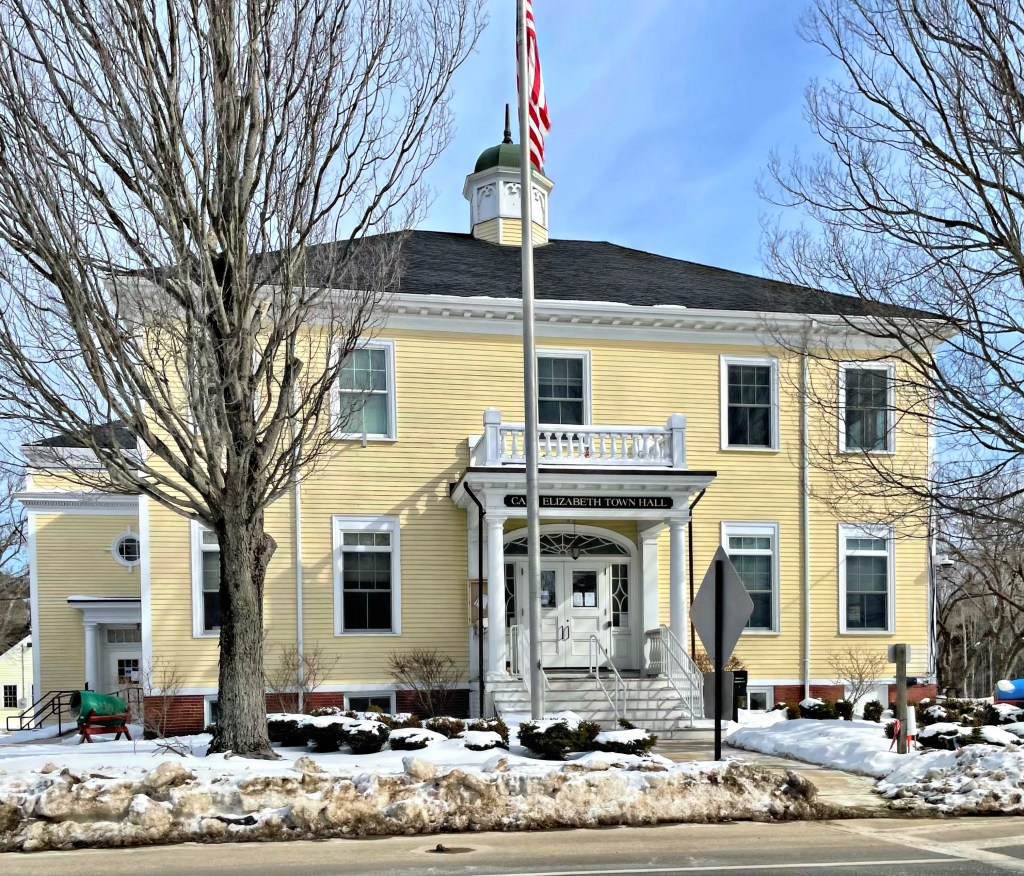
The town of Cape Elizabeth, Maine was originally a part of Portland (named Falmouth at the time) until the citizens there petitioned for and obtained their own government in 1765. Commercial and industrial growth in the north end of the town, nearest the harbor (now South Portland), was in sharp contrast to the continuing rural character of the southern tip of the Cape. In 1895, the two sections agreed to separate, and from that date forward the southern end of the original town became the present town of Cape Elizabeth. Shortly after the separation of South Portland, funding for a new town hall was appropriated, and the town hired Portland-based architect Frederick A. Tompson to design the new building to mark the start of the new town. The Town Hall building was constructed in 1900 and is an excellent example of Colonial Revival architecture with its hipped roof with cupola, classic central portico, and entry with Federal Revival sidelights with a fanlight above.

Ebenezer Baptist Church // 1860

On September 15, 1847, a ship carrying 66 men and women and children docked at Long Wharf in Boston. This group of ex-slaves, led by Rev. Peter Randolph, emancipated by their former slave master Carter H. Edlow from the Brandon Plantation in Prince Georges County, Virginia. Members of the Boston Anti-Slavery Society, led by William Lloyd Garrison met the newcomers and made them welcome by securing lodging and work for self-support.  The group settled in the South End on Ottaway Court not far from the Holy Cross Cathedral. The group first joined the Twelfth Baptist Church of Boston before establishing their own congregation. They eventually occupied this church in 1887, the building was designed by architect Nathaniel Bradlee in 1860, which was built for what was then the Third Presbyterian Church of Boston. The church has remained here for nearly 150 years, seeing the rapid change in the neighborhood. The church building accommodated meetings including the Professional Black Women’s Business Club, which bolstered Black women in business, many members owned stores in the South End. Many members left the area amid growing gentrification in the 1980s and 1990s, and from that, the aging population remaining made keeping the doors open difficult. Sadly, the church relocated out of the building in 2020 and appears to have sold the building, leaving its future uncertain.

Harriet Tubman House // c.1874

Adjacent to the Susie King Taylor House on Holyoke Street in the South End neighborhood of Boston, the Harriet Tubman House has long served the Black community of Boston. The Harriet Tubman Crusaders, an African American branch of the Women’s Christian Temperance Union in Boston, created the first Harriet Tubman House in 1904 as a residence Black females who had recently migrated from the South. The Harriet Tubman House took in young female boarders, providing them with food, clothing, shelter, and friendship while they adjusted to their new environment. It later adapted to provide housing for Black female students who were not allowed to live in the traditional student dormitories at some Boston-area colleges. The Crusaders rented a home on Holyoke Street until 1909 when member Julia O. Henson donated her own townhouse at 25 Holyoke Street as a permanent headquarters for the organization’s expanding programs. Harriet Tubman visited Boston several times in the late nineteenth and early twentieth centuries, often staying with Julia Henson at this home. In 1960, the Harriet Tubman House merged with other settlement houses in the area to form the United South End Settlements (USES) and in 1976 USES erected a modern building at the corner of Columbus and Massachusetts Avenues, which was designed by Black architect Donald Stull. The 1976 building was recently demolished, despite massive outcry, for a luxury condo development… Shocker.

Susie King Taylor House // c.1874

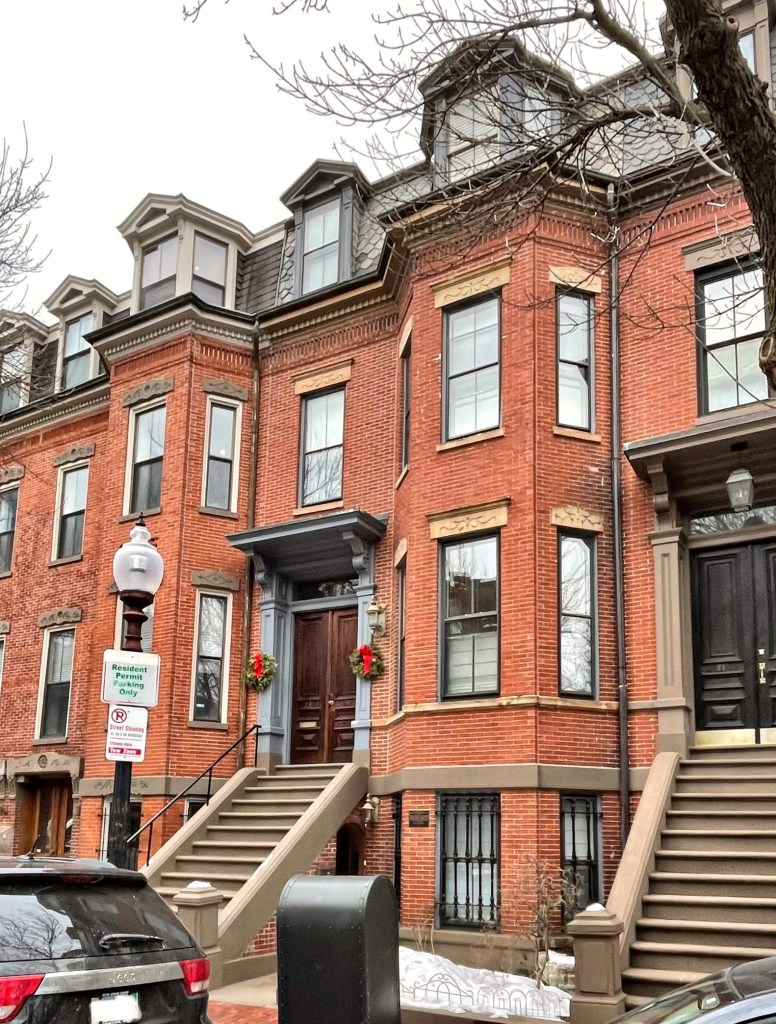
The rowhouse at 23 Holyoke Street in the South End neighborhood of Boston is an excellent architectural specimen, but is best known for one of its residents, Susie King Taylor. Susie King Taylor (1848-1912) was born into slavery near Savannah, Georgia; and despite Georgia’s harsh laws against the formal education the enslaved, she attended two secret schools taught by black women. She became free at the age of 14 when she escaped onto a Union-owned boat off the coast of the then Confederate occupied Fort Pulaski on the islands off the coast of South Carolina. She soon attached herself to the First South Carolina Volunteers, the first black regiment in the US Army. She served under the Union Army in various capacities: officially as a “laundress” but in reality a nurse, caretaker, educator, and showcased such strength and courage as a young woman. Eventually, Taylor married Sergeant Edward King in 1862, and together they remained with the unit until it was mustered out of service in 1866. It is likely at that time that she met Harriet Tubman, who served as a nurse, scout, and spy for the 1st South Carolina Volunteers. Postwar, the Kings moved to Savannah, Georgia. She hoped to continue her teaching career and opened a private school for the children of freedmen. Unfortunately, her husband died the same year, and a public school opening caused her private school to fail. By 1868, Taylor was forced to find work as a domestic servant. She moved to Boston in 1872 where she married Russell Taylor in 1879. She devoted much of the rest of her life to work with the Woman’s Relief Corps, a national organization for female Civil War veterans. She lived at this home on Holyoke for much of her time in Boston, likely re-connecting with her old friend Harriet Tubman when she lived on the street.

Boston Academy of Musical Arts // c.1874

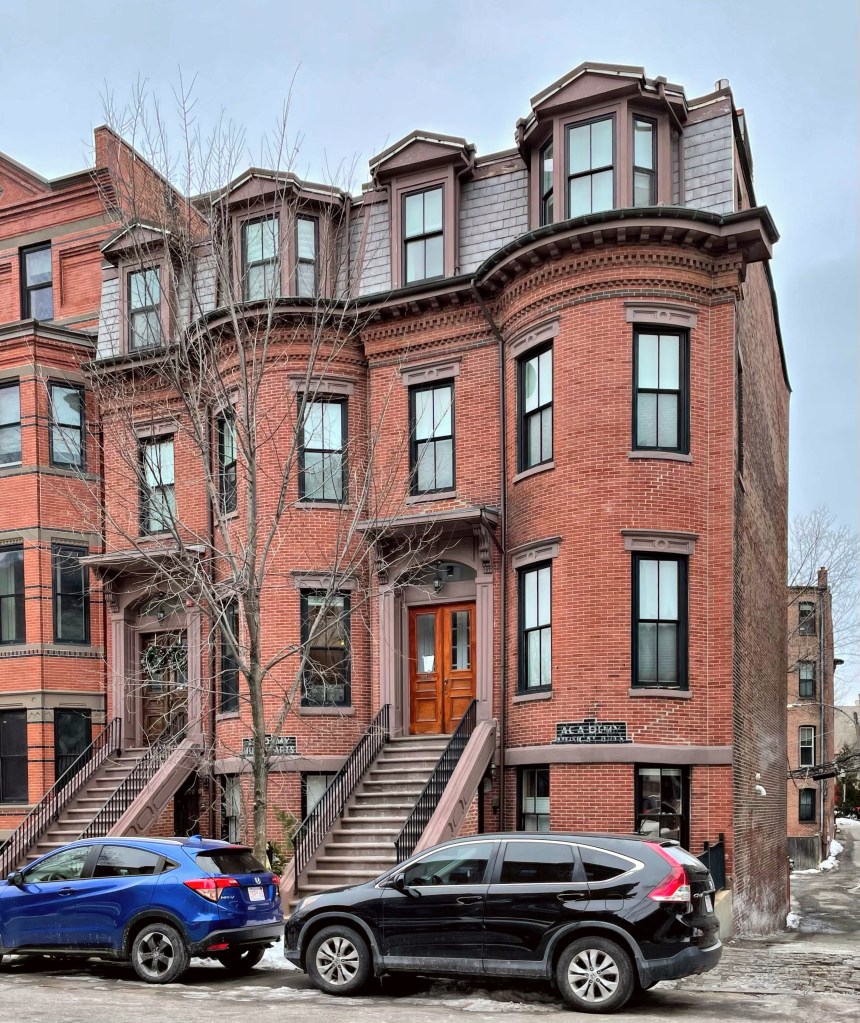
These paired rowhouses at 1-3 Claremont Park in the South End were built by 1874 as speculative housing. Between 1922 and 1928, 3 Claremont Park was purchased by a twenty-something year old Anna Bobbitt Gardner, and she opened a studio in the home, teaching Bostonians how to play the piano. In 1932, Anna Bobbitt Gardner (1901-97) became the first African American women to be awarded a bachelor’s degree from the New England Conservatory of Music. Her studio, Pianoforte Studio bloomed in popularity among Black and White Bostonians, and she rebranded the school as the Boston Academy of Musical Arts, adding four more studios in the area. She would later acquire the adjacent house at 1 Claremont Park and expanded the school. She went on to manage ‘Colored American Nights’, featuring African American musicians at Boston Symphony Hall, and produced local radio and television programs to boost the African American audience in classical music. After her death in 1997, the New England Conservatory has annually granted a musician the Anna Bobbitt Gardner Lifetime Achievement Award, showing her impact on the arts in Boston.

Wally’s Cafe Jazz Club // 1947

Historically, the South End neighborhood of Boston was populated by middle- to upper-class white residents until the late 19th century, when financial crises paired with new, modern housing (constructed in the Back Bay West and Allston areas) shifted that population elsewhere. West Indian immigrants and Black Bostonians moved to the relatively new neighborhood and many formerly single-family homes were converted to tenements or multi-family uses. From this, a vibrant Black community flourished, bringing black-owned businesses like restaurants, banks and jazz clubs. The area’s famous jazz clubs boomed during the forties and fifties, yet, many have disappeared over the years with the gentrification and development in the neighborhood. Wally’s Cafe Jazz Club on Massachusetts Avenue, was founded by Joseph L. Walcott. Mr. Walcott “Wally” was a Barbadian who immigrated to America in 1910, eventually settling in Boston. He worked many jobs and eventually saved up enough by 1947, purchasing an old rowhome and converting the space into a club. Wally was believed to be the first African American to own a nightclub in New England. He brought famed jazz musicians to Boston, and they played at this iconic venue for decades until 1979, when the venue shifted across the street to this building. With the jazz movement waning in popularity, Wally maintained his commitment to the music by featuring young musicians who were attending prominent academic institutions such as Berklee College of Music and the New England Conservatory of Music. Mr. Walcott cleverly decided to hire these young music students and mixed them with seasoned professionals who were veterans of the Big Band era. This mix of talent was special, and the format enabled Mr. Walcott to continue to serve the jazz loving audiences of New England. After Wally’s death in 1998 at age 101, his three children took over the bar, and today Wally’s Cafe is still owned and managed by his family, though presently closed due to COVID-19 restrictions.