President Calvin Coolidge Birthplace // 1840

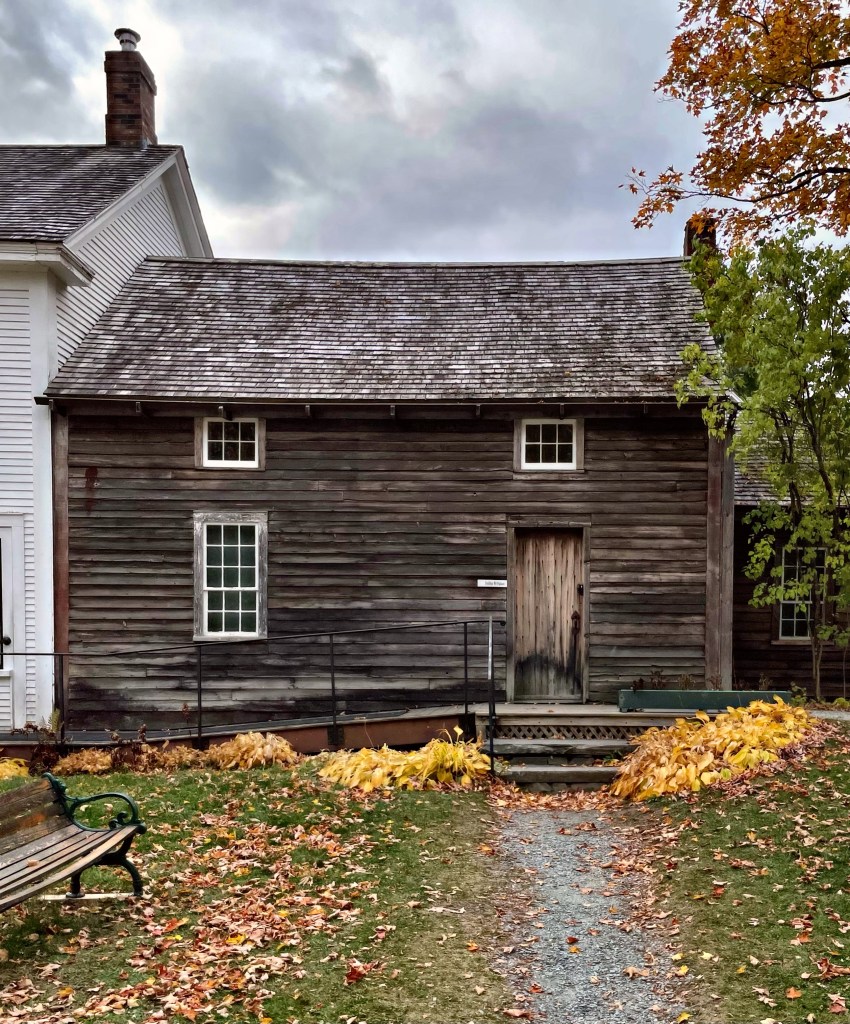
The President Calvin Coolidge State Historic Site in Plymouth, Vermont preserves the birthplace and childhood home of Calvin Coolidge, the 30th President of the United States. This iconic historic village appears much as it was during Coolidge’s lifetime. The homes of the Coolidge family, their relatives and friends are joined by the 1840 church, 1890 schoolhouse, cheese factory, and historic agricultural structures and barns. More on all of these later. First up is the birthplace of President Coolidge. This squat 1 1/2-story dwelling was built in 1840 at the rear of the Coolidge Family store which fronts the main road. By the 20th century, the old home was altered, but was restored in 1971 just in time for the 100th birthday celebration by the State of Vermont for Coolidge, dedicating the village as a historic museum.
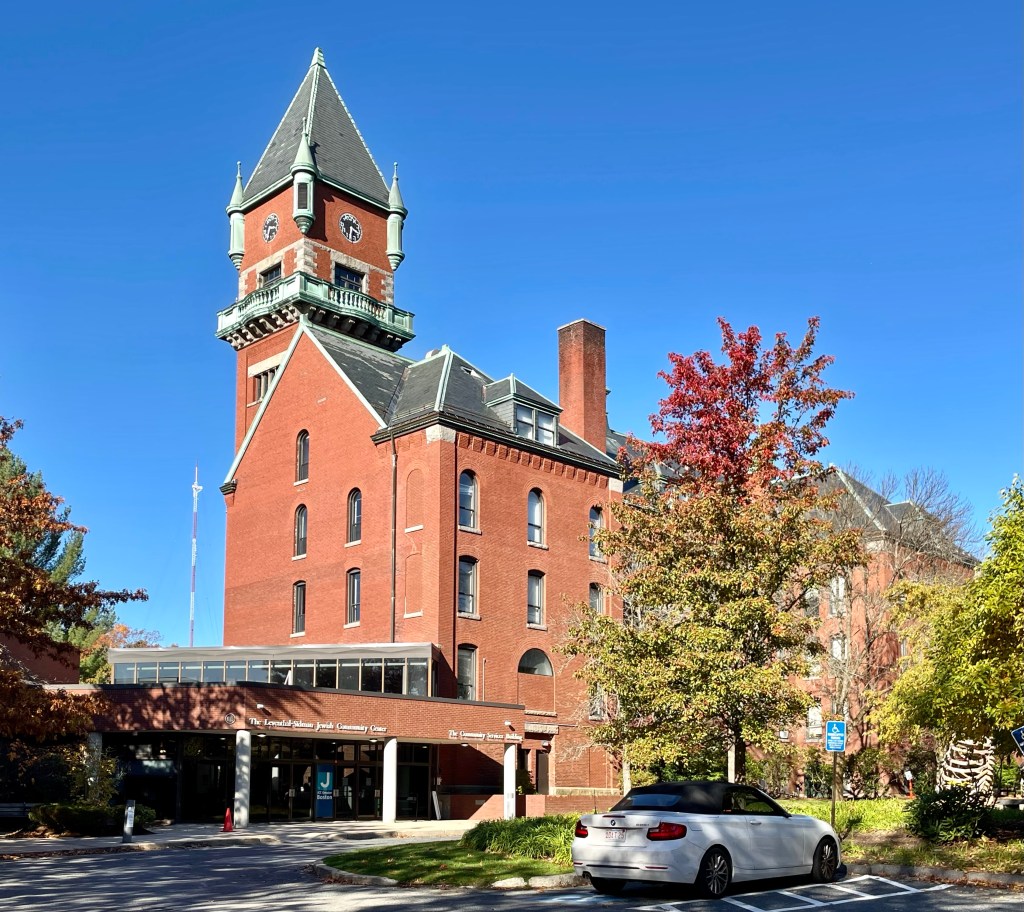
Newton Working Boys Home // c.1895

At the edge of the Charles River at the far edge of Newton, Massachusetts, homeless working boys of the Boston area had a place to rest their head. The Working Boys Home was established in 1883, as a new Catholic charity in Boston. Its mission was to provide a home for working adolescent boys (messenger boys, newsboys, boot blacks, etc.) who had no place to call home and often slept in abandoned buildings, alleys, stables, and other such places. The Working Boys Home was open to homeless boys between 12 and 17 years of age, and all were expected to work and contribute a part of their wages to the support of the home. The original space in Jamaica Plain and subsequent Bennett Street (North End) locations were deemed too inadequate. In 1890, the 48-acre estate in the Oak Hill section of Newton was purchased and this four-story brick building built from plans by William H. McGinty. After WWII, city prosperity other services reduced childhood homelessness, and the last group of boys moved out of the Working Boys Home in 1961. The property was sold in 1979 to the Combined Jewish Philanthropies of Greater Boston to be used as a center for activities meeting cross-generational needs, now known as JCC Greater Boston.

Eliza Starbuck Barney House // 1873

Another of the less common Victorian-era houses on Nantucket is this beauty located right on Main Street, named after its first owner. Eliza Starbuck was the third child of Joseph Starbuck and Sally Gardner, a Nantucket family that had become wealthy in the whale oil industry. At 18, Eliza married Nathaniel Barney and despite their wealth, the couple shared a home with Eliza’s sister, Eunice, and her husband William Hadwen. The husbands became business partners, opening a whale oil refinery on the site of the current Nantucket Whaling Museum. This house was built around 1873 for Eliza Starbuck Barney after the death of her husband. Mrs. Barney is best known as an abolitionist, a temperance and women’s suffrage advocate, and a local genealogist. The home is a fine example of Italianate-style architecture. Note the round-arch or Roman windows and bracketed cornice typical of the style.

Fosdick-Calder Double House // c.1745

This 2 ½-story, five-bay house was built for Benjamin Fosdick (1713-1801) and his family on Nantucket. After Benjamin died in 1801, the house was inherited by two of his surviving sons and they divided the house into two, creating a double-house for them and their own families. The symmetrical home was divided down the middle at the central chimney, and two front doors provided access to the two dwellings. The right section was once the home of Capt. William Calder, who escaped shipwreck at Cape Horn
on his first voyage at age 13. He later was captured by the British during the War of 1812, and escaped from Dartmoor Prison in England, making his way back to Nantucket. The double house has retained much of its original design since 1801 until the 1960s when the projecting entrance porch was added.

United Methodist Church of Nantucket // 1823

The United Methodist Church of Nantucket stands prominently at the top of Main Street on land was obtained from Peleg Mitchell in 1822. Construction on the site began in 1823 with the massive structure originally built with a pyramidal hip roof of enormous timbers brought to the island on whaling vessels. In 1840, the roofline was amended with the present gable roof, constructed over the original hip roof. The church is a highly significant example of Greek Revival architecture on the island and a more rare example of the temple-front form seen there. Deferred maintenance threatened the building to the point that in 1995, the building was listed as one of the most endangered buildings in Massachusetts. A restoration was undertaken funded by private contributions and the Massachusetts Preservation Project Fund, preserving the building for another 200 years.

George C. Gardner House // c.1834

On Nantucket, even the little houses can pack an architectural punch! This is the George C. Gardner House. The house on Main Street was built in 1834 for sea captain George Gardner, a descendant of Richard Gardner, an early white settler on the island (who’s house stands nextdoor). The house exhibits a five bay facade with Ionic columned portico and balustrade at the roof and widow’s walk. By the end of the 20th century, the house was sitting, decaying after years of deferred maintenance caused by a bitter divorce dispute between the owners. From this, locals told stories about the house being haunted, including stories of a Chinese servant of the Gardner family who was hanged after becoming infatuated with one of George Gardner’s daughters. The body is rumored to have been buried on the grounds of the house. There is not much to substantiate these stories of local lore, but they are always interesting to hear. A truth is that the home was purchased in the early 2000s for millions and restored faithfully before being sold for shy of $10 Million. Now that is really scary!

Richard Gardner Homestead // pre-1688

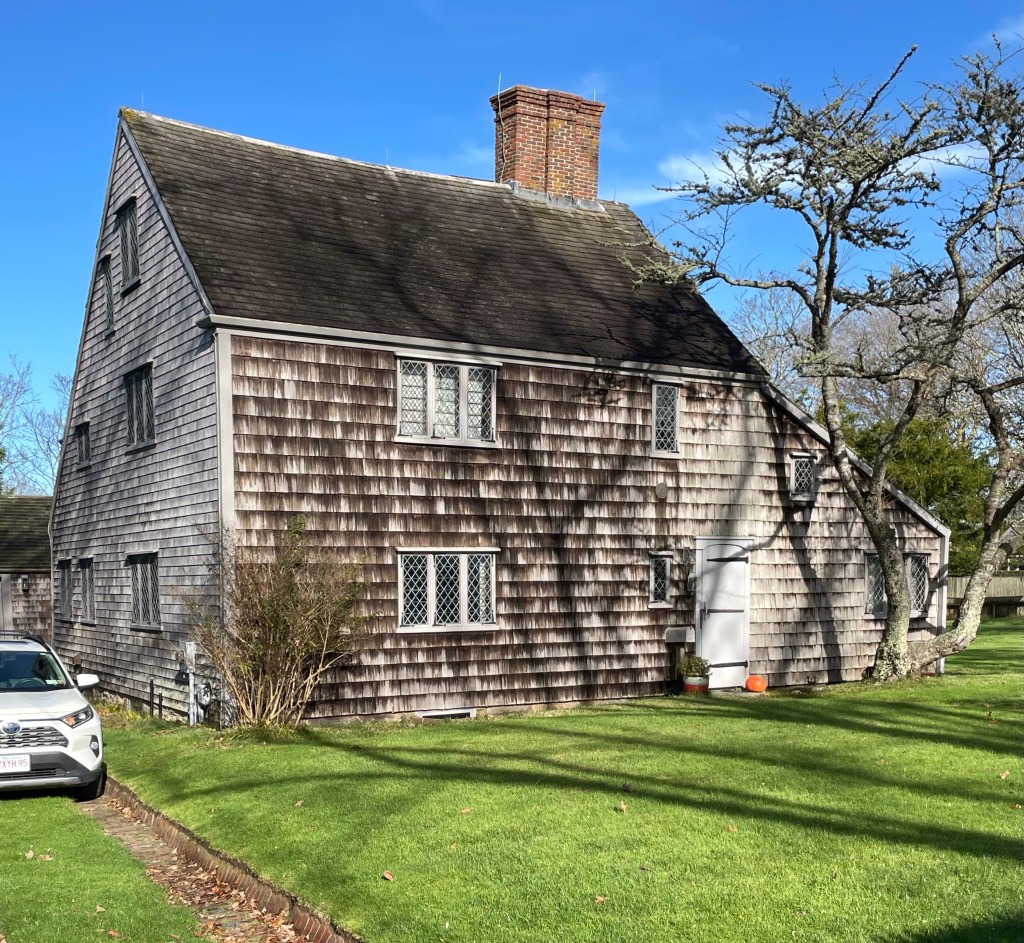
In 1690, Richard Gardner Jr. (1653-1728) received the land and dwelling house from his late father Richard Gardner (1622-1688) who was born in England and settled in Nantucket by way of Salem upon his death. The primitive, First Period home was occupied by subsequent generations of the Gardner family, and altered and expanded to fit the growing needs and wealth of the family. By 1840, the house was owned by George C. Gardner, a whaling captain and descendant of Richard Gardner. The original home was located on what is now Lowell Place, just off Main Street, and the Gardner Homestead was converted to a carriage house for the more modern George Gardner Home. By 1927, Ms. Gladys Wood purchased the deteriorating and heavily altered structure, and moved it to its current location on Main Street. Ms. Wood hired architect Alfred Shurrocks, who summered on the island and was restoring the Jethro Coffin house nearby, to restore the former Gardner Homestead, but this one was all based on conjecture and historical precedent. The home looks much like a 17th century saltbox and has stood the test of time.

Gorham Hussey House // c.1820

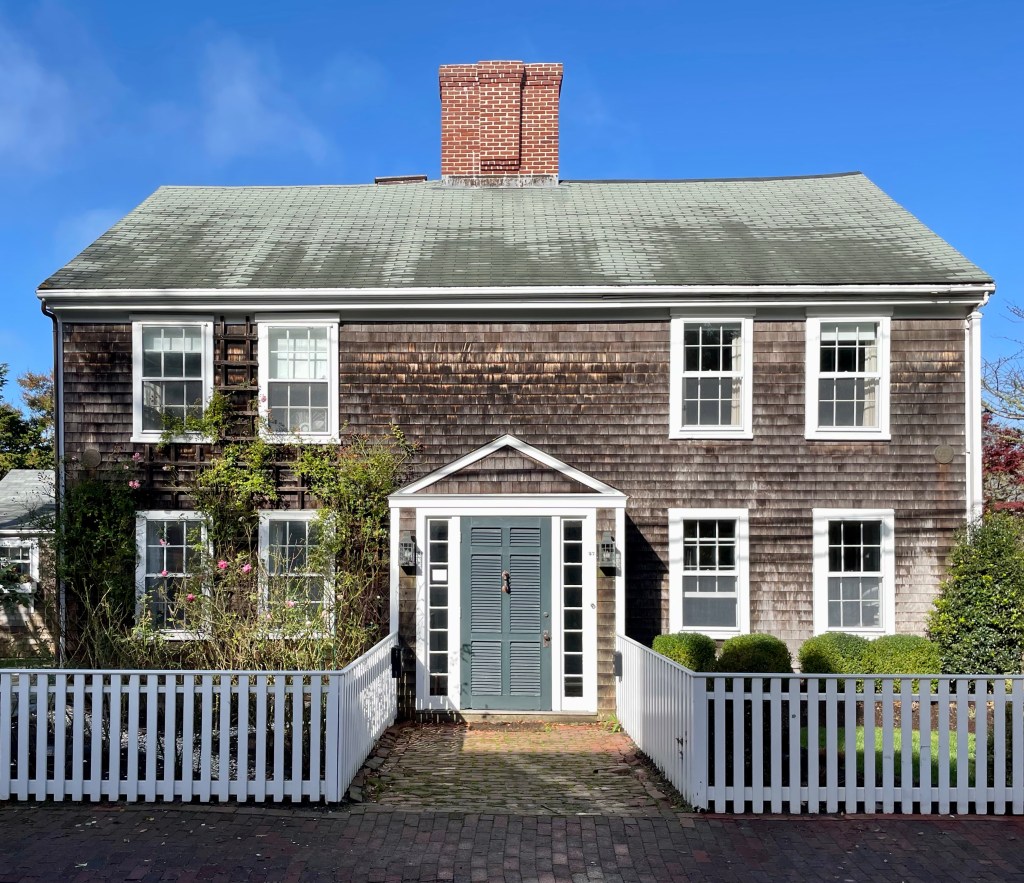
This Colonialized Federal period house sits just down Vestal Street from the Maria Mitchell Association campus on the ever-charming island of Nantucket. The home was built around 1820 for Gorham Hussey (1797-1879), who would have been around 23 at the time. He married Lydia Macy in 1820 and the couple had twin daughters that same year, likely right after this house was completed (talk about a busy year)! The home was later owned by photographer John W. McCalley, who photographed this and other houses in the area. The home retains a high-style Colonial Revival fanlight over the door, likely added in the first three decades of the 20th century as colonial homes were romanticized.

Maria Mitchell House and Observatory // 1790 & 1908

Although Hezekiah Swain built this house in 1790, the property is better known as the home of Maria Mitchell and is to this day, preserved to interpret her amazing legacy. Maria Mitchell’s father William bought the house in 1818, and Maria was born there later that year. Maria grew up on Nantucket and she became the first female astronomer in America. After she discovered a comet in 1847 (which was named Miss Mitchell’s Comet), her international recognition led to many awards and that acclaim enabled her to continue her work. She accepted a position as professor of astronomy at Vassar College by its founder, Matthew Vassar, in 1865 and became the first female professor of astronomy She established the Association for the Advancement of Women and became the first female member of the American Academy of the Arts and Sciences. She was also very involved in the anti-slavery movement in New England. After Maria Mitchell died in 1889, the Maria Mitchell Association, was established in Nantucket to preserve the sciences on the island and Mitchell’s work. On July 15, 1908, the Observatory on Vestal Street near the Science Library and Mitchell House was dedicated. The Observatory, built by the Nantucket Maria Mitchell Association, stimulated local interest in science. The success of the Observatory’s programs prompted the construction of an astronomical study in 1922, joining the existing facility with the Maria Mitchell Birthplace. The museum operates in Summers to this day, and continues Maria’s rich legacy in the sciences.

Lydia S. Hinchman House // c.1819

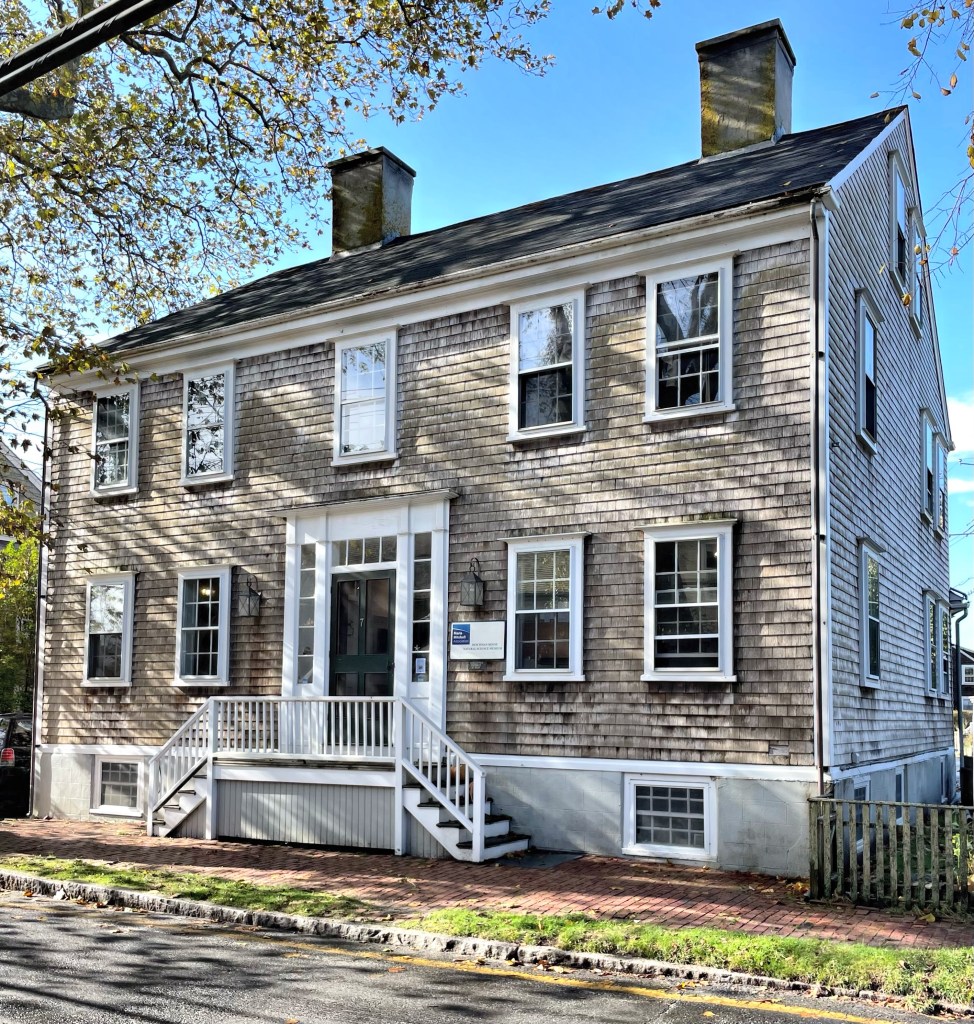
This late Federal style house on Nantucket was built in the early nineteenth century for Thomas Coffin, who himself acquired the land in 1818, which would date the home to around 1819. The Federal house exhibits a raised basement with a five bay facade with central entrance. The door is surrounded by sidelights and transom with Classical enframement. Like many houses on Nantucket, the house is clad with cedar shingles. After ownership by Thomas Coffin, the property passed through numerous hands until 1929, when the house was purchased by Lydia S. Hinchman (1845-1938). Lydia deeded the property to her son requesting that it go to the Maria Mitchell Association upon his death (Lydia was a first cousin of Maria Mitchell). He died in 1944, and the property transferred soon after to the Maria Mitchell Association which was founded in 1902 to preserve the legacy of Nantucket native astronomer, naturalist, librarian, and educator, Maria Mitchell.