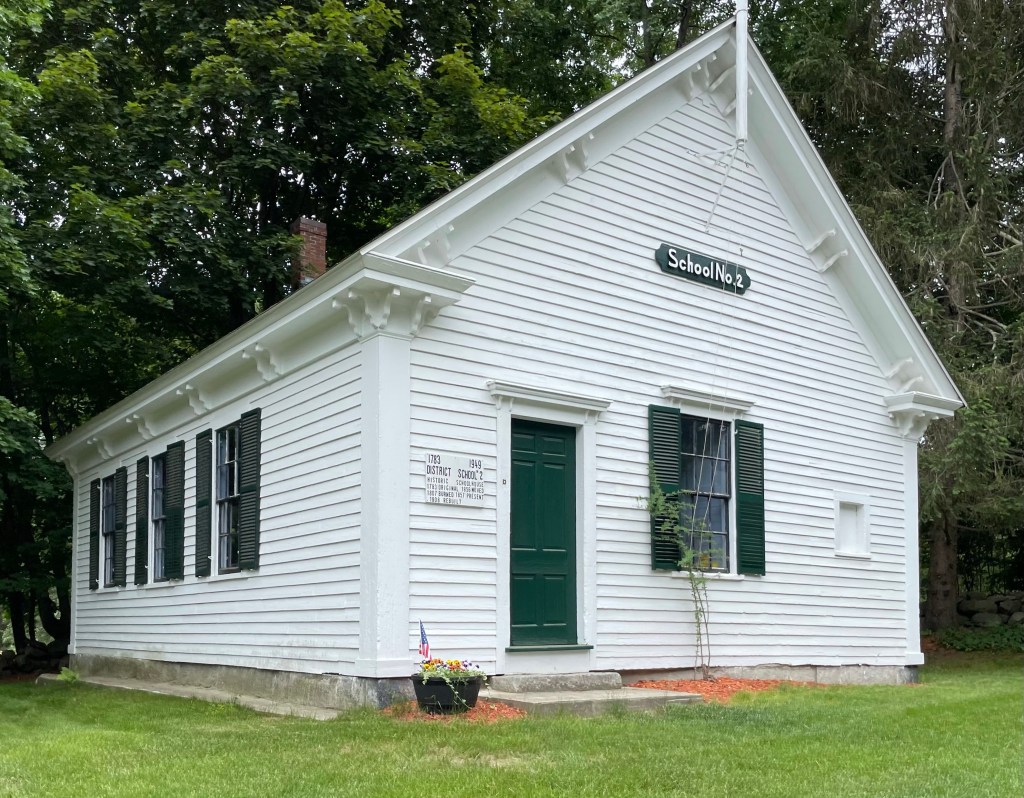
Before most small New England towns had single school buildings for elementary, middle and high school, small one-room schoolhouses like this dotted the landscape, especially in rural towns. Having smaller schools spread out allowed for a greater number of students to attend school without traveling by horseback long distances, and more local school buildings was a great solution. This c.1857 school building was in use until 1949, and it didn’t even have heat, running water, or electricity until the 1930s, making smart design a necessity to get the most out of the building. Large windows would provide natural light to flood the classroom and the steep gable roof would ensure snow to slide off the roof. Sadly, many towns have lost these buildings, but some have been restored or even repurposed as homes!
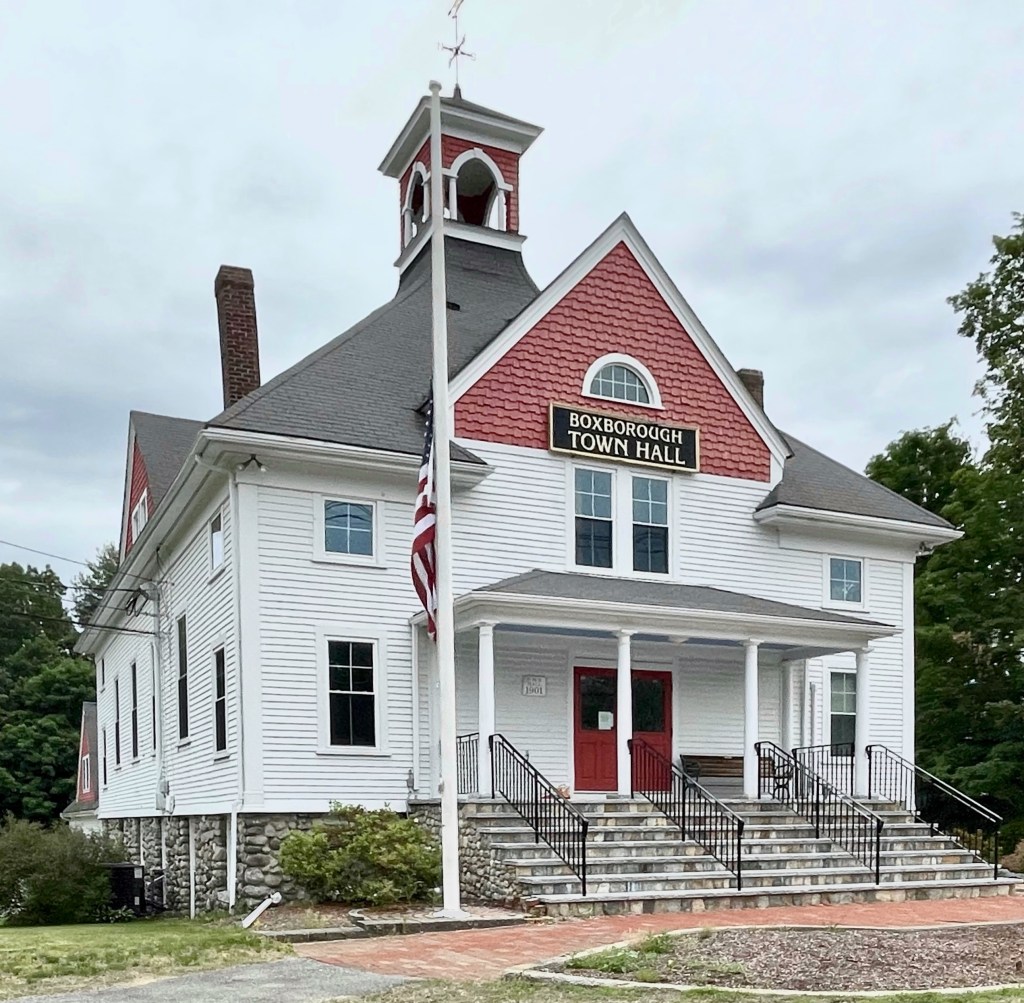
The area which became the town of Boxborough, Massachusetts, was first inhabited by the Native Americans of the Nipmuc and Pennacook tribes. Land in Boxborough was not settled by colonists until the beginning of the eighteenth century by farmers looking for fertile land to establish farms, who branched out from nearby Acton. Boxborough was formed from Harvard, Littleton, and Stow in 1783 and was incorporated as its own town. With the exception of small local industries including gristmills, sawmills, and cooperages as well as some minor boot and shoemaking, comb-making, and a lime quarry and kiln, Boxborough’s economy remained almost entirely agricultural through the 19th century. The town grew steadily and a Town Hall building was funded by the turn of the 20th century. This Queen Anne/Colonial Revival Town Hall building was constructed in 1901, atop the foundation which was constructed of locally gathered cobblestone by local volunteer farmers. Today, the town retains much of its agricultural heritage, but it is definitely under threat by subdivisions and Neo-Colonial mansions further contributing to Bostons suburban sprawl.
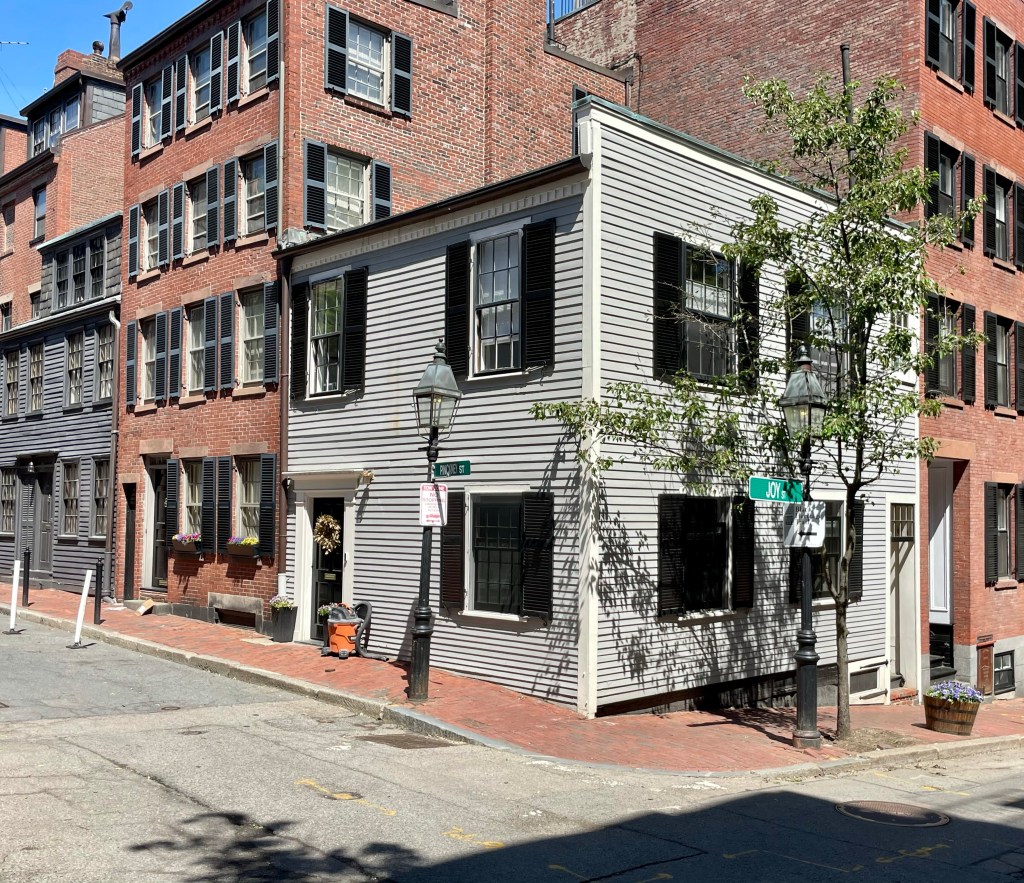
Less than a dozen wood-frame buildings exist on Beacon Hill in Boston, and this curious building is one of them, and also happens to be one of the oldest structures in the neighborhood! Built by 1800, this structure was constructed as an ell/addition to the Glapion-Middleton House at 5 Pinckney Street in Boston. The Glapion-Middleton House (previously featured) was constructed in 1787 after two Black men, George Middleton and Louis Glapion and their wives, built a small double house in the abolitionist center of Boston, Beacon Hill. In recent years, some have speculated that due to this living arrangement and other accounts, that Glapion and Middleton were in-fact gay men, but this is unsubstantiated. After the home was constructed, a two-story, five-bay ell was constructed which connected the home to Joy Street at the corner. The ell served as additional space for the two families and they appear to have had a workshop or store in part of the building. In 1855, owners demolished the center bay of the ell and erected a brick townhouse, similar to others in the neighborhood. The ell in this building was occupied as a store for the majority of its life and became an Italian restaurant and soon after a “Boyer’s Creamery Luncheon”. The property has since been converted to a residence.
Boston has many examples of adaptive reuse, likely none as frequent as converted horse stables and carriage houses from the 19th century. These one-story stables with a mansard roof on Stanhope Street in the Back Bay were constructed by 1868. The street once held other stable buildings, but those lots were either redeveloped or closed for the extension of Clarendon Street. The stables were used to store the horses and carriages of wealthy Back Bay residents including Jacob Pfaff, Dexter Follett, and Barney Corey. When automobiles replaced horses as a primary way of getting around, these buildings were converted to garages. As the land value raised here, they were adapted to commercial use eventually as restaurants. The building at the far left (now Red Lantern) was originally occupied by Gundlach’s Hofbrau German Restaurant, followed by the Red Coach Grill. A large fire occurred at the restaurant in 1955, likely destroying any historic fabric inside. The Stanhope Stables are threatened for redevelopment as the high-value land facilitates a higher and better use (presently proposed as a hotel). While the preservationist in me wants to see these stables remain intact, my stance is that the brick facades should be reconfigured into a new development in a lobby or restaurant.
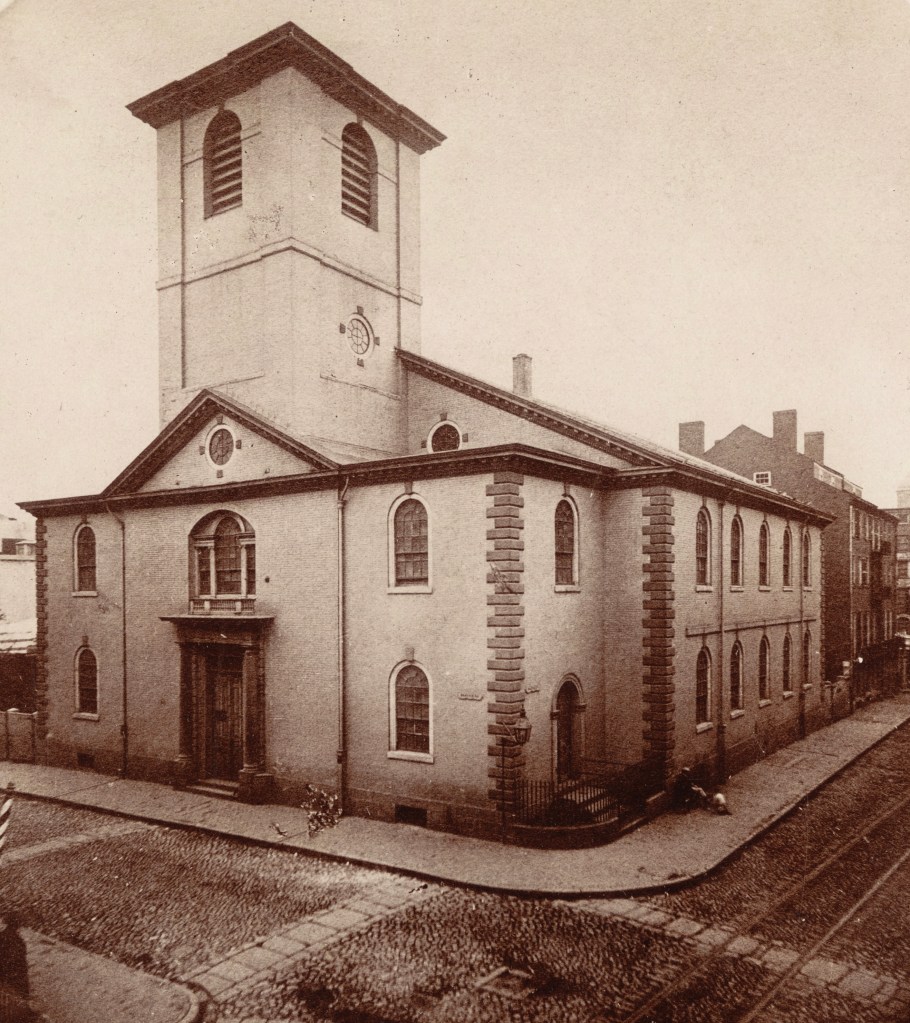
Boston’s constant churning of development has given us amazing architectural landmarks, and incredibly unfathomable architectural loss. One of such cases of loss is the former Brattle Street Church which was located on Brattle Street, roughly where the main entrance to Boston City Hall is located today. Demolition of significant architecture in Boston began way before the period of Urban Renewal in the mid-20th century, and the loss of the Brattle Street Church in Downtown Boston showcases this. The Brattle Street Church had been founded in the 1690s by a group of merchants seeking an alternative to the authority exercised by Increase and Cotton Mather in Boston’s existing congregations. Despite these beginnings, the church remained Congregational through the 18th century. At the time of the Revolution, Brattle Street counted such figures as John Hancock, Samuel Adams, Joseph Warren, and John and Abigail Adams among its parishioners. The original wooden church was replaced in 1772 by this stunning brick building, designed by Thomas Dawes. Just years after the doors opened, the American Revolution upended life in Boston. This building was a survivor, and was apparently hit by cannon-fire by the American batteries at the siege of Boston. A cannonball can be seen lodged into the building at the second floor, to the right of the Palladian window. After the American Civil War, development of the Back Bay led to a shifting population away from the downtown core, and a new church was erected for the congregation, the Brattle Square Church, designed by Henry Hobson Richardson. This church was demolished in 1872, just 100 years after it opened its doors and took a cannon for America.
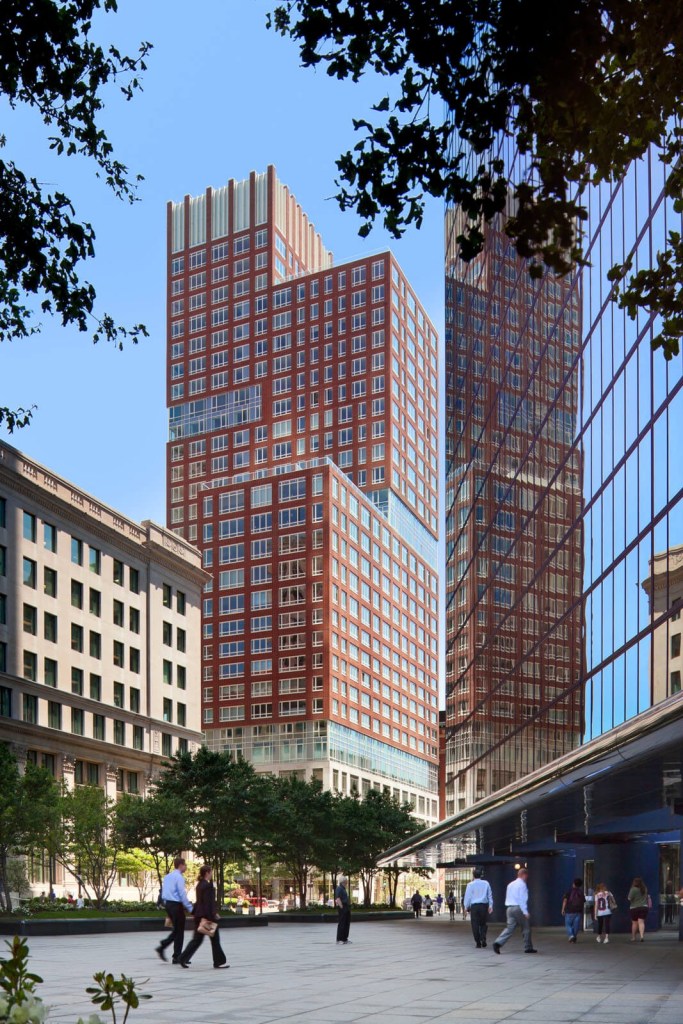
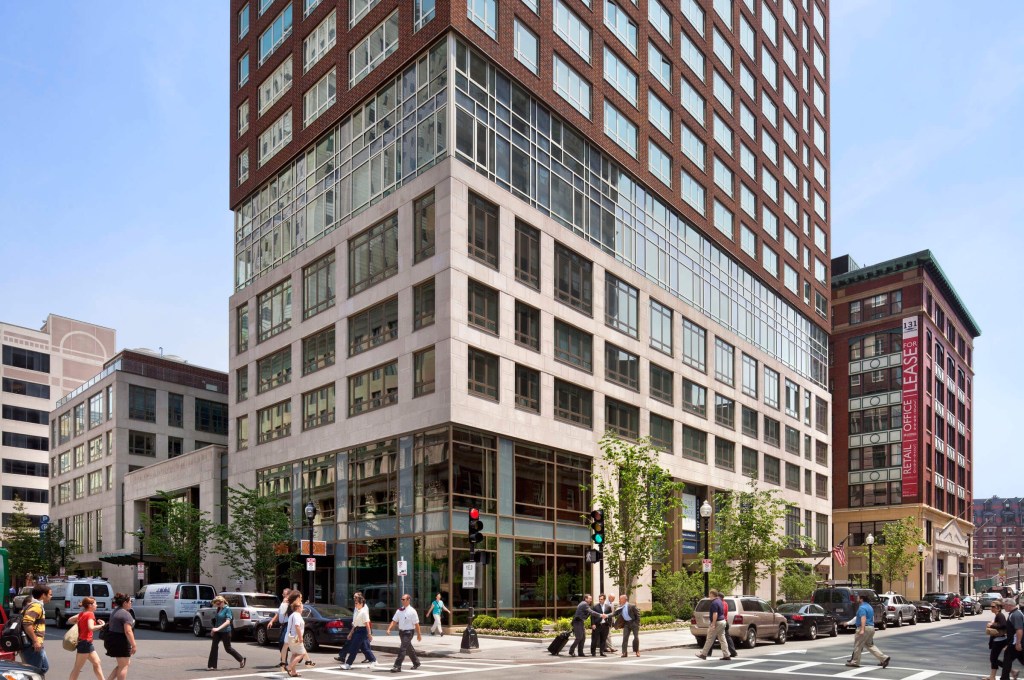
Few architects today continually put out good designs for new construction. One of those firms is Robert A. M. Stern Architects (RAMSA), who designed The Clarendon, a high-rise apartment building catty-corner to the tallest building in New England, the Hancock Tower. The Clarendon rises 32-stories atop a five-story limestone base, which relates to the scale of the base of the Old John Hancock Building (across the street). Above, the building is clad in the traditional Boston palette of red brick and limestone, but expressed in a way that relates to its modern neighbors with two-story recessed masses that break up the sheer height of the building. Above the base, the building sets back to create elevated green spaces and to mitigate wind conditions caused by the John Hancock Tower. Together the design features and materials provide a nod to historical context in Boston, while being unapologetically Modern. Part of the appeal for me is how this building does not command the corner, but adds to the rich layered fabric in this section of the Back Bay.
Schenectady’s oldest extant religious building, St. George’s Church, sits in the center of the Stockade Historic District in Schenectady, New York. As Schenectady was settled and dominated by Dutch settlers, English settlers began moving to the riverfront town, due to its rich fur trade and opportunity. With the growth of English residents, a church where the services were conducted in the English language became necessary. The blossoming congregation hired architect Samuel Fuller, who arrived to Schenectady from Boston in 1758, at the height of the French and Indian War. Ground was broken on the stunning Gothic church in 1759 and it was finally completed in 1763, delayed due to fighting nearby. The church was originally more modest for the smaller congregation, but underwent a large building campaign in the mid 1800s thanks to Reverend William Payne. He oversaw the construction of a new parish house, a new rectory, as well as two successive expansions of the church and the addition of a stone tower and spire to the west front of the church, giving it the appearance we see today. The congregation is still highly active and maintains the building beautifully to this day.
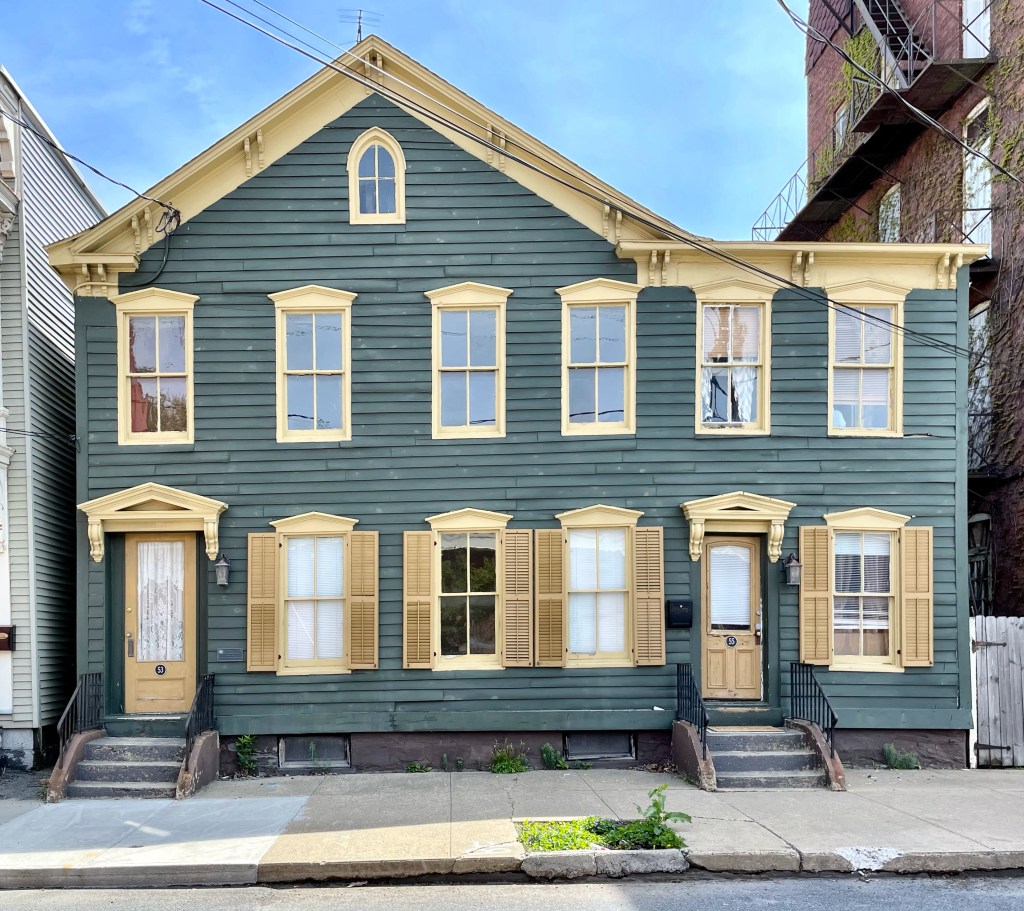
Welcome to the Stockade Historic District in Schenectady, NY! The National Park Service has described it as “the highest concentration of historic period homes in the country,” from this, the Stockade became New York State’s first local historic district, protecting it from demolitions and unfettered development. The neighborhood began in 1661, when a group of Dutch settlers, mostly merchants and fur traders looking to do business with Native Americans, settled the banks of the Mohawk River. This group of settlers built twelve houses surrounded by a wooden stockade (wooden defensive walls), to protect them from invasions, the neighborhood was named after this feature. The neighborhood developed over the 17th, 18th, and 19th centuries, providing an amazing layered neighborhood that showcases the best of designs throughout history! This home is no different. It was built around 1850 as an early example of Italianate architecture. It was most notably occupied by the famed Dr. Charles Proteus Steinmetz, a German-born scientist who beat the (then) impossible odds of succeeding with from dwarfism, hunchback, and hip dysplasia. Born Karl August Rudolph Steinmetz, he emigrated to the United States in the 1880s He changed his first name to “Charles” in order to sound more American, and chose the middle name “Proteus“, a wise hunchbacked character from the Odyssey. He got a job with General Electric in Lynn, MA, and was later transferred to Schenectady where he lived out his days. He settled in this quaint home between 1893-97, running a laboratory out of the first floor rooms. He went on to bigger homes, and never married or fostered children. I highly recommend that you all read more about him, he was a truly fascinating person!
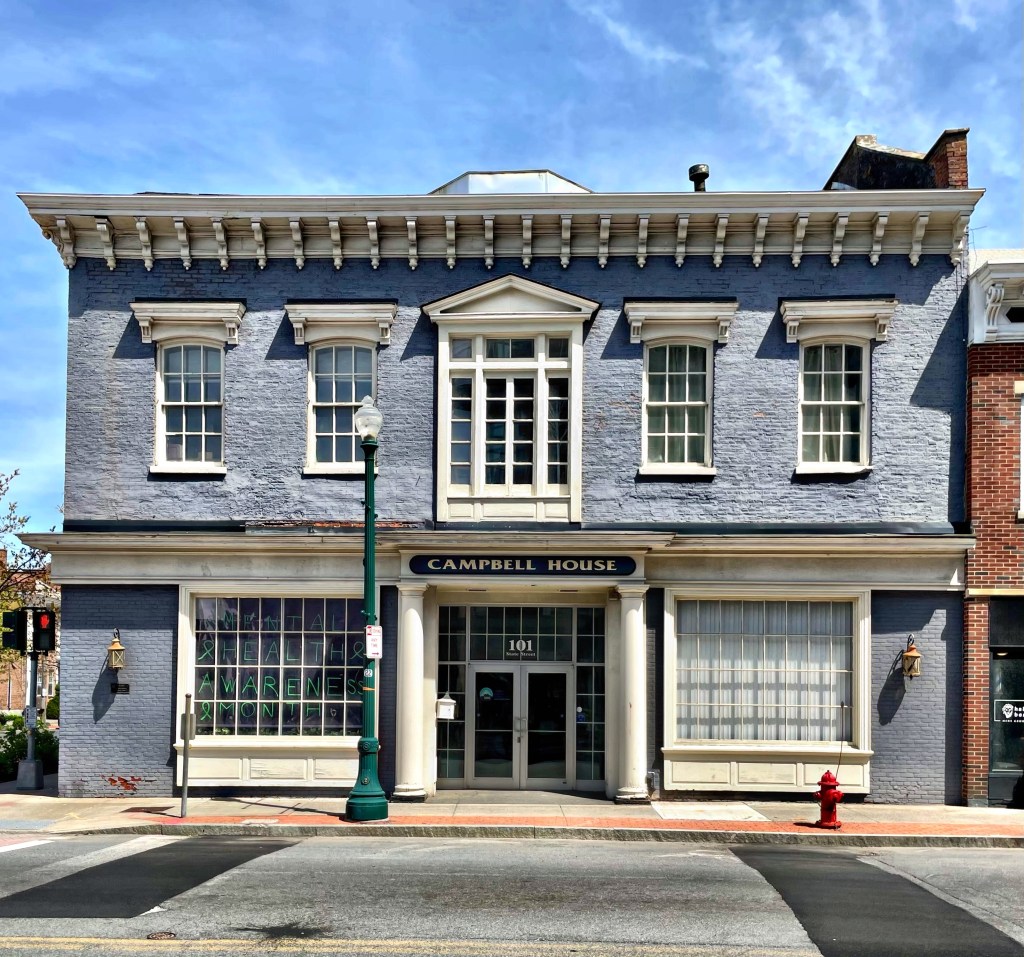
Daniel Campbell (1730-1802) emigrated to Schenectady, New York from Ireland, in 1754 at just 24. When he arrived to New York, he became involved in the fur trade, buying furs of animals from native people in the undeveloped lands of upstate, and selling the furs back to Europe. He began to purchase valuable land in the river town of Schenectady and nearby Albany, solidifying his position in those cities. In 1760, he married Engeltie Bradt, daughter of the Schenectady branch of a prominent New-Netherland era family. Soon after his marriage, he hired architect Samuel Fuller to design a spacious new Georgian mansion. The couple split their time between Schenectady and Albany until Daniel’s death in 1802. His widow resided at this home until her death ten years later. As State Street (where this mansion sits) turned more industrial, this home was modified with storefronts and later alterations in the mid 19th century.
The 16-sided Nott Memorial Hall is one of America’s most dramatic High Victorian buildings, is the centerpiece of the Union College campus (and a major reason for my stop in Schenectady when driving through New York). Union was the first non-denominational institution of higher education in the United States, and the second college established in the State of New York. Eliphalet Nott became college president in 1804, and envisioned an expanding campus to accommodate a growing school. In 1806 a large tract of land was acquired to the east of the Downtown Schenectady, on a gentle slope up from the Mohawk River. In 1812 French architect Joseph-Jacques Ramée, equally skilled in landscapes and structures, was then hired to draw up a comprehensive plan for the new campus. Ramée worked on drawings for about a year, and construction of two of the college buildings proceeded quickly enough to permit occupation in 1814. The Union College campus thus became the first comprehensively planned college campus in the United States! As part of Remee’s plan for the campus, a round, Neo-Classic “pantheon” building was proposed at the center of campus (a prescendent for Thomas Jefferson’s plans for the University of Virginia just four years later). The building never materialized in Unions early days. Construction finally began on the building in 1858, based on designs by Edward Tuckerman Potter, grandson of President Nott, but apparently took nearly 20 years to complete due to the Civil War and funding issues. The Nott Memorial as completed, is 89 feet in diameter and capped with a ribbed dome. The dome is sprinkled with 709 small colored glass windows, making it one of the finest buildings on a college campus in the United States!



 Buildings of New England

