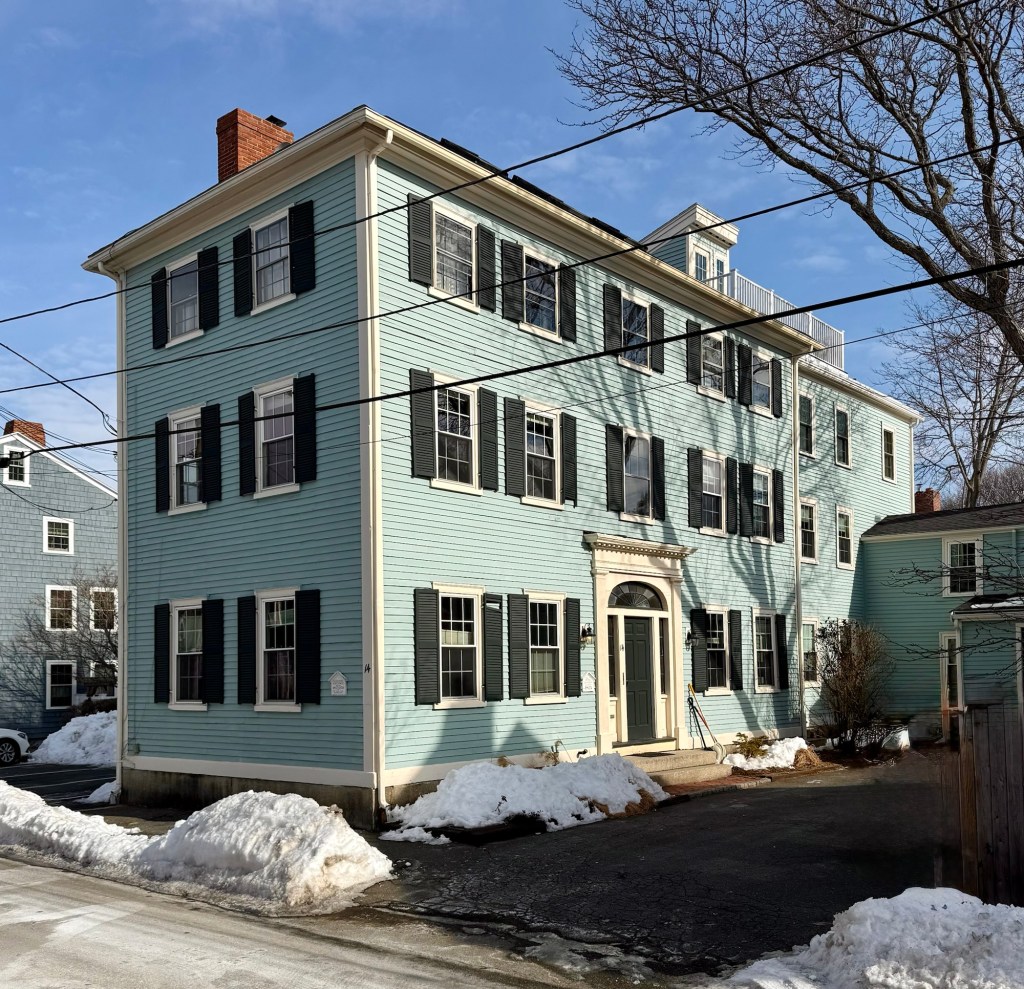
Edgerly-Hawthorne House // 1824

The Edgerly-Hawthorne House on Mall Street, near the Salem Common, is one of the most significant residences in Salem, Massachusetts. The Federal style residence was built in 1824 for Peter Edgerly, who ran a teamster/trucker or distribution company in Downtown Salem. After a decade, Peter became insolvent and the property was sold to Joseph Leavitt, a wealthy property owner in Salem. This house is best-known as the place where Salem-born Nathaniel Hawthorne and his family, lived from 1847 to 1850, and where he wrote The Scarlet Letter. It was in the room closest to the street, on the third floor, that Hawthorne sat at his desk and wrote the American masterpiece of fiction. After publishing The Scarlet Letter, Hawthorne moved to the Berkshires and then back to Concord, Massachusetts, never to live in Salem again. In c.1906, the Edgerly-Hawthorne House was photographed by the Detroit Publishing Company highlighting some landmarks in town. The house looks nearly identical from when it was built over 200 years ago!

Edgar Allan Poe Birthplace // c.1805-1965

Courtesy of BPL archives

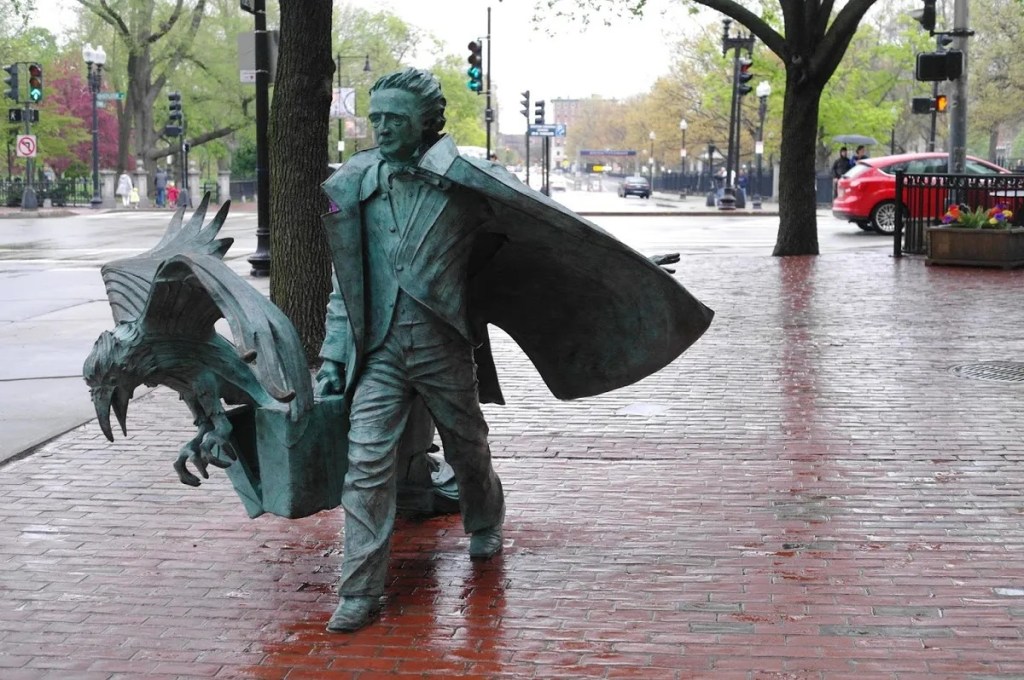
Famed author Edgar Allan Poe was born in this house on Carver Street in Boston, Massachusetts, on January 19, 1809, the second child of American actor David Poe Jr. and English-born actress Elizabeth Arnold Hopkins Poe. His father abandoned the family in 1810 and his mother died a year later from pulmonary tuberculosis. He would be adopted by John Allan, a merchant and slaver in Richmond, Virginia, his adopted family gave him the name “Edgar Allan Poe”. He would live a somewhat nomadic life, moving around often to cities all over the East Coast until his death in 1849 in Baltimore. Although it was his birthplace, Poe’s troubled early childhood likely contributed to his disdain for Boston, where he often referred to Bostonians as “Frogpondians,” after the frog pond on Boston Common, though as an insult. The poet’s seminal work The Raven was published in January 1845 to widespread success. Several months later, Poe was invited to read at the Boston Lyceum with the support of James Russell Lowell, a Harvard professor and editor of The Atlantic Monthly. It did not go well. His childhood home on Carver Street would be razed by 1962 and is presently a surface parking lot for an electrical substation. The city would honor its macabre author by renaming an alley off Boylston Street, Edgar Allan Poe Way, and in 2014, the City commissioned a public statue titled, “Poe Returning to Boston“. Designed by Stefanie Rocknak, the statue depicts Poe walking, facing away from the Boston Common. His figure is accompanied by an oversized flying raven; his suitcase lid has fallen open, leaving a “paper trail” of literary works embedded in the sidewalk behind him.

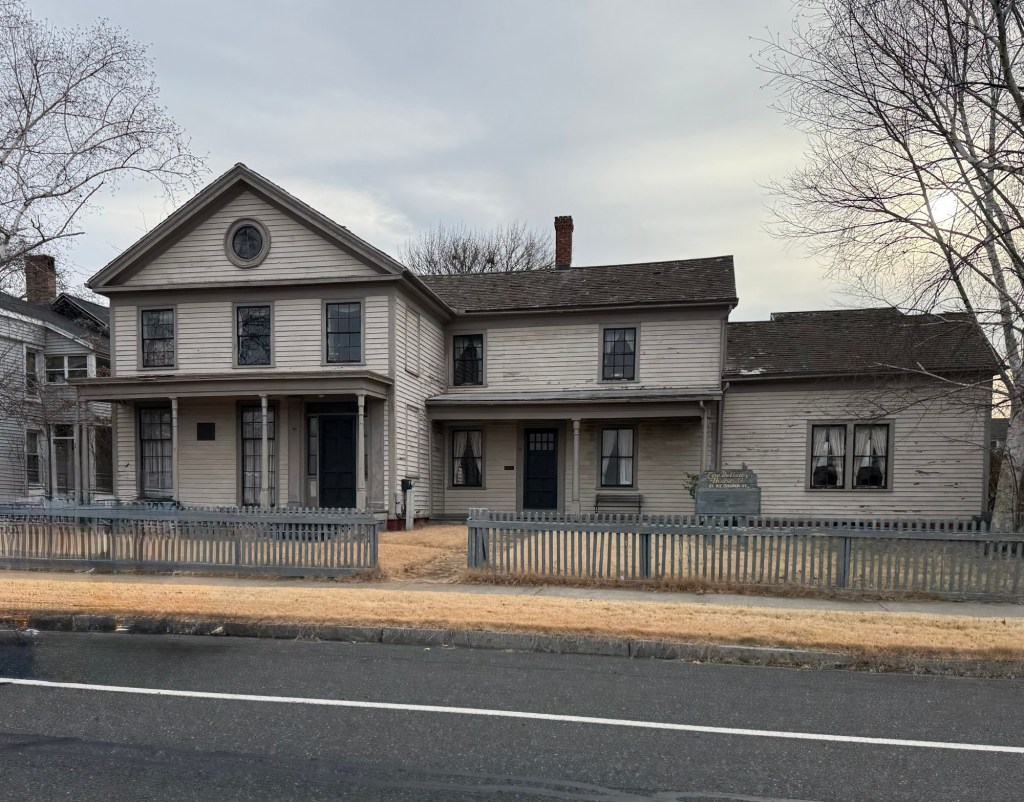
Edward Bellamy House // c.1840

The Edward Bellamy House is the only National Historic Landmark in Chicopee, Massachusetts. Its landmark designation was in honor of journalist and Utopian writer Edward Bellamy (1850–1898), whose home it was for most of his life. The house is located on Church Street in Chicopee Falls, an industrial village in town, which developed around mills and the Chicopee River. Built in for Harmon Rowley, a town selectman and local merchant around 1840, the house would later be purchased in 1852 by Rufus King Bellamy, a Baptist minister, moved the family into this house after its construction. The house, where Edward Bellamy spent much of his childhood is a well-preserved example of a late-Greek Revival residence, and today serves as a museum with rented offices that explores Bellamy’s ideas on social reform, economic justice, and the future of society. From this house, Edward Bellamy wrote  Looking Backward, a utopian novel that was instantly popular. Within a year it had sold 200,000 copies, and by the end of the 19th century had sold more copies than any other book published in America up to that time except for Uncle Tom’s Cabin by Harriet Beecher Stowe and Ben-Hur: A Tale of the Christ by Lew Wallace. His visionary work, which proposed a world free of poverty and class divisions, sparked a nationwide movement and influenced early American socialism. Edward Bellamy died of tuberculosis at his home, ten years after the publication of his most famous book. He was 48 years old. Today, the house stands as a reminder of Bellamy’s lasting legacy and his role in shaping conversations about social progress in the late 19th and early 20th centuries.

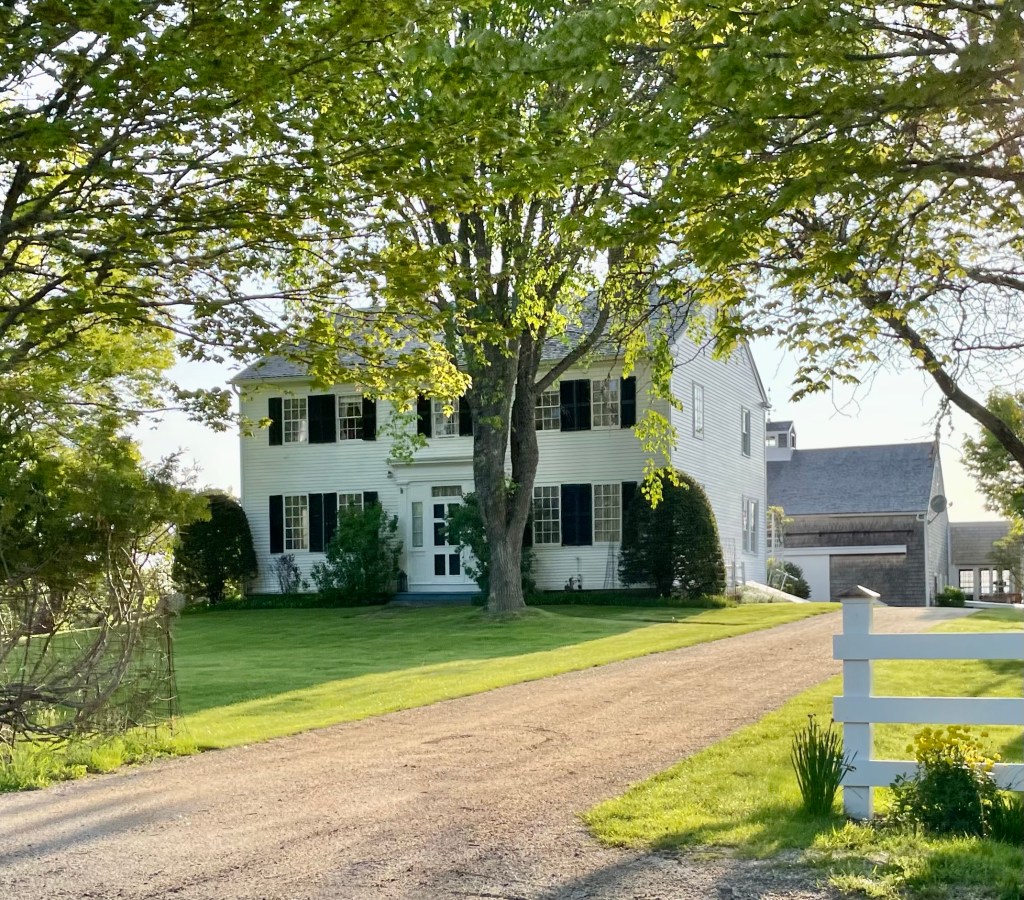
E. B. White House // 1795

The coast of Maine has long been a refuge for those looking for an easier way of life and access to natural splendor. One of the more well-known residents of Maine was author E.B. White, who lived on this farm in Maine for 48 years. The estate sits on 44-acres and was built in 1795 for William Holden by Captain Richard Allen, a local housewright. The property was purchased by E. B. White in 1933 as a summer residence, but it became a full-time home where he and his wife, New Yorker editor Katharine Angell, raised sheep, geese, chickens, pigs, even spiders all with a historic barn and tire swing. Sound familiar? It is from this house that he wrote the iconic children’s book, Charlotte’s Web (and Stuart Little) among others. White was a private person, and despite his internationally famous books, he did not advertise the location of his home while he was alive. In 1977, he convinced an interviewer to report that “he lives in ‘a New England coastal town’, somewhere between Nova Scotia and Cuba“. Katharine died in 1977, and E. B. in 1985. The property was inherited by their son, who summered there for years. The most recent owners, Robert and Mary Gallant of South Carolina, who have summered there for the past 30 years and preserved the house immaculately, selling it a few years ago.