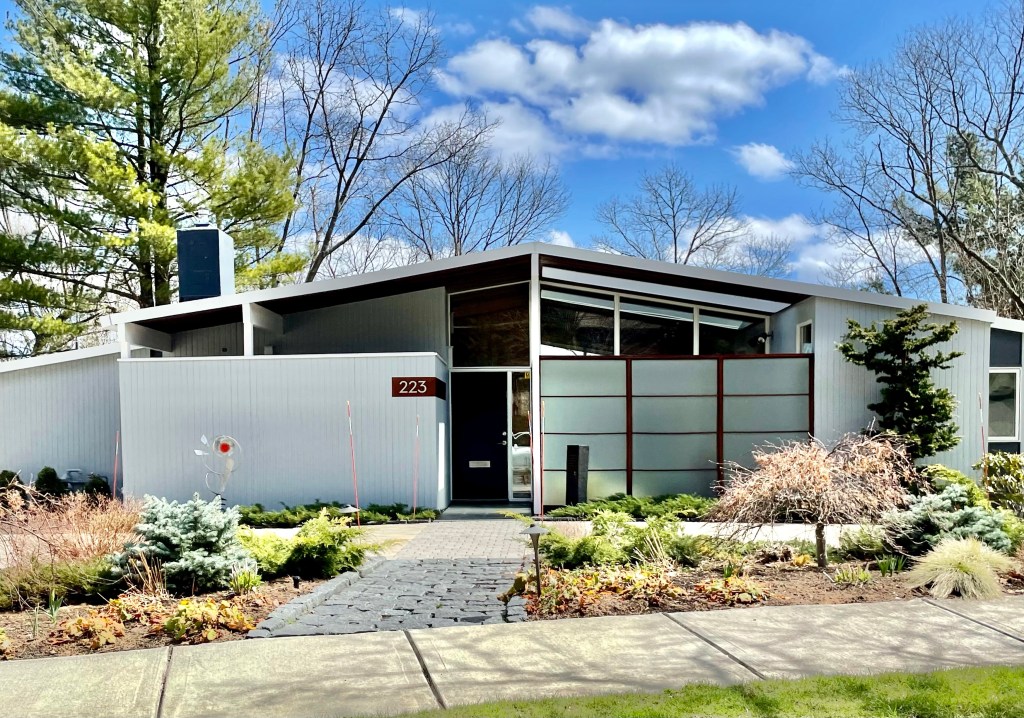
Occupying the highest elevation (315 feet) in Newton, Massachusetts Baldpate Hill and its residential development encompasses perhaps the largest concentration of architect-designed custom homes from the 1940-1960 period in the city. Newton realtor Arnold Hartmann purchased large land holdings in the minimally developed Oak Hill village, developed some land into the Newton Country Club and other areas for suburban neighborhoods. He laid out building lots on Baldpate Hill from 1926 to the late 1950s, and many of the homes were built after WWII. One of the later homes built is this house, built in 1959 from plans by the architectural firm of Hoover & Hill of Cambridge. The home features a low-slung roof with the home in a Ranch form, yet extends to two stories as the hill drops off at the rear of the home. A small garden is located in the front yard, and terraced yard is located at the rear.
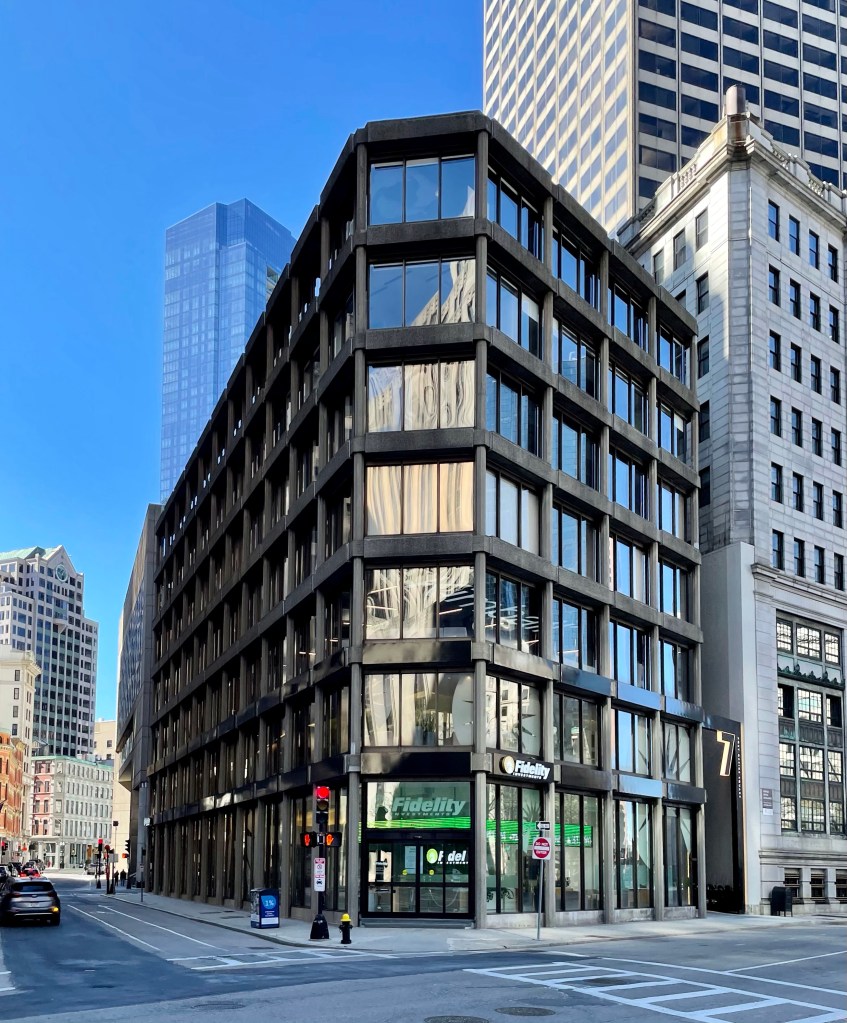
One of the lesser-known and written about examples of Brutalism in Boston is this refined, elegant take on the style, found in Downtown Boston. While many of you may dislike or even despise Brutalism, this building is a lighter version of the strong mass that we all know. The Massachusetts General Life Building was designed by Boston architect Frederick A. Stahl, who was trained in architecture locally at Harvard’s Graduate School of Design and MIT. Frederick Stahl was a perfect architect for Boston, he often worked on preservation projects including the rehabilitation of the Old South Meeting House, but showcased how 1960s architecture could compliment historic forms in a big way. For this building, he re-envisioned the historic granite commercial blocks found scattered around Boston, but showcased the ability of concrete to do more for much less massing. One of the key features of the design is that the two entrances are somewhat hidden, and are recessed in 14′ wide slots where the building is connected to the adjacent historic building. This was the aim to make this structure recess and not try and command the prominent corner. In the Mass. General Life Building, tenants also included the Loeb, Rhoades & Company, a brokerage firm based out of New York, that had offices in buildings in major financial centers all over the country. They later merged with Hornblower & Weeks, a Boston based firm, who had their own building in Boston.
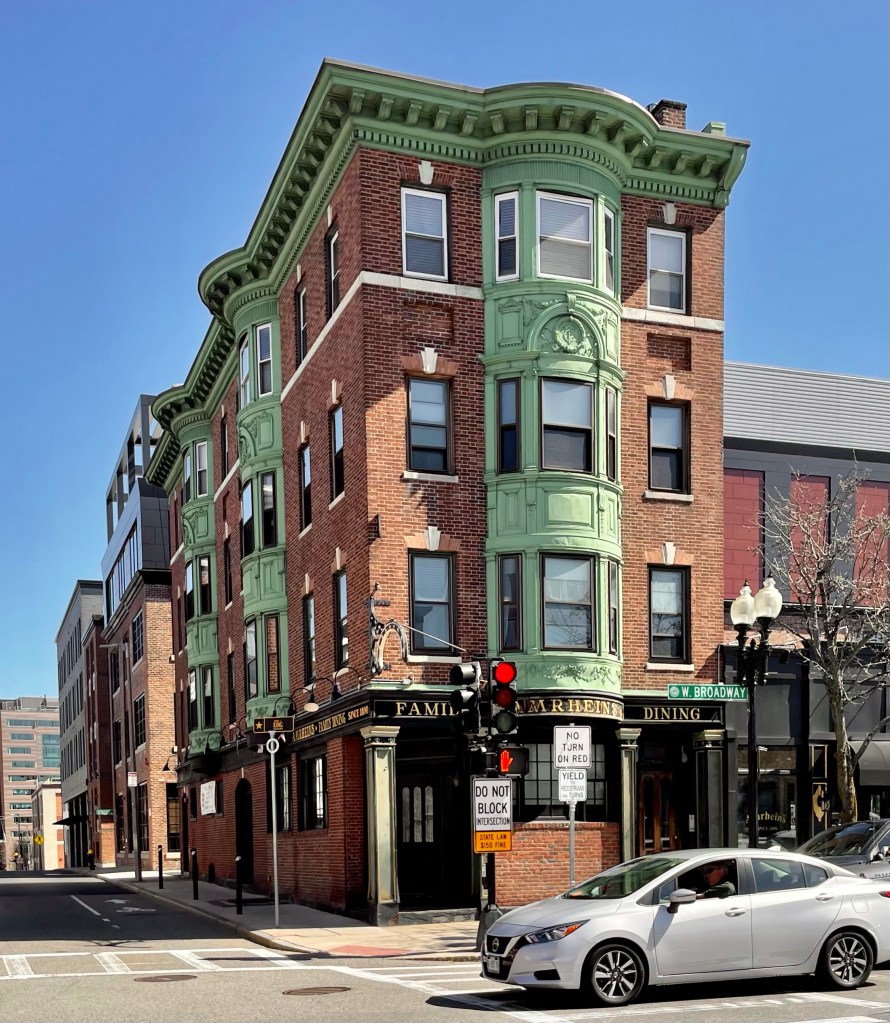
Located on West Broadway in a section of South Boston that has almost been stripped of all of its architectural character and history, sits this historic commercial building, which soon may face the wrecking ball. This building was constructed in 1896 for Thomas Casey, an Irish liquor dealer. He hired Irish-born architect Charles Donagh Maginnis who emigrated to Boston at age 18 and got his first job apprenticing for architect Edmund M. Wheelwright, the city architect of Boston, as a draftsman. The result was a four-story Colonial Revival commercial building, significant for the series of rounded copper bays and cornice. Of special note, there are wreath inlays designed into the bays between the third and fourth floors with the letters “T” and “C” within, representing Thomas Casey. Years after the building was constructed, it was purchased by Emma A. Amrhein, and has – until recently – been home to Amrhein’s Restaurant and Bar. The local landmark had two (unconfirmed) claims to fame; the oldest hand carved bar in America and the first draft beer pump in Boston. The large property was sold, and the developers proposed a large housing development on the site, retaining the Casey-Amrhein building. However, some have recently pushed for the demolition of this building to make the project slightly larger than would be with the historic building.
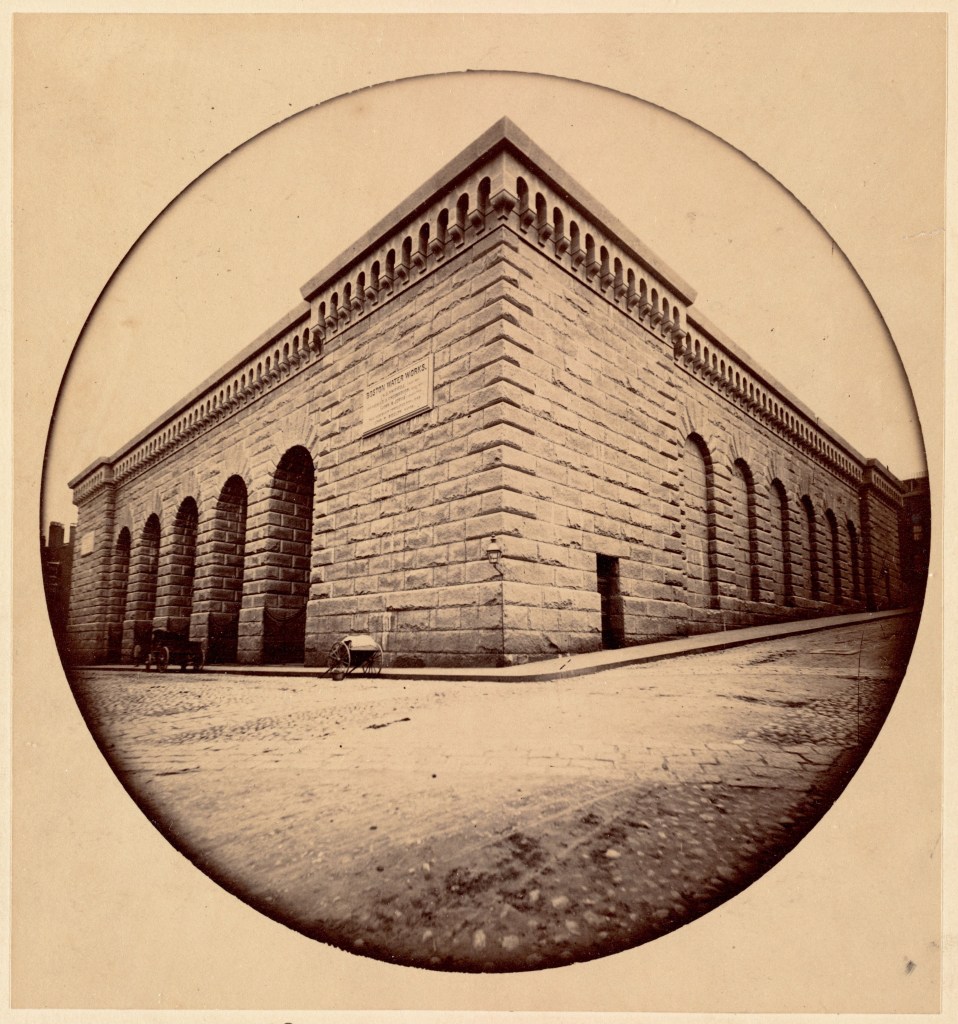
Did you know there was once a massive granite reservoir in Beacon Hill?
Long before the Wachusett and Quabbin Reservoirs that now supply water to Boston, the city’s original municipal water supply was Lake Cochituate, a reservoir in Metro-west. Due to Beacon Hill’s high elevation, the city selected the site behind the recently completed Massachusetts State House, to store and distribute water to the city. The site was too steep, so it had to be graded. Therefore, the top of Beacon Hill, where the beacon had long been standing, needed to be lowered to accommodate the reservoir. The soil was dug by hand and hauled by cart down to fill the old Mill Dam in the Bulfinch Triangle area. The reservoir, which opened in 1849, was unique in its approach. The design of the structure needed to minimize its footprint and reflect well on its surroundings in the prestigious location. In lieu of earthen bermed walls, as was the convention in most period distribution reservoirs, the design chose to create a watertight tank within a masonry structure. This made the structure the first elevated storage tank constructed in New England. Sheet lead was used to make the reservoir watertight (which likely led to a lot of health issues (hindsight is 20/20). By 1870, the poor water pressure made the Boston Waterworks build the Roxbury Standpipe, which relegated the Beacon Hill Reservoir to being an emergency water source for use only in case of fire or accident to the pumping-mains. In 1883, Boston Water Works sold the structure to the Commonwealth, who demolished it for the addition to the State House.
The Boston Gas Light Company was incorporated in 1823 and for thirty years was the sole company producing coal gas in the City of Boston. In the second half of the 19th century, several additional gas light companies were formed in and around Boston to make loads of money with the booming industrial growth seen there. They continued until it was determined that with the proximity of competing pipelines and the overlap of service areas it would be more efficient to consolidate into a single company. The Boston Consolidated Gas Company was chartered in 1903 to to combine numerous smaller corporations operating in the City of Boston under one conglomerate. The organization had a small building in Downtown, which was outgrown decades later. The company hired the local firm of Parker, Thomas & Rice, to design the new mid-rise office building on the outskirts of the fashionable Back Bay neighborhood. The base of the Classical Revival building follows the base, shaft and capital form. The base is traditional with three stories of rustication, ornamental capitals, carved detail at the arches and the elegant bronze window frames. The central stories are clad in dressed limestone, streamlined with punched openings, emphasizing verticality. Stories 12 and 13 are framed by colossal engaged columns with arched windows and bas reliefs. The ground floor today is home to a recently opened restaurant, Nusr-Et Boston, which was created by the famous chef, Salt Bae.
The New England Telegraph and Telephone Company Building was erected in 1947, just north of the Western Union Art Deco building (last post) to serve as the company’s headquarters. The steel-frame, polished granite and limestone-sheathed Art Deco skyscraper was designed by Alexander Hoyle, a partner in the firm of Cram & Ferguson. The stunning building takes the form of a stepped pyramid, or ziggurat, with successive receding stories rising from a four-story base, which diminishes its massing from the street. At the interior, a lobby mural on paper by artist Dean Cornwell (1892-1960), depicting “Telephone Men and Women at Work,” commissioned in 1947 and installed in 1951. The 190-foot mural told the story of the history of the telephone and was an artistic masterpiece, but was removed from the lobby during a recent renovation and subsequently sold.
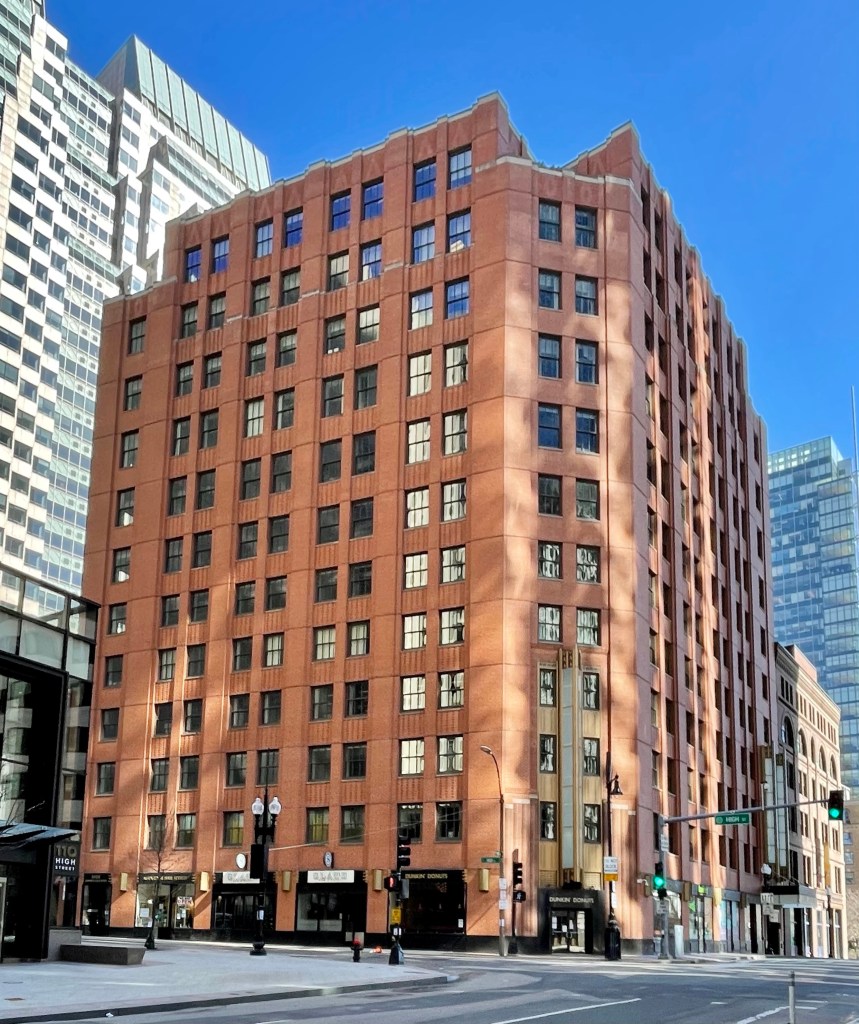
While Boston doesn’t have as many iconic Art Deco buildings as New York or Chicago, we do have some that pack a punch! Located at the southern end of Downtown Boston, the Western Union building at the corner of Congress and High streets served as a headquarters for the third district in Western Union’s eastern division. Western Union was founded in 1851, and ten years later, built the first transcontinental telegraph line. The company made a brief foray into the telephone field but lost a legal battle with Bell Telephone in 1879 and thereafter concentrated solely on telegraphy. In the 20th century, Western Union diversified its operations to include: leased private-line circuitry, a money order service, as well as telegrams and mailgrams. The company’s Boston building was designed at the same time as their New York City headquarters, designed by Ralph Thomas Walker, and the buildings are strikingly similar, just with the Boston building on a smaller scale. The building in New York is among my favorite Art Deco buildings ever, as the use of red brick in varied patterns creates such a stunning composition. Amazingly, in 2004, water infiltration behind the original brick façade of the Boston building necessitated the removal and replacement in-kind of the entire brick façade. The existing signage and light fixtures, designed in the Art Deco style were added at that time.
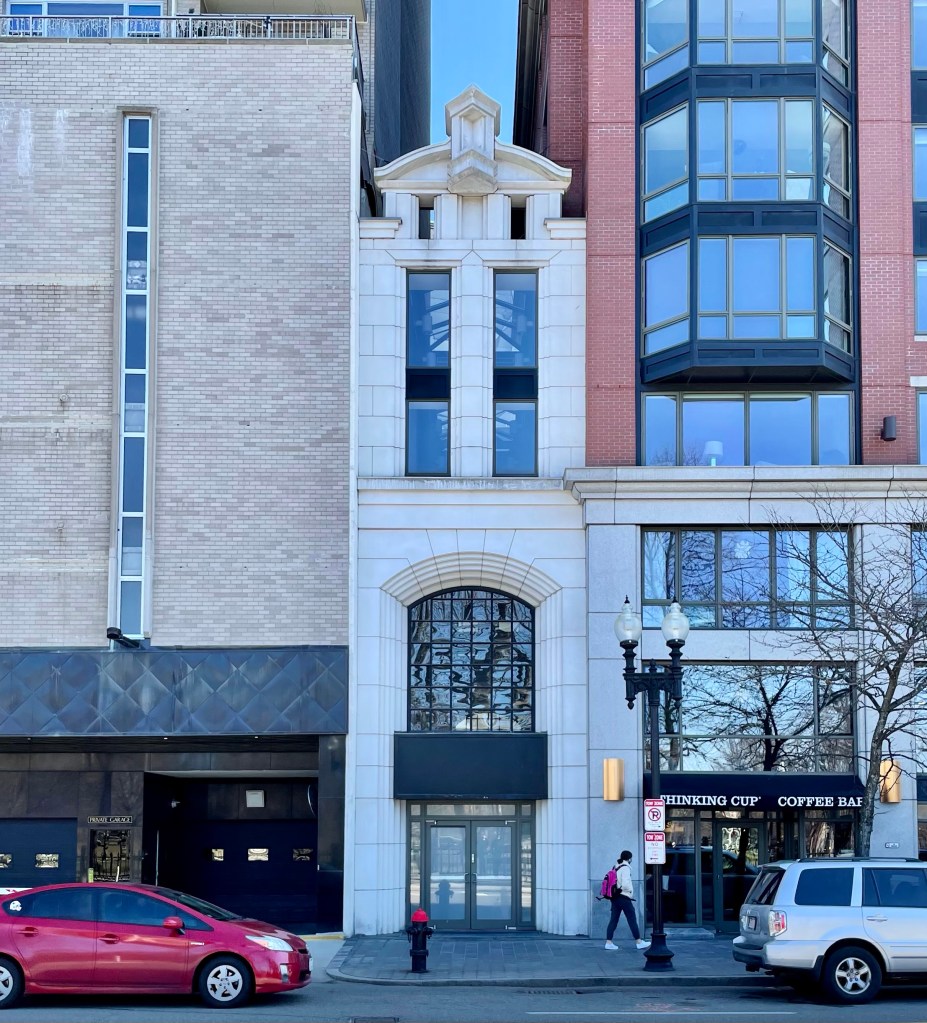
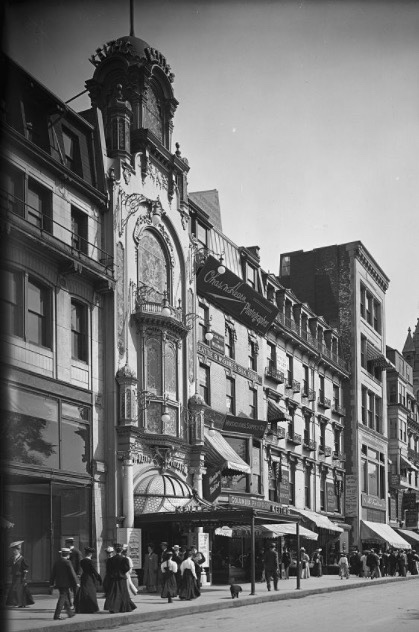
The other day, I was walking in Boston Common along Tremont Street, when I noticed this oddly ornate building wedged between larger, modern buildings. I HAD to investigate! The building was actually constructed as an arcade/covered walkway which ran to Mason Street behind, with a tunnel running under that street into the B.F. Keith’s Theatre. In 1892, Benjamin F. Keith and his business partner E.F. Albee purchased land off Mason Street, a scarcely trafficked street between the busy Tremont and Washington Streets in Boston’s Theater District, with the goal of creating the city’s finest vaudville theatre. The duo hired J. B. McElfatrick & Son, architects who specialized in theatres, to design the new B.F. Keith’s. Due to the site being wedged between two main streets, entrances were built off both Tremont and Washington with flashing lights and marquees, guiding patrons inward. The Tremont facade was especially grand so that B. F. Keith’s New Theatre could be advertised on, and approached directly from, Boston Common, with lights flooding the park. The theater opened in 1894 and was over-the-top with intricate details and sculpture all over, appealing to the city’s wealthy as a place to see the arts. Although it was primarily a vaudeville house during Keith-Albee’s ownership, famed inventor Thomas Edison demonstrated his new Vitascope movie projector here on May 18, 1896. This was the first projection of a movie anywhere in Boston. As live shows made way for motion pictures, the theater adapted, but suffered around the Great Depression when would-be patrons decided to save their limited money. In 1939, the theater was converted to a movie theater named the Normandie. The theater was demolished in 1952 for a surface parking lot to provide better service to the Opera House (originally B.F. Keith’s Memorial Theatre, confusing I know) and Paramount Theater. Today, all we have left of the once beloved B.F. Keith’s Theater is the small annex, which is virtually unrecognizable from historic images as most of its decoration and the top two stories were removed.
One of the lesser-known historic hotels in Boston can be found at the corner of Exeter and Blagden Streets in the Back Bay neighborhood, tucked behind the Boston Public Library’s Johnson addition. Exeter Chambers (now Courtyard by Marriott Boston Copley Square), was built between 1889 and 1890 from plans by architect Theodore Minot Clark. Clark was a professor at MIT and the understudy of Boston’s famed Trinity Church architect, H. H. Richardson. Clark oversaw much of the construction of Trinity Church and his name is even engraved on the building. Exeter Chambers was constructed by the Guastavino Company, a very prominent contractor during the period noted for style and quality, known for the Guastavino tile. Cutting edge techniques such as compression arches and terracotta accents were featured throughout the structure. The hotel was vacant for many years and a renovation in 2004, which added three stories to the building, restored the ornate exterior to its former glory.
St. Patricks Day in Boston is not the same this year. It has been a year since I have been crammed into a dimly lit, wood-paneled Irish Pub, with a pint of Guinness and good conversations with strangers. So for now, I will drink my sorrows in highlighting one of many Irish pubs in Boston, Hennessy’s. The building was constructed as one of a row around 1826 along with the adjacent buildings on the block (today containing Son’s of Boston and Blackstone Grill). All four buildings were identical and stood 3-1/2 stories as Federal style commercial buildings with retail space at the ground floor and office or residences above. The buildings were sold off separately and in the 1960s, this building was acquired by the Charlestown Savings Bank, who thought to “Colonialize” the building. They removed 1-1/2 stories and altered the openings at the ground floor (it could have been MUCH worse). The bank moved out just decades later and the building has since been home to Hennessy’s.
Adjacent to the Susie King Taylor House on Holyoke Street in the South End neighborhood of Boston, the Harriet Tubman House has long served the Black community of Boston. The Harriet Tubman Crusaders, an African American branch of the Women’s Christian Temperance Union in Boston, created the first Harriet Tubman House in 1904 as a residence Black females who had recently migrated from the South. The Harriet Tubman House took in young female boarders, providing them with food, clothing, shelter, and friendship while they adjusted to their new environment. It later adapted to provide housing for Black female students who were not allowed to live in the traditional student dormitories at some Boston-area colleges. The Crusaders rented a home on Holyoke Street until 1909 when member Julia O. Henson donated her own townhouse at 25 Holyoke Street as a permanent headquarters for the organization’s expanding programs. Harriet Tubman visited Boston several times in the late nineteenth and early twentieth centuries, often staying with Julia Henson at this home. In 1960, the Harriet Tubman House merged with other settlement houses in the area to form the United South End Settlements (USES) and in 1976 USES erected a modern building at the corner of Columbus and Massachusetts Avenues, which was designed by Black architect Donald Stull. The 1976 building was recently demolished, despite massive outcry, for a luxury condo development… Shocker.
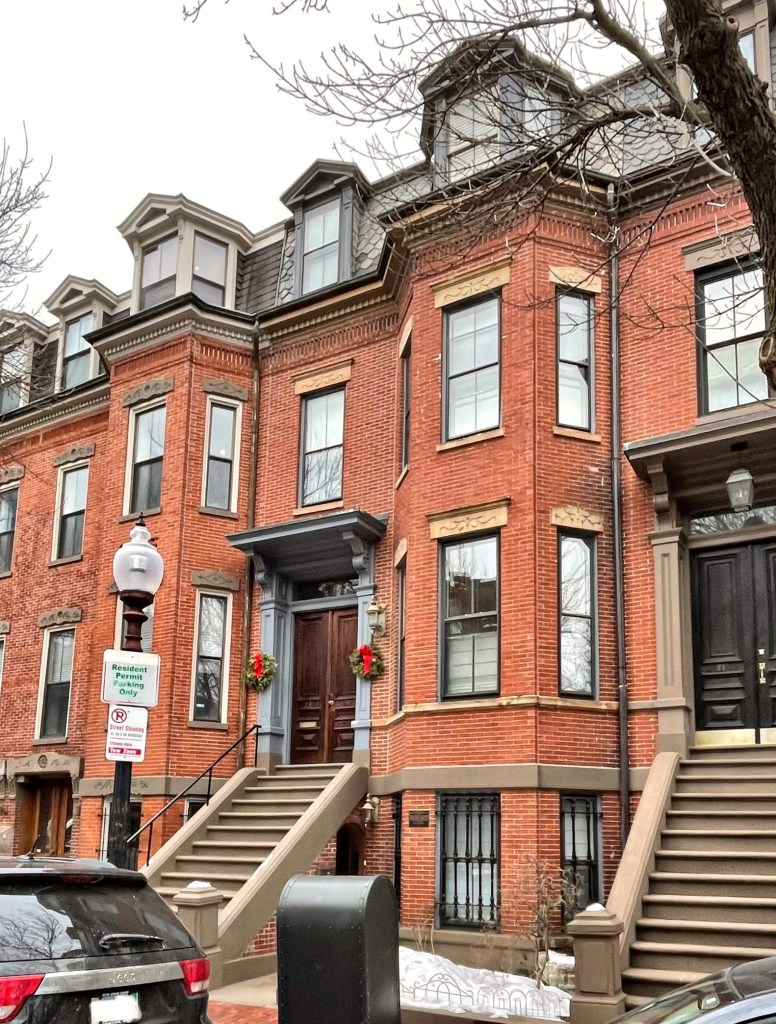
The rowhouse at 23 Holyoke Street in the South End neighborhood of Boston is an excellent architectural specimen, but is best known for one of its residents, Susie King Taylor. Susie King Taylor (1848-1912) was born into slavery near Savannah, Georgia; and despite Georgia’s harsh laws against the formal education the enslaved, she attended two secret schools taught by black women. She became free at the age of 14 when she escaped onto a Union-owned boat off the coast of the then Confederate occupied Fort Pulaski on the islands off the coast of South Carolina. She soon attached herself to the First South Carolina Volunteers, the first black regiment in the US Army. She served under the Union Army in various capacities: officially as a “laundress” but in reality a nurse, caretaker, educator, and showcased such strength and courage as a young woman. Eventually, Taylor married Sergeant Edward King in 1862, and together they remained with the unit until it was mustered out of service in 1866. It is likely at that time that she met Harriet Tubman, who served as a nurse, scout, and spy for the 1st South Carolina Volunteers. Postwar, the Kings moved to Savannah, Georgia. She hoped to continue her teaching career and opened a private school for the children of freedmen. Unfortunately, her husband died the same year, and a public school opening caused her private school to fail. By 1868, Taylor was forced to find work as a domestic servant. She moved to Boston in 1872 where she married Russell Taylor in 1879. She devoted much of the rest of her life to work with the Woman’s Relief Corps, a national organization for female Civil War veterans. She lived at this home on Holyoke for much of her time in Boston, likely re-connecting with her old friend Harriet Tubman when she lived on the street.
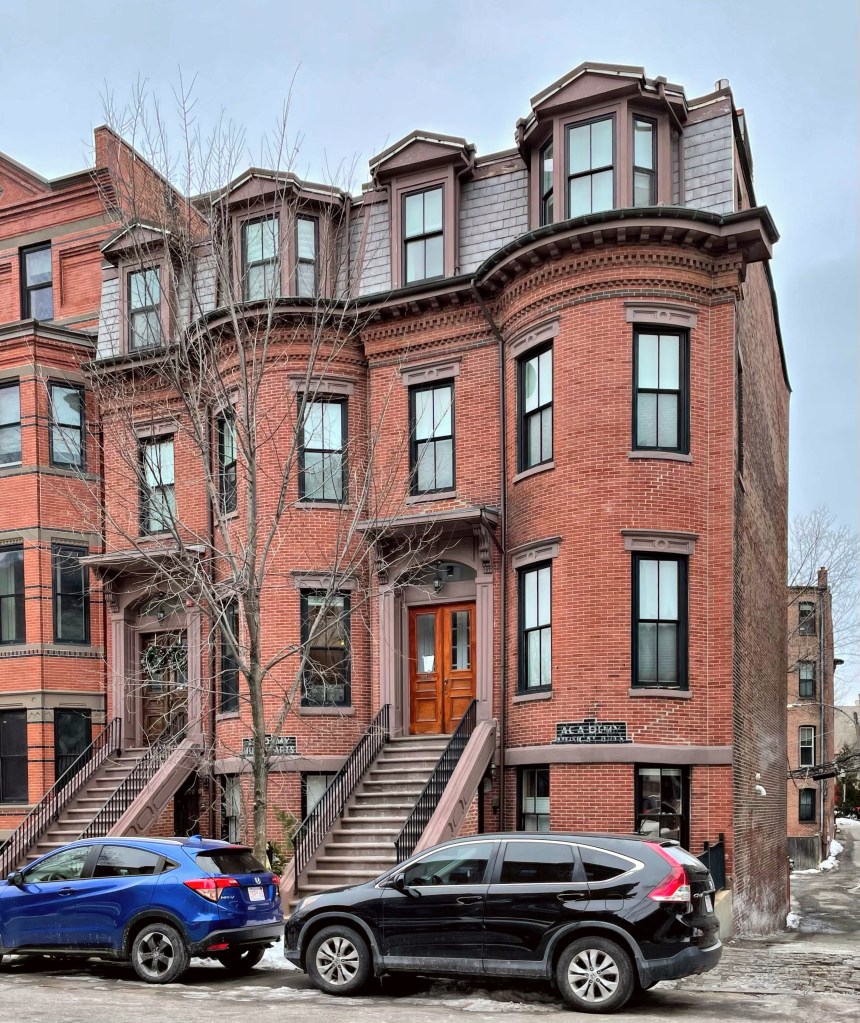
These paired rowhouses at 1-3 Claremont Park in the South End were built by 1874 as speculative housing. Between 1922 and 1928, 3 Claremont Park was purchased by a twenty-something year old Anna Bobbitt Gardner, and she opened a studio in the home, teaching Bostonians how to play the piano. In 1932, Anna Bobbitt Gardner (1901-97) became the first African American women to be awarded a bachelor’s degree from the New England Conservatory of Music. Her studio, Pianoforte Studio bloomed in popularity among Black and White Bostonians, and she rebranded the school as the Boston Academy of Musical Arts, adding four more studios in the area. She would later acquire the adjacent house at 1 Claremont Park and expanded the school. She went on to manage ‘Colored American Nights’, featuring African American musicians at Boston Symphony Hall, and produced local radio and television programs to boost the African American audience in classical music. After her death in 1997, the New England Conservatory has annually granted a musician the Anna Bobbitt Gardner Lifetime Achievement Award, showing her impact on the arts in Boston.
Historically, the South End neighborhood of Boston was populated by middle- to upper-class white residents until the late 19th century, when financial crises paired with new, modern housing (constructed in the Back Bay West and Allston areas) shifted that population elsewhere. West Indian immigrants and Black Bostonians moved to the relatively new neighborhood and many formerly single-family homes were converted to tenements or multi-family uses. From this, a vibrant Black community flourished, bringing black-owned businesses like restaurants, banks and jazz clubs. The area’s famous jazz clubs boomed during the forties and fifties, yet, many have disappeared over the years with the gentrification and development in the neighborhood. Wally’s Cafe Jazz Club on Massachusetts Avenue, was founded by Joseph L. Walcott. Mr. Walcott “Wally” was a Barbadian who immigrated to America in 1910, eventually settling in Boston. He worked many jobs and eventually saved up enough by 1947, purchasing an old rowhome and converting the space into a club. Wally was believed to be the first African American to own a nightclub in New England. He brought famed jazz musicians to Boston, and they played at this iconic venue for decades until 1979, when the venue shifted across the street to this building. With the jazz movement waning in popularity, Wally maintained his commitment to the music by featuring young musicians who were attending prominent academic institutions such as Berklee College of Music and the New England Conservatory of Music. Mr. Walcott cleverly decided to hire these young music students and mixed them with seasoned professionals who were veterans of the Big Band era. This mix of talent was special, and the format enabled Mr. Walcott to continue to serve the jazz loving audiences of New England. After Wally’s death in 1998 at age 101, his three children took over the bar, and today Wally’s Cafe is still owned and managed by his family, though presently closed due to COVID-19 restrictions.
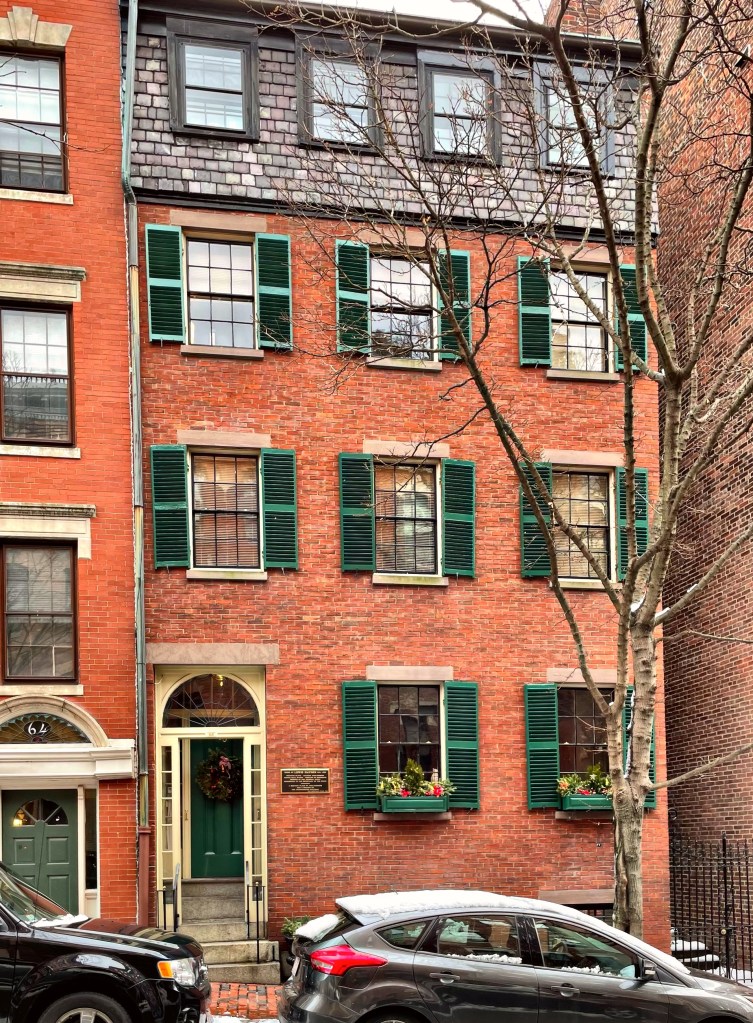
Lewis Hayden was born into slavery in Lexington, Kentucky, in 1811, as one of a family of 25. Hayden was first owned by a Presbyterian minister, Rev. Adam Rankin. He sold off Lewis’ brothers and sisters in preparation for moving to Pennsylvania, and he traded 10-year-old Hayden for two carriage horses to a man who traveled the state selling clocks. In the mid-1830s, Hayden married Esther Harvey, also a slave. She and their son were sold to U.S. Senator Henry Clay, who sold them both to the Deep South, and Hayden never saw them again. By 1842, Hayden married a second time, to Harriet Bell, who was also enslaved, and he cared for her son Joseph as his stepson. After this marriage, Hayden began making plans to escape to the North, as he feared his second family might be split up like the first. In 1844, he and his family escaped with assistance of abolitionists all the way to Canada. From Canada, the Haydens moved in 1845 to Detroit in the free state of Michigan, and the next year, they moved to Boston, at the center of anti-slavery activity with the city’s strong abolitionist base. In Boston, Hayden became a lecturer and ran a clothing shop, acquiring enough money to live in this large home in Beacon Hill. The Haydens routinely cared for fugitive slaves at their home, which served as a boarding house. Guests included Ellen and William Craft, who escaped from slavery in 1848. Hayden prevented slave catchers from taking the Crafts by threatening to blow up his home with gunpowder if they tried to reclaim the pair. Hayden died in 1889, outliving the abolishment of slavery. Harriet died in 1894 and left $5,000, the entirety of their estate, to the Harvard University for scholarships for African American medical students. It was believed to have been the first, and perhaps only, endowment to a university by a former slave. Their former home remains a stop on Boston’s Black Heritage Trail.