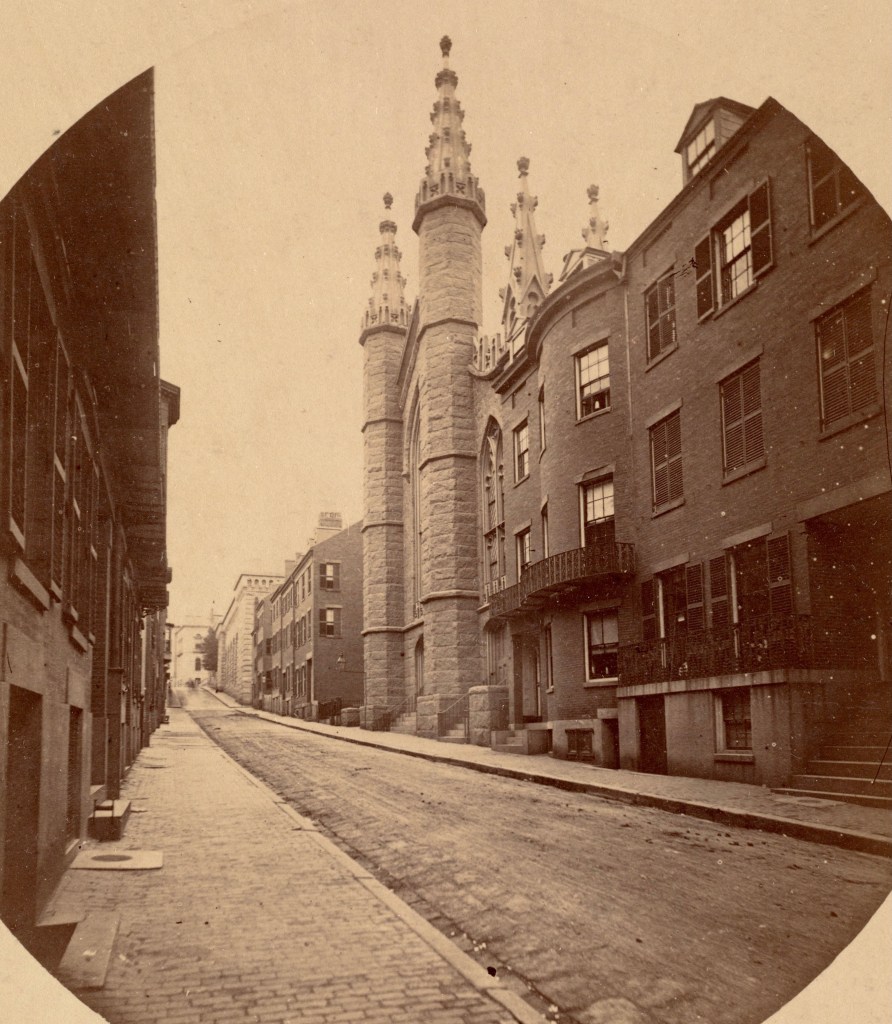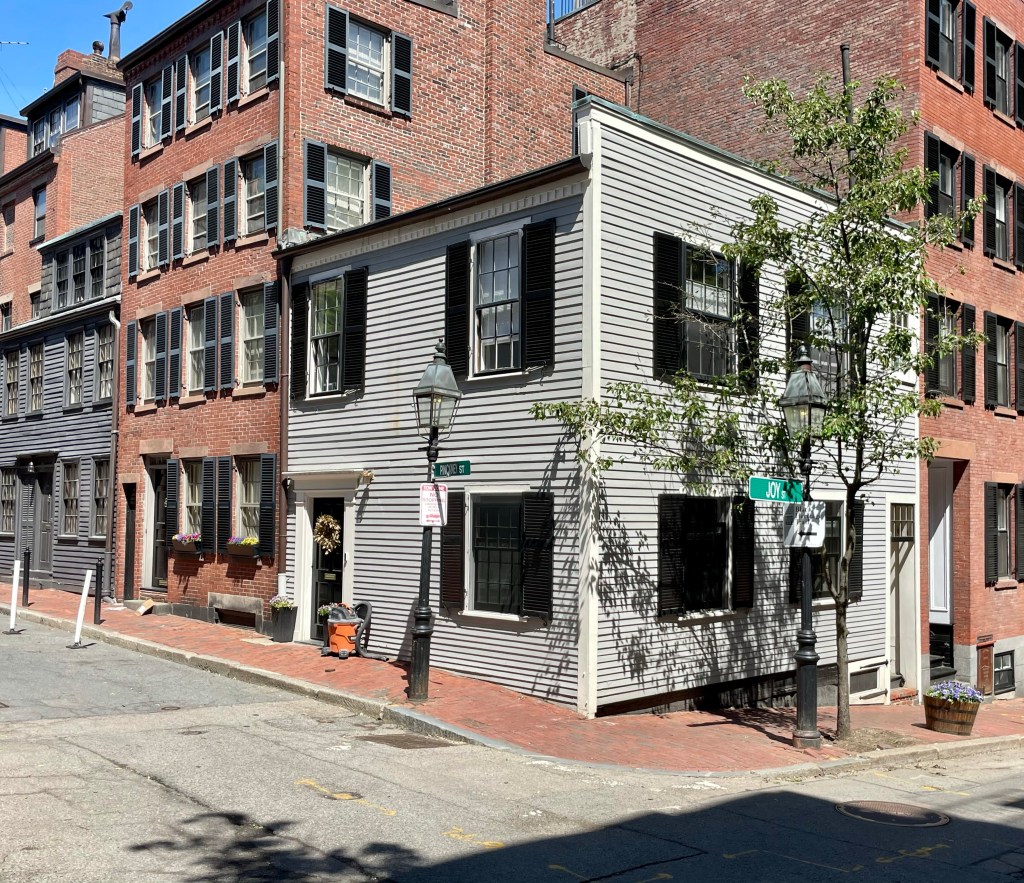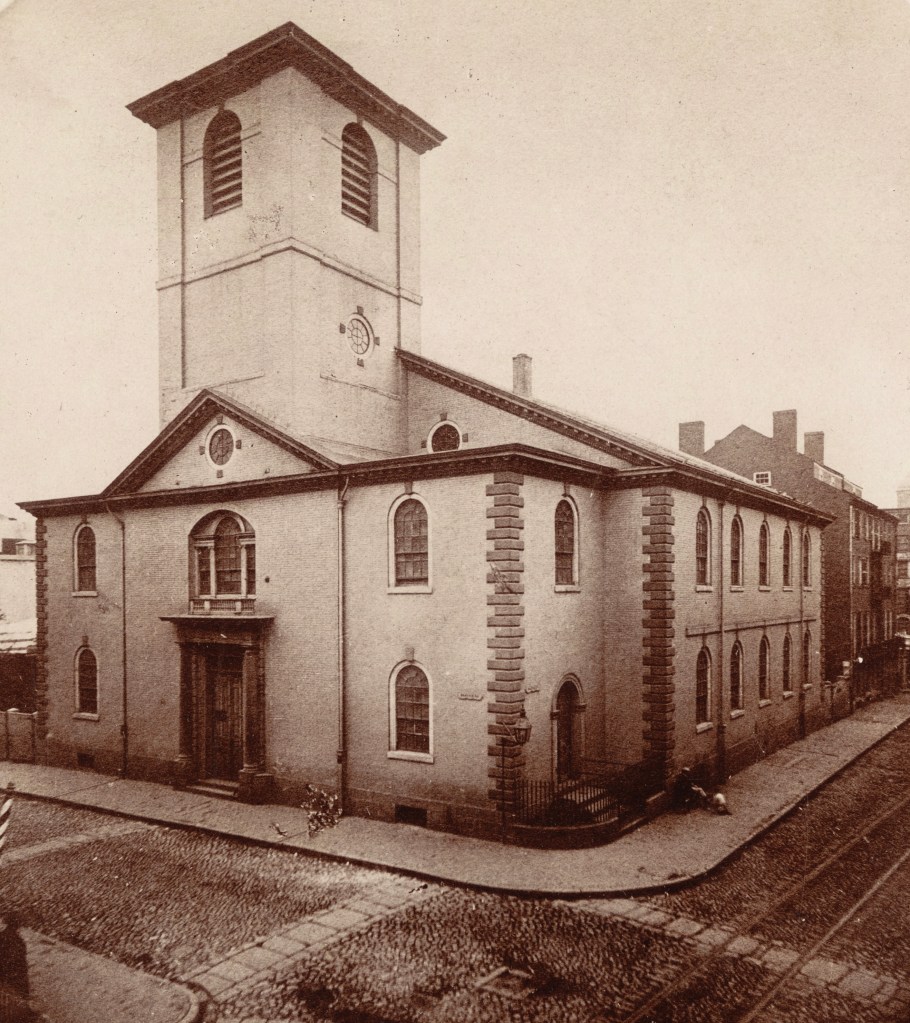
Joseph J. Lannin Triple Deckers // c.1910

In 1892, Thomas Minton who lived nearby Forest Hills Cemetery in the Jamaica Plain neighborhood of Boston, was hired by landowners Brown and Weld to subdivide their land for house lots near the Forest Hills station. Three residential streets were laid out, terminating at the edge of Forest Hills Cemetery for residential lots. Much of the parcels were developed within ten years of the platting of the site, with some vacant lots of more difficult land to develop. Some parcels included massive outcroppings of stone which made building difficult and thus, more expensive to develop. Savvy developer Joseph John Lannin (1866-1928) purchased these lots from Edwin Weld and hired a local architect to design matching triple-deckers on the ledge. Lannin was orphaned at the age of 14, and migrated from Quebec to Boston, where he found work as a hotel bellboy. He soon learned about real estate and the commodities market by listening to conversations of the wealthy patrons at his hotel and solicited advice from those who were willing to share their insights with him. He began investing in real estate and made a small fortune in Boston and New York City. In 1913, Lannin and a group of investors purchased 50% of the Boston Red Sox baseball team and a year later, he became the sole owner of the Red Sox. In 1914, he purchased the rights to bring Babe Ruth to Boston. The team went on to win the World Series in 1915 and 1916.

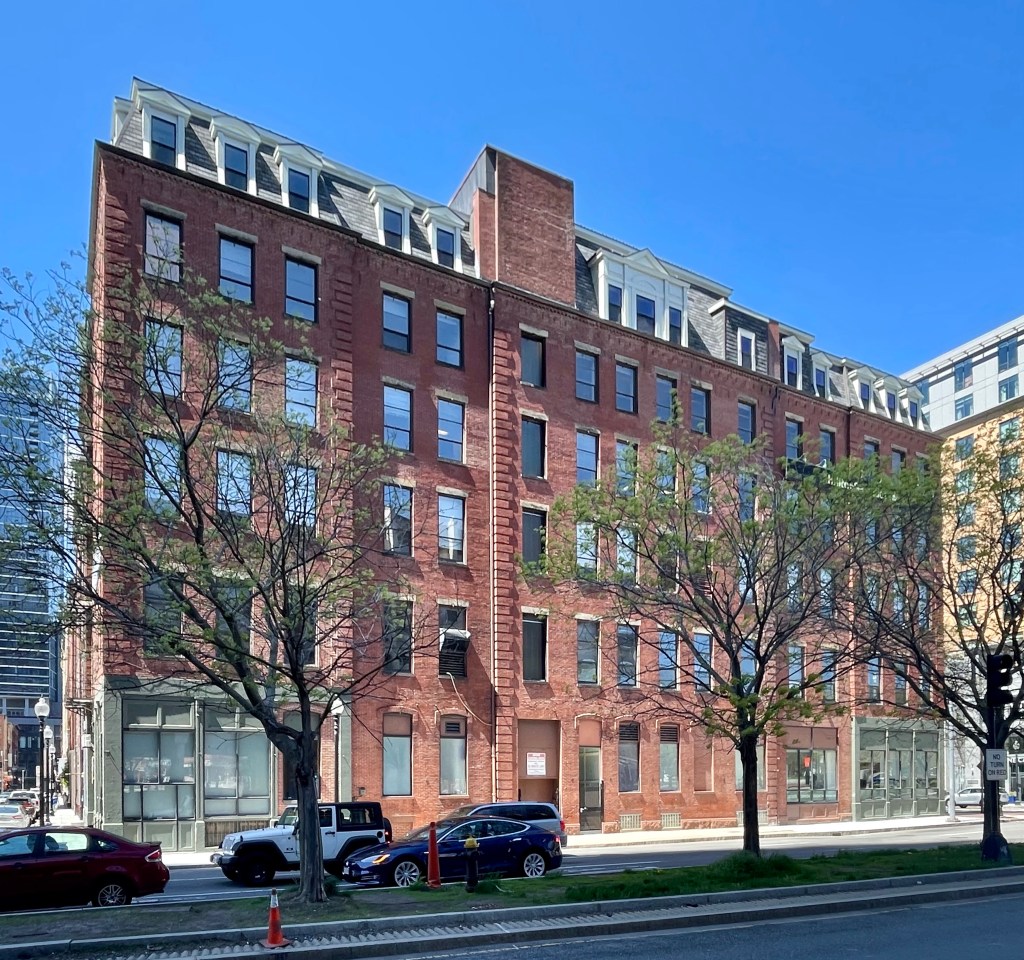
Tilia Jamaica Plain // 2020

As many of you likely agree with me, most contemporary architecture and buildings in Boston (and in many U.S. cities) is bland and mundane, but there are some projects that really stand out for creative and contextual designs. Tilia in Jamaica Plain is one of the latter! When the Massachusetts Bay Transportation Authority (MBTA) began accepting bids for the development of an undeveloped linear parcel along Washington Street just south of the Forest Hills T-stop, developers jumped at the opportunity. Urbanica Inc., a local design/development group had the winning proposal which consists of approximately 110‐120 residential units in buildings of varied density ranging from a larger apartment building to more human-scaled townhouses. Led by architect Stephen Chung with Kamran Zahedi as developer, the design for the townhouses specifically is a contemporary nod to the triple-decker form we see so much in the surrounding area. The varied color and recessed sections provide a lot of depth and character to the development along the streetwall.

Daniel and Mary Knowlton House // 1880

Another of my favorite townhouses in the Back Bay neighborhood of Boston is this Victorian Gothic mansion on Beacon Street, built for Daniel and Mary Knowlton. The residence was designed by the firm of Allen and Kenway and built in 1880 and stands out architecturally for its use of style and use of material amongst a sea of brick. A former cotton merchant, Daniel Knowlton was treasurer of the Flexible Shoe Nail Company and later worked as a stockbroker. The large single-family dwelling was converted into four condominium units in 1989, but has since been switched back to a single-family residence. It sold for $11.2 million dollars as a five bedroom, six full and two half bath home in 2017. Yikes!

282 Beacon Street // 1927

One of the finest apartment-houses in Boston is this towering building at the corner of Beacon and Exeter streets in the Back Bay neighborhood. In 1926, real estate dealers Elliott Henderson and Roger B. Tyler purchased two townhouses on small lots and demolished them for the present structure. They hired the architectural firm of Blackall and Elwell furnished the plans for the 11-story Renaissance Revival style residence which included ten large apartments. The design is unique to the Back Bay with amazing cast stone details at the entries with rounded arch windows, fanciful brickwork, and spiral columns!

Newton Working Boys Home // c.1895

At the edge of the Charles River at the far edge of Newton, Massachusetts, homeless working boys of the Boston area had a place to rest their head. The Working Boys Home was established in 1883, as a new Catholic charity in Boston. Its mission was to provide a home for working adolescent boys (messenger boys, newsboys, boot blacks, etc.) who had no place to call home and often slept in abandoned buildings, alleys, stables, and other such places. The Working Boys Home was open to homeless boys between 12 and 17 years of age, and all were expected to work and contribute a part of their wages to the support of the home. The original space in Jamaica Plain and subsequent Bennett Street (North End) locations were deemed too inadequate. In 1890, the 48-acre estate in the Oak Hill section of Newton was purchased and this four-story brick building built from plans by William H. McGinty. After WWII, city prosperity other services reduced childhood homelessness, and the last group of boys moved out of the Working Boys Home in 1961. The property was sold in 1979 to the Combined Jewish Philanthropies of Greater Boston to be used as a center for activities meeting cross-generational needs, now known as JCC Greater Boston.

Langham Court // 1991

Image courtesy of Goody/Clancy

Appropriate infill construction can be a very difficult thing to accomplish, with some developments hitting the mark and others adversely impacting the historic neighborhoods where they were built. Boston is home to many examples of both occurrences, but I wanted to share a very successful infill project in the South End neighborhood, Langham Court. As the South End resurfaced as a desirable neighborhood, long-time residents were priced out, which led to the Boston Redevelopment Authority to fund projects to provide much-needed housing for the local community. This site which once housed over 20 townhouses, was razed by the 1960s in a period of urban renewal where existing housing was deemed unsafe and inadequate. The local design firm of Goody/Clancy was hired, and they masterfully designed a U-shaped complex of 84 mixed-income units that fits well within its surroundings. The design exhibits dormers, bays, arched and vaulted entries, a combination of mansard and flat roofs, stringer courses and textured brickwork, and a palette of well chosen materials all at a scale that blends in the 1990s building to its surroundings which came nearly 150 years prior. The complex remains as a testament to good-quality design even for affordable housing, which notoriously gets the short end of the stick design-wise.

Joshua Bennett Townhouse // 1834

Just steps from the iconic Louisburg Square in Boston’s exclusive Beacon Hill neighborhood, a man named Joshua Bennett in 1834, purchased two recently completed townhouses built by housewrights Samuel H. Mitchell and Loring Dunbar. Joshua Holden Bennett (1792-1865) was born in Billerica, Massachusetts and split his time between his hometown and Boston. Bennett and his family owned the two identical bowfront houses until about 1930, likely renting them out to middle-upper class families. The home on the right (pictured) was later purchased by Benjamin B. Gillette an organist at a local church. After WWII, property values in Beacon Hill began to falter and this property and its neighbor became lodging houses of rented rooms to a more wealthy clientele than those on the North Slope of the hill. The home last sold in 1989 for $753,000 and is estimated at a value today at over $4,000,000!

St. Mary’s Episcopal Church // 1813

Lower Falls Village in Newton, Massachusetts was first settled in the early 18th century by colonists due to the area’s natural waterfalls and rapids which was perfect for early industry. By the early 19th century, up to four paper mills lined the Charles River here at a dam which provided power and steady water supply for their facilities. The village saw a large population increase from that point until the end of the 19th century when larger mills in the state were built. One of the major community spaces for the growing village was it’s main church, St. Mary’s Episcopal Church, which is the oldest extant church in Newton and the first Episcopal church built immediately west of Boston. The cornerstone for the building was laid in September 1813 containing a package of coins and a silver plate. Previously services had been held in the Lower Falls schoolhouse, with the first Episcopal service held in 1811. The land for the church was donated by Samuel Brown a wealthy Boston merchant who invested in the paper mills in Lower Falls. Many of the founding members and parishioners were in the paper making business in Lower Falls and buried in the adjacent cemetery. The Federal style church was altered in 1838 and given Gothic detailing, including lancet windows and finials at the steeple. In 1954, the bell tower was altered with the gothic finials replaced with the current urns on the balustrade, the gothic arched openings were changed to the current arched shape, and entablature, pilasters, and a cross were added.

Pagoda Building // c.1850-1917

For the last on this series of Lost Boston buildings, I present this little-known landmark which was once neighbors to the Old State House. The Pagoda Building as it was named, was located on the corner of Washington and State Streets and was one of the tallest buildings on the street upon completion. The seven-story building of Quincy granite exhibited round arched windows and an interpretation of a belvedere at the roof which served as a penthouse. The building’s upper six stories were residential, including the spectacular Oriental penthouse at the top, with retail space at the ground floor. The architect was a recent immigrant from Britain named George Snell, who clearly made a name for himself, later entering a partnership with James R. Gregerson. The Pagoda Building, which was originally an early “skyscraper” in Boston was quickly surpassed in height and floor plate size and was deemed inadequate for such a prominent location. It was demolished by 1917.

Trinity Place Station // 1900-1964

Trinity Place Station was the Boston & Albany Railroad’s second depot for trains running outbound from its newly completed South Station. The depot was designed by Alexander Wadsworth “Waddy” Longfellow, Jr., who from Harvard University in 1876, later studying architecture at the Massachusetts Institute of Technology and the École des Beaux-Arts in Paris, and then worked as senior draftsman in Henry Hobson Richardson‘s office upon his return to the United States. A. W. Longfellow was also the nephew of poet Henry Wadsworth Longfellow. He designed the station of pink granite with a covered platform 375 feet in length. The building long served train commuters leaving the ever-changing Back Bay neighborhood. Consolidated lines led to the station being deemed obsolete, and it was scheduled for demolition. Much of the old line route would be cleared for the right-of-way for the Mass Pike Expansion into Boston. The demolition on Trinity Place was postponed until early 1964 to allow for scenes of the movie, “The Cardinal” to be filmed there.