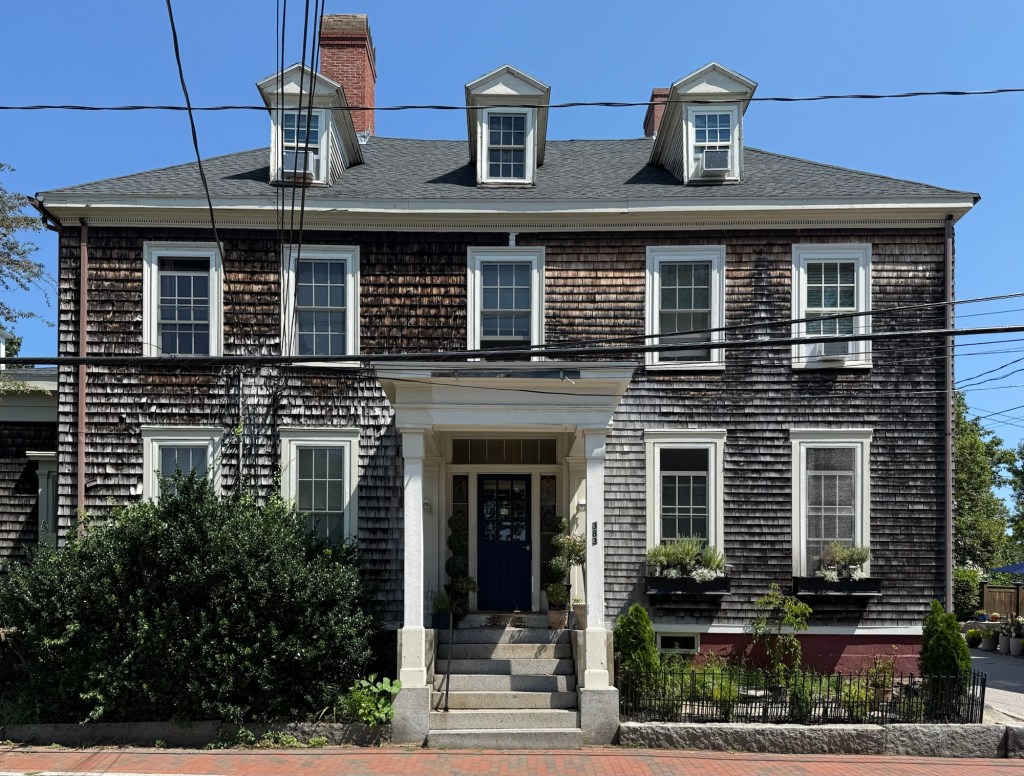
Capt. Charles Blunt House // c.1795

Master mariner Charles E. Blunt Sr. (1768-1823) built this large Federal period home on Pleasant Street in Portsmouth, New Hampshire near the turn of the 19th century for his bride, Abigail Laighton, and their new family. Charles Blunt was a wealthy sea captain who would be out at sea for months at a time, trading in the west indies. On a voyage near Havana Cuba in March, 1823, his vessel was boarded in the night by two piratical boats, with six men each, and Captain Charles Blunt was brutally murdered and thrown overboard. The ship’s cook was stabbed, and fed to the hogs on the brig, with the remainder of the crew maltreated and the goods plundered. The Captain Blunt House follows a symmetrical, five-bay, center entrance form, with cedar shake shingles, three pedimented dormers and large portico over the door.

Point Allerton Life Saving Station // 1889

The United States Life-Saving Service was a United States government agency that grew out of private and local humanitarian efforts to save the lives of shipwrecked mariners and ship passengers. It began in 1848 when the congress appropriated $10,000 to establish unmanned lifesaving stations along the New Jersey coast south of New York Harbor. That same year the Massachusetts Humane Society also received funds from Congress for lifesaving stations on the Massachusetts coastline. It was decided to establish a life saving service station at Point Allerton after 61-year-old Joshua James and his crew rescued 29 people from four vessels wrecked in the Boston Harbor during the great storm of November, 1888. The United States Corps of Engineers had this Queen Anne style life saving station built at the northern shores of town, overlooking the Boston harbor. Joshua James became the Keeper of the station at 62, seventeen years past the mandatory retirement age of 45 for a federal appointment with the new U.S. Life–Saving Service. The station is the best-preserved of 32 stations that once lined the Massachusetts coast (most have since been demolished or adapted to other uses). It is now operated as the Hull Lifesaving Museum.

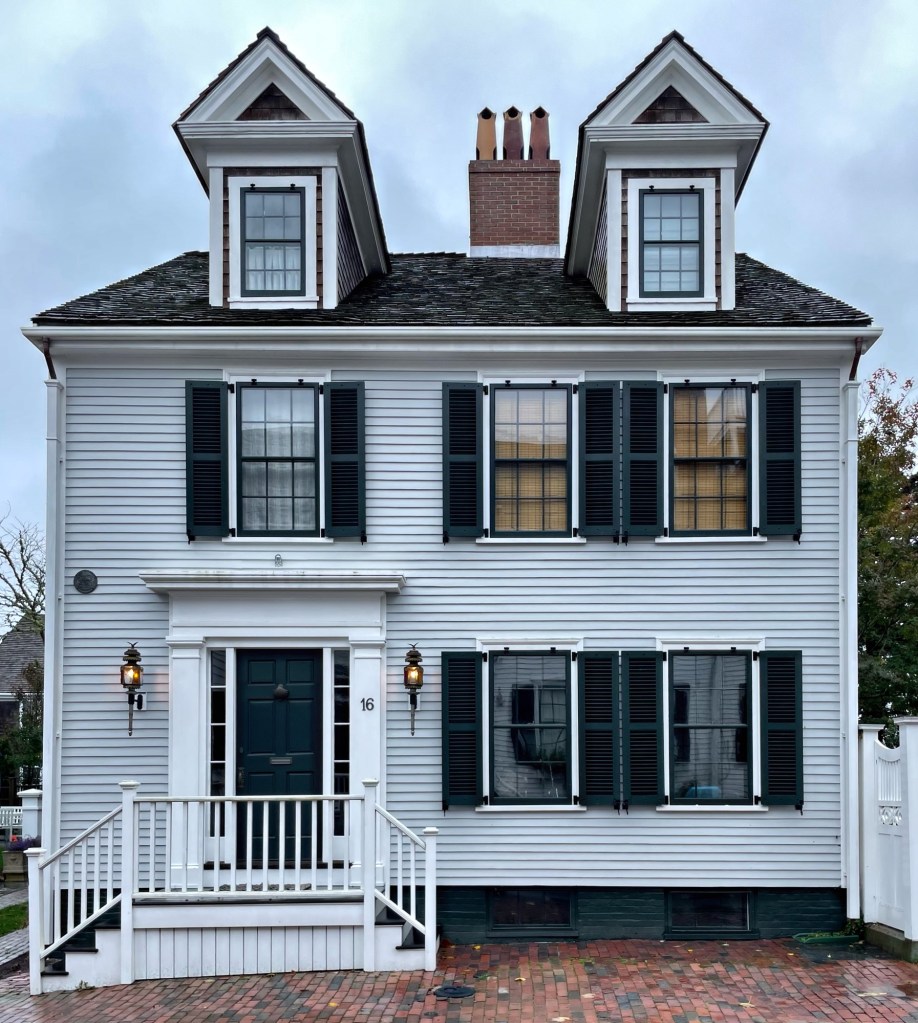
Andrew Myrick House // 1755

Nantucket is an old house lovers dream. A large part of the reason for this is that much of the island was designated as a local historic district in 1955, making it one of the earliest historic districts in the United States! This means that since 1955, the Nantucket Historic District Commission has been overseeing the island’s preservation, demolitions and alterations to historic buildings. This is the Andrew Myrick House located on Orange Street. The Georgian dwelling was built in 1755 by Andrew Myrick (1704-1777), a shipbuilder and storekeeper who was born in Charlestown, Massachusetts and eventually settled on island, constructing this home for his family. He and his wife Jedidiah had over 16 children, some of which died in childhood. Myrick would eventually hang himself at the age of 71. The home remained in the family until 1827. Fun fact: Andrew’s grandson, Peter Myrick was said to have set sail from Nantucket in 1833 in search of sea serpents. He came back empty handed.

Hall’s Block // c.1883

This diminutive commercial block sits on Water Street in Warren, Rhode Island while small in size, packs an architectural punch! The late-Italianate style wooden block exhibits its original wooden storefronts, second floor round arched windows with stained glass, and ornate detailing including the brackets, parapet and period-appropriate paint colors which allow those details to pop. The shop was owned in its early days by the Hall family, who sold drygoods. Later, the building was used as an antiques shop on the ground floor with a studio for author and illustrator, David Macaulay on the second floor. These types of smaller-scale commercial spaces are some last remaining (relatively) affordable spaces for small businesses to operate. So lets make sure we

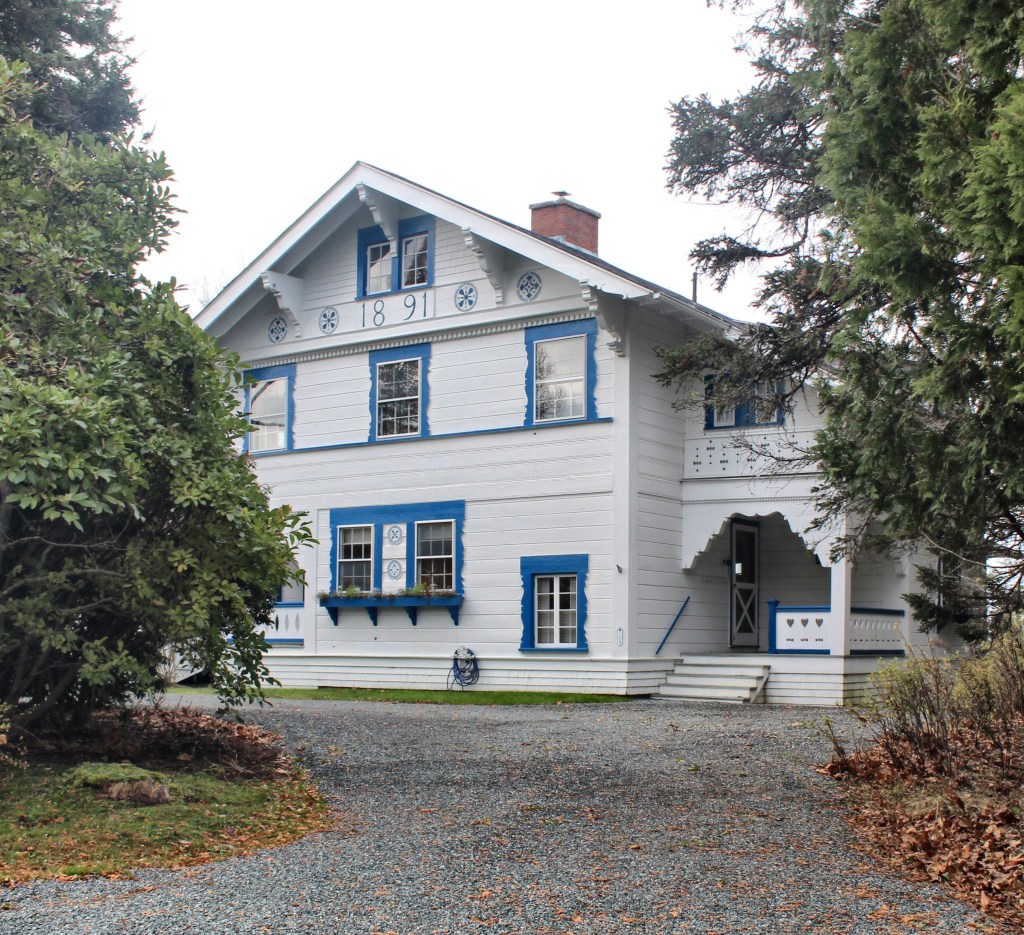
Red Chalet // 1891

Philadelphia-based architect Lindley Johnson was hired as the official company architect by the Gouldsboro Land Improvement Company’s Grindstone Neck summer colony. As a result, he became the chief tastemaker for the bucolic neighborhood of summer cottages, chapels, and an inn (since demolished). Johnson would design a majority of the cottages in the Shingle style, taking cues from the natural topography and rugged coastlines, but he did deviate from that style a couple times; most notably for his own cottage, “Red Chalet”. While no longer red, the cottage stands out as an extremely rare example of a Swiss Chalet, with its sloping gable roof with wide eaves, exposed stickwork and oversized brackets, decorative carving, and shiplap siding.

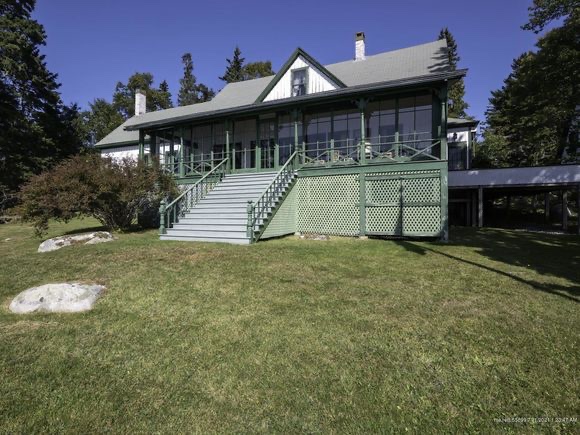
Radnor Cottage // c.1907

The historic summer cottages for middle-class summer residents of Maine have little written about them, but oh are these little cottages beautiful!! This is Radnor Cottage, a charming waterfront dwelling in the Haven Colony in Brooklin, Maine. The summer colony is comprised of a dozen quaint cabins (most historically without running water) for those of more modest means that wanted to escape the city for peace and tranquility on Maine’s rocky coast. The colony was developed in the late 19th and early 20th centuries as a respite for academics and more who did not want to flaunt their credentials or social prestige. This home was purchased a few years ago and the inside looks like it’s never been altered! This is a dream home!

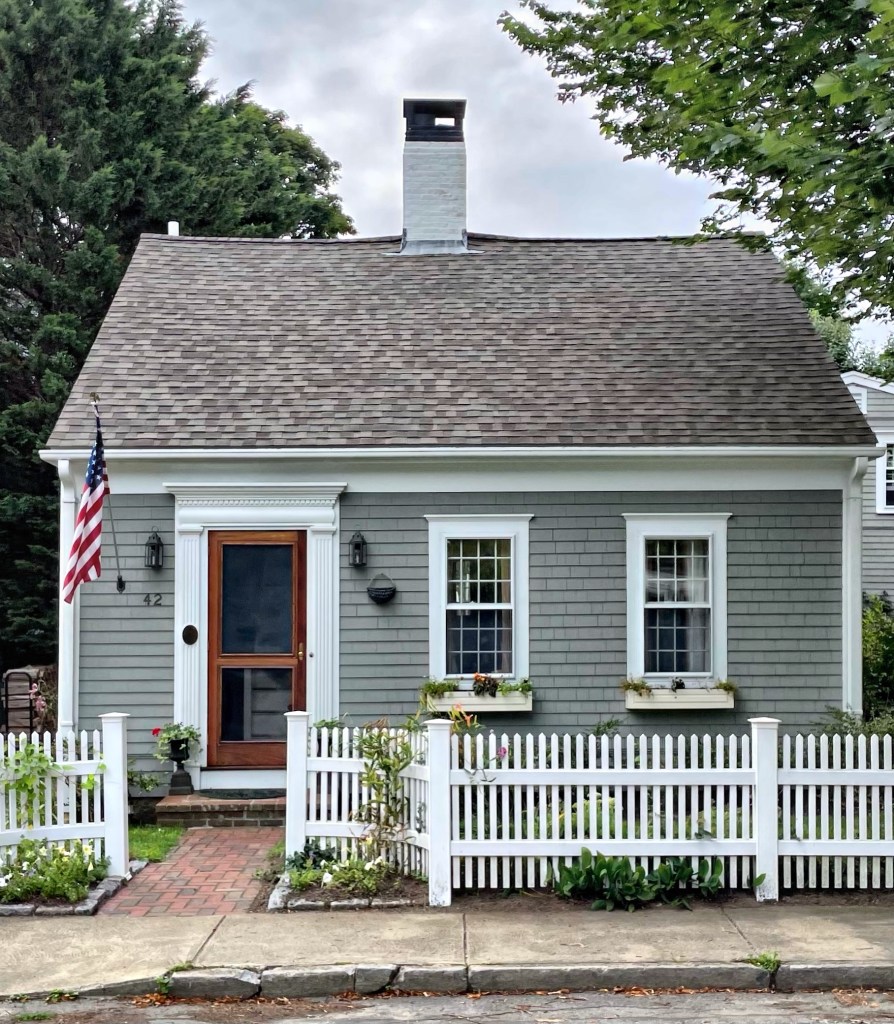
Briggs House // c.1850

This tiny half-cape house in Marion was built in the mid-19th century for Timothy Hiller Briggs (1822-1877), a whaler. Based on the Federal/Greek detailing on the house, it is also likely the home was built much earlier for Timothy’s father, Silas, a sea captain, and was willed to his only son upon his death in 1833. Timothy died at the young age of 54 and his widow, Josephine, maintained the cottage until her death in 1924! The home is a half-cape as it has an off-center door with two bays of windows at the facade. A full-cape would be symmetrical with a central door and two windows on either side. The central chimney would provide heat to all rooms in the cold winter months.

Austin Perry House // c.1830

One of the nicest examples of residential Greek Revival architecture I have ever seen is the Austin Perry House (c.1830) in the Southport area of Fairfield, CT. Austin Perry (1798-1864) was a member of a prominent merchant family, holding businesses in Fredericksburg, Virginia, before returning to Southport to manage a general store. He retired in his forties and resided at this home until his death. His home is a balanced, symmetrical design with massive Corinthian columns surmounted by a carved anthemion motif ornamenting the gable pediment.