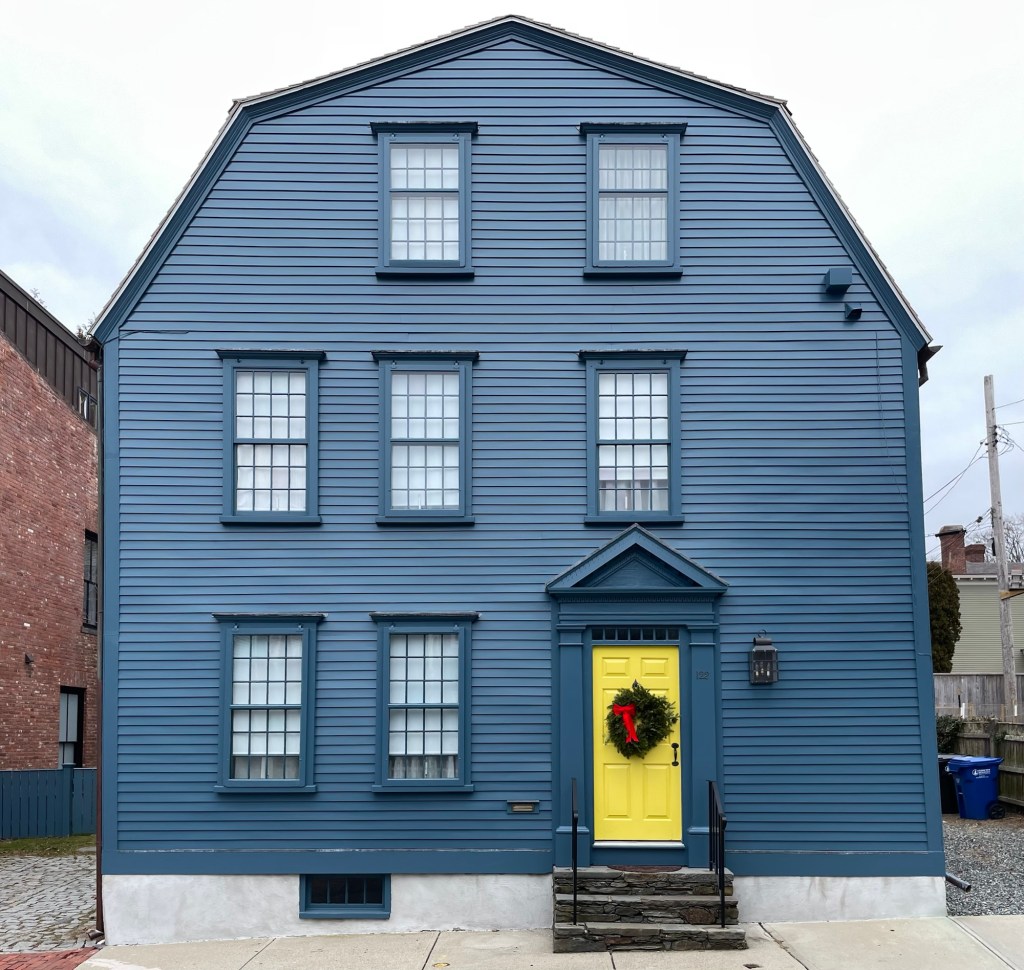
This beautiful Georgian house in Newport, with its prominent gambrel roof oriented toward the street, was built by 1760 and owned by Metcalf Bowler (1726-1789), a merchant, politician, and magistrate. Bowler was for many years speaker of the house in the Rhode Island colonial assembly, and it was discovered in the 20th century that he was a paid informant (spy) for the British during the Revolutionary War. The house was owned by Metcalf before he would purchase what is now known as the Vernon House, an even more stately Georgian mansion designed by Peter Harrison. This house was sold, and later owned by Charles Wickham, a Captain in the war, and later to the Burdick and Merrill families.
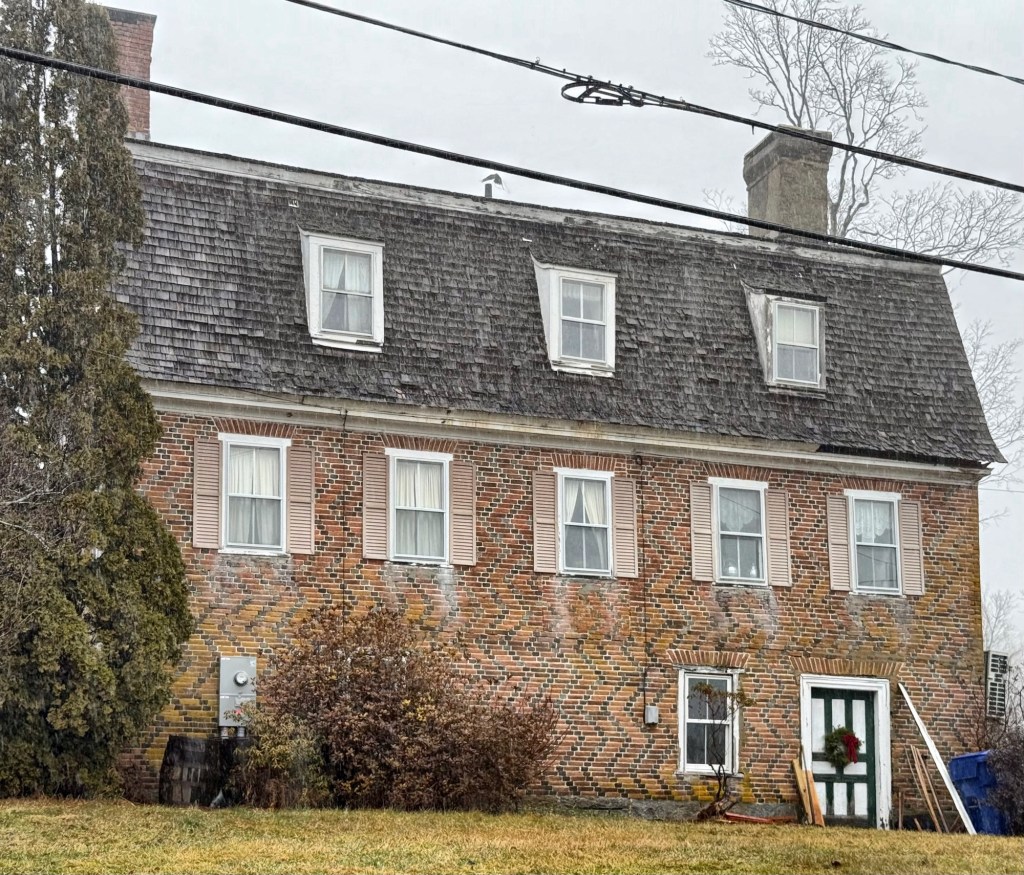
This large, brick gambrel-roofed Colonial home in West Goshen, Connecticut, was built over decades beginning before the American Revolution and has remained in the same family ever-since! In 1767, Captain Jabez Wright (1737-1813) married Martha Baldwin of Goshen, and began constructing this farmhouse of brick. When the war broke out, he fought in New York, he also served as captain of a company of Connecticut militia, turning out to repel the British forces at New Haven. He would largely complete the home by 1787, and ultimately died in 1813. After successive ownership of generations of the Wright family, the property was owned by Henry G. Wright (1831-1917), a farmer who represented Goshen in the state legislature and held many town positions. The first Methodist sermons in town were also held in the home. Henry Wright died at 86 years old on this property, after being attacked by a bull. When entertaining guests, he showed others a prized bull, and possibly fell into the pen, and was trampled and attacked. The Wright Homestead is unique for its brickwork with bonds and burned headers, resembling many Colonial-era homes in Virginia, but this house can be found on the back roads of Goshen, Connecticut!
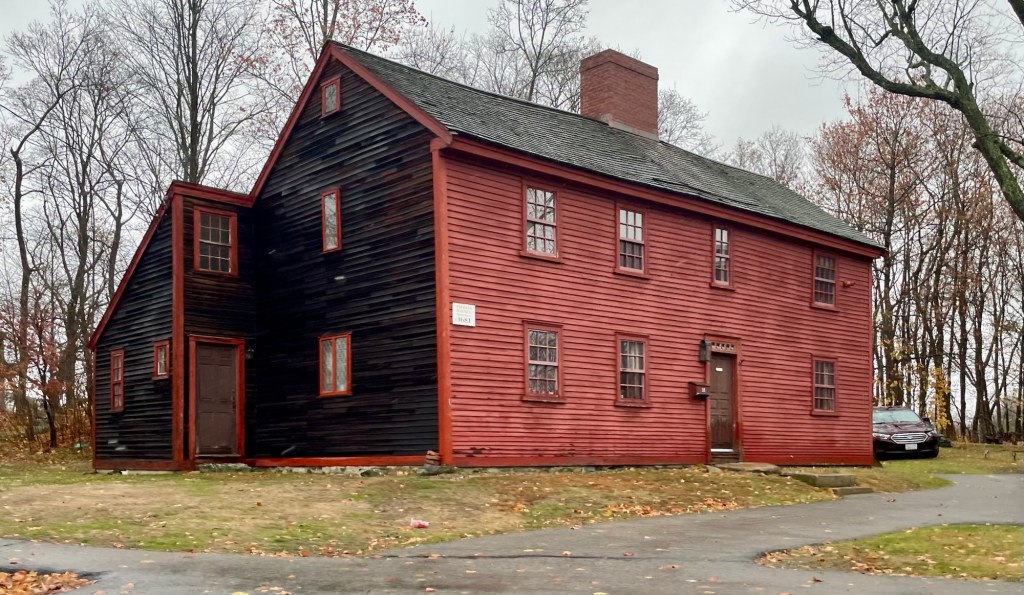
There aren’t many extant buildings with direct ties to the Salem witch trials of the 1690s, but this First Period house on Centre Street in Danvers is one of them! This is the Thomas Haines House, built in 1681 for Thomas Haines. During the witchcraft hysteria of 1692, Thomas testified in the trials of Elizabeth Howe and John Willard, who were accused of witchcraft. Elizabeth would be executed by hanging on July 19, 1692 and John was hanged on August 19, 1692. Less than a year following the frenzy of the trials, Thomas received a license to keep a public house of entertainment & sell strong drink as an innholder. He remained here until 1703, when he sold his home and land to John Allen, a gunsmith, and removed to Salem, New Jersey. The First Period home with saltbox roof is in great condition and was restored to its historic appearance in the 20th century. The property is privately owned.
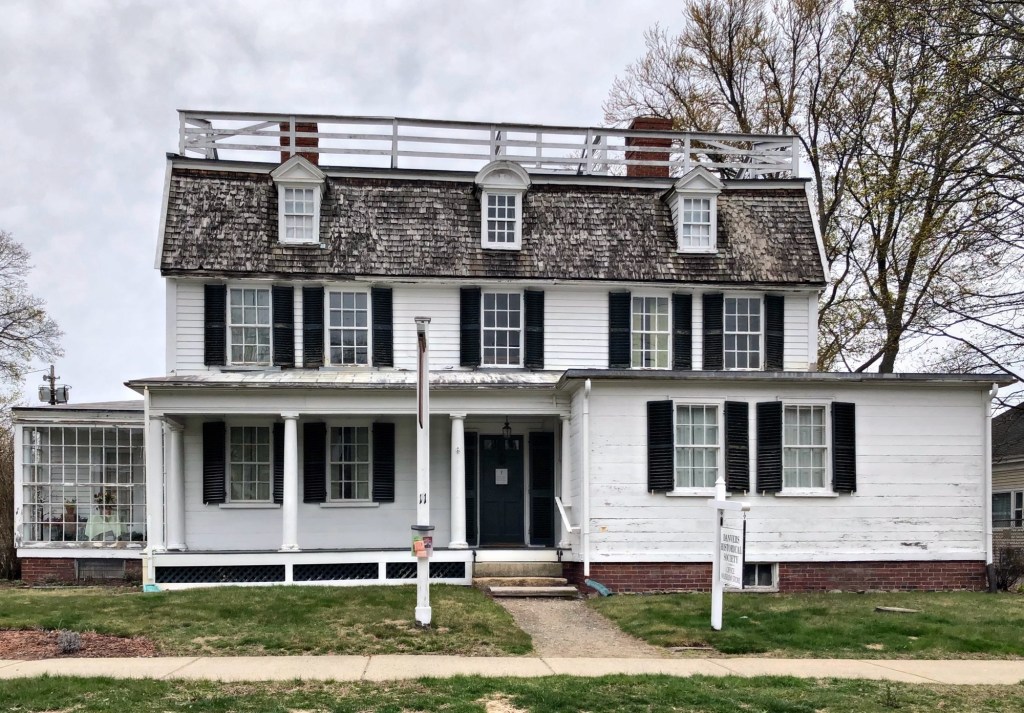
In 1754, a 32-year-old brickmaker Jeremiah Page built this large, gambrel-roofed Georgian house in Danvers, Massachusetts, for his young family. Jeremiah and his first wife, Sarah, raised nine children here and dreamed of liberty from England. Following the Tea Act, passed by British Parliament in 1773 that granted the British East India Company Tea a monopoly on tea sales in the American colonies, Page was said to have demanded that “none shall drink tea in my house.” One evening when her husband was out, Sarah Page is said to have invited several women from the neighborhood up to the porch atop the Page House’s gambrel roof to enjoy tea. Larcom quotes Page as telling her friends, “Upon a house is not within it,” thereby finding a loophole around her husband’s directive. This legend was enshrined in the poem “The Gambrel Roof” (1874) by Lucy Larcom, who knew Sarah Page’s granddaughter. Jeremiah Page would fight in the Revolution, serving as a Captain. The Page House remained in the family for two more generations, Sarah Page’s daughter in-law, Mary Page died in 1876 and her will put the property into a trust with the stipulation that once there were no longer any Page descendants to live there, the historic house was to be torn down. After Mary Page’s daughter Anne Lemist Page died in 1913, the trustee planned to demolish it according to her wishes. The Danvers Historical Society sprung into action and sued to oppose the will, fighting to preserve this significant home. They won, and relocated the home a block from Elm Street to its present site on Page Street, where it stands today. The Danvers Historical Society maintain the structure to this day, including the “porch” at the roof where the tea party once took place.
One of the many pre-Revolutionary homes in Georgetown, Massachusetts, the Spofford House is located on Andover Road, an important route which was occupied by many residences of the Spofford Family. In 1667, John Spofford and his family became the first permanent (European) residents in what would become Georgetown. Generations later his ancestor, Eleazar Spofford (1739-1828) would build this home in 1765 to be occupied by his new wife married that year, Mary Flint, and their new family. The Georgian farmhouse has been significantly altered since its original date of construction, but retains its general form and character even with later 19th and 20th century additions, porches, and windows. The Spofford’s had six children in this home and would later move to Jaffrey, New Hampshire after the Revolution, but returned and settled in nearby Groveland. Later generations of the Spofford’s would live-in and modify the home until it finally sold out of the family in the 20th century.
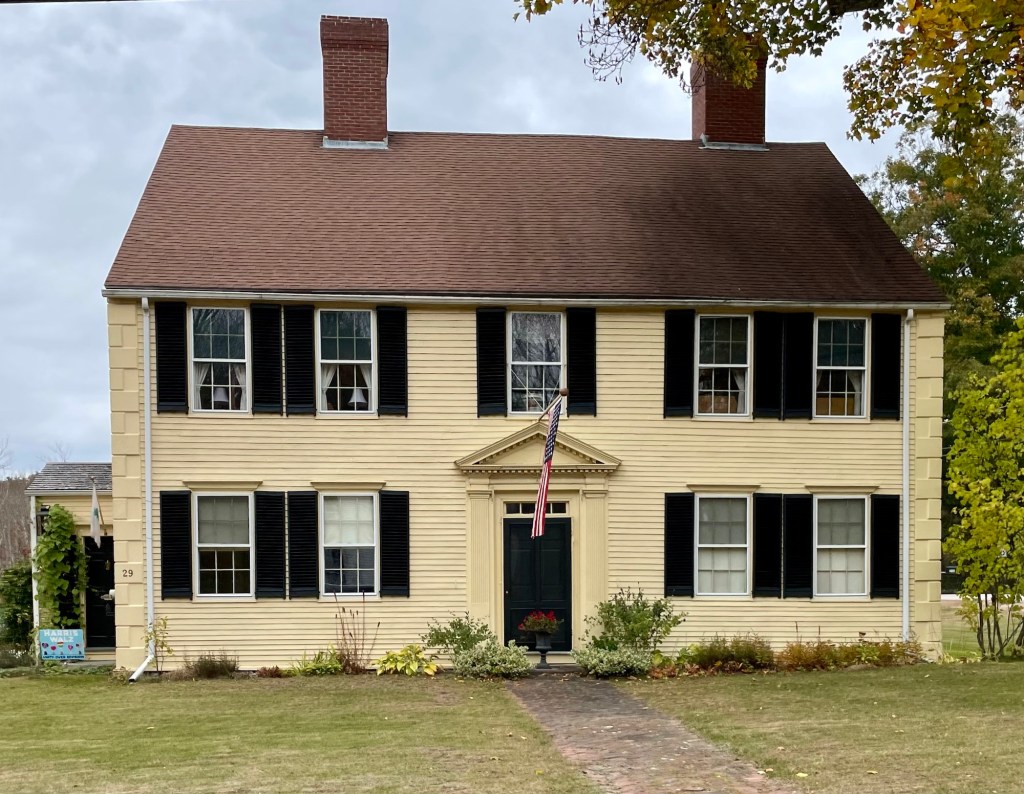
Built in 1765 for Rev. Samuel Foxcroft (1734-1807), this grand two and a half story house was the first major frame dwelling in New Gloucester, Maine. Its large scale and such fine mid-18th century architectural features as the triangular doorway pediment and quoins at the corners make this a house befitting the community’s first minister. Born in Boston in 1735, Foxcroft was the son of the Rev. Thomas Foxcroft, pastor of the First Church of Boston from 1717 to 1769. The younger Foxcroft graduated from Harvard in 1754 and answered the call of the New Gloucester Congregationalists ten years later, a brand new town in the wilderness of Maine. He was ordained in the blockhouse, a defensive structure from attacking native peoples, in January of 1765 and continued his ministry in the town until 1793, having the first purpose-built meetinghouse completed in 1773. The last years of his life were spent in poor health and he died at his home in 1807 at the age of 72.
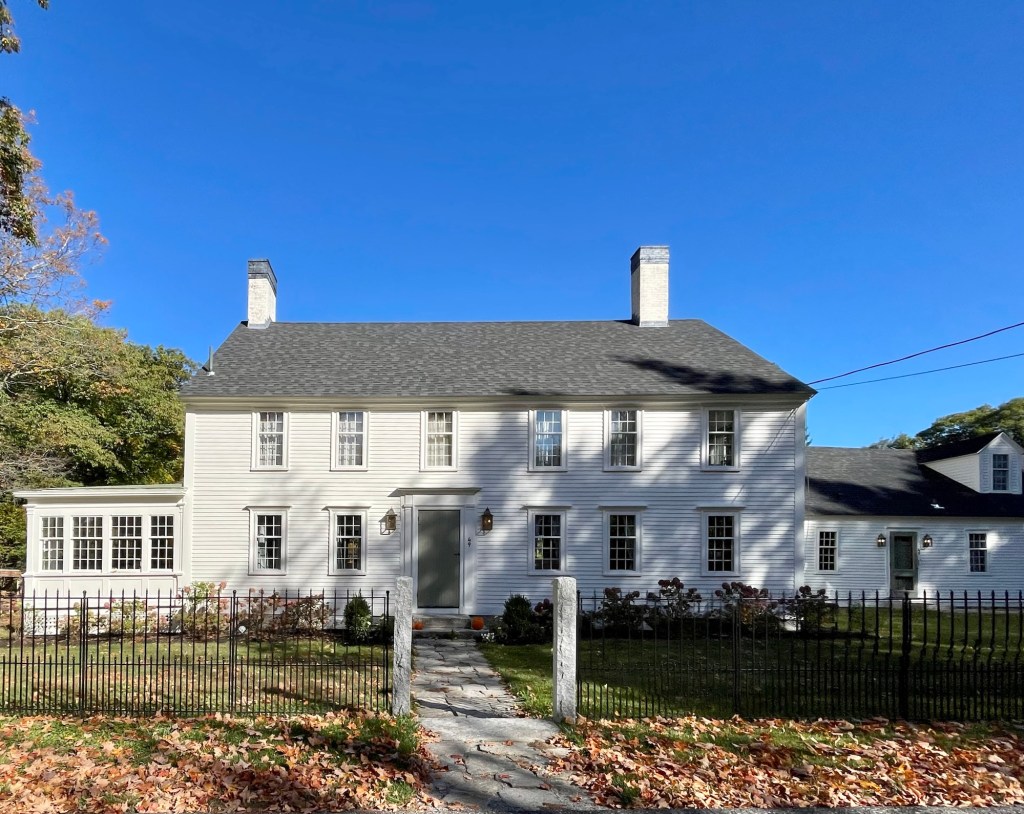
The Preston-King House of New Ipswich, New Hampshire, is a 2 1/2-story wood frame Georgian house and unique for its asymmetrical six-bay facade. John Preston I (1739-1803) built this house in 1764. Preston was a doctor, a profession followed by his son of the same name. As well as being the town’s leading physician, he was a member of the first Board of Selectmen and a member of the Convention for framing the State Constitution, also holding many local offices. Following his death, the house passed to his youngest daughter Anna, and her husband, Seth King, a manufacturer, in 1808. The house has been restored to its Colonial appearance and makes a statement without the frills and detailing of the Victorian style.
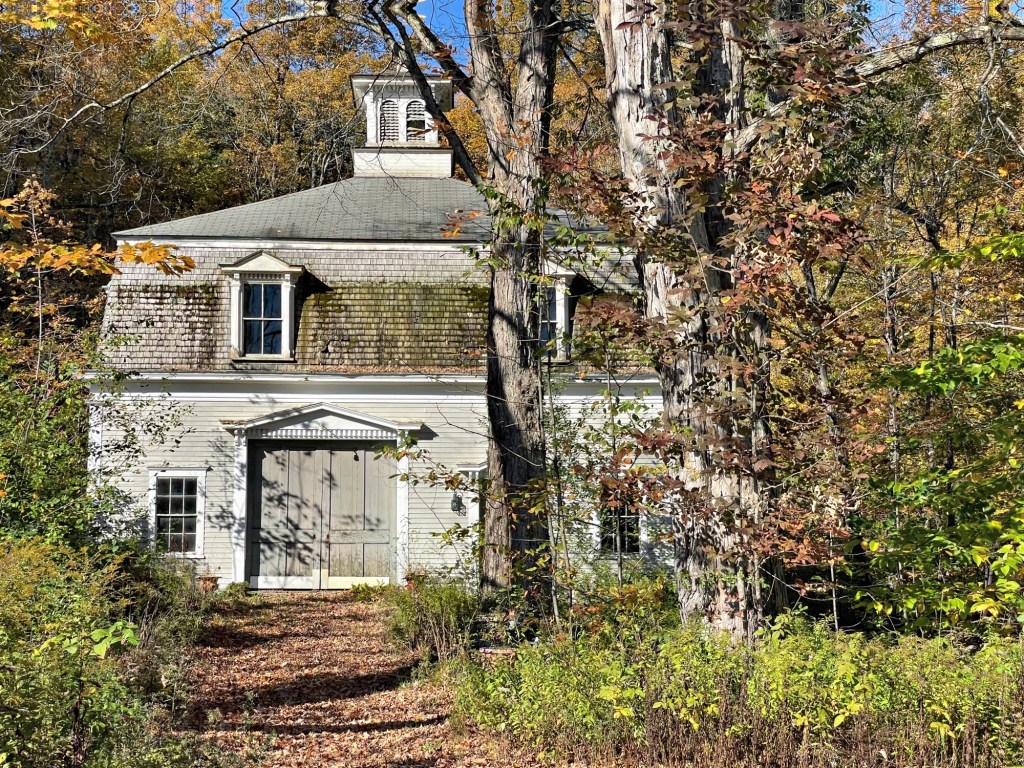
Built on a terraced knoll on Main Street in the enchanting village of New Ipswich, New Hampshire, the Charles Barrett House is a stunning late-Georgian residence that was restored in the 20th century. Charles Barrett (1739-1808) moved to the town from Concord, Massachusetts, and did quite well for himself, as just decades later, he would build his son one of the finest homes in the state, the Barrett House, next door. The house’s current appearance reflects a restoration circa 1960. Like many 18th century houses, it was altered in the 19th century with Victorian-era embellishments, including a Mansard roof, 2/2 sash, and a matching carriage house. Under the direction of Historic New England, the house was returned to its more simple, original, Georgian design.
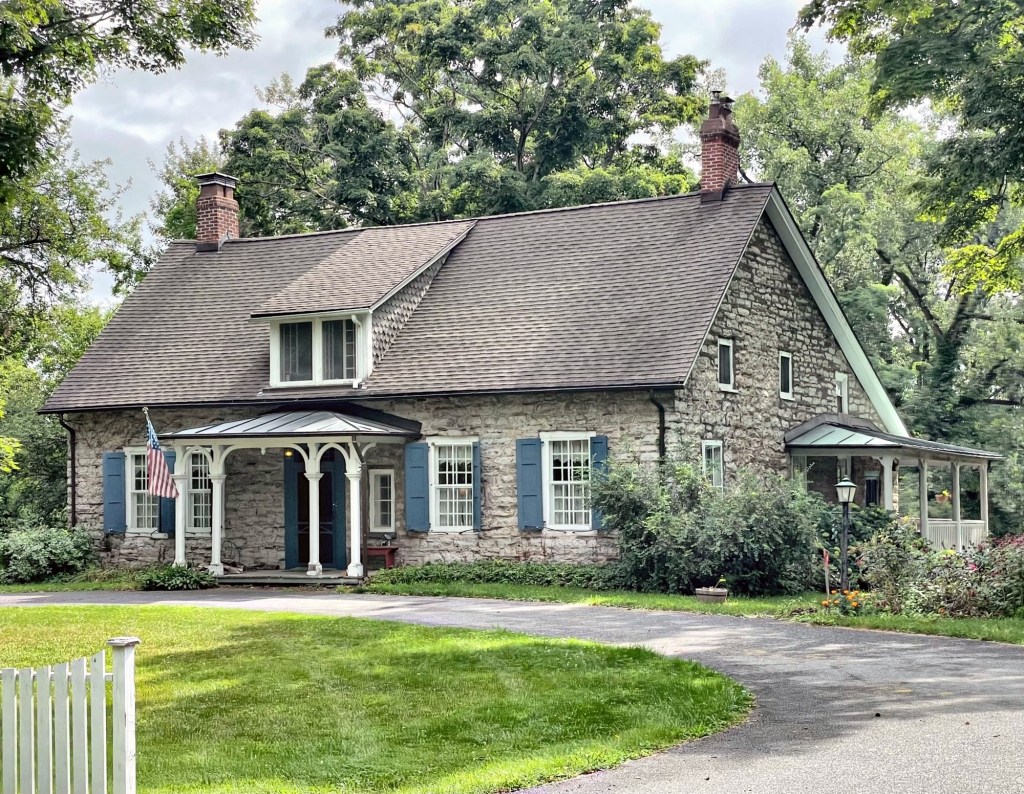
The Cornelius Person House is a pre-Revolution stone dwelling built in the Katsbaan village of Saugerties, New York. The residence was constructed around 1770 by Cornelius Person (1744-1827) a merchant who held a store just south of this home. The store was apparently used as a meeting place for Patriots during the Revolutionary War and Cornelius fought in the local militia at the time. After the war, John Jacob Astor was said to have traded with local fur trappers at the store. The Person Stone House was originally a smaller dwelling and was expanded multiple times to give it the center hall appearance and later saltbox rear. Later alterations include the porches, but the house retains so much of its original charm.
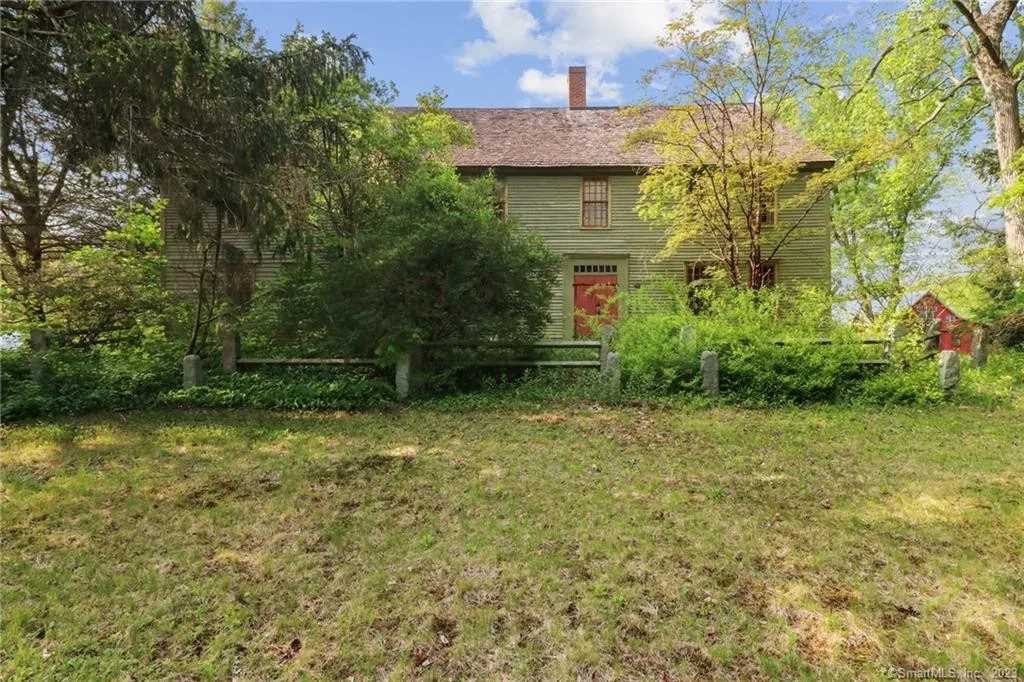
One of the most historic houses in Ashford, Connecticut was listed for sale! The house at 14 Westford Road dates to 1710, when John Mixer purchased the property which at the time totaled 100 acres, and applied for a license to operate a tavern. John Mixer was born in 1668 in Watertown, Massachusetts and married Abigail Fiske in 1695. Mixer worked as a tanner in Watertown before moving to Connecticut, becoming the first settler of Ashford in 1710. Mixer became Ashford’s first Town Clerk, Treasurer, Tavern Keeper, Select Man, and Deacon. Mixer and his family would eventually move to Suffield, Connecticut, but the old tavern remains in impeccable condition, largely due to its later owners and preservation as an inn and restoration in the 1920s.


 Buildings of New England