Old Chaplin Town Hall // 1840

The area that is now Chaplin, Connecticut was settled in the 18th century. The impetus to separate the community occurred due to the difficulty of area residents in reaching the churches in nearby town centers. Benjamin Chaplin (1719-1795), bequeathed funds for the establishment of a church near his (now no longer standing) home. A village center developed around the church, and the town was incorporated in 1822. The village is unusual in Connecticut for its relatively late development, and because the center is not near usable water power, and was bypassed by railroads, it was not affected by later industrialization. The main street is extremely well-preserved and a visual link to 19th century Connecticut. In 1840, the town erected this one-story Greek Revival building to serve as the town hall. The gable end reads as a pediment with the walls constructed of smooth vertical boards. The town outgrew this building and it became the town’s museum after the present town hall building was constructed in the northern part of the village. The museum closed and the building appears unused today. Hopefully the town can find a way to use the structure and maintain it.

New Haven City Hall // 1861

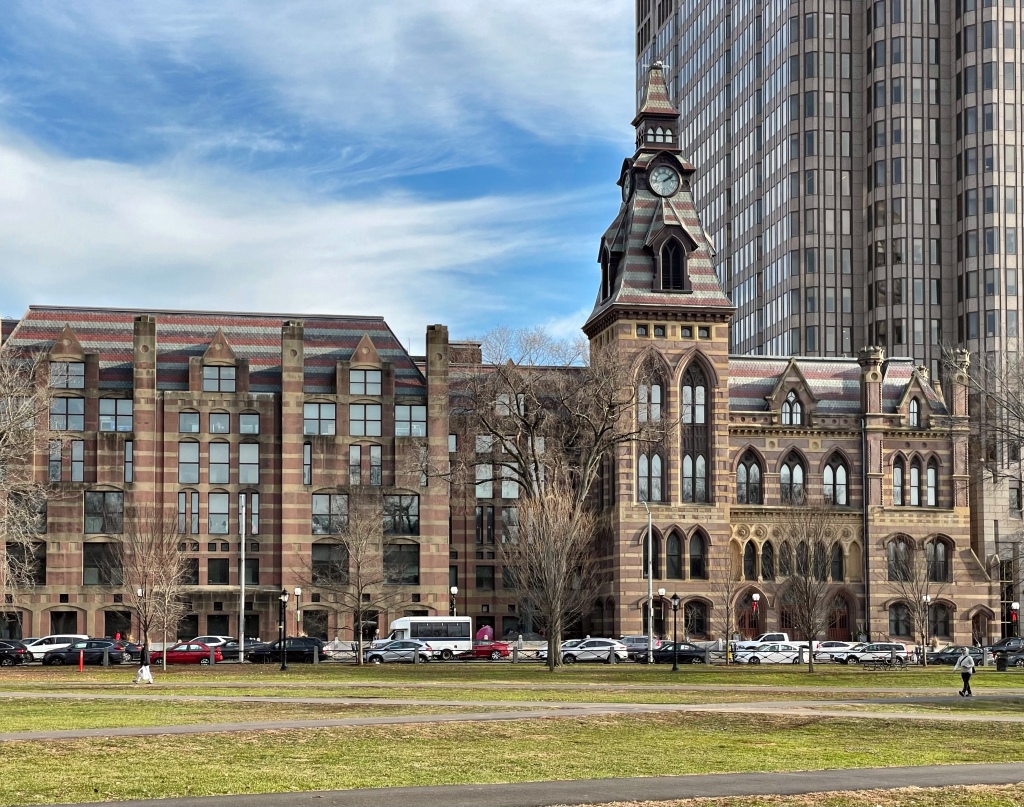
Less than four centuries ago the area which is now New Haven, Connecticut, was the home of a small tribe of Native Americans, the Quinnipiac. White settlers arrived by 1638 and made a deal with the local sachem (leader) to protect the native Quinnipiac from raiding bands of Pequots and Mohawks in return of purchasing some of the tribe’s land by the Puritans. By 1640 a complete government had been established and the settlement, originally called Quinnipiac, was renamed Newhaven (later New Haven). The town plan was based on a grid of nine squares. In accordance with old English custom, the central square, now the Green, was designated a public common. By 1718, in response to a large donation from East India Company merchant Elihu Yale, an early college relocated from Old Saybrook to New Haven, and its name was changed to Yale College. The city grew exponentially with industry, education, and commerce, becoming one of the wealthiest and diverse cities in the state. As the city grew after the Civil War, a new City Hall was built. The New Haven City Hall was constructed in 1861-2 and was designed by local architect Henry Austin. To the left of City Hall and set back further from the street was the old Courthouse (1871-3) designed by David R. Brown (1831-1910). Together the buildings provide a united facade marking the first phase of the High Victorian Gothic Style in America. By the 1980s, plans for a new Government Center were discussed following decades of deferred maintenance and a decaying building. Luckily, cooler heads prevailed, and the facades of the building were preserved with a modern structure constructed behind to house city offices, from plans by local architect Herbert S. Newman. The Victorian Gothic and Post-Modern building stands proudly today, anchoring the east end of the Town Green.

Judson Manville House // 1835

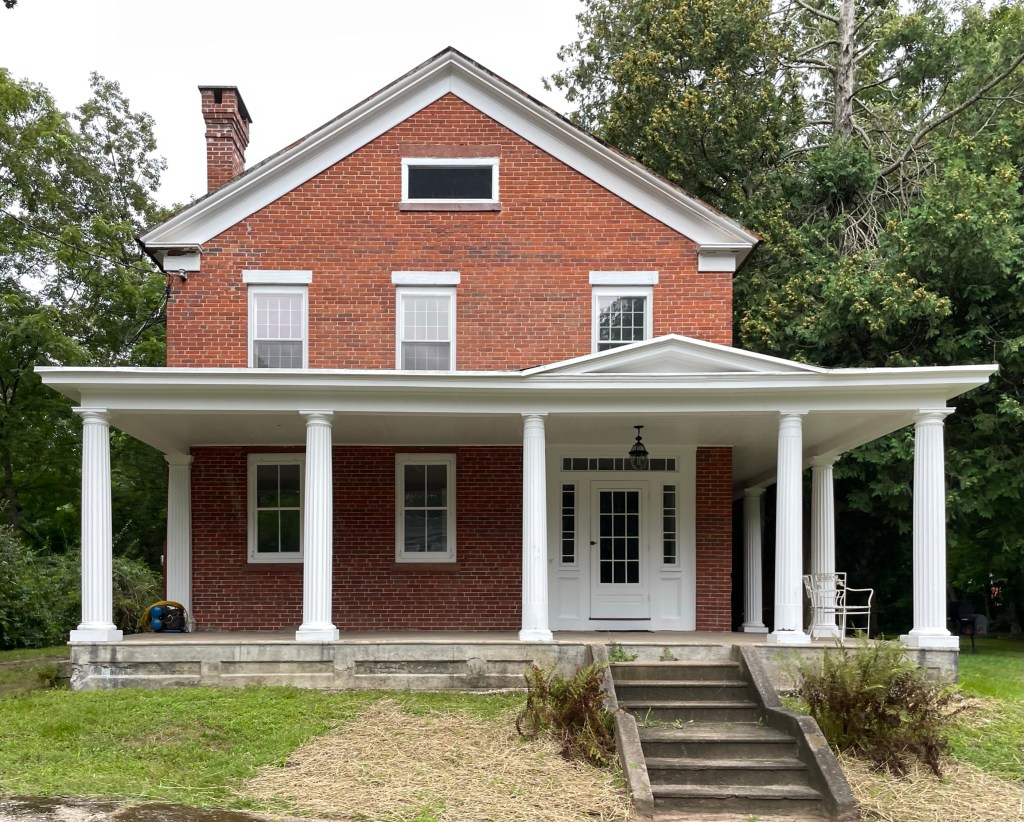
Greek Revival style houses in brick are amazing to find “in the wild”, when I stumble upon them! This example is located in the South Britain village of Southbury, Connecticut. The brick house was built for Judson Manville in 1835 and it was constructed of locally manufactured bricks. Judson operated a hat manufacture next door to this property and it clearly made him some money. The property was eventually acquired by the Hawkins Company at the turn of the 20th century and it was operated as the company offices. It was during this time that the 20th century wrap-around porch was added. It is now a private residence.

St. Sergius Chapel // 1932

Formerly known as “Churaevka,” the community known today as Russian Village in Southbury, Connecticut, was established in 1925 as an artistic community for Russians who fled to America after the Russian Revolution of 1917. The village was created by two Russian writers, Count Ilya Tolstoy, the son of Leo Tolstoy (the author of War and Peace and Anna Karenina), and the famous Siberian novelist George Grebenstchikoff. Although Tolstoy was first to discover the area while visiting his translator in Southbury, it was Grebenstchikoff who dreamed of establishing a cultural center and planned to create a rural community of cottages where Russian writers, artists, musicians and scientists could live and flourish statestide. The village was named after a mythical Siberian village mentioned in the works of Grebenstchikoff and the centerpiece is this chapel, St. Sergius Chapel, which was built in 1932-33 from plans by Nicholas Roerich. The small square-plan chapel was likely built of stone gathered from the neighborhood.

Benjamin Stiles House // 1787

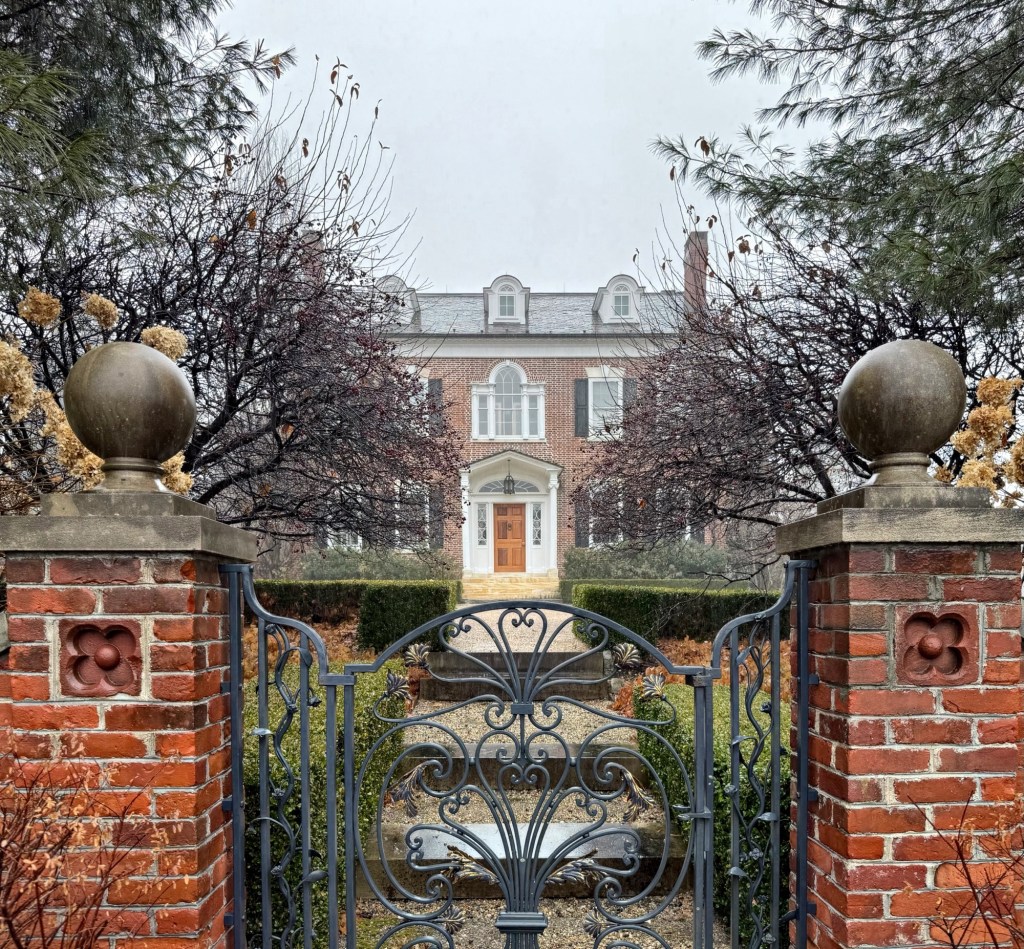
Built for Revolutionary War veteran and local lawyer Benjamin Stiles, this stunning Georgian mansion is unique for its use of brick in construction, a material not too common for some of Southbury’s earliest homes. Local tradition holds that a French engineer in General Rochambeau’s army provided assistance in designing the building, using the metric system, likely on the march from Newport to Yorktown. Benjamin’s father was one of the original settlers who migrated from present-day Stratford to the un-developed Southbury. The hip-on-hip roof with pedimented dormers is really a stunner, and unique for the town!

Oldfield – John Moseley House // 1818

Federal style houses are among my favorite styles! From the classical design details to the symmetrical facades, there are so many great examples of Federal style houses in New England. This house in Southbury, Connecticut dates to 1818 and was built by John Moseley (1775-1876), who lived to be 100 years old, and married twice, outliving both of his wives. According to a family history, Moseley personally went to Maine to pick out the wood used to build his house as there were no large trees left in the area when house construction began in 1818. In the early 1900s, the house was updated with a rear addition, built from a structure moved from across the street and attached to Oldfield, and with the addition of the large Colonial Revival style portico at the front entry. The house has been a bed & breakfast since the 1990s, originally called Cornucopia at Oldfield, it is now known as the Evergreen Inn.

Church of the Epiphany // 1867

The stereotypical church in New England is the usual wooden structure with a central steeple and painted a bright white. Whenever I see an old church that breaks that oh-so-common mold, I have to snap a photo and learn more! This is the Church of the Epiphany, located on Main Street in Southbury, Connecticut. The church is an example of the Gothic style built in the Victorian period and is constructed of stone with a wooden corner belfry. Construction started in 1863, and the church was not completed until four years later in 1867. I could not locate who the architect was, but I am dying to know!

Bullet Hill Schoolhouse // c.1762

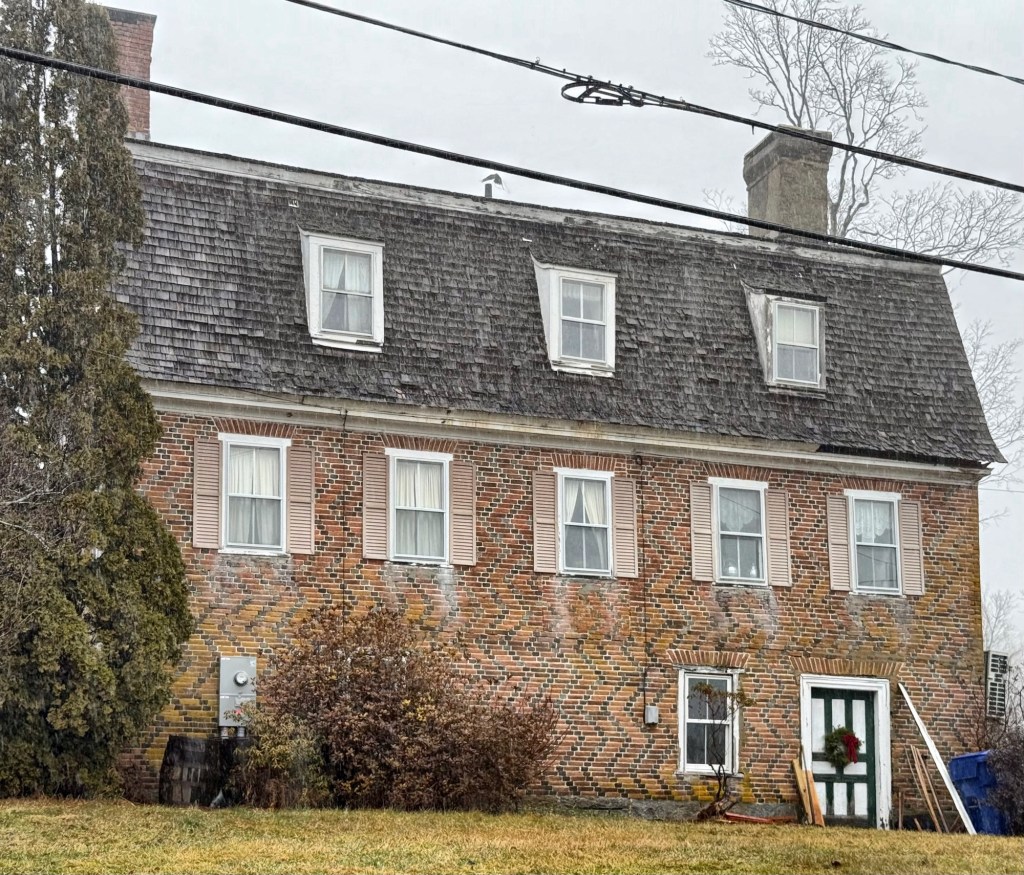
The Bullet Hill School, formerly known as the Brick School, is the oldest public building in Southbury, Connecticut and one of the oldest schoolhouses in America. Originally built in 1762 of locally made bricks, the two-story structure is a well-preserved example of a Colonial-era school building. Some sources date the building to 1790. The building remained in operation as a school for 179 years until December 1941 when the new Southbury Consolidated School, now Gainfield Elementary School, opened in January 1942. The Bullet Hill school is distinguished by its near-square proportions, locally made bricks laid up in Flemish bond, generous window sizes, and a hipped roof. The original cupola, now replaced, served as the model for Southbury’s 1977 Town Hall and other public buildings in town. Today, the former schoolhouse is maintained by the town and operated by the Historical Society as a living museum that is open for class visits and tours.

White Oak Schoolhouse // 1840

When the first white settlers of present-day Southbury, Connecticut, traveled up the Housatonic on rafts in 1673, they spent their first night under a white oak tree in what is now Settlers Park. That section of Southbury became known as White Oak for this early history. As this part of town developed and the population grew, another schoolhouse was needed. In around 1840, this Greek Revival style school building was constructed and has stood proudly on Main Street in the nearly 200 years since. The school now shares the same lot as the Reverend Graham House and has most recently been occupied as an antiques store.

Reuben Curtiss House // c.1840

The Reuben Curtiss House is a classic example of a Greek Revival farmhouse from the mid-19th century, located in Southbury, Connecticut. Local history states that a house built here by Israel Curtiss (1716-1795) who farmed the land with his large family. In 1798, Israel’s large estate was distributed among three of his sons, Joseph, Benjamin, and Reuben. This was complicated by the fact that in the same year, both Joseph and Benjamin died, leaving the entire estate to Reuben. From about 1840 and possibly until he sold the property in 1866, Reuben B. Curtiss ran an academy here, known as “Buck Hill Seminary for Boys.” It was a large operation, as suggested by the size of the addition and confirmed by the 1850 federal census. At that time there were 23 students in residence, ranging in age from 8 to 12, along with four adult supervisors. It was likely that the former farmhouse was expanded and the present 1840s Greek Revival block was added which now is the main facade.