Beebe-Phillips House // c.1832

The Beebe-Phillips house in Waterford, CT, was built in the 1830s by Orrin Beebe (though some accounts say it was built for his wife Lydia after his death), and is an excellent example of a traditional full-cape house in Connecticut. The home is a vernacular example of the Federal style with no frills or expensive details. The house was originally located elsewhere in town but was moved to its current site on Jordan Green in 1974 by the Waterford Historical Society, next to the Jordan Schoolhouse.

Seaside Sanatorium – Superintendent’s Residence // 1936

The last stop we will see at the stunning Seaside Sanatorium campus in Waterford, Connecticut is the former Superintendent’s Residence. Built in 1936, the home is elegantly sited at the waterfront, which would have provided amazing views for the man in charge of running Seaside, the Tuberculosis hospital for children here. Like the Maher Building, Nurse’s Residence, and Duplex Residence previously featured, this building was designed in the Tudor Revival style and is also credited as a work of architect Cass Gilbert. The Superintendent’s Residence is interesting as it has two completely different facades. The campus-facing facade features an L-shape with a garage wing and projecting entry pavilion in stone. Above, a diamond-pane window would allow natural light into what may be the stairhall. At the waterfront, a large open porch (since boarded up) and large windows at the first floor, would provide natural light and air into the building, along with amazing views of Long Island Sound. Additionally, a catslide roof extends from the rightmost bay and covers a recessed porch with basketweave brickwork above. I would for sure live here, could you?

Waterfront Facade

Powers-Rosenthal House // c.1877

This gorgeous stone house was built circa 1877 by Phillip M. Powers (1814-1889), who served as President of the Millstone granite quarry in Waterford, Connecticut. The home is said to have been built off an earlier 1700s home, but all was constructed in ashlar granite to showcase Mr. Powers’ quality stone. It is said that Phillip went bankrupt not long after the construction of this home. In 1930, the house was purchased by Beatrice H. Rosenthal and her husband. Ms. Rosenthal served as both a delegate and as a committeewoman of the Democratic National party, and a staunch advocate for women’s rights. She was also active in women’s educational institutions around New England. The old home and barn are now available for rentals for events or overnight stays.

Jordan Schoolhouse // c.1735

Waterford was once part of New London, but it separated in 1801 as the area desired its own town government which took agricultural interests more seriously. In the 19th century, much of the town’s economy was centered around agriculture, with many residents running sheep farms. During the 20th century, sheep farms were replaced by dairy farms. Between 1920 and 1960, there were about 100 dairy farms in Waterford. After WWII, suburbanization occurred and many wealthy residents of nearby New London moved to Waterford for more space. The oldest surviving public building in Waterford, Connecticut is this Colonial-era schoolhouse which was likely built in the 1730s. The Jordan Schoolhouse was built as a rural schoolhouse as farmers wanted their children to be taught writing, reading, arithmetic, and religion, even if they followed their parent’s footsteps in farming. The gambrel-roofed Georgian building was used as a school until the mid-19th century and it was converted to a private home for Asa and Eliza Gallup and their family. The schoolhouse was eventually moved to its current site on Jordan Green in 1972 and is operated as a museum space for the Waterford Historical Society.

Castle House // 1964

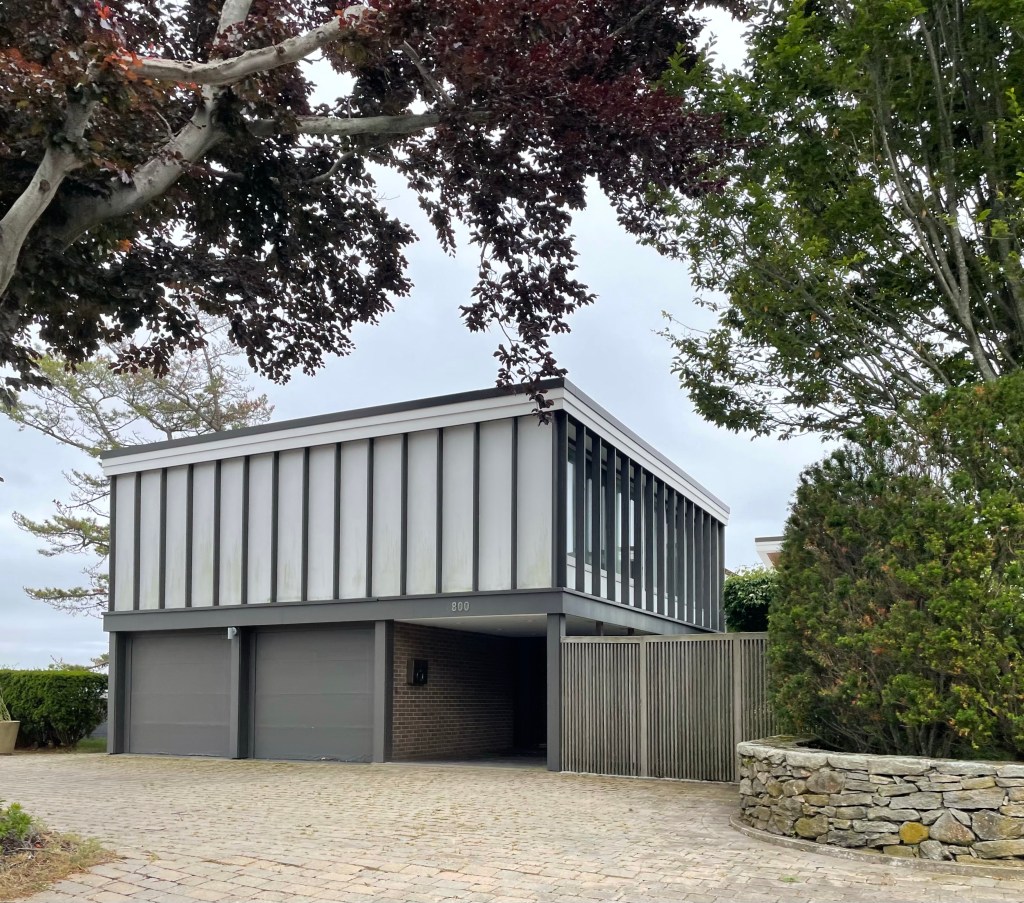
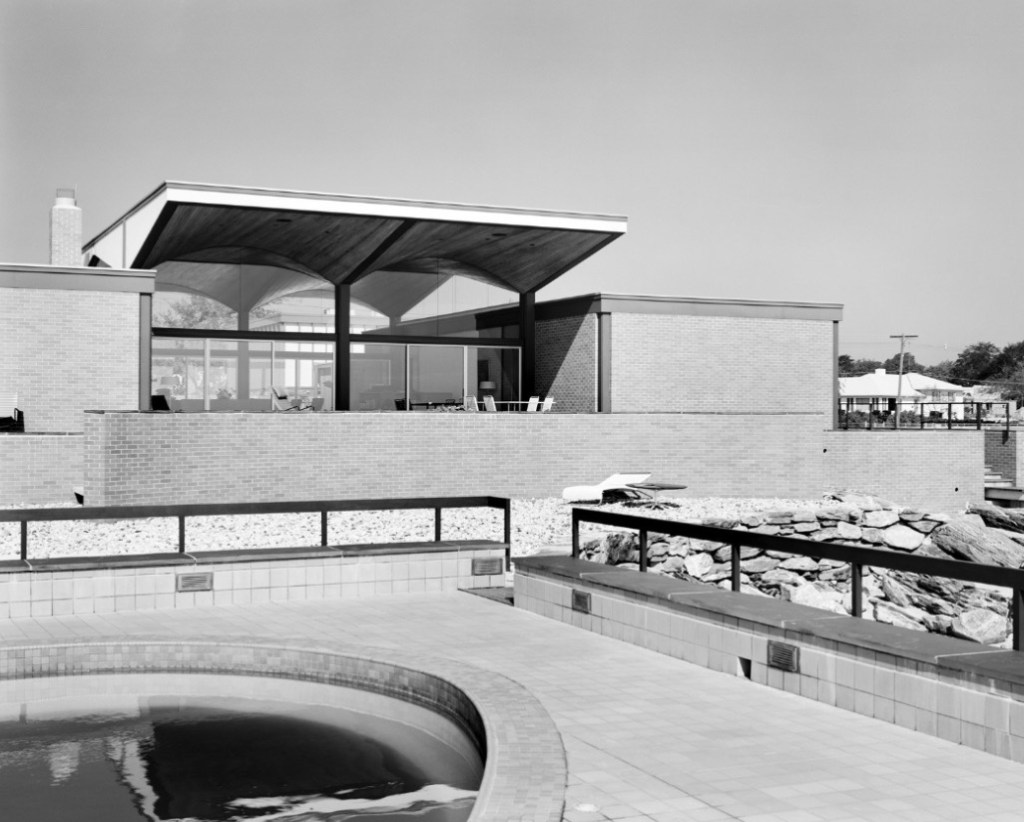
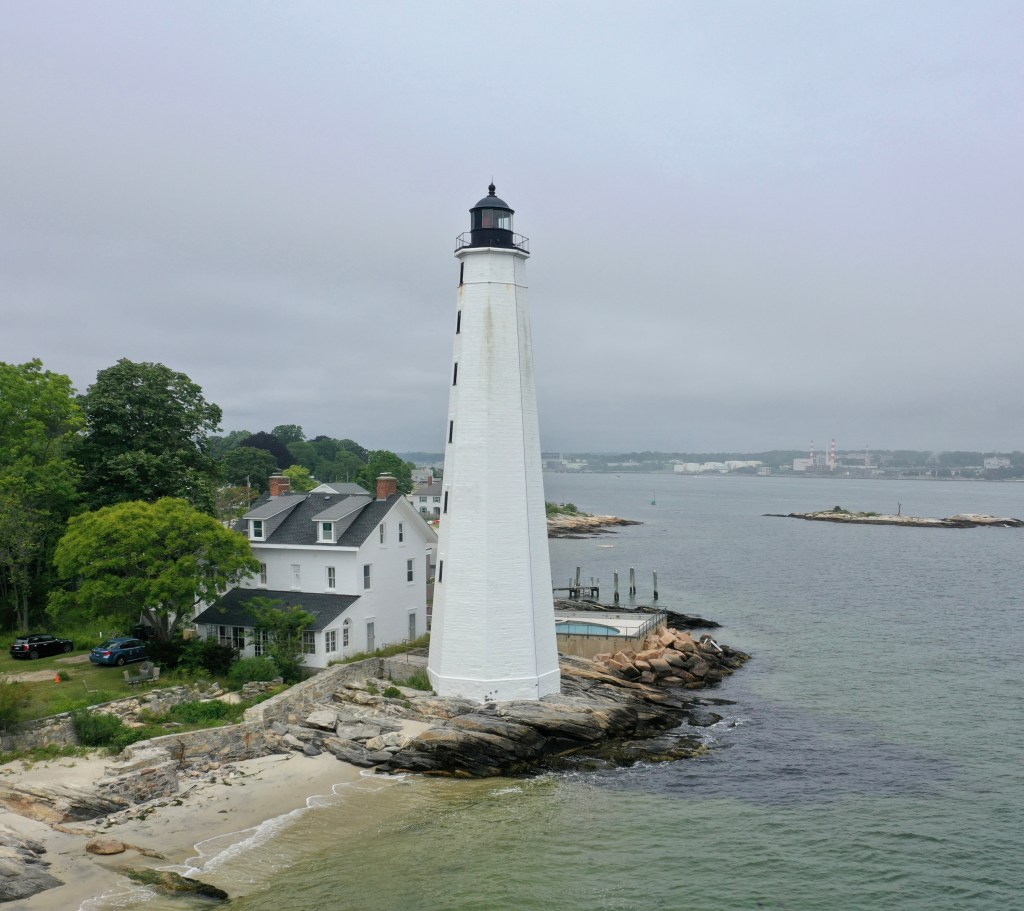
Perched atop the rocky coast of New London, CT, and seemingly at the base of the iconic New London Harbor Light, the “Castle House” stands as one of the most significant examples of 1960s residential design in a state known for such homes. The Castle House was completed in 1964 from plans by German-born American architect Ulrich Franzen (1921-2012), who attended Harvard’s Graduate School of Design after his service in WWII. After graduating, Franzen worked under I.M. Pei, until he formed his own firm, Ulrich Franzen & Associates, in 1955. The home’s signature element is its dramatic free-floating glass living room pavilion with cantilevered paraboloid vaults and flanking service wings, with a jaw-dropping cypress butterfly ceiling. Additionally, the oval pool sits over the harbor water and provides the best possible views of the 1801 lighthouse towering above. The house was recently updated by SchappacherWhite, a design firm who are known for their thoughtful Mid-Century Modern house preservation projects.

New London Harbor Light // 1801

In 1760, the colonial legislature of Connecticut passed an act creating a committee to pursue the funding, construction, and staffing of a new lighthouse for the harbor entrance at New London. The following year, thousands of lottery tickets were sold to raise £500 for the lighthouse (a popular method of raising funds for construction projects in those days). The lighthouse, a sixty-four-foot-tall stone tower with a wooden lantern at the top, was finished that same year at the west side of the harbor entrance. By 1799, issues began to pile-up, including a crack in the structure compromised the integrity of the tower, compounded by the fact the light was so dim as to often be indistinguishable from the lights of the surrounding homes. These challenges led the charge for a new lighthouse. Congress allocated $15,700 for a replacement lighthouse on May 7, 1800, and New Londoner, Abisha Woodward began construction on the current octagonal, tapered, eighty-foot-tall tower. The present light was completed the next year and is constructed of smooth-hammered freestone which are lined with brick inside. The current gable-roofed, two-and-a-half-story keeper’s residence was built in 1863, and in 1900 it was expanded to provide quarters for the assistant keeper and their families. Today, the keeper’s house is privately owned and the light tower is owned by the New London Maritime Society, who offer tours of the light on occasion.

Mary English Cottage // 1911

This shingled beach cottage on the southern tip of New London, Connecticut sits in the Neptune Park community, which was laid out by real estate speculators as summer homes, primarily for local families. The Post Hill Improvement Company made up of professionals, purchased the beach and the surrounding land for $25,000 and began selling off the land adjacent to the beach. Then, once developable lots were sold and many cottages were built, they sold the beach alone back to the City for the same sum of $25,000. Like many such developments, deed restrictions were placed on properties, and ensured that only a dwelling house, with a minimum value of $2,500 if not waterfront and $3,000 if waterfront, could be constructed on the lots. This formerly Colonial Revival cottage was built in 1911 for Mary R. English, and would have cost at least $3,000. The shingled home was later given the tower and other details, but retains much of its charm.

Wakeman Memorial Building // 1913

The Wakeman Memorial Building in Fairfield, CT, is one of a few buildings erected in the Southport area during the early twentieth century. The boldly proportioned central portico is supported by square Tuscan columns with an Ionic fretwork entablature and denticulated cornice, and topped by a spindled parapet and an elliptical shaped Palladian window on the second story. The red tiled gambrel roof, splaying beyond the exterior walls, is bracketed by decorative modillions. The building was constructed in 1913 through funds by Miss Frances Wakeman in memory of her grandfather, Jesup Wakeman, at a cost of fifty thousand dollars. The building was used by the Boys and Girls Club of Southport as a club house, offering sewing classes, a reading room, and offices. The building was converted to a home after the Boys and Girls Club moved to a larger facility.

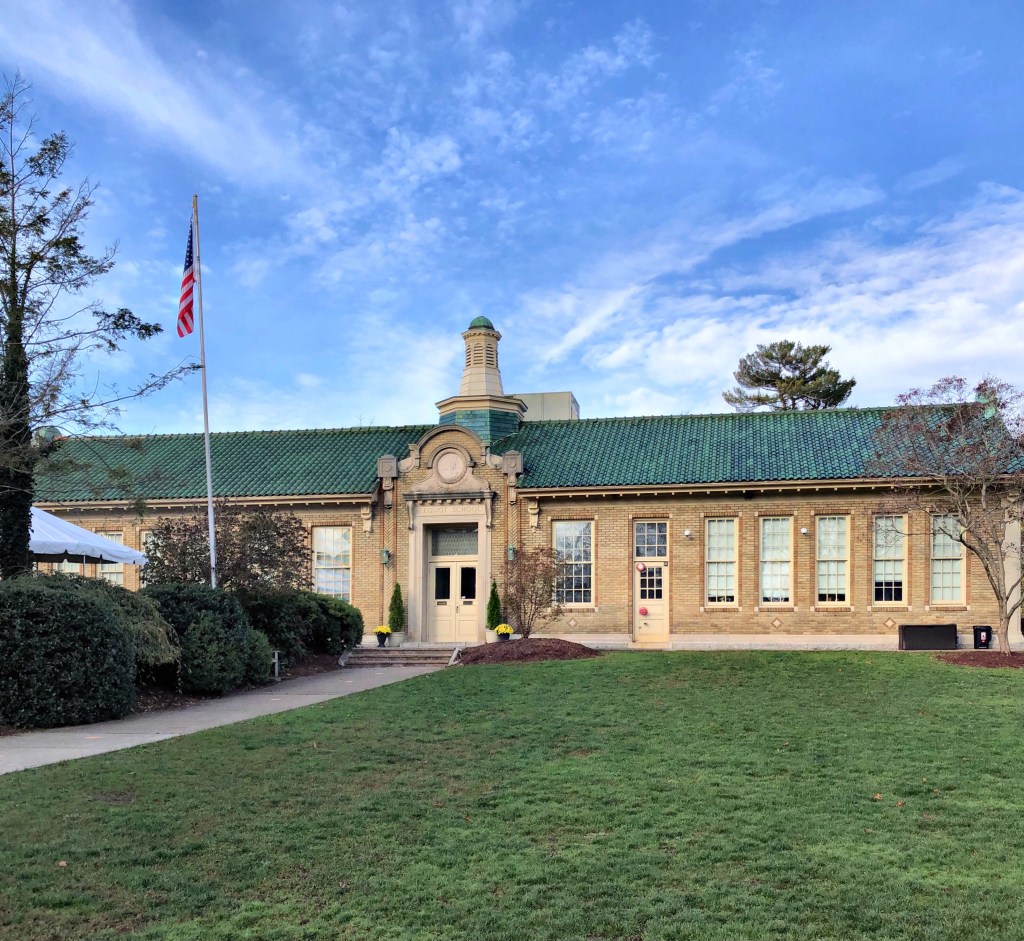
Pequot School // 1917

The Pequot School in Fairfield was built in 1917-18 and is one of only a few institutional buildings erected in the Southport area during the early twentieth century. The school, designed by architect William H. McLean, replaced an earlier school on the site which was built in 1854. The 1854 wood-frame school building was outgrown in the early 20th century and the school board voted to demolish the old building and replace with a larger, modern school. The school is a unique design in the Classical Revival realm, but capped with a cupola and stunning green tile roof. The school closed in 1972, and the historic Pequot School building was acquired by the Southport Conservancy as a treasured landmark. It was occupied by the town until 1985 when it was occupied by the Southport School.

Edwin Sherwood House // 1837

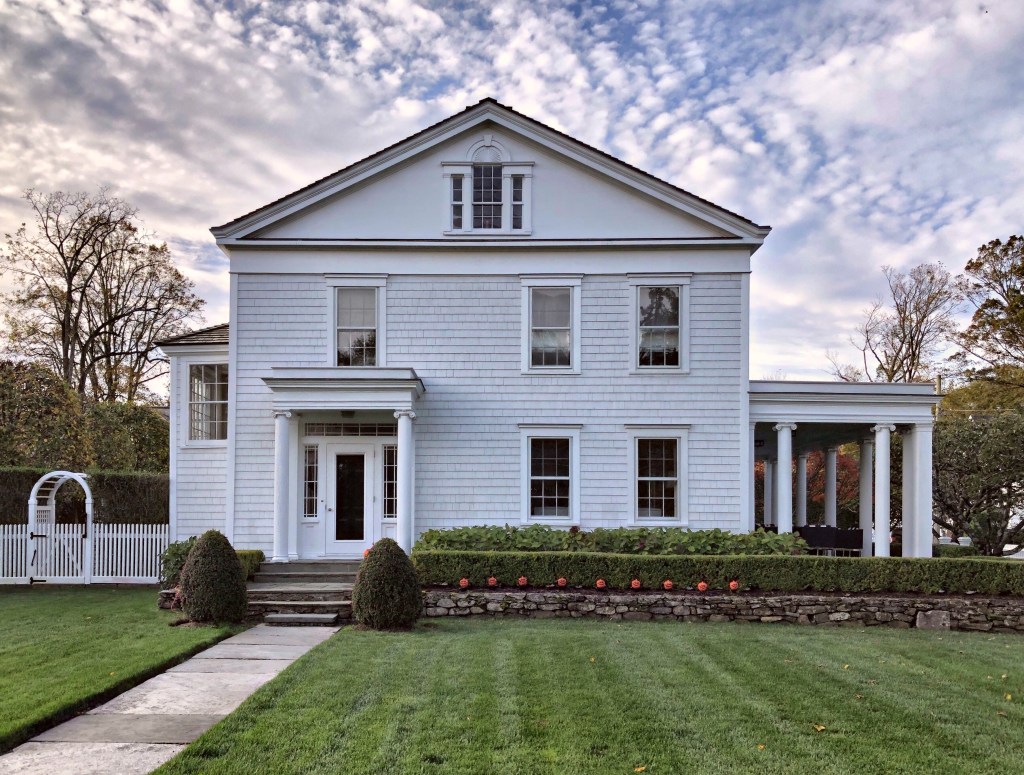
Located next to his son’s house, the Edwin Sherwood House in Southport, Connecticut is an excellent example of Greek Revival residential architecture in New England. The home was built in 1837 for Edwin Sherwood, a sea captain who traded between New York and Savannah with his two ships “America” and “Georgia”. From this wealth, he became President of the Southport Savings Bank and Director of the Danbury-Norwalk Railroad. The home was renovated in 2017 with a modern interior by Ken Gemes, an interior designer.

Captain John Maltbie House // 1766

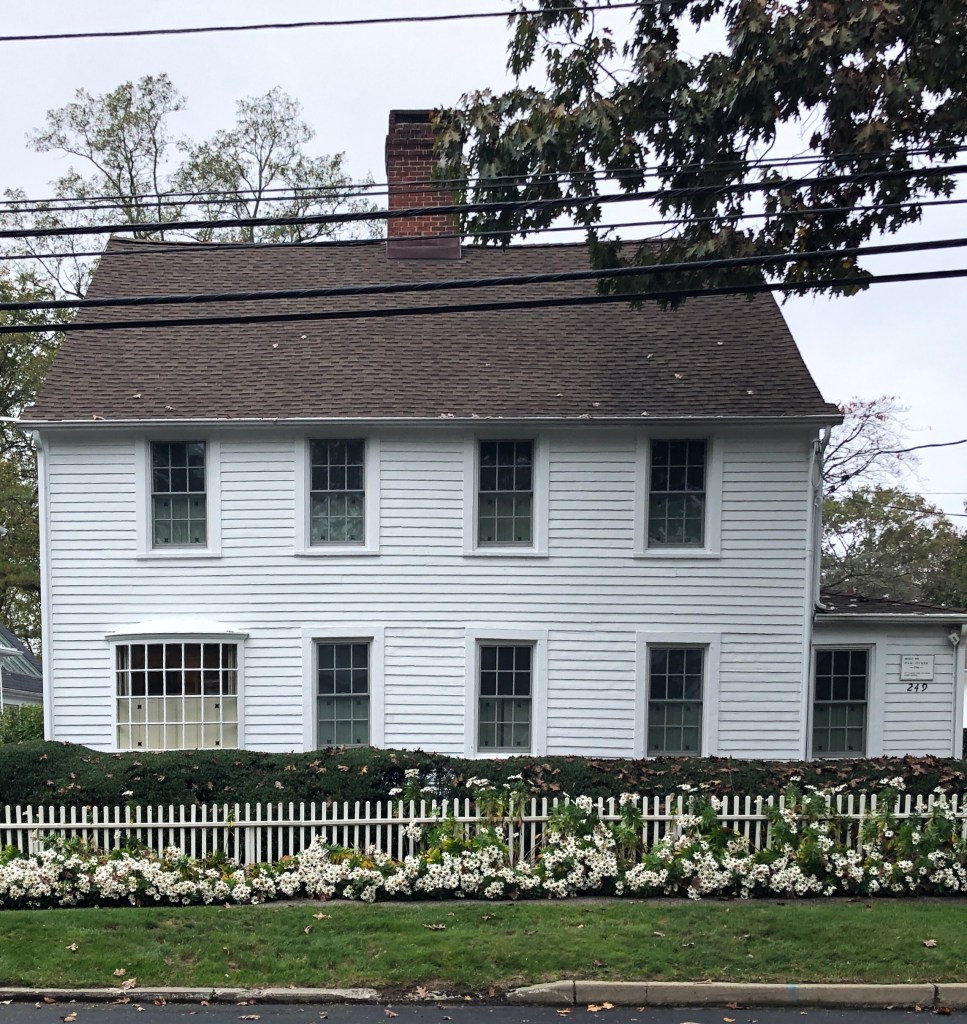
On July 7-8, 1779, the Red Coats marched through Fairfield torching houses to punish the locals for seeking independence. They killed locals, destroying anything they could find on their way out, setting fires to homes and civic buildings around the Green. This home was built by Isaac Tucker, later sold to Jonathan Maltbie, sea captain involved with East Indies trade. He later would fight against the British during the Revolution, and after the war, was hired as captain on one of the first cutter ships built, the Argus. During the British invasion of Fairfield, they attempted to set fire to this home three times, but it seemed to never go up in flames when they returned. The tradition holds that an elderly servant, hiding upstairs, put out the flames and saved the house from destruction, after the British Troops torched it. Burn marks apparently remain inside to this day. Since the home was built, the front door facing the street was relocated to the side, and a large multi-pane bay window was installed in its place.

Old Fairfield County Courthouse // 1794

Located at the Fairfield Town Green, the Georgian-style Fairfield County Courthouse stands as a reminder on the town of Fairfield’s Colonial-era history. The first courthouse at the site was built in 1720. After a fire destroyed the first (which housed the jail as well), a second structure was built in 1767. That second courthouse was the center of a thriving, wealthy village with a port just blocks away. In July 1779, the British landed in Fairfield and destroyed much of the town, harming its prosperity for decades to come (though it has clearly recovered since). In 1794, a new courthouse was built, also housing town offices. In 1870, it became solely a town hall (the County Court moved to Bridgeport years before) modified and altered in the Second Empire style to ‘modernize’ the building. As Colonial Revival resurged in popularity in the late 19th and early 20th- centuries, the town sought to bring back the Georgian style Town Hall building, in 1936 hiring architect Cameron Clark, to restore the building.