Thomas Lord House // 1847

This 1847 Greek Revival home sits in Blue Hill Village, Maine and it was built by and for local architect and builder Thomas Lord (1805–1880), who is credited with bringing the classical motifs seen in Greek architecture to Blue Hill. Mr. Lord had little formal education, spending much of his youth grinding bark at Ellsworth, sailing and working on his uncle’s farm. When he was 22, he apprenticed himself to a carpenter and began working for George Stevens in the shipbuilding yards of Blue Hill. From 1828 to 1880, Thomas Lord worked on 83 vessels, 84 dwellings, 12 school buildings, 14 meeting houses, 10 stern moldings and figureheads, 250 coffins and many barns and sheds. Lord is especially known in the area for his churches, including remodeling the First Baptist Church of Blue Hill in 1856. Just before building the house, Thomas married Matilda Carlton (1811-1898) and the couple had three children while living in the home. When Thomas died in 1880, Thomas Lord’s elder son, Roscoe Granville Lord took up residence here, where the 1900 census lists him as a painter. The home remains extremely well preserved and is one of the finer homes in the village of Blue Hill.

Pendleton House // 1826

Large commercial blocks like this can really transport you back a century or more! The Pendleton House in Blue Hill, Maine was built in 1826 by Jonah and Jeremiah Holt. The brothers were born in Beverly, Massachusetts and their family settled in Blue Hill, likely to work in the shipbuilding industry. Originally called the Brick Block, the building was a storefront for the Holts. In the 1870s, the building had fallen into disrepair, and was seized from its owner, Frederick Holt (Jeremiah’s son), by the Blue Hill Academy, from whom Nathan Pendleton purchased the building. As an 1877 issue of The Ellsworth American stated: “Blue Hill needs a hotel. There have never been so many strangers and visitors. Five hundred men are working in the quarries.” From the massive demand for lodging in town, tied to industry, Pendleton opened the building as a hotel in 1878, possibly adding the mansard roof at that time. The building became known as the Pendleton House for a number of years and was purchased by John M. Snow in 1888, who added porches to the building. Sadly, the porches were removed in the 20th century, but the old Pendleton House remains a fixture in Blue Hill and is home to small businesses with housing above.

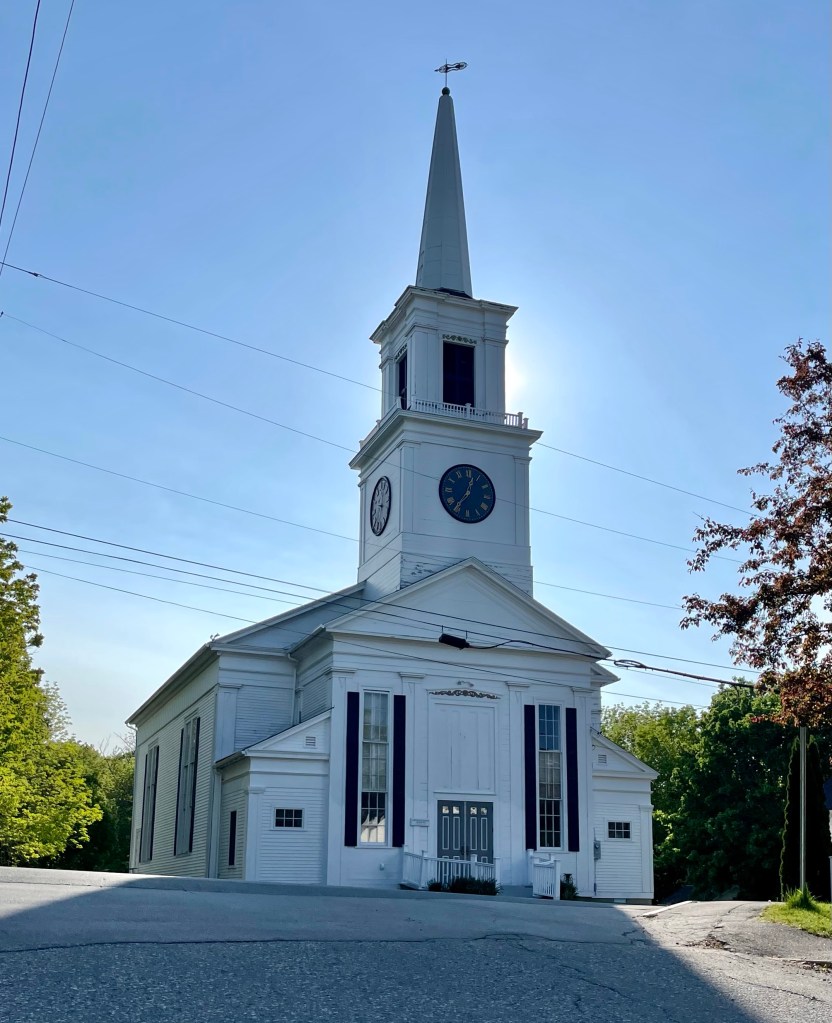
First Baptist Church of Blue Hill // 1817

In 1793, Rev. Daniel Merrill was ordained at the newly-organized Congregational Church in Sedgwick, Maine. Soon after the religious revival of 1799, Rev. Merrill changed his belief from a congregationalist to a Baptist; and in 1805, he and most of his church members were baptized by immersion. Rev. Merrill was
then re-ordained and installed as pastor of a newly-formed Baptist Church in town there. Baptism took hold in Maine (which was then still a part of Massachusetts), and in 1813, the Massachusetts Legislature passed a resolution incorporating the Baptist Society of Bluehill. Funds were gathered and the Baptist Church in Blue Hill began construction in 1817. In 1856, as Blue Hill saw great prosperity, the building was renovated by retired ship carpenter and local builder, Thomas Lord. The updated Greek Revival design has many pilasters and details that highlight the wealth and success of the Baptists in Maine.

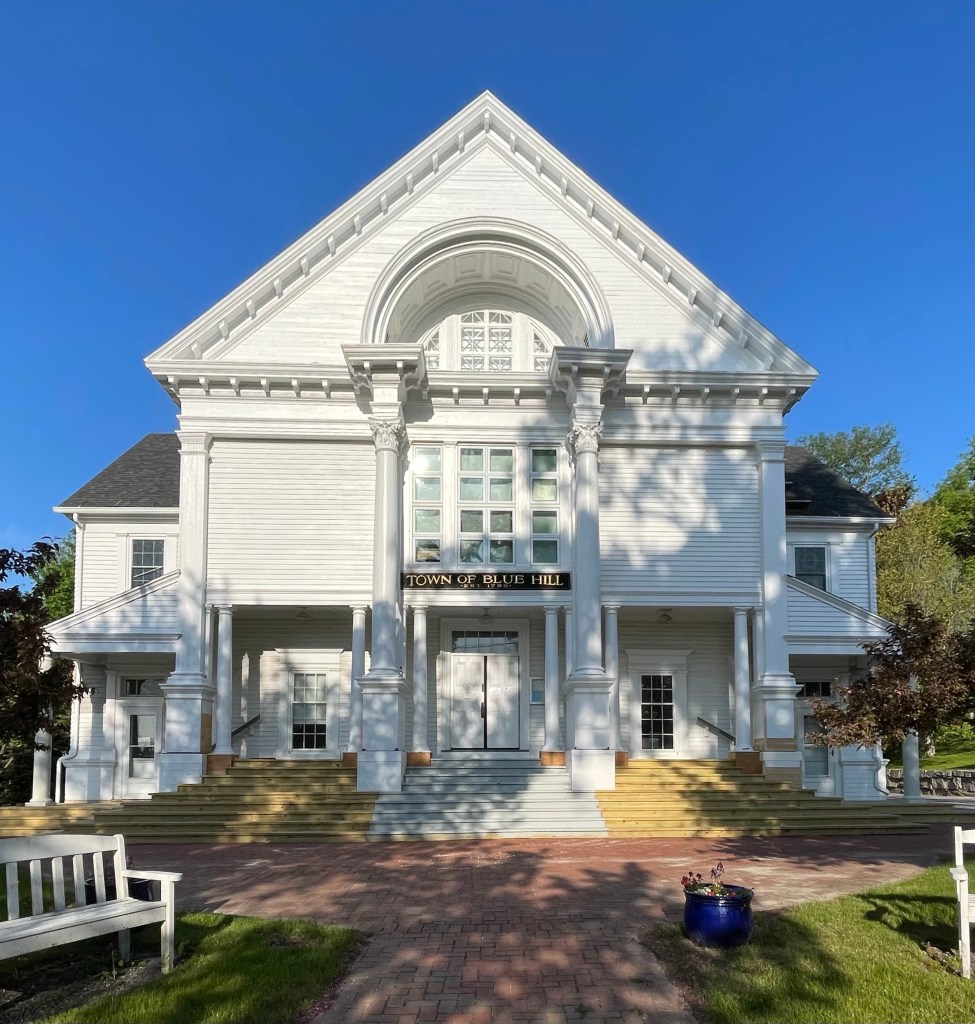
Blue Hill Town Hall // 1895

Blue Hill is a charming coastal town in Hancock County, Maine that retains so much of the charm that has been lost in many other coastal New England villages. Originally settled by the Penobscot Tribe, the town as we know it was incorporated in 1789 under the name “Blue Hill”, named after the summit overlooking the region. The town thrived early as a lumber and wood shingle exporter, later shifting to shipbuilding. The town was also noted for the quality of its granite, some of which was used to build the Brooklyn Bridge, New York Stock Exchange Building, and the U.S. Custom House at Norfolk, Virginia. In 1876, local quarries employed 300 workers. The town’s wealthy summer residents likely sought a new Town Hall for Blue Hill, as in the 1890s funding was acquired to erect a new building. It came as no surprise that George Albert Clough, an architect born in Blue Hill would furnish the plans for the new town hall. George was the son of Asa Clough an early settler and shipbuilder in town. He moved to Boston to work as an architect and later became the City of Boston’s first “City Architect” designing municipal buildings. For the Blue Hill Town Hall, he designed it in the Colonial Revival style, which remains well-preserved to this day.

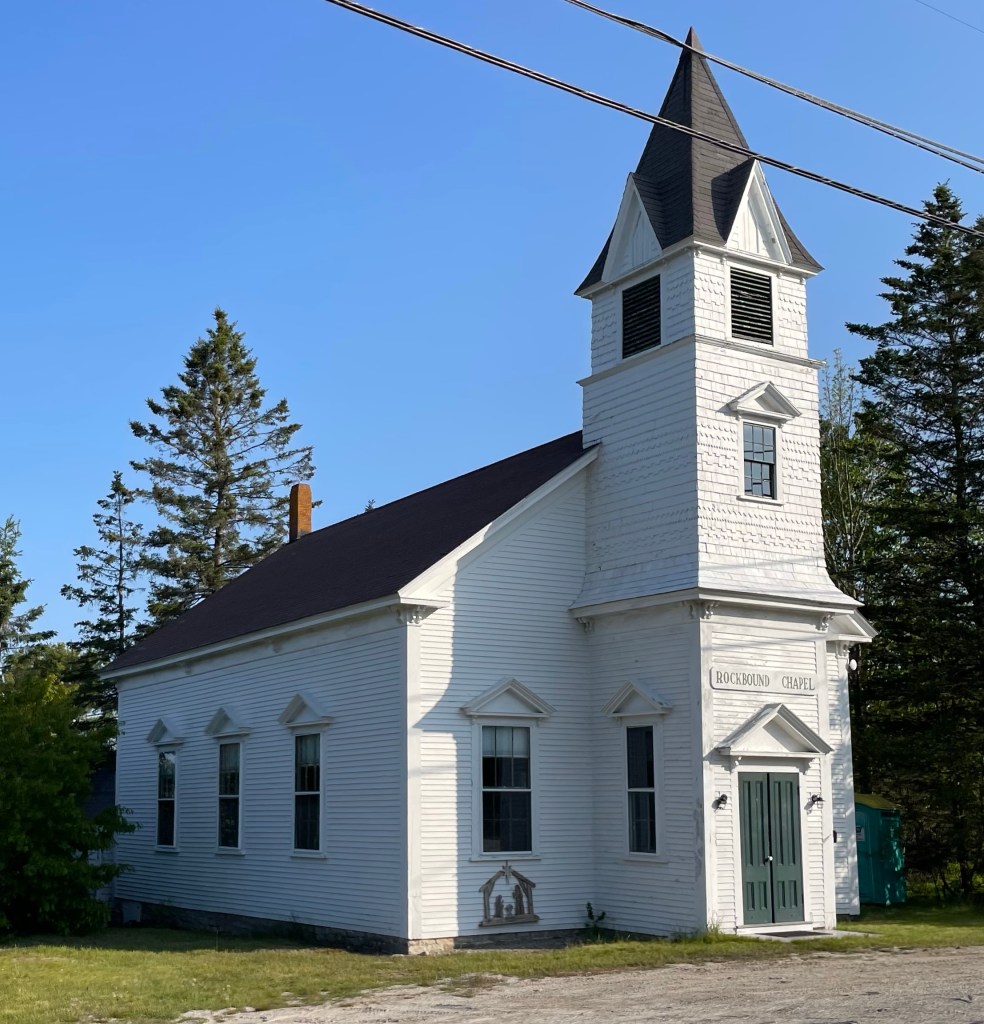
Rockbound Chapel // 1900

Wrapping up our “tour” of Brooklin, Maine, I wanted to conclude with a feature on Rockbound Chapel, one of the village churches in the small coastal town. The chapel (like the Beth Eden Chapel) was constructed at the turn of the 20th century as a village church which saw increased use when the town’s population surged (relatively) in the summer months. The vernacular church building has pedimented lintels over the windows and door, and a steeple covered in decorative shingles which flare toward the base. There is something just so enchanting about these small rural chapels!

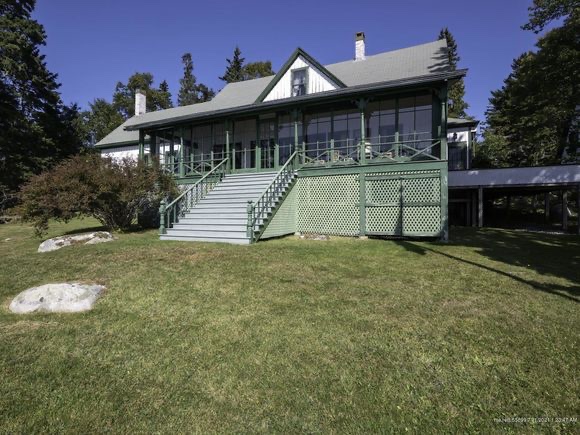
Radnor Cottage // c.1907

The historic summer cottages for middle-class summer residents of Maine have little written about them, but oh are these little cottages beautiful!! This is Radnor Cottage, a charming waterfront dwelling in the Haven Colony in Brooklin, Maine. The summer colony is comprised of a dozen quaint cabins (most historically without running water) for those of more modest means that wanted to escape the city for peace and tranquility on Maine’s rocky coast. The colony was developed in the late 19th and early 20th centuries as a respite for academics and more who did not want to flaunt their credentials or social prestige. This home was purchased a few years ago and the inside looks like it’s never been altered! This is a dream home!

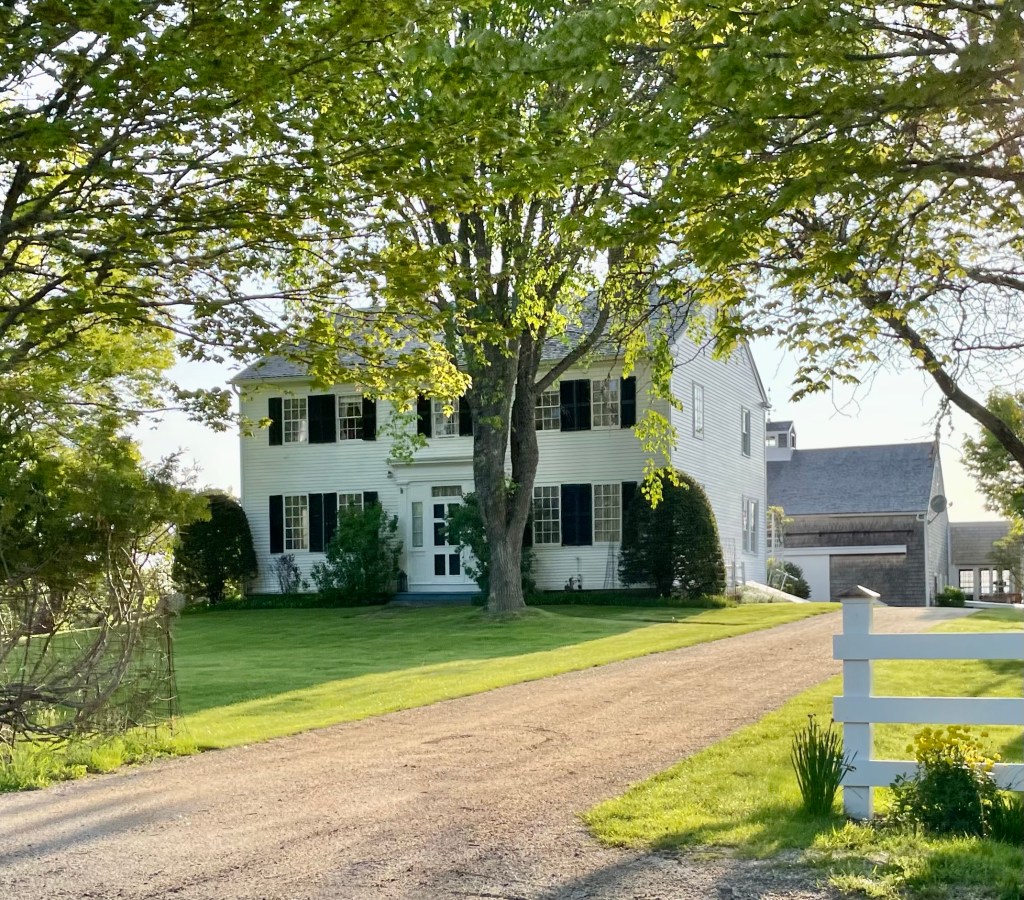
Amen Farm // c.1850

Can I get an “Amen”?! Amen Farm was built in the mid-19th century on 47 acres in Brooklin, Maine, overlooking the Blue Hill Bay and Acadia National Park in the distance. The Cape house, like many on Blue Hill peninsula, is modest and was enlarged by telescoping ells as space was needed. The house was long owned by the Bowden Family who farmed the land, later adding a small gas station to the side of the road (since removed). Later owner, Joseph “Roy” Barrette (1896-1995) likely helped give the home its name. Barrette got his first look at Maine in 1919 from a ship, when he was a deck-hand on an 800-ton coal barge, hauling West Virginia coal from Norfolk to Portland. He had bought this farm in 1958 and was looking forward to his retiring years, which he intended to spend in a library of some 3,000 volumes and indulging his hobbies as a gardener, a gourmet, and a connoisseur of fine wines. John Wiggins, associate editor of The Ellsworth American newspaper, impressed by Barrette’s garden, his literary tastes, and his writing style, persuaded him to write a column, which he called “The Retired Gardener.” He wrote many essays and three books from this home in Brooklin where he never fully retired. Roy died in 1995 and the property was eventually listed for sale in 2019. The house is undergoing some work and landscaping upon the time of the photos.

E. B. White House // 1795

The coast of Maine has long been a refuge for those looking for an easier way of life and access to natural splendor. One of the more well-known residents of Maine was author E.B. White, who lived on this farm in Maine for 48 years. The estate sits on 44-acres and was built in 1795 for William Holden by Captain Richard Allen, a local housewright. The property was purchased by E. B. White in 1933 as a summer residence, but it became a full-time home where he and his wife, New Yorker editor Katharine Angell, raised sheep, geese, chickens, pigs, even spiders all with a historic barn and tire swing. Sound familiar? It is from this house that he wrote the iconic children’s book, Charlotte’s Web (and Stuart Little) among others. White was a private person, and despite his internationally famous books, he did not advertise the location of his home while he was alive. In 1977, he convinced an interviewer to report that “he lives in ‘a New England coastal town’, somewhere between Nova Scotia and Cuba“. Katharine died in 1977, and E. B. in 1985. The property was inherited by their son, who summered there for years. The most recent owners, Robert and Mary Gallant of South Carolina, who have summered there for the past 30 years and preserved the house immaculately, selling it a few years ago.