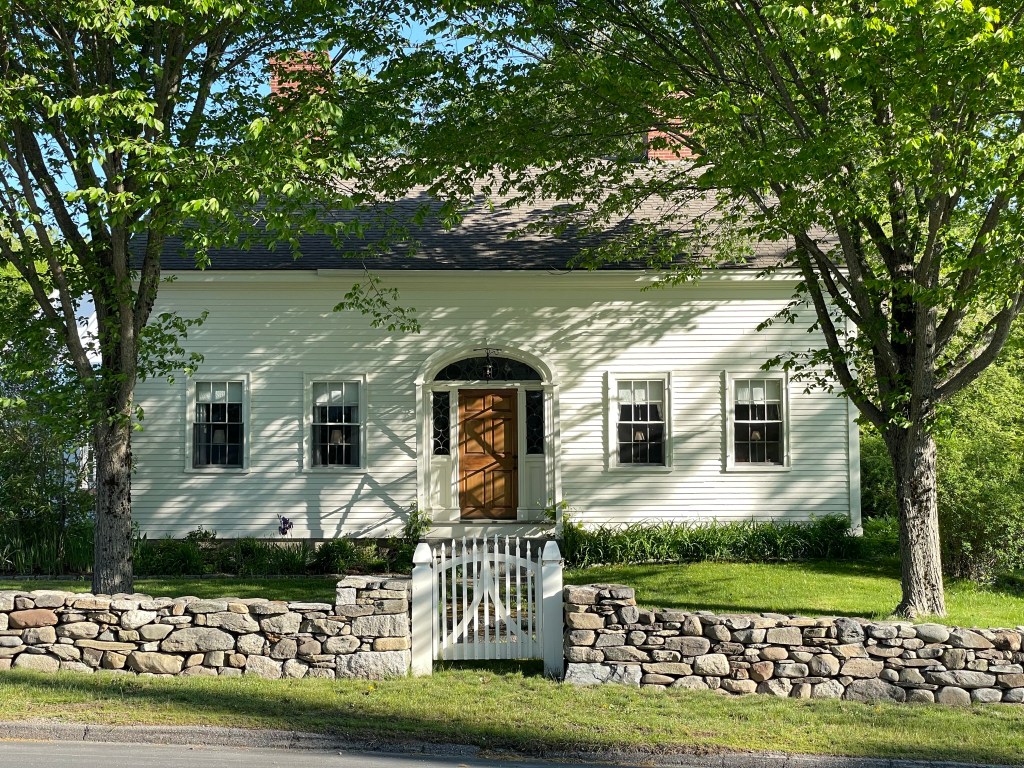
Clough-Hinckley House // 1832

This charming Federal style cape in Blue Hill Maine was built in 1832 by Moses P. Clough, a sea captain seemingly as a wedding gift to his new bride of that year, Sally Prince. He resided in the home off-and-on between excursions and trips at sea until his untimely death at sea in 1836 of bilious fever, possibly caused by malaria. After his death, his widow Sally, remarried and moved to Cherryfield, Maine. The old family home was sold to Bushrod W. Hinckley, an attorney who was involved in the town affairs. Today, the old Clough-Hinckley home is known as Arborvine, a great restaurant known for using local, farm-to-table ingredients. The home is excellently preserved by the owners, down to the leaded glass fanlight and sidelights at the entrance. Swoon!

Holt House – Blue Hill Historical Society // 1815

The Holt House in Blue Hill, Maine, was built in 1815 by Jeremiah Thorndike Holt, grandson of Nicholas Holt who brought Blue Hill’s fifth family from Andover, Massachusetts in 1765. Jeremiah was one of the first to locate at the head of the bay, in what is now the center of Blue Hill village. He was an influential businessman who kept a store at what became known as the Pendleton House, engaged in shipping, and became the town’s second postmaster. After Jeremiah died in 1832, his widow turned the house into the town’s only inn and tavern. In 1851 their son, Thomas Jefferson Napoleon Bonaparte Holt (what a name!) and his family occupied the house. It stayed in the family for over a hundred years until the Blue Hill Historical Society bought the Holt House and made it their headquarters in 1970. The Holt House remains as a well-preserved Federal style home in this part of Maine.

Captain Drisco House // 1790

The Captain Drisco House on Meetinghouse Hill Road is a recently restored example of the vernacular Federal period architecture so many flock to Portsmouth to see. The house sits in the middle of a warren of short streets where houses (all built before zoning and setbacks) were built right at the sidewalk creating the most pleasant walking experience. The symmetrical five-bay Federal house was built by Captain Drisco, who purchased the house lot after the Revolutionary War.

Nathan Parker House // 1815

Many may not know this fact about Portsmouth, which shaped the city’s development for some of the formative years of the coastal town. The 1814 Brick Act was passed by the New Hampshire legislature after three devastating fires wiped out hundreds of closely-packed wooden buildings in the heart of the state’s only seaport. The act prohibited the erection of wooden buildings of more than twelve feet high in the downtown area which was the densest, it was effectively an early building code. The regulation helped change the look of the city, creating the red brick image Downtown that many identify today as Portsmouth. As a result, nearly all homes and buildings in the downtown area of Portsmouth were constructed of brick, largely in the Federal style, popular at the time. This home was constructed around 1815 as a wedding present for the South Parish’s minister, Reverend Doctor Nathan Parker, upon his marriage to Susan Pickering, the daughter of New Hampshire Chief Justice John Pickering and a descendant of the original John Pickering.

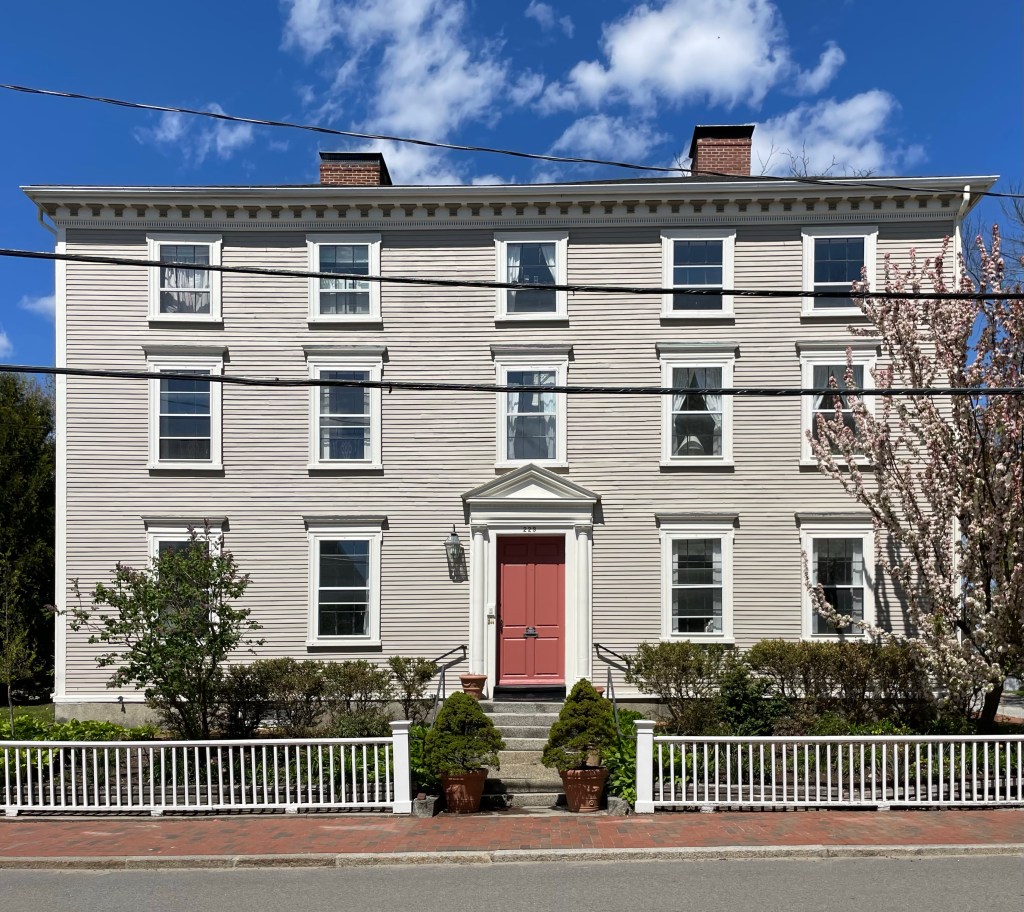
Haven-White House // 1800

Another three-story Federal period house on Pleasant Street in Portsmouth, NH is this wood-frame example, known as the Haven-White House. The property was developed in 1799-1800 by Joseph Haven, a merchant who built the house across the street from his father’s residence. Joseph Haven occupied this house until his death in 1829. After his wife Sarah’s death in 1838, the house remained in the Haven family, though usually occupied by others, until 1898 when it was sold to Mrs. Ella White. The White family, which included a grocer, a City Councilman in the early 1900s; and a chiropractor, with the family occupying the house until 1981. This history of long ownership by only two families for nearly 200 years perhaps accounts for the survival of this important house with so few changes. As a result, the house was listed on the National Register of Historic Places in 1985, marking it as a nationally significant building.

Samuel’s Stairs // 1810

Houses with unique names are always the most fun to research and post! This stately Federal style mansion in Kennebunkport was built in 1810 for Samuel Lewis (1777-1857), a cabinetmaker and carpenter in town. Lewis also worked as an undertaker and made glass-top coffins from 1801, until his death. It is estimated that Mr. Lewis made 2,500 coffins during his career – including his own. Samuel was a quirky character and built his home as a large addition to a 1762 home, which possibly remains today as an ell. The 1810 house with original transom and sidelights at the entrance was two stories as built which contained a spiral staircase that ended on the second floor at a skylight. Thus, the house became known locally as “Samuel’s Stairs.” A later owner added the third floor, but maintained the Federal proportions. SWOON!

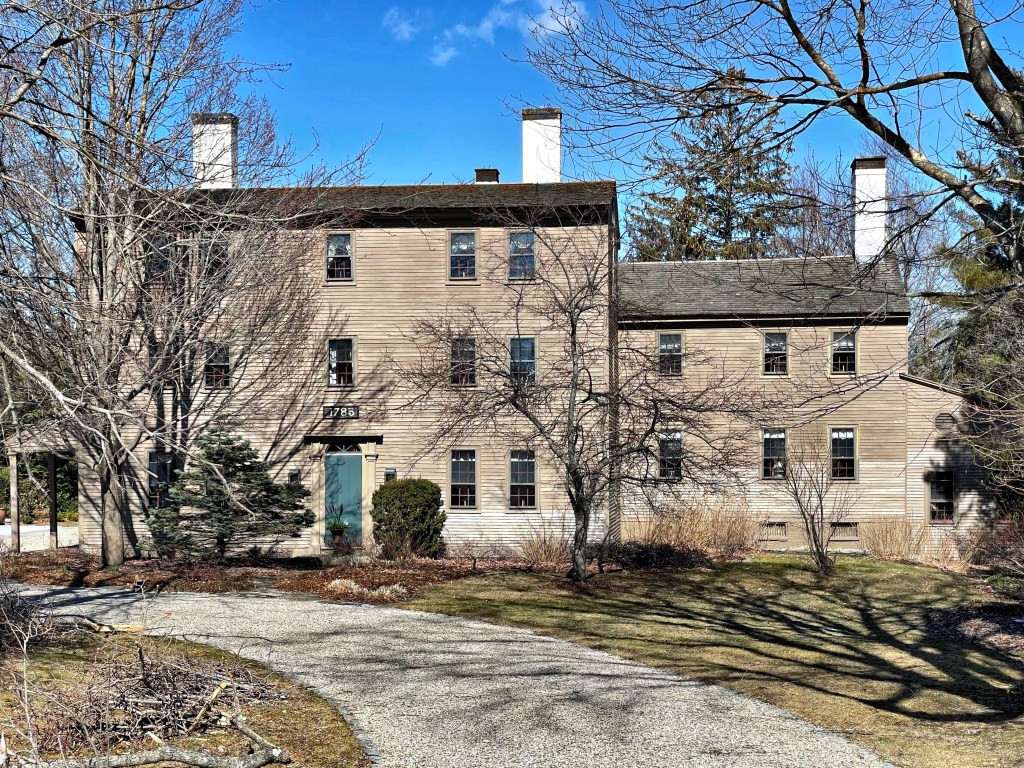
Benjamin Coes House – “Tory Chimneys” // c.1785

One of the hidden architectural gems of Kennebunkport is this Revolutionary-era house with some serious proportions. The house was built around 1785 by Benjamin Coes, a sailmaker from Marblehead, who settled in the burgeoning Kennebunkport in search of new work and opportunities. He married Sarah Durrell and the couple erected the seventh house in town, which is part of this property. For his work, Mr. Coes used the first two floors as his residence and the third floor was used as a sail loft, with an exterior staircase. A young boy, Joseph Brooks, would work in the loft and he would go on to marry Benjamin’s daughter, Sarah. The couple inherited the family house and retired here. The property was sold out of the Coes-Brooks Family when Maine State Historian, Henry Sweetser Burrage and his wife Ernestine purchased this house in 1917, which would be used as a guest house. The couple and lived in the house across the street. Ernestine Burrage, who was Chairperson of the Kennebunkport Chapter of the Red Cross, allowed the ladies of her chapter to gather there three times a week to roll bandages for the soldiers injured in battles overseas. It became the headquarters for the Kennebunkport Red Cross. It was likely Ernestine who had the chimneys painted white, which resembled the old Tory Chimneys in Revolutionary-era New England; where, when painted white, they served as a quiet signal which indicated that a home’s residents were loyal subjects of the British Crown.

John Bourne House // c.1800

John Bourne (1759-1837) was born in Wells, Maine as the son of Benjamin Bourne. When the American Revolution hit a peak, when he was only sixteen years of age, John enlisted in the service of the country, and marched in company of Capt. Thomas Sawyer, to Lake Champlain. After the war, he learned the trade of shipbuilding and established himself in Kennebunkport, at the height of the village’s manufacturing. John Bourne built ships for a wealthy ship-owner and became successful himself. Bourne was married three times. His first wife, Abigail Hubbard (m.1783) died at just 24 years old after giving him three children. He remarried Sally Kimball a year later, who died in her twenties at just 28, she birthed one son for him in that time. His third wife, Elizabeth, would outlive John, and they had five children together. After his marriage with Elizabeth, John likely had this home built, possibly from his own hands. The Federal style home stands out for the unique entry with blind fan and modified Palladian window framed by engaged pilasters.

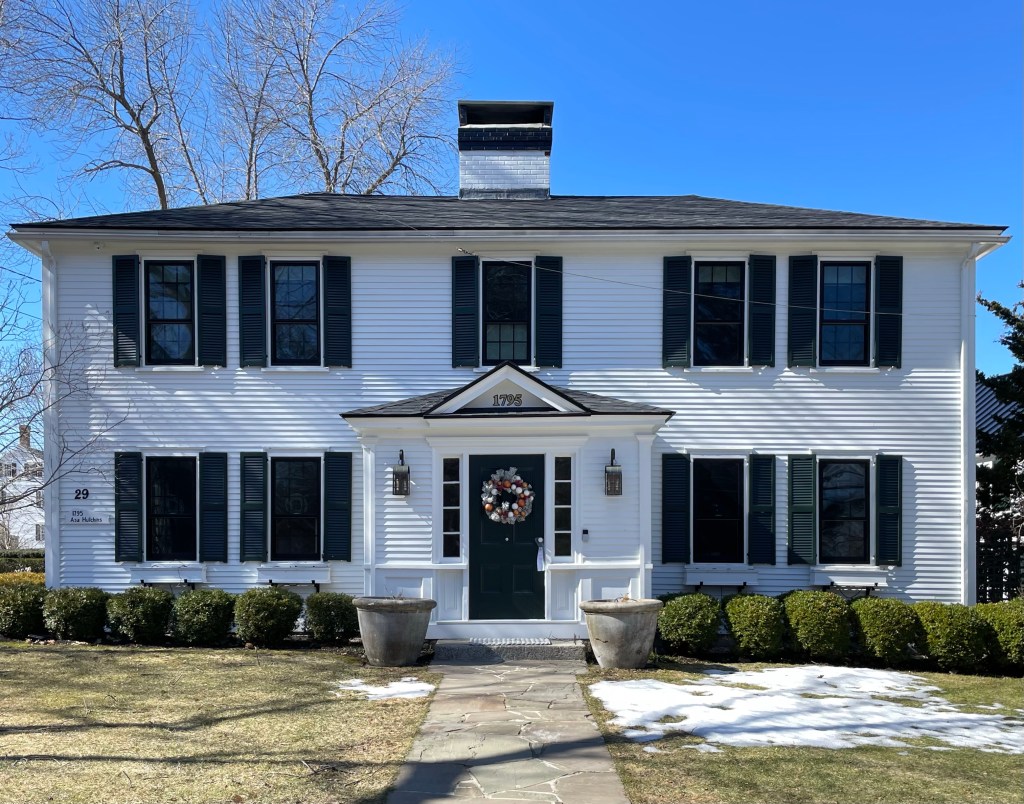
Asa Hutchins House // 1795

The village of Kennebunkport in Maine is a well-preserved enclave of Federal period houses built at the heyday of shipbuilding and maritime trade in the late 18th and early 19th centuries. Many sea captains and shipbuilders erected stately homes in the village, with high-quality design and woodworking inside and out. This Federal period home was built for Asa Hutchins (1769-1860) a blacksmith who was born in Portsmouth, New Hampshire and settled in Kennebunkport in the late 1700s. The house exhibits a central chimney a feature more common in Colonial-era homes, with a five bay facade and projecting entrance.

Captain Nathaniel Ward – Abbott Graves House // 1812

In about 1812, Captain Nathaniel Ward Jr. of Kennebunkport purchased this home in the village from housewright and builder Samuel Davis. The Federal style house is five bays with a central entrance with pedimented fan over the door. Two end chimneys would heat the home in the winter months when Nathaniel was out at sea and his wife, Sarah, would be maintaining the home and caring for their six children. The couple’s eldest son Charles Ward, served as the second American Consul to Zanzibar in Africa. In his role, Ward bickered continuously with the Sultan, whose word of law changed with the wind and he eventually left his position and settled in Salem, Massachusetts. This house was later owned by Abbott Fuller Graves (1859–1936), a renowned painter before he built a Prairie Style house in Kennebunkport in 1905.