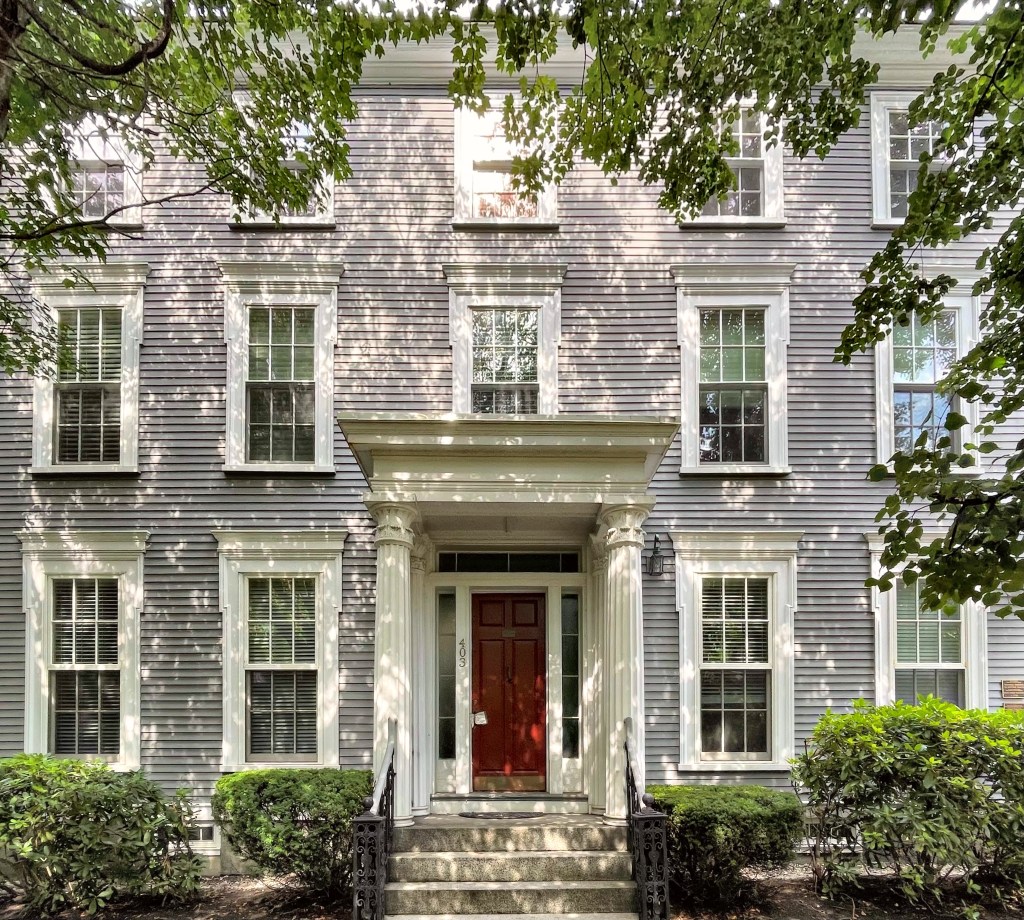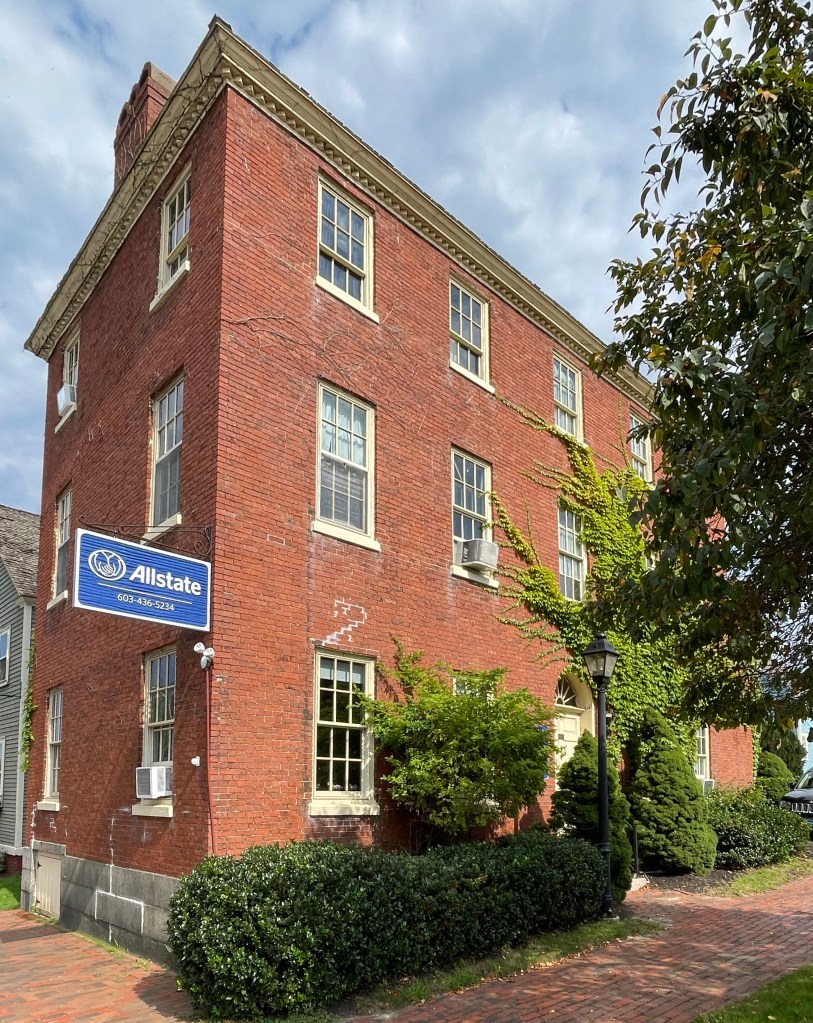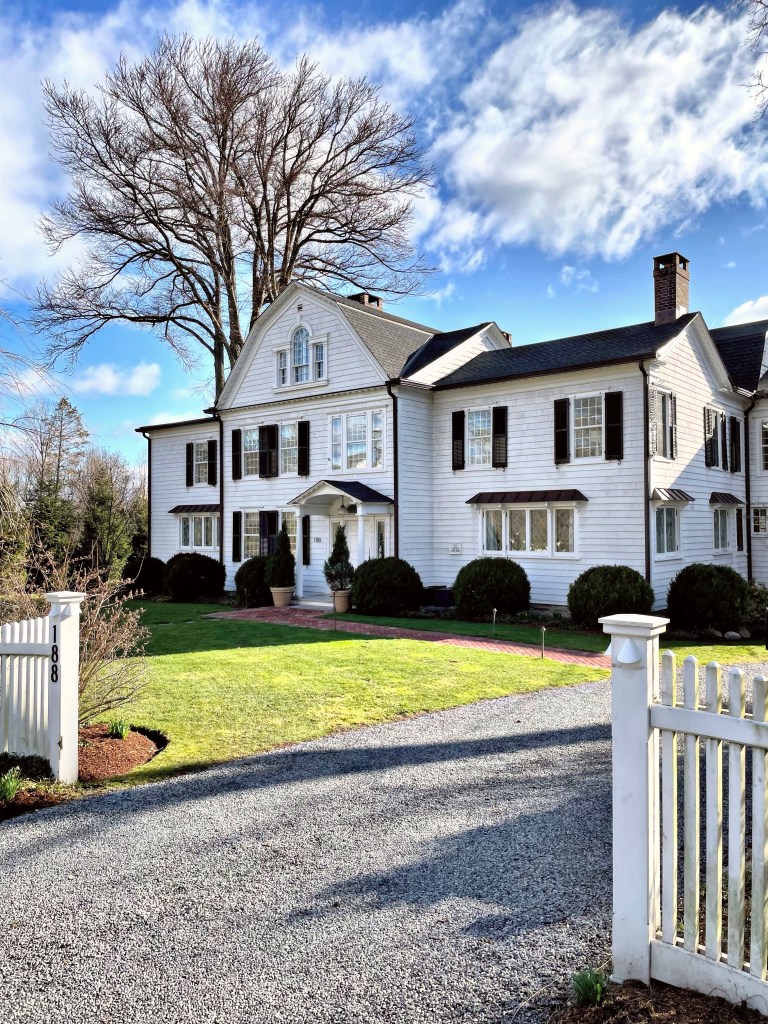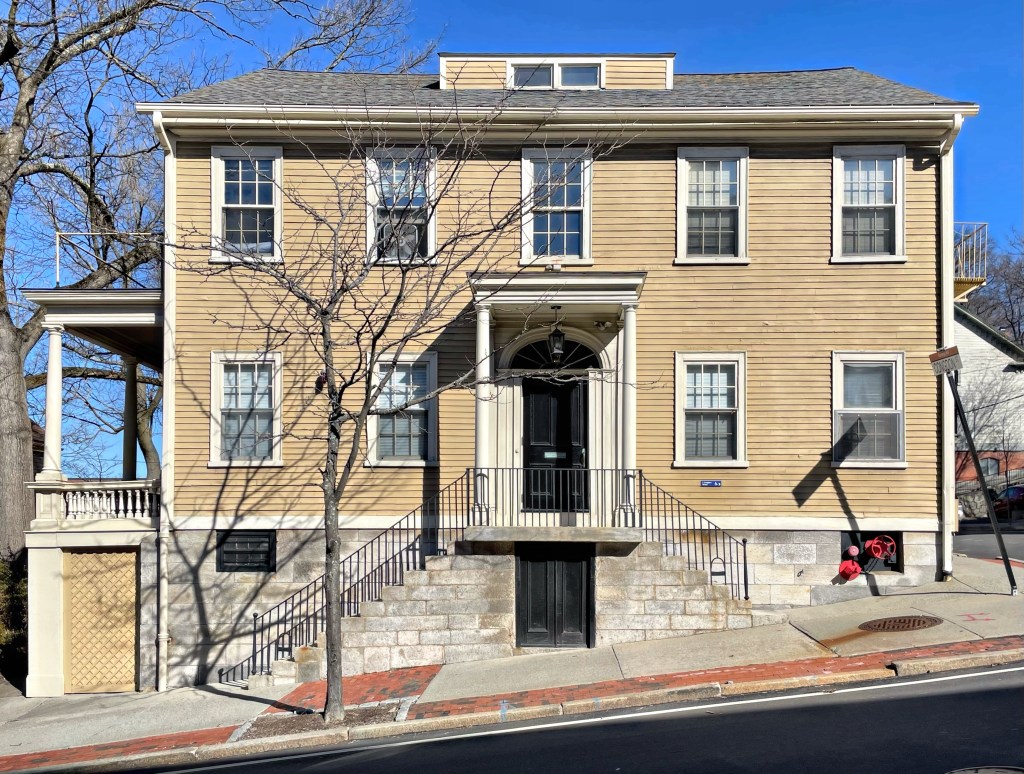
Nevers-Bennett Farmhouse // c.1820+

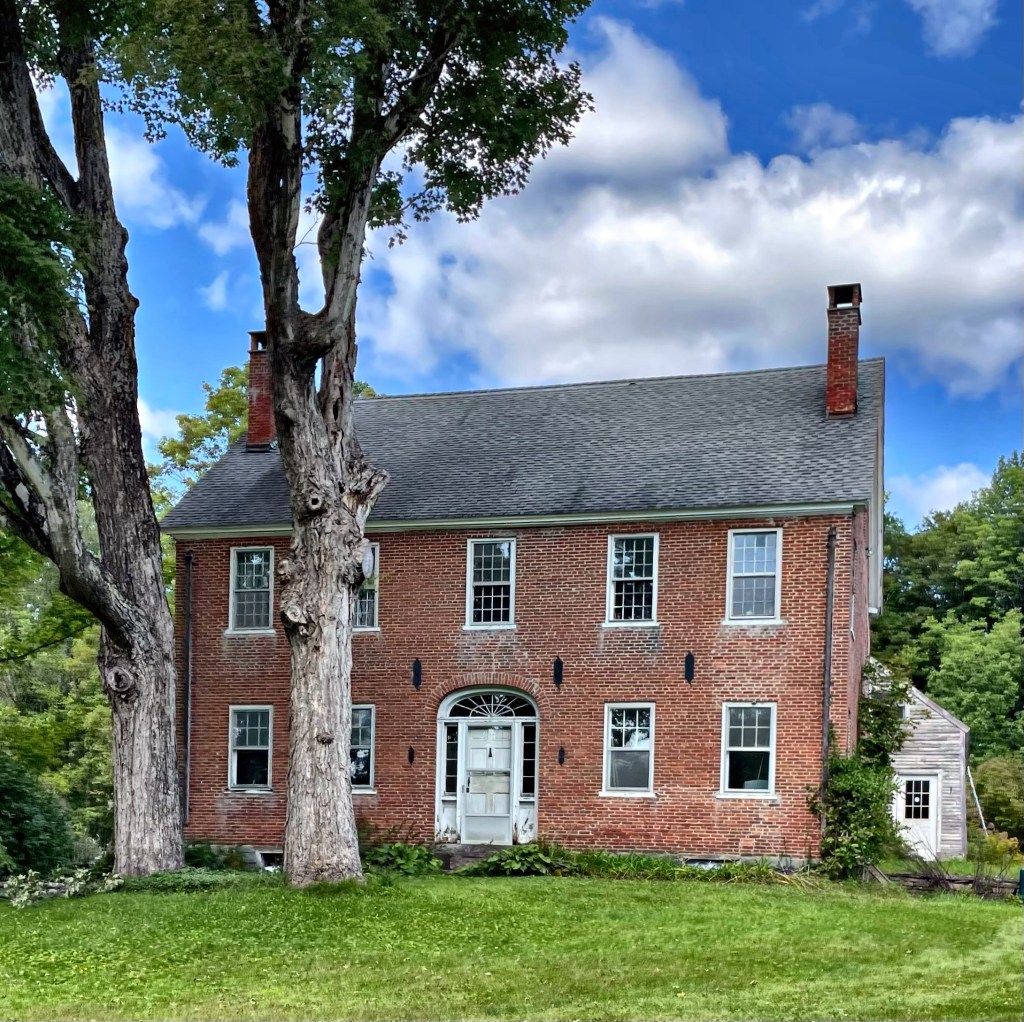
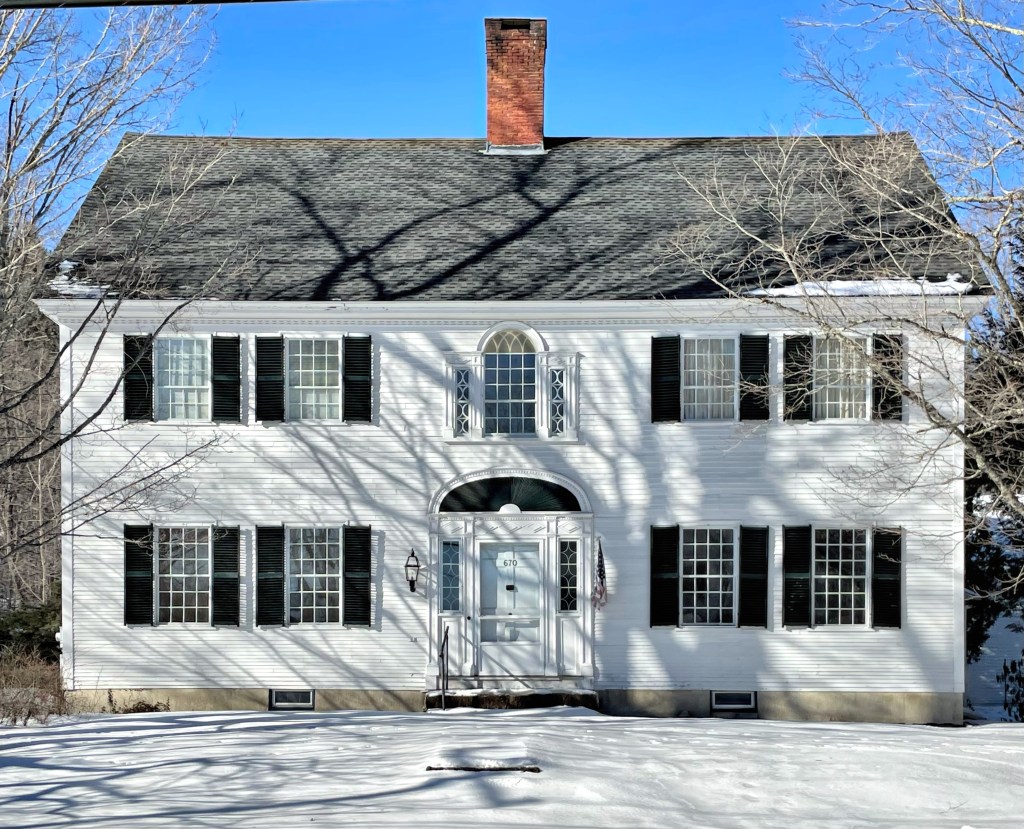
In 1820, just seven years after the incorporation of Sweden Maine, a homesteader, Amos Parker purchased fifty acres of land and began to erect a two-story, Federal house with a center chimney and a detached store beside it. Plagued by debt, Parker sold the unfinished house to Samuel Nevers circa 1833–1835, who purchased the property with the store for his recently married son, Benjamin. By 1860, Benjamin Nevers had a successful store and prospering farmstead. Benjamin died in 1883, and in the next two years, their daughter Charlotte, and her husband, Charles Bennett, dramatically remodeled and modernized the farmstead, adding a connected two-story ell building outward from the main house toward the old 1840 barn, connecting the entire property. I believe that the property remains in the Nevers-Bennett Family, as recently, Steve and Judy Bennett, recently negotiated an easement with the Maine Farmland Trust to protect their hay, beef, and maple sugaring acreage as farmland into the future.

Hall-Balcom House // 1810

This historic house in West Millbury, Massachusetts, began in the end of the 18th century as a one-and-a-half-story wood-frame farmhouse. By 1810, the home was rotated 90 degrees and a more substantial, two-story brick house was constructed facing the street. The Federal style home was owned by Thaddeus Hall (1779-1855), and after his death, it was owned by his son, Orson Eddy Hall, who possibly rented the property for income while he resided in New Orleans and ran the iconic St. Charles Hotel there. The property was later acquired by Willard Balcom and remained in the family. Oh what I wouldn’t do to see the paint come off this old brick house!!

Alexander Jack Jr. House // 1811

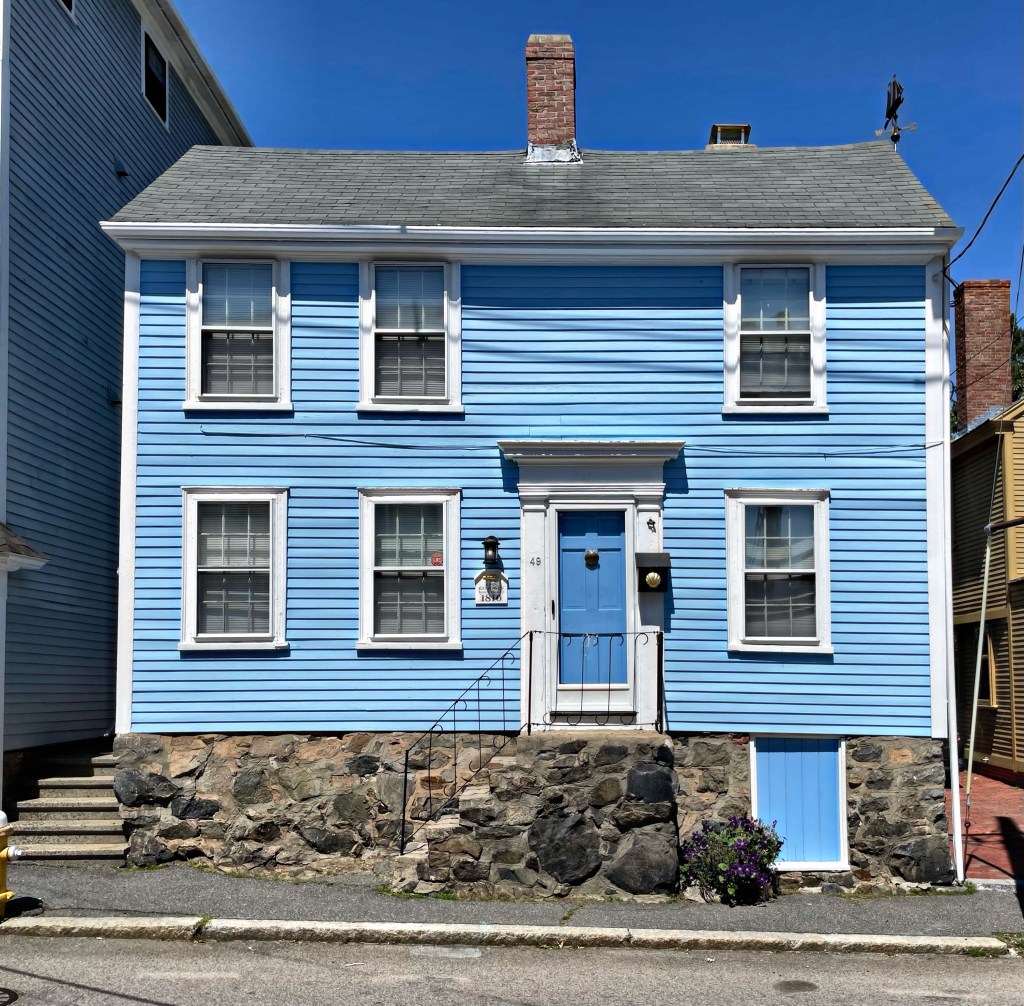
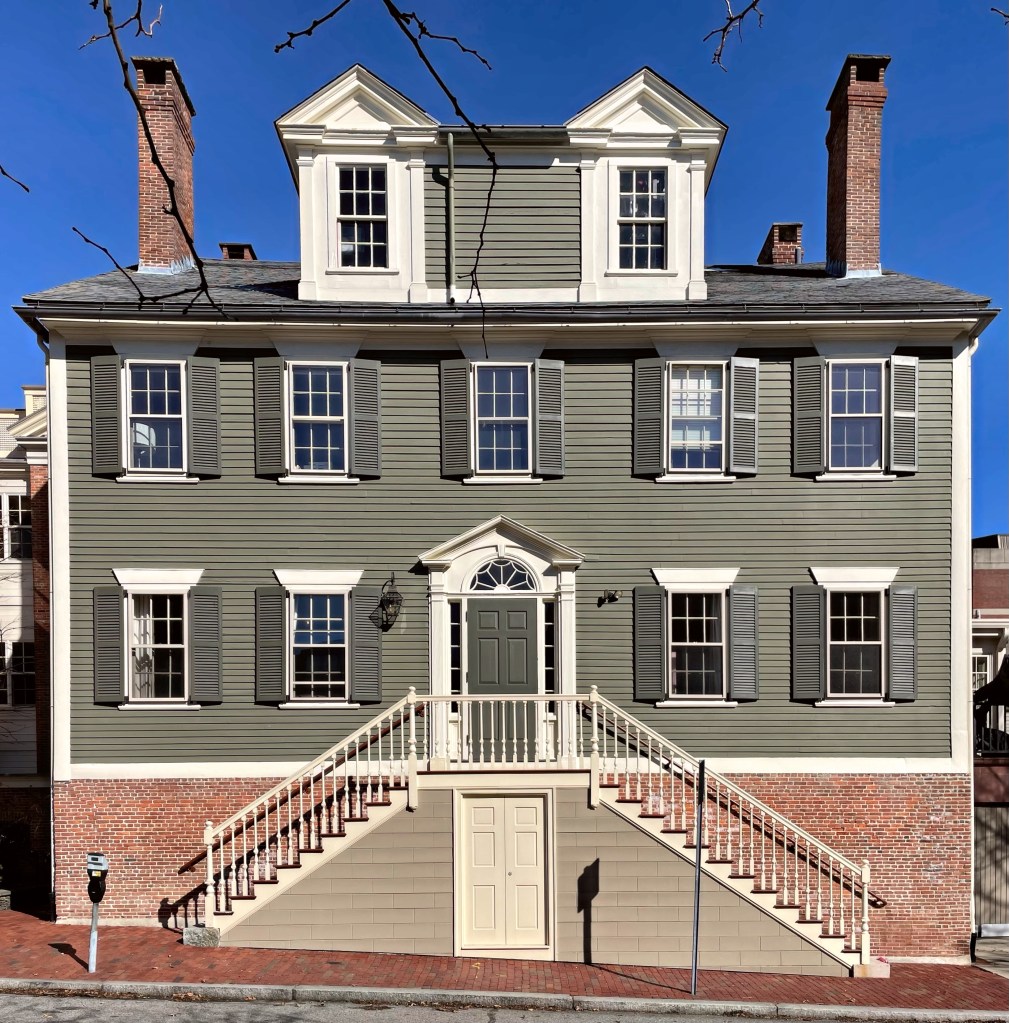
Newport in 1774 had approximately 153 free Black residents residing in 46 households comprising of thirty-percent of Newport’s population at this time. One of these free Black families was the Jack family who resided around Levin Street (Memorial Boulevard today). The Jack Family appears to have been from Antigua and may have had ties to the Redwood Family (the namesake of the Redwood Library), who owned a plantation on the island and resided in Newport. Alexander Jack, Jr. was a free African American whose trade was a cordwainer or shoemaker. He bought his land in 1811 and is thought to have begun construction almost immediately. Jack heirs remained on this property until 1881. The Newport Restoration Foundation purchased the house in 1969, moved it that same year to Mill Street to save it from urban renewal and the widening of Levin Street as Memorial Blvd.

Langley House // 1807

Smack-dab in the middle of Newport, Rhode Island’s dense network of downtown streets, you’ll find Queen Anne Square, a rare bit of open space in a web of alleys and ways. Did you know that this park is only 50 years old? It’s true! In the late 1960s and early 1970s, Newport (and many cities all over New England) were grappling with suburbanization and dwindling tax revenue with people and businesses moving out. Their solution was “urban renewal”, which entailed the razing of buildings and sometimes, neighborhoods which were deemed “blight”. Historic buildings and communities were destroyed with modern planning (high capacity roads and high-rises connected by open space) to take its place. In Newport, this saw the form of America’s Cup Avenue and Memorial Boulevard, which cut through the city to allow for more cars and less-congested side-streets. Years later, planners realized that Newport was without a traditional town common like many New England towns, so they cleared buildings in front of Trinity Church to provide that traditional feeling. At the time, preservationists were trying to save significant buildings, with the Langley House being one of them. This house was set for the wrecking-ball, from Memorial Boulevard’s construction but moved and restored by Newport Restoration in the last hour to the south side of Church Street. Seven years later when Queen Anne Square was built, this house was moved to the north side, saving it once again. This house is a survivor!

Old Brick Tavern // 1804

The Brick Tavern was an important stopping point on the old Union Turnpike, and the original two-story brick structure was completed about the time of the turnpike construction by Paul Willard, who with his heirs, operated the inn for 25 years. In the first years of the 1800s, the Union Turnpike Company planned and built a road providing a link for travel from Boston to Albany. Realizing the possibility for an inn along the first leg of the route, Willard financed this substantial brick building for travellers to stop, eat and spend the night. The tollroad was later made free, and less people stayed at the inn. After subsequent ownership, the building started to suffer from deferred maintenance and it was sold to a local Quaker group. The Quakers modernized the building by constructing the mansard roof and updating the interior. They never occupied it, but rented it to tenants for income. After, it was a hospital, boarding house, and in WWII, as a barracks of sorts for soldiers training nearby at a military base. The building is now a house!

Newhall-Lane House // 1809

The Newhall-Lane House (could be the home of many wives) was built in 1809 by Pliny Newhall, a bricklayer. He purchased the land here at a prominent crossroads in Lancaster in 1808 from his employer who owned a brickyard across the street. At a previous home in town, Newhall’s wife Patty died giving birth to their son, at just 23 years old. Their son also died during childbirth. He remarried and had a full family to grow into the couple’s new house. They relocated to Lincoln and the home was sold to Captain Anthony Lane, who was the son of Deacon Jonas Lane, an important figure in Lancaster town history. Jonas had four wives, outliving three of them. Captain Lane himself, was married twice while living in this house; he had no children from either marriage. Although he was a talented craftsman and cabinetmaker, Captain Lane listed his occupation as farmer. The house is significant architecturally, as a fine example of Federal style architecture in Lancaster . Its sophisticated design is reflected in the graceful entrance. One of the unique features of the house is the pedimented gable of the facade which in combination with the narrow plan of the house, creates a delightful massing in this distinctive combination of Greek Revival and Federal styles.

Carter House and Publishing Company Building // 1820

Here is a two-for-one post! These two absolutely gorgeous Federal style buildings on Main Street in Lancaster were built in 1820 for George Carter and his brothers who ran a publishing company in the sleepy town. The Carter family was very active in the Swedenborgianism, a very small church in the general realm of Christianity, and they helped create a small enclave of worshippers in town. The brick, Carter and Andrews Publishing Company building (on the other side of a dead end street from this house) was built at the same time as the Carter home. The company was extremely popular in publishing children’s books, textbooks, and maps. One of my favorite publications the company made was “Peter Piper’s Practical Principles of Plain and Perfect Pronunciation”, now say that three times fast!

Major Rowland Luce House // c.1790

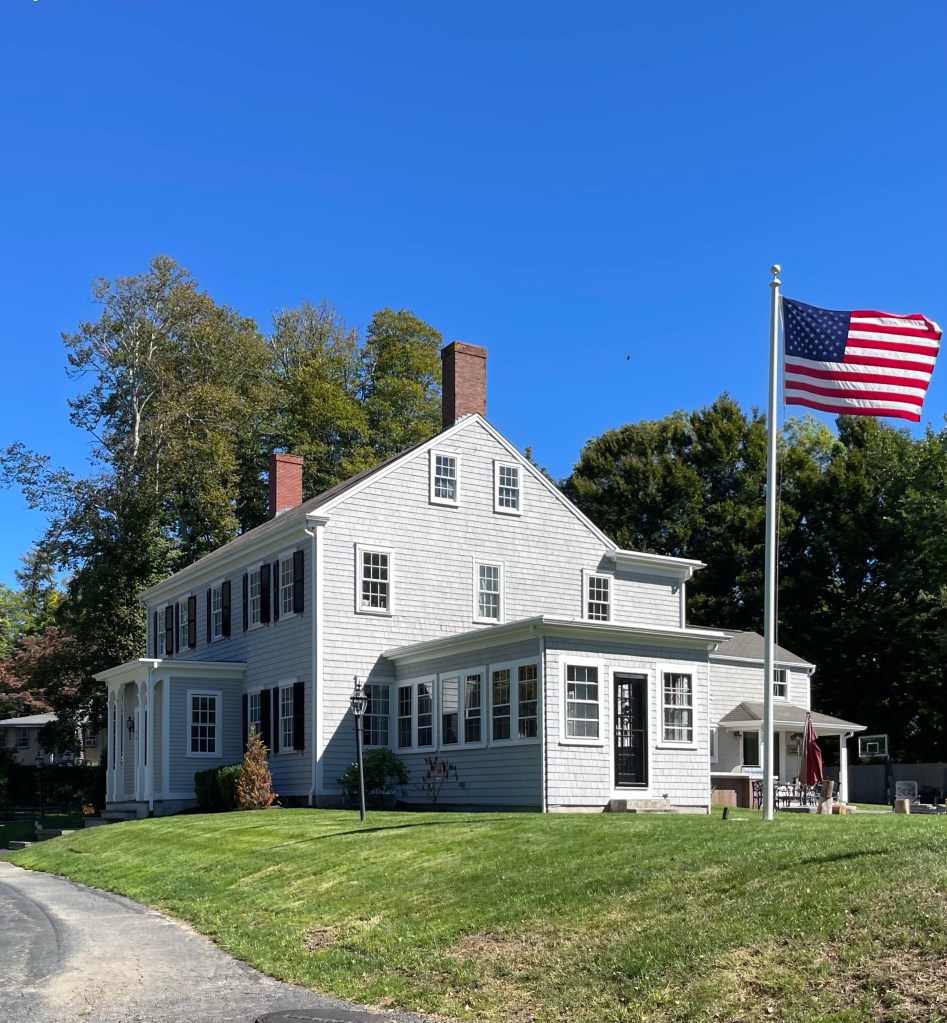
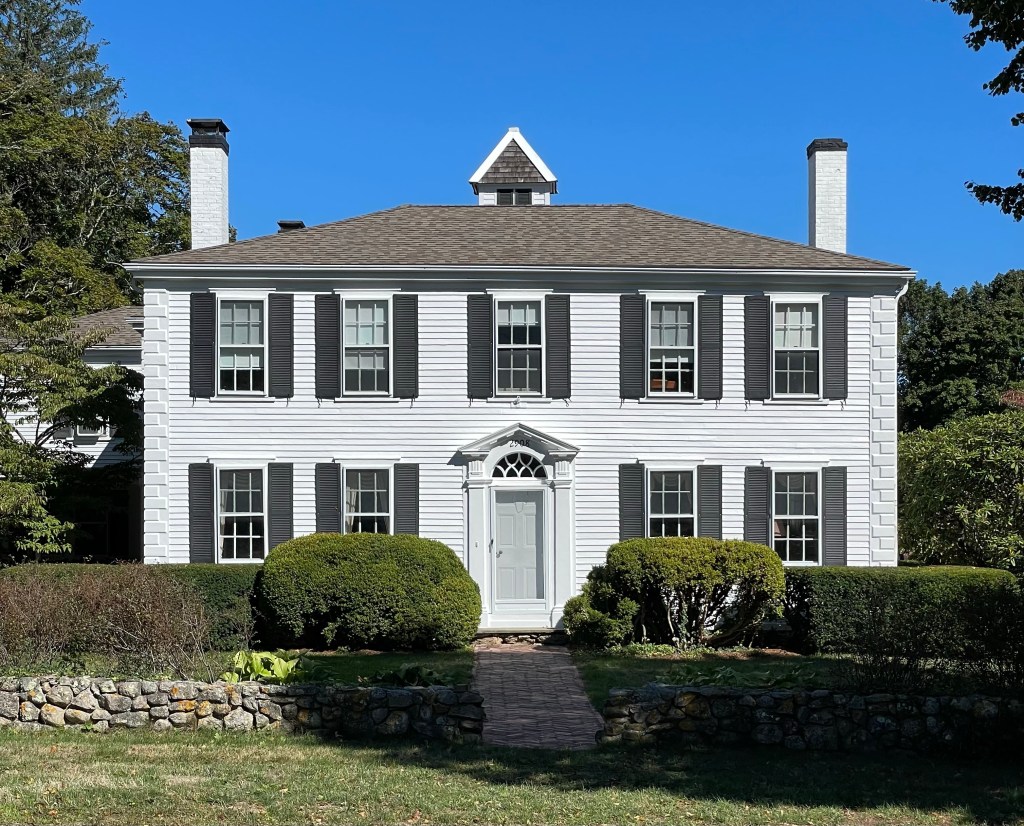
Built around 1790 for Rowland Luce (1756-1835), this Federal home oozes character and charm, and is located right on Main Street in one of my favorite towns, Marion, Mass. Luce was born in Tisbury on Martha’s Vineyard into a very religious family. While studying to become a Deacon like his father, the Revolutionary War broke out, and Rowland served to fight the British, leaving service as a Major. He eventually settled in Marion’s Sippican/Wharf Village and worked as a Deacon for the Congregational Church. The simple house is clad in cedar shingles and has two chimneys, a departure from earlier homes with one, large central chimney.

Peter Wheeler House // 1832

This cute brick house in Boxborough, MA, was built c. 1832 by the Revolutionary War veteran Peter Wheeler where he lived until his death in 1847. The home sits on a heavily trafficked street, yet retains much of its architecture and even historic windows, despite its conversion to commercial use! The brick house features e 6/6 double-hung units on the first story and 3/3 in the second, with the central window featuring stunning stained glass.

Dr. Daniel Robbins House // 1804

Damn I just love old brick Federal houses! This home in Boxborough, MA was constructed in 1804 for Dr. Daniel Robbins, who owned a one-story wooden home on the site in 1798. As building materials were expensive at the time, Robbins likely incorporated that structure as one of the side additions to this new brick house you see here. Robbins served as a town doctor until his death in 1837, and would treat patients in his home or ride on horseback to treat sick residents nearby.

Parsons Homestead // c.1800

The Parsons Homestead in Rye, contains some of the most interesting early Federal-style design elements in the coastal towns of New Hampshire outside of the principal towns of Portsmouth and Exeter. When the Parsons House assumed its present appearance at the turn of the nineteenth century, Rye was a coastal farming community, but despite its rural character, the town developed distinctive preferences within the Federal style. There is no architect listed for the home, but it is highly likely a housewright took cues from William Pain’s “The Practical Builder” (1774, published in Boston in 1792). This book, inspired directly by the designs of British architect Robert Adam, allowed carpenters to take plans from one of the earliest “do-it-yourself” manuals ever published. The builders’ manuals and pattern book offered carpenters and other construction workers important resources for designs and techniques in house design and construction. Those unable to afford an architect’s services could feel confident in the good taste of their residence by selecting designs from a pattern book style in southeastern New Hampshire. Records show the land here was purchased in 1757 by Samuel Parsons (1707-1789). The property was acquired by his son Captain Joseph Parsons (1746-1832), who was a Doctor and Captain in the Revolutionary War. It is likely that he or his own son built this “modern” Federal home, and incorporated some of the old features of the family home inside.

Dr. Skinner “Lottery” House // c.1800

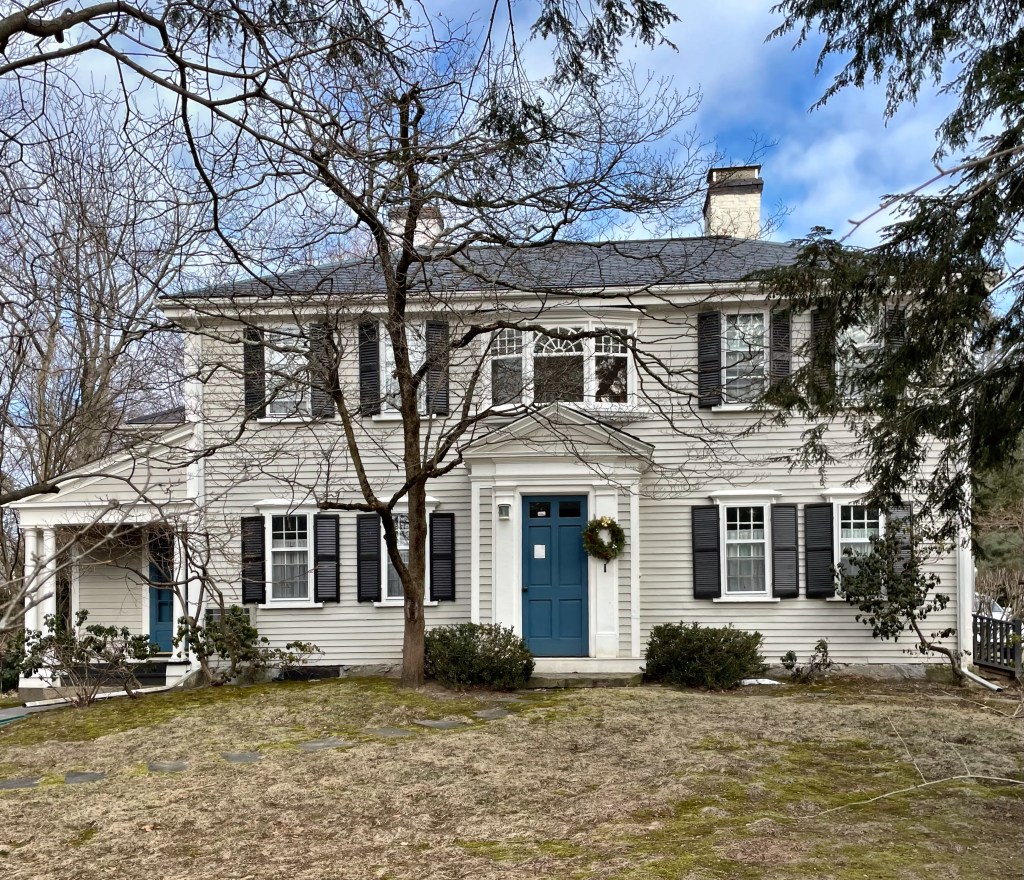
In 1794, four men from Acton, Abel Conant, Dr. Abraham Skinner, John Robbins and Horace Tuttle, jointly purchased a $5.00 ticket in a lottery run by Harvard College to raise funds for the construction of Stoughton Hall in Harvard Yard. This house, built for Dr. Abraham Skinner, is one of the four, and is the most grand of the four. Dr. Skinner was the third physician to practice in Acton and the first to arrive from out of town. He came to Acton in 1781 from Woodstock, Connecticut, and continued in practice until his death in 1810. The Federal style home is nearly square with five bays on all sides, with the facade and rear being slightly less crowded. The main entry includes a pediment with dentils, 4-pane side lights and a 4-panel, wooden door with elongated, rectangular, top panels. A similar entry, without sidelights, centers the south elevation. Time to buy some lottery tickets!

Richmond-Herreshoff House // c.1803

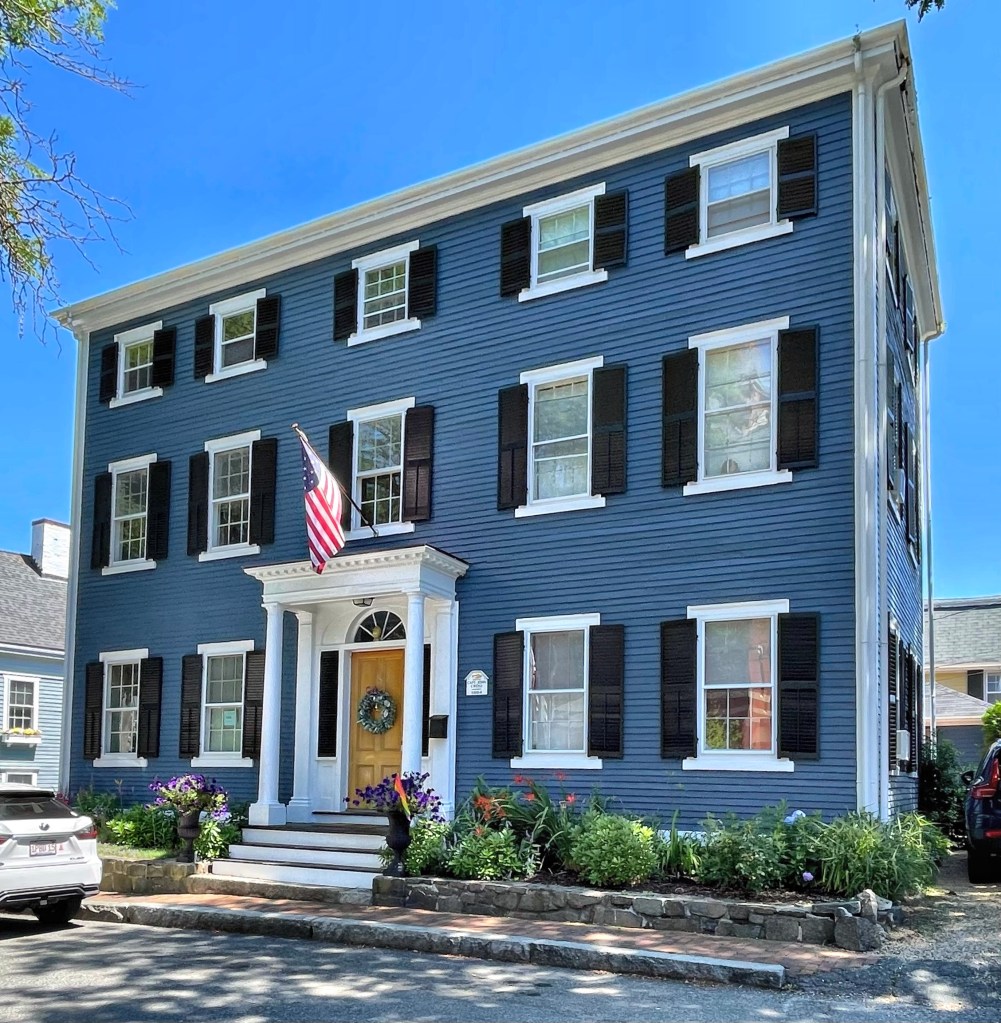
Located on Hope Street, just south of the downtown area of Bristol, Rhode Island, this beautiful Federal-style home overlooks the water, and once oversaw a large ship-building empire. The home was built by Lemuel Clarke Richmond (1782-1876), possibly in response to his marriage to Hannah Gorham in 1803. Richmond was a wealthy whaler who owned nearly twenty ships, including the Empress, a Bristol-built bark. The Federal style home features a five-bay facade with central entry. A modest portico surrounds the door which has a fan light transom above. Oh, and there are some gorgeous 12-over-12 windows on the home, at the ground floor the windows have flared lintels above. The home was sold by Richmond in the early 1850s and rented out to Charles and Julia Ann Herreshoff, who resided there with their eight children! It was here where sons John and Nathanael overlooked the water as young boys and became consumed by the beauty of the ships that sailed by their front yard. The brothers later ran the internationally renowned Herreshoff Manufacturing Company, which occupied land all around the home (and was featured previously). The home was acquired by the family in the 1860s, and often changed hands within the family over the next decades until it was inherited by Norman F. Herreshoff. A collector of Americana, Norman Hcrreshoff completed a series of renovations to the family home, including remodeling of the kitchen to be “old-fashioned” and replacement of the front porch with the small Ionic portico which we see today. The home is owned by the Herreshoff Marine Museum, but has seen better days.

“The House with the Eagles” // 1808

In 1807, a young John Howe (1783-1864), a descendent of the DeWolf family, married Louisa Smith, and built this family home soon after. He hired local esteemed architect Russell Warren (who was the same age as Howe at the time) to design the home, which is a simply designed, hipped roof home with an elliptical fanlight and sidelights at the central entrance. It is embellished with superb architectural woodwork with an ornate roof balustrade. Howe and his family lived in the home until 1822, when it passed to ship captain, Benjamin Churchill, who appears to have been involved with the transport of slaves to the Americas. According to local legend, Churchill gave the house its name by having the sailors of his ship, the Yankee, carve four American eagles, which he placed at the corners of the Chippendale balustrade that crowned his roof. Churchill’s tenure in the home was brief, and in 1825 the house passed to Byron Diman, a powerful merchant with interests in whaling, banking, and the local cotton mills who served as governor of Rhode Island in 1846–1847. The home has been restored numerous times and is well maintained.

Eagle Hotel // 1826

Built in 1826 as the Eagle Hotel, this stunning federal structure is representative of the transition from the 18th century tavern, with its domestic scale and features, to a larger-scale 19th century hotel. The town of Newport was situated at the convergence of two stagecoach turnpikes, which transported people through the town regularly. Due to this, James Breck and Josiah Forsaith built the Eagle Hotel to meet that demand. By 1856, additional hotels were built and then owner, S.H. Edes converted the building into a business block. The upper floors were later occupied as apartments and porches were added to the front facade on each floor (since removed). The building is now home to Salt Hill Pub.