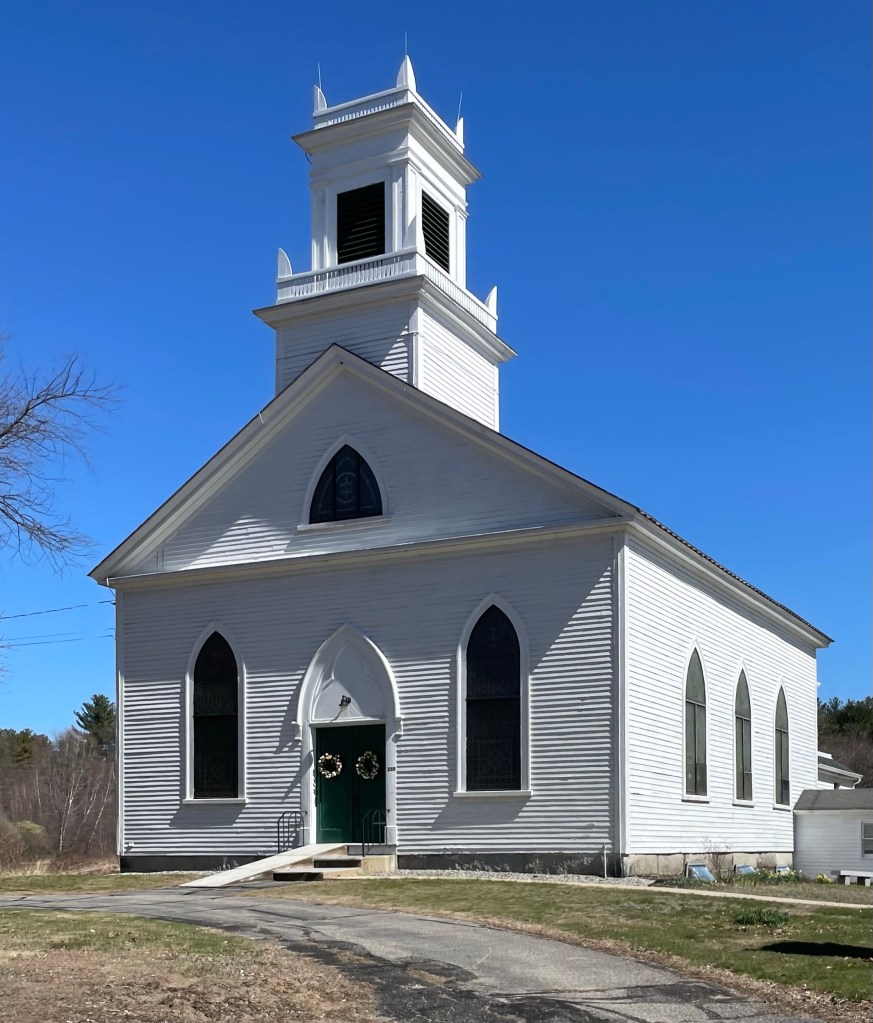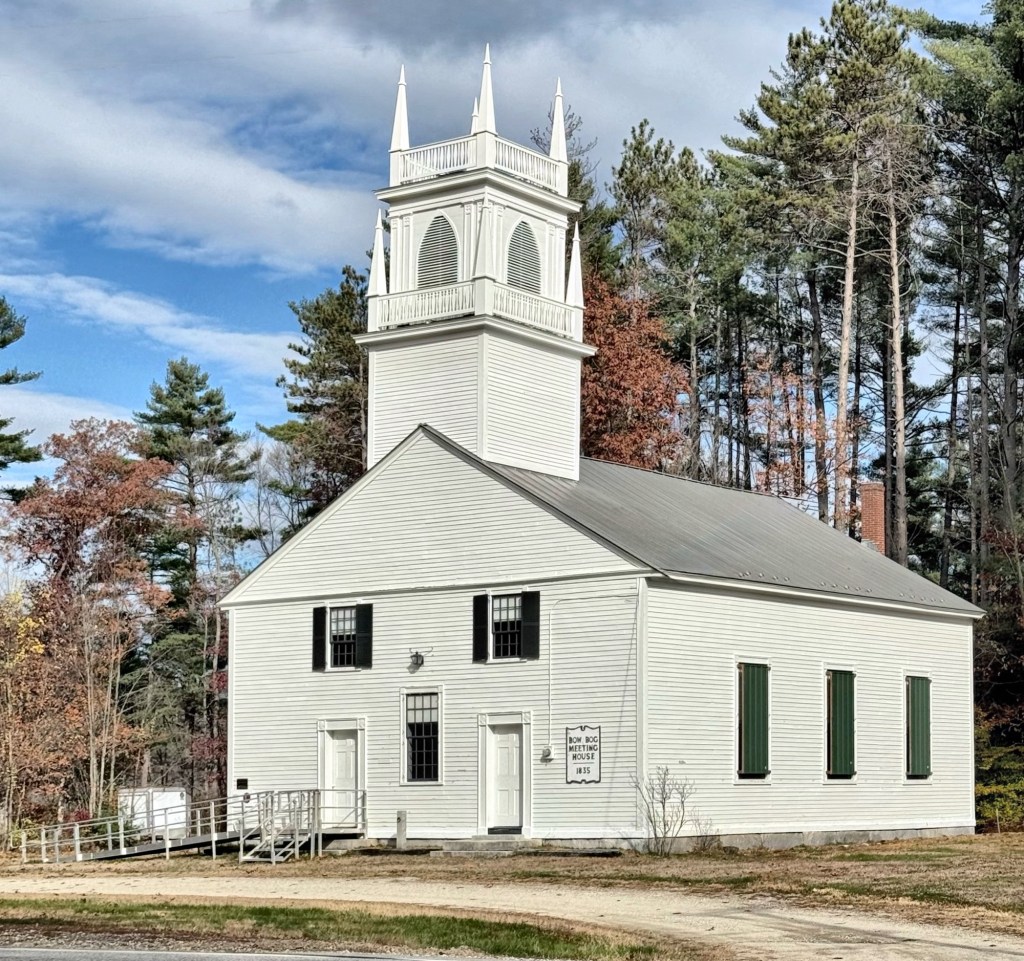
Bow Bog Meetinghouse // 1835

The Bow Bog Meetinghouse in Bow, New Hampshire, was built in 1835 for the First Methodist Episcopal Church and Society in town. Designed in the Greek and Gothic revival styles, the traditional form and paired entries with two stage belfry is adorned by finials and pilasters, showcasing an elegant blending of these two styles. built by George Washington Wheeler for the First Methodist Episcopal Church and Society of Bow in 1835. Mary Baker Eddy, founder of the Christian Science Church, mentioned Reverend Orlando Hinds as a contributor to her early religious teachings. She maintained close ties with this Church, donating funds for the bell in 1903. The Church provided religious instruction and social activities for 116 years and in 1951, the Church was closed and the Bow Bog Meeting House Society acquired the building. In 1970, they restored it to nearly its original condition, and it was acquired by the town in 1985.
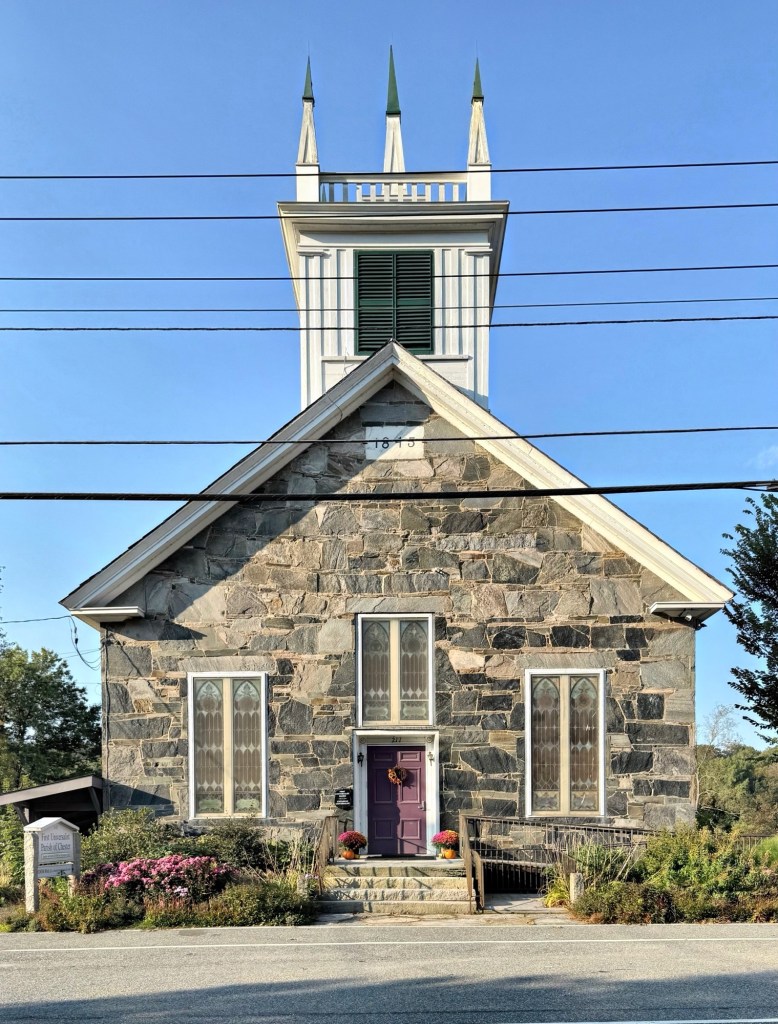
Stone Village Unitarian Church // 1845

The Stone Village of Chester, Vermont, is said to be the largest collection of stone buildings in the state, and is anchored by its largest building, the Unitarian Church. Built in 1845, the Unitarian Universalist Church is one of a few dozen “snecked ashlar” buildings in the region, where rubblestone is laid up with mortar using small long stones called “snecks” to tie an outer and an inner wall together. The construction method is said to have been brought to the area by masons from Scotland and Ireland which is known there as ‘Celtic Bond’. Oral tradition state that Scottish masons from Canada introduced the technique to local masons while erecting a mill in nearby Cavendish in 1832. Local Chester resident, Dr. Ptolemy Edson became such a fan of the building that in 1834, he had his home, the first stone building in Chester, built in this method. Dr. Edson served on the building committee for the new village church, and likely pushed for a cohesive material and construction method for this church and other buildings soon after. The Stone Village Unitarian Church blends Greek Revival and Gothic Revival styles in a more vernacular way, typical in many rural Vermont communities. The building exhibits stained glass windows that were added sometime in the late 19th or early 20th century.

Dixmont Corner Church // 1834

Dixmont, a small rural town in central Maine was originally originally a land grant by the Commonwealth of Massachusetts (of which Maine was then a part) to Bowdoin College, which sold the first settlers their land for profit to build on their campus. As a result, the town was originally called “Collegetown”, which was obviously short-lived. Dr. Elijah Dix (1747-1809) of Boston, who never lived there but took an interest in its settlement, encouraged others to settle there, and when the town was officially incorporated in 1807, it named itself after Dix, as Dixmont. A “malignant fever” broke out among the settlers in the early years, also killing Elijah Dix while in Dixmont on a trip there in 1809, he was buried in the Dixmont Corner Cemetery. Elijah was the grandfather of reformer and nurse Dorothea Dix. The early settlers had this church built by 1834 by Rowland Tyler, a local master builder whose only other documented work is the 1812 City Hall of Bangor. The Dixmont Corner Church is one of Penobscot County’s oldest Gothic churches and also exhibits some Greek/Classical elements.

Troy Meeting House // 1840

Located in the rural town of Troy, Maine, the 1840 Troy Meeting House is a classic example of a type of meeting house or church that was built by some rural communities in the state in the decades prior to the Civil War. Built as a Union Church, without a specific denomination, the building served the members of the Troy Meeting House Society, and by extension as the only church in the town. The building features both Greek Revival and Gothic Revival stylistic details on the exterior and its design is similar to others in the surrounding towns, likely being from the same builder.

Litchfield Community Presbyterian Church // 1844

Litchfield, New Hampshire remained a rural agricultural town on the eastern banks of the Merrimack River from its founding by white settlers until after WWII when it rapidly became a bedroom community for nearby NH cities and Boston. The area’s Presbyterian residents needed a place to worship, separate from the more common congregationalists, and they built this Gothic and Greek Revival style church near the geographic center of town, a stone’s throw from the Merrimack River. The building features lancet windows, tracery, and a two-tiered belfry with classical pilasters and Gothic finials at the tower.