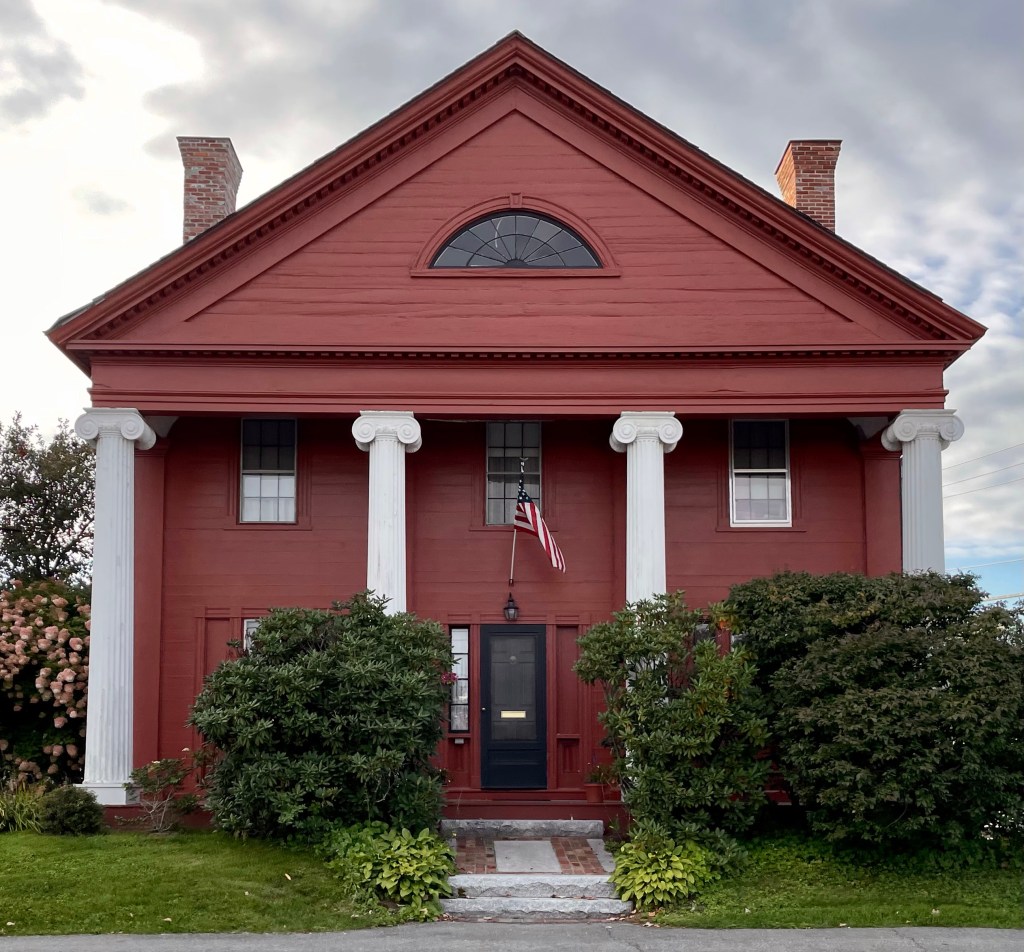
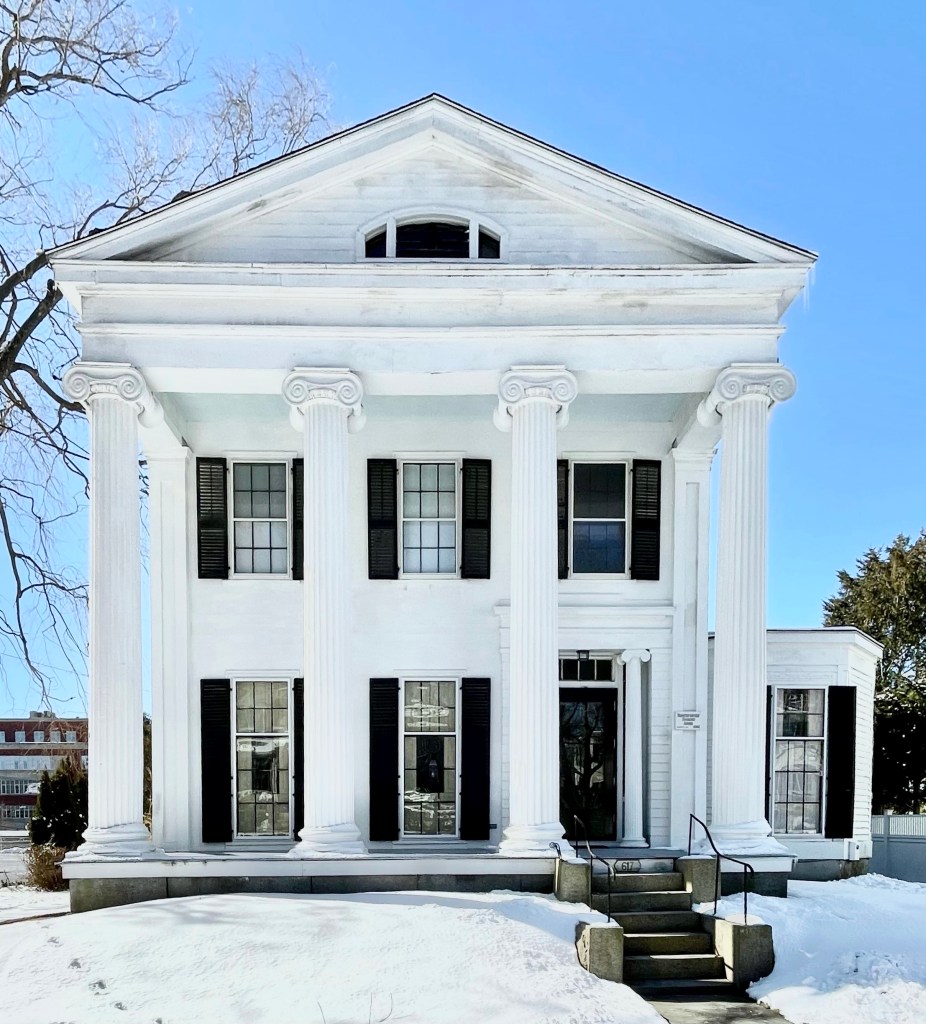
Gilmore-Mason House // c.1850

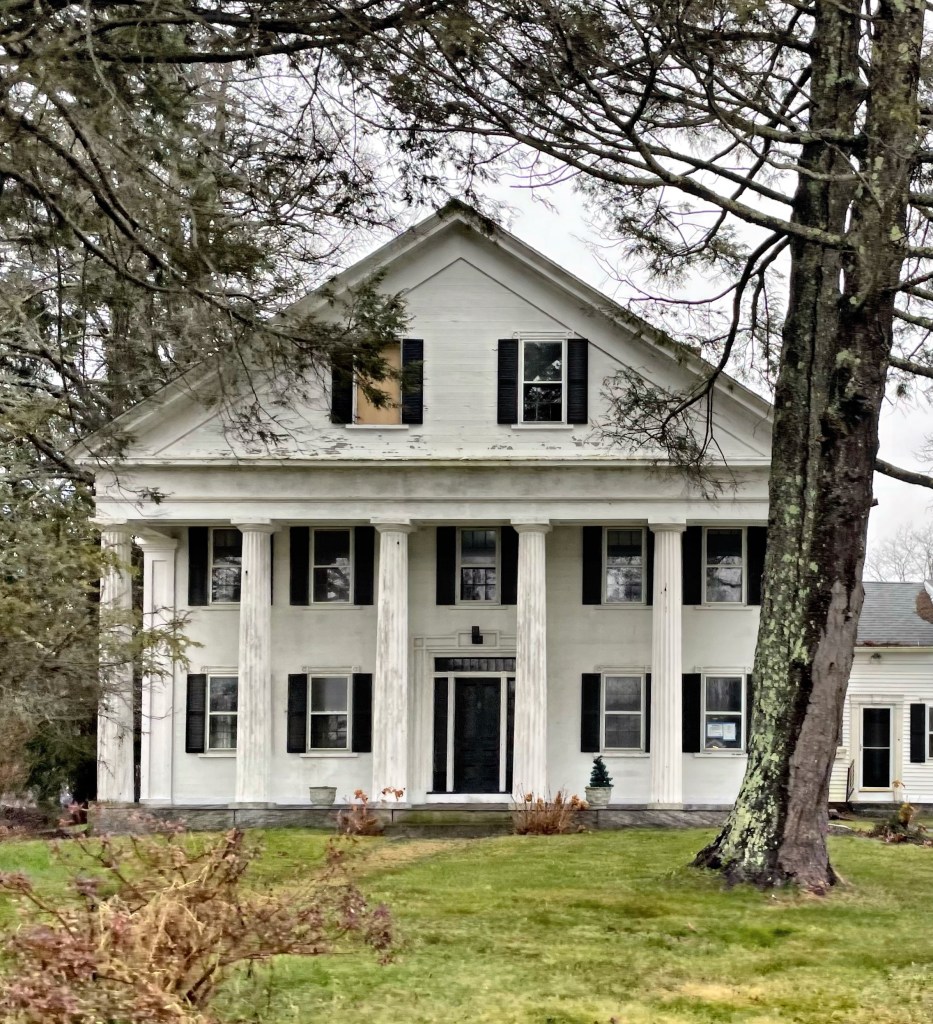
As the town of Westborough emerged from rural agricultural community to commercial center, connections to Worcester and Boston via rail service opened the town to prosperity. As businessmen accumulated wealth, these merchants built stately homes to showcase their position in the community. Before the Civil War, the Greek Revival style was ever-popular in Westborough, even though the style was already waning in popularity in larger cities. The Gilmore-Mason House on Church Street, is an excellent example of the Greek Revival style in a temple form. The form is seen in this house at the facade, with a portico of four two-story Corinthian columns supporting the pediment above. The house was built for George A. Gilmore and later sold to Alonzo W. Porter, an inventor, who would later move to New York. By the early 20th century, the residence was the home to Joseph S. Mason, a manufacturer who operated a weaving mill in Westborough.

Mitchell Mansion // 1828

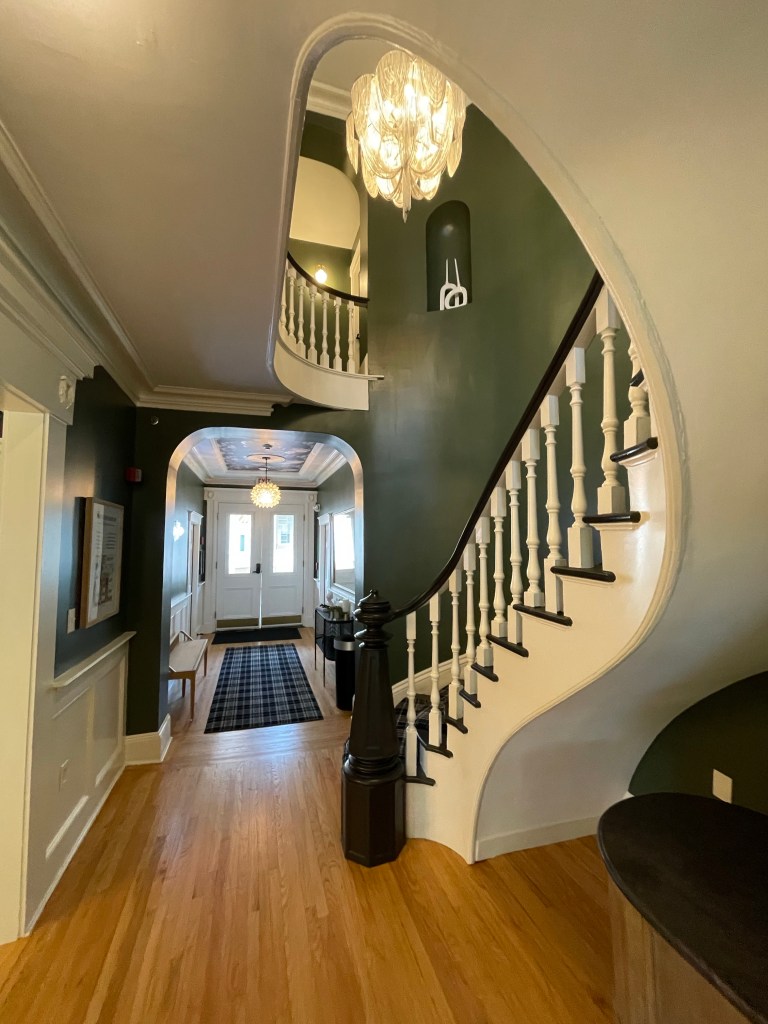
Built in 1828 and used for years as a “house of public entertainment” for Mitchell Simeon Mitchell, this stunning home in Southbury, Connecticut has historically been known as the Mitchell Mansion. The Mansion House displays sophisticated Greek Revival features, including its temple shape, the restrained Grecian doorway, an inset Ionic-columned portico and a cornice with continuous modillions. The quality of the exterior is matched by its interior detailing, with a semicircular staircase and, at one time, a large ballroom. Records found in the house indicate that one of the carpenters was James English, later to become Governor of Connecticut. During the middle of the 19th century the property was owned by noted New York furniture maker Duncan Phyfe.

United Methodist Church of Nantucket // 1823

The United Methodist Church of Nantucket stands prominently at the top of Main Street on land was obtained from Peleg Mitchell in 1822. Construction on the site began in 1823 with the massive structure originally built with a pyramidal hip roof of enormous timbers brought to the island on whaling vessels. In 1840, the roofline was amended with the present gable roof, constructed over the original hip roof. The church is a highly significant example of Greek Revival architecture on the island and a more rare example of the temple-front form seen there. Deferred maintenance threatened the building to the point that in 1995, the building was listed as one of the most endangered buildings in Massachusetts. A restoration was undertaken funded by private contributions and the Massachusetts Preservation Project Fund, preserving the building for another 200 years.

Old Dorset Post Office // 1845

Yet another of the buildings moved to Dorset Village by Charles A. Wade, this amazing classical building stopped me in my tracks when walking along the town’s marble sidewalks. It turns out this little structure was constructed in Enfield, Massachusetts, a town that was flooded in the 1930s for the filling of the Quabbin Reservoir. The building was likely built in the 1840s as a Congregational chapel, and upon hearing about the demise of the town, Wade drove to Enfield and brought back this charming little chapel for his hometown of Dorset. Upon its arrival to Vermont in 1938, the Greek Revival building was used as the town’s post office until a larger building was constructed in the 1960s. This building was converted to a real estate office and is now home to Flower Brook Pottery.

Woodstock Reformed Church // 1844

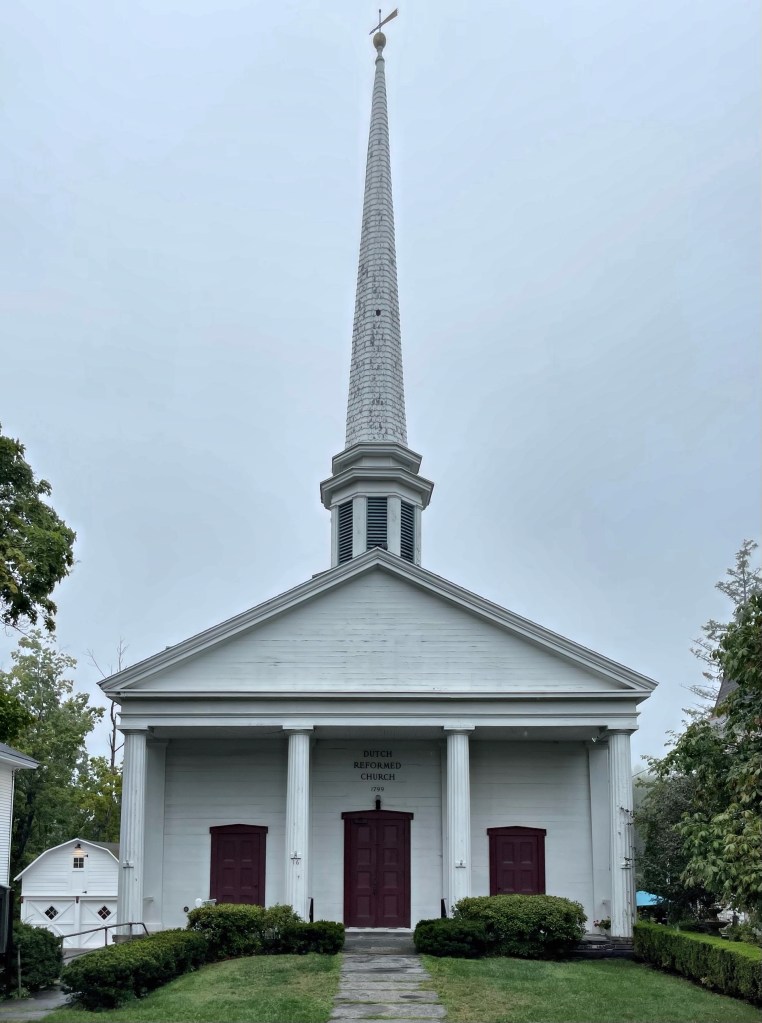
When Dutch and German colonists began to settle along the Hudson River Valley, they brought with them their own religious beliefs and desire for community in a new home. In the Village of Woodstock in Ulster County in 1799, the Dutch settlers began meeting in homes to worship establishing a church. By 1805, they petitioned the denomination for an organized church and purchased land, which is now known as the Village Green. In the heart of Woodstock, they built the first church structure. In 1844, that building was torn down for a new, Greek Revival place of worship on the outskirts of the Green. Architecturally, the church exhibits a prominent temple front with pedimented gable and Doric portico capped by an octagonal steeple. Inside, the sanctuary is lined on the walls and ceiling with decorative, pressed tin, which is apparently from the mid-19th century. The church remains very active in local and current events.

Prentiss House // 1843

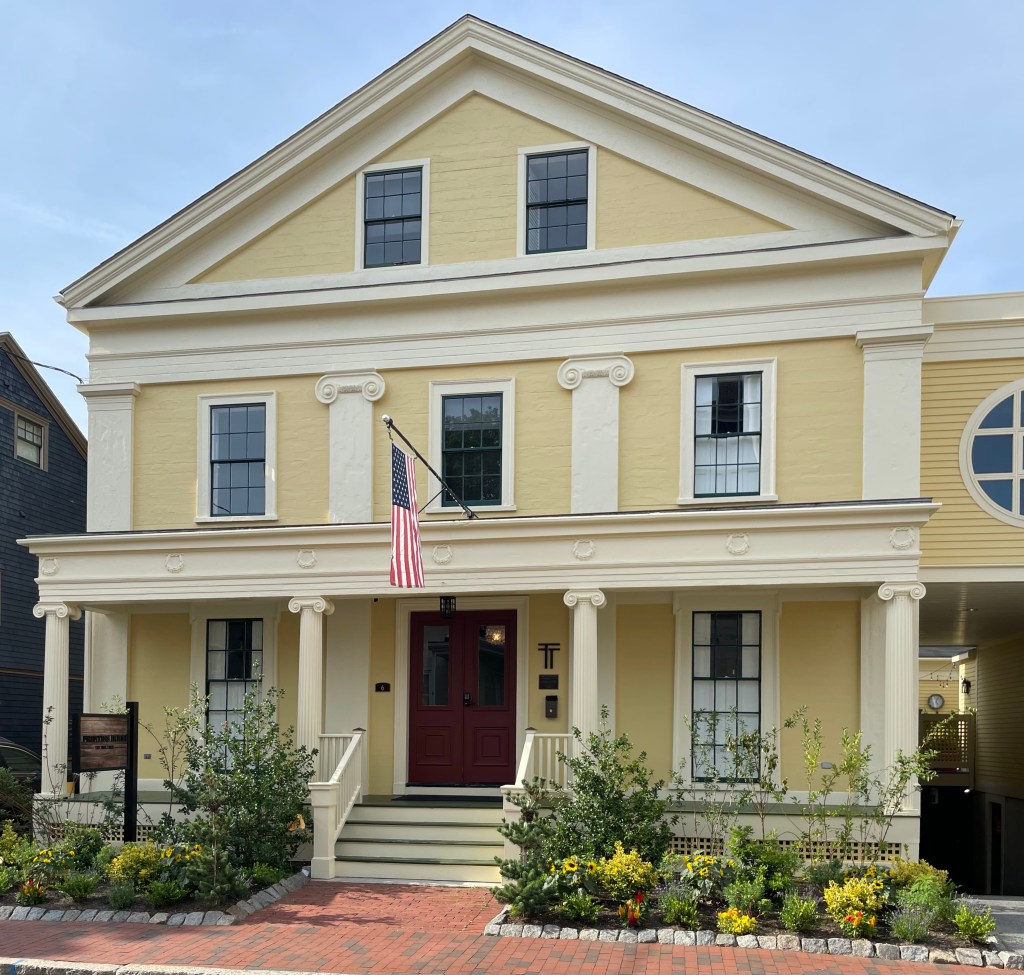
This past weekend, I took a little “stay-cation” in Cambridge, and I am so glad I did! I stayed at the Prentiss House, a highly significant Greek Revival house near Porter Square. The Inn is operated by Thatch, a company that offers short-term hotel stays, long-term apartments, and co-living arrangements in the Boston area. They recently acquired and renovated this amazing old house and its a great place to stay!

The home was built in 1843 by William Saunders a well-known housewright for his son, William Augustus Saunders about the same time as his first child, Mary was born. Sadly, Mary died at just six years old and was buried at Mount Auburn Cemetery with her grave guarded by a tiny stone dog. The Saunders Family resided at the home for over 50 years until William and his wife’s death at the end of the 19th century. The original location of the mansion on Massachusetts Avenue necessitated its move to the newly laid out Prentiss Street to save it from commercial development pressure and the wrecking ball. The home was moved to its present site in 1925 for the erection of a one-story block of stores on Mass. Ave. In 1992, the home was purchased by local artist, Charlotte Forsythe and she began the journey of transforming the home into the Mary Prentiss Inn. An addition by Bell/Fandetti added rooms and subterranean parking to the building at that time. The Inn was purchased by Thatch in 2021, who modernized the rooms.

The house reads like a Greek Temple, not with a full portico, but by using colossal applied pilasters and an entablature carried across the gable, suggesting a classical pediment. Ornamental wreaths adorn the full-length porch and interior mouldings.

Elijah Waters House // 1845

Elijah Waters (1773-1846), a hardscrabble farmer in West Millbury inherited his father’s large farm and resided there for over thirty years before wanting something more his style. Unmarried and without children, Elijah (who was 72 at the time), had this impressive Greek Revival farmhouse constructed near his old family homestead. He was possibly looking to spend money saved up and without a wife or heirs to will it to. The massive temple-front Greek Revival mansion has a stunning doorway and six columns supporting a projecting pediment. Within a year after the home was built, Elijah died. The home was willed to his nephew, Jonathan Waters. The house is for sale for $384,000 which is a STEAL!

Zebulon Smith House // 1832

The Zebulon Smith House in Bangor is one of the earliest temple-front Greek Revival homes built in the state of Maine. The house was constructed in 1832 for Zebulon Smith, a businessman who moved to the Maine frontier in the early 19th century, likely to get involved with a lumberyard as this section of the state shipped timber all over the region. The substantial home was built just south of downtown Bangor, and has survived fire and urban renewal. It sits alone in a sea of parking lots and industrial buildings in what was once likely a lovely neighborhood.

Peter Grant House // 1830

The this 1830 home in Farmingdale ranks as one of the first Greek Revival temple style residences in Maine. Situated on a rise overlooking the Kennebec River, the house reflects a dignity befitting the commercial success of its original owner, Peter Grant. Peter Grant was born in 1770 in Berwick, Maine. He was a fourth generation descendent of an earlier Peter Grant, born in Scotland in 1631, and one of 3,000 Scots taken prisoner by Cromwell’s army at the Battle of Dunbar. In 1650, he was sent as a convict laborer to the iron works in Lynn, Massachusetts, for a term of seven years. A number of the Grant family settled in Berwick, Maine, and from there, Peter, builder of this house, and his father, Capt. Samuel Grant, moved to Gardiner. Peter Grant soon involved himself successfully in land speculation and shipping in the area. In 1796 he and a group of associates, purchased a large tract of land along the west shore of the Kennebec River, which later became Farmingdale. Grant became sole owner of better than 200-acres of this land in 1800 and built a substantial house soon after. The original house was destroyed by fire and was replaced by Grant with the present house in 1830 six years before his death in 1836.

Francis M. Dimond House // 1838

Built in 1838, just three years after the Talbot House in Bristol, Rhode Island, (just two houses away), the Dimond House remains as the other of the two remaining Greek, temple-front homes in town. Like the Talbot House, this home was also designed by Russell Warren, but is unique as it is in the tetrastyle (with four columns) and utilizes the Ionic order with the capitals featuring volutes (scrolls). Additionally, a polygonal bay can be seen on the right side of the home. Images show that the bay features stunning lancet windows! The home was designed for Francis Moore Dimond (1796-1859), who was born in Bristol, and later traveled to the Caribbean and served for several years (1832-1835) as the United States consul at Port-au-Prince. It is entirely possible that Dimond was involved in the slave trade, but I wasn’t able to find more than a couple articles referencing his connections to the infamous DeWolf Family. From 1842 to 1849, Dimond was United States Consul to the Mexican port city of Veracruz. When he returned to Rhode Island, he promoted the Southern Pacific Railway and presided over its construction. He was elected lieutenant governor of Rhode Island in 1853. He became the governor of Rhode Island when Philip Allen, then Governor, resigned to become a Senator. He held the governor’s office just one year. He moved back to Bristol and lived out his final days at his home.