William L. Lockhart Company Building // 1887

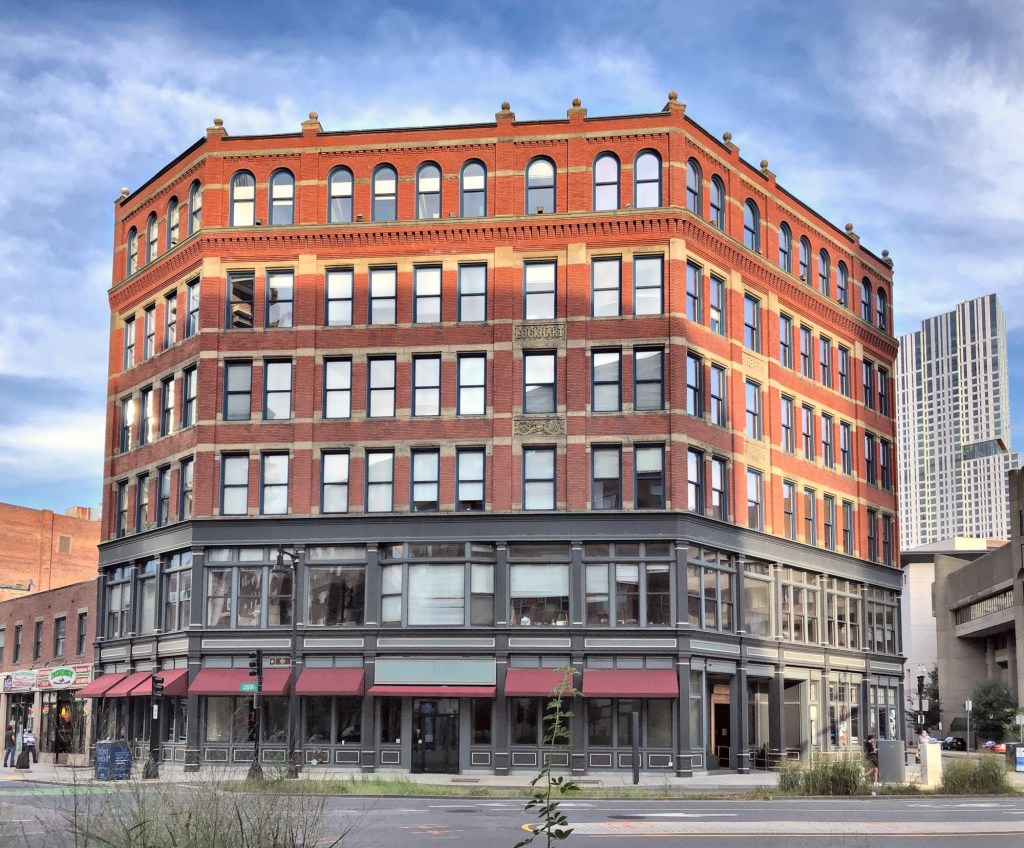
This six-story brick and sandstone building at Causeway and Staniford streets near North Station in Boston was built in 1887 as the headquarters and sales center for William L. Lockhart & Co., manufacturers and wholesale dealers of coffins, caskets, and undertakers’ supplies, which at the time was considered the largest establishment of its kind in New England. The company had its factory in East Cambridge and built this structure as offices and sales rooms. The building is an excellent example of the Romanesque Revival style, which is typified by the use of round arched windows at the top floor and the use of inlaid carved stone panels. Frederick Nason Footman a relatively unknown architect is said to have designed the building for the Lockhart Company, with the building serving as an important piece of the company’s portfolio. Shop space was created on the street level, with the company’s offices, salesrooms and casket hardware department occupying the second floor, show rooms on the third floor, shipping department on the fourth floor and storage on the fifth and sixth floors. While the adjacent parcels have been razed and are still vacant, this building serves as an important visual gateway into what was once the West End, a neighborhood that was almost entirely demolished during urban renewal.
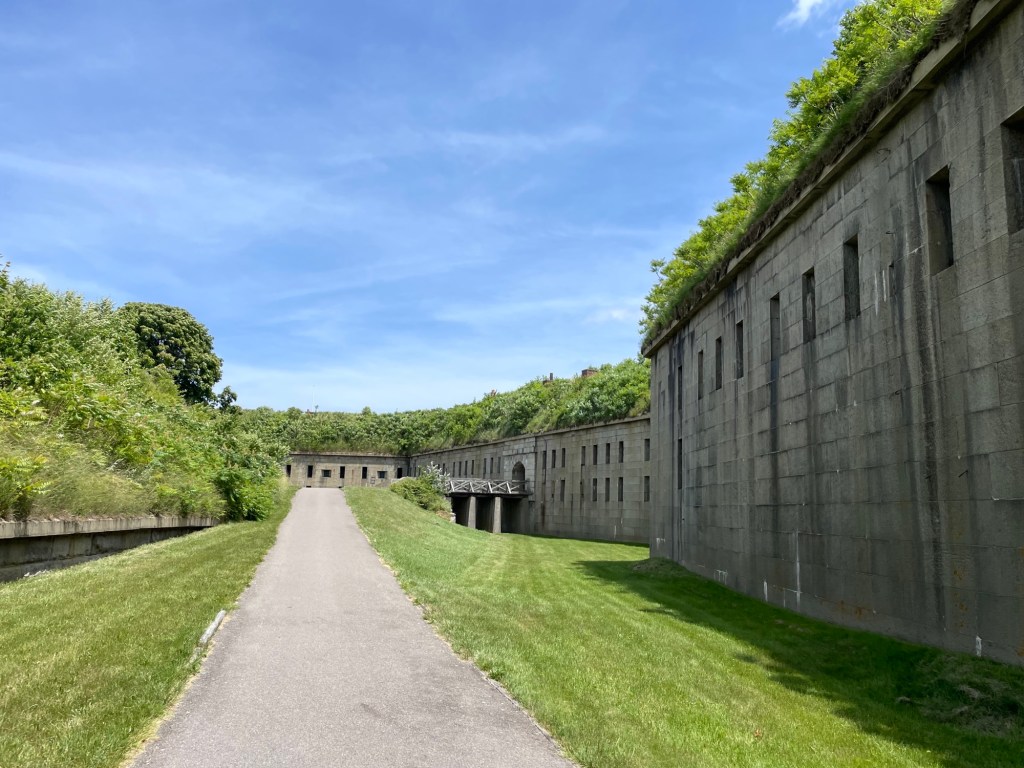
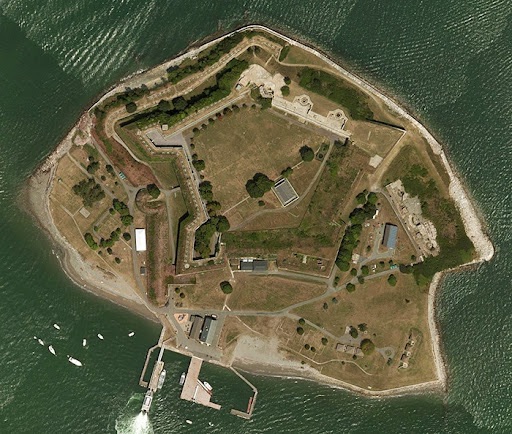
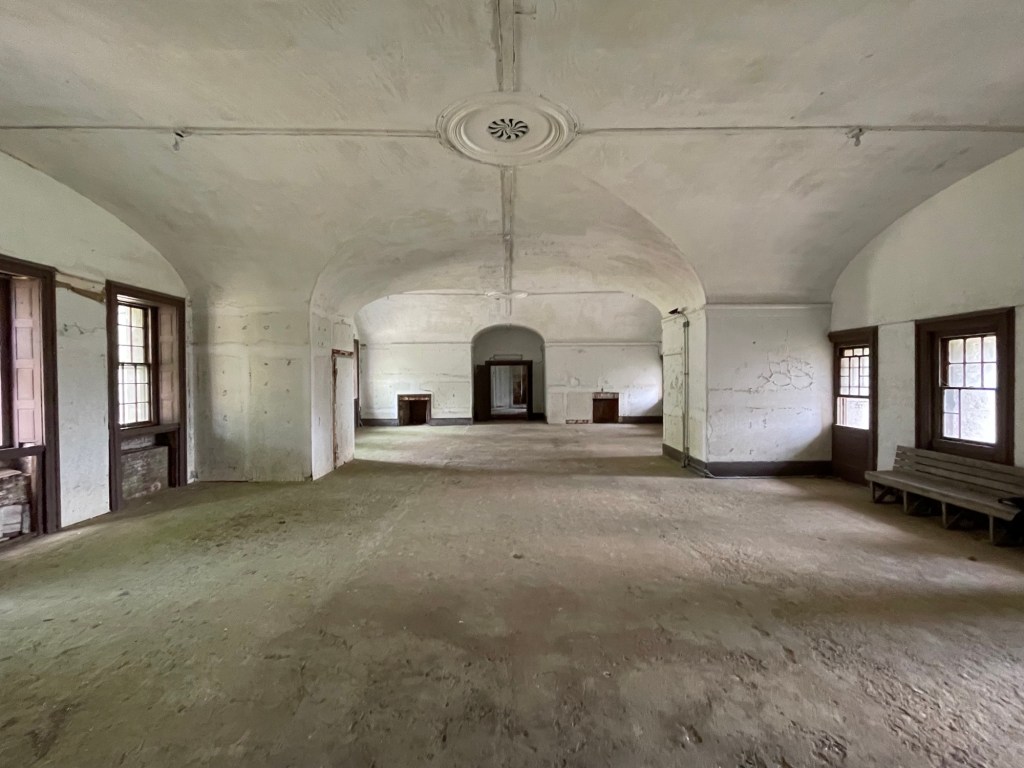
George’s Island – Fort Warren // 1847

Located seven miles by boat from downtown Boston, Georges Island is a must-visit location for history-buffs and those looking to see the city from a new vantage point! The island in its early days was used for agriculture for 200 years until 1825, when the U.S. government acquired it for coastal defense. Fort Warren was first-dedicated in 1847 and is named for Revolutionary War hero Dr. Joseph Warren, who sent Paul Revere on his famous ride, and was later killed at the Battle of Bunker Hill. Fort Warren is a pentagonal bastion fort, made of granite, and was constructed from 1833 to 1861, overseen by Col. Sylvanus Thayer, and completed shortly after the beginning of the American Civil War. Fort Warren defended the harbor in Boston, Massachusetts, off-and-on from 1861 through the end of World War II. It’s highest use was during the Civil War, where it served as a training facility and as a prison for Confederate officers and government officials. Unused after WWII, Fort Warren was acquired by the Commonwealth of Massachusetts by the Federal government and is today maintained by the Massachusetts Department of Conservation and Recreation as the centerpiece of the Boston Harbor Islands National Recreation Area.

Have you been to Georges Island?

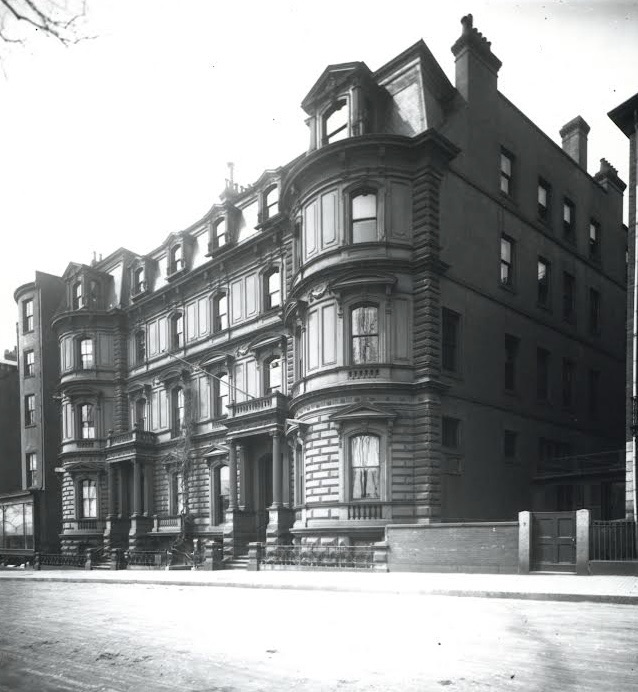
Brewer & Beebe Townhouses // 1863-1917

Boston is ever-changing and while change can be good, there have been some major architectural losses. This trend of redevelopment is not new however, as this single site on Beacon Street has seen two major losses, all before 1918! This lot on Beacon Street was originally home to Hancock Manor, a landmark Georgian mansion built between 1734-1737 for the wealthy merchant Thomas Hancock (1703–1764), and later inherited and occupied as the home of United States Founding Father John Hancock, yes, that John Hancock. In 1863, the Hancock Manor was sold at public auction and was purchased for $230. The house was demolished within days. While the building was torn down, souvenirs of it were actively sought as it fell. To replace it, two of the finest homes ever built in Boston were constructed on the site, from plans by elite Boston architect, Gridley James Fox Bryant. The double Second Empire style homes were first occupied by wealthy merchants, James Madison Beebe (the house on the left) and Gardner Brewer (right). In 1916, plans for the extension of the Massachusetts State House necessitated a taking of these (and other nearby) properties. These two houses were razed by 1917.

I wonder if the Hancock Manor would have survived to this time, would preservation prevail to save it?

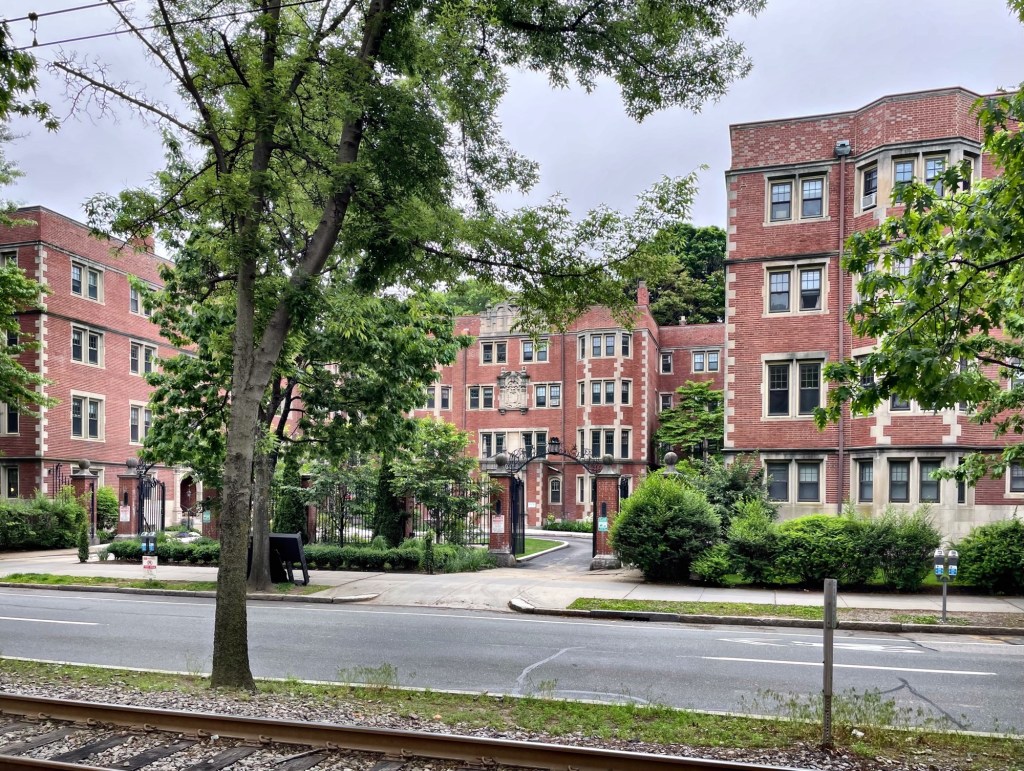
Richmond Court // 1898

Believe it or not, but this apartment building on Beacon Street in Brookline, Massachusetts is one of the most significant buildings of the type in the Boston area! This is Richmond Court, which is one of the oldest (if not the first) apartment house built in the northeastern United States that resembled an English Tudor manor house. The apartment building was constructed in 1898 from plans by architect Ralph Adams Cram, one of the best American architects of the late 19th and 20th centuries. Cram even moved into the building briefly before moving into a townhouse in the Back Bay neighborhood of Boston. The building set the tone architecturally for later apartment buildings in the Boston area, with many architects attempting (largely not as effectively) to design Tudor-influenced apartment buildings regionally. The development is also significant in that at a time when most Boston-area developers were building apartment houses that maximized the buildable square footage, as they do to this day, Richmond Court included a landscaped courtyard to provide residents with more light and air circulation. The development also included two separate town houses on either side of the apartment block.

Phinney-Bigelow House // c.1899

Before the turn of the 20th century, William L. and Elizabeth G. Phinney purchased a narrow house lot at the corner of Hawes and Chatham streets in the desirable Longwood neighborhood of Brookline. They then retained the young architect Thomas Marriott James, to design this massive Federal Revival style mansion. After William died in 1911, Elizabeth remained in the house until 1920, when it sold to C. Willard Bigelow a wool dealer and his wife, Ruth. The Phinney-Bigelow House is an exemplary Federal Revival style house on a narrow lot which takes full advantage of its boxy form. The slightly asymmetrical facade with Palladian window, limestone trimmings, and bold entrance are all great additions to the design.

John and Gertrude Parkinson House // 1902

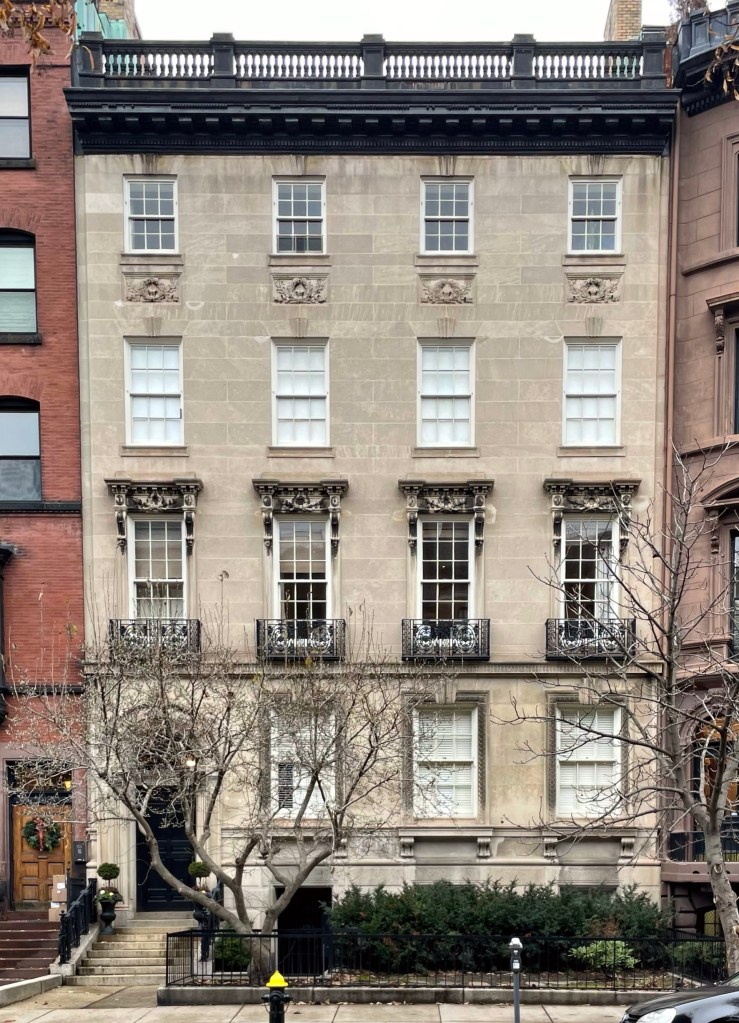
Teardowns have always been a common occurrence in cities, though replacement buildings from before WWII tended to be more substantially designed and built. This stately manse on Beacon Street in the Back Bay was built in 1902 on a lot previously comprised of two townhouses! This residence was built in 1902 for John and Gertrude Weld Parkinson from plans by the renowned firm of Peabody and Stearns. The Classical Revival style house has a limestone face and chunky stone lintels at the second floor to break up the facade. After income tax was introduced in the early 1900s and changing economic conditions for wealthy homeowners shifted, large single-family homes were no longer the norm. This home (and many others in Back Bay) was converted to a multi-family apartment building and today is home to eight condo units.

Dorchester Pottery Works // 1896

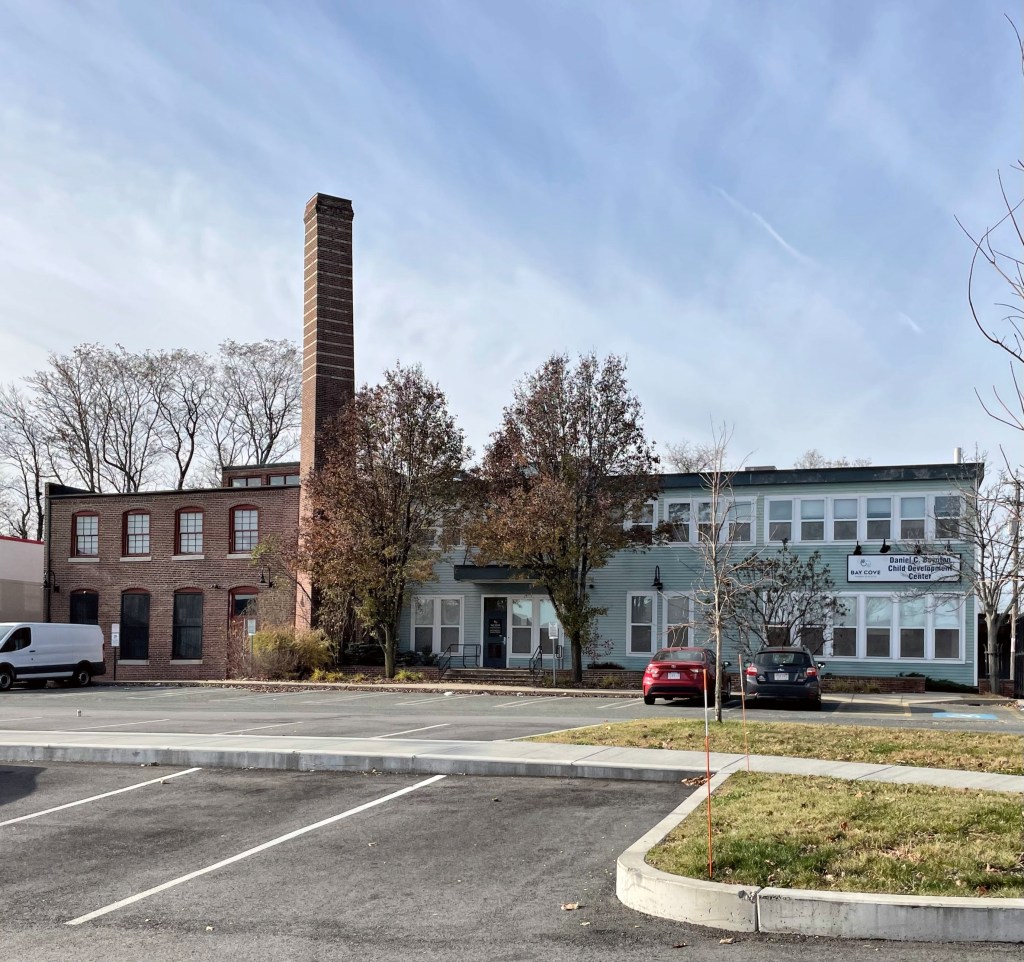
Founded in 1895 by George Henderson, the Dorchester Pottery Works successfully produced commercial and industrial stoneware for many years and its building is a significant piece of Dorchester’s industrial heritage. Located in the Harrison Square/Clam Point area of Dorchester, the building began as a two-story wood-frame industrial structure for the young company. It saw immediate success and Henderson oversaw the construction of a large, brick addition which housed an enormous beehive kiln 28-feet in diameter of his own design made of bricks. Here he could fire pottery and other clay goods from his modern facility. Besides clay pots, tableware, and jugs, the company became known for the production of foot warmers, which became known as the ‘Porcelain Pig’ or ‘Piggy’. Foot warmers were widely used in the days before central heating. These clay vessels would be filled with hot water and placed under bedding for overnight warmth. The company made foot warmers until 1939. The company saw dwindling sales after WWII, and eventually closed in 1979. The structures began to decay and the towering smokestack and brick structure was open to the elements. The local neighborhood advocated for its preservation, listing it on the National Register of Historic Places and protecting it as a City of Boston Landmark. After decades of neglect, Bay Cove Human Services acquired the property in 2001 and renovated the building for its own use, keeping the kiln room and the kiln itself intact for community exhibitions. Today, it provides an important historic survivor of Dorchester’s industrial past.

Tower Records Building // 1918 & 1986

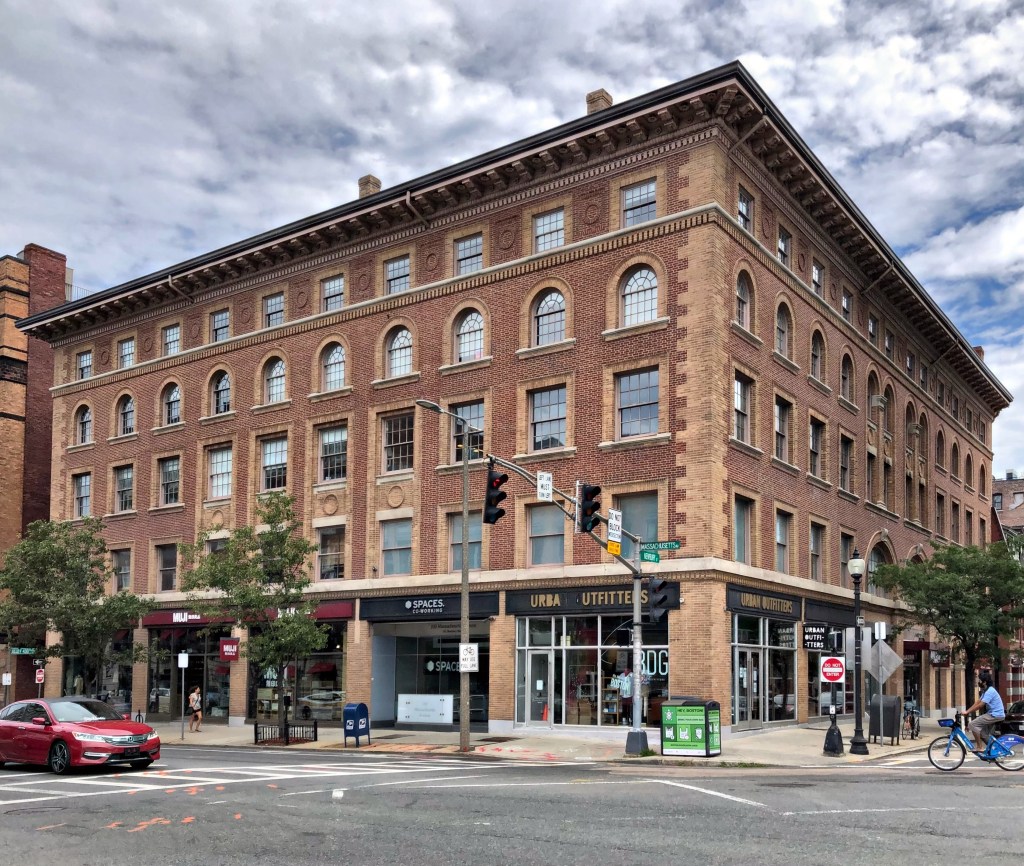
New England is home to just three projects by world-renowned (and sometimes maligned) architect Frank Gehry. To me, architecture is best when it makes you stop, look, critique, and comment on it. Architecture is an art, and it should evoke emotion and discussion. Gehry’s work does just that. His only project to date in Boston is located at the corner of Newbury Street and Massachusetts Avenue in the Back Bay, a project I would assume most don’t realize was a Frank Gehry design. The building was originally built as a seven-story office building (originally planned as eight stories) over an MBTA station lobby in 1918. Designed by Arthur Bowditch, the building was completed a year later, built of buff brick and concrete. The Boston Elevated Railway Company (BERy) moved into the top floors of the building and it became known as the Transit Building. The construction of the Massachusetts Turnpike in the 1960s removed neighboring buildings to the south, exposing the southern, unadorned façade of the building. By 1986, owner-developer Richard Cohen began a major renovation of the building with Tower Records as the main tenant. Gehry worked with local architects Schwartz-Silver who added an eighth floor with a cornice support by angled struts. The south and east sides of the building were sheathed in lead-coated copper with the street-facing west and north sides retaining their original brick and stone, but with added glass canopies supported by more angled struts. As housing became more desirable, the top five floors were converted into 54 condominiums. The design is timeless and showcases how new and old can work together in a juxtaposition of styles well! What do you think of the building?

Charlesgate Stables // 1892

Buildings not built for people, but for horses! This handsome masonry building sits at the heavily trafficked corner of Newbury Street at Massachusetts Avenue in the Back Bay neighborhood of Boston. It may get overlooked by some, but when you are not attempting to avoid shoppers on Newbury and cars and bicycles speeding along Mass. Ave., you’ll notice the amazing brickwork and details found on the former Charlesgate Stables. The building was constructed in 1892 as a five-story plus basement brick livery stable for owners Charles Kenney and Eugene L. Clark. Their permit called for storage of over 200 horses and other goods. The architectural firm of Peabody and Stearns designed the building to fit well within the surrounding area which is dominated by large, ornate townhouses and institutions. Inside the building horses were led up ramps to second floor stables leaving the first floor for carriage storage. This layout made it very difficult to save horses when fires occurred. The Renaissance Revival style building with contrasting brick was purchased by the Maxwell-Briscoe Trust after owners Eugene Clark died in 1907 and Charles Kenney died in 1909. The trustees were manufacturers of the Maxwell automobile, and they converted the former stable into an auto salesroom and garage, to keep up with the shift from horses to automobile. The building today has been converted to commercial use with retail on the ground floor and offices above.

Knoll International Furniture Showroom // 1980

An exemplar of late International Style, this stucco-clad concrete building stands apart from its traditional Back Bay neighbors and is located on one of the city’s most busy streets, Newbury Street. Built as the showroom and offices for Knoll International furniture, its crisp design is an elegant statement in form and details of Bauhaus- and Le Corbusier–inspired architecture, including its asymmetrical composition, curvilinear lower facade, horizontal window bands, and stairwell located behind a glass brick wall. The building was designed by Gwathmey, Siegel and Associates who have a great diversity of commissions, all with thoughtful site-specific designs. The building reinforced the positive qualities of modernist architecture at a time when some architects were advocating for historic revivals and Post-Modernism. The building was later occupied by DKNY and is presently rented out by Lenscrafters.