Capt. Charles Leonard House // 1805

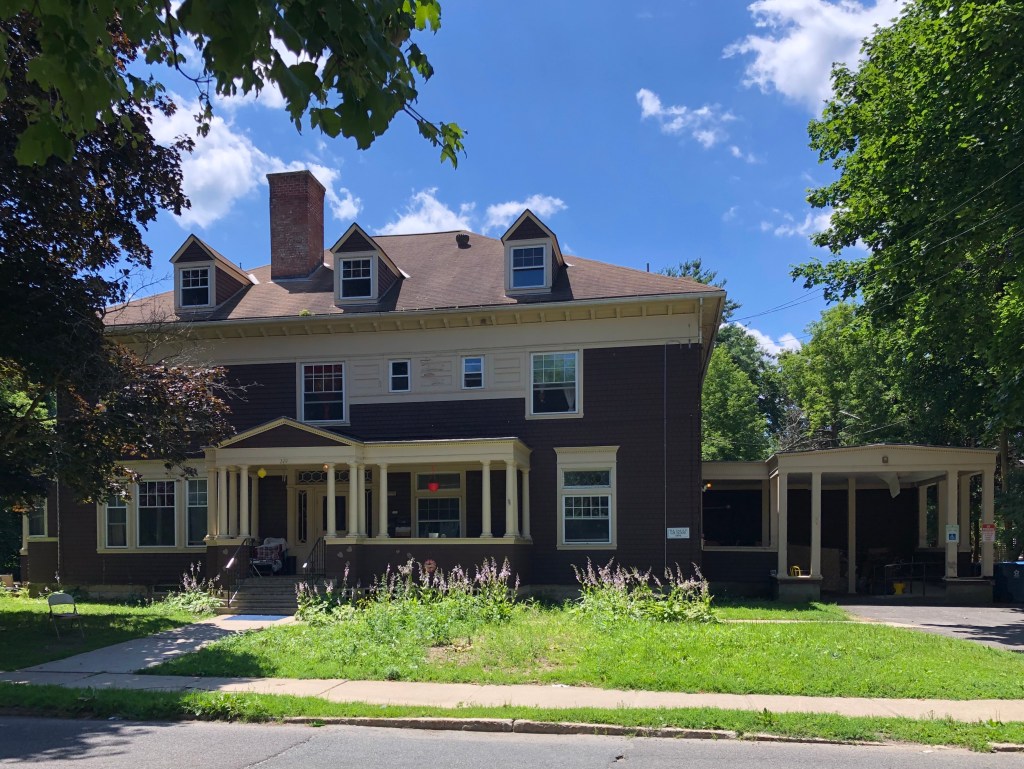
This stunning home on Main Street in Agawam, MA, was built in 1805 as a high-style Federal home. The property was developed for Captain Charles Leonard (1764-1814) who purchased twenty-five acres of land on the eastern side of Main Street at the center of town. Leonard was a graduate of Harvard University who later turned to farming. He attained the rank of Captain while serving in the local militia, and was known by that title thereafter. It was in 1805 that Leonard constructed Agawam’s fourth tavern on the western end of his property to serve travelers as the first stop on the Hartford to Boston stage run. He likely hired a local builder who took inspiration from Asher Benjamin’s early plan books. The home was later converted to apartment units until it was purchased and restored by Minerva Davis, a wealthy citizen from town, who then created a board of trustees to operate the building as Agawam’s Community House.
Hull Street Medical Mission // 1901

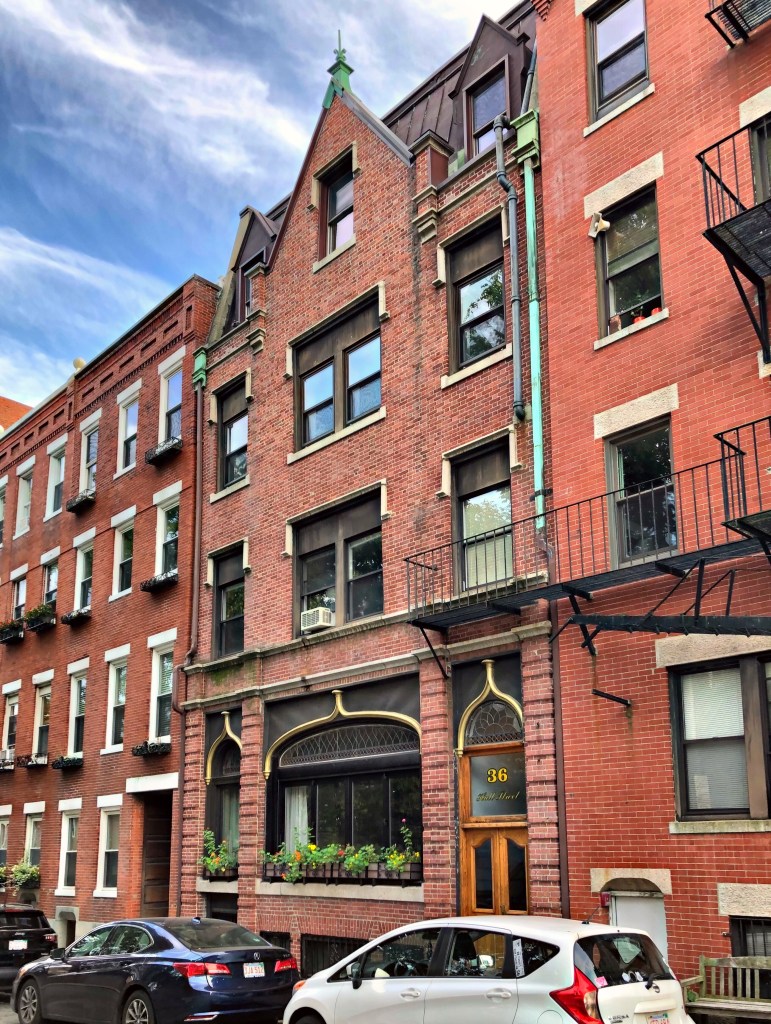
Constructed for the Woman’s Home Missionary Society of the Methodist Church of New England, this building was associated with the Hull Street Medical Mission from the time of its construction, in 1901, to about 1950. The mission was one of a number of church-related social service programs established in the North End in the late 19th and early 20th centuries to address the needs of recent immigrants, namely the Russian Jews, Italians, and Portuguese residing in this area of the neighborhood. In 1909-1910 alone, 14,574 treatments were given in the clinic, providing a huge medical service to the widely low-income immigrant community of the North End [29th Annual Report, 154]. The Medical Mission closed in the early 1950s and the property was later sold and converted to apartments. It was designed by architect Walter Forbush, who utilized ogee arches and leaded glass windows, adding much flair to the building’s design.

Gallup House // 1894

William A. Gallup was born October 28, 1851, in North Adams. He worked primarily for the Arnold Print Works beginning in 1870 before becoming a charter member, elected clerk, and director of the company. He went on to work for and own a few more mills in North Adams by the end of the 19th century. Gallup hired H. Neill Wilson, a Western MA based architect to design a mansion for his family on Church Street, near his father in-law and business partners (A.C. Houghton) house.

Captain Benjamin Smith House // 1790

The Captain Benjamin Smith House at 34 South Summer Street in Edgartown was constructed around 1790. The building sits on land that was once owned by the Coffin family who owned a broad sweep of land from Edgartown Harbor back to Pease’s Point Way. Many of the oldest houses in town were constructed by members of this family who had first settled in Newbury. Smith, a military captain who commanded a company of militia on Martha’s Vineyard during the Revolutionary War, was married to a member of the Coffin family and the family owned the home for over one hundred years. After successive ownership, in 1939, the Vineyard Gazette took over the building. The Gazette was the first newspaper to be published in Dukes County, and remains in the building to this day.

Captain Morse House // 1840

John Osborn Morse was born in 1803 in Edgartown. He was the second of eight children born to Uriah Morse and Prudence Fisher Morse. His father ran the small ferry from the foot of Morse Street to Chappaquiddick Island. As John Morse grew older, he began working as a whaler on various ships, sometimes gone for years at a time. After his first trip, he was hired as Captain of the Hector, a whaling ship which sailed out of New Bedford. Captain Morse took a break from whaling to establish a wharf on land he purchased and construct a massive Greek Revival home to overlook it. When news hit Edgartown of the gold found in California, it stirred the islanders’ imagination. In 1849, several ships sailed from Martha’s Vineyard to California, one commissioned by Captain Morse. The Vineyard Mining Company, led by Morse, brought roughly 50 passionate and hopeful Americans across the country by boat to California with some onboard writing journals of the trip. The boat arrived in San Francisco and discharged its crew in April of 1850 after a harrowing passage around Cape Horn and visits to several South American ports. After being in California for less than a year, Captain Morse decided to take go for a short whaling cruise. He died on this trip, reportedly getting “dropsy” off the coast of Colombia before succumbing in Peru in 1851.

Capt. Sands House // c.1840

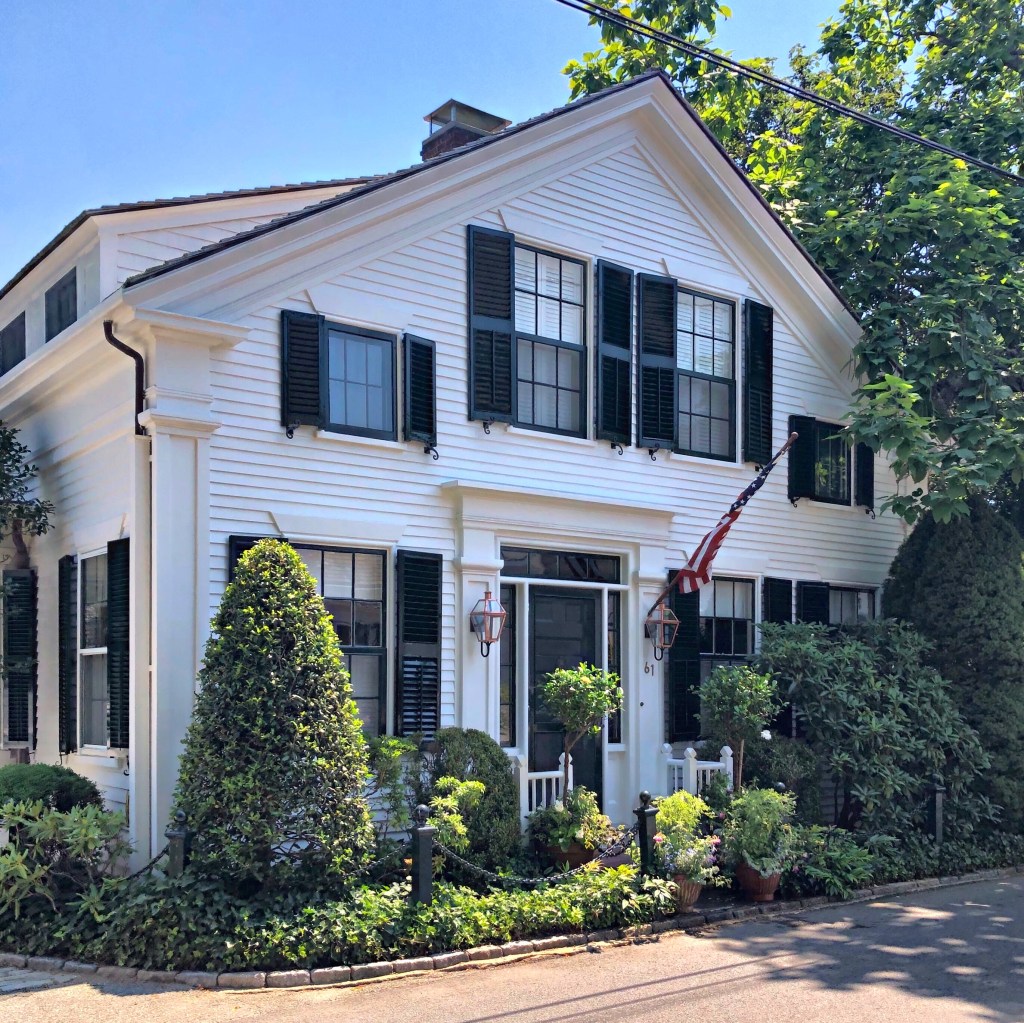
Edgartown on Martha’s Vineyard, became a primary whaling port in the early 19th century. Ships from all over the world would dock in its sheltered bay and captains would build grand mansions for their families on the tree lined streets, with sweeping views of the harbor. This modest whaling captain’s home was built around 1840 for Captain John Sands and his wife Eliza. John Sands worked as crew on various whaling ships based out of New Bedford, from the vessel Hector at age 22 before becoming a captain on the vessel Benjamin Tucker. Sands even brought his wife along on whaling ships, including a nearly four year excursion hunting for whale oil. The Sands home is the Greek Revival style with a gable front, six-over-six windows of varying sizes with flared lintels, and an off-center front door with sidelights and transom with an entablature above.

Edgartown Town Hall // 1828

Located on the idyllic Main Street in Edgartown, on Martha’s Vineyard, this historic building stands out for its design. It was built in 1828 as the first meeting house for the Methodists of Edgartown, the former building was shared with the Baptists there, but was quickly outgrown. Ten years after this church was built, the space was already becoming too cramped with the booming population of the town due to the success of the whaling industry here. The Methodists then constructed a larger church (known as the Old Whaling Church nearby and sold this structure to the town as a new Town Hall. After the Town bought it, the first floor was remodeled to accommodate the fire engine and also the Town’s police station. Today, it contains town offices on the ground floor and the former upstairs church
auditorium is now used as a movie theater. The infamous nails on the chalkboard scene in the movie Jaws was filmed in this building!

East Chop Light // 1878

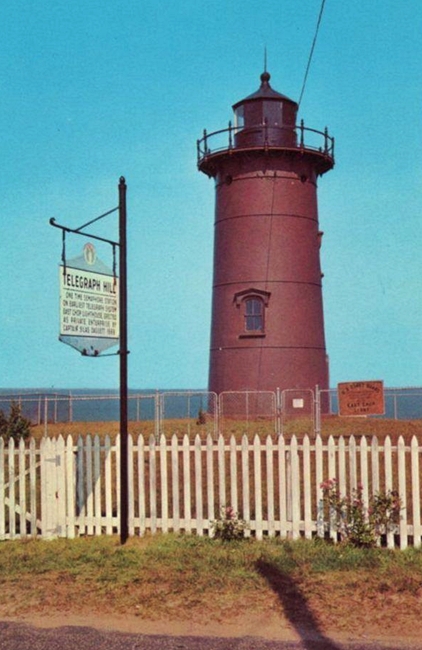
Is anything more “New England” than a historic lighthouse? Whenever I think of symbols of New England, lighthouses, Saltbox colonial homes, and lobster comes to mind. Located just north of Oak Bluffs, the East Chop Light was built to guide the hundreds of ferries every summer, picking up and dropping off passengers to the island. One of the many definitions of “chop” is the entranceway into a body of water. Knowing this, it seems natural that the two lighthouses flanking the entrance to the harbor at Vineyard Haven on the north shore of Martha’s Vineyard are respectively known as East Chop Lighthouse and West Chop Lighthouse. In 1878, a one-and-a-half-story dwelling and a cast-iron tower were under construction at the station. The forty-foot-tall, conical tower was similar in style to several other New England lighthouses constructed during the late 1800s. The lighthouse was painted white at first, but in the 1880s it received a coat of reddish-brown paint and became popularly known as the “Chocolate Lighthouse.” In 1988, it was returned back to white, as the dark color was causing excessive heat and condensation in the tower. East Chop Lighthouse remains an active aid to navigation, although the Fresnel lens was replaced by a modern beacon in 1984. The land surrounding the tower was sold to the town of Oak Bluffs in 1957 for use as a park.

Villa Rosa // 1875

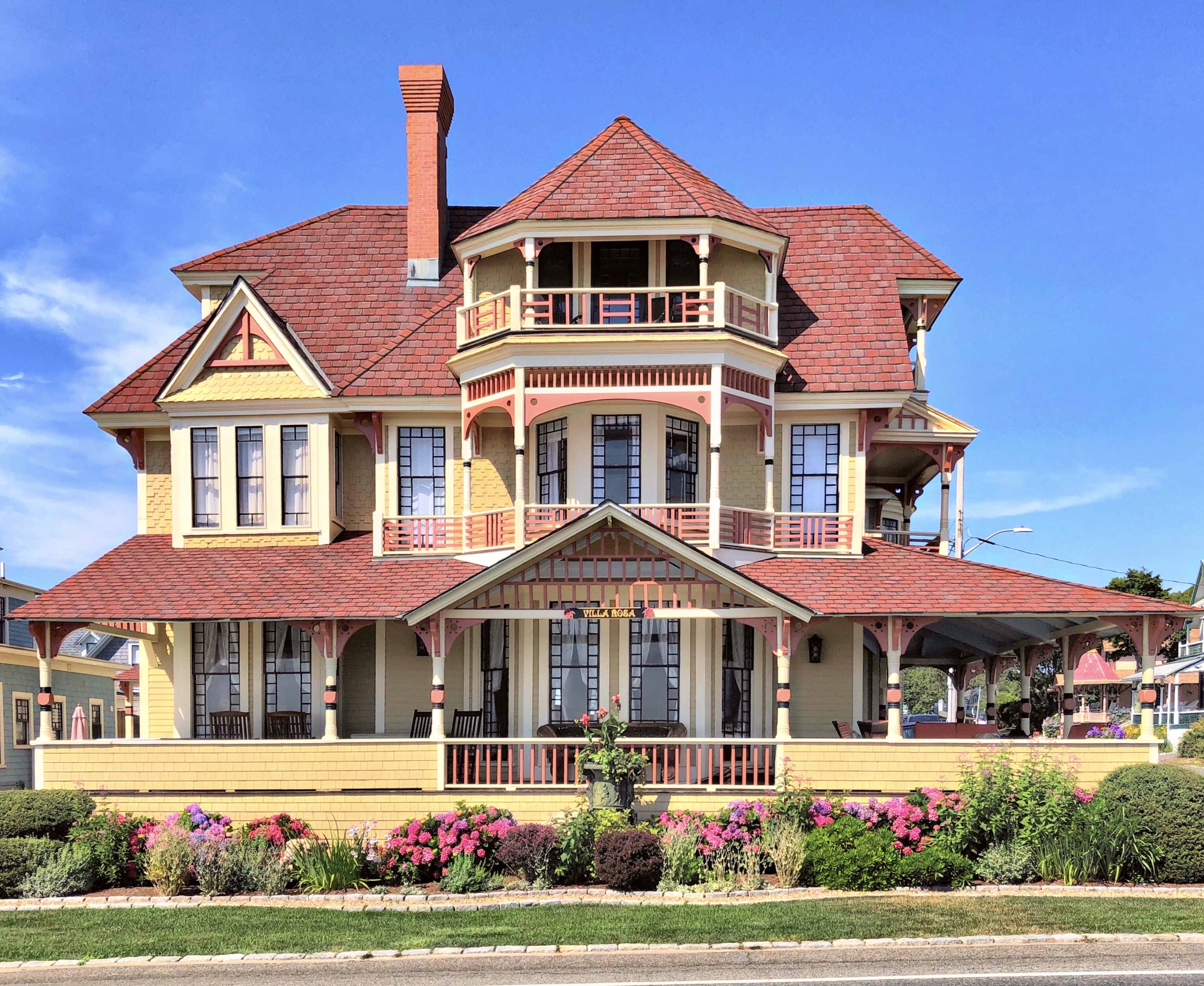
This Victorian mansion in Oak Bluffs was built in 1875 as part of the Oak Bluffs Land and Wharf Development, a private off-shoot development inspired by the success of the Wesleyan Grove campground. The Stick style house was occupied by wealthy businessmen and their families from its completion to after WWII. The home was purchased by Joe Overton of Harlem, NY, likely the home’s first Black owner. Under Overton’s ownership, Martin Luther King Jr., Adam Clayton Powell Jr. and other civil rights leaders visited what has come to be known as the Summer White House for African Americans. Overton was New York’s first African American labor organizer and president of NAACP New York Chapter. The home served as an informal inn, which provided a safe night’s stay for African American elite visiting the island. There was a guestbook with the signature of nearly every major Civil Right’s organizer in it, even Fidel Castro stayed here once. The home is now owned by Valerie Mosley, who named it after her grandmother as Villa Rosa.

Hills-Claflin House // 1871

This grand home was built in 1871 for George Hills, one of the original investors in the Oak Bluffs Land & Wharf Company development, a development to the east of Wesleyan Grove. The home was designed by Samuel Freeman Pratt, a Boston carpenter turned premier architect of Oak Bluffs, who likely designed the home in his distinct Stick Style with intricate wood carvings and posts. In 1877, the home was purchased by Governor William Claflin after his time in office as a summer retreat from his home in Newton, MA. The governor was an ardent Methodist who was involved with liberal causes such as abolition and Native American and female enfranchisement. Within 10 years of his purchasing of the home, he modified and enlarged it with Colonial Revival motifs including the gambrel roof, Tuscan columned porch, and simplified dormers.