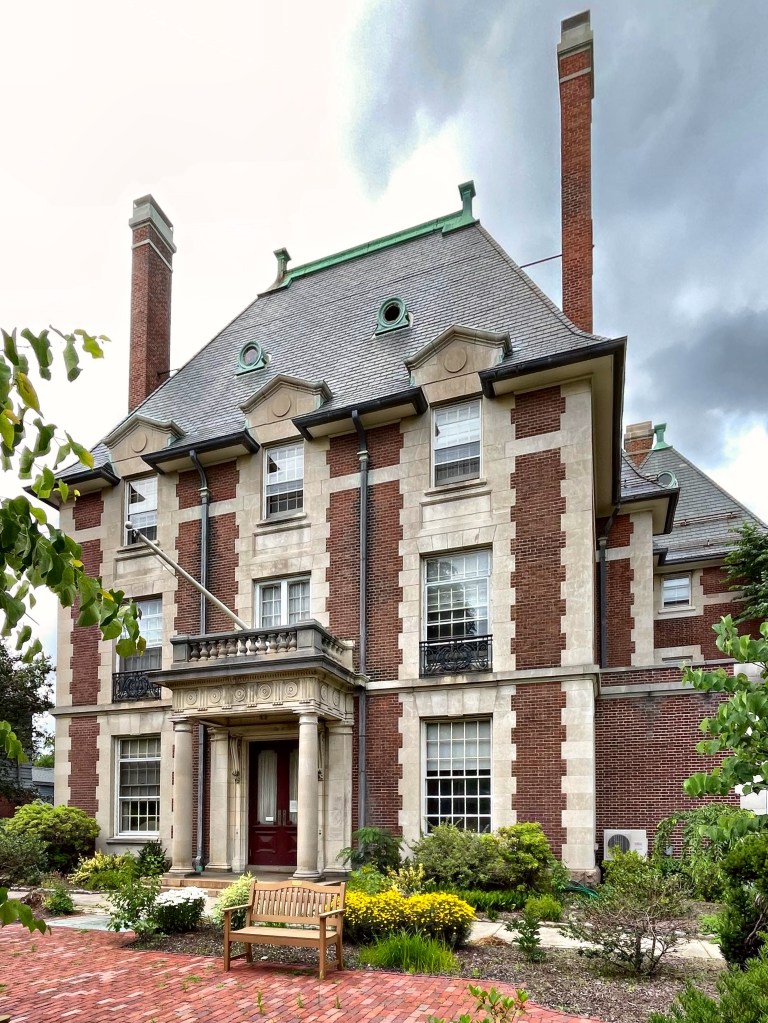
Hamilton House // 1896

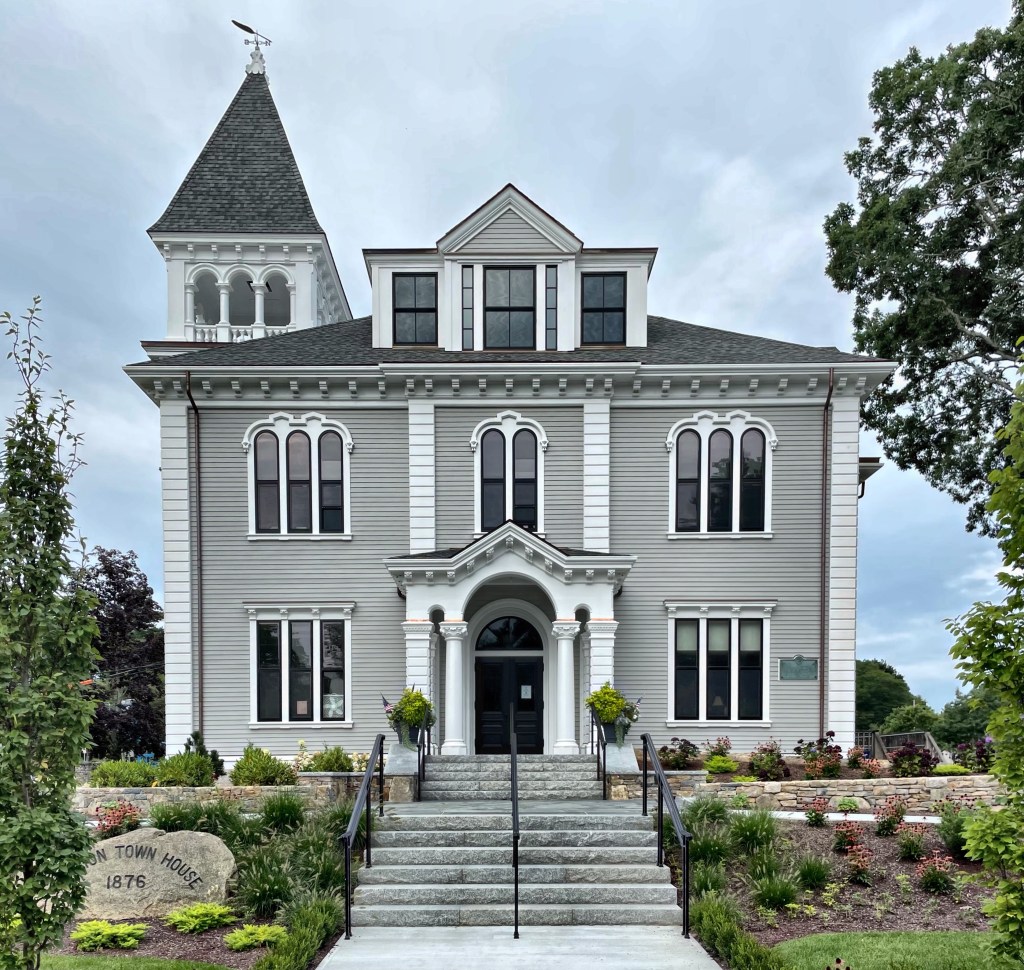
Providence is full of amazing residential architecture from all periods, but one house that stands out to me for being such a high style and unique mansion is the Hamilton House on Angell Street. The mansion was constructed in 1896 for local businessman, Francis W. Carpenter. From 1892 until his death, he was the president of Congdon & Carpenter Company, an iron and steel company which was founded in 1792, and operated in Providence into the 1980s. Carpenter was very influential as chairman of the committee on the construction of a new building for the Central Congregational Church (a previous post) in 1893. So pleased with how the church turned out, he hired the same architects, Carrère and Hastings of New York to design his own mansion which would sit next door to the church! Many in New England may not know how significant it was to have Carrere and Hastings design your house. To put it into perspective, while the firm was designing this house, they were designing the New York Public Library’s Main Branch building! The Carpenter Mansion was designed in the French Renaissance Revival style which was not too common in America, but always turns heads! The large hipped roof emulates the earlier French mansard roof forms, and the bold massing and use of limestone and brick makes the house look like a chateau or castle plucked from the French countryside. The house apparently was not finished until 1915, likely when the porte-cochere was added for the owner’s vehicles. The building is now occupied by The Hamilton House, a non-profit organization that serves as an adult learning exchange with programs from history classes to group fitness courses.

Robert Lippitt House // 1854

“Less is more” is a phrase adopted in 1947 by architect Ludwig Mies van der Rohe to describe his minimalist, Miesian glass box buildings. While he was referring to Modern architecture, the same phrase can be used in 19th century design, where massing, form, and materials are showcased in all their glory with little frills or additions. The Robert Lippitt House in Providence was constructed by 1854 for Robert Lincoln Lippitt (1823-1858), who worked with his brother Henry Lippitt in owning and managing textile mills. Henry would later build his own mansion nextdoor to his late brother’s house (see past post). Sadly, Robert died four years after this home was built, at the young age of 34. His widow, Louisa Gorden Hallet remained in the home and remarried within a year of her late husband’s death, to Charles Lippitt, possibly a cousin to Robert. Messy. The home was designed by architect Thomas A. Tefft, a promising and respected young architect who also died young, at the age of 33.

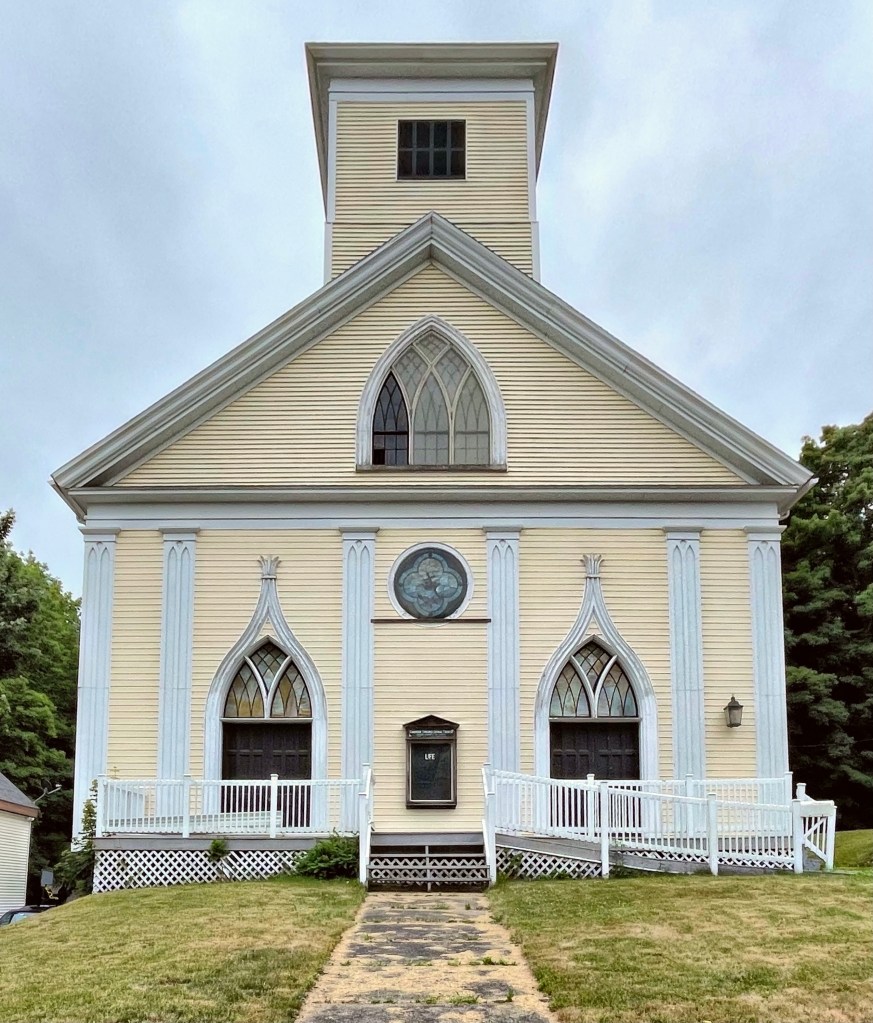
Gardiner Universalist Church // 1843

This stunning Gothic Revival church was built in 1843, on the site of the blockhouse, erected 80 years prior for the settlers of the area from native attack. In the 17th and 18th centuries, many rural parts of New England had blockhouses erected to allow the settlers a defensive fort from attack. The blockhouses were often garrisoned wooden structures with small windows on all sides to allow for gunfire to attackers below. The structure would protect those inside from arrows and melee weapons. This building however, was constructed later for the Universalists, who believed in “universal salvation,” who had been meeting since 1821 in a schoolhouse beside the town common. The church, in its original state with its steeple and clock, was an extremely sophisticated example in wood of the Gothic Revival style with its pinnacles, lancet windows and pilasters. Sadly, the steeple and clock were removed in the early 1920’s for safety reasons as the structure could not support it without significant engineering. The church and congregation changed to the United Church of Christ-Congregational denomination in 1964. After that, the building was occupied by a brewery (believe it or not), before being reverted back to a church by the current congregation.

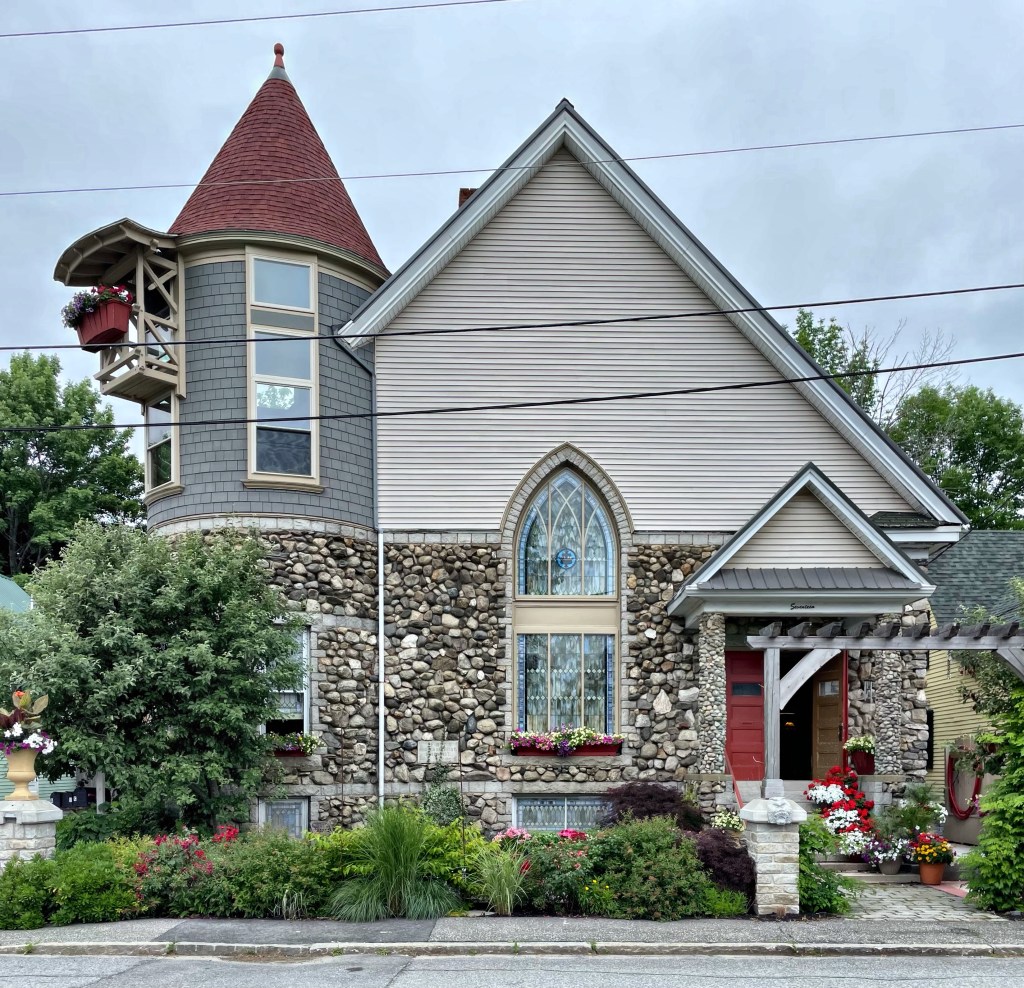
Christian Science Church, Gardiner // 1905

The first purpose-built Church of Christ, Scientist church in Maine is this turn-of-the-century edifice constructed in 1905 in Gardiner. Organized in 1897, this Christian Science Society of Gardiner met for several years in members’ homes and public places nearby until Palmer Noyes and his wife Caroline funded the new building. Caroline and Palmer helped establish the first such church in Chicago, after the couple witnessing a ‘healing’ and then heard Mrs. Mary Baker Eddy lecture in 1882. This church in Gardiner was seemingly designed by Caroline, who was likely inspired by architectural influences on the churches in town, from Gothic style lancet windows, to the shingle style facades. The building was eventually converted to a development center for the disabled, and is now known as “The Stone Turret”, a bed & breakfast, with amazing stained glass windows!

Tucker Octagon House // 1856

The Octagon form of architecture was conceived in 1848 in the prolific mind of Orson Squire Fowler, phrenologist and author of books on sex, family relations, and many other subjects. His book A Home for All, or, the Gravel Wall and Octagon Mode of Building struck the fancy of a certain few, and Octagon homes were built across the country, for just about a decade until they fell out of favor almost overnight. This home in West Gardiner, Maine, was built by Jesse Tucker in 1856 on land his father had cleared, replacing a more standard structure. The new octagon house was being constructed as a gift to Jesse’s soon-to-be wife, but tragically fell from the roof of the barn when building, and died. The home was completed, and it was seemingly acquired by Jesse’s twin brother David. The home remained in the Tucker family until the 1950s.

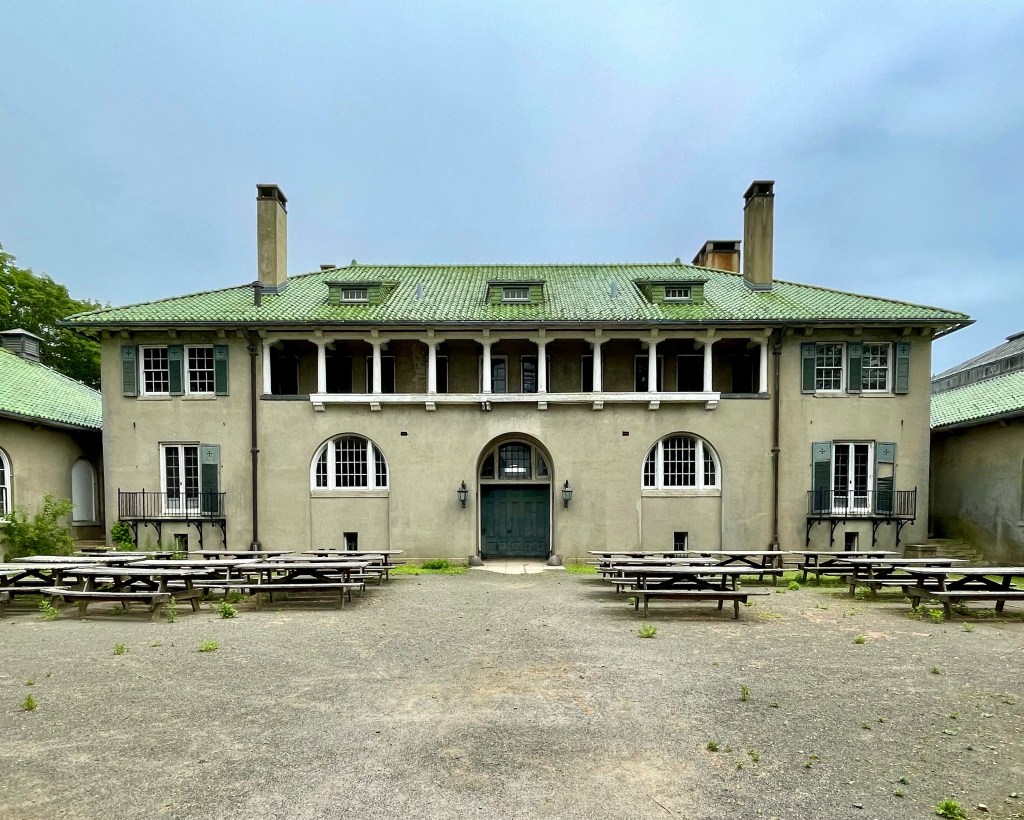
Harkness Estate – Carriage House // 1908

Another of the stunning buildings on the Harkness Estate is this massive all-purpose building that served a variety of functions, but I will call it the Carriage House. The building was constructed in 1908 and designed by James Gamble Rogers, mimicking the Renaissance Revival grandeur of the main home, Eolia. As previously mentioned, the large, U-shaped building was a multi-use support compound for the Harkness Family and their farm. The South Wing (right) of the building served as a clubhouse for Edward Harkness and his friends, with a billiards room, squash court, and two bowling lanes. This wing has large windows looking out towards the ocean and the large gardens on the property. The central block contained a garage with a turntable to facilitate the parking of limousines, a gas pump and a car wash for Mr. Harkness and his growing automobile collection. The North Wing (left) contained the horse stables, carriage area, tack room, smithy, and even a space dedicated to dog grooming. Upon close inspection you can see small rounded stones near the portals to allow the wheels to hit them rather than damage the building. Perhaps most importantly, the Carriage House was the location for the furnace room with its huge steam boiler. This boiler heated the Carriage House as well as the Mansion via an underground steam line. Apparently the building will soon be undergoing a restoration. Fingers crossed!

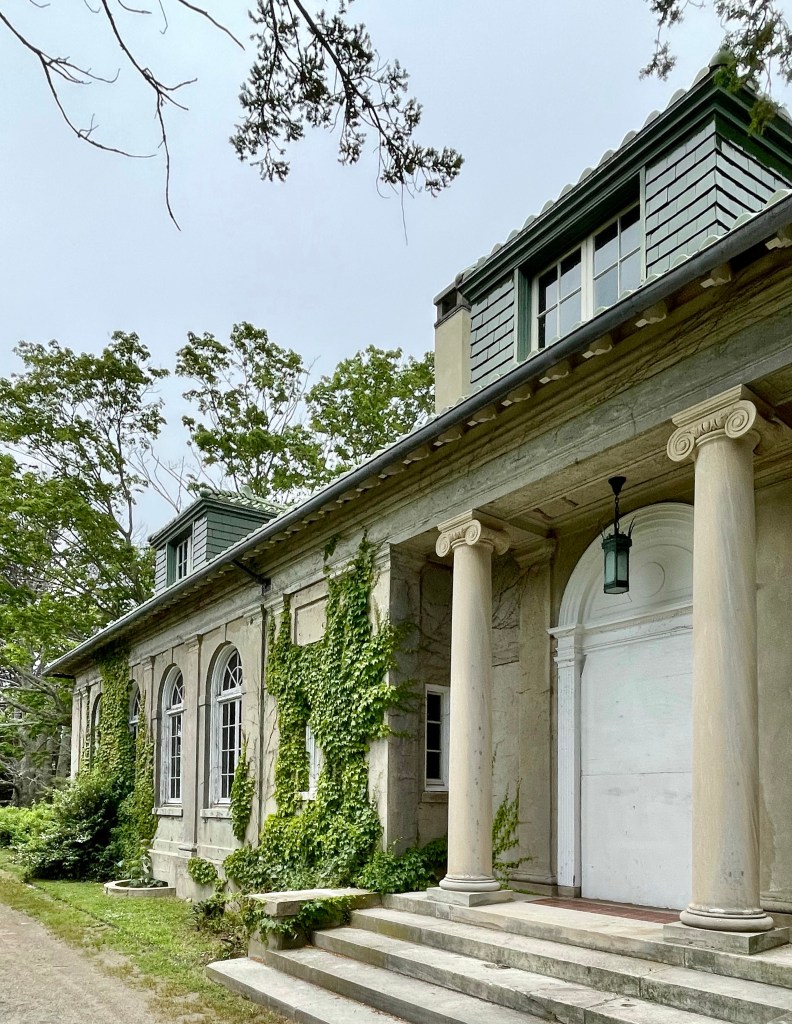
Seaside Sanatorium – Duplex Residences // 1936

Another of the handful of original structures extant on the Seaside Sanatorium campus in Waterford, Connecticut, is this gorgeous Tudor Revival style duplex constructed for medical staff housing. Like the Main Building and Nurse’s Residence, this duplex is credited as a design by the great Cass Gilbert. While the building was constructed after Gilbert’s death in 1934, the plans were likely all drawn up at the time the Maher (main) building was in 1933. The duplex residences feature a symmetrical facade with two main entranceways, located in slightly projecting pavilions, and are set within basket-arched openings, detailed with alternating brick and granite voussoirs. There are three-part windows above the doors which project from the wall plane and have cross-braced faux balustrades of wood below. Identical sun porches are recessed at either end of the house. The small associated garage to the
immediate northeast has a simple design, but one that reflects the style of the houses. Like the other buildings on the campus, this structure is vacant and is slowly rotting away. So sad to see.

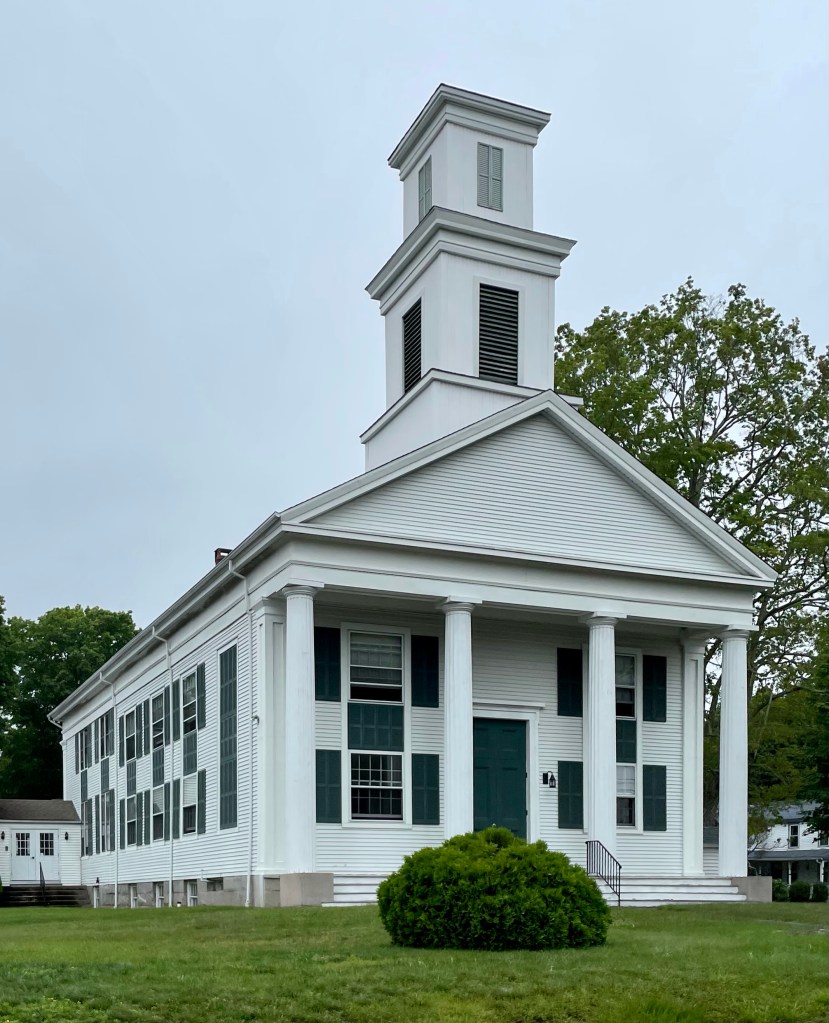
First Baptist Church, Waterford // 1848

Founded in 1710, when Waterford was still part of New London, the Baptist Church was one of the dominant institutions in the historical development of the Jordan Village, which became the historic population center of town. The fact that Jordan Village in Waterford sprang up around a Baptist and not a Congregational church gives it an unusual religious significance in the state. The Baptist denomination was introduced to Connecticut from Rhode Island in 1705. The separation from the City of New London, which was organized around the locally supported Congregational church, was due in large part to the differences between the the formal, structured, Congregationalists and the evangelical Baptist farmers. In 1848, when this church in Jordan Village was built, many residents followed the architectural vocabulary and built Greek Revival homes nearby, creating a large development boom in the new town center. The church remains today as an active member of the community.

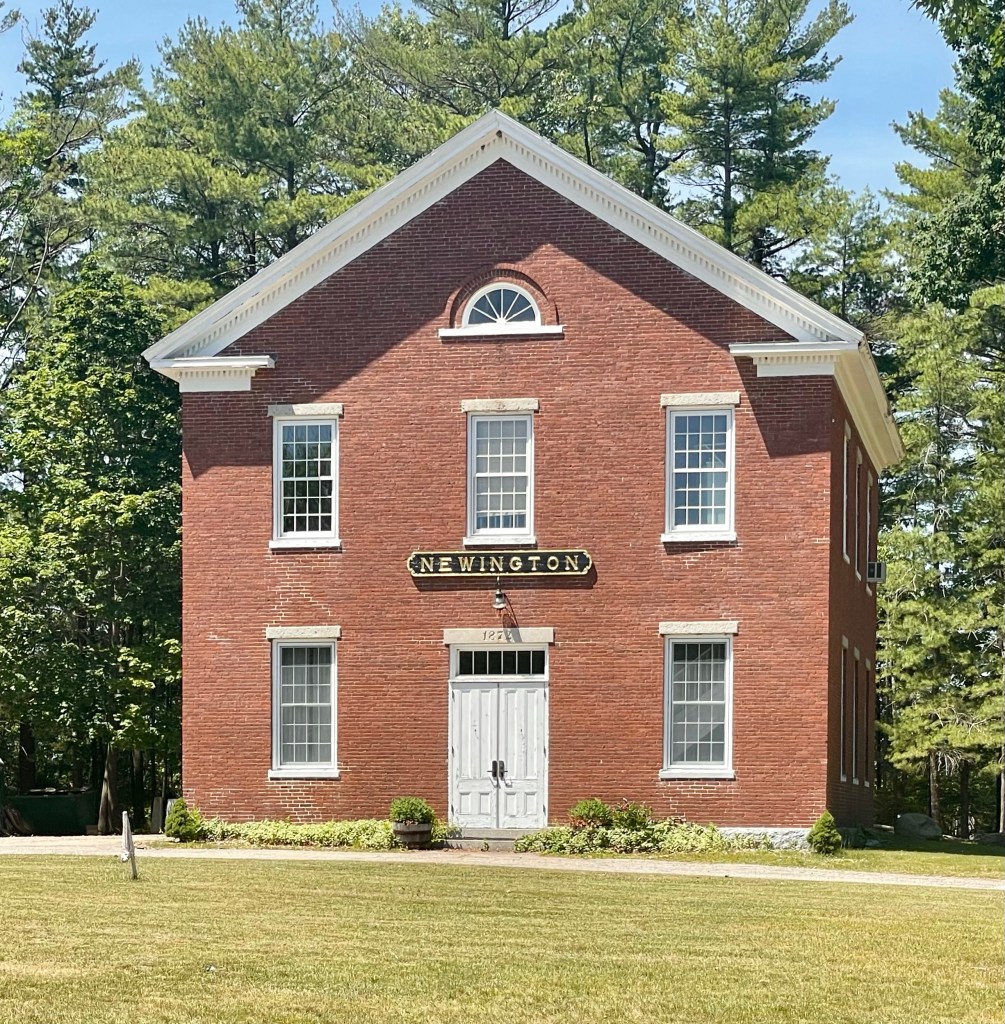
Newington Old Town Hall // 1872

Set in Newington Center, the historic core of the quaint town of Newington, NH, this old Town Hall building looks much like it did when constructed 150 years ago. Newington was originally a part of the town of Dover, and due to boundary disputes among early river settlers and native people, this area was later called Bloody Point. The town was eventually incorporated in 1764, and town functions were held in the local meetinghouse, a common tradition at the time before the separation of church and state. After the American Civil War, the town erected this town hall building which was a one-stop shop for civic functions. The Old Town Hall has served as a school, meeting hall, government office building, home of the local Grange hall and as a local social hall. In 1872 when the building was completed, the town had just 414 residents, a number that has only doubled since that time. The design of the brick town hall is a blending of styles, all were out of fashion when this was built, which include Federal and Greek Revival elements. By the second half of the 20th century, new town offices were built nearby.

Boxborough District Schoolhouse #2 // 1857

Before most small New England towns had single school buildings for elementary, middle and high school, small one-room schoolhouses like this dotted the landscape, especially in rural towns. Having smaller schools spread out allowed for a greater number of students to attend school without traveling by horseback long distances, and more local school buildings was a great solution. This c.1857 school building was in use until 1949, and it didn’t even have heat, running water, or electricity until the 1930s, making smart design a necessity to get the most out of the building. Large windows would provide natural light to flood the classroom and the steep gable roof would ensure snow to slide off the roof. Sadly, many towns have lost these buildings, but some have been restored or even repurposed as homes!