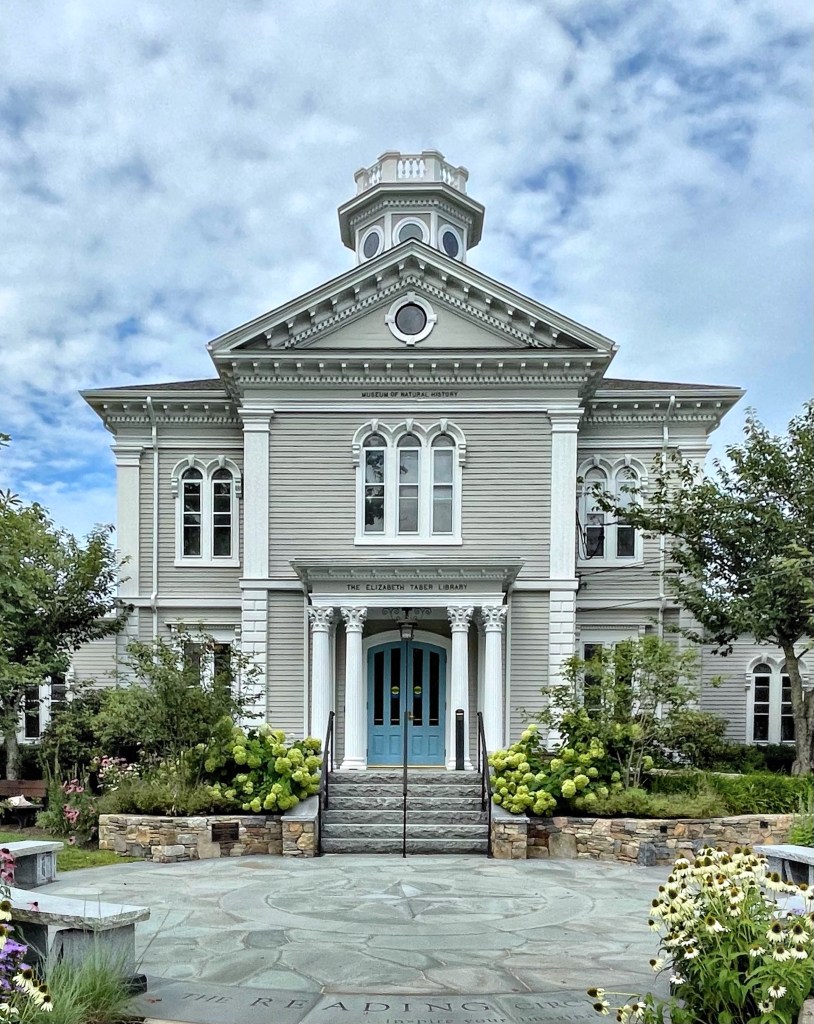
Elizabeth Taber Library // 1872

The first of many generous gifts by Elizabeth Taber to the town of Marion, Massachusetts was this gorgeous Italianate style library building. Elizabeth Taber (1791-1888) was educated in the Sippican Village School, immediately giving back, teaching school in Marion while still in her teens. At 33, she married Stephen Taber, a clockmaker, and they had three children, none living to adulthood. They eventually settled in New Bedford, where Stephen made much more money in his trade, paired with investments in whaling excursions leaving the town. In 1870, eight years after the death of her husband, Elizabeth Taber turned her attentions to engaging in projects for the benefit of her hometown, Marion. In 1870, she bequeathed over $20,000 for the design, construction and furnishing of a new library in town that would also house a natural history museum. The natural history museum component of the building had been eclipsed in importance by the library which was expanded by side wings during the mid-20th century. Encompassing a collection of rocks, minerals, stuffed birds and other curiosities, the second floor museum was designed to complement the first floor’s book-learning activities. By the late 1870s, the Taber Library and Natural History Museum had become a key component of the Tabor Academy campus, founded just years later.
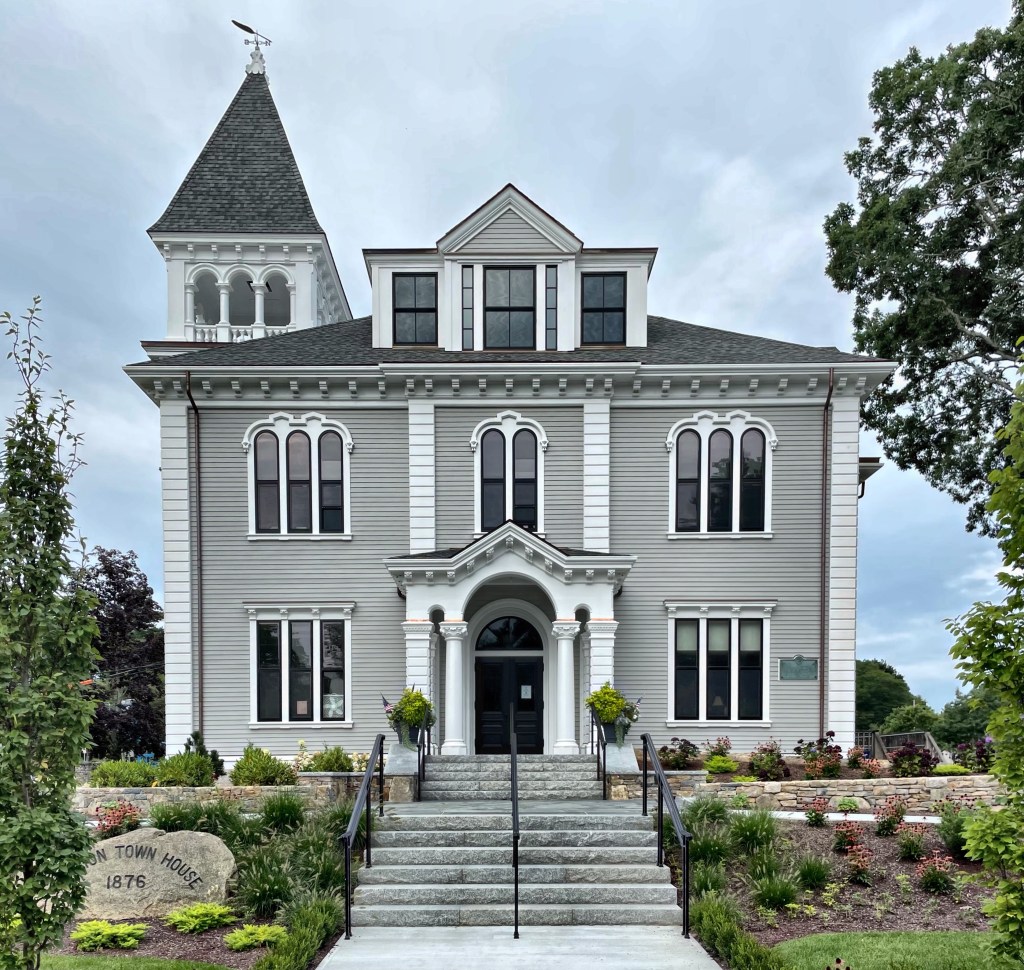
Marion Town Hall // 1876

Welcome to Marion, Massachusetts! Colonized in 1679 as “Sippican”, the town was once a district of adjacent Rochester, Massachusetts. The name, which also lends itself to the river which passes through the north of town and the harbor at the heart of town, was the Wampanoag name for the local tribe that once utilized these lands. Native settlements in present-day Marion dates as far back as 3000 B.C. as the local people were members of the Wampanoag tribe who, when the Pilgrims came, lived in a number of villages in Southeastern Massachusetts under the leadership of the great chief Massasoit. By the 19th century, the town was mostly known for its many local sea captains and sailors whose homes were in town. Today, the coastal town is known for its charming village and large waterfront homes, oh and amazing architecture!

This building was constructed in 1876 by Mrs. Elizabeth Taber (1791-1888), who, at the age of 85, founded Tabor Academy in town. She named it after Mount Tabor in Palestine rather than after herself. The school was built towards the end of the “Age of the Academies”, when in 1852, Massachusetts became the first state in the country to make education compulsory. While some major private institutions already existed, many more were founded in the mid-19th century. Tabor Academy served as a private school for boys and girls over 12 years of age, and was to remain free for local students. With the rise of public schools in the state, many academies began to struggle with admitting students, especially those that had parents willing to pay additional money for enrollment. The school struggled around the Great Depression and thus, traded buildings with the Town of Marion in the 1930s and this building became the Marion Town Hall, a use it retains to this day. The building itself is a stunning Italianate design constructed from plans by Boston architect William Gibbons Preston.

Stay tuned for more buildings and history on one of my favorite Massachusetts towns!

Robert Lippitt House // 1854

“Less is more” is a phrase adopted in 1947 by architect Ludwig Mies van der Rohe to describe his minimalist, Miesian glass box buildings. While he was referring to Modern architecture, the same phrase can be used in 19th century design, where massing, form, and materials are showcased in all their glory with little frills or additions. The Robert Lippitt House in Providence was constructed by 1854 for Robert Lincoln Lippitt (1823-1858), who worked with his brother Henry Lippitt in owning and managing textile mills. Henry would later build his own mansion nextdoor to his late brother’s house (see past post). Sadly, Robert died four years after this home was built, at the young age of 34. His widow, Louisa Gorden Hallet remained in the home and remarried within a year of her late husband’s death, to Charles Lippitt, possibly a cousin to Robert. Messy. The home was designed by architect Thomas A. Tefft, a promising and respected young architect who also died young, at the age of 33.

Governor Henry Lippitt Mansion // 1865

North (secondary) facade

New England is lucky to have so many diverse house museums where architecture and history nerds like me can tour old houses and envision what it was like to live in that era. The Governor Henry Lippitt mansion in Providence stands out as one of the most significant Victorian-era homes in Rhode Island, and contains one of the best-preserved Victorian interiors in America. The mansion was likely designed by local architect Russell Warren, and modified by Henry Lippitt (1818-1891), heir to one of Rhode Island’s leading textile manufacturing families, for his wife Mary Ann Balch (1823-1889) and their six children who survived to adulthood. While Henry was a prominent businessman, his wife Mary may have been even busier. Mary owned and managed rental properties in Providence, including this mansion, giving her husband Henry life tenancy. She oversaw day-to-day running of the mansion, supervising the servants while teaching her daughter Jeanie, who became deaf at age four due to complications from scarlet fever, to read lips and continue to develop her speech. The Lippitt Mansion is an early, and high-style example of an Italianate Villa/ Renaissance Revival design, which moved away from the more prescribed forms of architecture towards the more eclectic, Victorian-era mode. The home features two main facades, with the smaller, west (main) facade featuring a central pavilion with ornate foliate frieze and Corinthian columns, and the north (side) facade – my favorite – with a more commanding presence with a bold porte-cochere. The home remained in the Lippitt family for 114 years, and was later acquired by Preserve Rhode Island, who opened it to the public as a museum in 1993.

George C. Wright House // 1861

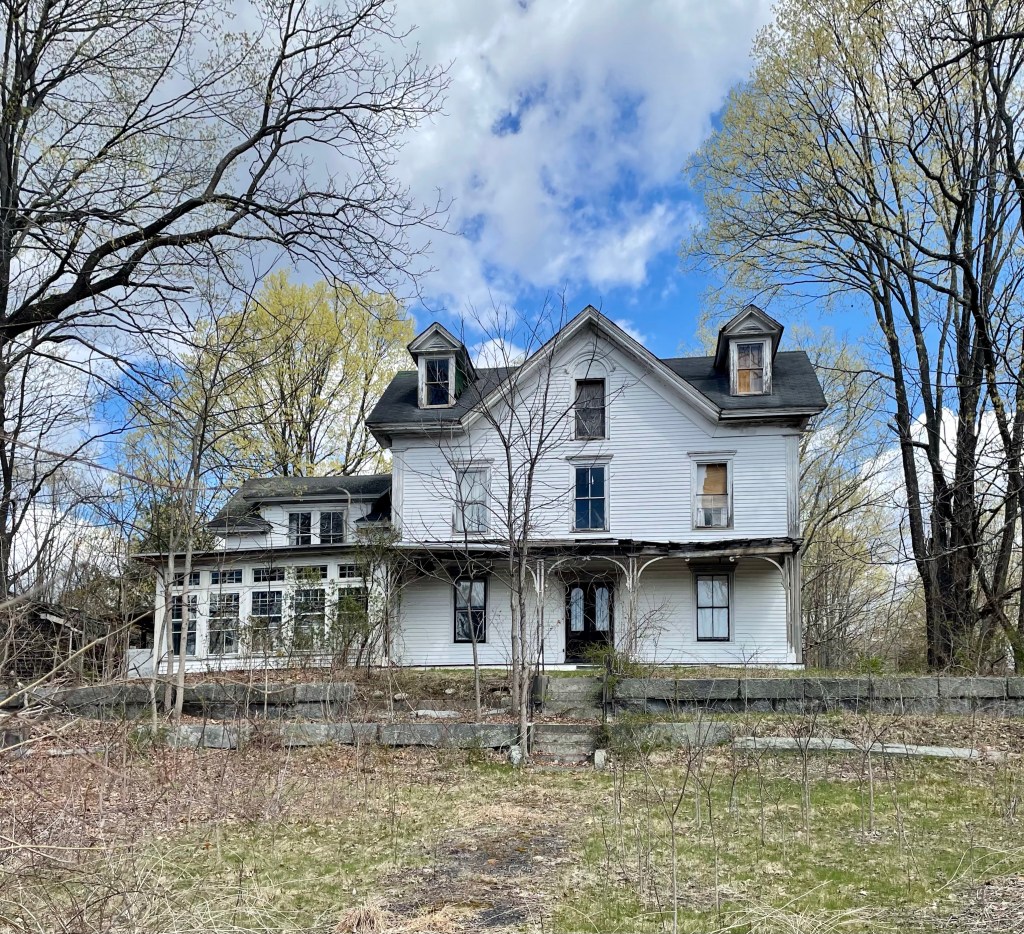
Perched high on a hill in Acton, Massachusetts, this once grand Italianate mansion has been slowly deteriorating without a caretaker. The home was built in 1861 for George C. Wright (1823-1910), a wealthy coffee and spice merchant at Dwinell, Hayward, and Co., a powerhouse in the coffee industry in Boston. In 1855, he was overworked in Boston and fell ill for two years, which worried his wife, who convinced him to relinquish some of his work and move back to Acton, which he did. Soon after he built this house, not too far from the village train depot which would give him easy access to Boston. In papers, he stated, “I felt that good air and a plenty of sunshine would do more for my health than anything else. For this reason, we built upon a hill and arranged the rooms of the house so as to get the sun to its fullest degree.” Wright later served as a State Representative, and remained active in local politics in the suburban town. His home was connected to a large barn (since demolished) and featured a large belvedere (removed after a hurricane) to provide sweeping views from his house on the hill. In recent years, an absentee owner did not appear to maintain the home and it has deteriorated, but good news! The house sold the week that I took these photos, so hopefully it will be restored to its former glory soon!

Henry Tuttle House // 1873

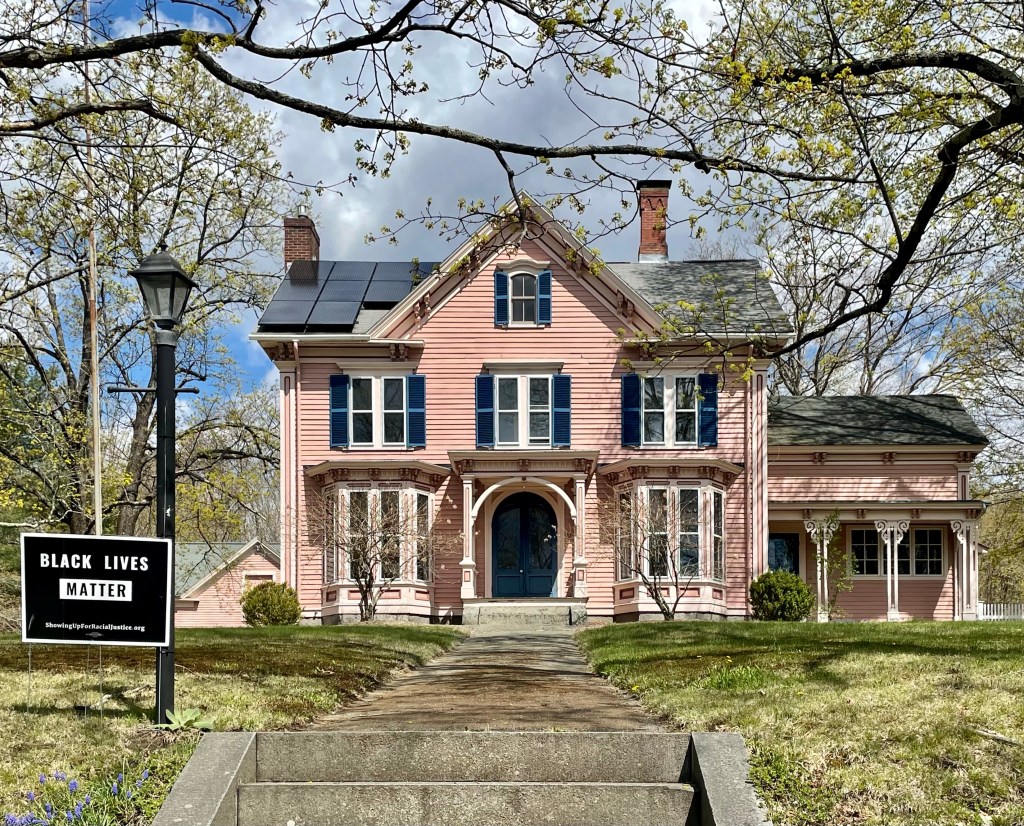
This large Italianate house in Acton was built in 1873 for Henry Waldo Tuttle (1847-1916), who ran a grocery store business in town with his father, James Tuttle. The business did quite well as Henry built this massive home around his 26th birthday, likely around the time of his marriage. The exuberant Italianate home features a wide central gable and a projecting central entrance porch accessed by double entrance doors. The home has a detached stable to the left of the home too!

Acton Town Hall // 1863

Acton, Massachusetts, was once part of Concord, the first inland colonial town established in the Massachusetts Bay Colony in 1635. 100 years later in 1735, land that we know today as Acton, separated from Concord to become their own town. Acton’s second Meetinghouse was located here in Acton Center, which was selected for its location more accessible to all houses and farms in the town. The Second Meetinghouse was built in 1806, and burned to the ground in 1862. Immediately after, a town committee was formed to construct a new town hall. Opening in 1863, Acton’s Town Hall stands as a stunning Italianate building with tripartite arched windows, corner quoins, a two-stage cupola with clock, and a bold (and historically appropriate) paint scheme. Acton’s Town Hall remains as one of the finest extant in the state.

George Lee House // c.1865

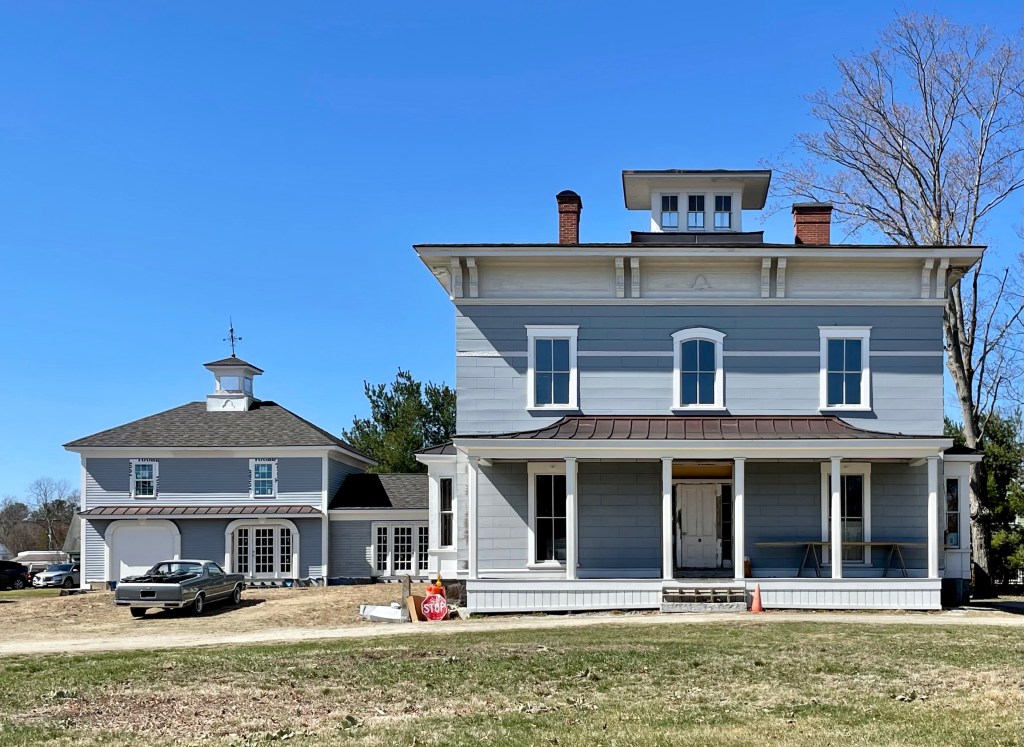
This Italianate mansion was built in the 1860s for George E. Lee, a tanner. Lee lived in this home for a few decades until his death, before which, we had a stable or carriage house built to house his horses and carriage. There is a belvedere at the roof which could have been used by George or his wife to oversee the tannery business just blocks away! The home was willed to his son William after his father’s death, who sold off land across the street for new development. Interestingly, land behind the house was sold off in the early 2000s for townhouse development, possibly to provide funding to restore the home, currently undergoing renovations. The street that the townhomes sit on… Preservation Lane.

Bristol Customs House and Post Office // 1858

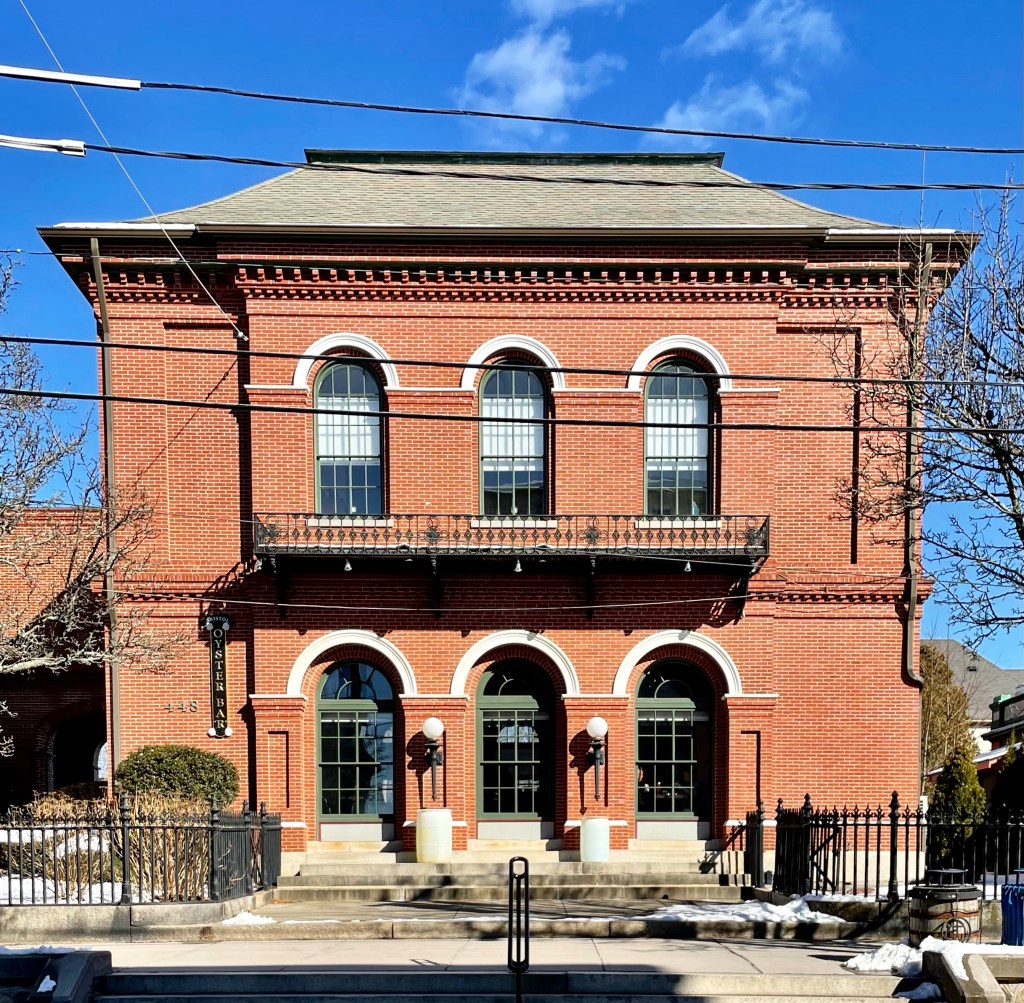
Completed in 1858 from designs by architect Ammi B. Young, the Bristol Customs House and Post Office is a two-story rectangular Italianate style building, that stands out as an uncommon building of the style in town. Ammi B. Young was the first Supervising Architect of the U.S. Treasury Department. As federal architect, he was responsible for designing many custom houses, post offices, courthouses and hospitals across the United States. He was a master of the Greek Revival style so it is interesting to see how he diverged from his trusted style in a town so populated by homes and buildings in the style. The design is more subdued compared to other Customs Houses he designed around the time, likely a response to the declining economy in town from whaling and shipping. The building was occupied as a customs house and post office until 1962, when it was abandoned. The adjacent YMCA purchased the building soon after, connecting it via a small addition and occupying it as additional programming space until 1990. The building was restored and is now home to the Bristol Oyster Bar.

312 Ocean House Road // c.1870

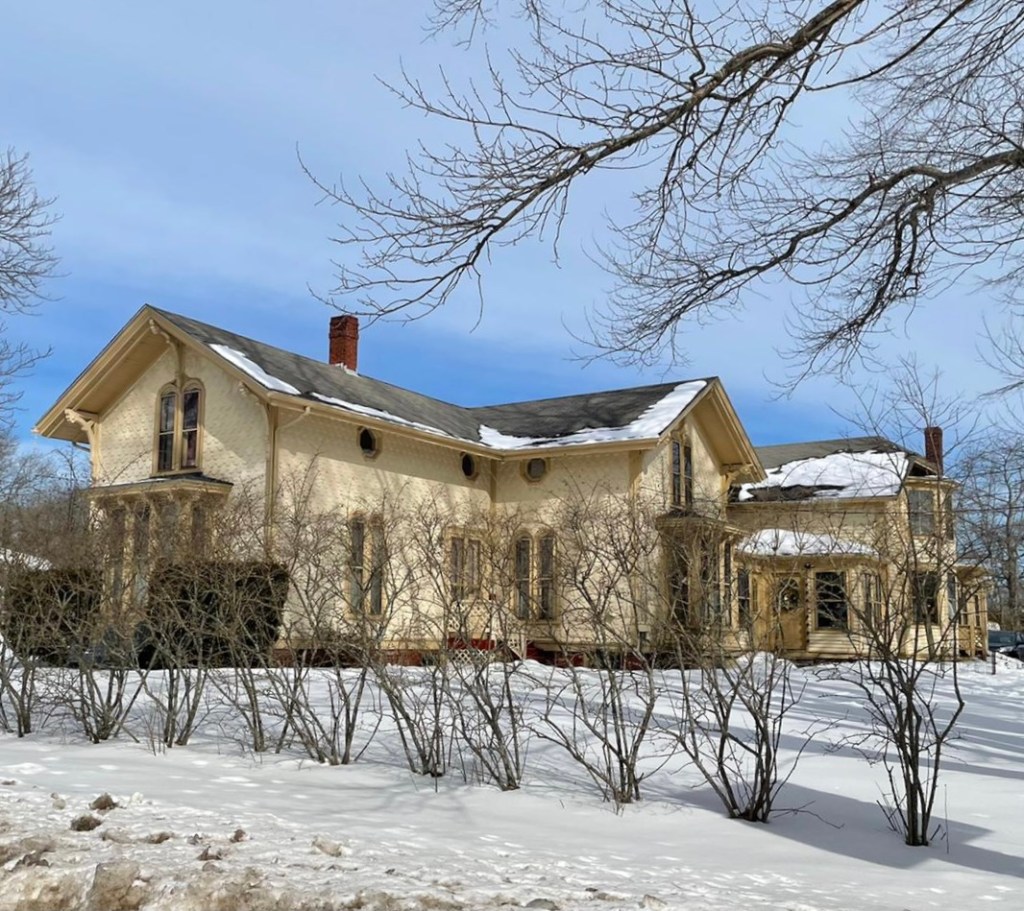
This charming home in Cape Elizabeth, Maine looks to have been built after the American Civil War, as an interesting Italianate cottage. The home is clad with scalloped shingle siding which works well with the paired round headed windows facing the street. The deep overhanging eaves are supported by brackets. Running under the eaves on the sides are octagonal windows, a very unique detail. The home is located at the center of town, away from the summer cottages which sprouted up along the rocky coastline in town starting around this time. It was converted into condominium units sometime in the late 20th century.